





© ROOT-NATION.com - Use of content is permitted with a backlink.

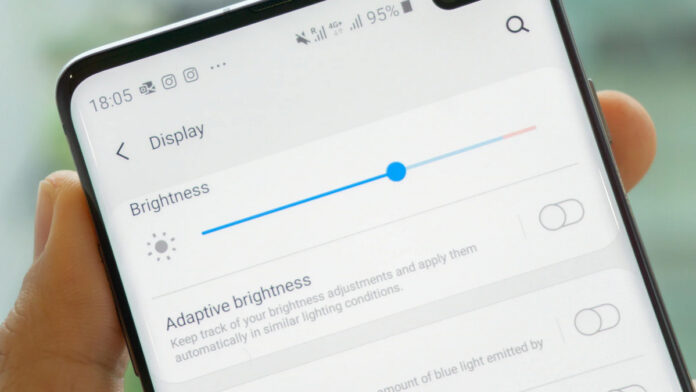
The brightness levels of mobile screens are constantly increasing, but what exactly lies behind these numbers? A new leak suggests that the mobile industry may soon amaze users with truly fantastic figures. According to a well-known Chinese insider, a smartphone is expected to hit the market with a display capable of producing an incredible 10,000 nits.
These rumors were spread by the informant Digital Chat Station, who has a solid reputation for leaking tech news from China. In a post on the social network Weibo, he noted that Honor is developing a device with a panel brightness of 10,000 nits. The blogger’s post states that the upcoming device will stand out not only for its battery capacity of over 10,000 mAh, but also by a record-breaking peak display brightness of 10,000 nits, making it a true beast in terms of technical specifications.
Read also:AERONAUT – everything that flies above the ground: aviation, UAVs and drones, rockets and space
The claim of a 10,000 mAh battery or larger is also impressive, but Honor already has at least two smartphones in its lineup that have surpassed this threshold. We’re talking about the Honor Win and Honor Power 2 models. But how exactly should we interpret the announced ultra-bright 10,000-nit screen?

There is one important caveat to this bold claim. The fact is that electronics developers measure brightness parameters in a rather specific way. OLED-based displays work on a principle similar to a garden hose: if you pinch the end, the water flow becomes significantly stronger and faster. Similar processes occur with pixels. When power is supplied to the entire surface of the OLED matrix, the load is distributed among millions of pixels, so the resulting brightness isn’t particularly high. However, if only a small group of pixels is activated, significantly more power can be directed there, causing them to glow much more intensely.
This feature is called the average picture level, or APL. Full activation of all elements on a smartphone screen corresponds to an APL of 10%. However, gadget manufacturers choose their own test conditions. If you measure the luminous flux when only 1% of the display area is active (when 1% of the matrix is illuminated), you can record extremely high numbers. Given this, the promised 10,000 nits for the Honor may simply be the result of a clever testing method, so it’s best not to get your hopes up too high.

Moreover, the question remains open as to whether mobile phones even need panels with a brightness of 10,000 nits. The human eye perceives light logarithmically. This means that as light intensity increases, the human visual system reacts less and less to changes in it. The difference between 100 nits and 1000 nits seems much more significant to us than, for example, the difference between 5000 nits and 10,000 nits. The reason lies in the fact that in our eyes, special cells – rods – are responsible for detecting changes in light levels, and these rods have their own sensitivity threshold. At high light intensities, their response or activation decreases because these cells are already at maximum saturation. Therefore, a phone with a 10,000-nit rating may look impressive on paper, but in practice, its actual brightness is unlikely to differ significantly from that of the Pixel 10 Pro XL or the iPhone 17 Pro Max.
In reality, users need much more energy-efficient screens capable of maintaining high brightness levels for extended periods without overheating the device or rapidly draining the battery. Engineers are currently working on developing new materials for the transistor layers of OLED panels that would facilitate electron flow, reduce energy consumption, and minimize heat generation from resistance – which gives cause for optimism. Unfortunately, lower electrical resistance figures don’t look as impressive on presentation slides, whereas thousands of nits are much more likely to wow a mass audience.
Read also:
- Why Your Eyes Hurt from a New Monitor: Everything About PWM Flicker and How to Test It
- End of Specs Race: How Many Megapixels Can Human Eye Actually Perceive?