





© ROOT-NATION.com - Use of content is permitted with a backlink.
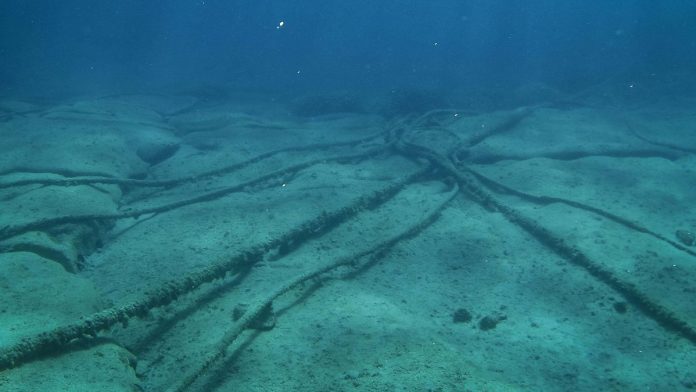
Encouraged by the recent successful military blockade of the Strait of Hormuz, Iranian authorities have set their sights on a strategic artery of the global economy – submarine communication cables. These highways, laid along the bottom of the strategic waterway, provide enormous amounts of financial and Internet traffic between European, Asian and Persian Gulf states.
Official Tehran plans to make the world’s largest tech corporations pay for data transit through the region. At the same time, state-affiliated media outlets are already issuing veiled warnings about possible network disruptions if foreign firms refuse to comply with the new requirements. Last week, Iranian parliamentarians discussed in detail the relevant initiative, which directly affects the interests of submarine lines connecting the Arab world with Europe and Asia.
The military leadership of the Islamic Republic, represented by spokesman Ebrahim Zolfaghari, has publicly confirmed its intention to introduce fees for the operation of Internet backbones. The press, controlled by the Islamic Revolutionary Guard Corps, specifies that the introduction of this enrichment scheme will oblige such giants as Google, Microsoft, Meta, and Amazon to obey local laws. In addition, operators of deepwater communication lines will be forced to purchase special licenses, and exclusively Iranian companies will have the right to carry out repair and maintenance work. Although some of these corporations have invested heavily in the development of the Strait of Hormuz and Persian Gulf cable network, there is no accurate information on whether these communications pass directly through Iranian territorial waters.
The implementation of this coercive strategy remains questionable, as US sanctions strictly prohibit technology companies from conducting any financial transactions in favor of Tehran. Because of this, international business may well perceive such statements as a mere political bluff and a show of force, rather than a real plan of action. However, Iranian state media continue to hint at the risks of infrastructure damage that could paralyze trillions of dollars worth of cross-border data transfer and undermine the stability of the entire global Internet. Amid fears of a possible resumption of hostilities after US President Donald Trump returns from China, Tehran is trying to demonstrate the availability of powerful instruments of influence that go far beyond traditional military confrontation. In this way, the country seeks to convert its favorable geographical location into long-term economic dividends and geopolitical weight.
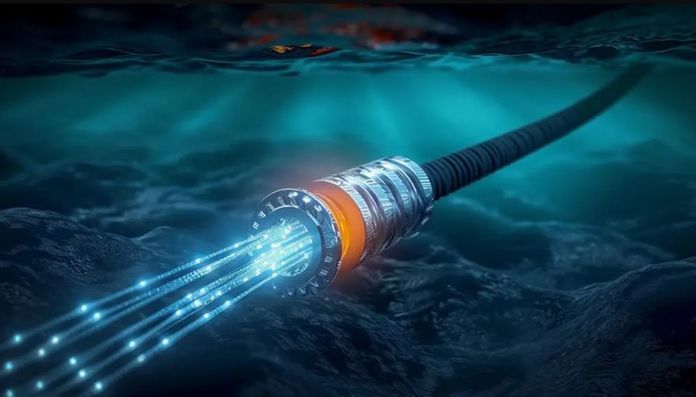
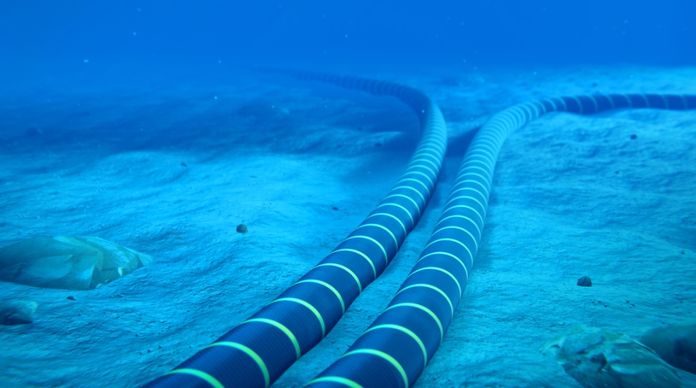
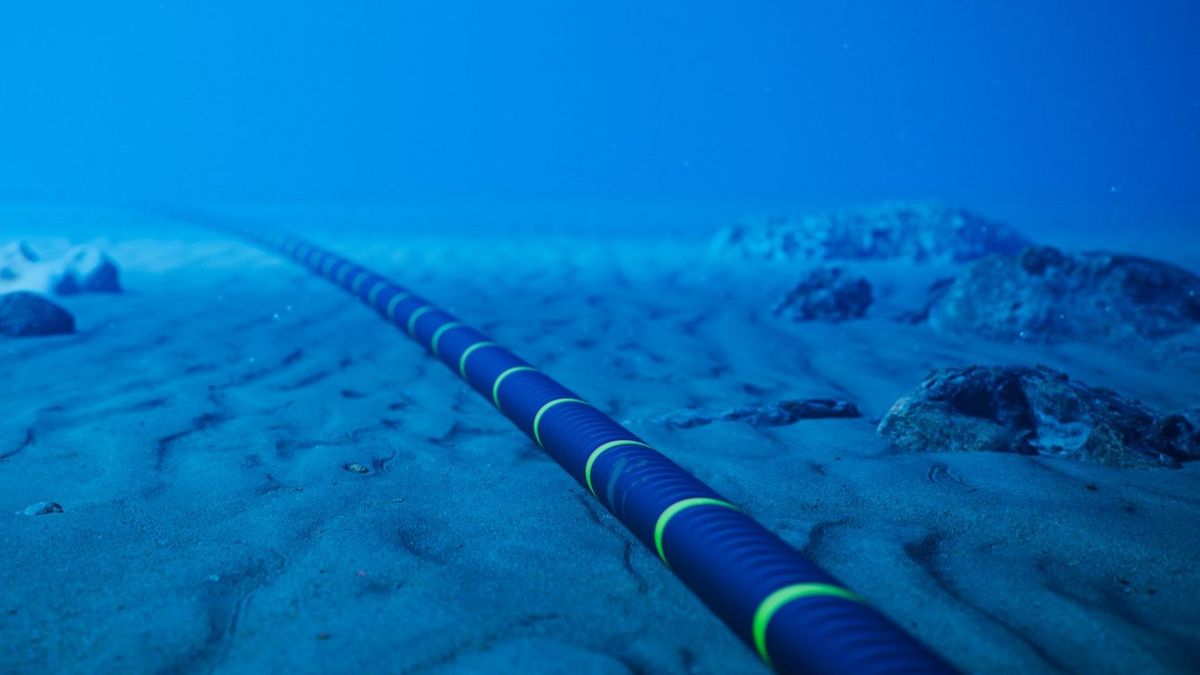
Submarine communication lines are the foundation of the modern global network, providing the lion’s share of the world’s information. Any hostile actions against them will not just slow down the network speed, but will pose a serious threat to the banking sector, military communications, AI cloud infrastructures, remote work, online gaming, and streaming platforms. Bloomberg Economics’ Dina Esfandiari notes that such blackmail is part of the regime’s broader defense concept aimed at demonstrating control over the strait for its own survival. According to her, Tehran is trying to create such enormous risks for the global economy that no one in the world would dare to attack it anymore.
Several key intercontinental lines run through the Strait of Hormuz. As Mustafa Ahmed, a leading analyst at the Emirati Habtoor Research Center, explains, international consortia have long tried to avoid the Iranian zone because of security risks, so most communications are concentrated in a narrow corridor closer to the Omani coast. However, Alan Mauldin, research director at TeleGeography, notes that two large systems – Falcon and Gulf Bridge International (GBI) – do cross Iranian territorial waters. Although there have been no direct threats of sabotage from Tehran, the rhetoric of officials and the media clearly indicates a desire to punish US allies in the region through asymmetric warfare. The Islamic Revolutionary Guard Corps, which has combat swimmers, compact submarines, and underwater unmanned vehicles, is capable of causing a large-scale digital crisis on several continents.
The consequences of a potential attack will be felt by all neighboring Arab countries, where problems with the Internet may arise, which will harm oil and gas exports and financial transactions. In India, a huge outsourcing industry would be at risk, with losses running into billions of dollars. The strait is a critical link between Asian digital centers like Singapore and European land stations, so an accident would slow down financial trading and international settlements, and East Africa risks being completely isolated. The situation will worsen if pro-Iranian forces use similar methods in the Red Sea, as they did in 2024, when damage to three cables by the anchor of a Yemeni Houthi ship disabled a quarter of regional Internet traffic. However, TeleGeography experts reassure that as of 2025, the lines in the Strait of Hormuz provided less than 1% of the world’s international bandwidth.
The history of the cable confrontation goes back almost two centuries, starting with the first transatlantic telegram in 1858 between Queen Victoria and President James Buchanan. Modern optical fiber is capable of transmitting data volumes equivalent to 150 million telephone conversations at a time. The practice of destroying such lines has been known since World War I, when Britain isolated Germany from its troops by cutting telegraph wires. Today, most accidents go unnoticed due to the ability to quickly redirect information flows through other routes. However, a large-scale attack would have catastrophic consequences due to humanity’s absolute dependence on digital data. In addition, military operations in the region will complicate repair work, as specialized vessels must stand motionless over the accident site for a long time, and only one of the five such ships is currently left in the Persian Gulf.
In an attempt to legitimize their claims, Iranian media refer to the 1982 UN Convention on the Law of the Sea, which regulates the use of underwater communications. Iran has signed but not ratified this document, but it is recognized as part of customary international law. Article 79 of the Convention allows coastal states to set conditions for laying lines in their territorial waters. As an example, Tehran cites Egypt, which earns hundreds of millions of dollars in transit fees through the Suez Canal. However, lawyers point out that the Suez Canal is an artificial artery on Egyptian territory, while the Strait of Hormuz is a natural waterway with a different legal status. Professor of International Law Irene Papanikolopoulou emphasizes that with regard to the existing cables, Iran is obliged to comply with previously signed agreements, although for new lines in its territorial waters it does have the right to dictate its own terms.
Read also:
- Ukraine Struck One of Russia’s Largest Oil Refineries: Military Vessels and Occupation Logistics Sites Also Reportedly Targeted
- Ukraine’s Shield for Europe: Fire Point Develops the Freya Missile Defense System