





© ROOT-NATION.com - Use of content is permitted with a backlink.
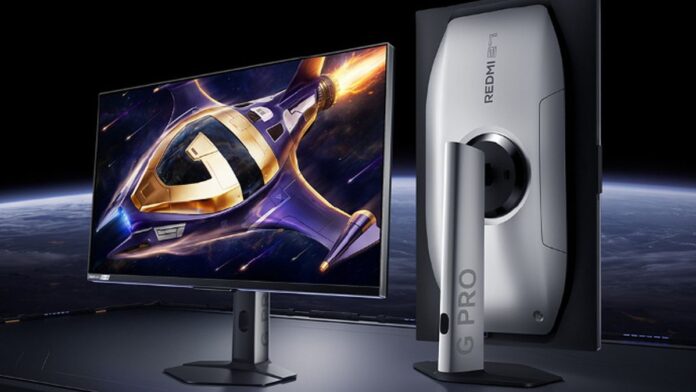
The monitor market has been stagnant for a long time, with manufacturers limiting themselves to minor improvements and reusing the same panels. In most cases, a standard IPS display is labeled “gaming”, backlighting is added, and that’s where innovation ends. However, Redmi seems to have come to the conclusion that this approach no longer works. That’s why the company introduced the G Pro 27U and G Pro 32U models, and these are not just another screen, but an attempt to combine the capabilities of a professional workstation with the characteristics of a premium gaming solution.
Particularly noteworthy is the dual-mode technology, which is implemented in a very thoughtful way. Traditionally, users have to choose between high resolution and display speed. If you need 4K, you have to sacrifice frame rate. The new Redmi monitors, thanks to the dual-mode solution from LG Display, try to eliminate this compromise.

In a working scenario, you can use 4K mode at 160 Hz for maximum detail. However, after the work is completed, you can switch to 1080p resolution, which allows you to increase the refresh rate to 320 Hz. This approach provides high display speed, which will be especially appreciated by players, although for some users a sharp decrease in resolution may seem unusual.
Read also: Redmi Smartphone Reviews
An important feature is the integration of HyperOS 3, which is a key element of the concept. Redmi aims to make these devices a central part of the user’s digital space. The monitor can work as a regular PC display, but at the same time it functions as an independent smart TV. This approach provides for a dual use scenario.

In this case, the effectiveness of the solution will largely depend on the quality of the interface implementation: if the system does not provide fast and convenient operation, it risks becoming an overloaded and slow tool. However, support for cross-platform interaction and the ability to run applications directly on the monitor potentially allows you to refuse a separate TV, for example, in the workspace.
Read also: ViewSonic VX2779A-HD-Pro Review: A Budget 240Hz Gaming Monitor

Another aspect that is often underestimated is glare, which has a significant impact on work comfort. According to Redmi, the new models have a screen with a low reflection level of 2.6%, which significantly reduces the mirror effect in well-lit rooms. This should have a positive impact on the convenience during prolonged use. Additionally, there is a Type-C port with 90W of power that supports reverse power. This allows you to use a single cable to transmit images and charge your laptop at the same time, creating a tidier and more minimalist workplace. This makes many competitors look outdated.
Read also:
- The new Philips Evnia 27M2N5201P monitor focuses on speed and accuracy in esports
- ASUS ROG Strix OLED XG27AQDPG Monitor Review: 2K QD-OLED, 500 Hz, and 0.03 ms Response Time