





© ROOT-NATION.com - Use of content is permitted with a backlink.

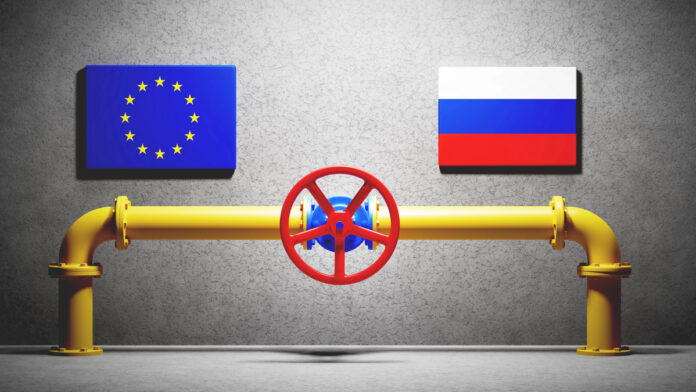
All 27 member states of the European Union have officially approved a new regulation that provides for a phased cessation of imports of Russian pipeline gas and liquefied natural gas (LNG) to the bloc. The document also introduces additional mechanisms to control, monitor and accelerate the diversification of energy supplies.
This decision is a key milestone in the implementation of the REPowerEU strategy, which aims to eliminate the EU’s dependence on Russian energy resources. European institutions emphasize that the new rules should make the Union’s energy market more sustainable, competitive and diversified, as well as strengthen internal solidarity and coordination between member states on the way to forming an autonomous Energy Union.

According to the regulation, imports of Russian pipeline gas and LNG will be banned after the end of the transition period. The ban will take effect 6 weeks after the document enters into force. A phased wind-down mechanism is envisaged for existing contracts to reduce market risks and avoid sharp price fluctuations. A complete ban on imports of Russian LNG will come into effect from the beginning of 2027, while pipeline gas will be completely withdrawn from the European market from the fall of 2027.
Before authorizing gas supplies to the EU, member states will be required to check the country of origin of the fuel. This should make it impossible to circumvent restrictions through third countries.
Violation of the new rules will result in significant financial penalties. For individuals, the minimum fine will be at least €2.5 million. For companies, the penalty will be fines of at least €40 million, or at least 3.5% of the global annual turnover, or up to 300% of the turnover of a particular transaction.
By March 1, 2026, all EU states must prepare national gas supply diversification plans. In these documents, countries must outline potential risks associated with the replacement of Russian gas and propose alternative sources of supply. Energy companies will be obliged to inform national authorities and the European Commission about all existing or remaining contracts for the supply of Russian gas. States that still import Russian oil must also submit separate diversification plans.

The regulation provides for a special emergency response mechanism. If there is a serious threat to the security of supply in one or more EU countries, the European Commission will have the right to temporarily suspend the import ban for up to 4 weeks.
After the official publication of the document in the Official Journal of the EU, the regulation will enter into force the very next day and will be applied directly in all Member States without the need for additional implementation at the national level.
Separately, the European Commission is preparing a new legislative initiative to phase out Russian oil imports by the end of 2027. This should be a logical continuation of the overall strategy of energy independence.
After the start of Russia’s full-scale aggression against Ukraine and the use of energy as an instrument of pressure, EU leaders agreed in the Versailles Declaration of March 2022 to abandon Russian fossil fuels as soon as possible.

As a result, the volume of Russian oil and gas imports has declined significantly in recent years. In 2025, the share of Russian oil in EU imports fell below 3% due to the current sanctions regime. At the same time, gas remains a problematic item. It is estimated that in 2025 it will still account for about 13% of total EU imports, equivalent to more than €15 billion a year. According to European institutions, this factor poses significant risks to trade stability and energy security in the region.
Read also:
- Everything About Palantir’s Dataroom: How Ukraine Turns the War into a Defense AI Laboratory
- Ukrainian Intelligence Disclosed Information on the Design and Manufacturing of Iskander-K Cruise Missiles