





© ROOT-NATION.com - Use of content is permitted with a backlink.
Let’s get straight to the point. The be quiet! Dark Rock Pro 6 is larger, more powerful, and quieter than the Dark Rock 6, while retaining all the key features and design nuances of its smaller sibling. However, during testing, it encountered a processor that forced me to reconsider my overall perspective on gaming CPUs.
Read also: Reviews of cooling systems (coolers) for PCs

TABLE OF CONTENTS:
Specifications
- TDP: 300 W
- Overall dimensions (excluding mounting brackets): 147×140×169
- Total weight: 1.34 kg
- Compatibility with Intel sockets: 1851 / 1700 / 1200 / 1150 / 1151 / 1155
- Compatibility with AMD sockets: AM5 / AM4
- Noise level at 50/75/100% PWM: 7.5 / 20.2 / 32.4 dBA
- Q/P switch: yes, passive mode up to 40% PWM Q
- Fin material: aluminium with ceramic coating
- Base material: nickel-plated copper
- Heat pipes: 7×6 mm
be quiet! Dark Rock Pro 6 Video review
Market Positioning and Package Contents
A brief overview of the cooler itself. As the company’s flagship air-cooling solution, the be quiet! Dark Rock Pro 6 is priced at around $130. At this price point, the package contents are identical to those of the Dark Rock 6, including the mounting hardware, documentation, thermal paste, and an installation screwdriver. Nothing unnecessary has been added, and nothing essential has been left out.
Comparison with the Dark Rock 6
The cooler is massive, even when compared to the be quiet! Dark Rock 6. It measures 147 × 140 × 169 mm and weighs 1.34 kg. Yes, this cooler comes close to tipping the scales at one and a half kilograms. Is it worth considering an additional support bracket? In my opinion, it makes more sense to simply opt for a horizontal chassis instead. be quiet! offers several such cases, and I have reviewed them previously.
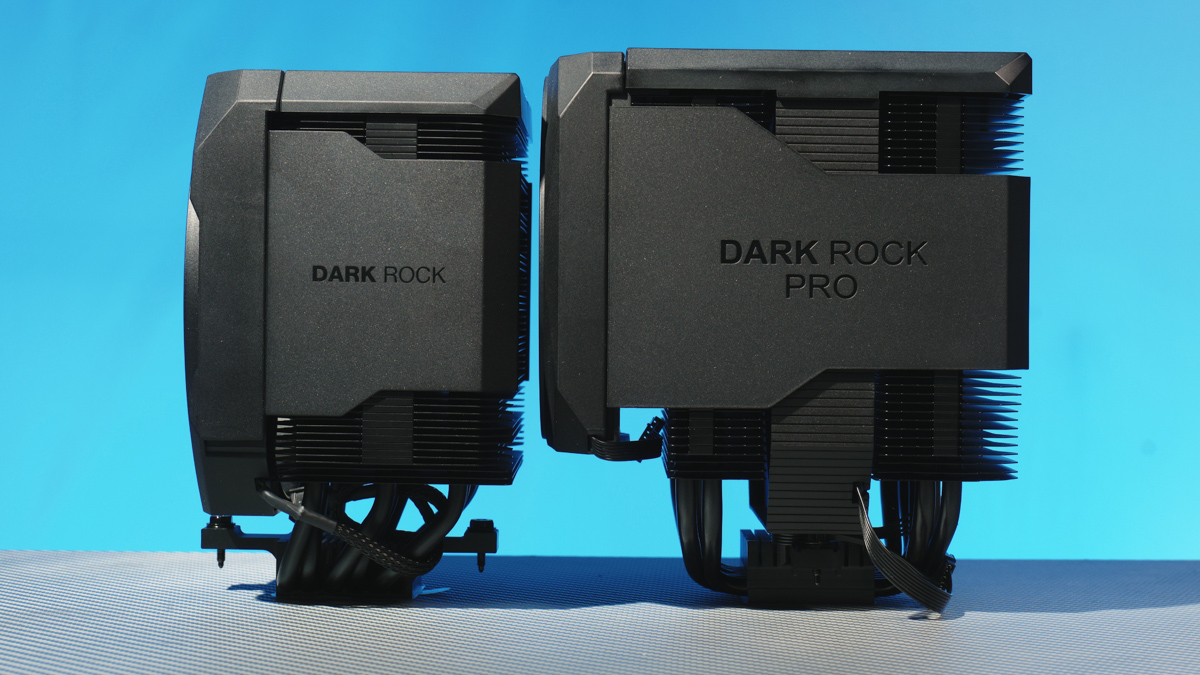
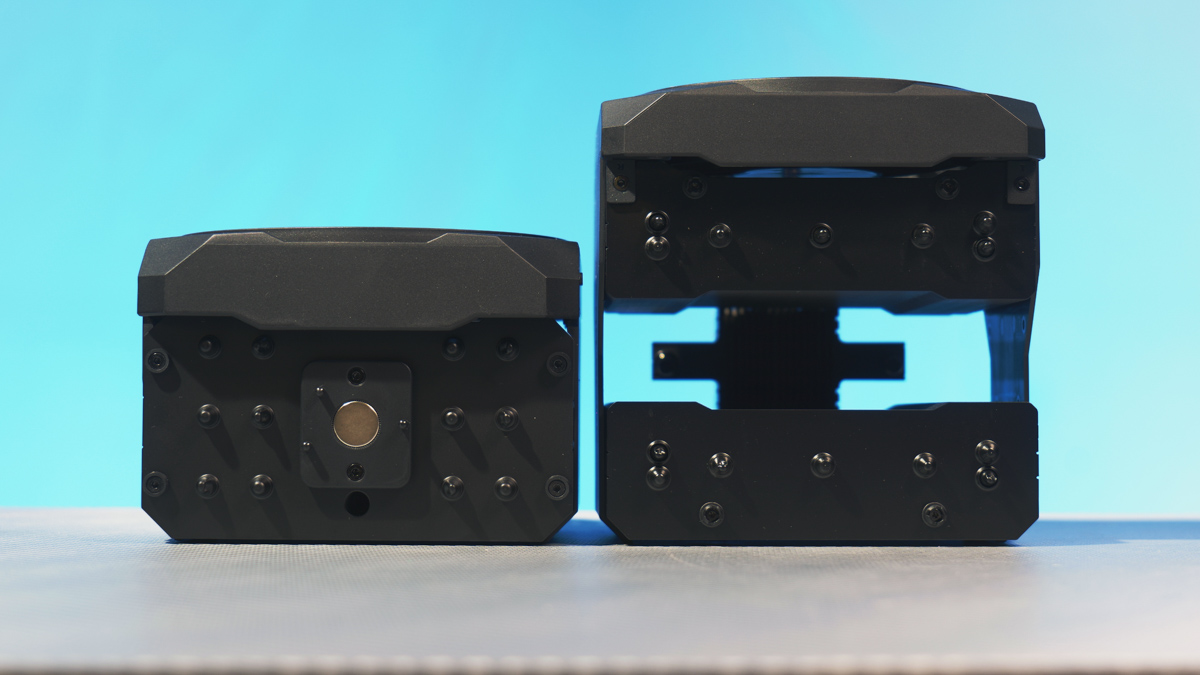
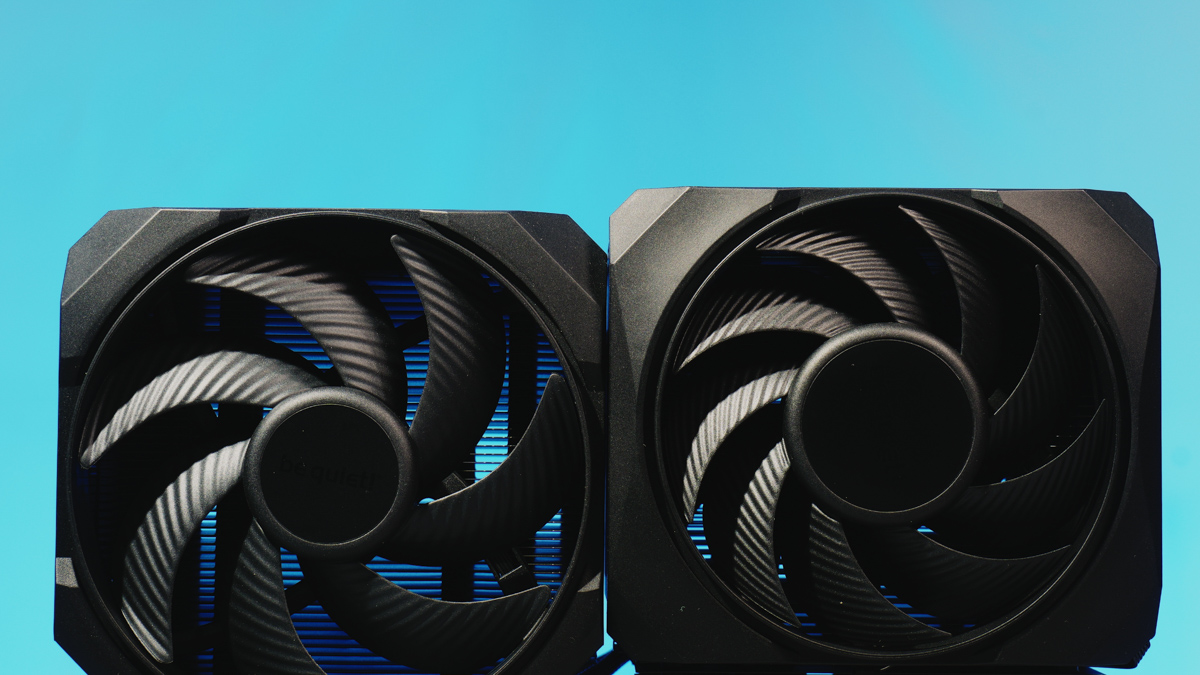
Why is the Pro 6 so large? Because it features a dual-tower design, seven 6 mm heat pipes, a nickel-plated base, and, of course, two fans.
Fans
This is where I have a few questions. As with the smaller model, the fans are integrated into plastic shrouds, making them effectively proprietary components. Also identical to the smaller model is their rated lifespan of up to 300,000 hours at 25°C, which translates to more than 30 years of continuous operation. The fans use six-pole fluid dynamic bearings as well.

What bothers me is something else. One of the Silent Wings fans is a 135 mm model, which is perfectly fine. The other, however, is a 120 mm unit. And that is something I have never been particularly fond of – I have even dedicated an entire article to the subject. The only explanation I can find for this unusual choice is memory compatibility: the 120 mm fan is mounted at the front, while the 135 mm fan sits between the two fin stacks.

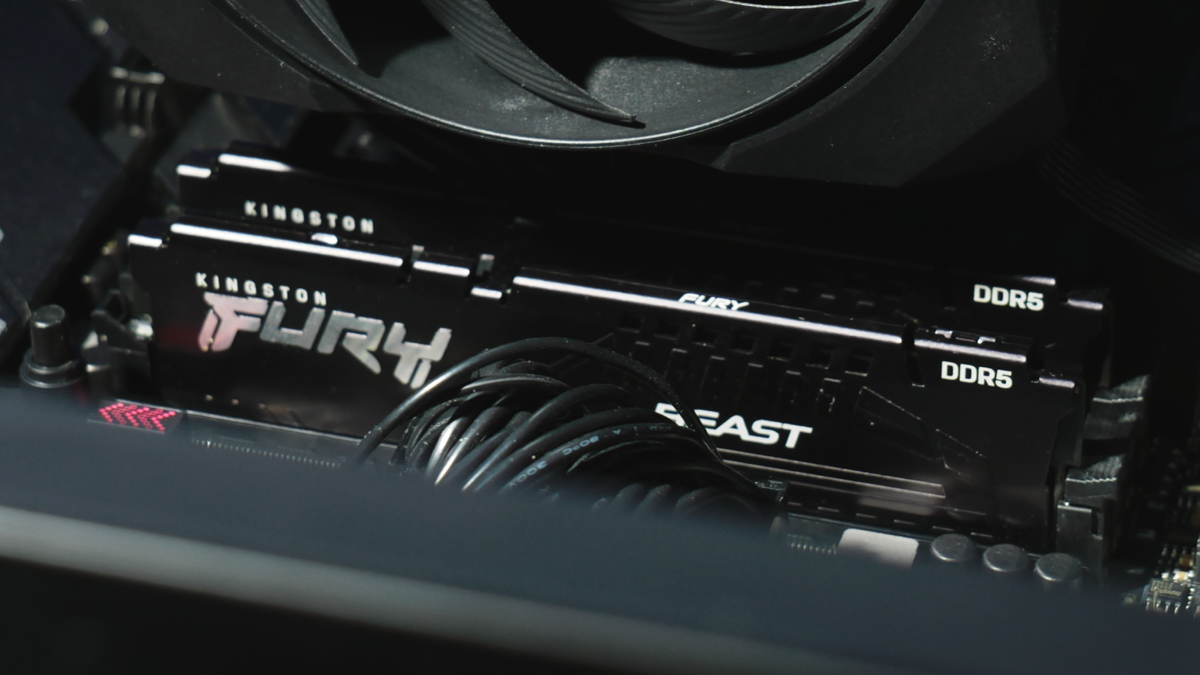
This provides 40 mm of RAM clearance, which is still insufficient for some RGB memory kits, such as those from Kingston. The trick, however, is that the front fan can be moved upward. It is mounted on plastic guide clips with a notched adjustment mechanism, allowing the cooler to accommodate 46 mm or even taller memory modules without issue.
Compatibility
This, however, leads to another issue – the same one encountered with the Dark Rock 6: height. The cooler stands 169 mm tall without accounting for any upward adjustment of the front fan. To put this into perspective, roughly half of be quiet!’s own cases do not provide more than 170 mm of CPU cooler clearance. That said, be quiet! still offers around eight cases with full support for this cooler, and the number of compatible models exceeds the number of incompatible ones.
For example, the Dark Base Pro 901 provides 190 mm of cooler clearance, while the Dark Base 701 offers 185 mm. The Pure Base 501, in both Air and Window variants, supports coolers up to 178 mm in height. However, clearance figures can be misleading. Personally, I do not consider a nominal 170 mm specification to be sufficient, as it is advisable to leave an additional 2–3 mm of headroom. For the reasoning behind this, refer to the Dark Rock 6 review.


If your case is not from be quiet!, it is worth paying very close attention to the available cooler clearance. Even full-tower cases from well-established brands are not universally compatible with this cooler. The ASUS TUF GT502, for example, is incompatible for the same reason as with the Dark Rock 6 – except that the situation here is even worse.
On the positive side, the Q/P switch has been retained. This means the be quiet! Dark Rock Pro 6 can operate passively at PWM duty cycles of up to 40% in one of its modes and limits fan speed to 1,800 RPM instead of the maximum 2,000 RPM. In practice, this means the fans do not spin at all while the system is idle. Nice? Very nice.
There is no RGB lighting here, and the motherboard connection scheme is somewhat unusual. The cooler uses a standard 4-pin PWM connector along with a proprietary daisy-chain connection linking the smaller front fan to the larger central fan. In theory, this means the smaller fan is not strictly required for operation, since the primary connection runs through the central fan. Therefore, if RAM clearance is a major concern, you can simply remove the front fan altogether.

That said, if RAM clearance is absolutely critical for your build, this starts to become an exercise in unnecessary compromises. At that point, it makes more sense to simply opt for a liquid cooler, where memory clearance is effectively a non-issue. Especially since be quiet! offers plenty of 420 mm AIO solutions as well.

As for installation, the process is similar to that of the Dark Rock 6. The mounting screws are located between the two fin stacks rather than beneath the heatsink, but they are still inaccessible without the included screwdriver. Fortunately, one is provided in the box.
Test bench
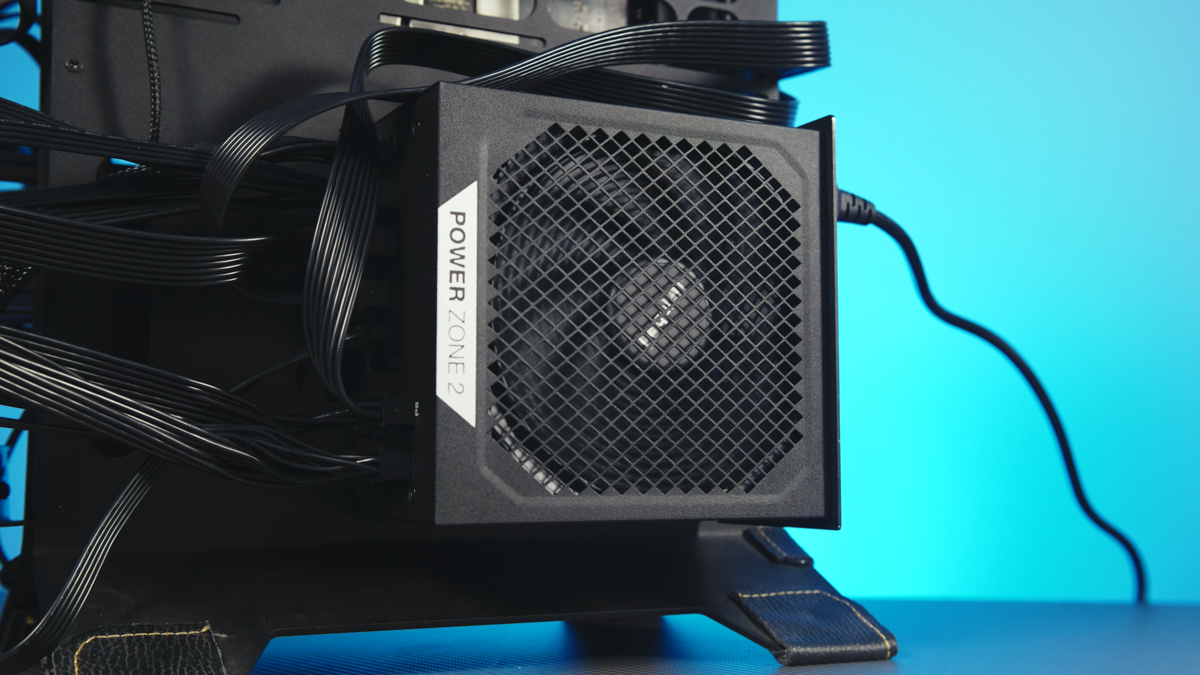
Now, on to the testing. And I want you to remember two numbers: “0” and “8”. They are more important than you might think. Why? Because our test system features a rather unusual guest. Alongside the ASUS ROG Strix B650E-E Gaming WiFi motherboard, fully updated to the latest BIOS, the ASUS TUF GT502 chassis, the be quiet! Power Zone 2 1000W power supply, Kingston memory, and a Goodram SSD, we have a new processor.
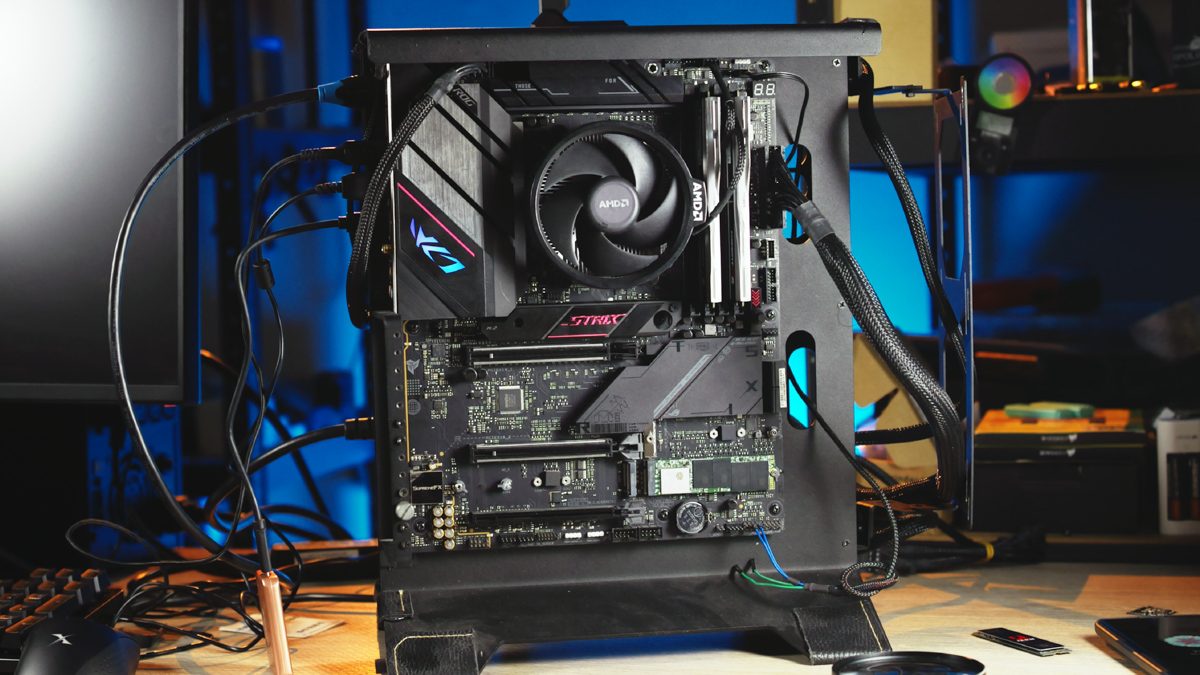
AMD Ryzen 7 9850X3D.

And it has significantly disrupted my statistics. Normally, my approach is straightforward: I install any AM5-compatible cooler in offset mode without giving it much thought. What is offset mode? It is an adjustment of the cooler’s contact position designed to better align the contact area with the hotter section of an AM5 processor. These CPUs are inherently asymmetric, meaning that a perfectly centered mounting position is not necessarily the optimal one for heat transfer.

Or rather… it is not always optimal. Take the AMD Ryzen 7 9850X3D and the AMD Ryzen 9 9800X as examples. One offers eight cores with 3D V-Cache, while the other features twelve cores without it. Yet both share the same TDP. The reason is that the X3D model consumes more power per core due to its expanded L3 cache, which is literally stacked on top of the compute die like an extra layer in a sandwich.
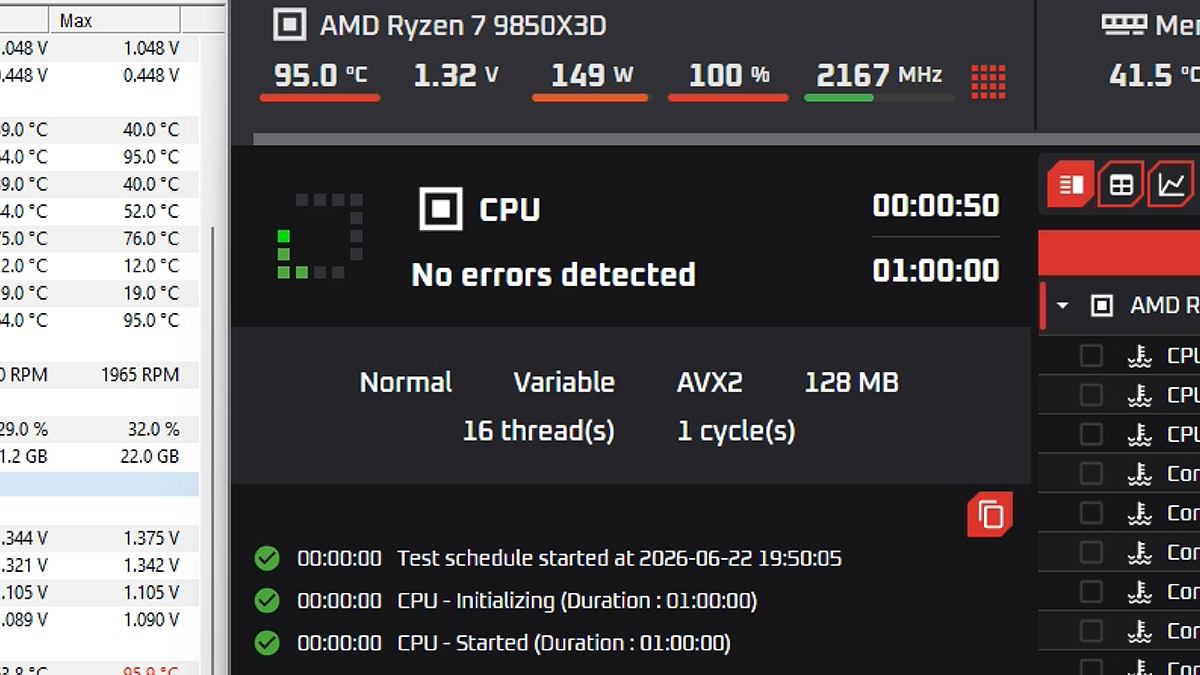
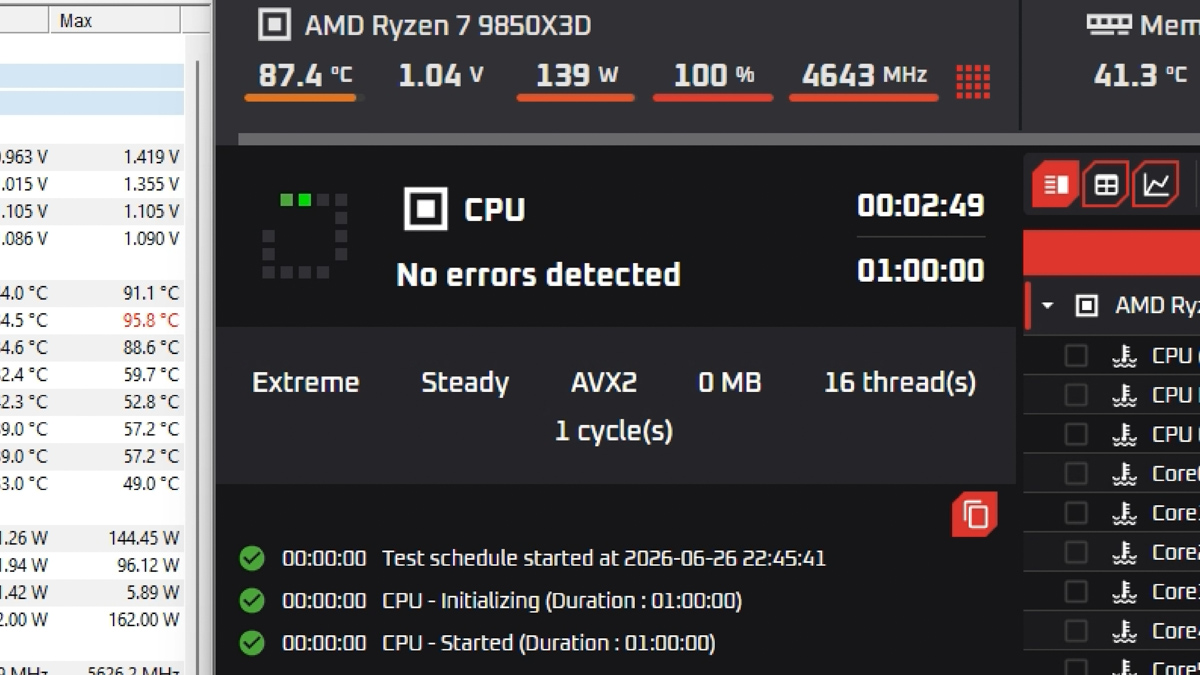
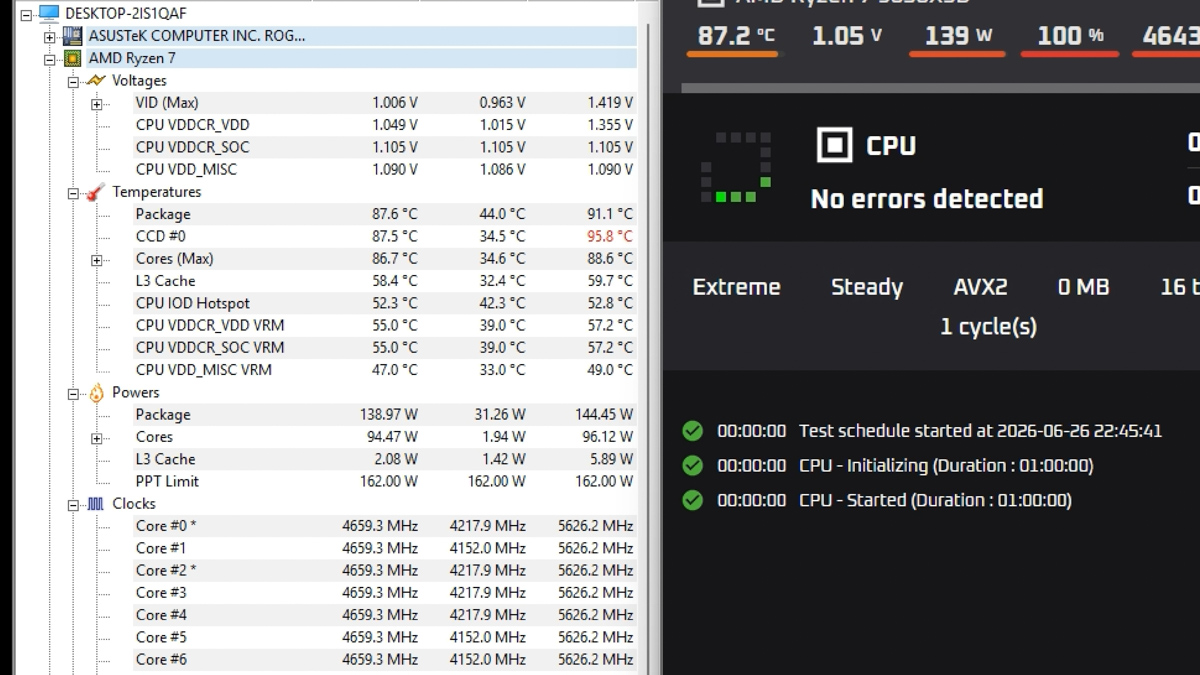
And I place the blame squarely on the L3 cache. Using the “8-core” offset position resulted in the AMD Ryzen 7 9850X3D reaching 95°C in the standard OCCT stress test, even with the fans running at maximum speed. I then switched back to the standard mounting position and immediately saw a 10°C reduction in the same test, under identical ambient conditions.

What makes this even more interesting is that other reviewers had no trouble achieving temperatures on the be quiet! Dark Rock Pro 6 with the eight-core AMD Ryzen 7 9700X that were comparable to those delivered by the Noctua NH-D15 G2 and the 420 mm NZXT Kraken Elite RGB liquid cooler.
Conclusions
So, what does all of this mean? Let that serve as the conclusion: X3D processors are… interesting. Not bad by any means. I have also included gaming test results for the processor, and in those scenarios the be quiet! Dark Rock Pro 6 performs like a king – both exceptionally quiet and highly effective. The key takeaway is that, first and foremost, flagship cooling is not a necessity for gaming-focused CPUs, but it is certainly beneficial.


Secondly, when dealing with X3D processors, it may be time to abandon the habit of automatically using offset mounting with CPU coolers. In some cases, it can cost you tens of degrees Celsius. And that can mean the difference between thermal throttling and maintaining boost clocks. For an eight-core processor equipped with 3D V-Cache, that difference can effectively determine whether it performs like a flagship CPU or like a mid-range chip costing half as much.

Oh, and yes – I can recommend the be quiet! Dark Rock Pro 6. Provided, of course, that you can find a case large enough to accommodate it.

