© ROOT-NATION.com - Use of content is permitted with a backlink.
Lately, I’ve been thinking more and more about whether it’s time to replace my gasoline-powered Mini (BMW) with something fully electric. However, short test drives around a dealership offer little objective insight into what living with an EV is actually like. About five years ago, I briefly tested a Tesla Model 3, which was my first experience behind the wheel of an electric vehicle. This time, I wanted to put the concept to the test in real-world conditions – during a genuine trans-European road trip.
As luck would have it, a friend asked for help collecting his newly purchased car from a dealership in the Netherlands and driving it to Spain. It turned out to be the perfect opportunity to put modern EV technology through a true endurance test over a distance of 1,600 kilometers. It is also worth noting that this is not a review of the BMW iX2 itself, but rather an account of my impressions from traveling in it.
Read also: All car reviews

TABLE OF CONTENTS:
Vehicle Overview
The car chosen for this marathon was a 2025 BMW iX2 eDrive20 in M Sport trim. One of its highlights was the Individual paint finish called Deep Sea Green. In person, this deep metallic green looks remarkably elegant and immediately brings back memories of the classic British Racing Green found on authentic Mini Coopers. The journey ahead would take us through Belgium and across the entirety of France, with two overnight stops – one on the outskirts of Paris near Charles de Gaulle Airport and another in the southern town of Agde. It also promised a complete reassessment of what modern electric road travel is really like.


Aesthetics, Comfort, and Ergonomic Contradictions
On a long journey, the BMW iX2 feels like a remarkably cozy cocoon. The driver’s ergonomics leave an excellent impression: both the center armrest and the door panel are designed in a way that makes them exceptionally comfortable to lean on during hours of driving. The cupholders are also well thought out and positioned exactly where they should be. Visibility was another pleasant surprise. Even at my height of 1.65 m (5’5″), outward visibility was excellent, although achieving this required raising the driver’s seat to its highest position.
Read also: SUNRA K6 electric scooter review: Quieter than water, faster than the wind

The centerpiece of the cabin is the impressive curved display. The screen quality is excellent, and, somewhat surprisingly, adjusting the climate controls through the touchscreen turned out to be very intuitive and convenient. There is one minor drawback, though: this large glossy display attracts dust like a magnet.

As for practicality, the luggage compartment is impressively spacious, offering 525 liters of cargo capacity and easily swallowing all of our belongings. In the photo, the trunk contains a 20-liter Peak Design Everyday Backpack, which provides a good sense of the available space.

The rear seats also appear quite spacious at first glance, although I never had the opportunity to properly evaluate their passenger accommodation, as I was traveling entirely on my own. The back seat mostly served as a place to toss my backpack, and I only climbed in a couple of times myself – once while the car was charging to get a sense of the available space, and another time to take a wider photo of the front cabin.

One aspect that genuinely disappointed me was the glove compartment. Its shape and usable volume are surprisingly poor: even a standard A4 document folder would not fit inside without some effort and had to be bent slightly to make it fit. That is hardly something one expects from a premium brand. Unfortunately, I did not take a photo, so you’ll have to take my word for it.
Read also: Škoda Kodiaq Sportline (2025) Review: Balanced Family SUV with Sporty Character
The Joys and Quirks of German Automation
The convenience of the trip begins before you even get into the car. The smart key automatically unlocks the doors as you approach, which is incredibly useful when your hands are full of luggage. I had a similar feature on my 2020 Suzuki Jimny, a car I might write about someday as well (let me know in the comments if that would be of interest).

After my own 2018 Mini One, the conveniences of this Bavarian machine initially felt downright indulgent. It was refreshing not to think about the headlights at all – the adaptive system seamlessly shaded oncoming traffic while keeping the high beams active where possible. The rain-sensing wipers were equally effortless. The safety systems also worked well, automatically slowing the car when approaching slower vehicles ahead. That said, the intervention was not entirely consistent, so it would be unwise to become complacent – the driver remains fully responsible for maintaining control.
Once again, I was reminded of my former 2020 Suzuki Jimny, as it was nice to have a traffic sign recognition system back in my life. However, this is also where one of the BMW’s more peculiar quirks appeared. The system would occasionally – though not regularly – misread road signs. When that happened, the car would begin insistently flashing warnings on the head-up display (which, by the way, is absolutely excellent) and repeatedly chime to indicate that I was exceeding the speed limit. Fortunately, the warning sound itself was rather pleasant and not particularly intrusive, making it easy enough to wait until the next road sign, at which point the system would usually correct itself and return to normal operation.

One additional detail worth mentioning is that the car attempted to automatically reduce its speed to match these incorrectly detected speed limits. This “helpful” feature can be completely disabled in the settings, but the relief reportedly lasts only until the next stop: once you switch the car off and start it again, the setting resets and the entire deactivation process has to be repeated. At least, that is the information I came across online. I did not test it myself, as the issue never caused any serious problems or became genuinely annoying during the trip.
Read also: Škoda Karoq Sportline Test Drive: Just a Visual Refresh?
Electronics, CarPlay, and Driver Assistance Systems
One of the biggest advantages of the BMW iX2 is fully wireless Apple CarPlay (as well as Android Auto). It works exceptionally well and keeps the cockpit clean and free from unnecessary cables. However, the system did have one rather specific quirk: it consistently disconnected when crossing international borders. The phone had to be manually reconnected while driving. During the first day alone, I encountered this “border syndrome” twice – once when crossing from the Netherlands into Belgium and again at the Belgium–France border.
I would not consider this a critical issue, but it was certainly confusing at first. Once you know what is happening, reconnecting the phone is a simple workaround and the journey continues. By the time I reached the France–Spain border, I was already doing it almost automatically, knowing exactly how to restore CarPlay on the display immediately.

The car is equipped with a wireless charging pad, but I did not use it because I have a thick Quad Lock protective case on my iPhone. The dealership staff warned that, in this configuration, the phone could heat up significantly. In general, I currently try to avoid wireless charging in order to preserve battery capacity for as long as possible. However, BMW has compensated for this quite well through thoughtful ergonomics: there is a very convenient smartphone compartment between the seats, along with two USB-C ports. As a result, using a regular wired connection did not affect overall comfort in any way. And since CarPlay works wirelessly, there was no inconvenience when using Apple Pay for toll payments either. It was easy to take the phone out and reach through the window to the payment terminal at the toll barrier.

As for the other driver assistance features, I personally prefer to maintain full control of the driving process, so I did not use the adaptive cruise control. In fact, I rarely use cruise control even in my Mini, despite covering a significant distance recently: more than 5,000 km behind the wheel over the past month and a half (including 1,600 km in this BMW) and around 1,500 km as a passenger in a Tesla Model Y. The BMW has a very advanced parking assistance system. I watched numerous videos before the trip, and almost every reviewer highlighted this feature. However, I treated it only as an informational aid and did not trust it to handle parking completely on its own. That is simply my personal preference.
Read also: Škoda Octavia A8 (2025) Test Drive: Updated Bestseller with 1.5 TSI m-HEV Engine

The lane-keeping assist system, however, genuinely impressed me with how subtle it felt. Unlike the system in a diesel Peugeot 5008, where a similar assistant could aggressively – and rather unpleasantly – push the car back into the lane when attempting a lane change with the turn signal activated, the BMW iX2 provides steering corrections that are remarkably smooth and intelligent.
I covered around 700 km in that Peugeot 5008, so I understand the difference firsthand, and even the owner of that car had similar complaints. In the BMW, the experience was completely different: the assistance felt natural and comfortable. It was also important to use the turn signals, allowing the system to correctly understand the driver’s intentions. There should probably be a joke here about BMW drivers and turn signals, but unfortunately there isn’t one (the joke, not the turn signal). Interestingly, even with temporary yellow road markings – which often ran differently from the original white markings – the system handled the situation correctly. When it detected the yellow markings, it prioritized them and ignored the white lines, regardless of their position.
Route: Belgian Traffic Jams, French Beauty, and Spanish Specifics
Finally, we get to the route itself. The journey started in the Netherlands, but practically right on the Belgian border, so I covered only a very short distance through the Netherlands. The trip began with the usual European traffic challenges. Still in Belgium, I had to detour around a major traffic jam near Antwerp. It seems to be a recurring issue there – I was “lucky” enough to drive through that area on two consecutive weekends, and both times traffic was almost completely stalled. Because of this detour, the first 230–240 km were completed at an average speed of only 80 km/h. However, this also helped preserve battery capacity: by the time I reached the first charging stop, I still had a full 40% charge remaining (more than 150 km of estimated range). Nevertheless, I decided to charge anyway to avoid complicating the planned travel schedule.
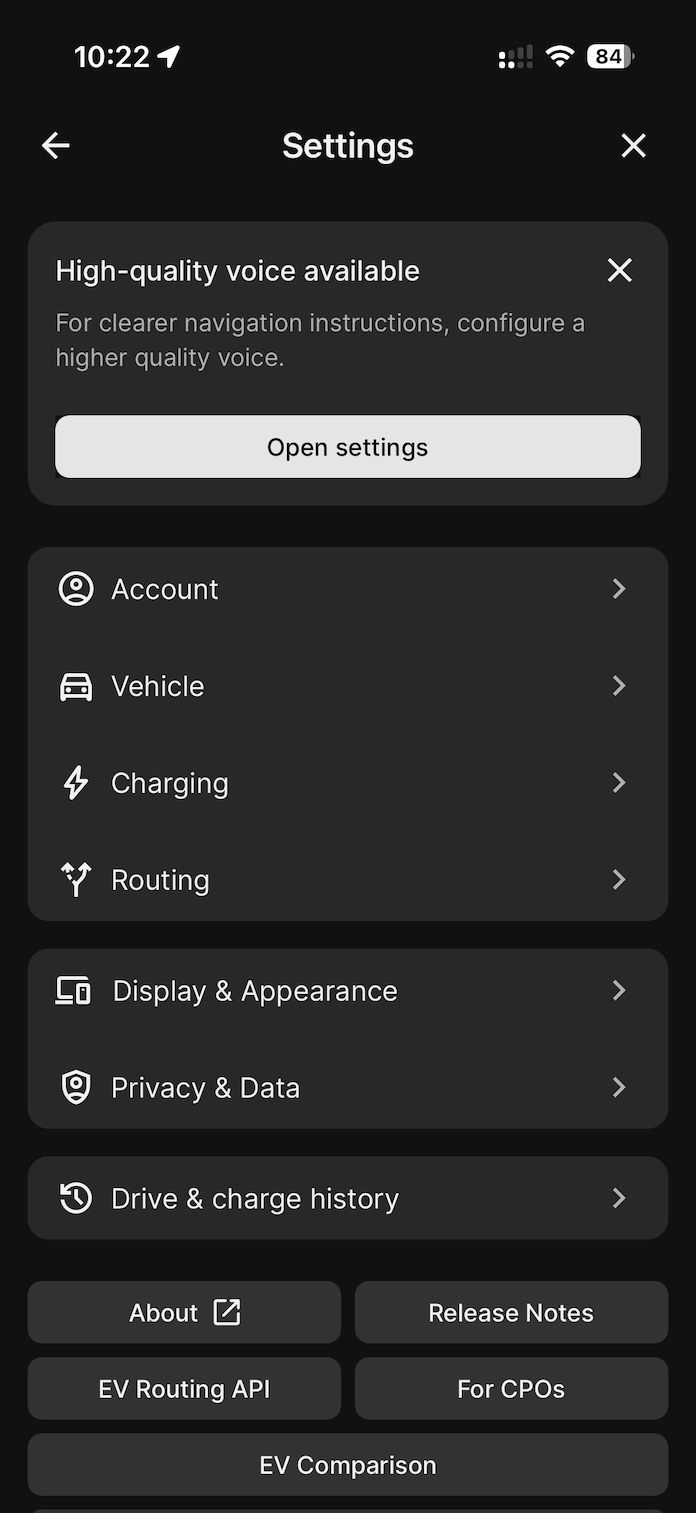
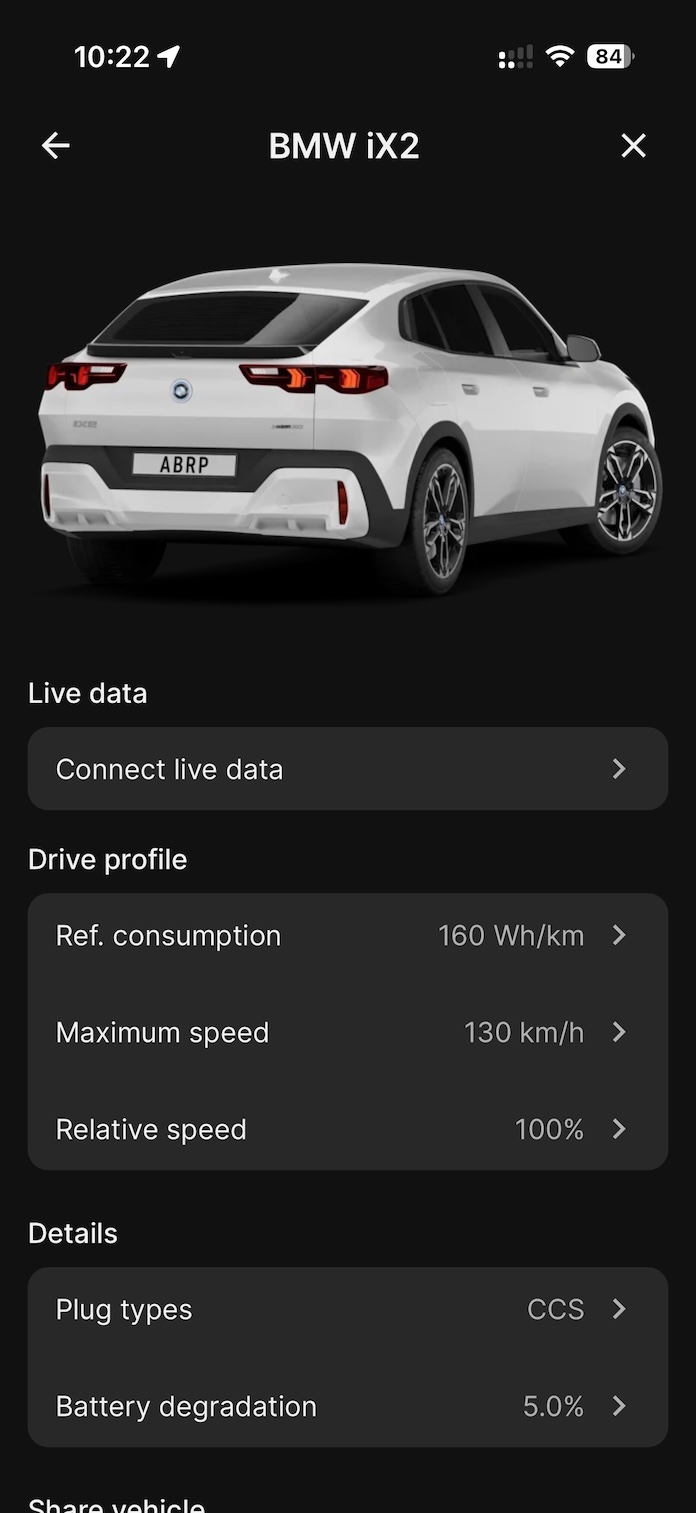
For EV route planning, I used the ABRP app, which also works in Ukraine. It offers a wide range of settings for the specific vehicle, personal preferences, and charging-related filters, as well as broader trip-planning options. The screenshots do not show the exact route I followed, but the app was extremely useful for solving charging logistics during the journey. I mention this to clarify why the article title refers to a 1,600 km trip, while the route shown in the screenshots may display a different distance.
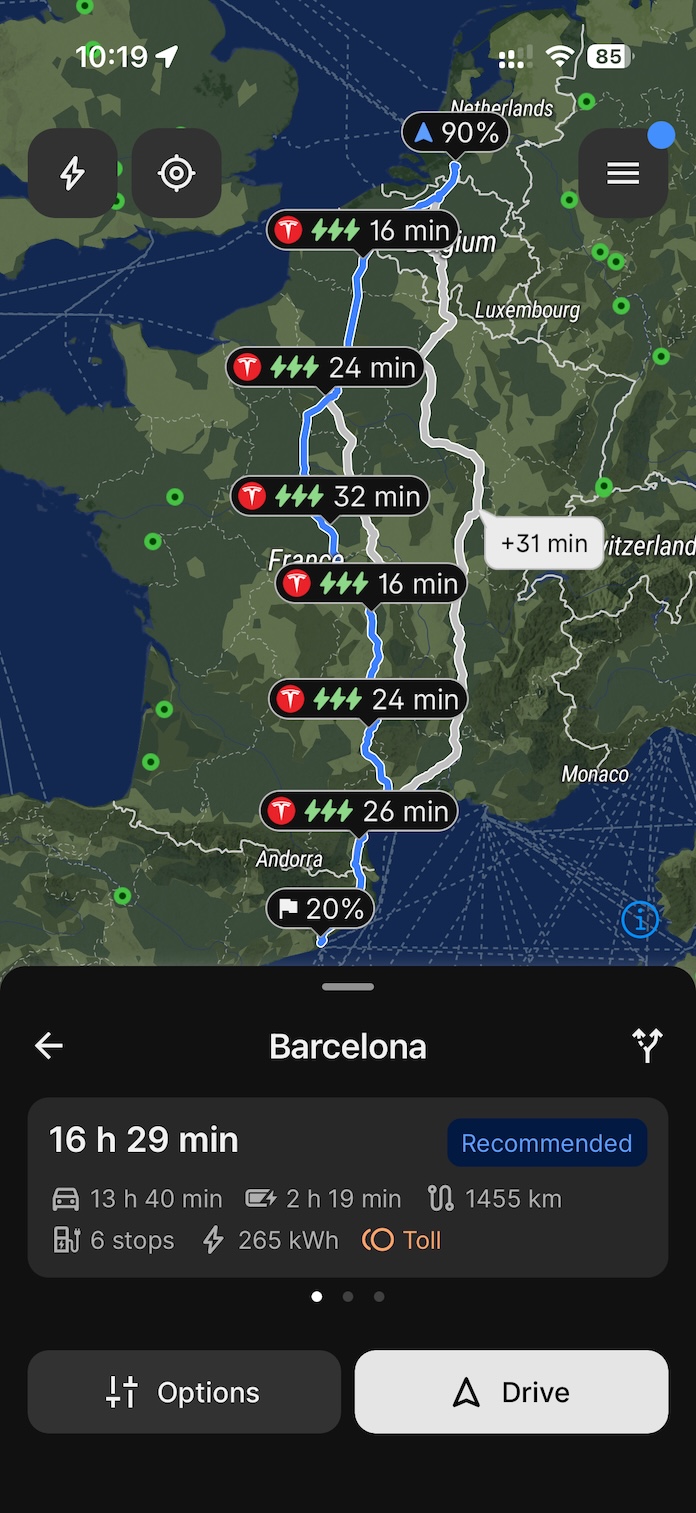
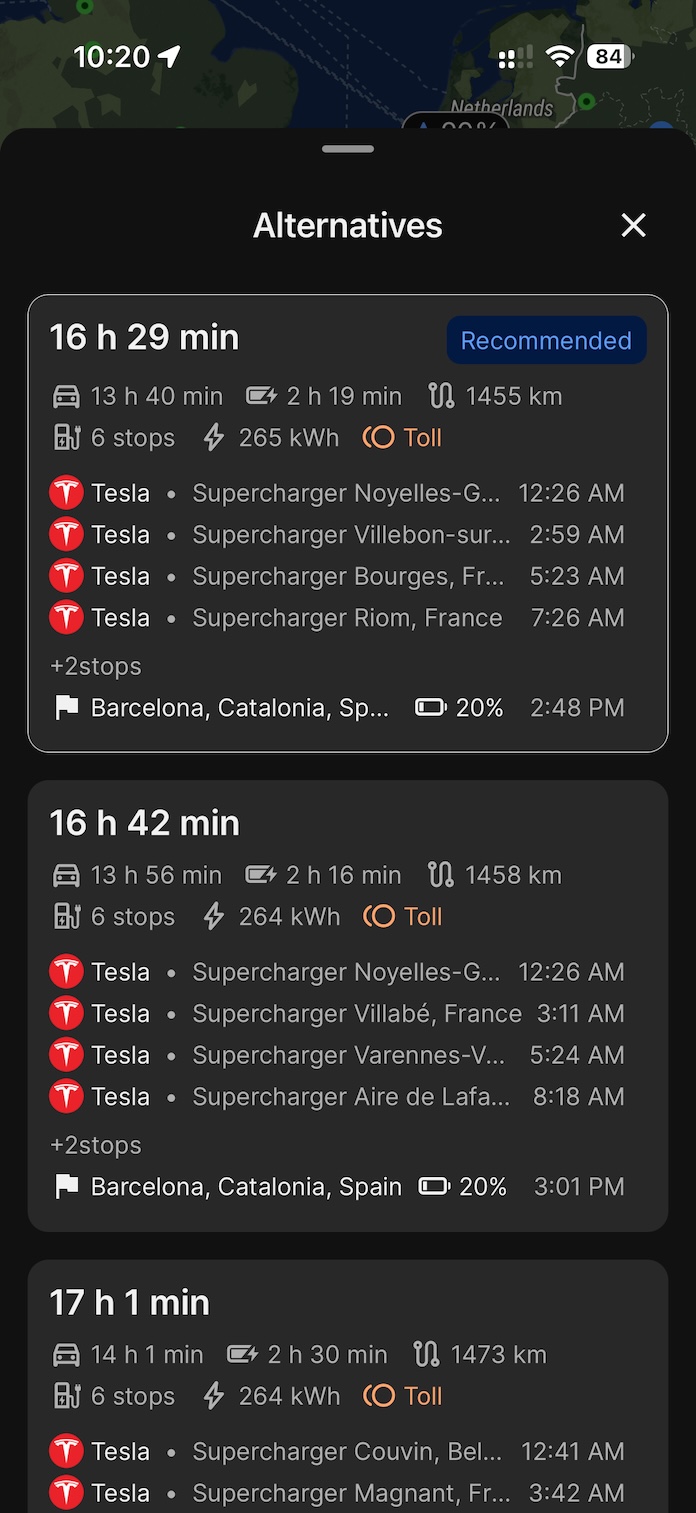
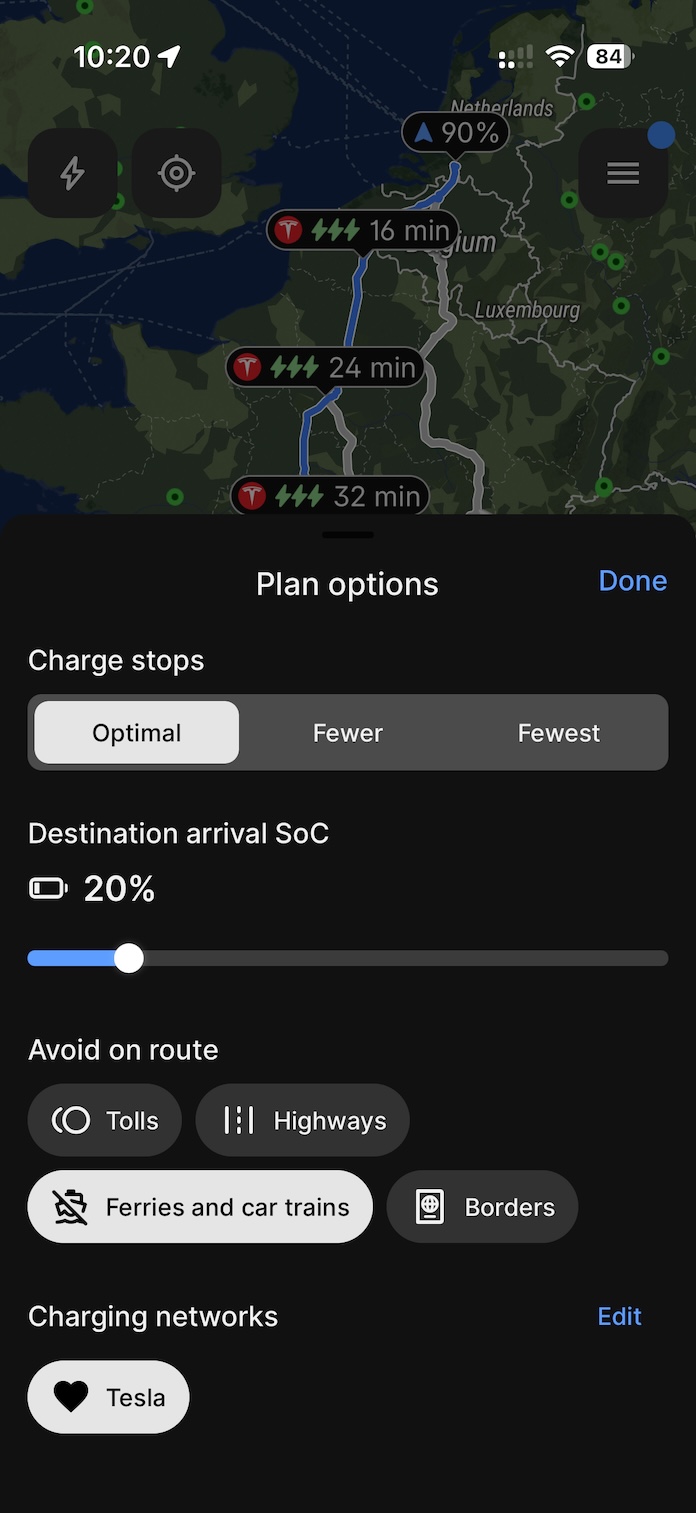
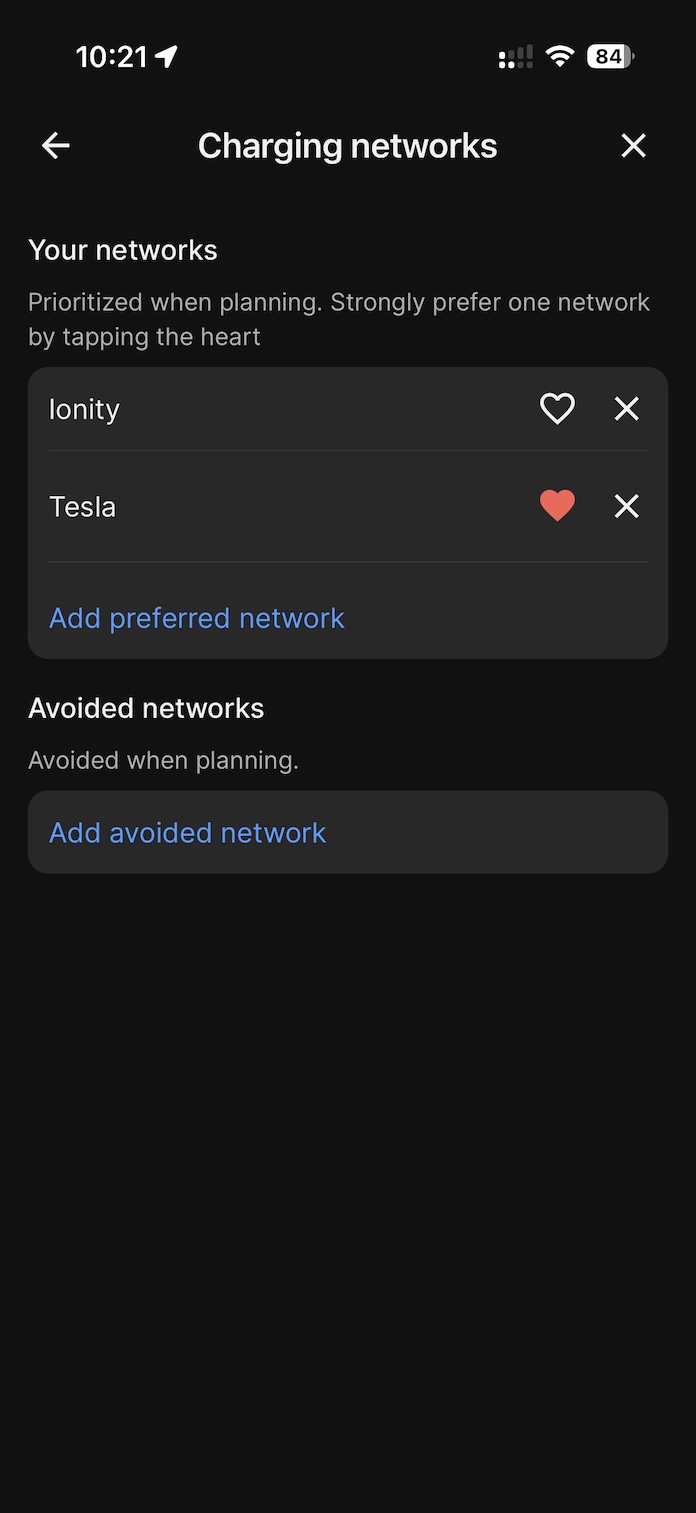
Further on, once I reached the open French highways, the journey settled into a typical motorway rhythm: a steady 110–120 km/h cruising speed. This is where the laws of physics become unavoidable. A charge to 91% indicated a projected range of 394 km, but after 200 km of pure motorway driving, the battery level had dropped to around 30–33% (roughly 120 km of remaining range).


On the first day, I drove to Paris and stayed at a hotel near Charles de Gaulle Airport. However, I did not take the BMW into the city center. Of course, I still saw the Eiffel Tower, but I reached it by taxi. And I cannot overstate how relieved I was that I did not attempt the drive myself. The traffic there is simply intense – extremely aggressive, chaotic, and with a very high risk of leaving the BMW with some unwanted marks. It was not quite as aggressive as the traffic I experienced in Almaty, Kazakhstan, but it did remind me somewhat of Kyiv’s traffic culture before the full-scale invasion.
Read also: Mitsubishi Eclipse Cross Review: True Japanese Car – Modern on Outside, Conservative on Inside


The following day, I drove from early morning until late evening, but due to frequent stops, I covered only about 800 km in 12 hours of travel.
However, France is captivating with its landscapes, and crossing the monumental Millau Viaduct in the south, soaring above the valley, was an absolute visual highlight. But that experience comes with a rather serious price tag. French toll roads charge in small increments: €5 here, €12 there, €20 somewhere else. While driving, each payment feels insignificant. But once you add everything up at the end of the journey, the total comes as a cold surprise: €100 spent solely on toll roads. Of course, there are alternative routes that avoid toll sections, but they make the logistics considerably more complicated – especially if you are visiting the country for the first time and doing the trip in an electric vehicle.
The third day began in Agde, France, which is located very close to the Spanish border. And it was precisely this border crossing that instantly disrupted the romantic atmosphere of the French coastline. The landscapes of Catalonia quickly gave way to more intimidating roadside billboards along the highway. Numerous warnings about dangerous areas, staged accidents, and the risk of thefts at parking areas or even on the road itself were a reminder to stay alert and keep all belongings securely locked during every stop. Fortunately, I reached Barcelona without any incidents, which was the best possible outcome.
Supercharger Numbers and Charging Economics
Throughout the entire journey, I charged exclusively at official Tesla Supercharger stations using the dedicated app.

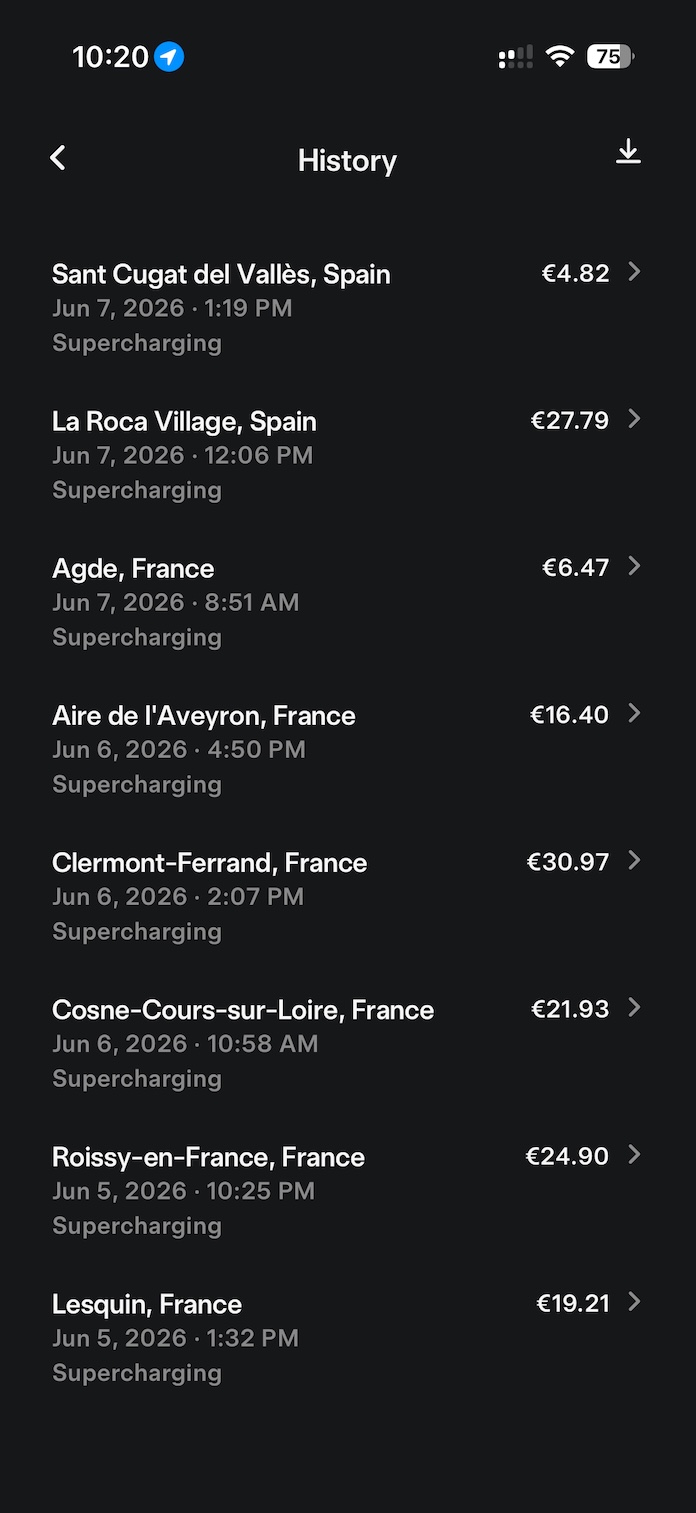
Thanks to the transaction history, it is now possible to calculate the charging costs for this journey down to the exact cent:
- Lesquin, France – €19.21 for 32.03 kWh (duration: 35 minutes)
- Roissy-en-France, France – €24.90 for 41.51 kWh (duration: 41 minutes)
- Cosne-Cours-sur-Loire, France – €21.93 for 48.74 kWh (duration: 43 minutes)
- Clermont-Ferrand, France – €30.97 for 49.17 kWh (duration: 41 minutes)
- Aire de l’Aveyron, France – €16.40 for 34.90 kWh (duration: 29 minutes)
- Agde, France – €6.47 for 27.00 kWh (duration: 35 minutes)
- La Roca Village, Spain – €27.79 for 53.46 kWh (duration: 41 minutes)
- Sant Cugat del Vallès, Spain – €4.82 for 9.10 kWh (duration: 17 minutes)
The total charging cost was €152.49 for eight charging sessions over approximately 1,600 km of travel. In total, I spent 4 hours and 42 minutes at charging stations during this three-day journey.
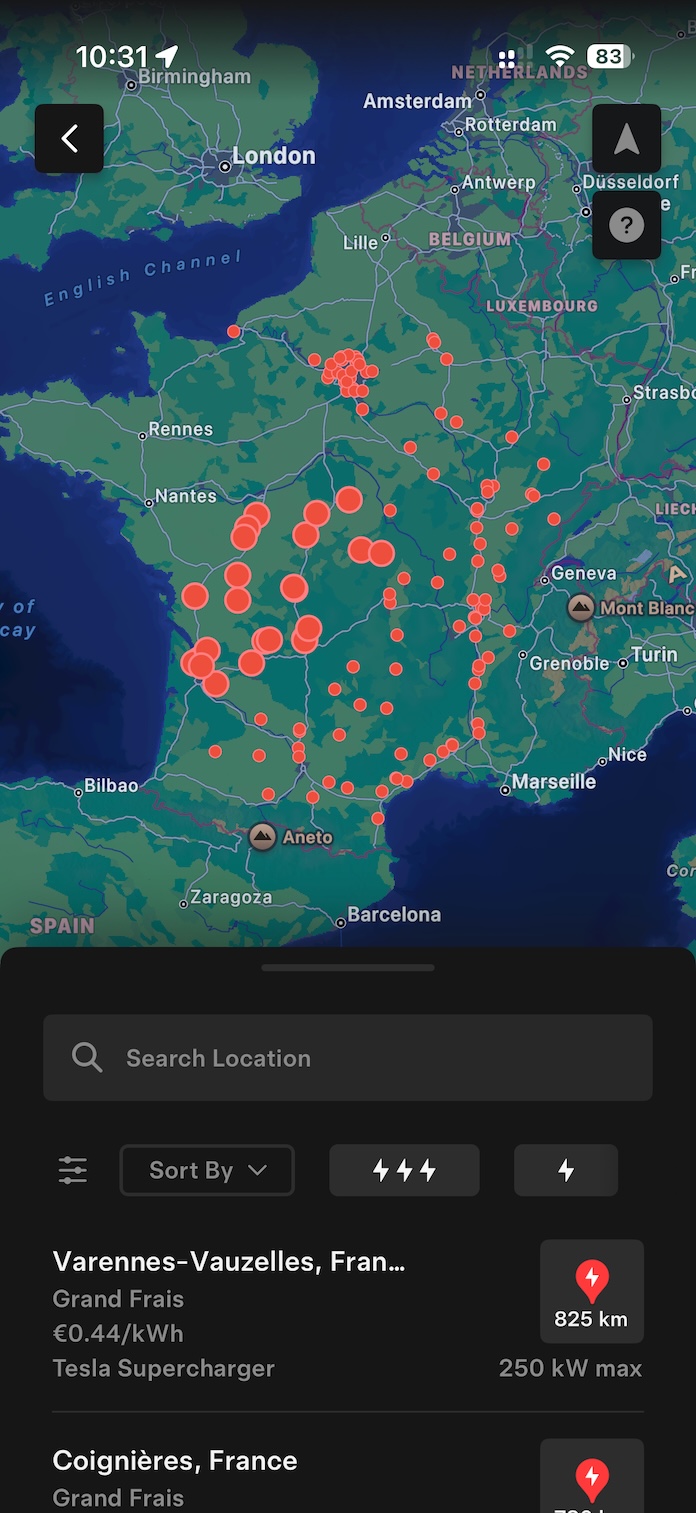
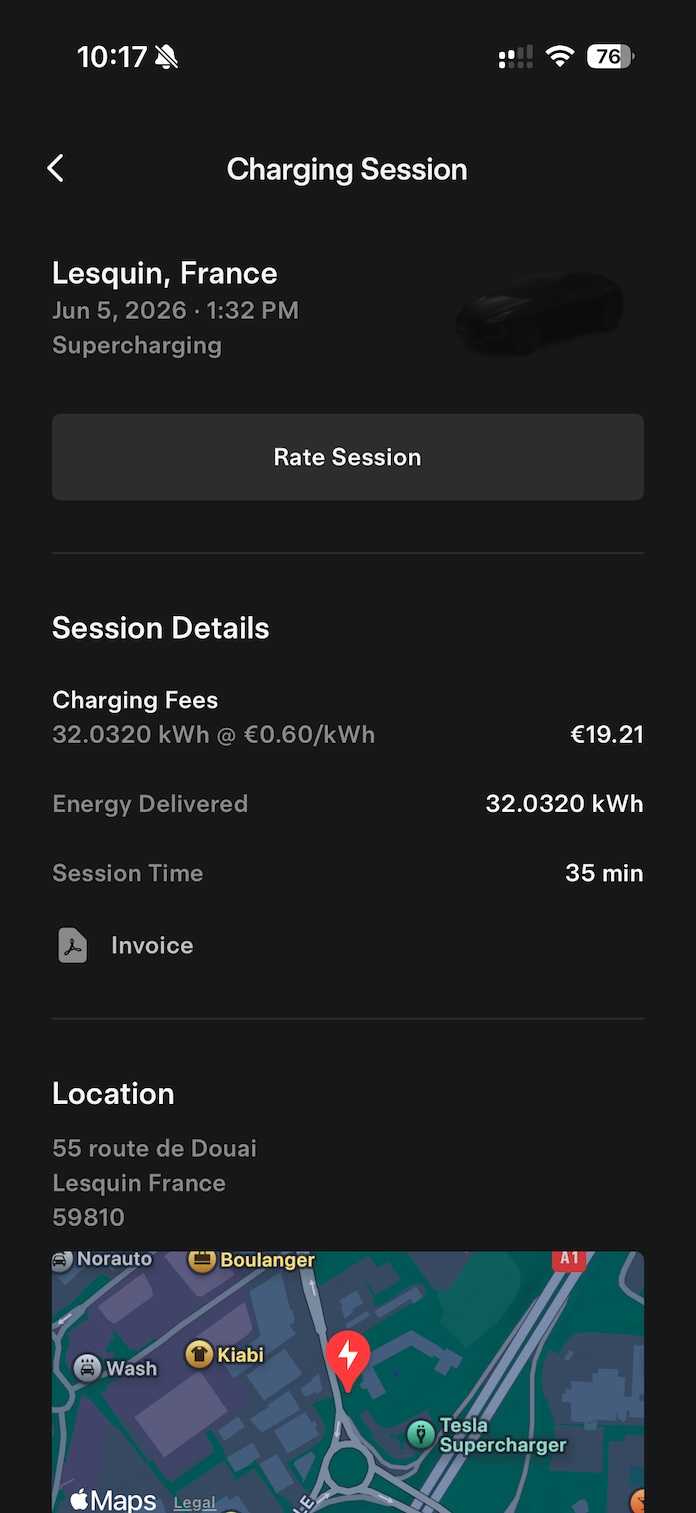
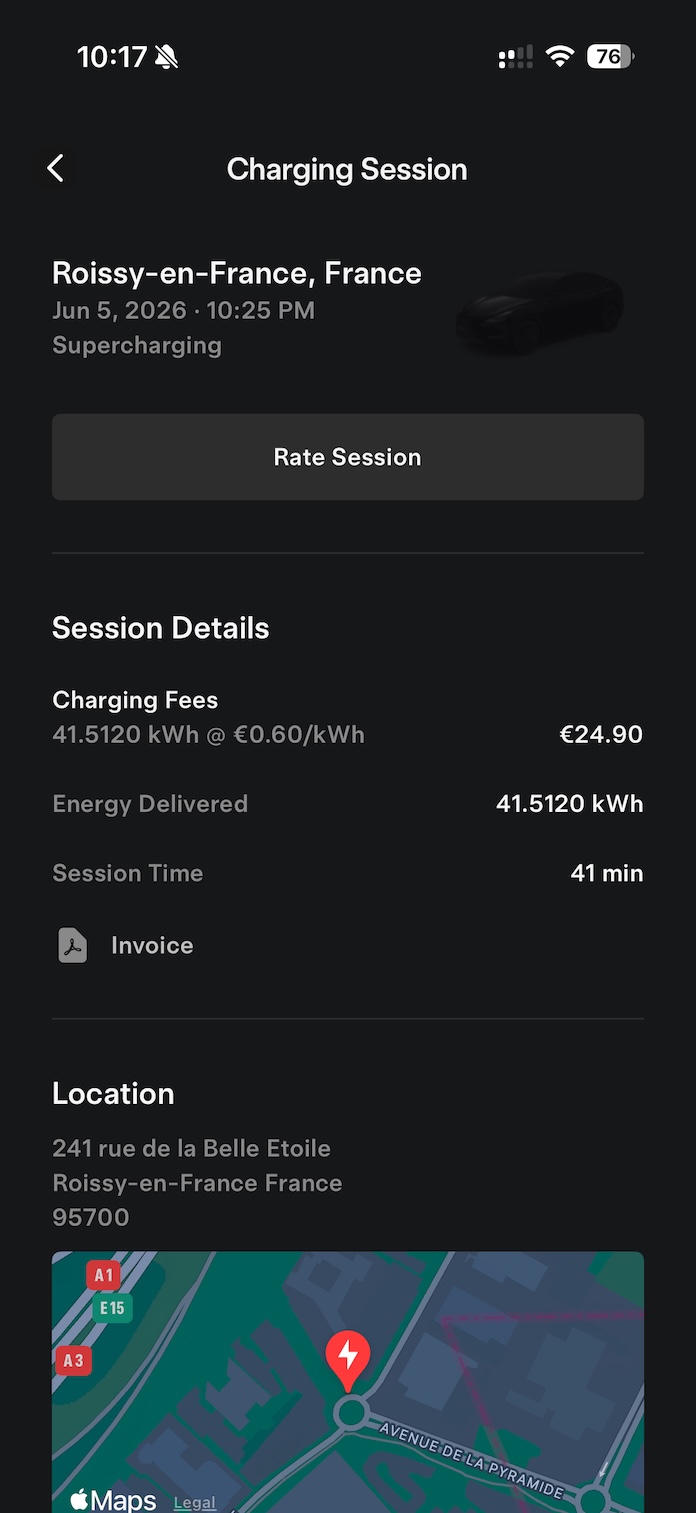
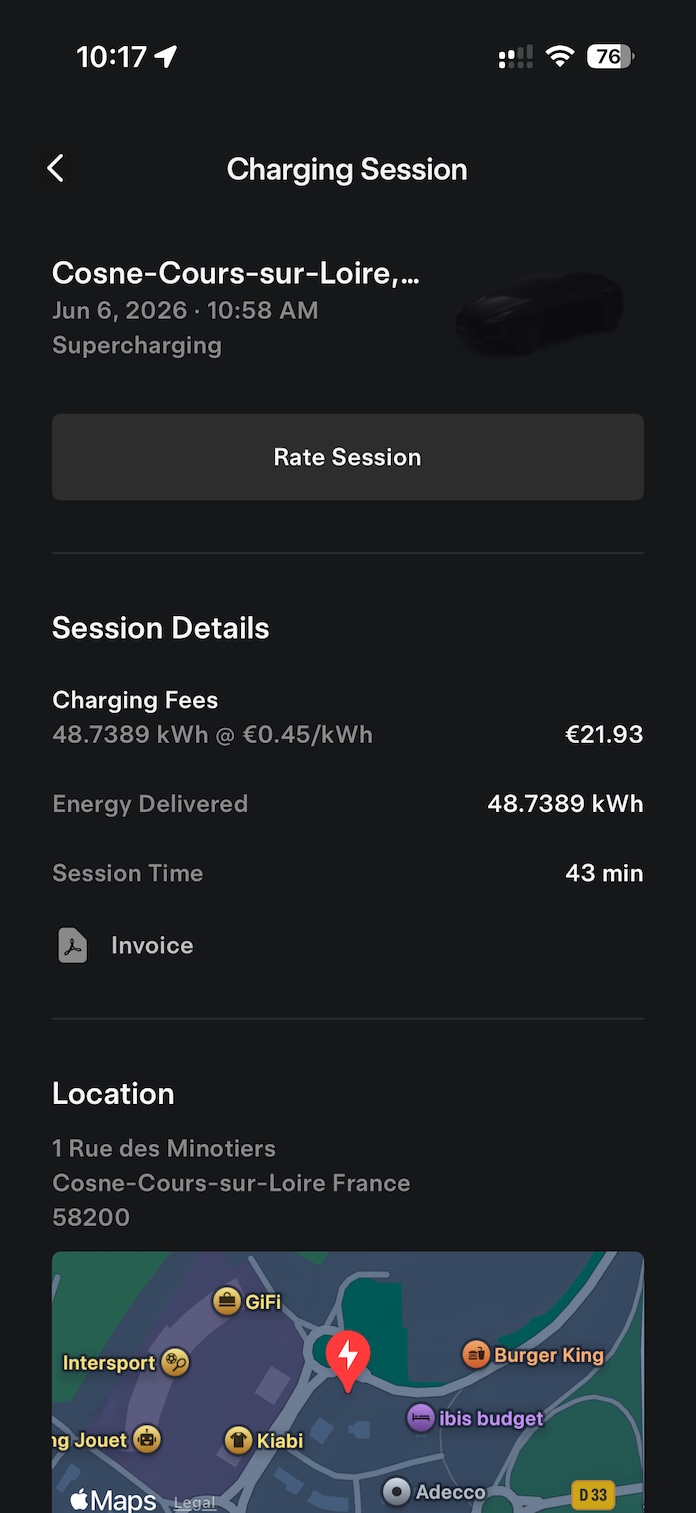
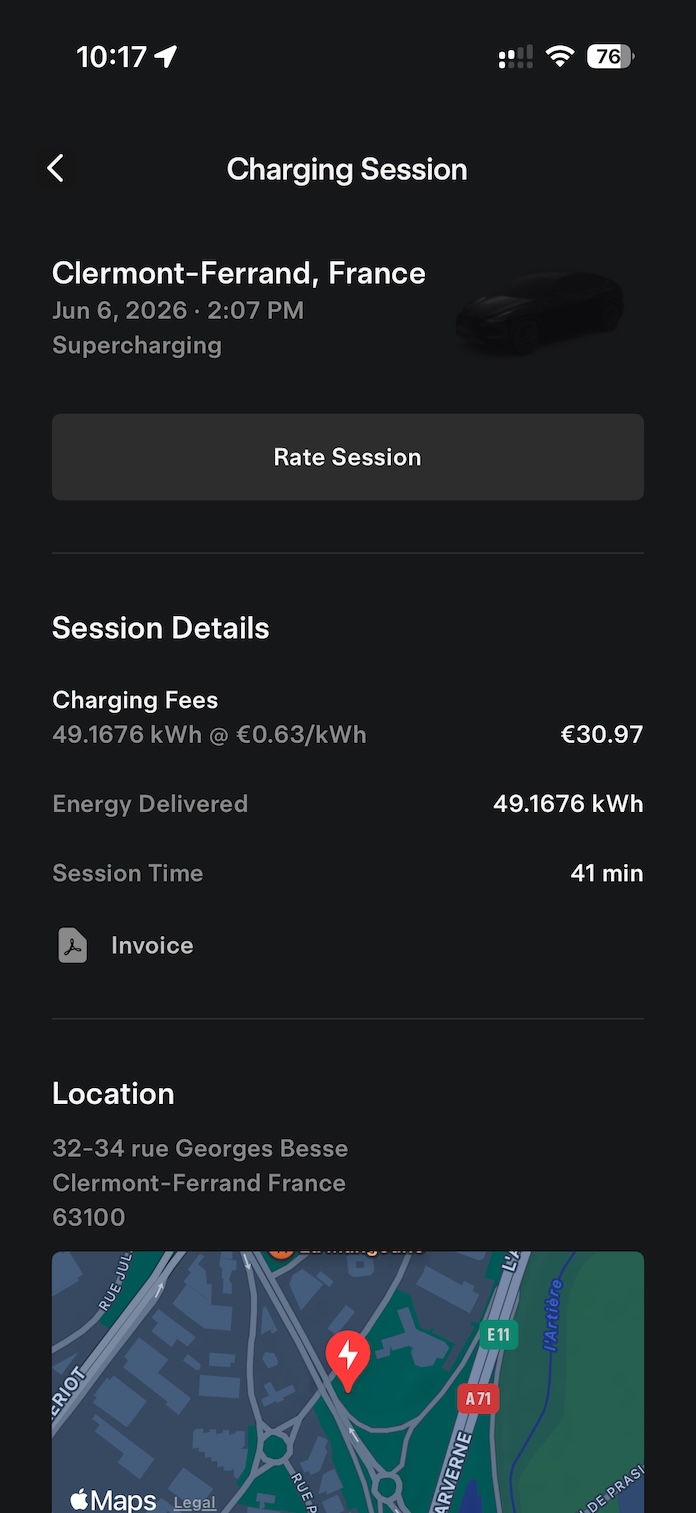
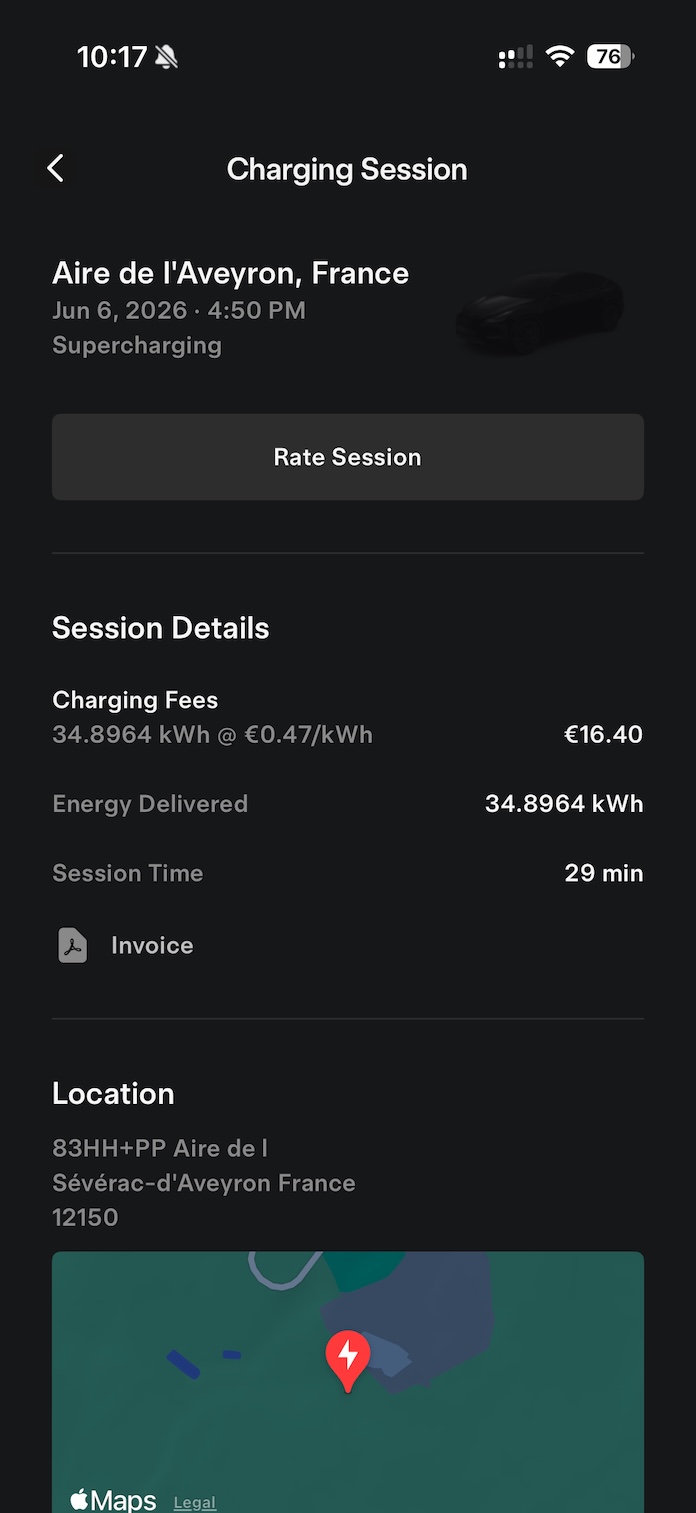
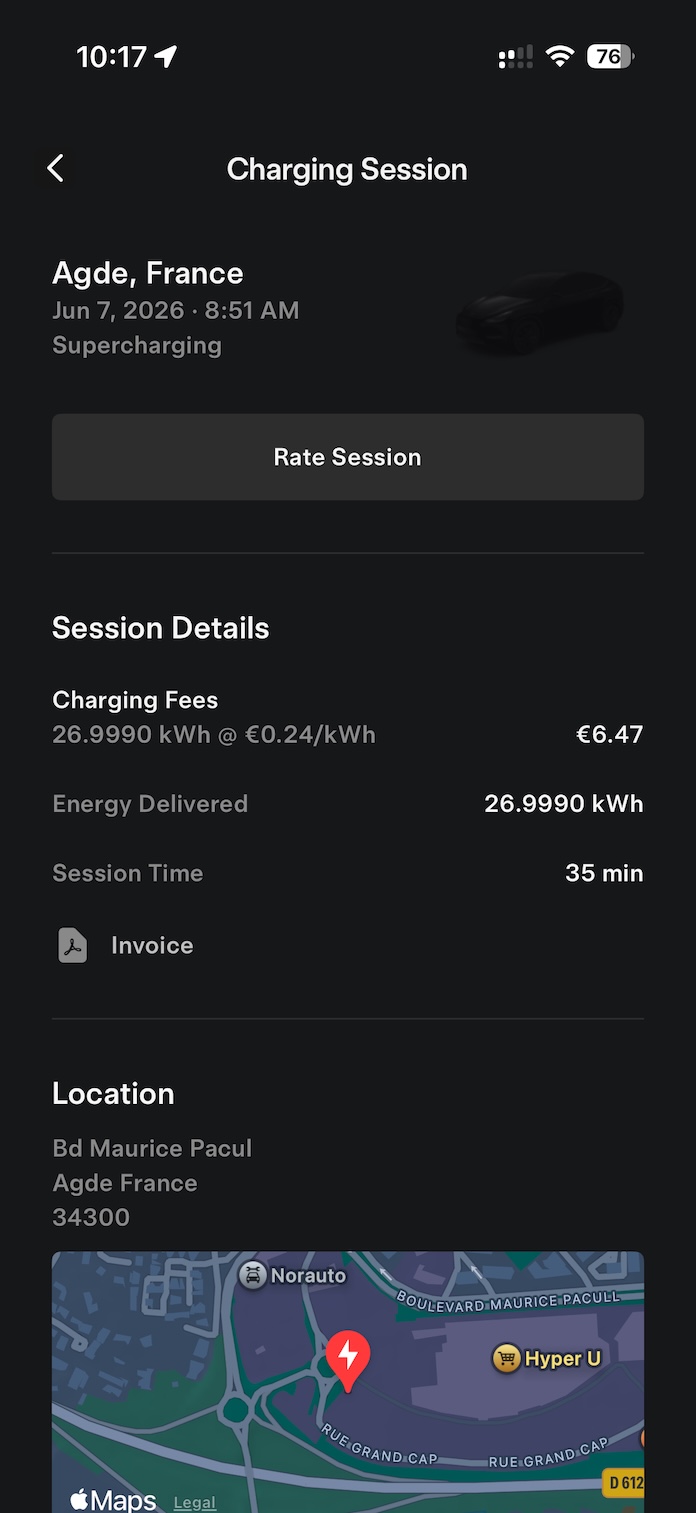
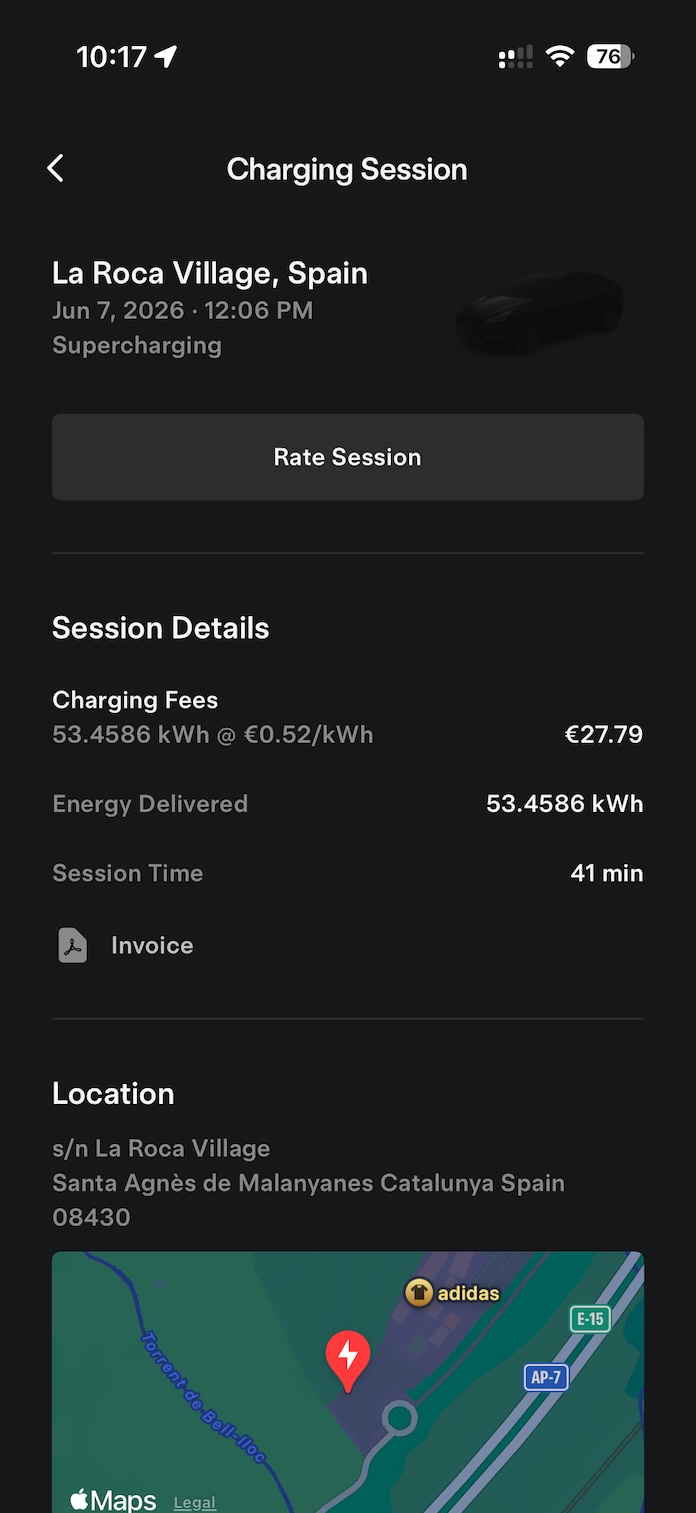
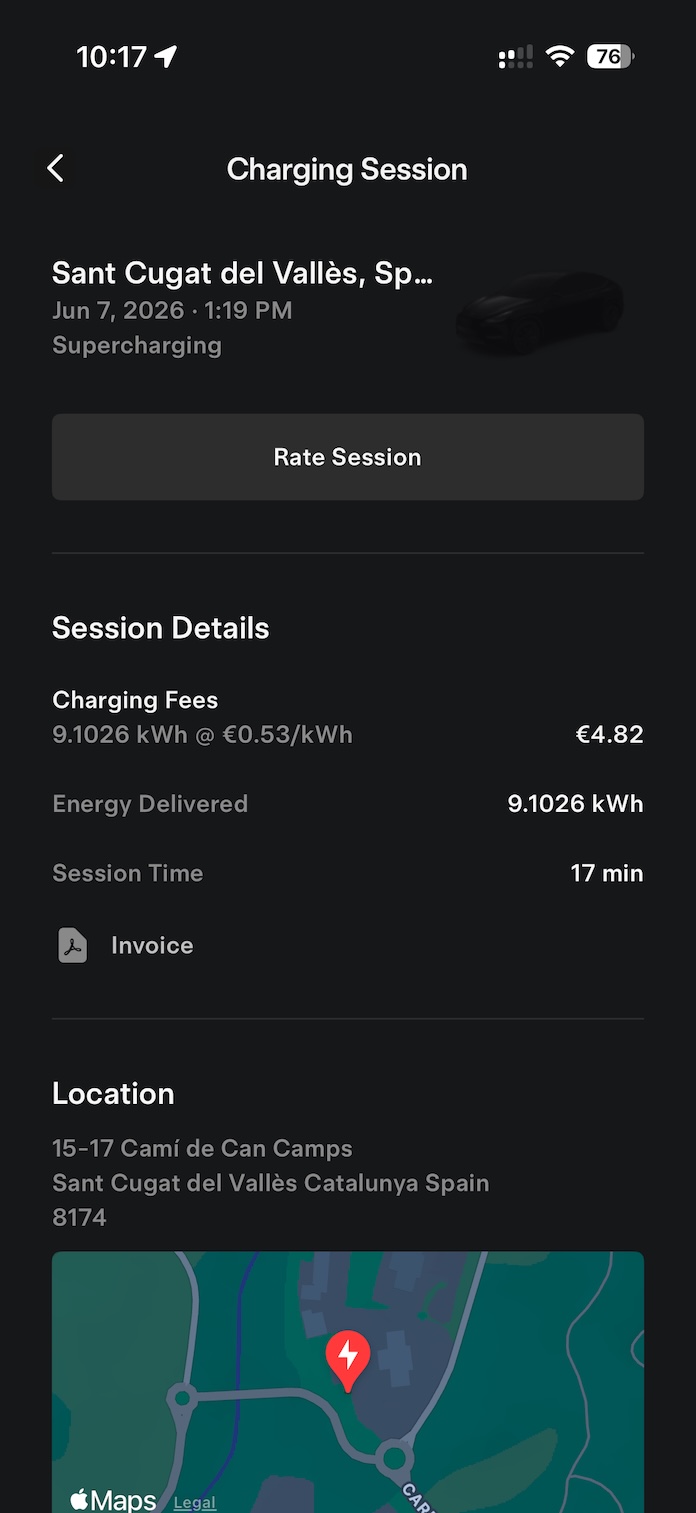
Could it have been cheaper? Absolutely. First of all, I charged randomly during daytime hours, while the Tesla Supercharger network offers clearly defined nighttime and morning tariffs that are significantly cheaper than peak daytime rates. This difference is especially noticeable in the short morning charging session in Agde, which cost only €6.47. For better clarity, I have also included a screenshot showing the tariff structure in more detail.

Secondly, third-party charging operators and BMW itself offer their own memberships and subscription plans (such as BMW Charging), which can provide significant discounts on the cost per kilowatt-hour in exchange for a monthly fee. For a one-time vehicle transfer, this did not make financial sense, but for regular EV ownership, such options are definitely worth considering. There are also many other charging networks available, but I decided not to experiment. During previous European trips with friends in electric vehicles, we encountered various issues: sometimes a charger would fail to connect, sometimes payment would not go through, or a station would show available spaces in the app even though the chargers were actually unavailable due to technical problems. This was not my first experience traveling by electric vehicle overall, but it was my first time doing such a journey behind the wheel – and I was traveling alone.
Read also: Mazda CX-60 Premium-Sport Review: Not Enough Premium, But Too Much Sport

The Main Timing Paradox of Fast Charging the iX2
The main time-related paradox of fast charging the iX2 is that the car can charge from 15% to 90% in roughly 30 minutes. However, to add the final 10% and reach a full charge, you need to spend almost the same amount of time again – the remaining 30 minutes. The charging curve drops dramatically after 90%. That said, it is worth noting that when using the built-in navigation system, the car can recognize that a charging stop is approaching and prepare the battery for fast charging in advance. This does not completely transform the charging experience, but it does help improve charging speed. In my case, however, I was using Apple CarPlay with navigation on my smartphone, so BMW’s battery preparation processes were triggered only after the fact rather than ahead of time.
When traveling alone, these 30-minute charging breaks become something like a private mobile office. I would simply open my laptop and work, grab a snack, or just enjoy the scenery. Meanwhile, life continued around me: at one charging station, neighboring EV drivers even organized a small tournament, playing tennis on the asphalt right next to the chargers. Still, solo travel in an electric vehicle feels somewhat unusual. It is a completely different experience when traveling with company. A week later, we drove a Tesla from Amsterdam to Le Mans as a group, and charging stops were much easier to accept – while one person went to the restroom, another bought coffee, and a third stretched their legs, the time simply passed unnoticed.


Electric Vehicle vs. Internal Combustion Engine: A Return to Reality
The BMW iX2 eDrive20 is a luxurious, well-balanced, and quiet vehicle that makes every kilometer enjoyable. My test mission successfully ended in Barcelona, where the car was handed over to its owner. However, this journey also provided a clear answer to my original question about switching to an electric vehicle.

The best proof of this came from my return journey. After the electric marathon, I got back behind the wheel of my familiar gasoline-powered Mini One and had to cover 700 km on a classic highway route – from Berlin to Amsterdam, and then the same distance in the opposite direction a few days later.
I left at 11:00 and, driving at a comfortable pace, was already parking near my home by 18:30. The entire trip took 7.5 hours. No searching for charging stations, no mandatory charging stops, and no overnight planning. Just one quick break for coffee and a snack, plus one strategic refueling stop in Germany at €1.90 per liter (to avoid the much higher Dutch prices of €2.30–2.40).
In reality, the Mini’s fuel tank capacity would have been enough to cover the entire distance without refueling at all, completing the journey in one uninterrupted run. After the light and effortless steering feel of the BMW, the Mini’s steering initially felt almost go-kart-like and noticeably heavier during the first 100 km. But the sheer convenience of continuous travel quickly outweighed everything else.
Conclusion
Today, electric vehicles are an ideal choice for urban driving, suburban commuting, and relaxed weekend trips with company. They offer a highly technological, comfortable, and refined driving experience. However, if your goal is to cover long distances as quickly and efficiently as possible, without additional planning or unnecessary complications – especially when traveling alone – the good old internal combustion engine still wins this particular contest by a wide margin. It saves not only money but, more importantly, your most valuable and irreversible resource: time.
Read also: First Impressions of the Volvo EX30 EV Electric Car: Safety and Space