




© ROOT-NATION.com - Use of content is permitted with a backlink.
The launch of ChatGPT has significantly reshaped the app market, sparking renewed discussions around the idea of a “superapp.” But is that really what’s happening?
After years of rapid innovation and unrelenting hype, the mobile app landscape is starting to show signs of fatigue. The initial excitement is fading, and what used to be a constant stream of flashy launches has slowed to a quiet, oversaturated lull. Recent data points to a continued global decline in app downloads – a trend that actually began back in 2023. For an industry that spent over a decade in near-constant growth mode, this marks the first real downturn in the mobile ecosystem.
When was the last time you opened the App Store or Google Play not out of habit, but genuinely hoping to discover something new? If you can’t remember, you’re not alone. The average smartphone user has around 80 apps installed, yet only uses about 9 on a daily basis. The rest are silent digital tenants – or ghosts, long forgotten.
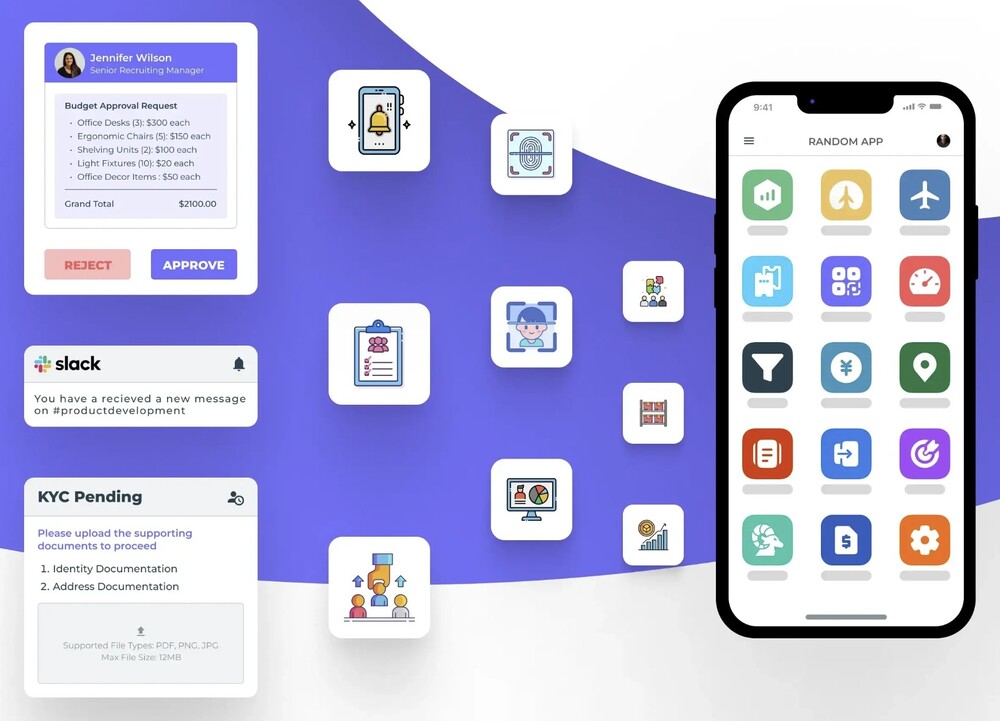
An even more sobering statistic: a quarter of all installed apps are never opened more than once. This isn’t digital transformation – it’s digital impulse shopping with a hangover. Downloaded, then forgotten. A burst of optimism that ends up as another layer of icons and growing on-screen clutter.
Users are becoming increasingly risk-averse when it comes to trying new apps. Instead of exploring fresh solutions, they stick to the familiar. The top 30 apps are still dominated by Facebook, Instagram, and WhatsApp – not because they offer anything particularly new, but because they’ve evolved into full-fledged ecosystems. These platforms have become digital staples – not flashy, but reliable and essential.
The mobile app market isn’t dead – but it’s clearly lost some of its momentum. And while it settles into this quieter phase, a new contender is emerging: a universal assistant that promises to replace dozens of individual tools. But that’s a story for another time.
Read also: Gabe Newell’s Starfish Neuroscience Сhallenges Neuralink
TABLE OF CONTENTS:
ChatGPT – the new Walkman of the digital age
The arrival of ChatGPT on the AI scene is, without exaggeration, comparable to the impact of the Walkman in the world of consumer tech. When Sony introduced its portable cassette player in 1979, it didn’t just release a new gadget – it redefined how people experienced music. In much the same way, ChatGPT didn’t just appear on our screens; it rewrote the rules for an entire industry, becoming more than a product – it became a cultural reference point.
Today, when people mention “AI chatbot,” what often comes to mind looks a lot like ChatGPT – even if they’re referring to tools like Gemini, Copilot, or Claude. The name has evolved into a kind of shorthand for a new era. Much like how “Adidas” once referred to any sneakers, or “Xerox” to any copy machine, ChatGPT has become a stand-in for the broader category of intelligent digital assistants.
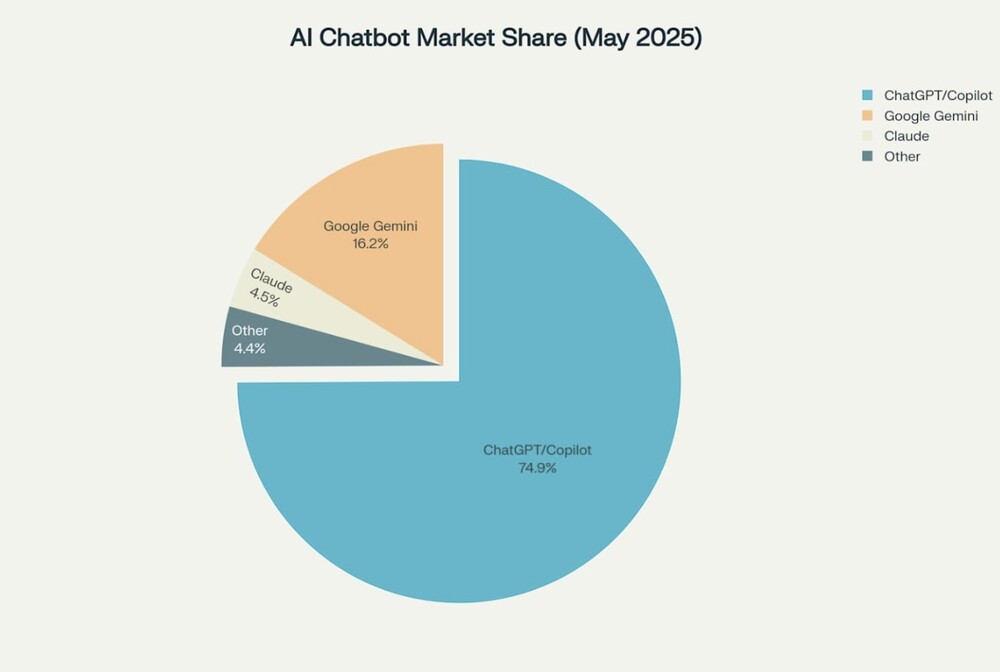
And this isn’t just a matter of perception – the numbers back it up. ChatGPT currently holds around 80% of the AI chatbot market, a commanding lead by any measure. By comparison, Perplexity – despite its rapid growth – has yet to reach even 12%. Google’s Gemini, backed by all the weight and resources of Mountain View, sits at a symbolic 2%. This isn’t a competitive race – it’s a digital monarchy. OpenAI is the reigning king, while the rest are still minor players, struggling to be heard.
At this point, we’re no longer just dealing with a piece of software or a technological trend – we’re witnessing the rise of a new mode of interaction, one that seamlessly aligns with how people think and communicate. Just as the Walkman taught the world to listen to music on the move, ChatGPT is teaching us how to think and operate alongside machines. And by the looks of it, this is only the beginning of the symphony.
Read also: When AI Nudges Toward Death: The Illusion of a Safe ChatGPT
A super app, or when one app replaces dozens
The growth of ChatGPT has been nothing short of rapid. Reaching 521 million users in under two years is more than just a milestone – it’s a leap that would rival even giants like Instagram or TikTok at their peak. And the expansion shows no signs of slowing down. OpenAI has openly stated its goal of reaching one billion users by the end of this year. Ambitious? Certainly. But given that the product functions like a digital Swiss Army knife, it’s within the realm of possibility.
It’s not just about the number of users registered – it’s about how many functional roles this tool has already taken from traditional apps. ChatGPT isn’t just competing; it’s gradually absorbing entire segments. It’s used for writing, reducing the need for numerous content generators. It analyzes code, cutting into the demand for standalone IDEs and debuggers. Its translation capabilities challenge established tools like Google Translate, while its online research features serve as a clear signal to browsers and search engines: “Your days are numbered.”
What we’re seeing isn’t just a passing trend – it’s a fundamental reshaping of the digital landscape, a return to the concept of a universal app that covers everything. This idea isn’t new. In China, WeChat has long evolved from a simple messenger into a digital hub for everyday life, combining payments, bookings, taxi orders, and social networking all in one platform. Alipay follows a similar path, supporting over 120,000 mini-programs within its ecosystem.
ChatGPT is following a similar path – but on a global scale, not just a local one. Unlike WeChat, which expanded mostly horizontally by adding more services, GPT is moving vertically as well – delving deeper into complexity, personalization, and creativity. It’s not just about combining apps; it’s about redefining the interface itself: interacting not with separate programs, but with an intelligent entity that handles everything for you at once.
So maybe we’re already living in a world where you don’t need 20 different apps – just one. And it doesn’t require manual updates – it evolves, grows, and adapts on its own. For traditional apps, all that remains is to watch as their relevance fades away, like the light disappearing from an old film camera.
Read also: ERNIE Bot: What’s Behind China’s AI Success
Revolution or evolution?
ChatGPT goes even further than Asian superapps. While WeChat and Alipay act as platforms that bundle various services into a single interface, ChatGPT functions as a powerful engine capable of simulating, absorbing, and unifying entire categories of applications. Whereas Chinese superapps collect mini-programs like beads on a string, GPT simply becomes each of them – without the need to switch apps, download anything, or navigate through graphical interfaces. You just speak, and you get the result.
Need to check the weather? No need to open Weather.com – just ask. Need to do some calculations? Instead of pulling up a calculator, one sentence is enough for GPT to handle everything from taxes to trigonometry. Want to learn a new language? No need to install Duolingo – just start speaking Spanish, and ChatGPT will keep the conversation going, correct you, and offer tips. Planning a trip? Instead of juggling multiple tabs with Booking, Google Maps, and Tripadvisor, one request delivers your itinerary, hotels, advice, and even a packing list if you ask.
OpenAI seems to have a clear understanding of where things are headed. A recent update to ChatGPT on Android allows users to set it as their default voice assistant, replacing Google Assistant or Bixby. This isn’t just a minor upgrade – it’s a direct challenge to the core of the Android ecosystem and potentially a new gateway into a user’s entire digital life.
Looking ahead, this suggests one thing: the less users interact with dozens of individual apps, the more they’ll turn to ChatGPT as a single interface. There’s no need to know which app to open – just express the need.
Here lies the central question: if artificial intelligence can handle most daily tasks more efficiently, faster, and without app switching – why use apps at all? Could GPT become the first true “anti-app,” fundamentally changing how we use mobile devices?
The question is no longer if it can happen, but when.
Read also: Civilization at Risk: Donald Trump’s Policies Are Undermining the Scientific World
Are we facing a future without apps?
Does this mean the end of mobile apps as we know them? Maybe not the final act yet, but definitely the start of the last chapter. What we’re witnessing isn’t just an evolution – it’s a fundamental transformation reshaping the very nature of digital interaction. Apps that want to survive will need to offer something artificial intelligence can’t replicate – at least for now.
The mobile gaming world will likely remain relatively stable for now. Interactivity, graphics, complex scenarios, and the need for specialized interfaces will continue to lie beyond what a neural network conversation can handle anytime soon. Similarly, apps that work directly with hardware – like cameras, sensors, or augmented reality – will persist. But anything focused on text processing, data handling, or communication is entering a turbulent phase.
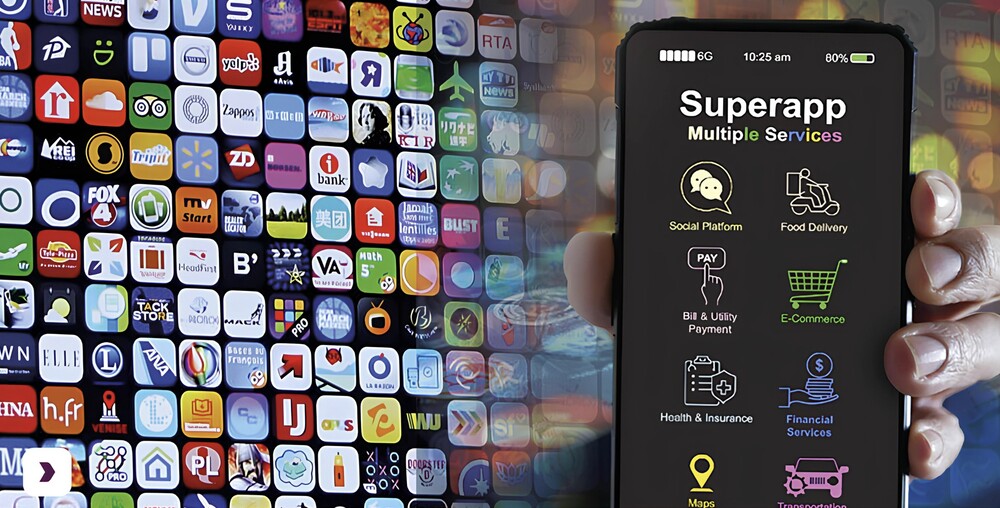
The irony is that after decades of chasing ever more specialized apps, we’re essentially returning to a universal tool. Only this time, it’s neither a browser nor an operating system. It’s artificial intelligence – not just combining functions, but adapting to the user’s specific needs in real time. From design tools to consultants, from note-taking to navigation – all merging into a single dynamic interface where the focus shifts from the app itself to the conversation.
So no, mobile apps won’t disappear tomorrow. But their dominance is coming to an end. Ahead lies a world where we don’t download apps – we express intentions. And it’s no longer us adapting to the interface; the interface adapts to us.
This transformation doesn’t just change the rules of the game – it undermines the very architecture of the mobile ecosystem. For developers who have spent years building their businesses around specialized tools – time trackers, calculators, planners, dictionaries – the moment of truth has arrived. The old model, which seemed stable for a long time – “do one thing well and monetize it” – no longer holds up in an environment where a single universal interface can imitate (or even outperform) entire categories of apps.
For a long time, the App Store and Google Play acted like bustling digital marketplaces with an endless flow of customers. Now, they increasingly resemble supermarkets in a slowly dying town. The decline in new downloads isn’t just a statistic – it’s a clear signal that users are tired of choice and novelty for its own sake. They don’t need 15 different apps; they want results.
Yet, there’s a paradox: spending in the mobile segment keeps rising. Last year, global mobile spending surpassed \$127 billion – up 15.7% from the previous year. This doesn’t indicate market growth so much as a reshuffling of priorities. People are paying more – but only for what they actually use. The number of transactions has dropped, but the average spend per transaction has increased. The fragmented mobile app economy is moving into a phase of consolidation.
This creates a new dynamic: the winners won’t be those offering yet another app, but those integrated seamlessly into users’ daily habits – becoming invisible yet indispensable.
On the horizon is a new kind of platform – not a marketplace, but a neural cloud of services, where apps aren’t separate entities but temporary masks worn by a universal interface. In this world, you don’t download an app – you talk to it. And you choose it not by its icon, but by how well it understands you.
Read also: Online Safety: How to Protect Your Data – Even When You Let Your Guard Down
Is this the beginning of the end or the end of the beginning?
The history of technology is a record of rises and falls, where each major innovation not only opens new horizons but eventually leaves behind digital ruins. Smartphones buried MP3 players, GPS navigators, and compact cameras – but at the same time, they sparked an entire ecosystem of new products, services, and business models. Now, we’re witnessing a similar shift – but this time, it’s the interface itself undergoing transformation.
The rise of ChatGPT and related AI technologies could lead not just to change, but to a radical consolidation of the digital space. Thousands of apps – from note-taking tools to travel assistants – might disappear or become invisible features within a handful of universal platforms. For users, this will likely feel like relief rather than loss. Instead of frantically switching between icons, we’ll simply speak to our phones: “Book a hotel,” “Explain this term,” “Remind me every day at 9 AM” – and it will just work.
Simplification for some presents a challenge for others. For developers, this is a moment to rethink their purpose. Creating another timer, dictionary, or calculator no longer makes sense – GPT can do these better, faster, and without downloads. The question is: what can you offer users that artificial intelligence can’t?
The answer may lie not in utility, but in emotions, creativity, experience, and play – areas that remain beyond predictable AI capabilities for now. AI has already won the battle of functionality, but there’s still room for unique experiences. At least, for the time being.
Read also: AI Hallucinations: What They Are and Why They Matter
What will the world be like without apps?
Looking at how rapidly the mobile technology landscape is shifting, it’s hard not to feel that we’re witnessing more than just a new trend – it’s the end of an era. The app age that began with the launch of the first iPhone in 2007, turning smartphones into pocket-sized universes, could be coming to a close – and sooner than many expected.
But is this necessarily a disaster? Unlikely. It might simply be a natural end to a cycle. After more than a decade of digital fragmentation – where every minor function required its own icon, update, and permissions – we seem to be returning to the idea of simplicity as strength. ChatGPT and other AI systems offer an alternative where the key element isn’t a button, but a conversation. Not a collection of apps, but a single adaptive interface that listens, understands, and acts.
Instead of searching through dozens of installed apps, you simply express your need. This brings us back to a more intuitive way of interacting with technology, where the key resource isn’t the app itself, but the context.
Are we ready for that future? The question remains open. We’ve grown used to freedom of choice – even if that often resulted in digital clutter. A world where all functions are combined into one intelligent app promises convenience and speed, but it also raises new questions: about control, trust, and the limits of automation.
One thing is certain: we’ll have answers to these questions long before we update the next “classic” app. The pace of change in this space is so fast that even those of us seasoned in technological optimism can’t help but think, “Is it really happening already?”
Read also:
- Techno-feudalism – A New Form of World Order
- Panama Canal: History of Its Construction and Basis of U.S. Claims

