




© ROOT-NATION.com - Use of content is permitted with a backlink.
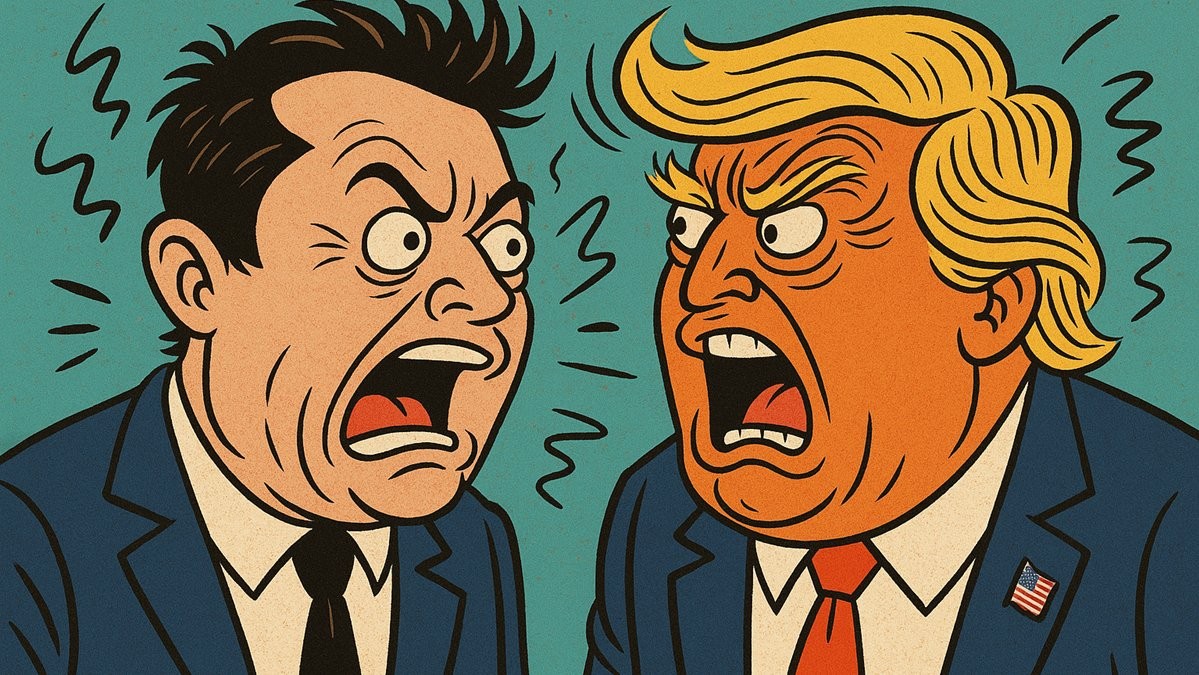
Elon Musk and Donald Trump – today, we’ll take a closer look at the roots of their fallout. What happened? Why did these “friends” suddenly turn into adversaries? What was once expected to be a long-term alliance has quickly unraveled. Donald Trump, freshly re-elected as President of the United States, and Elon Musk, the world’s richest man – two dominant figures of the era, both with strong egos – had seemingly found common ground. Just a week ago, they stood side by side in the Oval Office, trading insincere compliments in front of the cameras. Their smiles projected confidence; their glances hinted at a quiet understanding.
Today, the two are locked in an all-out public feud on social media. Accusations of corruption are flying in both directions, cutting through the platform X like bullets. Trump is hinting at the cancellation of multibillion-dollar government contracts with SpaceX, while Musk is calling for impeachment over what he describes as a betrayal of democratic principles. This isn’t just a disagreement – it’s the public dismantling of an alliance.
Watching this rift unfold feels like witnessing a high-speed Bugatti crash in slow motion: violent, chaotic, tragic – and yet impossible to look away from. Within just a few hours on June 5, 2025, one of the most high-profile and unconventional partnerships in modern American politics completely imploded. Now one question hangs in the air: how did it all fall apart so loudly – and so fast?
Read also: Civilization at Risk: Donald Trump’s Policies Are Undermining the Scientific World
TABLE OF CONTENTS:
Fuse: The bill that was supposed to change everything
It all started with the “One Big Beautiful Bill Act” – a name that sounds almost poetic for a bureaucratic behemoth spanning 1,137 pages. Trump has called it the “cornerstone of the Second Great American Renaissance.” There’s something vaguely biblical in that framing – except instead of commandments, the bill delivers tax breaks on tips and overtime, along with another round of “working class” relief aimed at those pulling in eight-figure incomes.
Also buried in the legislation: $350 billion earmarked for “iron borders,” razor wire, and an expanded fleet of deportation charters.
On paper, it read like an epic. In reality, it was a ticking time bomb. The Congressional Budget Office – still inconveniently independent – quickly spoiled the celebration. According to its estimates, the bill would increase the federal deficit by \$2.4 trillion over the next decade.
That, it seems, is the price tag for Trump’s version of “beautiful.”
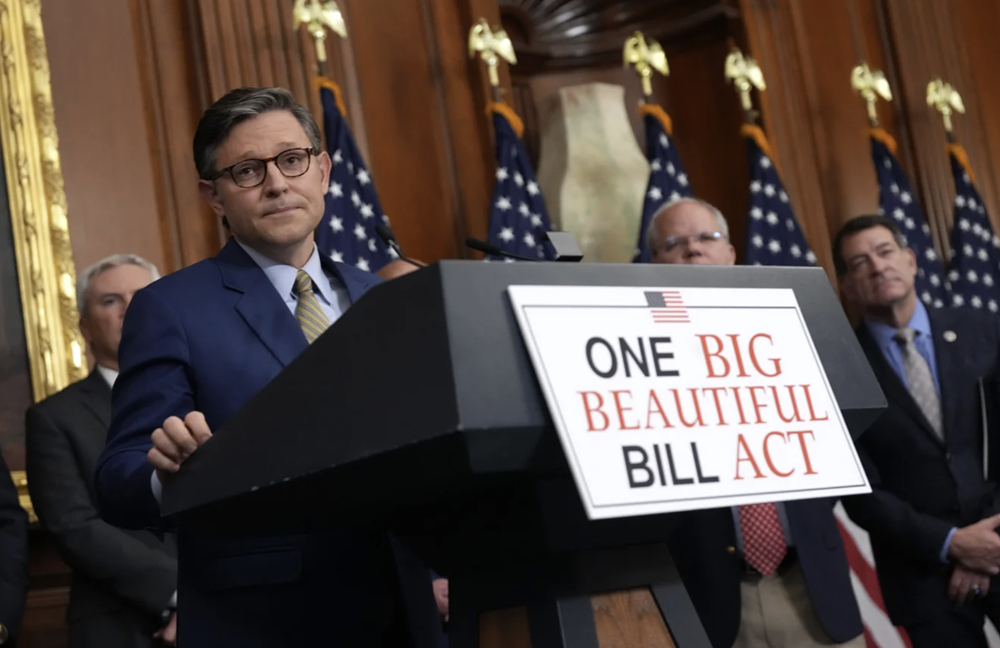
That was the final straw for Elon Musk – a self-styled champion of “fiscal responsibility” and relentless critic of government waste. On June 3, he’d had enough of what he called political theater.
“Sorry, but I just can’t take this anymore,” he posted on X, with the flair of an HBO protagonist. “This bloated, outrageous, pork-stuffed bill is a disgusting disgrace.” For dramatic effect, he added: “Shame on those who voted for it. You know what you did. And yes, we kept receipts.”
This wasn’t just a tweet – it was a shot fired at the heart of what had looked like a perfectly aligned partnership. And from that moment on, things didn’t just spiral – they plunged straight into a live broadcast of political chaos.
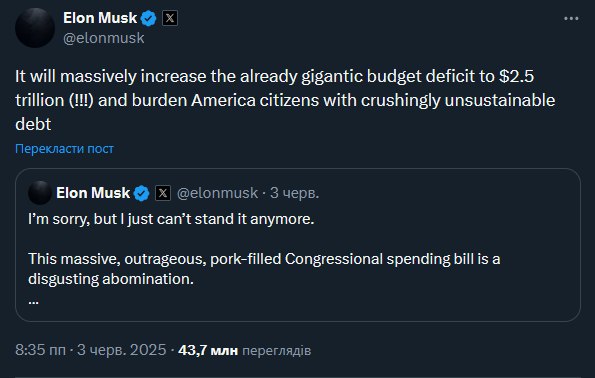
For someone who had spent the past few months calling for deep federal spending cuts, the bill likely felt like a slap in the face. Musk claimed it would “significantly inflate an already massive budget deficit to $2.5 trillion (!!!),” saddling the American public with what he described as a “crushing and unsustainable debt burden.”
Read also: AI Hallucinations: What They Are and Why They Matter
Trump counterattacks
For several days, Donald Trump remained silent – diplomatic, but clearly strained. While his former “top ally” publicly dismantled the administration’s flagship initiative, the president held back. But on June 5, as German Chancellor Friedrich Merz arrived at the White House, the silence broke.
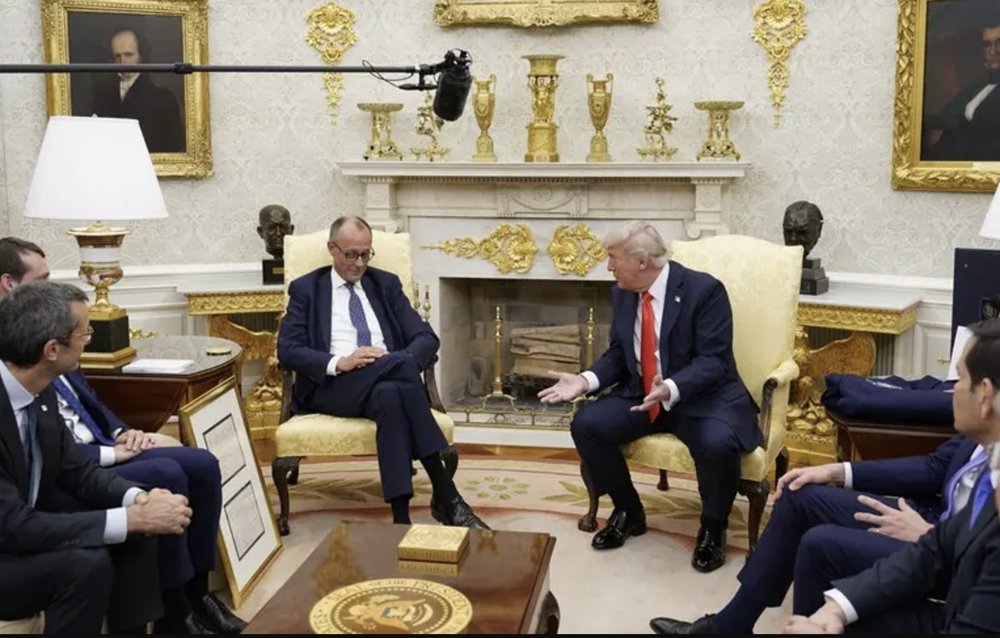
“I’m very disappointed,” Trump told reporters in the Oval Office, glancing toward his German guest. “Elon knew all the details of this project. I helped him a lot. And so, I am very, very disappointed in Elon.”
Then came the words that left no room for ambiguity:
“Look, Elon and I had a great relationship. Had. I don’t know if that continues.”
The president’s disappointment quickly turned into accusations. According to Trump, Musk only started criticizing the bill after realizing that the new rules would eliminate subsidies for electric vehicles – directly impacting Tesla’s business.
“He had no issues with the bill. Then suddenly – there was a problem. And that problem appeared right after he found out the subsidies were gone,” Trump emphasized. “This isn’t about politics. It’s about money. His money.”
Read also: Techno-feudalism – A New Form of World Order
Digital warfare on two fronts
As Trump spoke in the quiet but tense Oval Office, Elon Musk didn’t take long to respond. Live on X, he fired back with a single word: “False.”
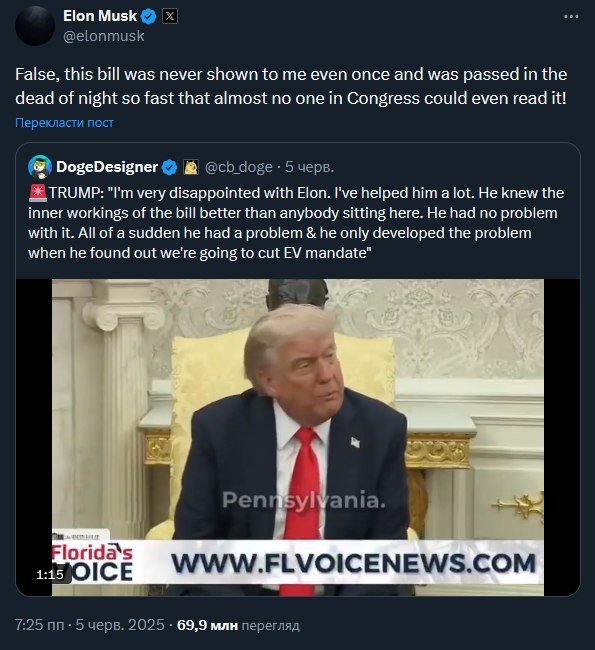
“They never showed me this bill even once. It was pushed through in the middle of the night so fast that almost no one in Congress had time to read it,” Musk added casually, but his point hit home.
Then came a stinging blow – one that cuts the deepest.
“Without me, Trump would have lost the election. The Democrats would be controlling the House, and Republicans would have only 51 votes to 49 in the Senate,” Musk wrote. “Such ingratitude.”
For a president accustomed to claiming credit for every victory as the main architect of success, Musk’s words were a personal insult – like a red flag to a bull.
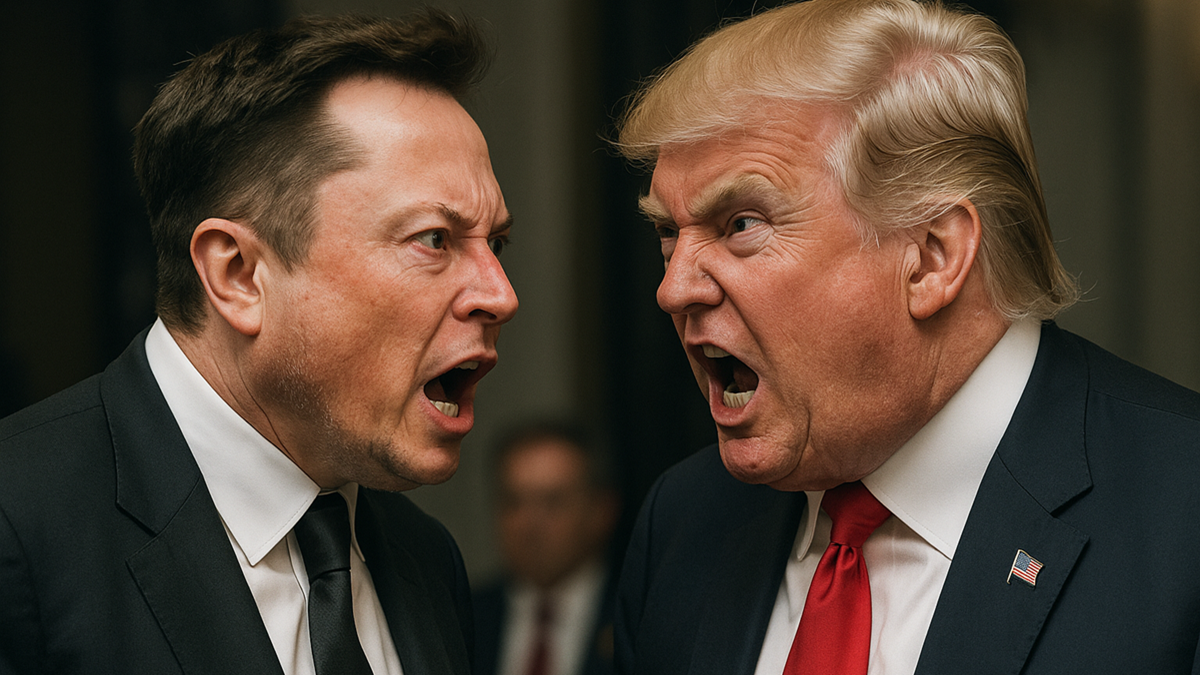
The response was swift. On Truth Social, Trump issued a public threat – one that could damage not only Musk’s reputation but also the foundation of his business empire.
“The easiest way to save billions and billions of dollars in our budget is to cut Elon’s government subsidies and contracts,” he wrote.
Brief and cold. Like a surgeon before an incision.
Musk accepted the challenge with the same bravado that has long become his trademark.
‘Go ahead. Make me happy.’
Read also: Use It or Lose It: How AI is Changing Human Thinking
When politics becomes personal
At this stage, the conflict had clearly moved beyond typical political sparring. Elon Musk, no longer content with trading blows over bills and subsidies, escalated to direct personal attacks. In his usual style – loud and unsubstantiated – he claimed:
“Trump appears in Epstein’s files. That’s the real reason they haven’t been released.”
This was no ordinary incident. It resembled the use of a nuclear weapon – an allegation that the Trump administration deliberately concealed compromising material from the so-called “Epstein files” – too provocative to ignore. Especially in the context of a convicted sex offender whose name continues to stir political controversy.
The climax came immediately. Under a post discussing the potential impeachment of Trump and the suggestion to transfer power to Vice President J.D. Vance, Musk didn’t elaborate. One word was enough to bring the entire country to a standstill: “Yes.”
This wasn’t just approval. It was an open betrayal. From the richest person on the planet. Publicly. Without any filters.
The reaction was swift. Markets shook. Tesla’s shares dropped 14.3% in a single day. The company’s market capitalization lost over $150 billion. Musk himself saw nearly $20 billion wiped off his personal wealth – all because of a few lines of text typed on a smartphone.
But he continued to raise the stakes. On his X account, Musk announced that SpaceX would “immediately begin decommissioning the Dragon spacecraft.” This was no longer a shot at Trump – it was a shot at the country. Dragon is the only spacecraft capable of transporting American astronauts to the ISS. Halting it would effectively freeze an entire era.
That evening, after the worst headlines had already spread worldwide and advisors had managed to somewhat cool the situation, Musk took a half step back.
“Good advice. Fine, we won’t decommission Dragon,” he wrote, sounding like a sulking teenager convinced not to tear the door off its hinges.
But no one believed this was the end. It felt more like a pause – before the next act in a play unfolding in real time.
Read also: All About Microsoft’s Majorana 1 Quantum Processor: Breakthrough or Evolution?
The story of the alliance that was to change America
To grasp the full scale of this rupture – personal, political, and historical – it’s important to return to where it all began. To the moment when two of the most eccentric egos in modern America formed an alliance that seemed both absurd and invincible.
Elon Musk publicly sided with Trump for the first time immediately after an attempted assassination of the candidate – on July 13, 2024, in Butler, Pennsylvania. This marked a moment when politics took on a personal dimension. Within days, Musk established a Super PAC – a political action committee – and began funding the campaign at a level not seen before.
In the end, he spent nearly $300 million – a staggering amount and a record in U.S. election history. But the real symbol was a daily lottery in Pennsylvania, organized by Musk: anyone who voted for Trump was automatically entered into the drawing. Through money, memes, and mobilization, Musk was shaping politics on his own terms.
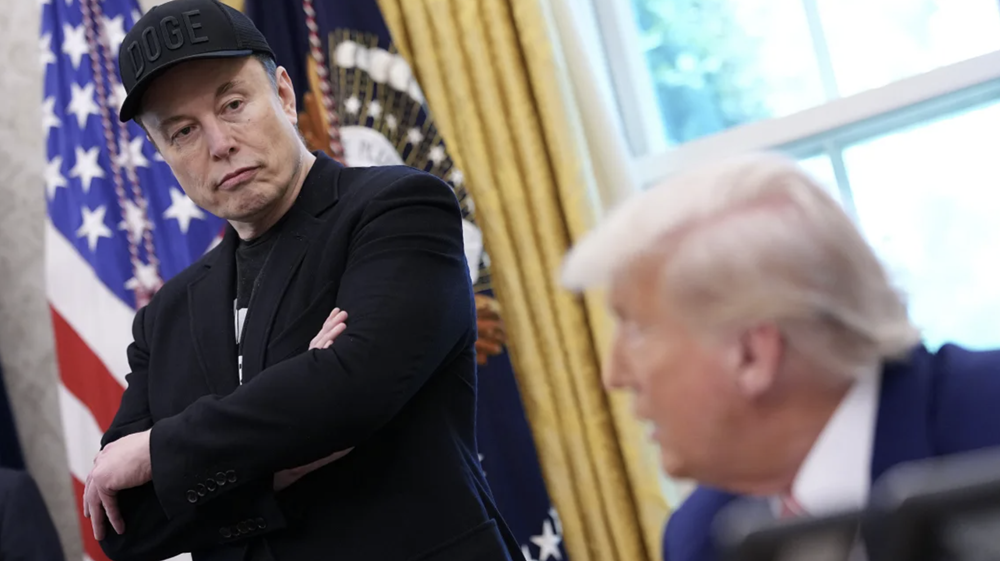
Trump didn’t hesitate to return the favor. A new position was created specifically for Musk – the Head of the Department of Government Efficiency (DOGE). The name was deliberate. “Doge” is an internet meme featuring a wide-eyed dog, popular in crypto culture and once the mascot of the Dogecoin cryptocurrency. Musk got his own “toy” and an office next to the Situation Room.
In the early months of Trump’s second term, Musk was more than just an advisor – he became a focal point. He was seen in the Oval Office more often than the Vice President. He flew on Air Force One, stayed overnight in the famous Lincoln Bedroom, attended Cabinet meetings, and occasionally showed up wearing multiple MAGA hats at once – “just in case,” as he joked.
The press dubbed him the “vice president without a mandate,” the “shadow premier,” or simply “Elon in Trumpland.” Ideologically, they were different, but they were united by power, a shared sense of exceptionalism, and a flair for spectacle.
Now, all of that has turned to ash. Even the memes can’t save it.
Read also: Tectonic Shifts in AI: Is Microsoft Betting on DeepSeek?
DOGE: Big promises, modest results
When Elon Musk was appointed head of the newly established Department of Government Efficiency – DOGE – it sounded like the start of a technocratic revolution. The promises were ambitious, almost mythical: reducing federal bureaucracy by 75%, cutting two trillion dollars from government spending, eliminating entire agencies deemed “zero output” – all framed by slogans about transparency, artificial intelligence, and “efficiency over inertia.”

Joining Musk on the stage was Vivek Ramaswamy – energetic, charismatic, with the commercial savvy of a TV producer. Together, they looked like a duo of the future: one building rockets and electric cars, the other launching startups and talk shows. They promised a “government reboot,” pledging it would be swift and painless.
But reality turned out to be harder than a PowerPoint presentation
Yes, DOGE did carry out large-scale layoffs – office floors in some agencies emptied almost overnight. Yes, dozens of programs were canceled, including long-standing grants and entire units like the “Center for Climate Adaptation Initiatives.” However, the trillion-dollar savings promised at every meeting remained purely theoretical.
According to official figures posted on DOGE’s website, their so-called “receipt wall” shows savings of \$175 billion – a significant amount, but only 8.75% of the loudly declared target. And this came at the cost of intense political conflict within the administration.
For Musk, accustomed to launching rockets into the stratosphere, disrupting established industries, and tweeting market-moving messages, dealing with federal bureaucracy was like hitting a concrete wall. It didn’t budge. It didn’t listen. And it retaliated – slowly, but relentlessly.
The first cracks on the facade
The first signs that this machine was shifting into reverse appeared back in March. Trump and Musk staged an unprecedented event on the White House lawn: a Tesla Model S, painted red like the MAGA logo, gleamed under the spotlights. Trump personally took the wheel and promised to purchase the car – a public show of support at a time when protests against Tesla were spreading worldwide over labor conditions and environmental controversies.
But beneath the event’s shine, tension was brewing. A few weeks later, without any warning, Trump withdrew Jared Isaacman’s nomination – Musk’s longtime ally – for NASA administrator. In a closed meeting, Trump labeled him a “total Democrat” and added, “I don’t need technocrats in space, I need loyalty.”
It was a clear signal. Musk heard it. By early June, he began packing his bags. In an interview with CBS, a day before his official resignation, he said:
“I was disappointed. We had a chance to change the government. But instead, they passed a massive bill that only increases the deficit and undermines everything the DOGE team worked for.”
The statement didn’t sound like a government official’s report. It felt like the opening of a new front in a battle.
The personal dimension of conflict
What began as a disagreement over fiscal policy quickly took on the character of a personal feud. And Trump, as usual, didn’t miss a chance to strike below the belt – this time, quite literally.
“I said, ‘You want makeup? We’ll buy it for you,’” the president recalled with his typical mix of contempt and theatrical disdain, referring to the bruise under Musk’s eye, which, according to Musk himself, he got while playing with his young son.
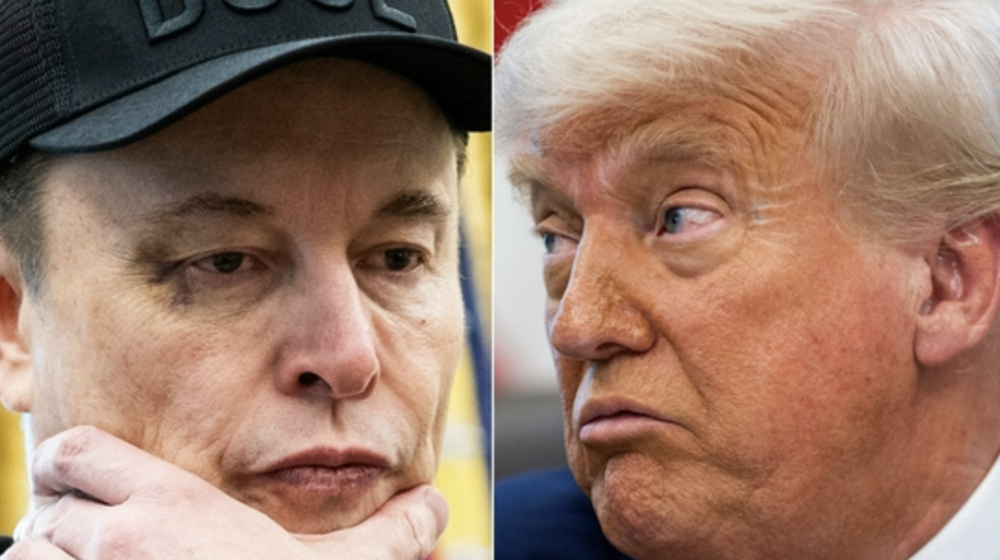
But the president didn’t stop there. He launched into his trademark psychoanalysis in typical Trump fashion. According to him, Musk was just another case of “Trump Derangement Syndrome,” a label the president often uses to describe anyone who once worked with him but now criticizes him.
“Some people who leave my administration miss it so much they actually turn hostile,” he said, as if referring not to a billionaire with his own space fleet, but to a disgruntled intern.
This is now a familiar story – a former aide who “couldn’t handle” the aura of a great leader and turned into a traitor. But the problem is that Elon Musk is not just another staff member. He has his own army of followers, his own infrastructure, his own space program. He didn’t simply walk out of the office – he can crash markets with a single tweet and challenge the very notion of Republican unity.
What is a routine psychological drama for Trump is a strategic breakup for Musk. And while one plays to the crowd, the other has the power to rewrite the script.
Read also: Panama Canal: History of Its Construction and Basis of U.S. Claims
Cosmic consequences or how Musk decided to play Star Wars
Elon Musk’s threat to cancel the Dragon program was more than just dramatic – it resembled a full-scale Hollywood thriller with elements of space-related blackmail. The SpaceX Dragon isn’t just a piece of metal with Wi-Fi; it’s the only American spacecraft since 2011 capable of not only flying but also returning safely to Earth – a feature that sets it apart from some political promises.
According to official SpaceX data, the Dragon is currently the only operational spacecraft capable of carrying up to seven astronauts to orbit and returning more than just a postcard from the ISS. Now, imagine that this capability could simply disappear – just like that – because Musk is unhappy with Trump. And in this case, the reason doesn’t really matter, whether it’s a hairstyle, tweets, or spelling errors.
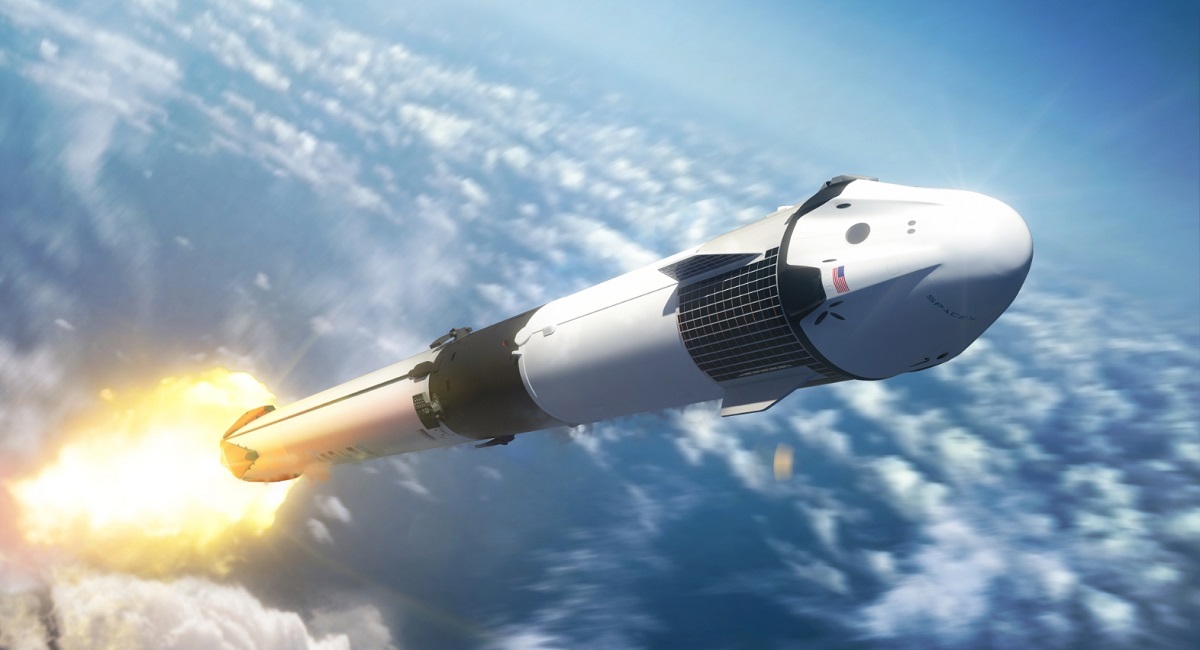
If the program is shut down, the U.S. would once again have to politely turn to Roscosmos and ask for a “ticket on the Soyuz” – all this happening amid sanctions, geopolitical tensions, and other serious issues. It’s a kind of space-age surrealism typical of the 21st century.
This whole situation highlights just how personal – and yet publicly high-profile – the conflict between Musk and Trump has become. Rather than simply debating on Twitter, Musk has raised the stakes considerably, putting the U.S. space program, the ISS, and arguably common sense itself on the line.
Read also: Microsoft, how many more interns will decide what Windows should be?
Musk’s empire under fire: space rockets, earthly problems and a little panic
When you’re Elon Musk and control a mini-empire of rockets, cars, and space-based internet, any political conflict isn’t just an inconvenience – it’s a strategic crisis. The dispute with Trump, it turns out, is more than just a Twitter feud; it poses a real threat to Musk’s entire operation.
SpaceX, Musk’s flagship company, holds multibillion-dollar contracts with NASA. This is the company tasked with returning Americans to the Moon under the Artemis program – not just putting on impressive rocket launches. Now imagine all of that could be jeopardized because someone in politics wants to punish Musk.

Starlink – the so-called “internet from space” that Musk has positioned as a global solution – also heavily depends on government contracts. Deals with the Pentagon? They exist. Classified projects? Almost certainly. And while Tesla might seem like the more “grounded” part of the empire, it too regularly benefits from grants, subsidies, and other government incentives. After all, who would turn down such advantages?
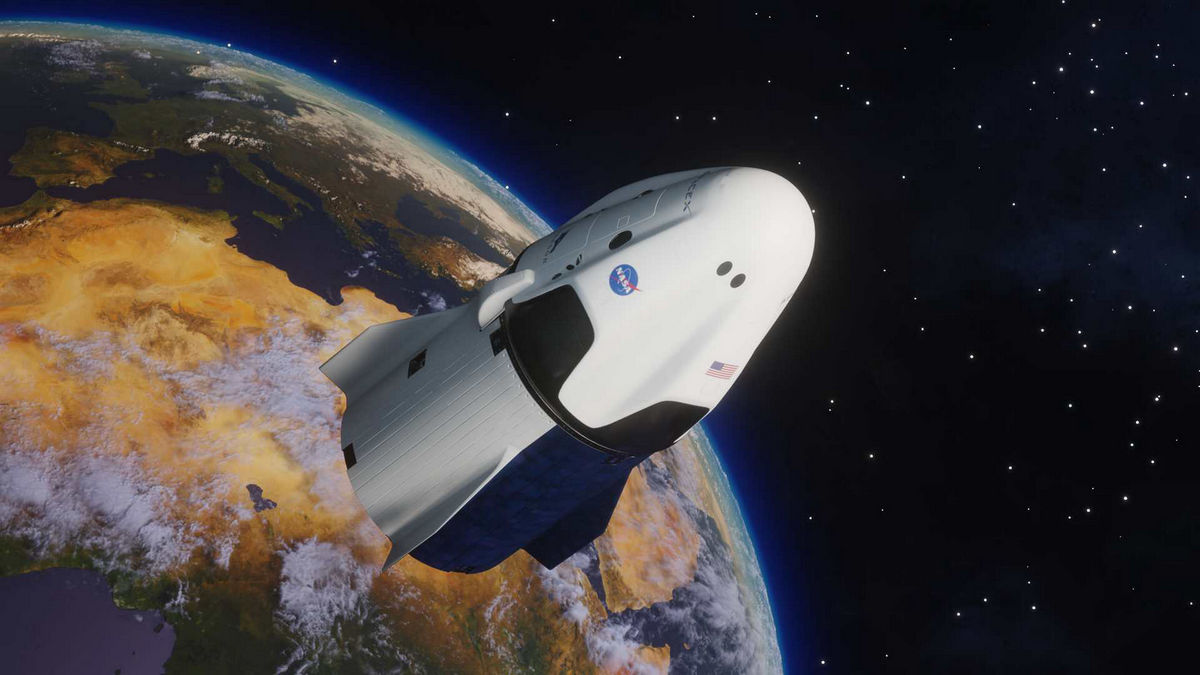
Trump’s threat to cancel contracts is more than just a business maneuver – it’s a direct hit to Musk’s finances. However, this move carries significant risks. If SpaceX loses government support, the U.S. space program could quickly devolve into something more symbolic than functional, resembling an improvised TikTok project with cardboard rockets. Meanwhile, China could take the lead in the space race without hesitation, while the U.S. remains distracted by internal conflicts with its primary launch provider.
Read also: Everything You Need to Know About Dolby Atmos FlexConnect Wireless Technology
The future of the ‘One Big Beautiful Bill Act’
After Musk’s public criticism, the once “grand and beautiful” bill now looks far less impressive – more like a fragile structure on the verge of collapse. It barely passed the House of Representatives, squeaking through by a single vote. Just one. And that’s despite the bill’s title containing three grandiose words. This case shows that calling something “beautiful” doesn’t guarantee it will succeed.
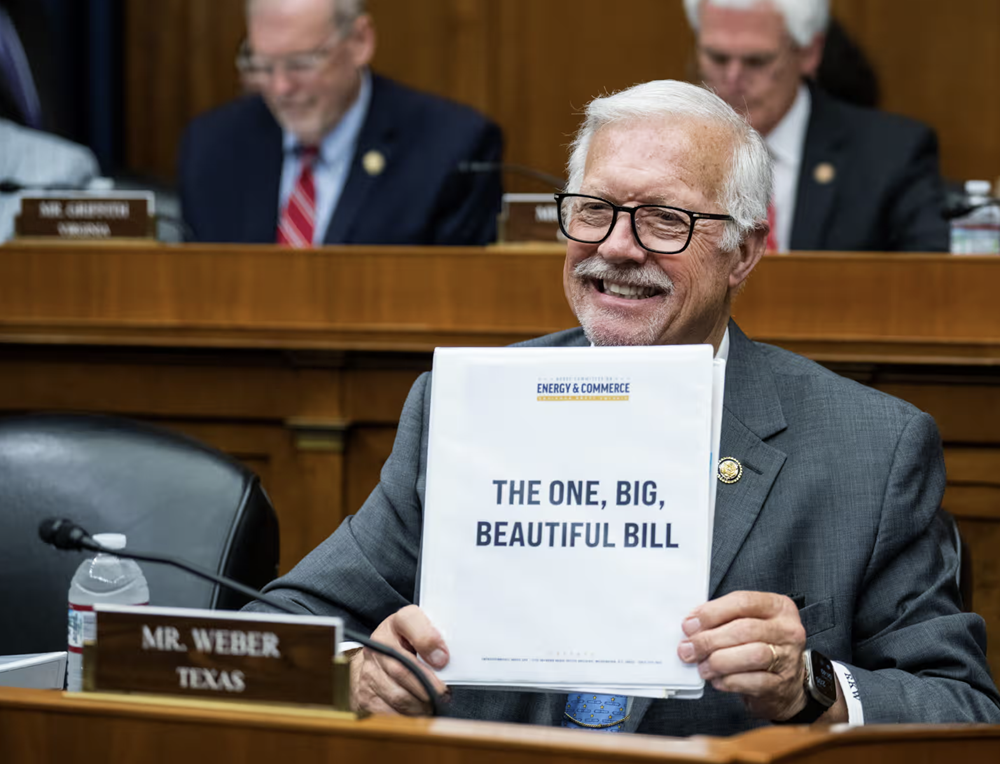
As usual, conservatives put on a show about the “excessive cost,” as if until now funding had only gone to ethical startups and good intentions. Now, the bill – like a patient in intensive care – has arrived in the Senate, with hopes it will be passed by July 4th. After all, what could be more patriotic than passing a “bill” during fireworks?
Democratic gloating: popcorn, memes and a bit of legislation
While Republicans scramble to piece together the remnants of their “unity,” Democrats are openly enjoying the spectacle. Congresswoman Melanie Stansbury from New Mexico put on a political performance right on the floor of Congress: she appeared with a sign reading “Real Housewives of Pennsylvania Avenue” and started quoting Trump and Musk as if it were a rap battle.
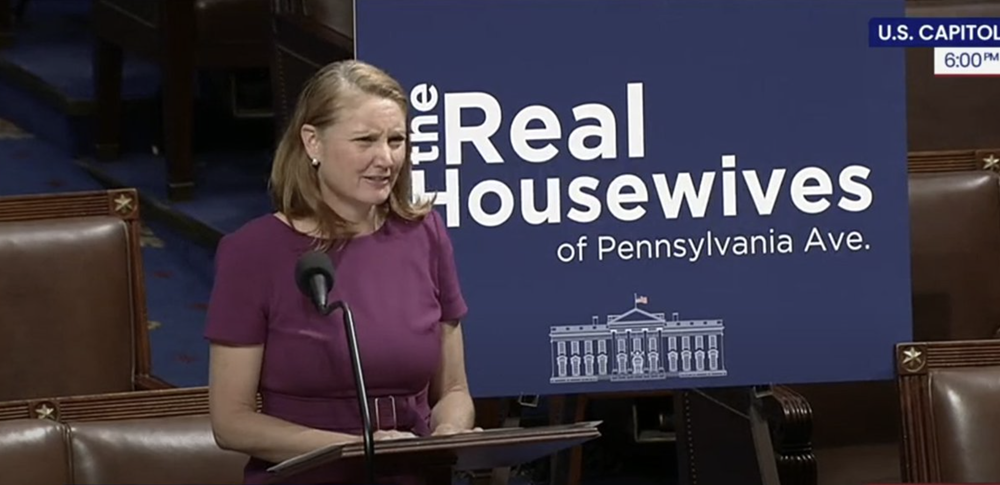
“That was an epic breakup for the ages. Totally worthy of the ‘Real Housewives’,” she said. “They literally had a romance in the Oval Office less than a week ago.” And indeed, the shift from “Elon – genius!” to “Elon – traitor!” in just four days had a pace even Netflix would envy.
Attempts to save the relationship
Late Thursday evening, subtle – almost quantum – signs of possible de-escalation emerged. Not exactly peace, but something moving in that direction. Musk unexpectedly responded positively to a post by Bill Ackman, a hedge fund manager and self-declared peacemaker, who urged both sides to “stop acting like children in a sandbox.” “You’re not wrong,” Elon replied. For Musk, that’s almost like waving a white flag – or at least a light gray one.
Meanwhile, according to CNN sources – essentially “people who heard something somewhere” – representatives from both sides were trying to make contact to defuse this intergalactic ego showdown. However, Musk, true to form, was playing “not at home”: he didn’t answer calls or messages from the White House. Perhaps he was busy with something more important – like refining memes or testing a new Tesla autopilot system that ignores all forms of communication, much like Elon himself.
The climax unfolded, as expected, on X (formerly Twitter), where reality often takes its own peculiar turn. Someone suggested, “Let’s cool down and take a few steps back,” and surprisingly, Musk agreed. “Good advice,” he wrote, even adding that the Dragon program isn’t retiring after all.
This is what modern diplomacy looks like: a mix of tweets, some irony, a bit of drama – and an entire space program gets a second chance.
The question of the future: will there be a second date?
Is it possible to piece together this political vase shattered at supersonic speed by two egos? In theory, yes. In practice – time will tell. History shows that Trump is capable both of forgiveness and holding grudges for life. Steve Bannon, the main architect of MAGA, has made comebacks worthy of a Greek tragedy, while John Bolton still features on the “traitors for the apocalypse” list.
Now Musk finds himself somewhere between those two categories. There might still be a chance for a “reset.” But here’s the catch: billion-dollar donations don’t guarantee immunity from political grudges. And as we know, grudges are one of the most powerful forces in the universe – right after dark matter and tweets in all caps.
Read also: Seven Annoying Windows 11 Features – and How to Fix Them
Money matters: the end of ‘unbridled love’?
Musk was the primary financial backer of MAGA in 2024. However, following this “split,” his generosity might dry up. Republicans now face a dilemma nearly as dramatic as the finale of “Game of Thrones”: where to find a new billionaire? Is there anyone willing to step in and replace Elon – with the money, the platform, but a less volatile ego?
Read also: Everything About New Android 16: Changes, Improvements, and More Gemini Integration
Lessons for democracy: buy influence – get stress
This conflict isn’t just a showdown between two ultra-wealthy alpha males. It’s a clear example of how money shapes politics in the 21st century. Musk poured $300 million into the political arena expecting the world to revolve around him. But influence doesn’t equal control. Sometimes politicians act like politicians, not Tesla shareholders.
Trump, on the other hand, values support but isn’t willing to share the spotlight. No matter how many zeros your donation has, if you don’t fit the narrative, you get tossed aside like a minor character in the fifth season of a TV show.
Yes, this might suggest that democracy is still functioning. But the fact that a single billionaire can spend \$300 million to buy the “key to the room of influence” is a symptom that would raise eyebrows in a healthy republic. If not among politicians, then at least among the voters.
Social media as the new cold war
A unique twist to this drama is that each participant controls their own media empire. Trump runs Truth Social, Musk oversees X. In the past, conflicts were settled behind closed doors; now they unfold publicly, amid a stream of memes and conspiracy theories.
Every post feels like an artillery strike. Every response triggers market jitters. Millions watch in real time, while no press secretary can keep up. This is diplomacy 2.0: loud, emotional, performed for the audience, and always with a comment section.
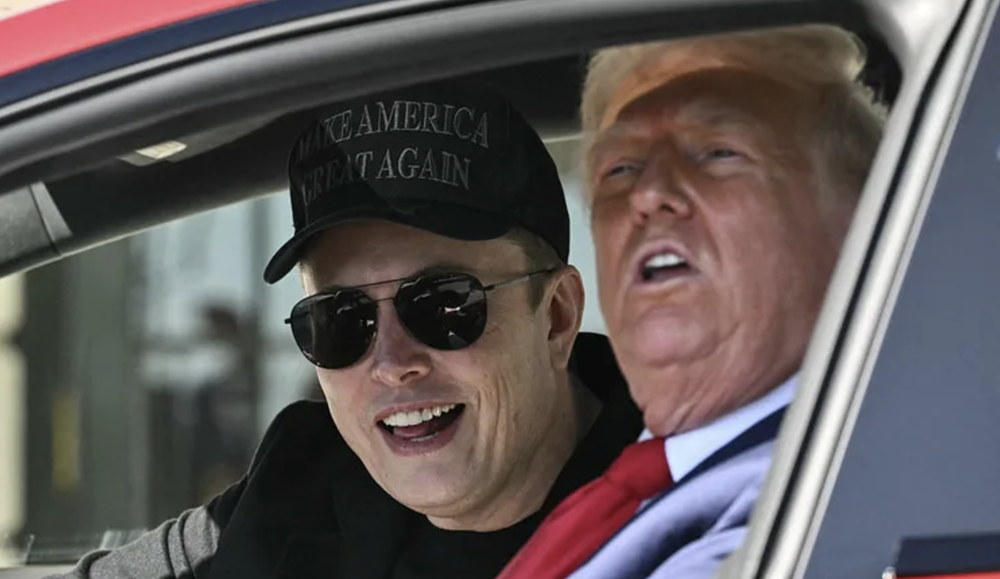
Amid all this stands a red Tesla – the very one Trump bought in March as a symbol of his “unbreakable alliance with Elon.” It’s still parked on the White House grounds, with no clear plan for what to do next. Should it remain as a monument to a brief friendship? Or be auctioned off labeled “barely used, kept during a betrayal”?
This electric car has become a fitting metaphor: an attractive, expensive item that now only serves as a reminder of how quickly alliances built on mutual interests, rather than shared values, can fall apart.
Afterword: there are no friends in politics – only algorithms
The story of Musk and Trump isn’t just an isolated incident; it’s a warning. In an era defined by social media, massive capital, and politics unfolding live, long-lasting alliances are rare. What exists are simply aligned interests. And when those interests diverge, friendships end the same way they began – with a post on X and an unanswered call on WhatsApp.
What remains are digital ruins, a red Tesla parked and forgotten, and a growing dose of cynicism in American democracy.
Read also:

