





© ROOT-NATION.com - Use of content is permitted with a backlink.
Today, we will look at how autonomous trucks could affect the freight and delivery market, and whether it already makes sense to adopt them at scale. Let’s go step by step.
Self-driving trucks are expected to reduce transportation costs by roughly a third, address the global shortage of drivers, and potentially improve road safety. At the same time, they pose a risk to millions of jobs and require a fundamental rethink of existing supply chain structures.
TABLE OF CONTENTS:
Levels of Autonomy: Where the Industry Stands
Before going further, it is important to understand the levels of truck autonomy. The automotive industry has been following the SAE J3016 standard for over a decade, which defines six levels of driving automation – from Level 0 (full driver control) to Level 5 (full automation with no human driver required).

Today, the industry is predominantly at Level 2 (partial automation). Systems such as Tesla Autopilot, GM Super Cruise, Ford BlueCruise, and Hyundai Highway Driving Assist can control steering, acceleration, and braking, but the driver is still required to remain attentive and keep hands near the wheel. This is currently the most widespread and commercially mature level.
Level 3 (conditional automation) remains relatively rare. Mercedes-Benz has obtained certification for limited deployment and testing in several countries, including Germany, the United States, and China. In these conditions, the system can allow the driver to disengage from active monitoring in specific scenarios such as traffic congestion or highway driving. However, regulatory and insurance-related constraints continue to limit broader adoption.
Level 4 (high automation) is currently implemented only in limited geographic areas. Companies such as Waymo (Alphabet) and Cruise (GM) already operate driverless robotaxi services in selected districts of cities like Phoenix and San Francisco, along with a few other locations. In China, Baidu Apollo is also actively developing and deploying similar systems. However, the technology remains constrained by operating conditions. It is still sensitive to adverse weather and atypical or unpredictable traffic scenarios, which limits its scalability beyond controlled environments.
Read also: Computers in Space: Limitations as an Advantage

Level 5 (full autonomy in all conditions) remains a long-term objective. Most experts estimate that widespread deployment is still 5–15 years away, and potentially longer, due to ongoing technical limitations, regulatory frameworks, and ethical considerations.
In summary, the industry is currently in a transitional phase: Level 2 autonomy is widely deployed at scale, early Level 3 and Level 4 systems are already operating commercially in limited environments, while full autonomy remains an aspirational goal rather than an immediate reality.
Read also: Digital Detox in 2026: Why Going Offline Is Becoming the New Luxury
From Assistant to Autopilot: Where We Are Now
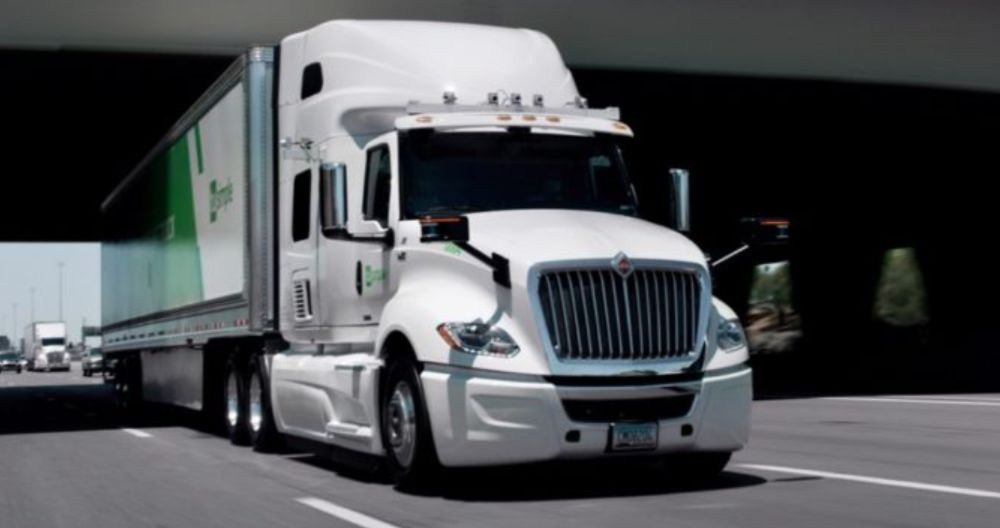
Autonomous trucks are no longer a distant concept. They are already operating today, albeit under clearly defined conditions. Companies such as Waymo Via (Alphabet), Aurora Innovation, Torc Robotics (a Daimler Truck subsidiary), Plus.ai, TuSimple, and several others are conducting daily commercial freight operations across the United States, China, and Europe. In some cases, these vehicles already operate without a safety driver in the cabin.
Between 2023 and 2024, Aurora launched regular driverless commercial freight routes between Dallas and Houston for clients such as FedEx and Werner Enterprises, operating without an onboard operator. Waymo Via continues testing routes in Texas and Arizona. In China, Inceptio Technology reports a fleet of more than 500 semi-autonomous trucks operating on commercial logistics routes. While the overall scale remains limited, the rate of deployment is growing rapidly.

It is important to understand where autonomous trucks perform best. They are most effective on long-haul highway routes. These environments typically involve consistent road conditions, predictable traffic patterns, and a minimal number of intersections – making them well suited for current sensor and perception systems. For this reason, most early commercial deployments focus on interstate corridors such as I-10 and I-45 in the United States, where operating conditions are relatively stable and closer to ideal for autonomous systems.
It is also important to clarify that an autonomous truck should not be viewed simply as a “robot driver.” It represents a fundamentally different logistics unit: one that does not experience fatigue, does not require mandatory rest periods, and can operate for up to 22 hours per day under suitable conditions.
Read also: Quantum Networks as Alternative to Classical Internet: What to Expect
Freight Economics: Where the Billions Are
Freight transport is a core component of any economy. In the United States, it accounts for roughly 70% of total cargo movement. Annual spending by U.S. companies on domestic trucking alone exceeds $940 billion. Of this, approximately 40% is associated with drivers, including wages, benefits, high turnover costs (with annual attrition rates exceeding 90% in the industry), and recruitment expenses.

Autonomous trucks reduce or significantly limit this cost category. However, the impact is not limited to driver wages alone. Analysts from Deutsche Bank and McKinsey highlight three effects that are considered even more important.
First, asset utilization. Human drivers are constrained by legal driving time limits – 11 hours per day in the United States and even less in the EU. An autonomous truck (Level 4 and above) can operate 20–22 hours per day, stopping only for refueling or recharging and maintenance. This effectively doubles the number of trips per week per vehicle, increasing asset productivity by an estimated 70–90%.
Second, predictability. Algorithmic driving maintains optimal speed without abrupt acceleration or braking, which reduces fuel consumption by approximately 8–15% and decreases tire wear. Maintenance costs are reduced, and travel times become more stable and predictable, which is critical for logistics planning and on-time delivery performance.
Third, driver shortage. The U.S. trucking industry is currently facing a shortage of roughly 80,000 drivers. In countries such as the UK and Germany, the situation is even more acute. The average age of a truck driver in the United States is around 46, and younger workers are increasingly reluctant to enter the profession. Autonomous systems address this structural imbalance rather than simply replacing labor for cost reduction.
Read also: John Ternus: The Engineer Apple Has Been Waiting For for Quarter Century
Impact on Supply Chains and E-commerce
For retail and e-commerce, autonomous trucks primarily imply a redesign of warehouse networks. If trucks can operate overnight without a driver, maintaining a large regional warehouse in every city becomes less efficient. Instead, fewer but larger distribution hubs located at key highway intersections become viable, with autonomous fleets handling long-haul transport and traditional couriers covering the “last mile” closer to the end customer.
Amazon is already adapting its logistics network with this scenario in mind. The company has invested in Rivian and is exploring various approaches to fleet automation. Other major U.S. retailers, including Walmart, Target, and Home Depot, have also entered partnerships with autonomous freight companies or are testing such systems through pilot programs.

A practical example illustrates the impact. A conventional freight route from Kharkiv to Uzhhorod typically takes 2–3 days with a human driver due to mandatory rest periods. A Level 4 autonomous truck could complete the same journey in approximately 34–38 hours of near-continuous operation. This effectively moves ground transport into a category that can compete with air freight in terms of delivery time for certain goods, while remaining 5–10 times cheaper.
The underlying economics are straightforward. Around 40% of transportation costs are associated with the driver. Reducing or eliminating this component can lower total costs by roughly 25–30%. Lower transportation costs translate into reduced product cost structures, which in turn can result in lower retail prices, higher margins, or a combination of both, depending on competitive dynamics.
Read also: Claude Mythos: Too Intelligent for Its Users?
Now to the uncomfortable part – people
I will not present the situation as uniformly positive, because it is not. There are about 3.5 million truck drivers in the United States alone, along with hundreds of thousands in Poland, Romania, and Hungary. The Chinese market is even larger. In addition, there are several hundred thousand Ukrainian drivers currently working long-haul routes across Europe. This is not an abstract notion of “jobs at risk”; it concerns specific households, mortgages, and children in school.
Two points can be true at the same time.
First, the transition to automation is likely to be gradual. Level 4 systems operate reliably only under constrained conditions – primarily on well-maintained roads and in favorable environments. Achieving full Level 5 autonomy is expected to take years, possibly decades. As a result, a substantial portion of the current workforce will reach retirement age before large-scale displacement occurs. At the same time, new roles – such as remote operators, dispatchers, and technical support personnel – are expected to emerge.

Second, if the transition occurs over 7–10 years rather than 20, a portion of workers will face significant disruption. A 45-year-old driver who has spent their entire adult life behind the wheel is unlikely to transition seamlessly into a role such as an autonomous vehicle operator. At that point, the issue extends beyond technology to broader societal readiness: whether adequate preparation will be made, or whether the problem will be deferred.
Governments and companies with responsibility in this area should begin funding retraining programs now, rather than waiting until deployment is widespread. The available lead time should be used to support workforce adaptation.
Read also: Childbirth in Space: Science Fiction or Biological Catastrophe?
Safety: an argument that cannot be dismissed
In the United States, approximately 94% of road accidents are attributed to human factors – fatigue, distraction, or alcohol use. Collisions involving heavy trucks are disproportionately severe; the mass of a typical vehicle (on the order of 20 tonnes) significantly increases the likelihood of fatal outcomes.
An autonomous system does not become fatigued on overnight routes, does not engage in messaging while driving, and does not operate while impaired by conditions such as migraine. If the technology demonstrates consistent reliability under real-world conditions – as companies such as Aurora Innovation are beginning to test – the safety case is likely to outweigh purely economic considerations.

However, it is important to note that trust remains an open question. Current systems are trained on large volumes of simulated driving data, but real-world environments continue to present edge cases that are difficult to anticipate: construction zones without clear lane markings, a child entering the roadway unexpectedly, or vehicles carrying atypical loads.
A higher level of reliability will depend on accumulating extensive real-world operating experience, not only simulated scenarios. This requires time – likely years of deployment and data collection. The process is ongoing, but it has not yet reached maturity.
Read also: Trump vs. Claude AI: How the AI Debate Is Unfolding in the U.S.
Winners and losers – without simplification
When a new technology emerges, there is a tendency to claim that “everyone benefits.” In practice, gains and losses are unevenly distributed. Some actors benefit in clearly defined ways, while others incur tangible costs.
Who benefits?
Primarily, large-scale operators – such as Amazon, Walmart, and the broader retail sector. These firms are not waiting for full technological maturity and are already investing at scale.
For example, Amazon spends tens of billions of dollars annually on logistics. Even an approximate 20% reduction in long-haul transportation costs would translate into savings on the order of billions. These gains could be retained as profit or used to reduce prices, increasing competitive pressure on other market participants.

However, the impact is not limited to cost.
An autonomous fleet offers greater predictability: fewer disruptions from labor actions, reduced exposure to human error, and consistently optimized routing. At scale, these factors can be more valuable than one-time cost reductions.
Large carriers – including Schneider National, J.B. Hunt, and Werner Enterprises – are also positioned to benefit. At first glance, lower transportation costs might suggest reduced revenue. In practice, early adopters of autonomous systems can reduce operating costs faster than market prices decline, allowing margins to expand. At the same time, smaller operators may face increasing competitive pressure, contributing to industry consolidation.

Consumers do benefit, but not immediately or uniformly. In the early stages, efficiency gains are typically absorbed by company margins. Price reductions tend to appear first in highly competitive sectors such as e-commerce, grocery retail, and fast food. In less competitive markets, the pass-through to consumers is slower and more limited. In other words, the distribution of benefits depends on market structure and, in some cases, on the country.
Cities may become an indirect beneficiary of this shift. Autonomous freight operations can run during nighttime hours without regulatory or labor constraints. As a result, a portion of logistics activity may shift away from daytime hours. This could reduce daytime traffic congestion and lower the incidence of accidents involving heavy vehicles. The effect is gradual but structurally significant at scale.
Who is under pressure?
Long-haul truck drivers are the first group exposed to disruption. In the United States alone, this segment includes roughly 3.5 million workers, with additional hundreds of thousands of drivers from Ukraine and other countries operating on European routes. The earliest phase of automation is expected to focus on highway, overnight freight – precisely the type of work these drivers perform.
While not all roles disappear immediately, the total volume of available work in this segment is likely to decline over time. This implies a gradual but potentially difficult transition period for parts of the workforce.

Small carriers are also under pressure. They generally lack the capital required for large-scale investment in autonomous systems and are less able to compete with fleets operated by larger logistics companies. Over time, this can reduce their market share and employment opportunities within this segment.
A less visible impact concerns highway service infrastructure. Businesses such as fuel stations, roadside diners, and motels along major freight corridors depend heavily on truck drivers as a primary customer base. If autonomous trucks operate continuously with fewer or shorter stops, demand for these services may decline. For some small towns located along freight routes, this could lead to measurable economic contraction.
Read also: Algorithm Without Fear or Doubt: Why AI Cannot Be Trusted with War
Realistic outlook
2030. In the United States and China, approximately 15–25% of long-haul highway freight could be handled autonomously. The European Union is likely to lag due to more complex regulatory frameworks and more heterogeneous road infrastructure, but a 5–10% share of autonomous operations is plausible in selected corridors.
2035. A majority of overnight intercity freight on major transportation corridors may operate without a driver in the vehicle. A “hub-to-hub” logistics model becomes more established: autonomous trucks handle long-distance transport between logistics centers, while conventional delivery vehicles manage last-mile distribution to end customers.

2040. Truck driving remains a niche but still existing profession. It is primarily limited to edge cases: non-standard routes, difficult terrain, and specialized cargo. In this sense, it resembles the role of a commercial aircraft pilot today – where much of the flight can be automated, but a human is still present for oversight and exceptional situations.
An autonomous truck should not be understood as a system that simply makes the driver obsolete. Rather, it shifts the driver from being the primary constraint in the system to a supervisory or exception-handling role. This is a fundamental change in system design.
Finally, what is most notable is not the technology itself, but the scale of the secondary effects it triggers. Logistics networks, retail pricing, road safety, small towns along freight corridors, and the careers of millions of workers are all interconnected. A change in one part of the system propagates through many others.
Read also:
- Balcony Solar System, Part 1: EcoFlow Stream Pro (Ultra) – A Residential Energy Independence Solution
- Balcony Solar Power System, Part 2: EcoFlow Stream Setup, Basic Configuration, Backup Power, and Scalability
- Balcony Solar Power System, Part 3: Choosing and Installing Solar Panels. Flexible vs Rigid Panels – Which Are More Efficient?

