





© ROOT-NATION.com - Use of content is permitted with a backlink.
Today we will look at computers designed to operate in space – in particular those used in NASA’s Artemis II lunar mission – and examine why their computing performance is significantly lower than that of a typical consumer laptop.
Artemis II has returned to Earth. Four astronauts, ten days in space, and over 400,000 kilometers traveled to the Moon and back. It marked a new record distance from Earth, the first of its kind in more than 50 years. Media coverage has focused on emotional imagery, crew interviews, and visually striking footage from orbit. However, if you are more interested in what was actually running onboard, this article is for you.
While attention was directed toward the views outside the spacecraft, inside the Orion capsule a computer system was operating quietly on hardware comparable to early-2000s processors. Yes, that is correct – early 2000s. And this is not a flaw, but a deliberate engineering decision.
TABLE OF CONTENTS:
Space is hostile to your electronics
Let’s start with the main point. Why can’t we simply take a modern chip, put it into a spacecraft, and launch it into space?
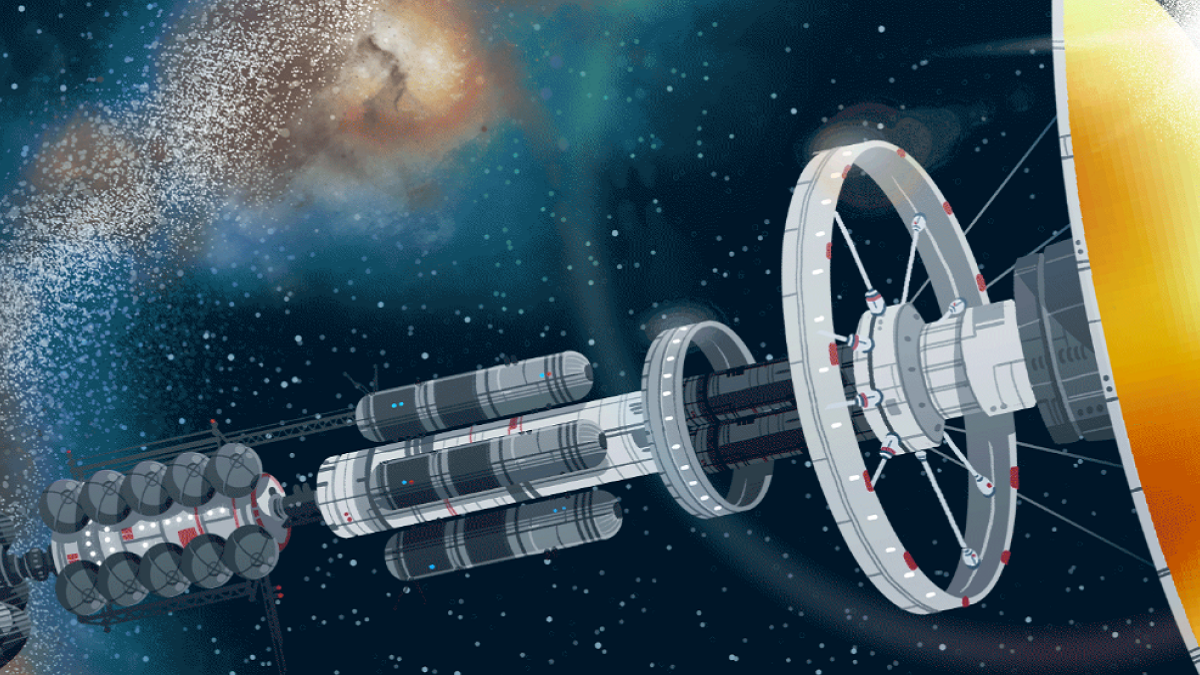
The answer is simple: radiation. On Earth, we effectively live inside a protective shield without even thinking about it. The planet’s magnetic field and atmosphere absorb most of the cosmic radiation that constantly reaches us from space. Once you move beyond this protective layer, conditions become extremely harsh for electronic systems. In that environment, high-energy particles can interfere with or damage semiconductor components.
Read also: What Happens to Astronauts’ Brains in Space?

In space, integrated circuits are constantly bombarded by protons, heavy ions, electrons, and neutrons. These particles penetrate silicon and can cause behaviour in transistors that would keep any hardware engineer awake at night.
The simplest effect is an SEU (Single Event Upset). A single ion passes through a microchip and flips the state of a memory bit – from 0 to 1 or from 1 to 0. Just one bit. It may sound insignificant, but consider what that bit might control: whether a corrective thruster is activated, or how many degrees a spacecraft adjusts its orientation. In 1972, a similar fault on a Hughes satellite caused a 96-second communication loss with a ground station. In lunar orbit, an interruption like that could have far more serious consequences.

But SEU is only the beginning. There is also SEL – Single-Event Latch-up. This is no longer a random bit flip; it is closer to a full short circuit inside the silicon structure. A radiation strike can trigger an uncontrolled conductive path, causing a sudden surge of current that can permanently destroy a microchip. No recovery, no reset – the component is simply gone.
Finally, there is TID – Total Ionizing Dose. This is a cumulative radiation effect. It does not destroy hardware instantly. Instead, it gradually degrades transistor performance over time. Leakage currents increase, threshold voltages drift, and the chip slowly loses its intended behaviour. Eventually, it no longer operates correctly. It is a slow degradation process, comparable to hearing loss: at first it is barely noticeable, but over time it becomes critical.
Read also: Quantum Networks as Alternative to Classical Internet: What to Expect
The more advanced the chip, the more vulnerable it becomes – and that is the irony
This is one of the most interesting aspects, and it deserves separate attention. Technological progress has made modern processors extremely powerful. At the same time, it has also made them significantly more sensitive to radiation.
The reason is straightforward. Contemporary chips rely on extremely small transistors, already at scales of around 3 nanometers and below. As transistor dimensions shrink, the amount of charge required to change their state decreases as well. And when less charge is needed, it becomes easier for a single high-energy particle to disrupt that state.

Back in the mid-1990s, researchers already warned that if transistors continued to shrink at the same pace, spacecraft could end up spending more time recovering from radiation-induced faults than actually performing useful operations.
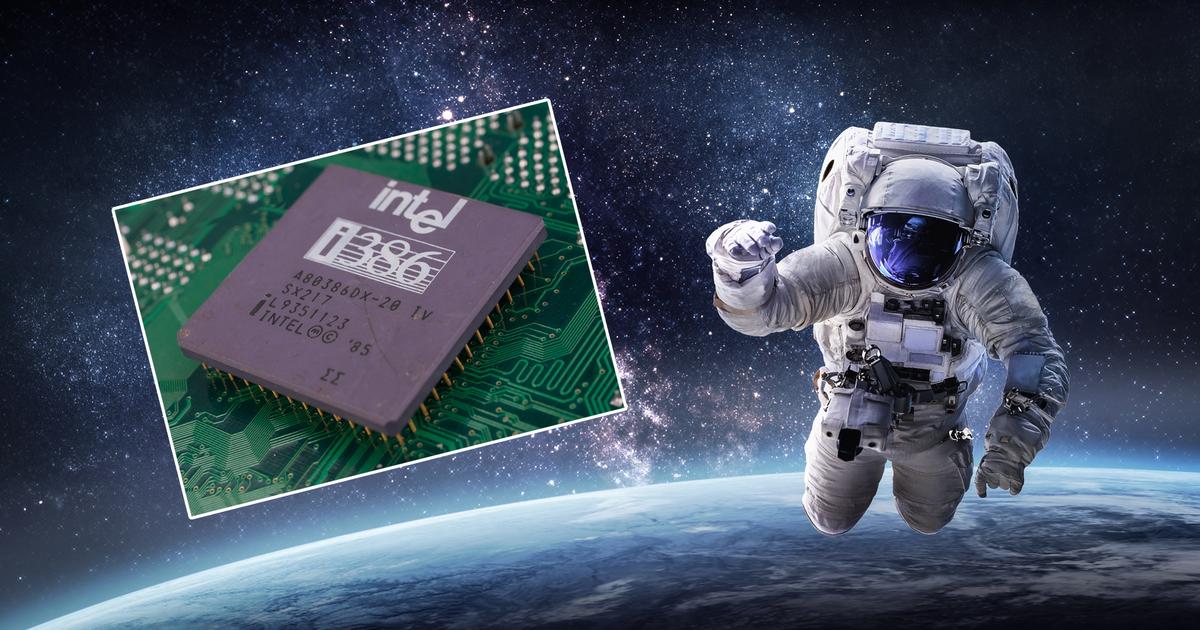
This is why the Orion spacecraft’s onboard computers are based on the IBM PowerPC 750X – a processor architecture from the early 2000s. It is deliberately outdated, extensively tested, and formally certified. It offers lower performance, but it is reliable in conditions where modern consumer devices would fail.
Four Honeywell computers built around this processor operate in parallel. A modern smartphone is millions of times more powerful than each of them individually. However, a smartphone would not survive a mission to the Moon and back in a space environment.
Read also: XChat by Elon Musk: End-to-End Encrypted Messaging Service Challenging WhatsApp and Telegram
What is an FPGA and why it is used in space
Another important type of microchip used in space systems is the FPGA. This is a particularly interesting technology that is often mentioned, but not always clearly understood.
FPGA stands for Field-Programmable Gate Array. In simple terms, it is a type of chip that can be reconfigured after manufacturing. A conventional processor has a fixed architecture and executes predefined instruction sets. An FPGA, in contrast, can be described as a configurable logic fabric – a blank slate on which digital circuits can be implemented.

If you need to process radar signals, you use an FPGA. If you need to compress data from cameras, you use an FPGA. If, six months after launch, you need to completely change the system’s processing logic without any physical access to the spacecraft, you also rely on an FPGA.

For space applications, this is extremely valuable. Ken O’Neill, a spacecraft systems architect at AMD, describes it in practical terms: these chips can be reprogrammed after deployment, allowing mission operators to adjust algorithms, optimize performance, and respond to new requirements directly from Earth.
If, after launch, it turns out that an instrument is producing data in an unexpected format, the issue can be resolved without hardware intervention – the FPGA is reconfigured, and the system continues operating.
AMD has been developing radiation-tolerant FPGAs for space missions for many years. Their latest generation, the Versal family – including the XQRVC1902 and XQRVE2302 – is built on a 7 nm process. These devices combine programmable logic, ARM processor cores, and AI acceleration engines on a single chip. In other words, onboard artificial intelligence in space systems is no longer a theoretical concept, but an operational requirement.
Read also: Claude Mythos: Too Intelligent for Its Users?
How a chip gets its “space certification”
If you think certification is just paperwork and a few lab tests, that is not the case. It is one of the most demanding and expensive processes in the semiconductor industry. The process starts with extensive radiation testing, typically covering three categories, each simulating a different space environment.
Protons are used to simulate solar radiation and particles trapped in Earth’s Van Allen belts. Heavy ions reproduce galactic cosmic rays – highly energetic particles originating outside the Solar System. Gamma radiation is used to evaluate cumulative dose effects and how long-term exposure gradually degrades transistor performance.

And here is a key point that is often surprising: it is not just a sample batch that gets tested, nor every tenth unit. Every single component is tested individually. Every one of them, across the entire production batch.
But radiation testing is only the beginning. The next stage involves extreme temperature simulation. In the shadow of a spacecraft, temperatures can drop to around −150°C, while in direct sunlight they can exceed +120°C. Spacecraft repeatedly move in and out of Earth’s shadow on each orbit, creating constant thermal cycling. These rapid temperature shifts are extremely stressful for materials and solder joints.
Finally, vacuum testing is performed. In a vacuum, certain materials can outgas or even partially evaporate. Lubricants and some plastics can release compounds that then condense on sensors and degrade their performance. For this reason, space-grade electronics are typically enclosed in sealed ceramic or metal housings, rather than conventional plastic packages.

Finally, there are mechanical vibrations. During launch, the SLS rocket generates vibration levels and shock loads so intense that onboard electronics must survive several minutes of extreme mechanical stress before even reaching orbit. All of this is tested and certified under the MIL-PRF-38535 standard – a strict military specification for integrated circuits used in high-reliability and aerospace applications.
Read also: Space Photography: Cameras of Artemis II Mission
Three computers are better than one – or even four
Building a radiation-tolerant chip is only part of the problem. The other part is designing the system architecture around it. One of the key approaches is TMR (Triple Modular Redundancy). The idea is straightforward: instead of a single processing unit, the system uses three identical units running in parallel and performing the same calculations. If two units produce the same result while the third differs, the system automatically applies a majority vote and accepts the consistent output.
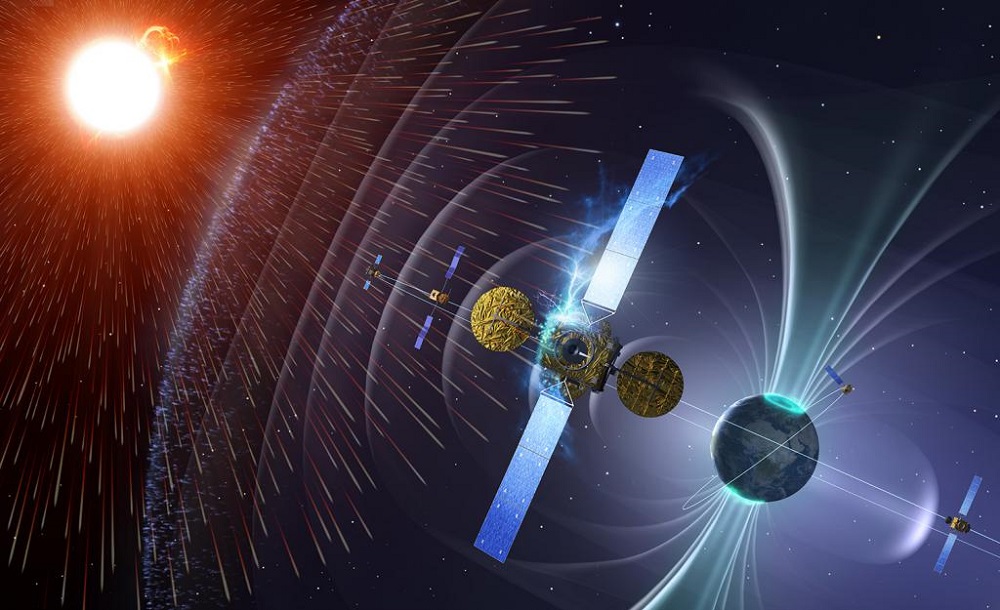
A single bit can be flipped by radiation. But the probability that radiation will simultaneously produce the same error in two independent computing units is extremely low.
The Orion spacecraft takes this concept further. It uses four Honeywell computers. Each of them can effectively “drop out” at any moment – meaning it can stop transmitting data if it detects inconsistencies in computations. The system continuously cross-checks itself, isolates faults, and maintains operation without external intervention.
This is not overengineering or paranoia. It is a design approach shaped by decades of experience from real space missions and their failure cases.
Read also: Childbirth in Space: Science Fiction or Biological Catastrophe?
Artificial intelligence is going to Mars – and this is serious
Now we come to what, personally, is one of the most interesting aspects of this topic. The Artemis II mission lasted around ten days. But humanity is now preparing for sustained operations near the Moon, and eventually missions to Mars. This is where a fundamental limitation becomes unavoidable. A radio signal between Earth and Mars takes roughly 3 to 22 minutes one way, depending on the relative positions of the two planets. This makes real-time control from Earth impossible in practice. By the time a command arrives, the situation onboard may have already changed multiple times.
This is why autonomy is becoming essential. A spacecraft must be able to analyze data, make decisions, and respond to anomalies without waiting for instructions from Earth. To support this, space systems are increasingly equipped with processors capable of running machine learning algorithms directly onboard.

AMD Versal AI Edge Gen 2, for example, is already being used by Blue Origin in the onboard computers of a test vehicle designed to support a planned lunar landing mission in 2028.

The NISAR mission – a joint project between NASA and the Indian Space Research Organisation – produces such large volumes of synthetic aperture radar data that transmitting everything to Earth is not physically feasible. The solution is onboard processing. The chip filters, compresses, and analyzes the data in space, and only the most relevant information is sent back to Earth.
Artificial intelligence in space is no longer a future concept. It is already in use today.
Read also: Trump vs. Claude AI: How the AI Debate Is Unfolding in the U.S.
Another problem that is rarely discussed
There is an aspect that often does not appear in public discussions, yet it is critical: timing. From initial concept to launch, a space mission typically takes 10–15 years. Once in operation, the mission itself may continue for decades. Now compare this with the lifecycle of a commercial semiconductor. In consumer markets, a chip generation usually lasts only a few years. After that, manufacturers move to a new architecture, production is discontinued, and long-term supply of identical components is no longer guaranteed.
As a result, space systems must often rely on technologies that are already mature and stable at the time of design, rather than the latest available hardware.

This means that manufacturers of space-grade chips are required to support their products for significantly longer periods than is typical in the commercial semiconductor industry. AMD, for example, formally commits to long-term support for its space-qualified product lines. In space engineering, an unexpected “sorry, this model has been discontinued” is not an acceptable outcome.
Read also: Algorithm Without Fear or Doubt: Why AI Cannot Be Trusted with War
So what is the conclusion?
Your smartphone is an extraordinary piece of engineering: 3-nanometer processes, billions of transistors, gigahertz-level frequencies. But outside Earth’s magnetosphere, it would likely fail within hours. The first heavy ions it encounters would begin systematically damaging its microscopic transistors.
The chips used in Orion, by contrast, are “outdated,” expensive, and far slower than modern consumer processors. However, they have undergone hundreds of hours of irradiation testing with protons, heavy ions, and gamma radiation. Each unit is tested individually. They are enclosed in hermetic ceramic housings, replicated in triple and quadruple redundant configurations, certified under military-grade standards, and supported by manufacturers over long operational lifetimes. In space systems, performance is not the primary goal. Reliability under extreme and unpredictable conditions is.
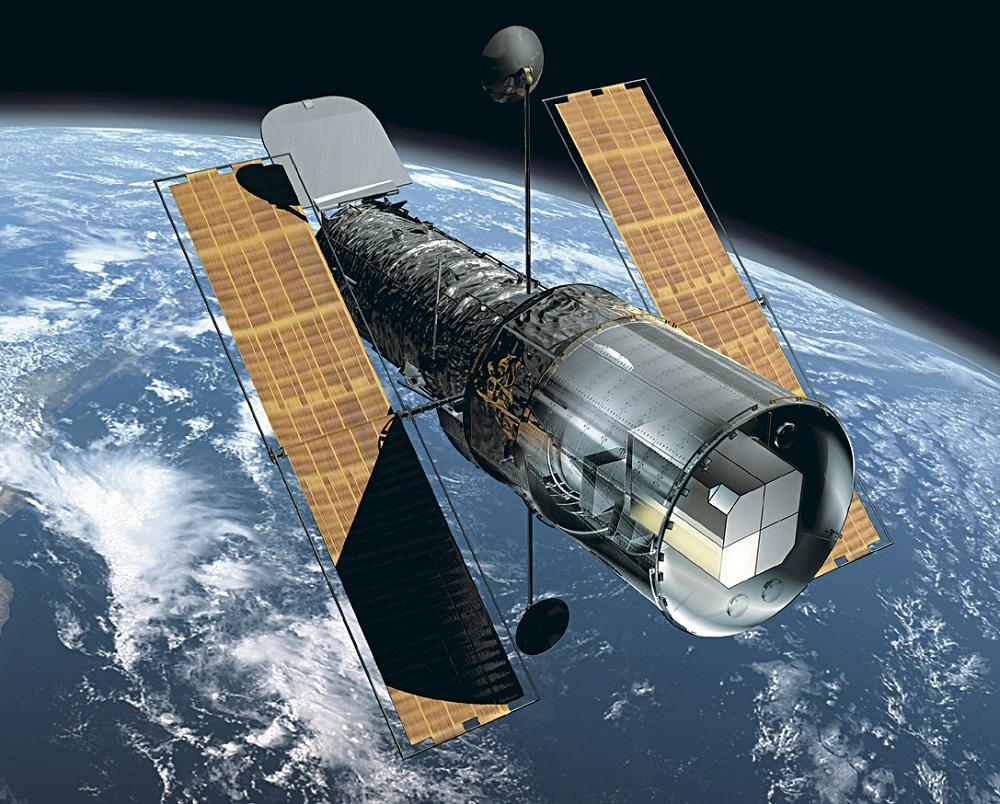
Artemis II has returned. The crew is safe. The electronics performed without failures.
In my view, this is the most meaningful measure of any system: not gigahertz or nanometers, but simply whether it completed its task and brought people home safely.
As we move toward sustained lunar operations and eventually Mars missions, these seemingly outdated, certified chips will remain at the core of every spacecraft. Quiet, reliable, and without unexpected behaviour – exactly as required.
Read also:
- Balcony Solar System, Part 1: EcoFlow Stream Pro (Ultra) – A Residential Energy Independence Solution
- Balcony Solar Power System, Part 2: EcoFlow Stream Setup, Basic Configuration, Backup Power, and Scalability
- What Happens to Astronauts’ Brains in Space?
Weapons of Ukraine’s Victory: The “Shvidun” Interceptor Drone

