





© ROOT-NATION.com - Use of content is permitted with a backlink.
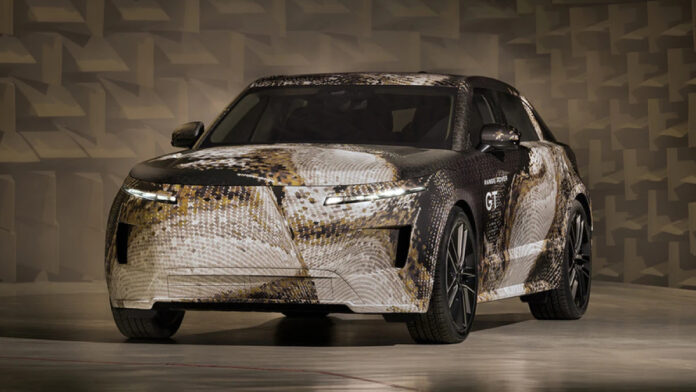
The Range Rover brand surprised the public with the unconventional silhouette of its upcoming GT model, which turned out to be the closest to a traditional sedan in the brand’s entire history.
In the released photos from the final stages of testing, the camouflaged vehicle demonstrated the luxury brand’s shift away from its familiar, boxy, monumental SUVs toward a radically new segment. While previous generations of the Range Rover focused on off-road capabilities and flawless all-wheel drive, the GT model is being developed as a luxury cruiser designed for high-speed travel on paved roads.

Read also: AERONAUT – everything that flies above the ground: aviation, UAVs and drones, rockets, and space
This step is particularly significant, as it marks the first public unveiling of the technical platform that will serve as the foundation for an entire lineup of future Range Rover models.
The very use of the GT badge was a hint at this shift in concept. Historically, the term “Grand Tourer” has encompassed both uncompromising sports cars and massive, comfortable premium sedans. The term’s roots date back to the 19th century, when wealthy young Europeans embarked on the so-called “Grand Tour” across the continent for cultural enrichment, which later gave rise to the Italian concept of Gran Turismo. This term was applied to high-performance cars designed for long, comfortable journeys at high speeds, with classic models from Jaguar and Aston Martin serving as prime examples.

As consumer preferences have shifted, this category has expanded to include super-SUVs such as the Bentley Bentayga or the Porsche Cayenne. And it is the Range Rover GT that is poised to join the ranks of this exclusive club.
Although the Jaguar Land Rover subsidiary is currently refraining from disclosing comprehensive technical specifications, the GT emerges as a modern, sophisticated interpretation of the classic Grand Tourer formula. The model is being developed as a refined, road-oriented luxury crossover designed to revive the spirit of long-distance journeys along continental highways. This model is certainly no ordinary Range Rover.

The developers chose to use footage from a soundproof test chamber for a reason: Land Rover aims to clearly demonstrate the high level of quietness and the complete absence of even the slightest extraneous noise in the cabin.
Essentially, the Range Rover GT will be the first fully electric model in the family, built on the new EMA architecture, and production will be established at the British plant in Gaylewood. Initially, the vehicle will enter the market as a pure electric vehicle, though a hybrid version may also be introduced in the future. Brand Director Martin Limpert acknowledged that the GT version is the most “passenger-car-like” of any model the company has ever produced. At the same time, the brand is world-renowned for having effectively pioneered the luxury SUV niche in the 1970s with its debut model – a boxy, tall, and premium vehicle.
The brand’s current lineup includes the Range Rover, Range Rover Sport, Range Rover Velar, and Range Rover Evoque. The GT model will slot right in the middle, positioned above the Velar and Evoque. Land Rover notes that additional information will be released later this year, but the GT will not go on sale until at least 2027.

The GT’s exterior features a distinctive aerodynamic silhouette with a tapered rear end. It is a distinctly coupe-style crossover that nevertheless retains Range Rover’s traditional large wheels and signature horizontal headlights. The GT’s interior is also completely devoid of retro styling.
The interior features a minimalist dashboard with a full-width horizontal air vent, a more compact steering wheel with an integrated gear selector, and a 13-inch multimedia screen, with virtually no physical buttons. There’s no return to analog switches here – the focus is on advanced voice control. According to Range Rover representatives, the updated operating system will respond much more naturally and quickly to everyday human speech.
In the spacious rear cabin, beneath the largest panoramic roof in the brand’s history, buyers will be offered a choice between a four-seat configuration with individual seats or a five-seat bench, and all seats can be folded flat to create a level floor for greater practicality.
Parent company Tata is investing approximately $5.32 billion in the construction of a battery plant in Somerset, UK, so the vehicle is expected to use state-of-the-art flat battery cells integrated into the platform’s floor. According to industry insiders, the GT’s range will be targeted at over 500 miles (800+ km). Prices are also expected to rise: automotive circles are discussing a starting price that will exceed $90,000.
Read also: First Impressions of Toyota bZ4X: Brief Test Drive on Road