





© ROOT-NATION.com - Use of content is permitted with a backlink.
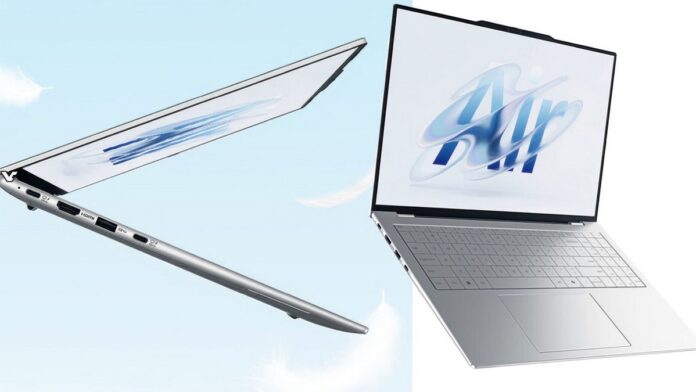
The Chinese market has started accepting pre-orders for the Lenovo Lecoo Air 14 device, and this event hides much more significant nuances than it might seem at first glance. This is not just another ultraportable computer in the budget segment. This model is the debut commercial laptop created in accordance with the requirements of Intel’s new Project Firefly supply chain standardization program.

The main objective of this initiative is to bring the price tags of thin and light Windows-based solutions closer to the MacBook Neo. Before the Lenovo brand finally approved the Air 14 chassis thickness at 12.95 mm, Intel executives demonstrated their own chassis prototype, which was only 11 mm thick.
Lenovo Lecoo Air 14 opens the list of laptops developed under the Intel Project Firefly program. The project aims to unify parts borrowed from smartphone production lines to reduce the cost of computers based on the Wildcat Lake platform.
The technical capabilities of the new product are provided by an Intel Core 5 315 processor (Wildcat Lake architecture), complemented by 12 GB of RAM. The device weighs exactly 1 kg, and its profile thickness is 12.95 mm. The fourteen-inch screen has a brightness of 300 nits and provides a refresh rate of 60 Hz. The initial cost of the equipment is reduced by about $413 thanks to government subsidies.

This computer is part of the Lecoo Air family, which also includes the Air 13 and Air 15 versions. The Lecoo Air 13 is equipped with a more powerful Intel Core 5 320 chip, has 16 GB of RAM, and a display with a resolution of 2560×1600 pixels and a frequency of 120 Hz. The Air 15 variant offers users a 15.3-inch matrix with a resolution of 1920×1200 pixels.

The reasons for the appearance of this laptop lie in the implementation of the Project Firefly initiative. Intel has launched the large-scale Project Firefly program with a very specific goal: to make mobile computers based on Wildcat Lake crystals more accessible to customers in China, where Apple’s position is significantly strengthened by the success of the low-cost MacBook Neo portable device. The strategic plan calls for standardization of interconnect interfaces, mass adoption of components and assemblies originating from the mobile phone industry, and provision of ready-made basic designs to various manufacturing partners. All this is intended to reduce the financial costs of designing each individual product.
Lenovo Lecoo Air 14 became the first commercial implementation of this strategy. During the official presentation of the Project Firefly initiative, Sam Gao, head of the Client Computing Group at Intel, demonstrated a test sample of an 11 mm thick case. The production model from Lenovo turned out to be very close to this benchmark with a thickness of 12.95 mm. In total, more than 70 different computer systems based on the Wildcat Lake architecture are planned to be released as part of the Project Firefly initiative, but it is the Lenovo Lecoo Air 14 that opens this large-scale marathon.
Read also:
- Lenovo Launches AI Monsters at #CES2026: New Servers Promise Revolutionary Inference
- Acer Swift Go 14 AI Review: General-purpose laptop with OLED display