





© ROOT-NATION.com - Use of content is permitted with a backlink.
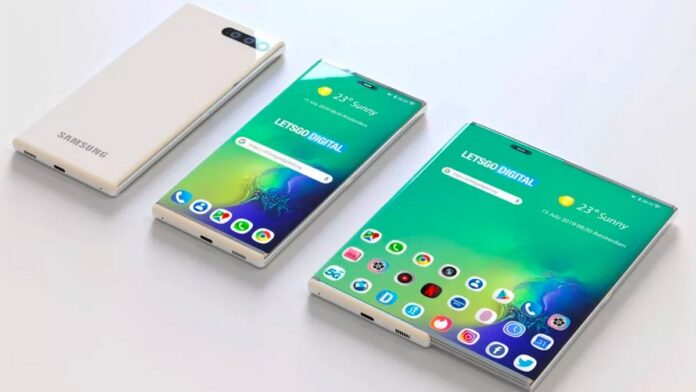
Samsung, which already holds the lead in the segment of devices with flexible screens, continues to actively search for new design solutions for mobile gadgets. Recent patent documents indicate that the South Korean manufacturer has returned to the development of models that can twist and slide. This time, the presented concepts look much more realistic for everyday use than the futuristic prototypes that were demonstrated in previous years. These patents, which were first spotted by WearView, describe several variants of devices where the usable display area is increased by special sliding or retractable mechanisms.

The first concept looks like a classic monoblock. However, unlike the Galaxy Fold line, this device does not open like a book, but expands horizontally when you pull its edges. This allows the user to get a much larger screen for simultaneously working with several programs, mobile gaming, or watching video content. It seems that Samsung is trying to combine the compact dimensions of a regular phone with the scale of a large screen of foldable devices.

When assembled, the flexible panel is completely hidden inside the protective case. When the user slides the side edges apart, the matrix moves outward, revealing a large work surface. Samsung notes that this engineering idea is designed to protect the sensitive coating from scratches, scuffs, and damage when the device is not in use. This directly solves one of the main problems that still causes concern among potential buyers of flexible devices.

The documentation also mentions the integration of special sensors that record the degree of screen extension and the speed of its movement. Thanks to this data, the software will be able to adjust the system interface on the fly to the current size of the panel and its orientation in space.
Of course, we are currently talking only about patent developments. The South Korean giant annually registers a huge number of different ideas, and a significant part of them is never implemented in commercial products. In addition, the production of sliding smartphones involves serious technical challenges, including the durability of moving elements, long-term structural reliability, and finding free space for the battery.

Nevertheless, Samsung has been showing a steady interest in this area for a long time. The Samsung Display division has previously demonstrated working prototypes of OLED panels that can be twisted and slid apart at major technology exhibitions such as CES and MWC. Therefore, the appearance of these documents is a logical step in the development of the technology.

Moreover, moving screens can eliminate some of the drawbacks that are still inherent in modern folding models. Part of the audience is still annoyed by a noticeable crease at the fold or massive hinge units. At the same time, the sliding format allows the device to remain thin and compact most of the time, growing in size only when needed.

However, whether the mass consumer is ready for another unusual smartphone form factor is an open question. Foldable devices are only now, after years of careful refinement and improvement, beginning to confidently conquer the market.
Read also:
- Testing the APV video codec on the Samsung Galaxy S26 Ultra: Why Was This Not Mentioned Earlier?
- One UI 9 based on Android 17: Which Samsung devices will get the update