





© ROOT-NATION.com - Use of content is permitted with a backlink.
I’m breaking my own promise for the second time with this piece. And again, I’m doing it solely because of the new and modern APV video codec on the Samsung Galaxy S26 Ultra. The fact that 99% of reviewers simply ignored this feature genuinely deserves a separate discussion – one that explains why APV is worth the attention of technical specialists, video bloggers, and even film producers.

TABLE OF CONTENTS:
A video about the APV and the Samsung Galaxy S26 Ultra
Quick and simple
The point is this: Samsung Electronics introduced support for this codec alongside its flagship device, the Samsung Galaxy S26 Ultra. The codec, Advanced Professional Video (APV), is positioned as a potential competitor to ProRes in terms of high-quality video recording.

It is about 20% more space-efficient, uses an intraframe structure (i.e., each frame is encoded independently), and is therefore relatively straightforward to edit. It also supports extremely high bitrates.
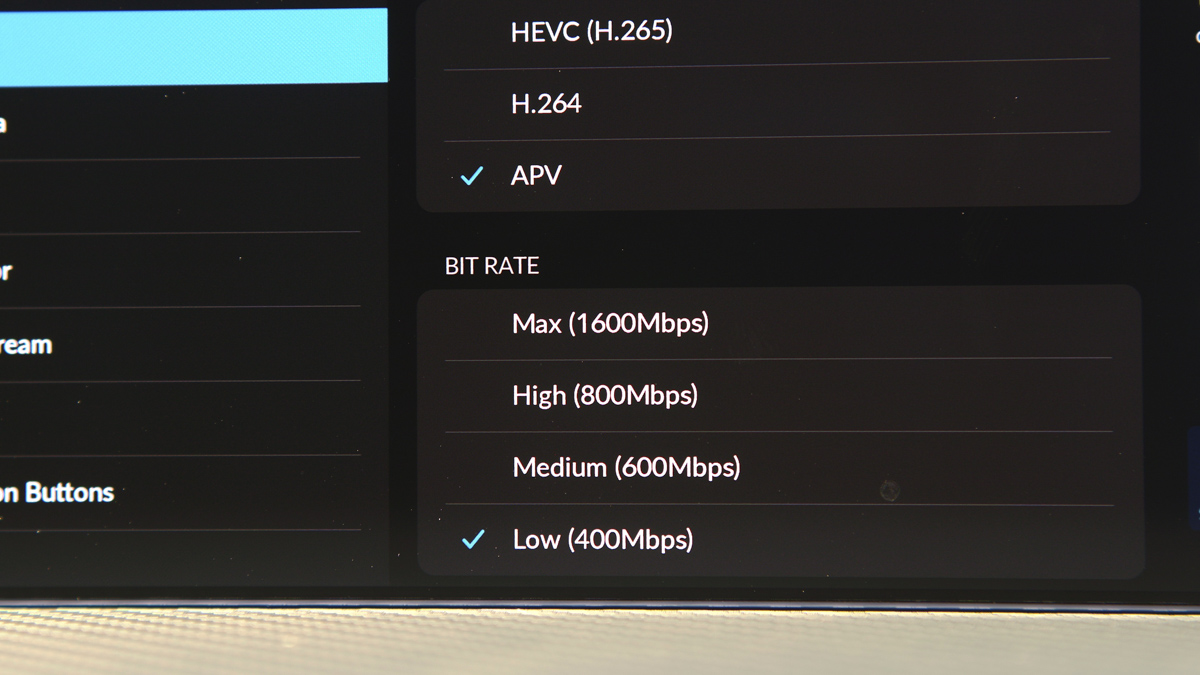
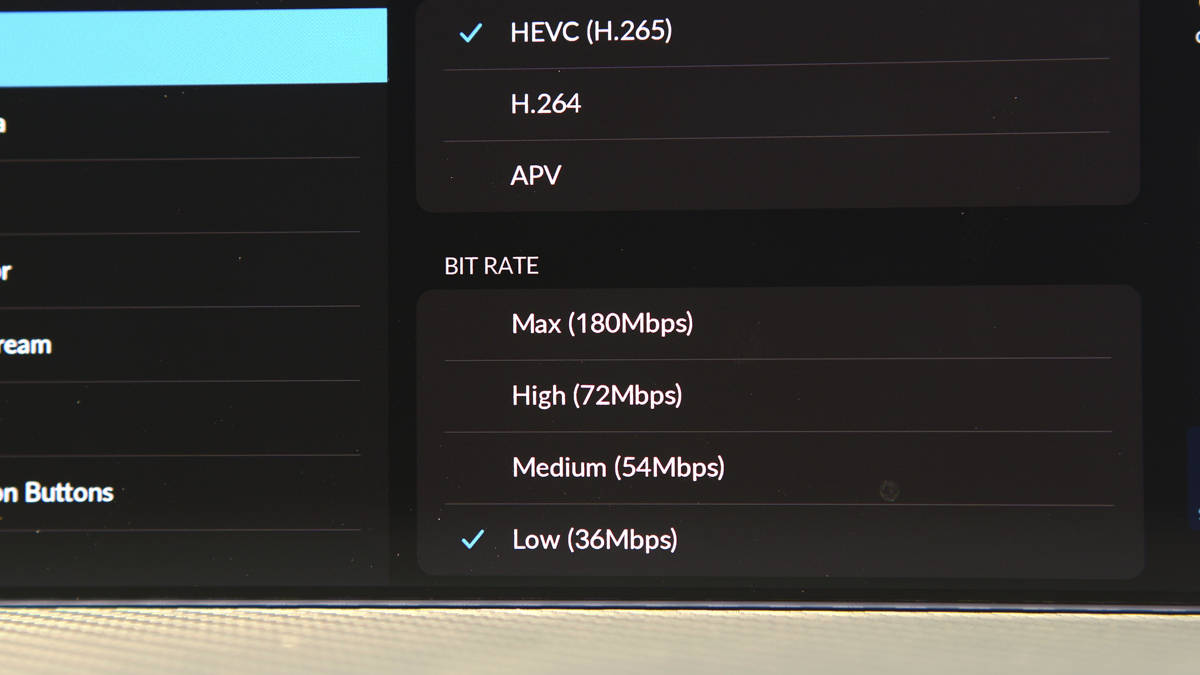
The codec is also fully royalty-free. It was initially developed by Samsung Electronics, later joined by contributors including Google, Qualcomm, and Chips&Media. It is fully supported in DaVinci Resolve starting from version 20.2. It is also natively supported in LumaFusion and CapCut.

It is also supported by media players such as FFmpeg (often used via FFplay), MPV, and PotPlayer. There are also reports of users enabling APV 4:2:2 recording on devices such as the Xiaomi 17 Ultra. This was not achieved without workarounds, but it appears to function without major stability issues.

There are, however, some limitations with APV. In particular, while the codec itself supports 12-bit 4:4:4 encoding, even 12-bit 4:2:2 recording requires hardware-level support. This capability is available on devices such as the Samsung Galaxy S26 Ultra and the Xiaomi 17 Ultra, which is why recording is possible on those platforms. Without dedicated hardware support, even 4:2:0 recording can become problematic.

At present, APV is not supported in any Adobe software. This may change in the future, but for now, serious workflows are effectively limited to DaVinci Resolve. That said, this is not necessarily a practical limitation, especially given that Resolve is increasingly positioned as a comprehensive toolset that could eventually replace not only Premiere Pro and After Effects, but also Lightroom in many production pipelines.
Key advantages
However, the main advantage of APV is the amount of retained image information. To put it in perspective, the lowest-quality APV option available on the Samsung Galaxy S26 Ultra – namely 4:2:2 LQ at 4K 30 fps – uses approximately 11× higher bitrate than HEVC HDR. All APV recording modes on the S26 Ultra, by the way, use 4:2:2 8-bit encoding.


In theory, it is possible to force 4:2:2 12-bit recording, but only in APV HQ mode, with a minimum bitrate of around 800 Mbps at 4K 30 fps on the Samsung Galaxy S26 Ultra. The S26 Ultra is also capable of recording 8K 30 fps and 4K 120 fps in APV HQ, with a bitrate reaching approximately 3200 Mbps. For comparison, ProRes operates at a slightly higher bitrate of around 3500 Mbps.

The main point is that you simply do not need that much data in most cases. In addition, the Samsung Galaxy S26 Ultra will support a wide range of accessories similar to those available for iPhone, making it viable for more serious video production workflows. At the same time, it is also perfectly suitable for standard YouTube content creation, allowing users to edit smartphone footage without constantly fighting aggressive compression artifacts.
Usability and quality
The lowest APV quality setting is around 400 Mbps. For context, my Panasonic Lumix S5 IIX records all my footage at 200 Mbps in 4K24. Look at the video at the beginning of the article – are you satisfied with the quality? Does the color hold up? Is there no visible banding or compression breakdown? If yes, then similar results can be expected from the Samsung Galaxy S26 Ultra as well.
For those unfamiliar with bitrate in megabits, here is a simple conversion: 8 Mbps equals 1 MB/s. This means 400 Mbps corresponds to 50 MB/s. In practical terms, a 5-minute recording in APV on the S26 Ultra would take at least 15 GB at the lowest quality setting – and up to 120 GB at the highest.

I’m not fully sure what “Blackmagic Camera” refers to here as a source app in your context (there are multiple similarly named tools and workflows), so I’ll keep the translation faithful but neutral. And I’m not even mentioning Blackmagic Camera support, which is where most of these numbers come from. In Blackmagic Camera, anamorphic modes are supported, as well as Open Gate 4:3 recording, and ISO values as low as 25 for video capture. That is, roughly speaking, about two stops below ISO 100. In practice, it is effectively like having an ND4 filter built in.
Conclusions on APV and the Samsung Galaxy S26 Ultra
I requested the Samsung Galaxy S26 Ultra for practical testing simply to confirm whether APV is truly what I thought it was. It feels like the entire industry has moved in one direction, while I’ve gone the opposite way – using a unit obtained via a promo code and evaluating it from a different perspective.

Modern Android smartphones now record video with a quality comparable to iPhones – if not better. I did not investigate all the underlying nuances of recording on the Samsung Galaxy S26 Ultra in detail. I noticed them, but they are not critical for my use case.

The fact is that APV is the most significant step forward in video recording on Android smartphones since the first cameras capable of 4K60. This has been overlooked by almost everyone. And regardless of my personal opinion about Samsung Electronics, I consider that to be fundamentally unfair. When I have the opportunity to address that imbalance, I try to do so. It simply feels more right to me.
Read also:
- Samsung Galaxy S26 Ultra Review: Reference Flagship Without Major Changes
- Samsung Galaxy S26 Plus Review: Is It Worth the Price?
- Samsung Galaxy S26 Review: Most Compact Flagship with Minimal Changes

