






© ROOT-NATION.com - Use of content is permitted with a backlink.
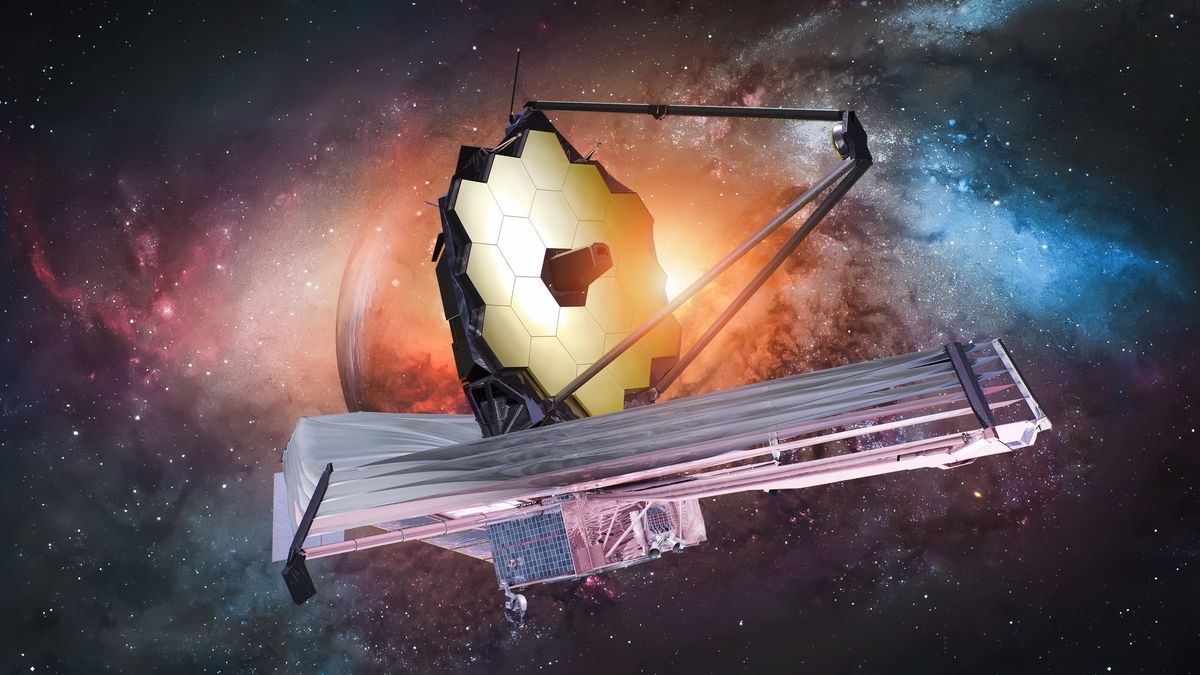
Astronomers have stumbled upon a cosmic phenomenon potentially unknown to science, which has been dubbed a “black hole star.” NASA’s James Webb Space Observatory has detected an extremely bright, reddish object deep within the early universe, which is a giant gas shell with a black hole at its center. In terms of size, this structure is comparable to the Solar System, but it emits significantly more energy than any known celestial body. Experts note that such anomalous characteristics point to the formation of an entirely new class of objects – a colossal gas cavity surrounding a gravitational monster.
Read also: AERONAUT – everything that flies above the Earth: aviation, UAVs and drones, rockets, and space
The study’s lead author, Rohan Naidu, who represents the Kavli Institute for Astrophysics and Space Research at MIT as a fellow of NASA’s Hubble and Pappalardo programs, emphasized the rapid shift in scientific understanding of this object. According to him, calculations indicate the presence of a central black hole with a mass 100,000 times that of the Sun. It is enveloped by a gigantic gas shell, comparable in scale to the entire Solar System, making the structure colossal.

The research team’s findings were published in the journal *Nature* based on data from an astronomical survey called Mirage or Miracle (MoM). Thanks to the capabilities of the James Webb Space Telescope, this project focuses on searching for primordial galaxies that formed just a few hundred million years after the Big Bang. It was while scanning distant star systems that scientists noticed an atypical source of red radiation.
At first, the red spectrum of the glow suggested that the light waves were simply being obscured and shifted by clouds of cosmic dust. However, a thorough spectral analysis refuted this hypothesis. Scientists recorded a sharp drop in radiation intensity in the shorter wavelength range – a phenomenon known as the Balmer jump.
Such Balmer jumps occur due to the absorption of photons by dense layers of gas in stellar atmospheres and are observed in stars such as Vega. At the same time, in the discovered source, this jump turned out to be significantly more intense than any analogues ever recorded in typical stars.
As Naidu noted, this object exhibited the strongest Balmer jump in the team’s entire history of observations, making it impossible to classify it as an ordinary star. This discovery suggests that scientists have stumbled upon a gigantic equivalent of a stellar atmosphere on an unprecedented scale.
Furthermore, spectral analysis revealed an almost complete absence of chemical elements heavier than hydrogen and helium. This chemical composition, combined with its extraordinary brightness and anomalous spectrum, fundamentally distinguishes the source from both typical galaxies and ordinary stars. According to the scientist’s assessment, the object is truly unique by many criteria.
This observation may also shed light on a broader mystery in the data obtained by the James Webb Space Telescope, which concerns the numerous small red sources in the early universe. Known as “little red spots,” these structures are frequently found in images of the distant cosmos but are virtually absent in the present cosmic era.
Naydu emphasized that such spots were ubiquitous at the dawn of the universe but have almost completely disappeared by today, and their nature remains one of the most debated topics in modern astrophysics. The MoM project was created specifically to test the theory that some of these extremely bright early clusters might be something entirely different from classical galaxies.
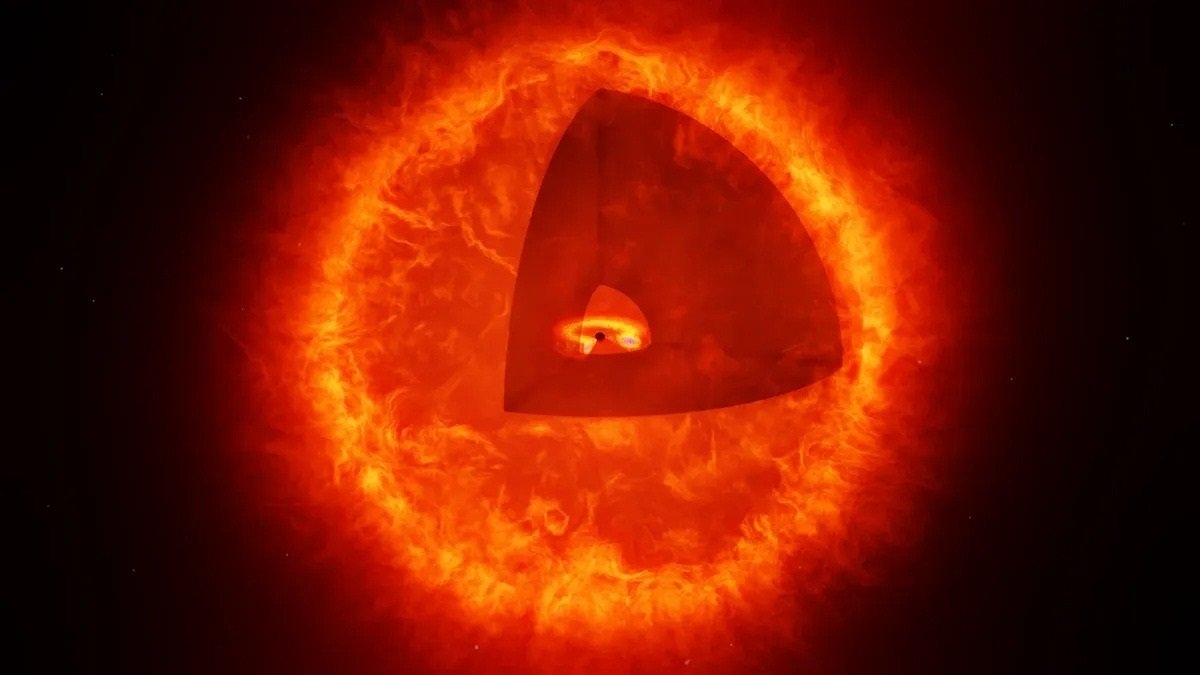
The researcher noted that the scientific community has long sought to explain the unexpected appearance of such bright structures during the early stages of the universe’s evolution. The data obtained confirm the hypothesis that at least some of these objects are not true galaxies, but merely resemble them in telescope images. The study was co-authored by MIT researchers Robert Simko and Wendy Sun, along with colleagues from other partner institutions.