





© ROOT-NATION.com - Use of content is permitted with a backlink.
Before outlining the lessons learned from using the Moza Air 2S, it is necessary to address several preliminary questions: why Moza was selected, why the Air 2S model specifically. Following this, the discussion will focus on practical observations derived from working with a high-performance consumer-grade camera stabilizer.

It is also important to note that, at the time of this video, the Moza Air 2S is understood to be an End-of-Life (EOL) product, meaning it has been discontinued. As a result, producing a full, detailed review is of limited relevance. However, Gudsen offers a range of current models that share many of the same core characteristics and advantages as the Air 2S. This means that the practical lessons derived from using this device remain applicable to newer products in the lineup. References to current models will be provided at the end.
I would like to thank Gudsen Moza for providing the model.
TABLE OF CONTENTS:
Specifications
- Mounting: quick-release platform
- Maximum load: 4.2 kg
- Wireless connection: Bluetooth
- Connection: USB Type-C
- Display: OLED
- Focus/zoom control: focus wheel on the body
- Pan rotation: 360°
- Tilt rotation: -100° to +200°
- Roll rotation: -190° to +110°
- Battery capacity: 3200 mAh
- Operating time: up to 20 hours
- Charging time: 2 hours
- Thread size: 1/4‘, 3/8’
- Dimensions: 184×478×206 mm
- Weight: 1.9 kg
- Warranty: 12 months
Moza Air 2S Video review
Background
This video was originally planned for late 2024 as a concluding piece to a specific period in my work. That period was defined by taking on projects without a fallback plan, including work for which I was not fully qualified at the time.

This applied not only to experience, but also to the available equipment. Despite these limitations, I took on the work with the understanding that there were few, if any, alternatives. For example, I was asked to film a 12-hour концерт for the Armed Forces of Ukraine in +30 °C heat not because of specific expertise in outdoor production, but due to a shortage of experienced camera operators, many of whom had joined the front.

For that reason, I did not refuse the work. I was often the fallback option, which in practice carries a level of responsibility that is difficult to anticipate in advance.
In this context, the Moza Air 2S became a symbolic tool. It reflects the idea that even when taking on unfamiliar and demanding tasks, it is still possible to find guidance and support – at least enough to navigate the initial stages. Just as I was asked to step in when no alternatives were available, I also had to rely on others for assistance, and that support proved essential.

In practice, this support was tangible. When I requested a microphone from SoundMag.ua, it was provided. The same applied when I asked for a podcast setup for the “Varto Zhyty” project. Likewise, Panasonic assisted with the acquisition of a camera, and I now work with the Lumix S5 IIX.
Primary objective
The Moza Air 2S was originally requested for filming a workshop project prior to the full-scale war – ByKyivWood, later known as Re4Win. This was a Kyiv-based workshop producing сувеніри to support the Armed Forces of Ukraine.
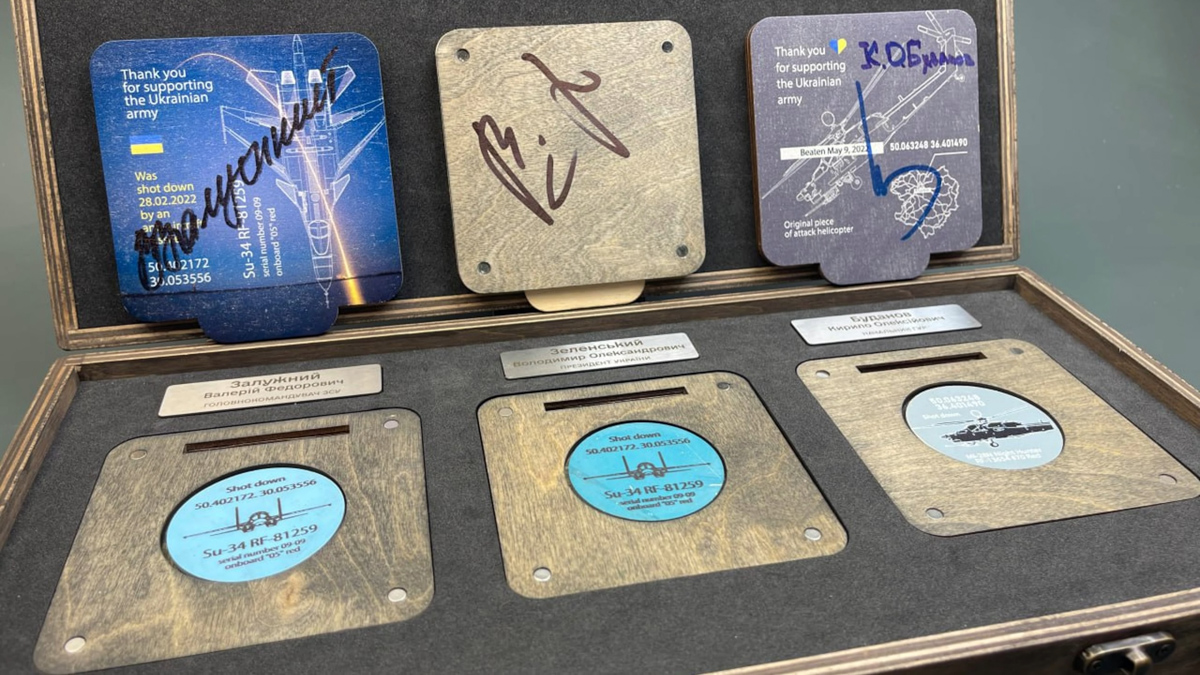
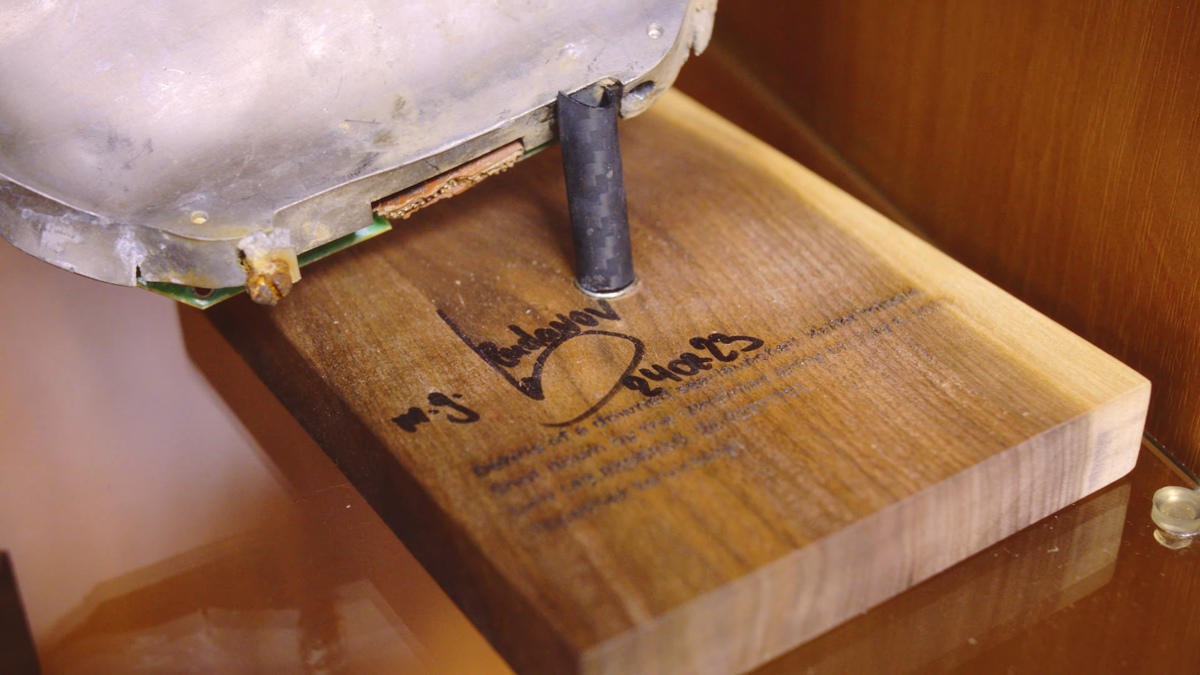
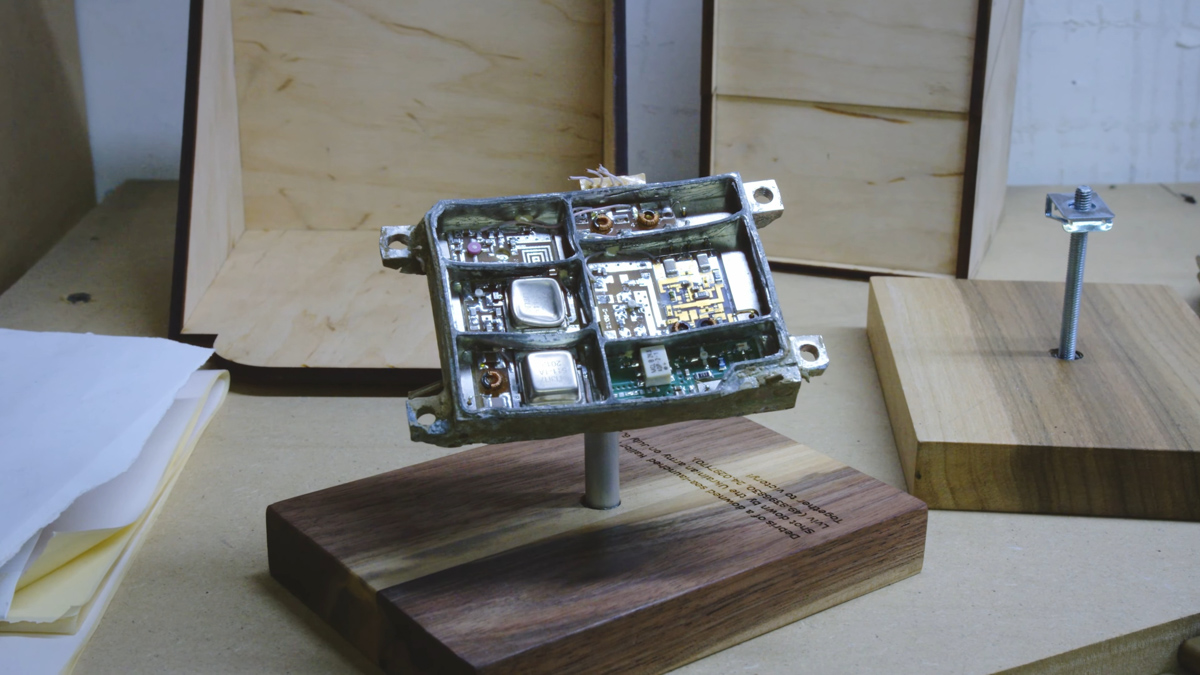
The lads there had items signed by Zaluzhny and Budanov, and a letter of thanks from Madyar, and I was to talk about how, with the outbreak of full-scale war, the craftsmen had retrained from making jigsaw puzzles to producing military equipment, 3D-printed parts for drones, camouflage netting… and souvenirs for fundraisers in support of the Armed Forces of Ukraine.
The lads made these souvenirs from the wreckage of rockets, tanks, helicopters and other debris left by the occupiers. Separately, later on in my studio, I filmed a project about the darts, or flechettes, with which the occupiers filled cluster munitions. I don’t know if I’ll find the footage. I don’t know if it’s been published on YouTube. I’ll show you the rough cuts if I can.

The thing is, I was well aware that I’d have a much greater responsibility on my shoulders, and that I’d have to be running around with a camera. And there’d be no time to rest. And my kit back then, I should point out, was heavier than an AK-74 – about 3.5 kg.
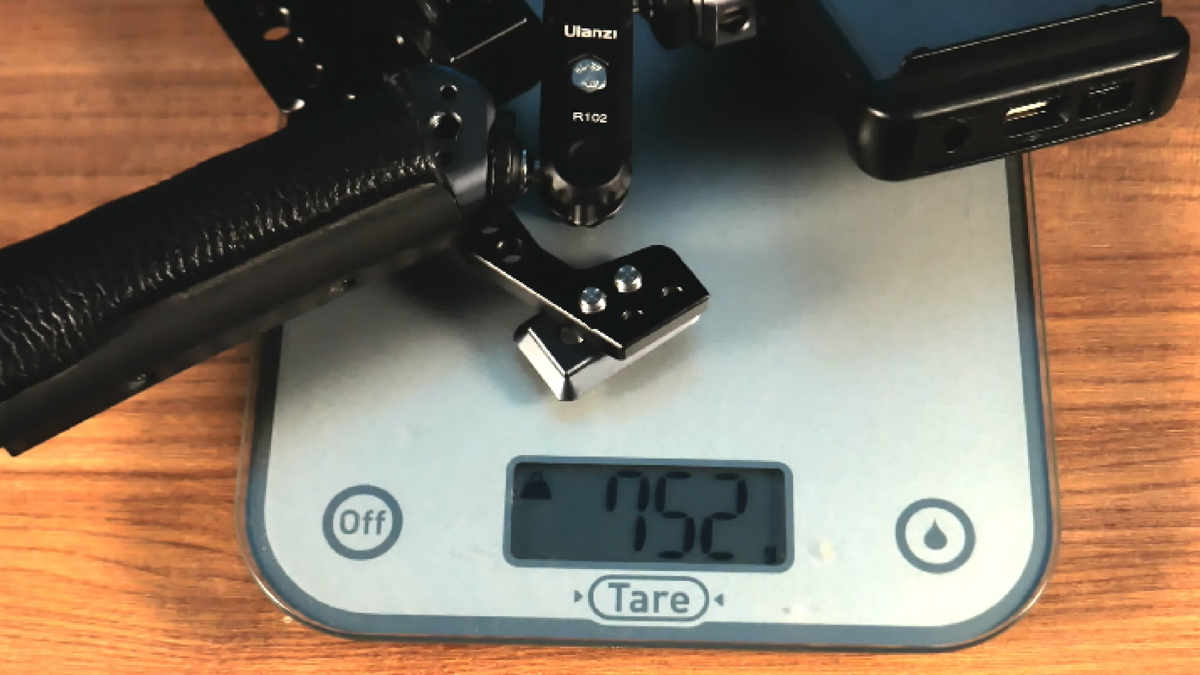
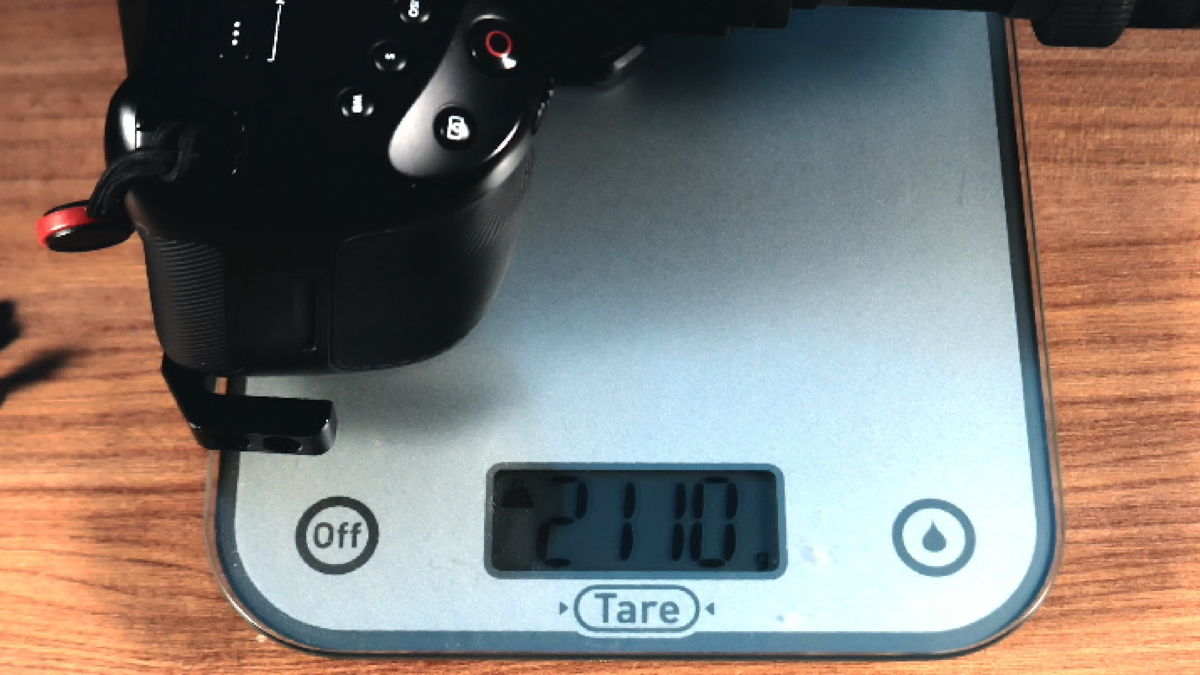
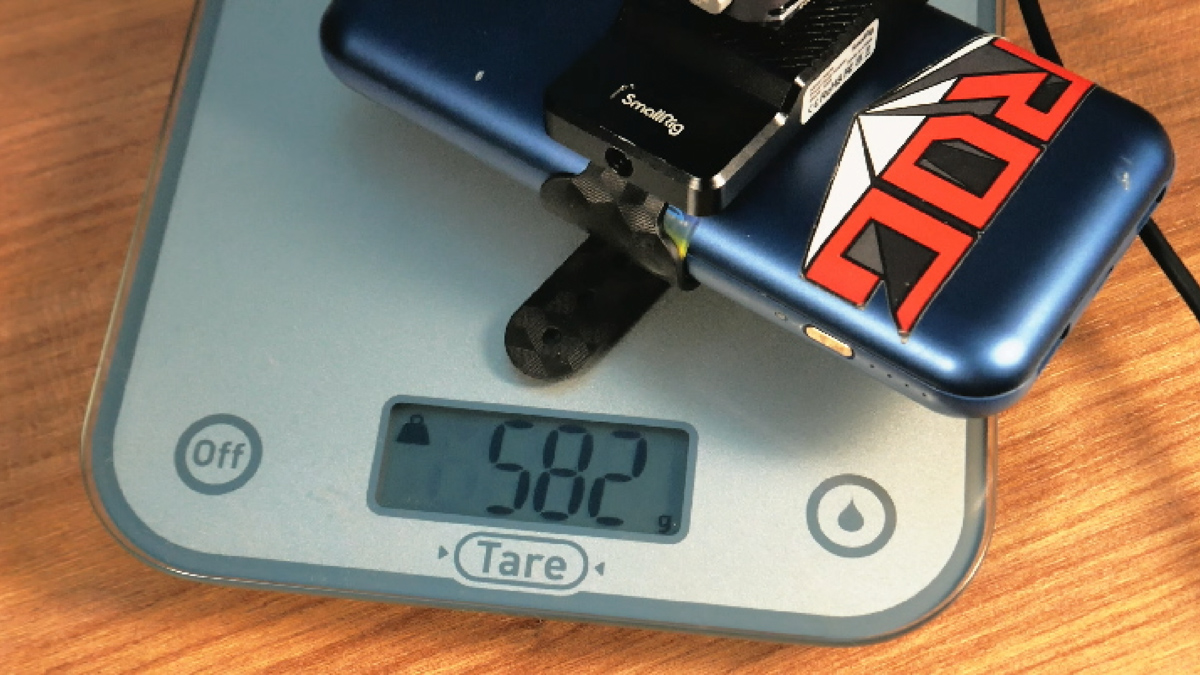
I understood that macro shooting would be required, and that it would no longer fit the “run-and-gun journalism” aesthetic that my colleague used when filming on my Blackmagic at the beginning of the full-scale invasion. He handled the shooting, while I did the color grading without yet having sufficient experience, which resulted in less-than-ideal color work.
Choice
In this context, I needed a camera stabilizer for a cinema camera, and I needed it relatively quickly. The first obvious question is why not rent one. The answer is twofold. First, it introduced additional costs that were not affordable at the time and remain difficult to justify. Second, it required additional time and effort for logistics, including travel and pickup/return procedures.

Third, there is a significant amount of stress involved, as any damage or malfunction could result in financial liability. Fourth, the exact duration of use was uncertain, making it difficult to determine an appropriate rental period. However, the primary factor was a personal tendency toward risk aversion. I generally consider worst-case scenarios when making decisions.

That the stabilizer might not be suitable, that it could fail, or that I might not be able to operate it effectively. For this reason, I requested the Moza Air 2S through MotoStuff from Gudsen. Prior to this, I had never used Moza equipment. I had reviewed stabilizers from Zhiyun, DJI, Feiyu-Tech, and Hohem, but none of those companies’ representatives responded to my inquiry. Gudsen, however, did respond – via their European office.

To avoid repeating the story I recounted in more detail in my review of the Moza AirCross S, I’ll just say that I received the Air 2S. I used it to film the Re4Win workshop and another project. And ever since then, I’ve been trying to repay the favour.

Recently, I learned that the Re4Win workshop was hit by debris and partially burned. The damage was not total, and operations are being restored, but the space itself has been significantly altered. In this context, my footage shot on a Blackmagic Pocket Cinema Camera 4K with the Moza Air 2S stabilizer has become one of the most detailed visual records of how the workshop looked during its most active period – when it was producing work for the Armed Forces of Ukraine during one of the most difficult phases of the war. Re4Win will not return to that exact state again.
Lesson 1: Rental is not a universal solution
The story concludes here. The next part focuses on what I learned and what can be generalized from this experience. The first lesson is that renting equipment is only practical when you are fully confident in the compatibility of all components involved. Until every part of the system has been independently verified for compatibility, you are effectively working blind. In my case, a representative from MotoStuff assured me that the Blackmagic Pocket Cinema Camera 4K setup, including its accessories, would be fully compatible with the Moza Air 2S. In practice, this was not the case. The question then becomes: why did this mismatch occur?
Lesson 2: Compatibility
Compatibility between camera systems and stabilizers is not determined by weight alone, but also by physical dimensions and overall balance. As mentioned earlier, my Blackmagic setup included an SSD-mounted configuration attached to the top handle. The stabilizer was unable to properly handle this configuration and consistently tilted downward under load. This occurred despite having approximately 0.5 kg of remaining payload capacity. The issue was not related to total weight, but to the camera’s form factor and how its mass was distributed across the stabilizer’s axes.

This information is available on Moza’s website, but it is primarily limited to overall length specifications. If the combined camera and lens setup is too long, proper balancing on the stabilizer becomes impossible. The same applies if the camera body is too wide or too tall – each of these dimensions can prevent correct stabilization setup, regardless of whether the payload weight is within limits.
Lesson 3: Center of Gravity Shift
Remove everything that can be detached from the camera body and mount those components directly onto the stabilizer where possible. This is one area where the Moza Air 2S performs well as a system. It provides mounting options such as a rear ARRI rosette interface and a side NATO rail mounting point, allowing for more flexible redistribution of accessories and improved balance adjustment.

With the introduction of the Moza Air 2S into my setup, the camera configuration changed significantly. The SSD was repositioned from the top handle to a side-mounted orientation. Power delivery to the camera no longer came from a handle-mounted powerbank adapter, but directly through the stabilizer via the 7.4V DC output. An ARRI rosette was used to mount a SmallRig 3093 powerbank adapter as a structural attachment point. In this configuration, the adapter powered the stabilizer, while the stabilizer in turn powered the camera.

There was no dedicated emergency backup power source in this setup. If the stabilizer battery – rated at approximately 3200 mAh – was depleted, the camera would shut down as well. However, the stabilizer itself was powered via a power bank. This provided an effective operating window of roughly 2–4 hours, depending on usage, with the possibility of extending runtime through power bank replacement.

Lesson 4: Endurance
The heavier the stabilizer setup, the more important it becomes that it can be held comfortably for extended periods. At the same time, a larger portion of physical effort is spent simply maintaining a stable, level framing. In response to the common criticism – along the lines of “if you can’t hold 3 kilograms for a few hours, go to the gym” – my answer is straightforward.

While I’m at the gym, will you be handling the editing? Because if not, the choice becomes between training and earning a living. In practical terms, I prioritize the latter. More seriously, in most cases you will still need to handle post-production after filming. That is why any available opportunity to reduce physical strain during shooting should be used. It is also important to account for fatigue in planning and allocate sufficient time for rest.
Lesson 5: Grip comfort
Even if the stabilizer and camera setup is lightweight – around 1 kg in total, which is relatively modest – fatigue will still accumulate over several hours of continuous use. This becomes especially noticeable when the stabilizer is held at eye level with the camera screen, requiring the elbows to remain unsupported. In this position, monitoring the image on the display is only practical if it is kept within the operator’s line of sight. This is not an unusual constraint, as not all cameras provide fully articulating screens, unlike some models such as Blackmagic.

What I recommend, in short: keep your elbows close to your body and hold the stabilizer with both upper and lower grips as low as possible. In many cases, a tripod mount is attached to the bottom of the stabilizer, and it is preferable to use it as an additional grip point. In the case of Moza systems, the included tripod is well-designed for this purpose. The Moza Air 2S comes with a solid metal tripod featuring rubberized surfaces on both ends, allowing it to function effectively as an auxiliary handle. This kind of setup provides a practical secondary grip option. I can compare it with several alternatives, and in this case the implementation is notably well thought out.

If constant screen monitoring is required, a side handle combined with an external monitor becomes essential. In most cases, side handles include mounting points for attaching a monitor. Additionally, there are inexpensive load-distribution accessories available on AliExpress, including neck straps, waist supports, harnesses, and load-bearing vests. Any solution that transfers part of the system’s weight from the arms to the neck, shoulders, or waist can significantly reduce fatigue. In my case, a neck-mounted support strap costing around $11 has already provided a noticeable improvement in handling comfort.
Lesson 6: Reliability of accessories
The sixth lesson is a personal one. It is important to verify how the follow focus system and all included accessories actually perform in practice. In the case of my Moza Air 2S, a branded follow focus unit was included in the kit. It featured a side-mounted rotary control ring and initially appeared to be a well-designed component. However, a potential limitation is the inability to properly adjust sensitivity or disable acceleration behavior in the control response.

For me personally, the main issue when using stabilizers has been close-up shots. When I tried to set an accurate focus point on a Blackmagic camera paired with the Sigma Art 18–35 lens, I found it difficult to consistently hit the intended focus position. The problem was not strictly related to the follow focus unit itself, but rather to the configuration and tuning of the stabilizer system as a whole.

When I rotate the control wheel on the stabilizer slowly, the corresponding movement on the follow focus responds too weakly and with noticeable delay. When I rotate it quickly, acceleration is triggered, but the resulting focus shift still lacks precision. At this point, I do not have a clear method to resolve this behavior on the Air 2S. I also tested the same follow focus system with the AirCross 2, and observed a similar response pattern there as well.
Conclusions
As a final summary, I want to express my gratitude to Moza for enabling several projects that were personally important to me, as well as relevant to volunteers and to Ukraine as a whole. I do not know when I will next use this stabilizer, and I am not certain there will be a further need for it given changes in my setup. However, I am satisfied that I had access to the Gudsen Moza Air 2S at all.

Read also:
- Sony A7C Camera Review: The Smallest and Lightest Full-Frame Camera in the World
- Review of Zhiyun Weebill Cinepeer 3E Stabilizer
- Experience with Yongnuo YN35 F2C: Legendary Full-Frame Lens

