
© ROOT-NATION.com - Use of content is permitted with a backlink.
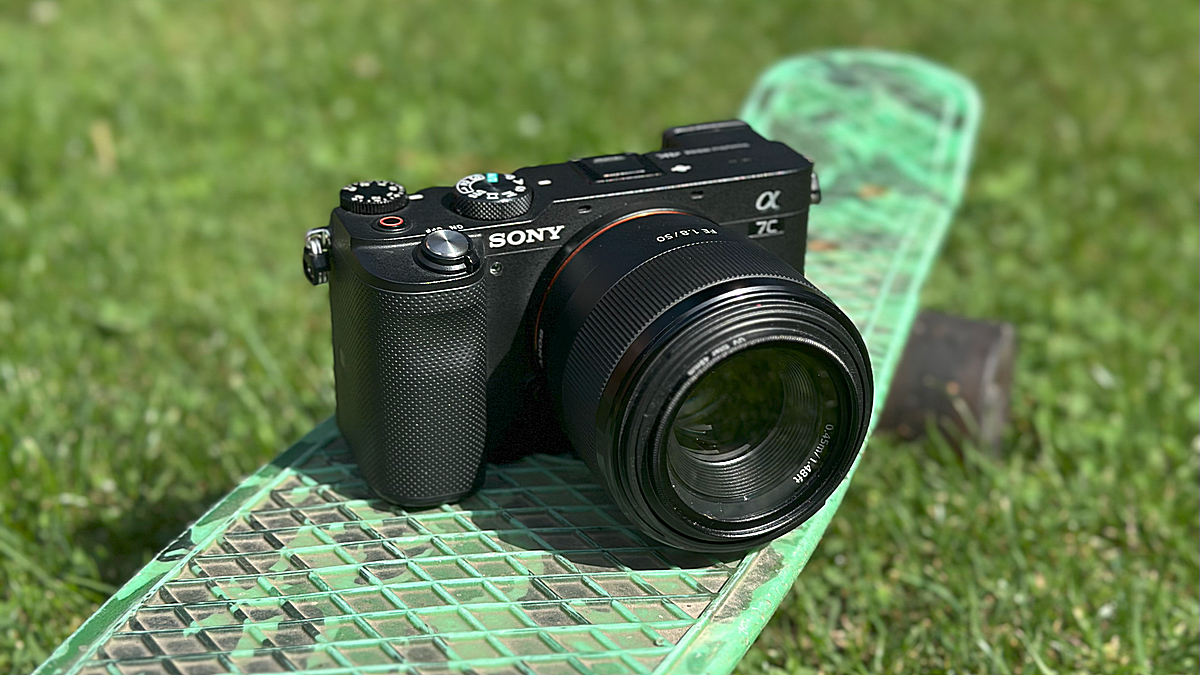
When Sony decided to release the A7C, the goal was clear: to create a full-frame camera in the most compact body possible. And they succeeded. The Sony A7C is currently the smallest and lightest full-frame camera in the world – a successful attempt to combine the capabilities of a serious mirrorless system with the portability valued by travel photographers and content creators.
At the same time, the Sony A7C isn’t designed to appeal to everyone. It’s not for those who prefer a large grip and extensive button controls. This camera is aimed at users who want the full power of a full-frame sensor without having to carry an extra 1.5 kg of gear.
Did the Sony A7C live up to expectations? Is it still worth considering in 2025, given that it was released in 2020? Most importantly, are its technical capabilities still relevant today? Here, I’ll cover how it performs in real-world shooting, how comfortable it is to use, and whether it’s suitable for those who want a compact setup without sacrificing image quality.
TABLE OF CONTENTS:
SONY A7C Specifications
- Sensor: 35.6×23.8 mm, CMOS, Exmor R, full-frame
- Resolution: 24.2 MP
- Processor: BIONZ X
- ISO range: 100-51200 (expandable to 50-204800)
- Stabilisation: 5-axis, up to 5 stops of compensation
- Autofocus: 693 phase detection points + 425 contrast points
- Continuous shooting: up to 10 frames/s with AF/AE
- Video: 4K up to 30p (6K oversampling), Full HD up to 120p
- Video formats: XAVC S, AVCHD
- Shutter: 1/4000 – 30 s, electronic up to 1/8000
- Viewfinder: 2.36 million dots, OLED
- Display: 3″, 921k dots, tiltable, touchscreen
- Interfaces: Wi-Fi, Bluetooth, USB-C, HDMI
- Slots: 1 slot for SD UHS-II
- Battery: NP-FZ100, up to 740 frames (LCD)
- Weight: 509 g with battery and memory card.
Read also: Bigme HiBreak Pro Review: An Almost Ideal E-Ink Smartphone for Digital Detox
Positioning and price
The Sony A7C isn’t just another addition to the lineup. It’s Sony’s attempt to appeal to users who want a full-frame camera without the bulk. The price, however, is on the high side. At launch, the body alone cost around $1,800, while the kit with the 28–60mm lens pushed the price to about $2,100. The positioning is straightforward: a compact full-frame option for those unwilling to compromise on image quality. In that sense, Sony managed to hit the mark. The A7C comes across as something in between a serious camera and a lifestyle-oriented device.
In the same price range as the Sony A7C, there are a few alternatives within Sony’s own lineup. The closest competitor is the SONY A7 III, which features a similar 24-megapixel full-frame sensor and a very capable autofocus system. Its trade-offs are a slightly larger body and less emphasis on portability. The A7 III typically sells for around $1,800–1,900 for the body. A step above is the SONY A7 IV, which introduces the newer BIONZ XR processor, a 33-megapixel sensor, and the ability to record 4K at 60fps without major compromises. However, it comes at a higher cost, about $2,500 for the body.
This positions the A7C as a practical choice for those who value mobility and modern features without moving into the higher pricing tier.
Is the Sony A7C worth its price? In many cases, yes – especially for those focused on travel, street photography, or reportage. However, if you prefer working with heavier lenses, value a more stable grip, and want extensive physical controls, it makes more sense to look at the standard A7 series rather than the compact-oriented A7C.
Read also: Reliable Driverless Cars: Why Full Autonomy Remains Out of Reach
Lenses used in tests
For a complete evaluation of the Sony A7C, I used several different lenses – each bringing its own character and purpose to the testing.
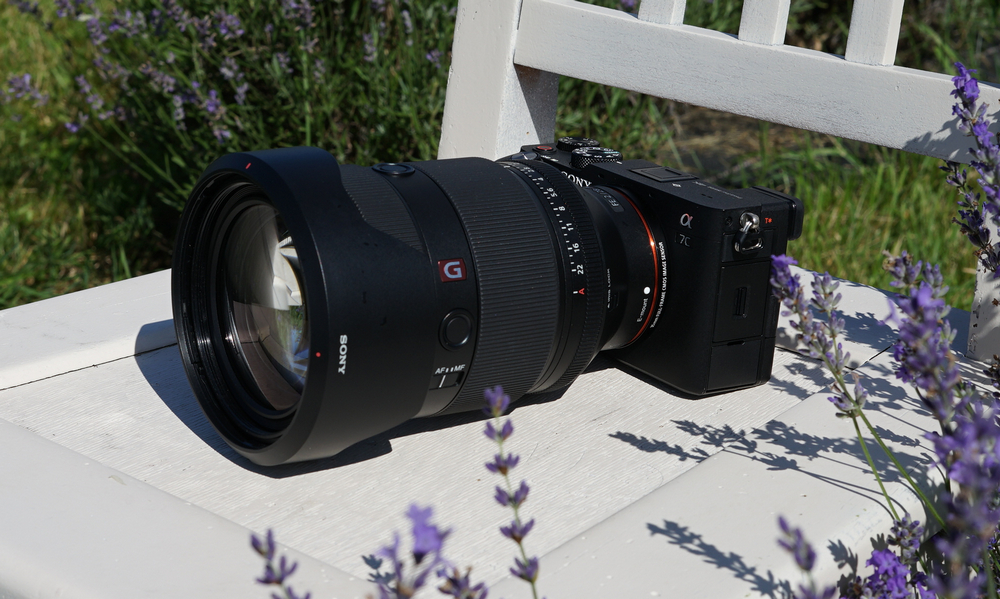
SONY FE 28-70 mm f/2 GM
The first lens is the premium SONY FE 28-70 mm f/2 GM, which I had separately for testing. It’s a high-end, versatile full-frame zoom suited for dynamic reportage, landscapes, and portraits. The 28–70mm focal range makes it flexible enough for both wide-angle work and moderate zoom. With an f/2 aperture, it delivers pleasing background separation, handles low-light conditions without heavily pushing ISO, and maintains strong image detail.
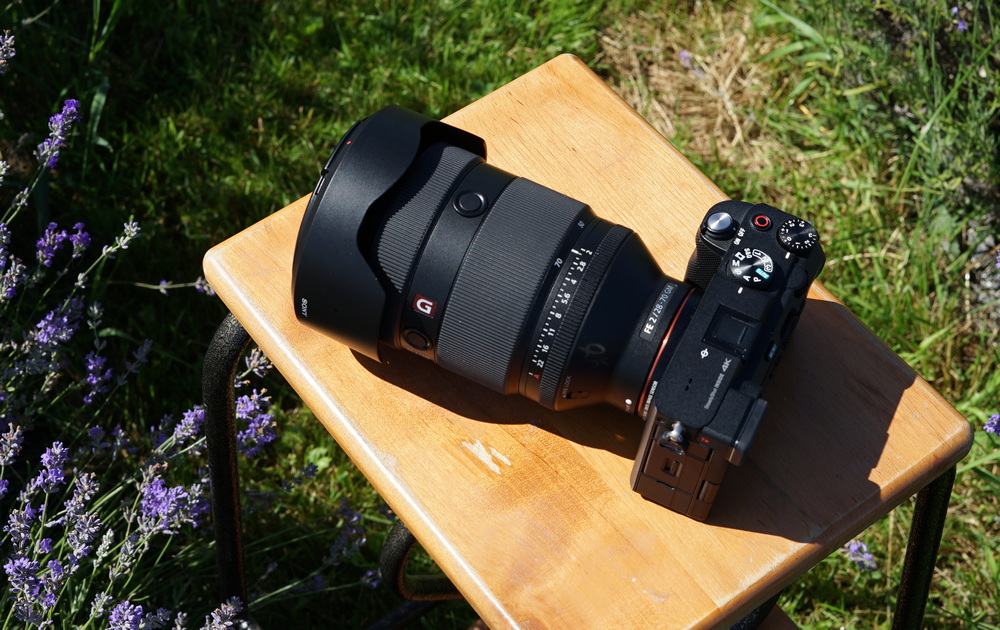
SONY FE 28-70 mm f/2 GM
Particular attention should be given to the build quality of the FE 28–70mm f/2 GM. Like other lenses in the G Master line, it comes with dust and moisture resistance, making it reliable even in challenging weather conditions. The autofocus is fast and nearly silent, which is especially useful for video where background noise can be distracting. Its optical design includes aspherical elements and ED glass, effectively reducing chromatic aberrations and maintaining sharpness across the entire frame. On the downside, the price is steep – high enough to feel like it could have documented the Apollo 11 landing. Given the sharpness it delivers, that comparison doesn’t feel entirely out of place.
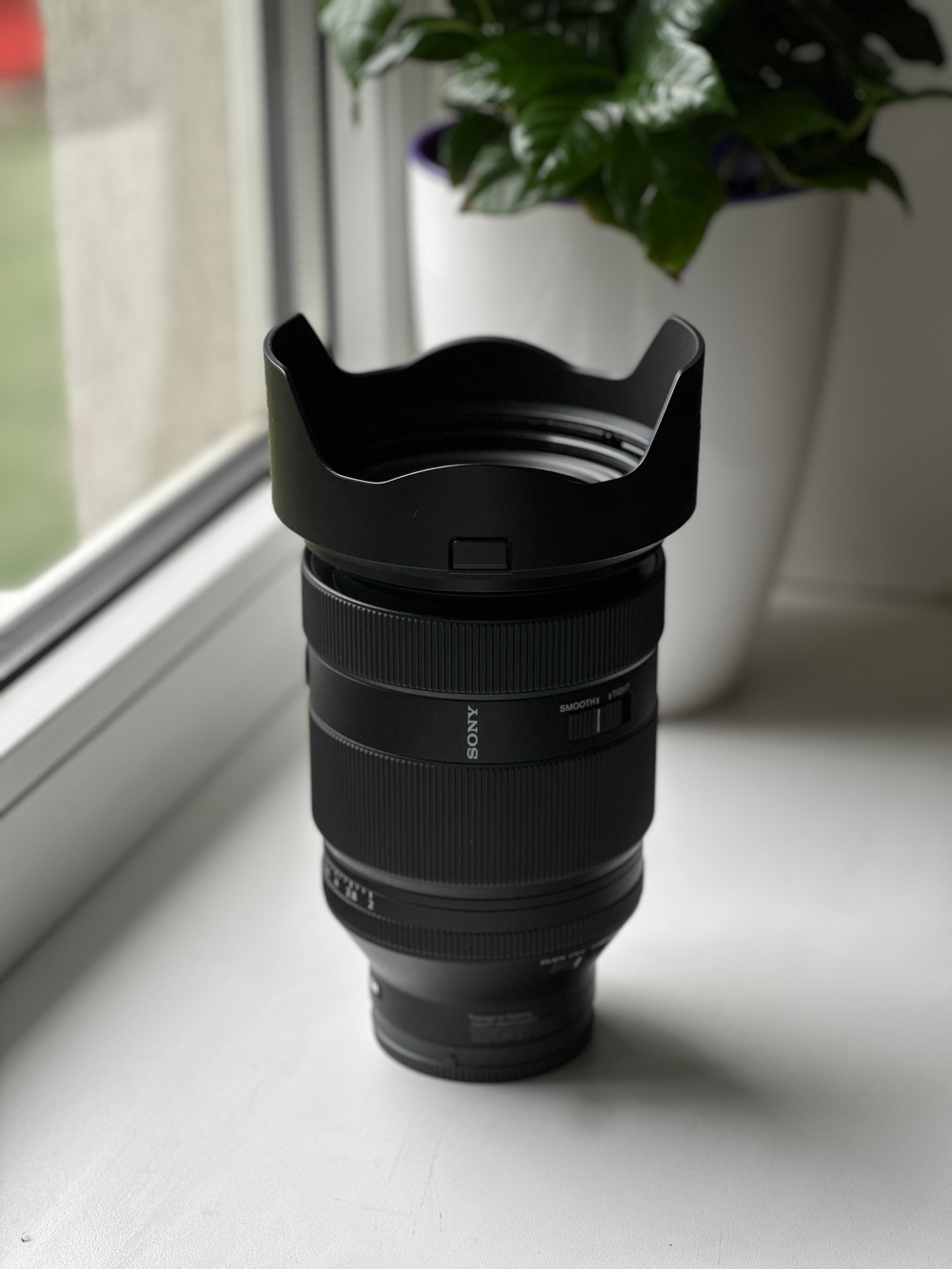
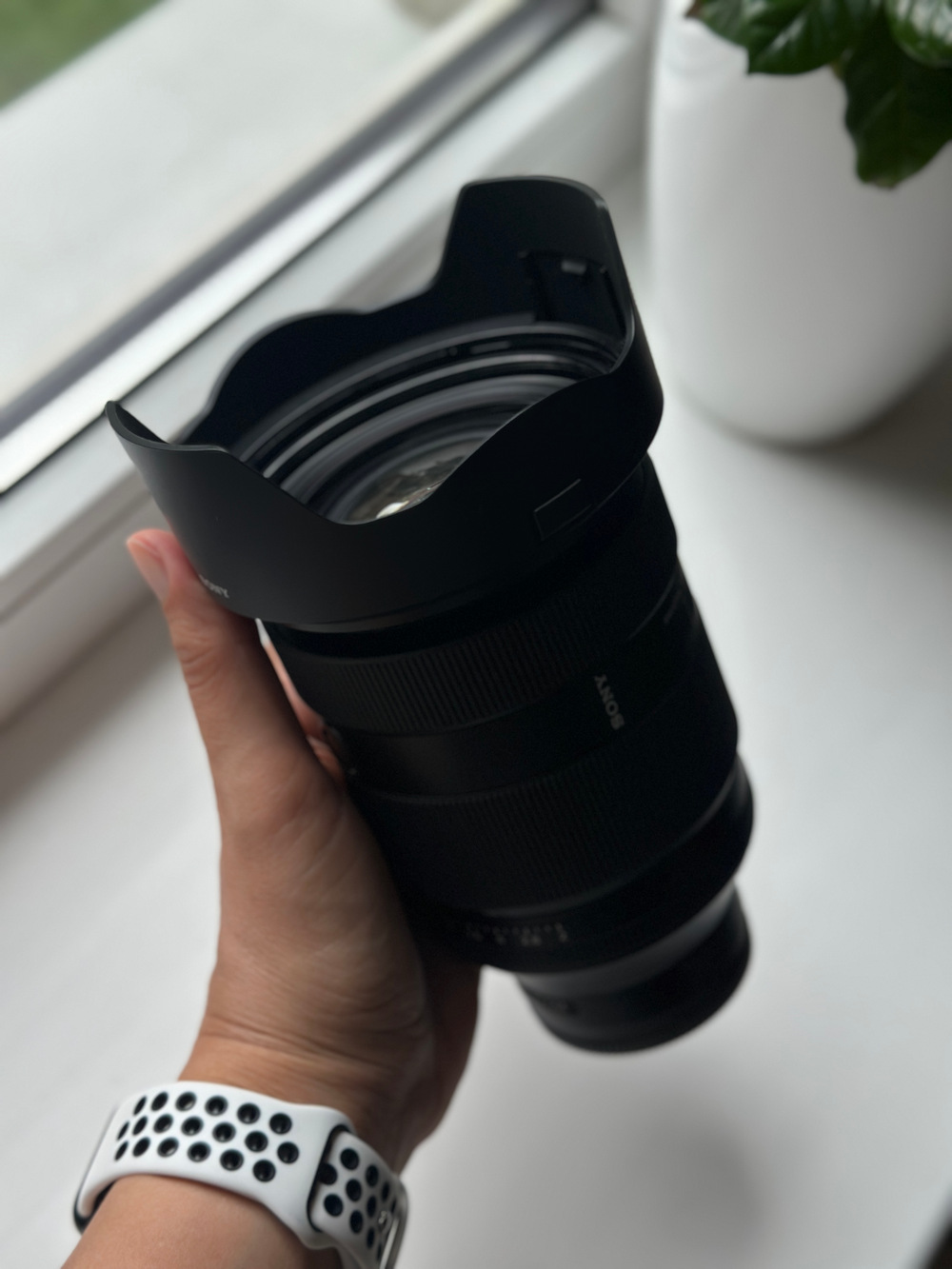
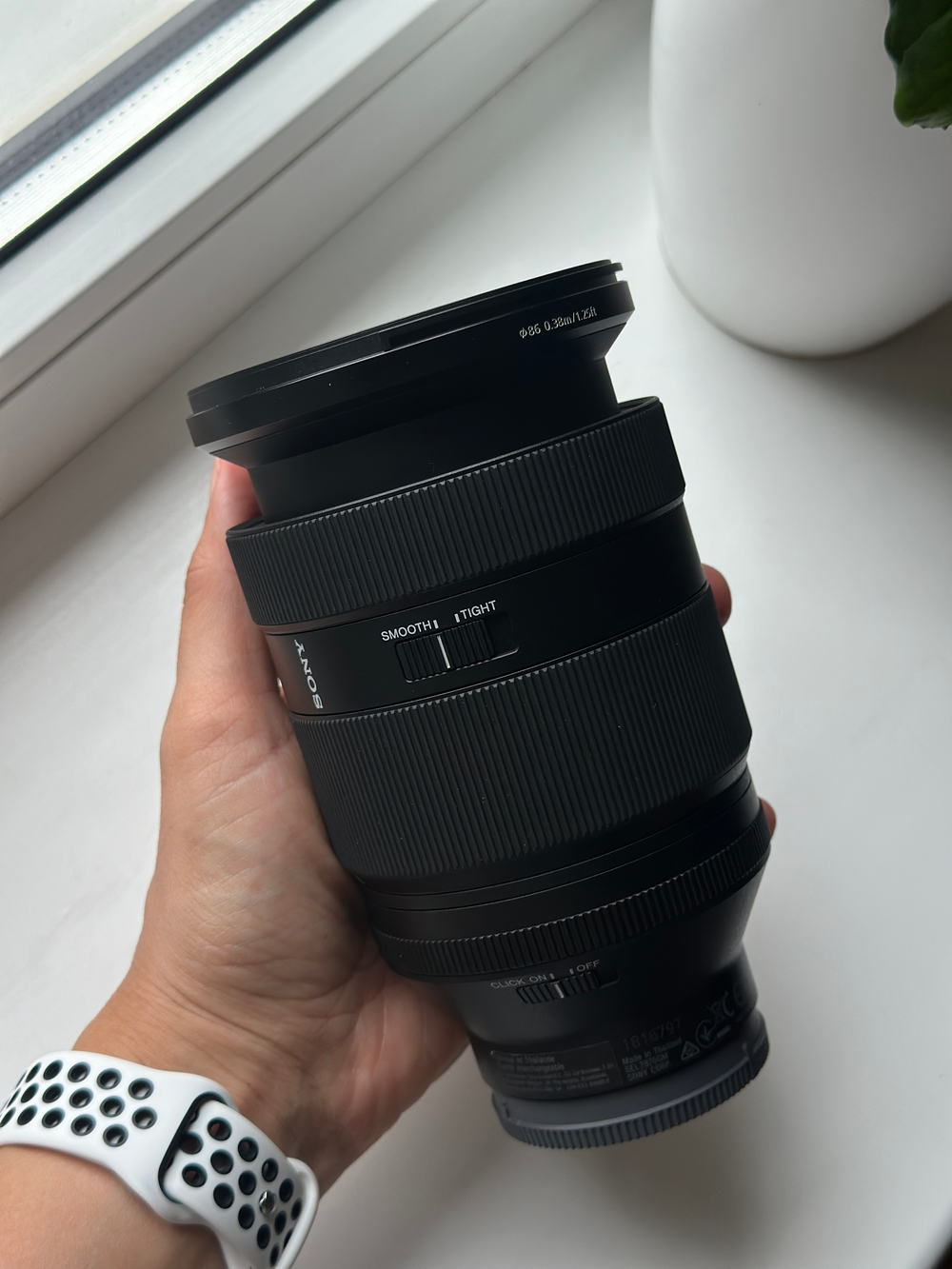
SONY FE 50mm F1.8 (SEL50F18F.SYX)
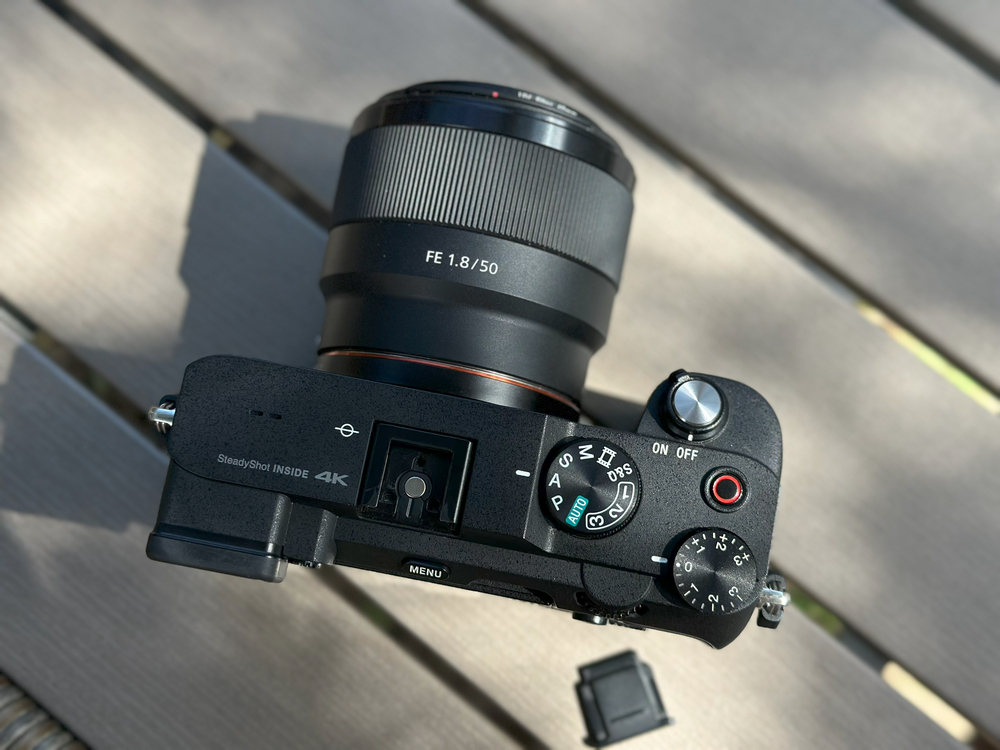
The second lens I used extensively during testing was my own SONY FE 50mm F1.8 (SEL50F18F.SYX). This classic “nifty fifty” has long been a favorite among portrait photographers. Its wide f/1.8 aperture produces smooth background blur and makes it easy to isolate subjects, even in more challenging lighting conditions.
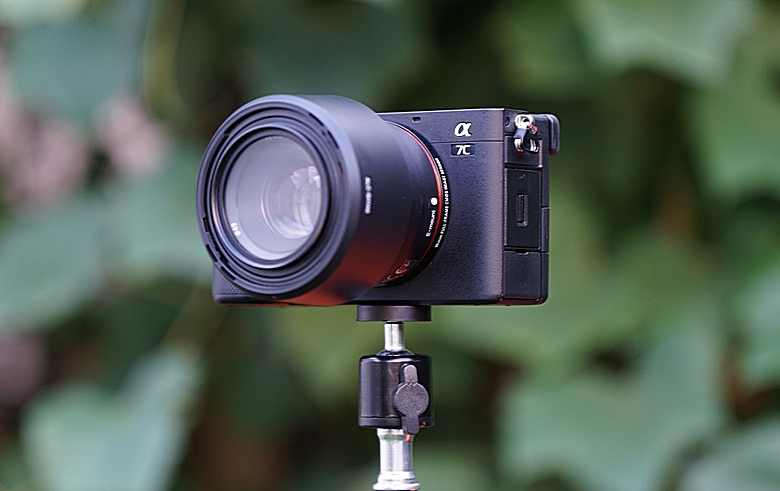
SONY 50mm f/1.8 FE lens
Most of the photos in this review were taken with these two lenses, though you’ll occasionally see shots made with others. If any particular image catches your attention, let me know in the comments and I can go into more detail about the lens behind it. This approach made it possible to show the full potential of the Sony A7C’s sensor: from wide scenes and street photography to artistic portraits with strong background separation. It also gave me the chance to test how the camera performs with optics of different levels – from premium GM lenses to more affordable primes like the Samyang 35mm f/1.4. So, let’s get started.
Read also: How to Photograph the Perseids with a Smartphone Camera
Package contents
The Sony A7C comes in a typically understated and minimalist package, without any unnecessary frills. Inside the box, you’ll find everything needed to start shooting: the camera body, an NP-FZ100 battery, and a USB-C cable for charging. This minimalist approach is practical – nothing gets tangled, and there’s no clutter. In addition to the essentials, the kit includes a neck or shoulder strap, which most users will probably set aside right away – it’s really just included for completeness. All the necessary documentation is also provided.
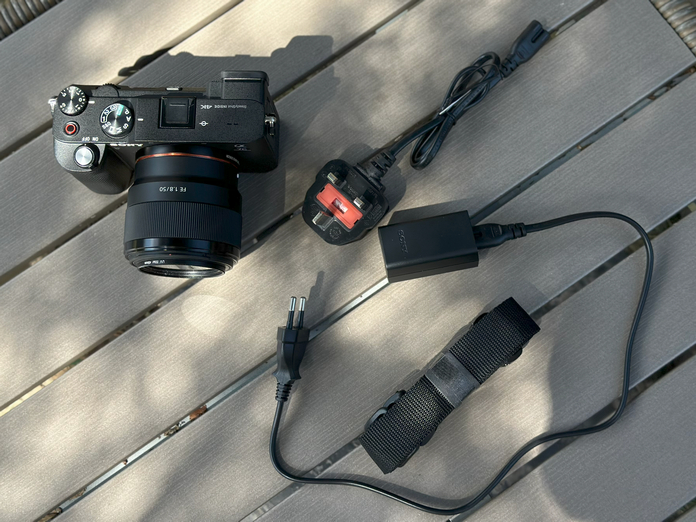
It’s worth noting that some A7C kits include the 28–60mm f/4–5.6 lens. This compact, lightweight “starter” lens is suitable for everyday shooting and allows users to start using the camera immediately without additional expenses.
Read also: Sex Robot Industry: New Rules in the Age of Technology
SONY A7C design and ergonomics
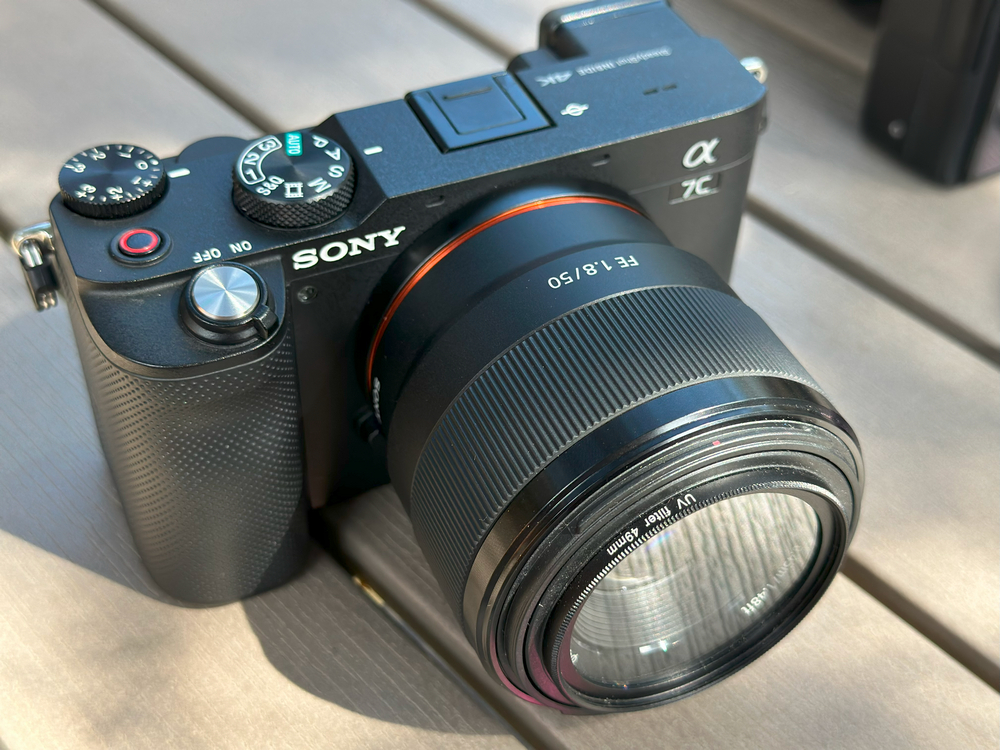
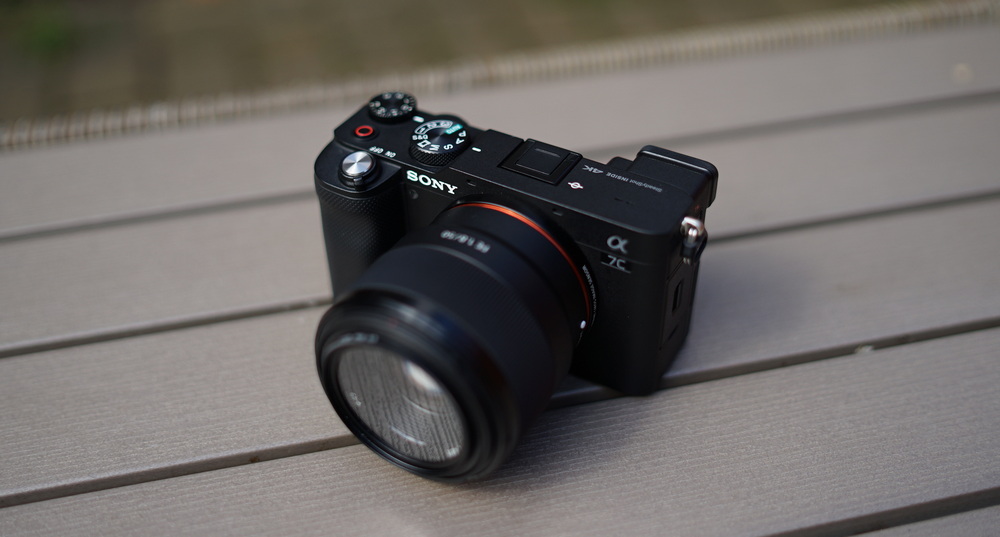
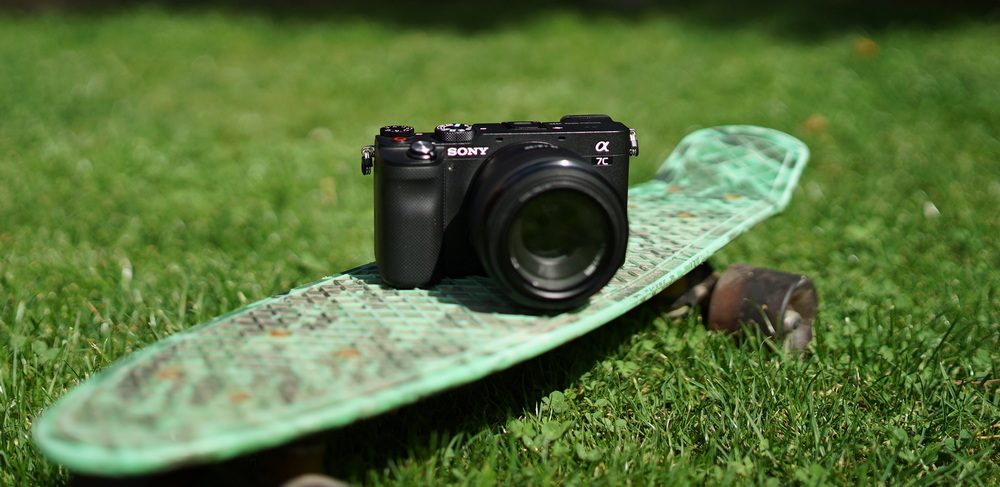
The Sony A7C demonstrates that a full-frame camera can be both compact and stylish. The body features a clean, minimalist design with smooth lines and no unnecessary accents. When I first held it, I noticed an unusual combination: it feels almost like an APS-C camera, but with the presence of a true full-frame model. Weighing around 509 grams, it’s noticeably lighter compared to my A7II (599 grams plus a bulky grip), and that difference is immediately felt – your hands thank you. The build materials are pleasant, and the metal frame adds a sense of durability. In the hand, the A7C feels solid, even though its design emphasizes compactness and lightness.
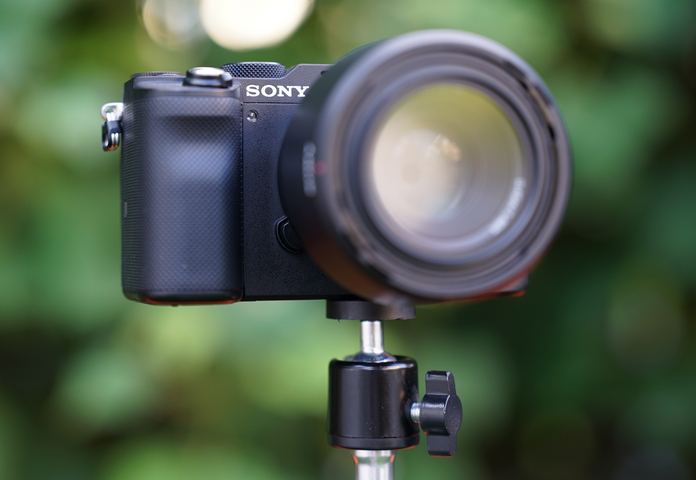
The grip is a compromise. It’s smaller than on the standard A7 series, so users with larger hands might find their fingers searching for extra support. The balance tends to shift slightly forward, especially when using heavier lenses like a 24–70mm or 70–200mm. With lighter lenses, such as a 35mm or 55mm, however, the camera feels well-suited for a compact, easy-to-handle setup.
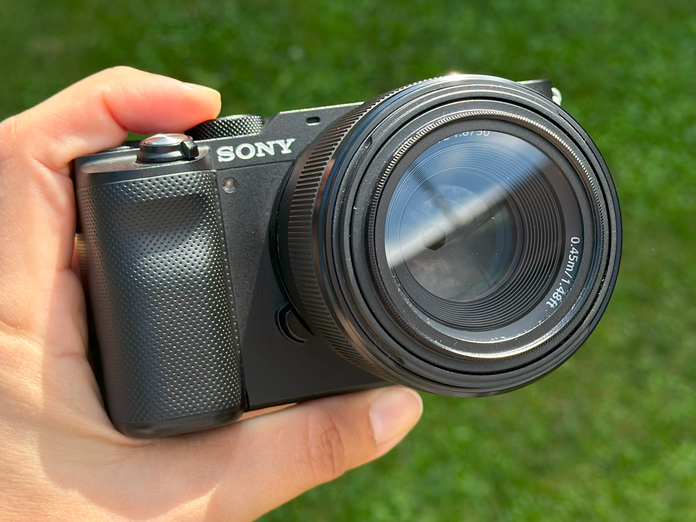
The ergonomics of the Sony A7C reflect a design focused on compactness and simplicity. There are fewer dials and customizable buttons compared to the A7II. The top panel is minimal: a mode dial, an exposure compensation dial, and a video record button.
Functionality is supported by the Fn menu and button customization, which, when properly configured, allows for efficient operation. That said, photographers who prefer full manual control at their fingertips may need some adjustment. This simplified layout is actually an advantage for self-shooting or content creation for blogs and social media.
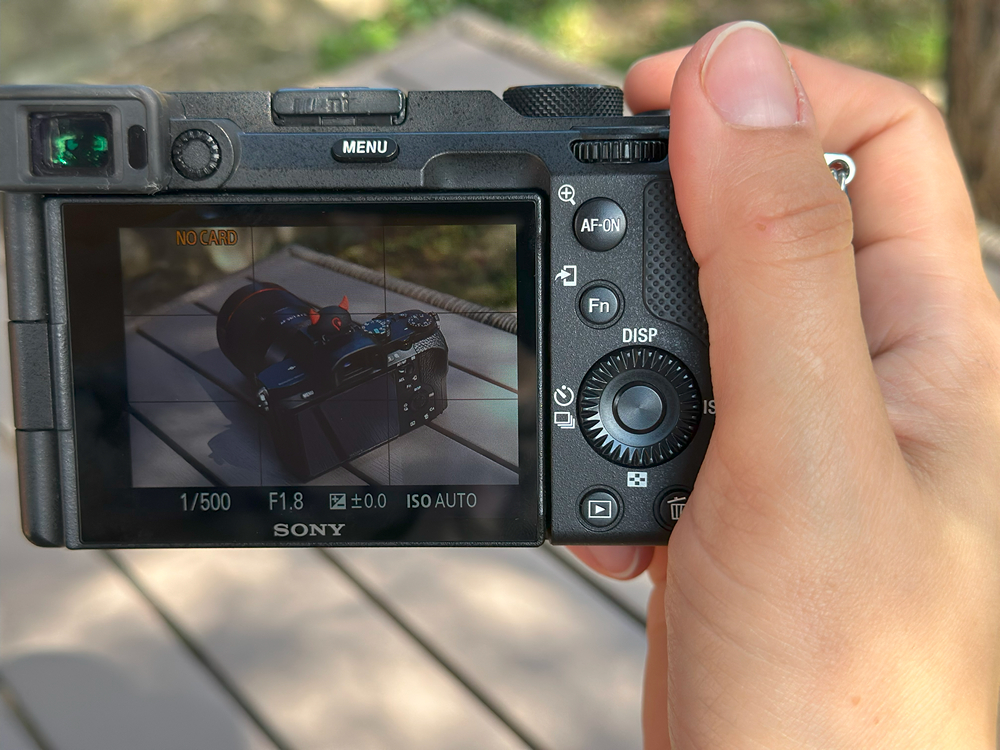
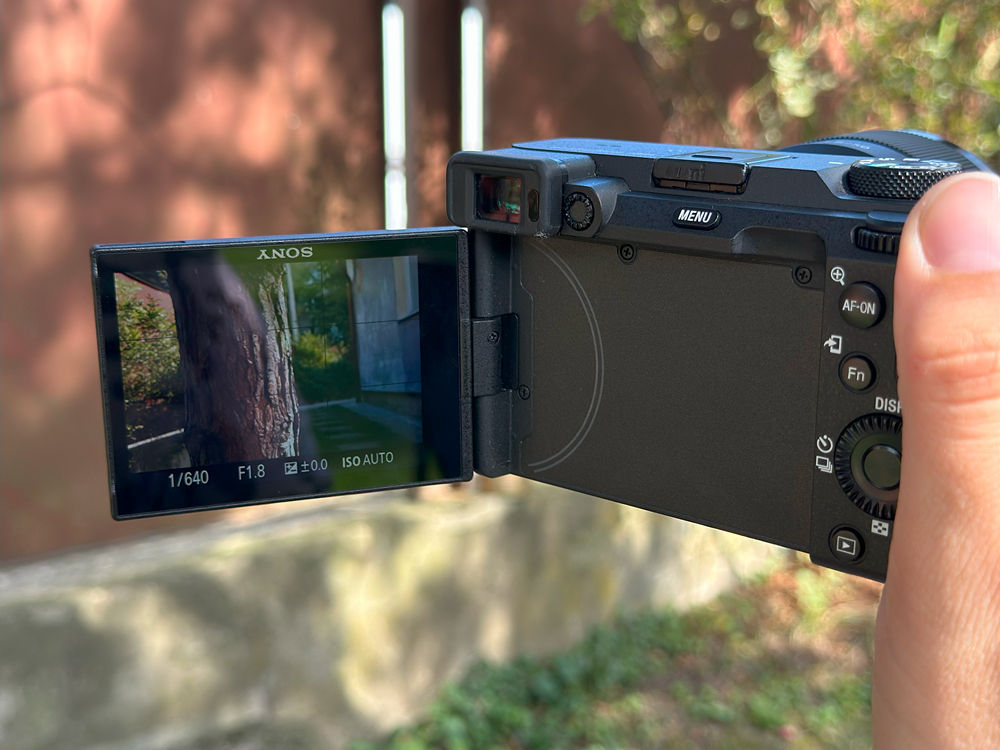
On the A7C, all controls are arranged compactly, which becomes noticeable when operating the camera with one hand. This is convenient for travel or reportage work. Overall, the design and ergonomics of the A7C strike a balance between comfort and portability. It doesn’t look as “serious” as the standard A7 series, but in practical shooting, its lightness is a clear advantage.
Read also: Rare Earth Metal Situation: Whoever Controls the Resources, Rules the World
Form factor and control
The A7C’s screen deserves its own mention. It finally offers 180° tilting, making the camera more user-friendly for vloggers and anyone filming themselves. This feature is especially useful while traveling, at weddings, or when shooting from tricky angles.
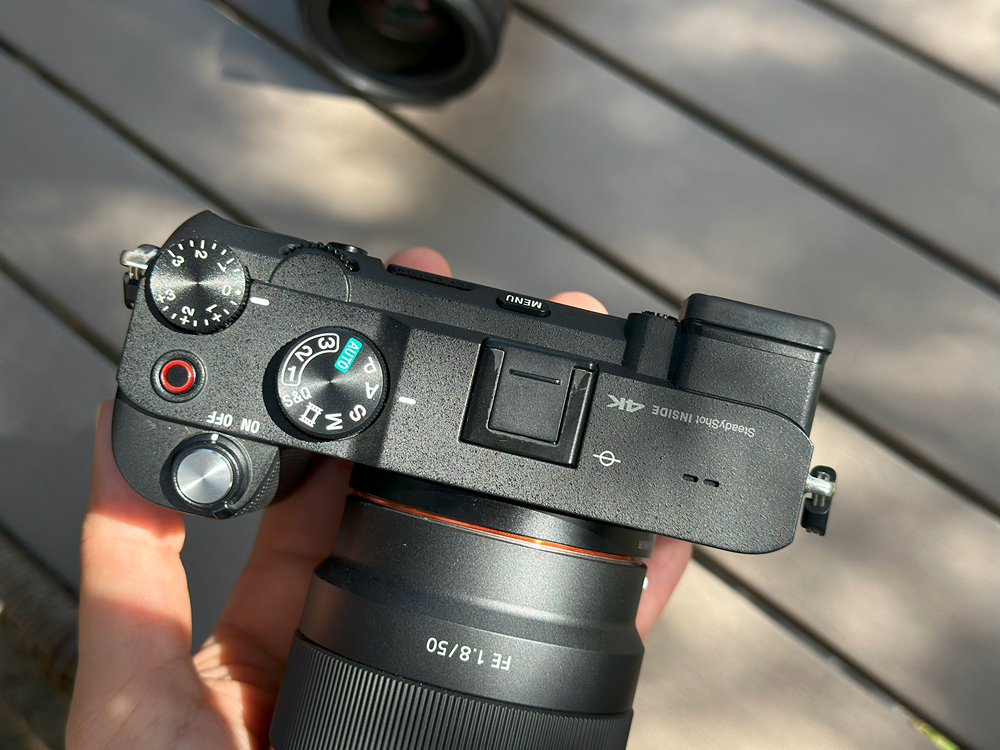
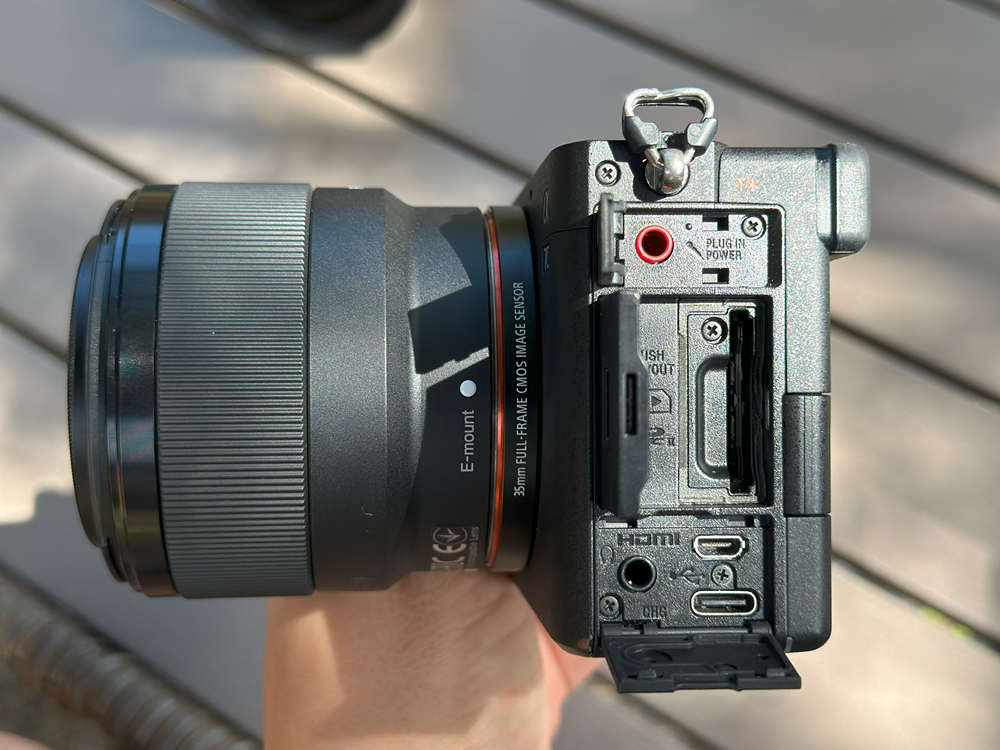
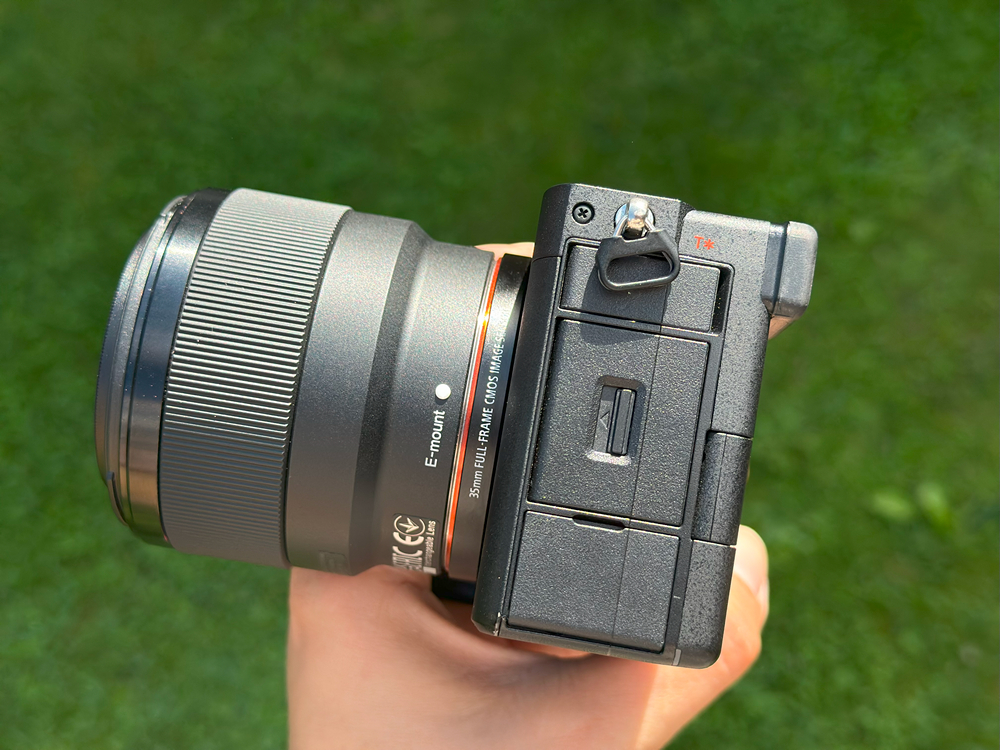
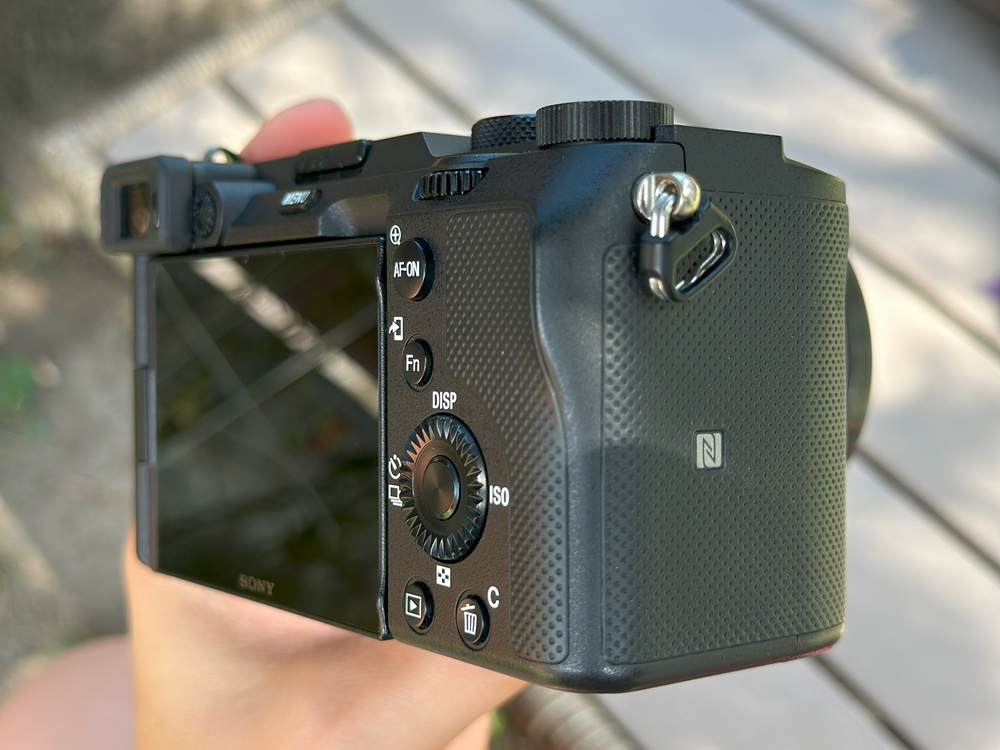
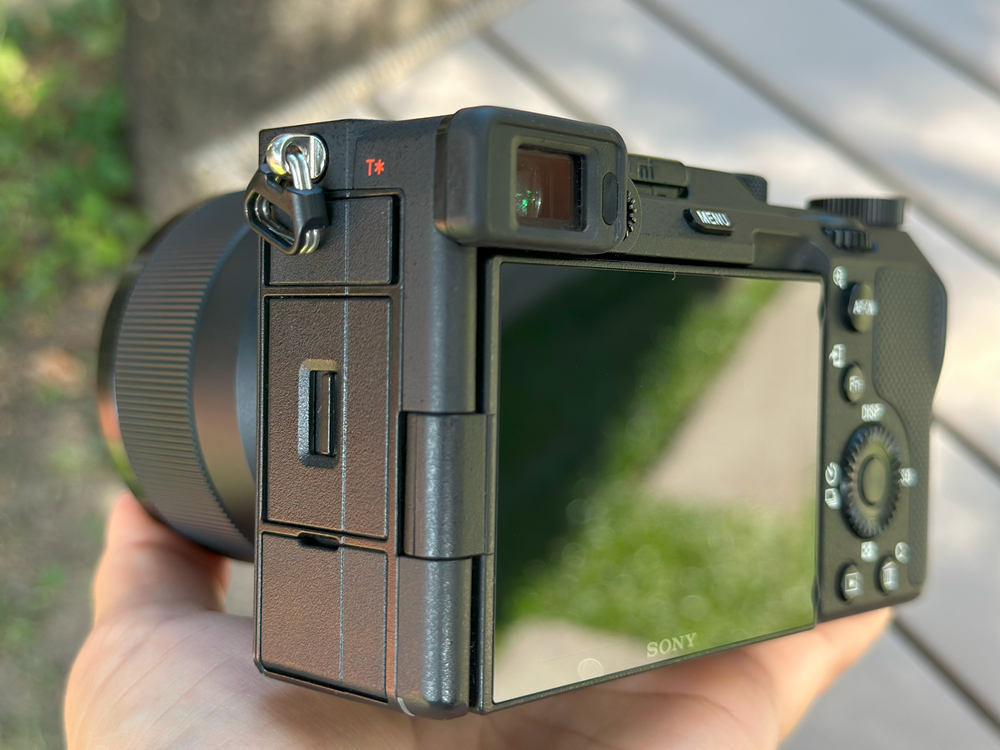
I like that you can hold the camera close to the ground and still see the frame without awkward contortions. The downside is that when the screen is flipped out to the side, connected cables can get in the way. Shooting video with an external microphone may require some adjustment.
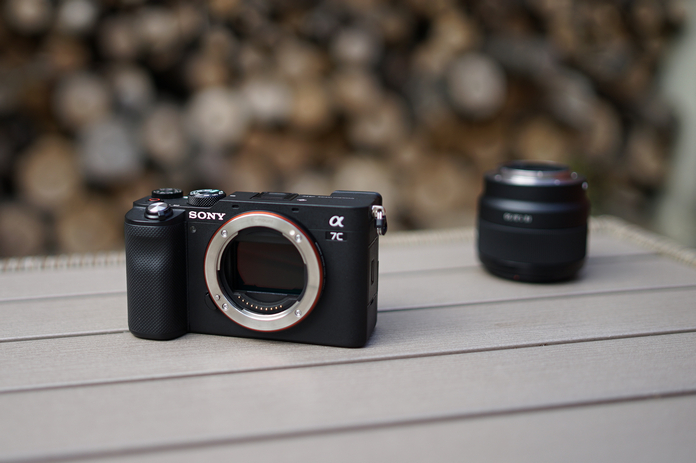
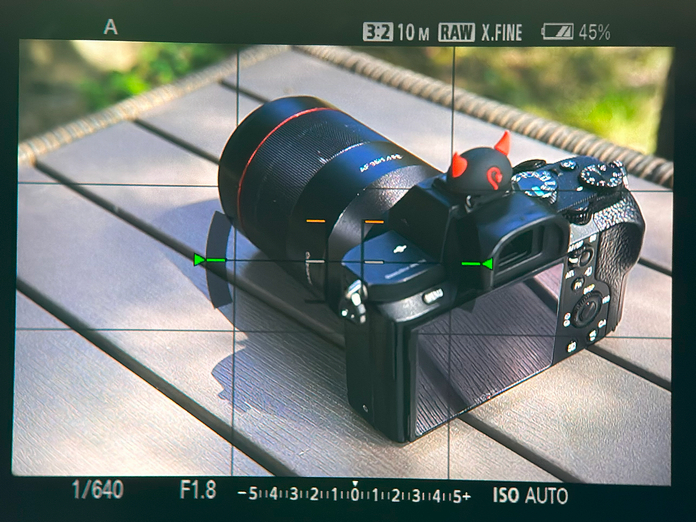
The A7C’s viewfinder was also scaled back to maintain compactness. It’s positioned in the upper-left corner, similar to APS-C mirrorless models, and its resolution and size are smaller than those on the A7II. If you’re used to a large, bright viewfinder, it may take some getting used to – or, like me, you might just rely entirely on the LCD screen. This is what the viewfinder experience looks like:
In terms of ports and connectivity, the A7C strikes a balance between minimalism and practicality. It includes USB-C, micro HDMI, and jacks for a microphone and headphones – everything needed for both photo and video work. There’s a single SD UHS-II card slot. Compared to the dual slots on newer A7 models, this is a drawback for commercial shooting, but it’s fine for travel or content creation. While I would have preferred two slots, adding them would have increased the camera’s size. Overall, the A7C’s form factor once again reflects a compromise between convenience and compactness.
Read also: Secret Behind Microsoft’s Profits: What the Company Hid for 15 Years
SONY A7C sensor and processor
At the heart of any camera is the sensor, and the A7C features a 24.2-megapixel full-frame Exmor R CMOS sensor with back-illumination. This design maximizes the light captured by each pixel, reducing noise, particularly in low-light conditions. Images at high ISO remain relatively clean, and even at ISO 12,800, results are generally usable.
Please note! All photos in the review are compressed for faster loading and comfortable viewing. Full versions of the frames and additional videos can be viewed at this link.
Another important aspect is dynamic range. The A7C allows you to recover shadows and preserve highlights to the point that even high-contrast scenes retain detail. This means you can confidently shoot in challenging lighting – whether in bright sunlight with deep shadows or in an evening cityscape with multiple light sources.




The BIONZ X processor in the A7C is another strong point. Its performance not only handles large amounts of data efficiently but also supports continuous shooting at up to 10 frames per second with full autofocus and exposure tracking. And this isn’t just a theoretical number – the camera maintains this speed in practice. Combined with a generous buffer, you can shoot around 40 RAW files in a burst without noticeable delay, which is a significant advantage for me.


Another feature worth noting is the real-time noise reduction and color correction algorithms. You notice their effect when reviewing shots – JPEGs straight out of the camera look very good, even though I mainly work in RAW. It’s still nice to have a solid starting point.
Read also: How to Spot Fake Photos: New Challenges of the Digital Age
Photo quality
Now, onto the most important part. The first thing you notice when opening RAW files from the A7C is the remarkable level of detail.
Detailing
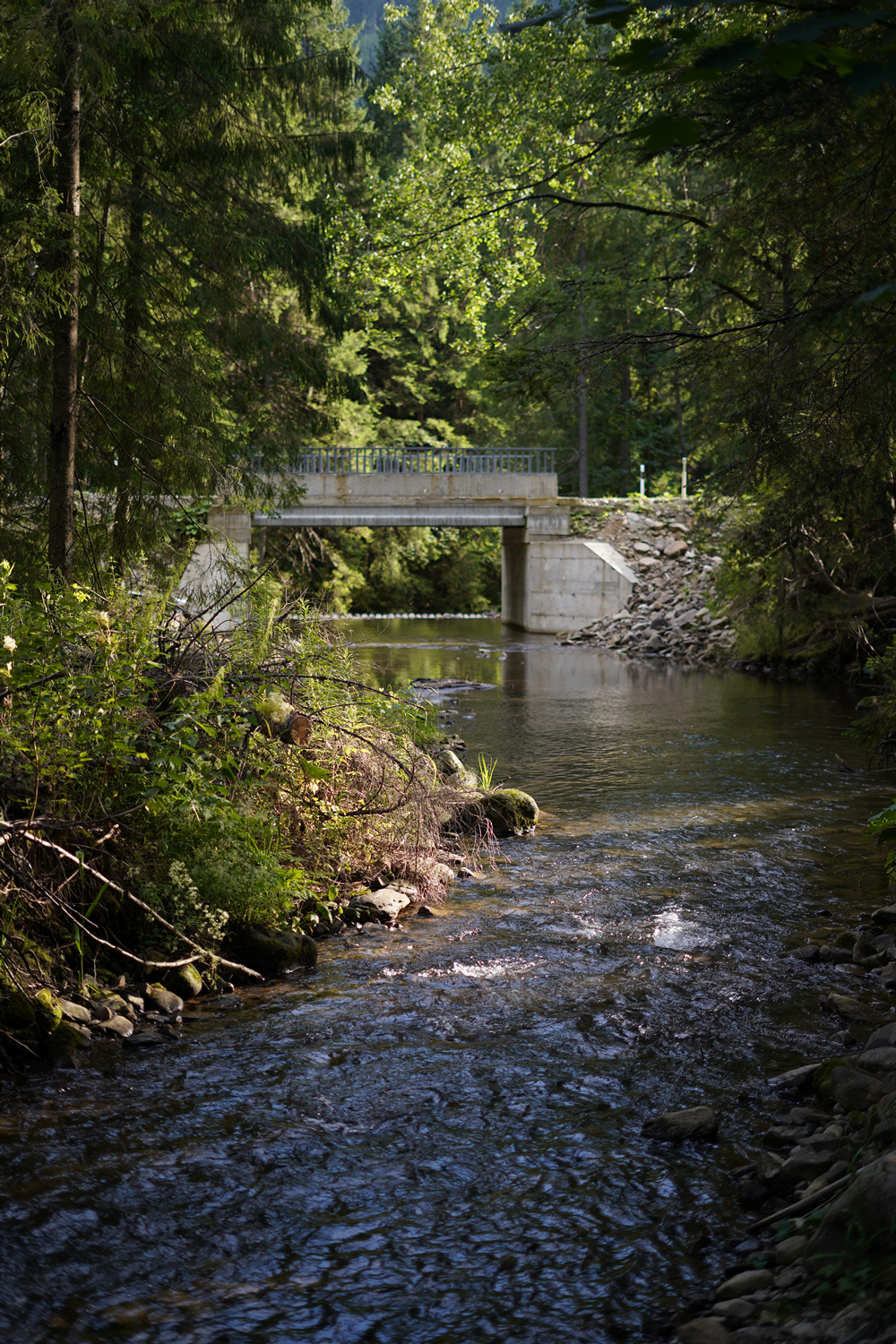
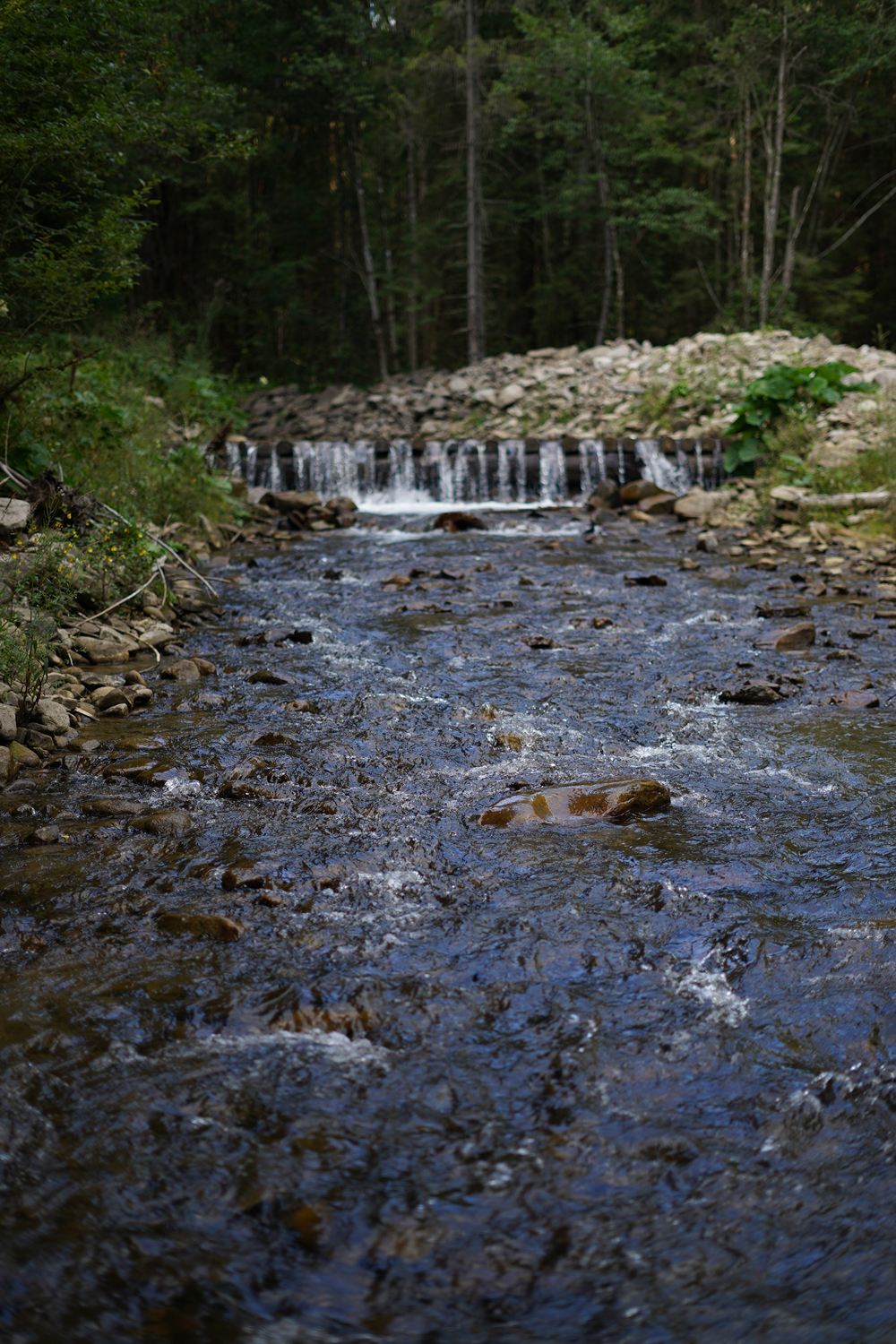
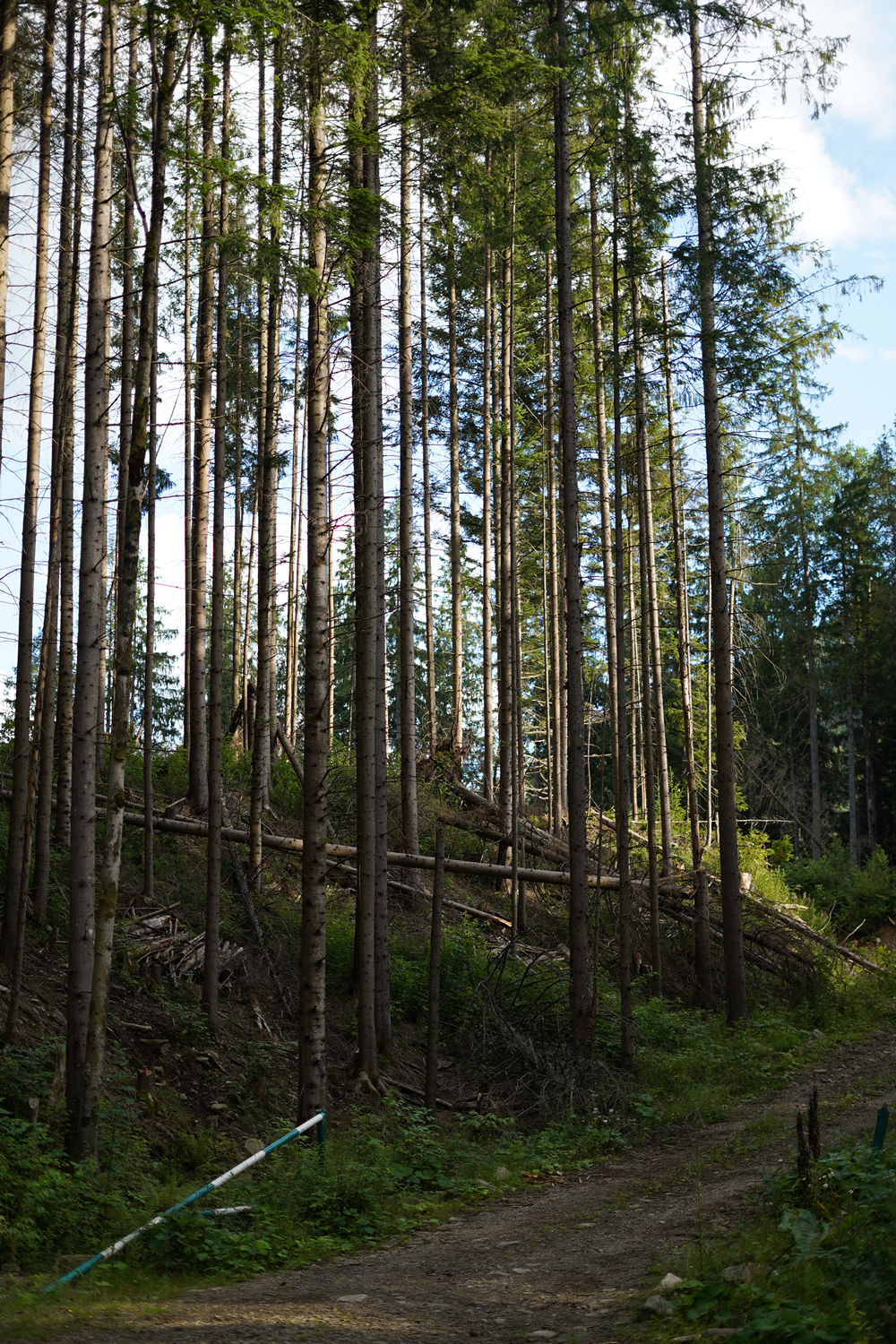
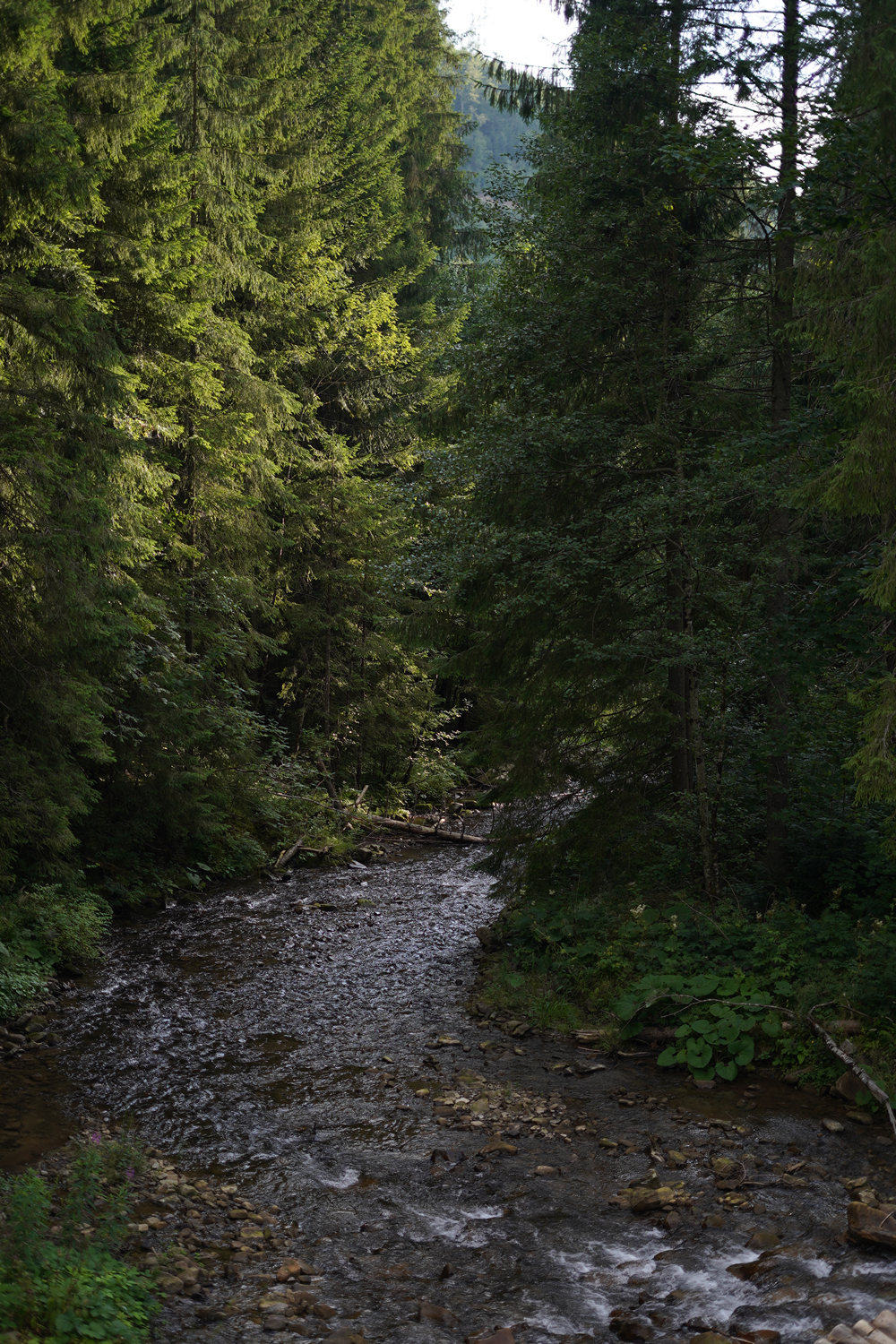
The full-frame sensor, combined with updated processing algorithms, delivers images that feel very clean and well-structured. For those interested in cityscapes or architecture, the camera captures textures in impressive detail – brick surfaces, cracks in walls, and the structure of leaves are all rendered naturally. There’s no sense of a “plastic” look; images retain a lifelike quality even after significant post-processing.

Working with colour
Another aspect that stood out is color rendering. The A7C handles subtle skin tones noticeably better. With the A7II, I often adjust tones in Lightroom because faces could lean toward cooler hues. With the A7C, even JPEGs display natural, pleasing colors without odd shifts. This is particularly valuable for portrait work, reducing the need for extensive retouching. The camera also manages natural tones well: blue skies remain realistic rather than oversaturated, and greens look soft and balanced instead of overly vibrant.





Dynamic range
Dynamic range is another strong point of this camera. When shooting in RAW, you don’t need to worry about blown highlights or lost shadow detail. I experimented with pulling up to four stops of shadow, and the image remained usable, with noise kept under control and detail intact. This means you can work confidently even in challenging lighting – whether at a wedding with harsh contrasts or outdoors in bright sunlight – without fear of losing information.



ISO
The A7C offers a significantly wider usable range. ISO can be pushed up to 12,800 or even higher when needed. Noise is present, but it has a “film-like” quality rather than appearing as digital grain. For reportage or low-light evening shooting, this is particularly useful. Even at high ISO, colors remain balanced and don’t fall apart. I tested this in real-world conditions – night streets, street lighting, minimal additional illumination – and the results were impressive. And just to clarify, all the photos you’ll see are unprocessed.
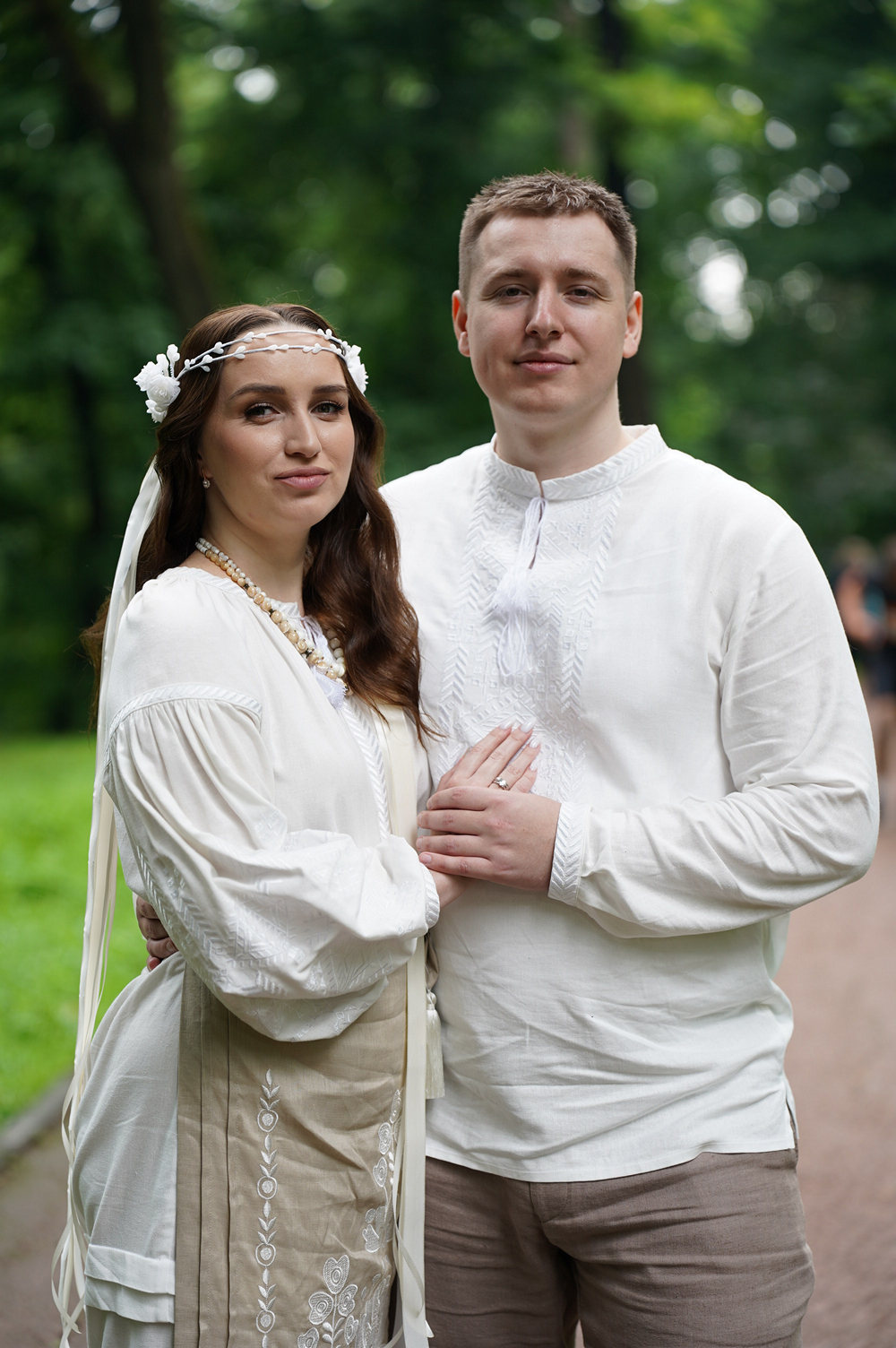


Speaking of JPEGs straight from the camera: if you need to deliver images quickly without retouching, the A7C makes that possible. The new processing engine produces decent-looking JPEGs even in challenging conditions. The color profiles (Creative Styles) are also more versatile, allowing you to pick something that fits your style. That said, I still prefer shooting in RAW, as the camera’s post-processing potential is extensive – worth taking full advantage of.




Another point: the A7C supports 14-bit RAW even during continuous shooting. This is important if you shoot dynamic scenes and want to maximize what you can extract from your files. Overall, the A7C delivers images that look high-quality and detailed, with accurate color rendering and plenty of latitude for post-processing.
Read also: Cryptography: What It Is and How It Works
SONY A7C video capabilities
Of course, the Sony A7C isn’t just a full-frame stills camera – it’s a compact little video powerhouse. If, like me, you occasionally shoot short video clips, it offers plenty of options. Starting with the essentials: video resolution. The A7C records 4K video (3840×2160) at 24, 25, and 30 frames per second. Notably, 4K is captured with full pixel readout and no binning, which translates to high detail and sharp footage.
Another key feature is support for 8-bit 4:2:0 internal recording, along with 8-bit 4:2:2 output via HDMI. For professionals seeking more color information for post-processing, this is a clear advantage. While it’s not on the level of high-end cinema cameras, it’s impressive for a compact full-frame mirrorless camera. The A7C also supports S-Log2 and S-Log3 profiles for those interested in color grading and achieving a cinematic look.
It’s also worth highlighting the video stabilization. The A7C’s built-in 5-axis stabilization is quite effective, noticeably smoothing out shakes and jitters when shooting handheld, especially while walking or during dynamic scenes.
In terms of formats, the camera records in MP4 and XAVC S, with the latter offering higher quality and bitrates up to 100 Mbps – important for maintaining detail and smooth motion. There’s also an S&Q (Slow and Quick) mode, allowing for slow-motion recording at up to 5 fps or accelerated footage up to 120 fps in Full HD.
And, of course, the built-in microphone and the option to connect an external mic via a 3.5mm jack are worth mentioning. Audio is half the story in video, and the A7C takes a step toward meeting the needs of users who want not just good visuals, but quality sound as well.
Read also: The Third World War of Browsers: Has It Already Begun?
Autofocus, performance and stabilisation
One of the A7C’s standout features is its autofocus system, which uses 693 phase-detection points covering roughly 93% of the frame. This makes it easy to track moving subjects across almost the entire field of view, ensuring the camera maintains focus reliably.
The Real-time Eye AF feature – available for both humans and animals – is particularly useful. In my view, it’s a significant advantage, since no photo feels complete without sharp focus on the eyes. Overall camera performance is also strong. The A7C can shoot up to 10 frames per second in continuous mode, which is valuable for sports, wildlife, or fleeting moments. Its buffer allows for several dozen RAW shots in a burst, enabling smooth shooting without delays.
Another key feature of the A7C is its 5-axis in-body image stabilization, which compensates for camera movement in five directions. This stabilization is effective enough to allow handheld shots at shutter speeds that previously would have required a tripod. It’s also important to note that stabilization works for both photos and video, making it ideal for vloggers or amateur videographers who want smooth, steady footage – as if the camera is floating rather than shaking like a rocket at launch.
Finally, it’s worth noting that all these technologies don’t just work well on paper – they’re comfortable to use in real-world conditions. The intuitive menu, along with quick autofocus and stabilization settings, makes the shooting process straightforward, while consistently delivering high-quality results.
Read also: AI in Medicine: Is the Future Already Here?
Lenses and compatibility
The camera features a Sony E-mount, giving access to a wide range of compatible lenses – from Sony itself as well as third-party manufacturers like Sigma, Tamron, Zeiss, and others. This is a major advantage, as it allows you to choose optics for virtually any style or genre of photography, rather than being limited to the manufacturer’s own lineup.
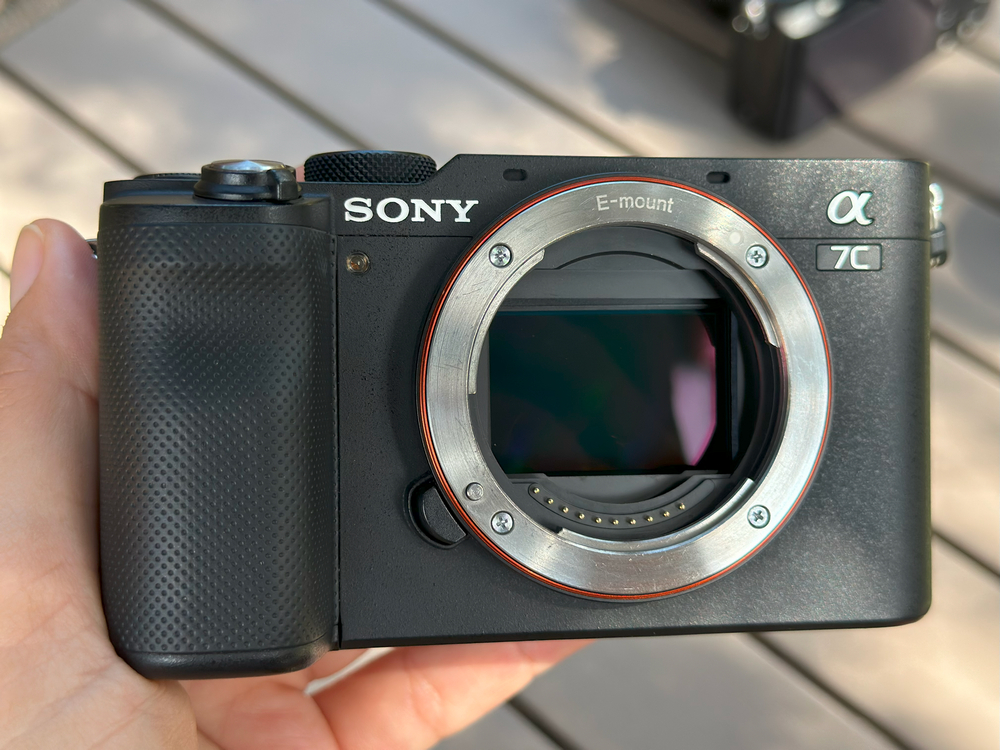
The camera supports both full-frame and APS-C lenses. When using APS-C optics, images are cropped accordingly – the field of view narrows, and the effective focal length increases by about 1.5×. The sensor then uses only its central area, which also reduces resolution (for example, from 24MP to roughly 10–12MP). It’s also worth noting that thanks to the improved autofocus system, the A7C works particularly well with lenses that have an internal focus motor. This allows for very fast and quiet focusing, which is especially valuable for video or wildlife photography, where being unobtrusive is important.
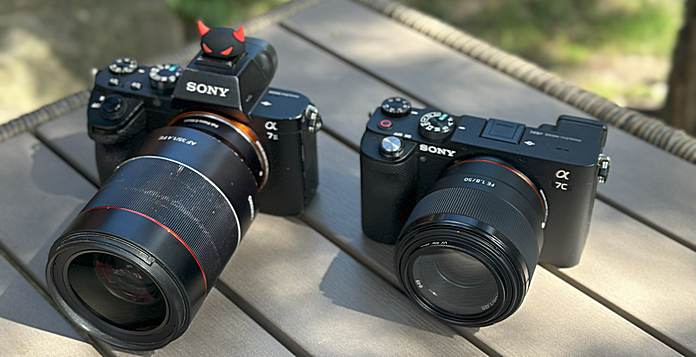
SONY A7C next to SONY A7II
It’s also worth noting that a variety of adapters are available for the A7C, allowing the use of lenses with Canon EF or Nikon F mounts. While not ideal for fast-paced shooting, this can be a real advantage for creative projects or fans of classic lenses. The camera itself is very compact and lightweight, and pairs particularly well with 35mm or 50mm primes. In short, the A7C maximizes the potential of your lenses, and with the right optics, it becomes a genuinely capable working tool.
Read also: Biomimicry: How Nature Inspires Engineers to Innovate
Interface and settings
People often say that Sony menus are overly complicated, but honestly, it’s not like piloting a spaceship with hundreds of switches and ominous red buttons – though there is, in fact, a red button. In reality, it’s not as intimidating as it seems. Yes, there are many options, but this allows you to customize the camera down to the smallest detail. The A7C has an intuitive and user-friendly interface, with a logically structured menu divided into tabs. Each item is clearly labeled and organized by category – shooting, playback, camera settings, connectivity, and so on.

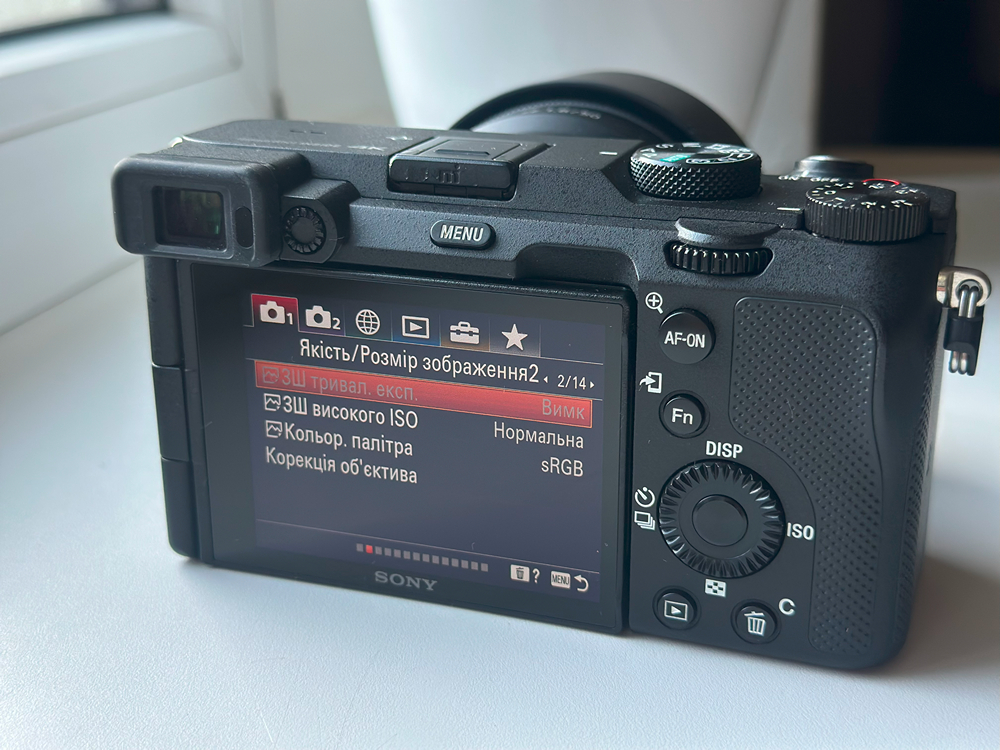
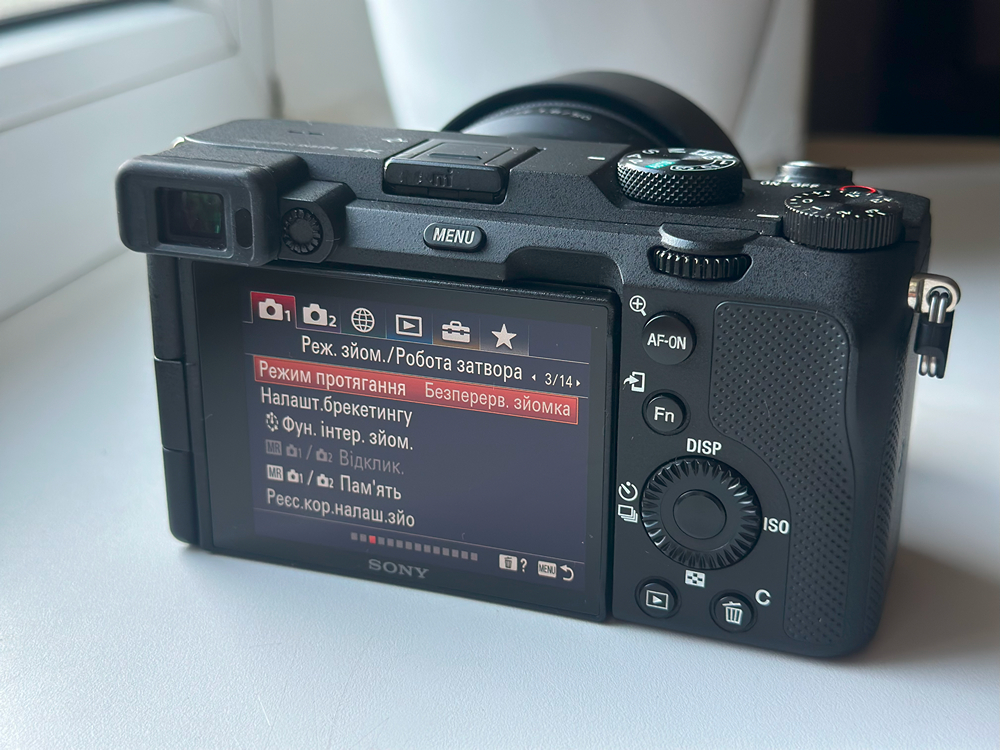
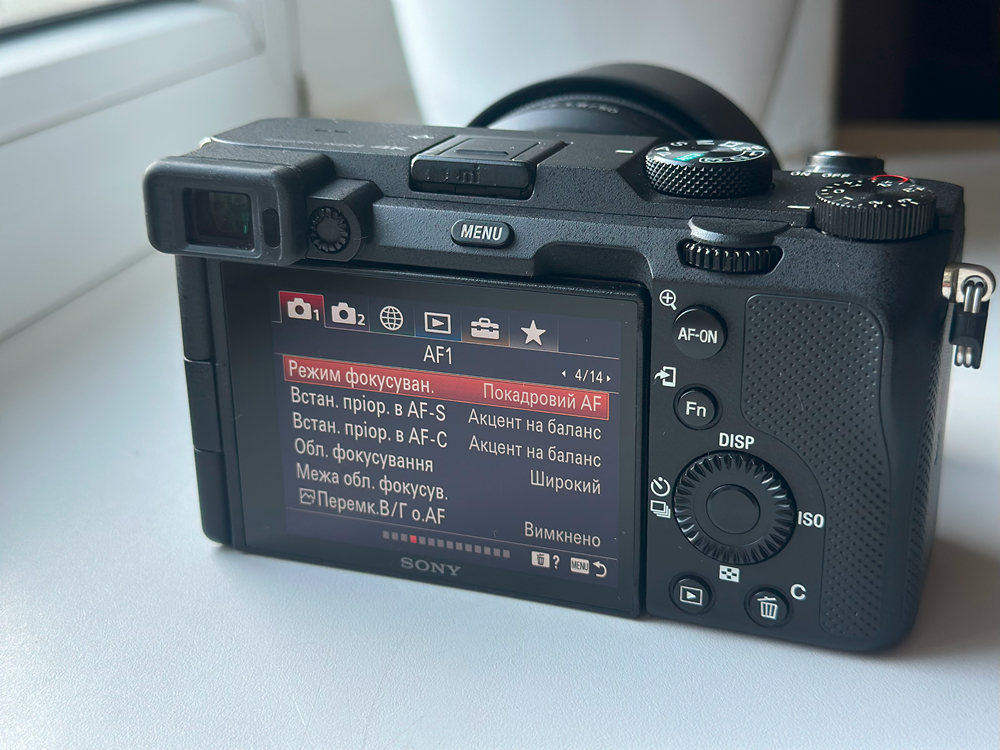
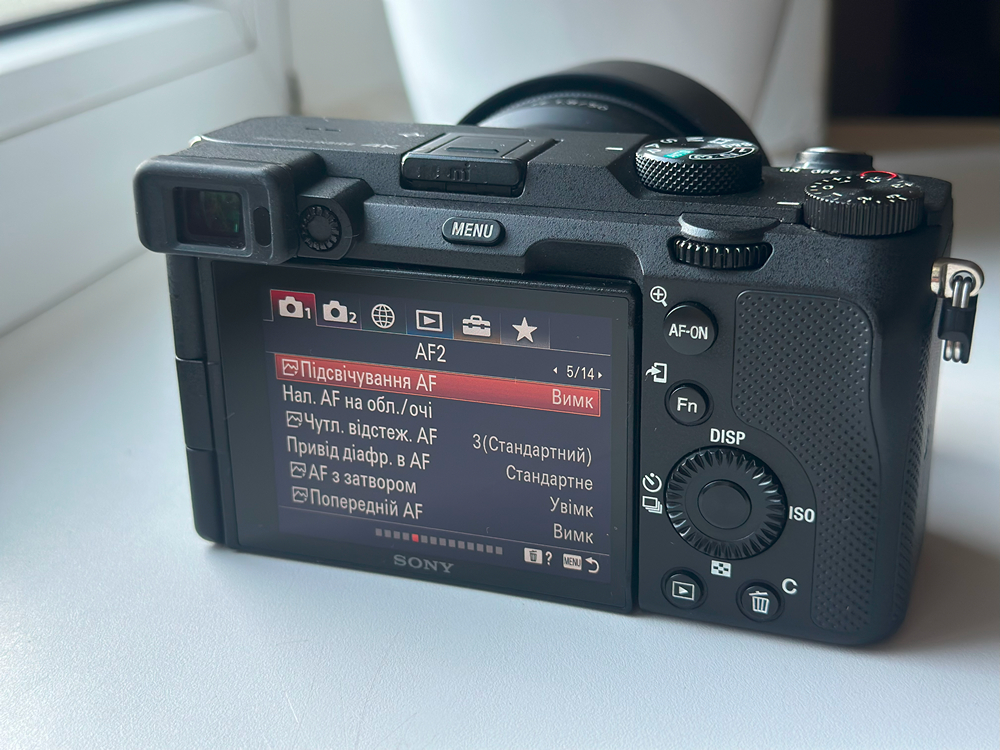
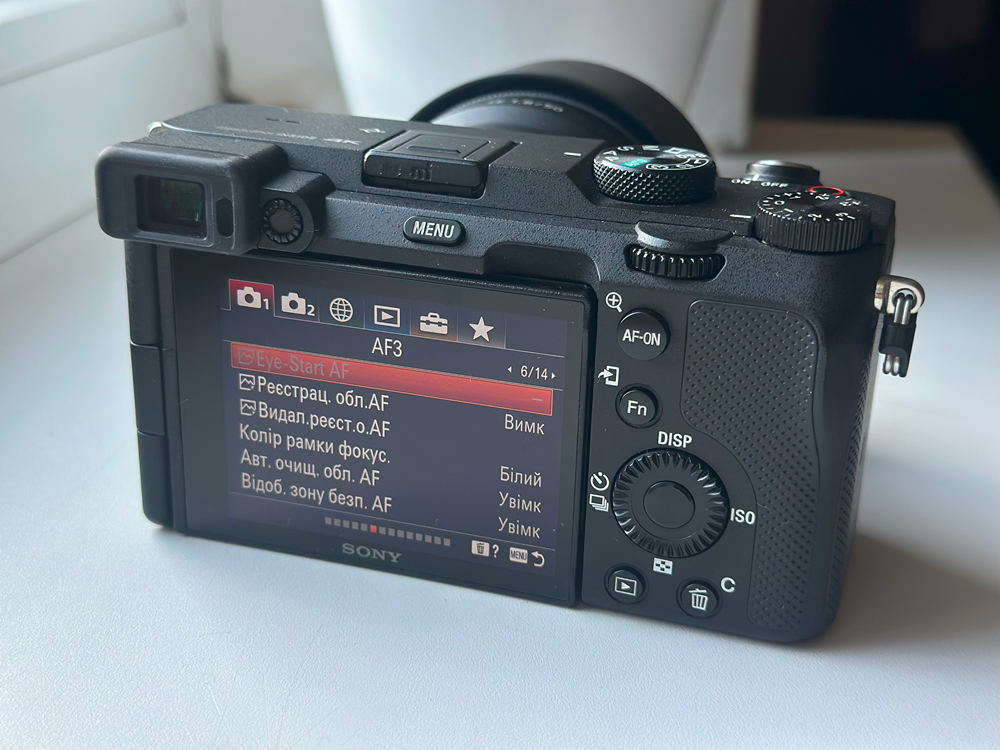
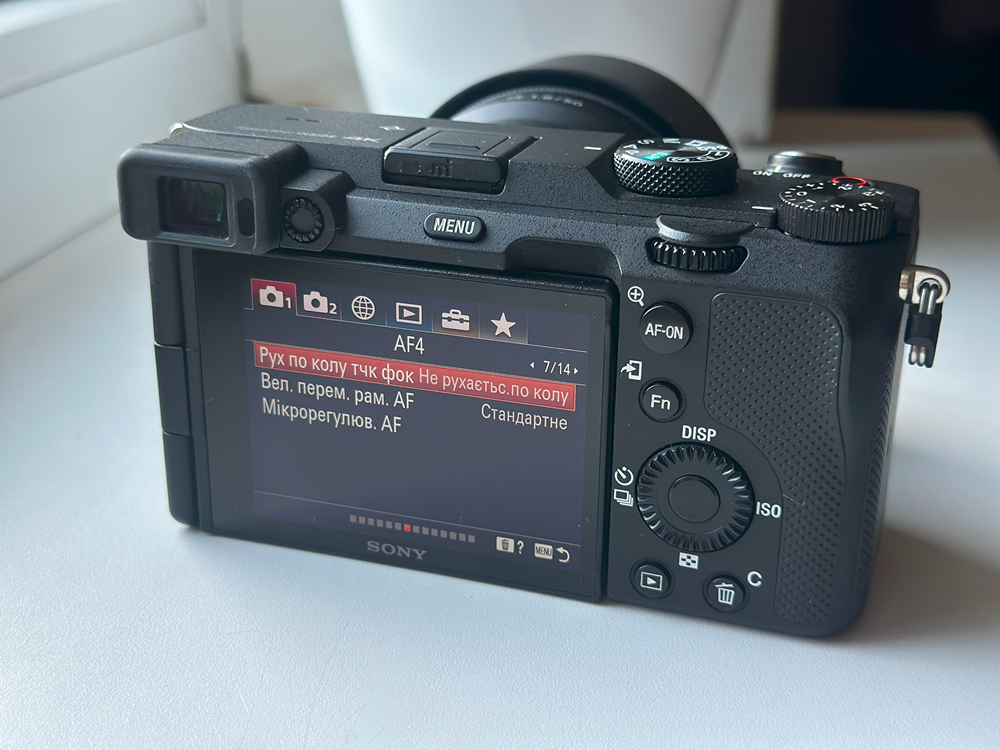
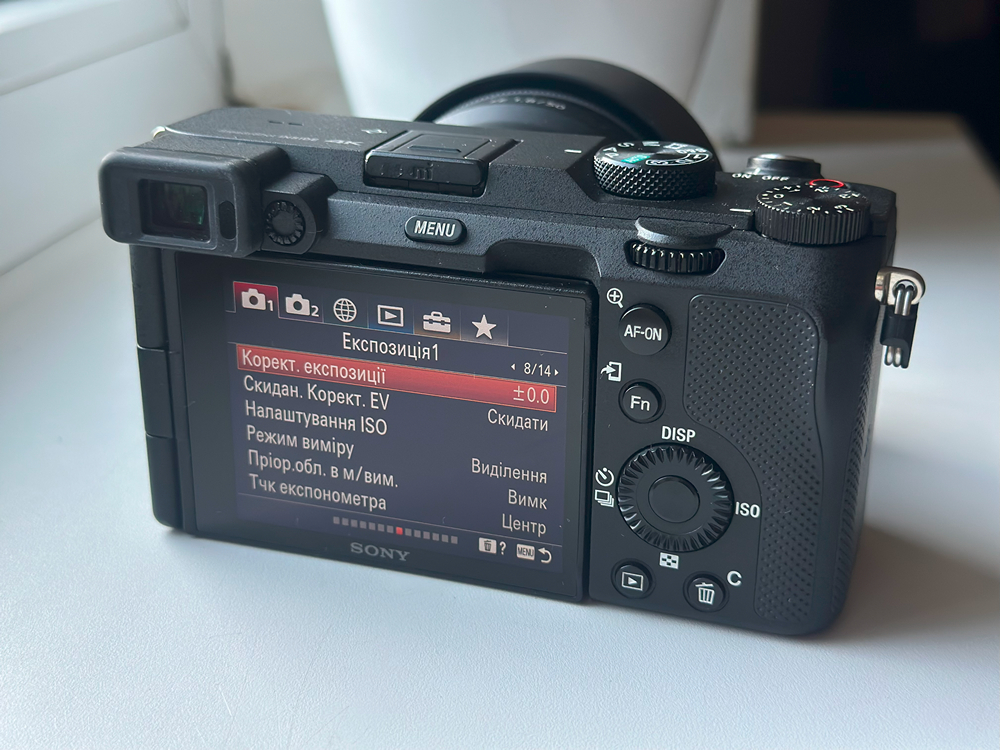
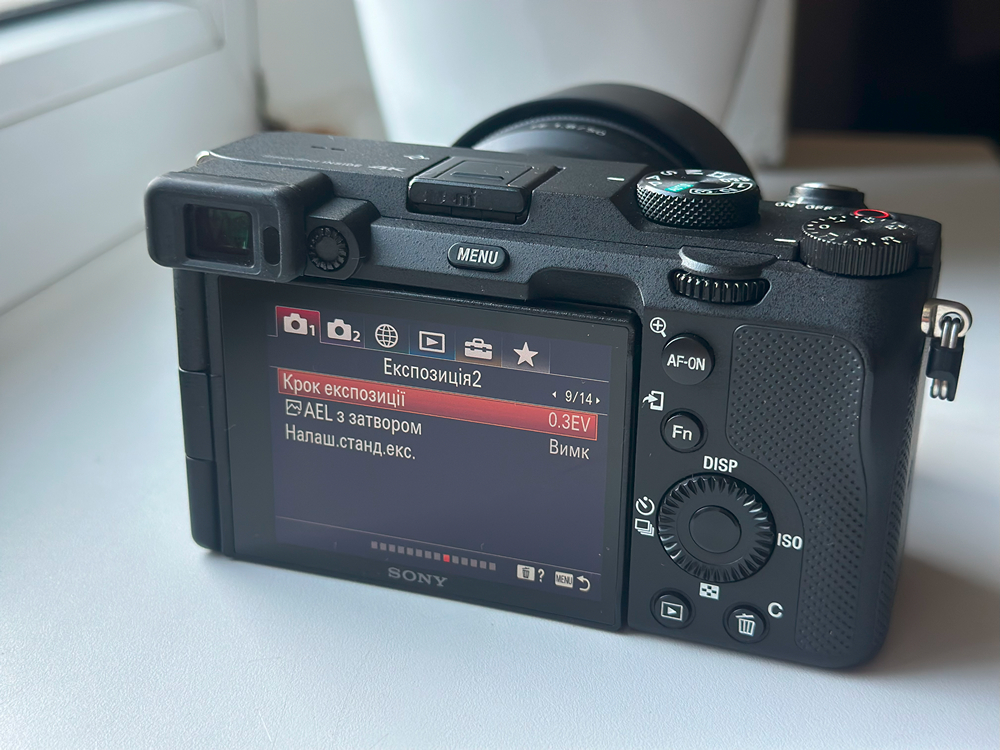
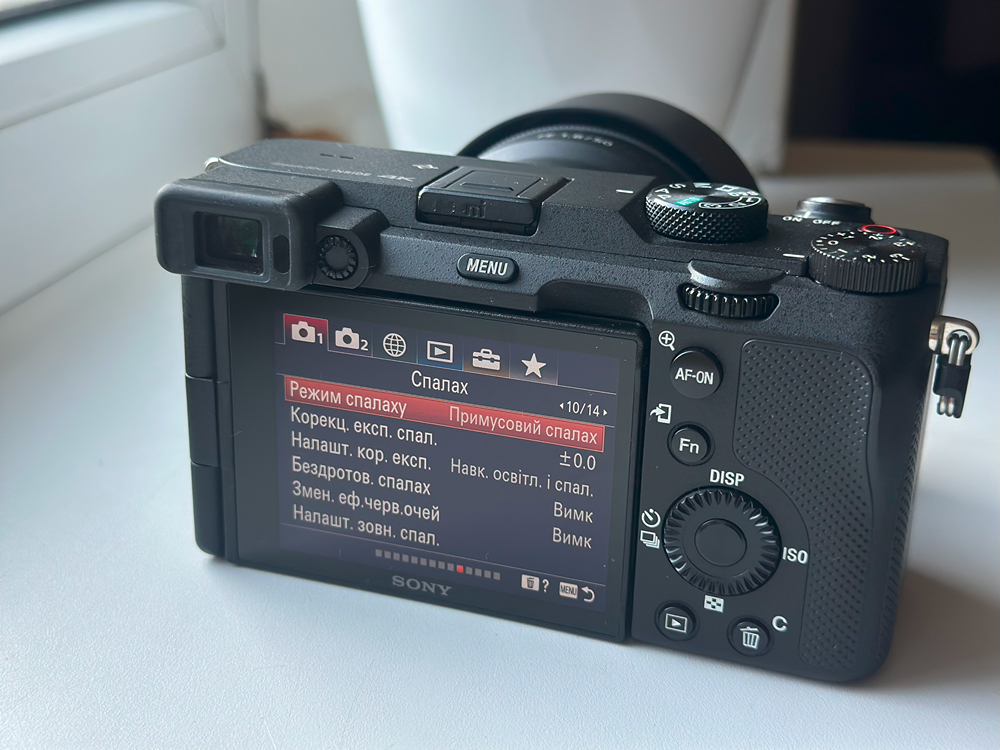
The Sony A7C features a 3-inch fully articulating touchscreen with a resolution of roughly 921,600 dots. While it does respond to touch, its functionality is limited: you can use it to select focus points (AF) or perform gestures in playback mode, but menu navigation still relies on the traditional buttons and dials – there’s no full touchscreen control for the menus.
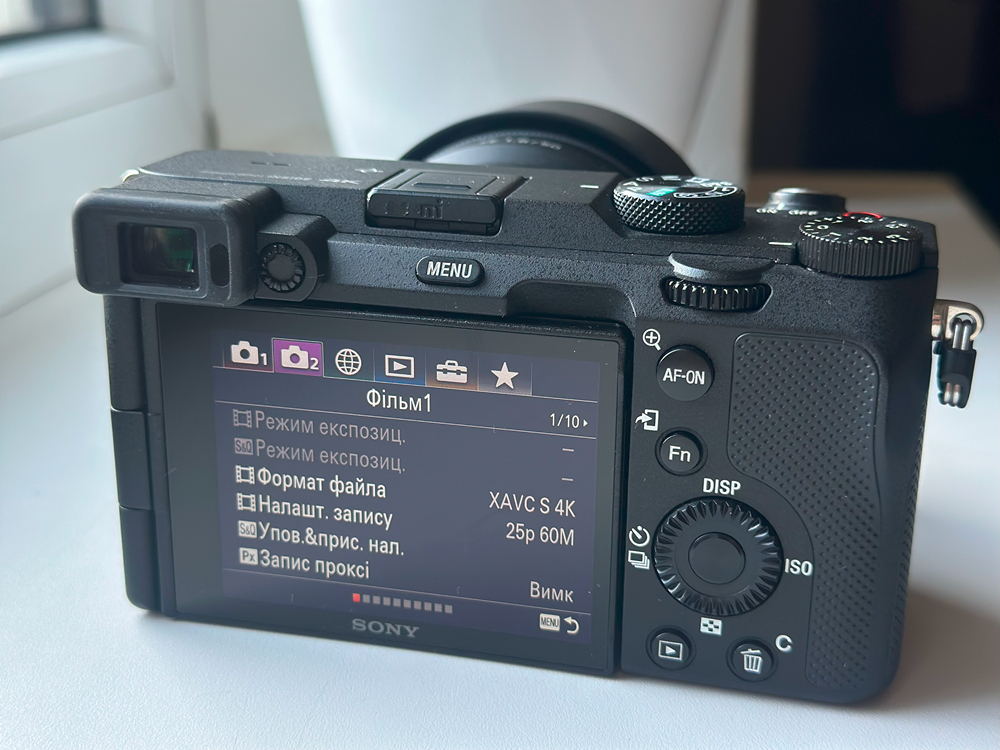
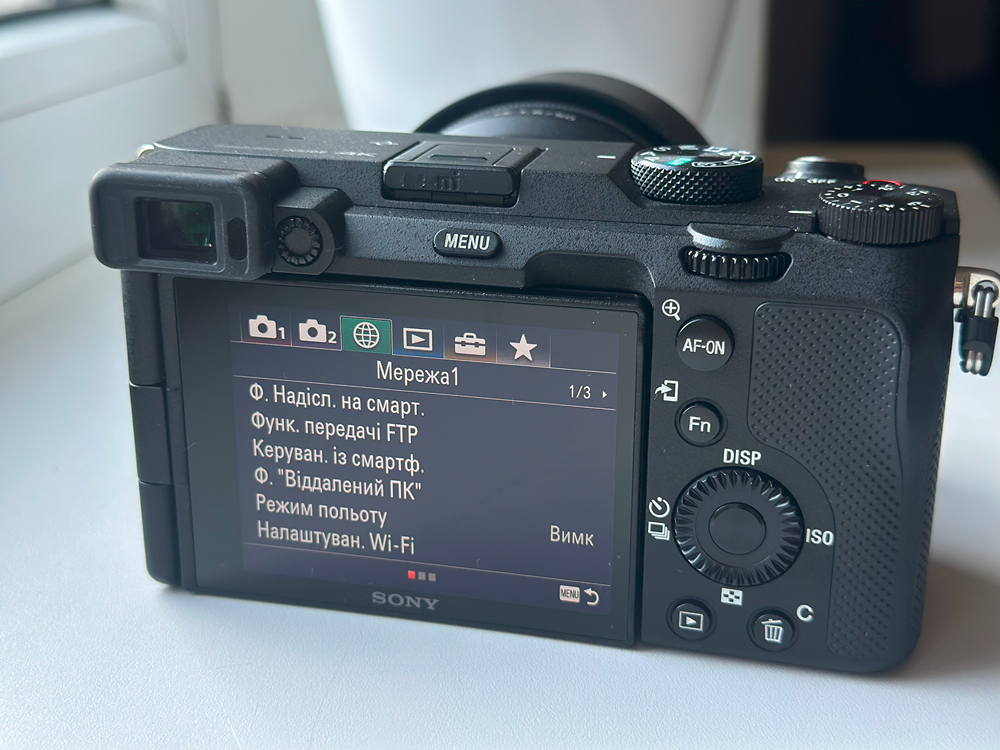
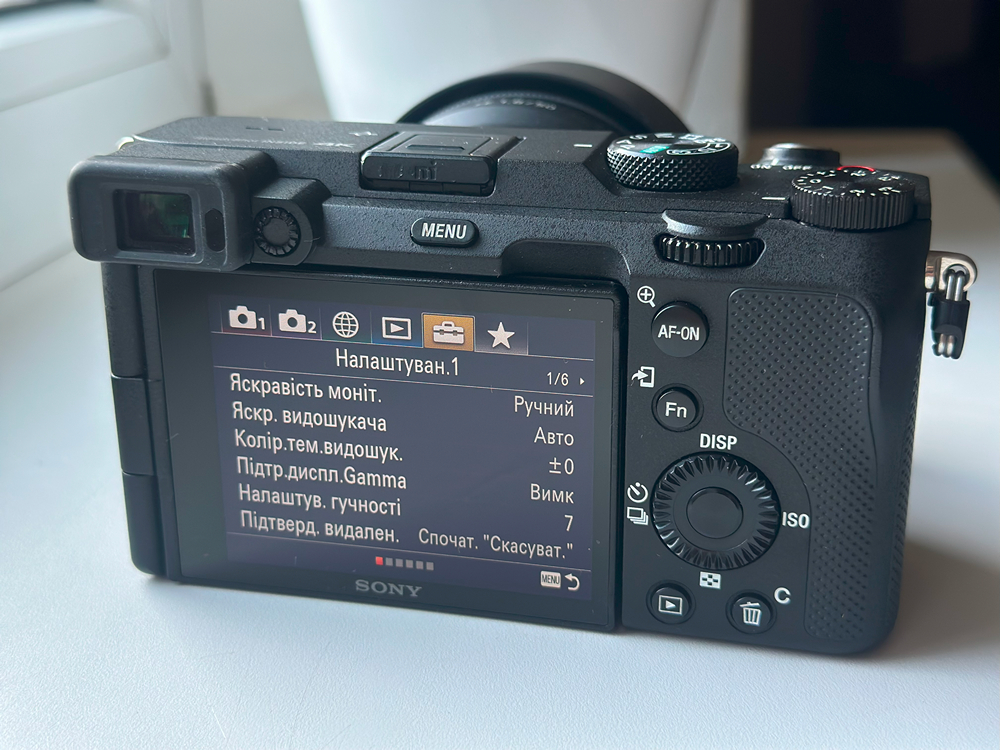
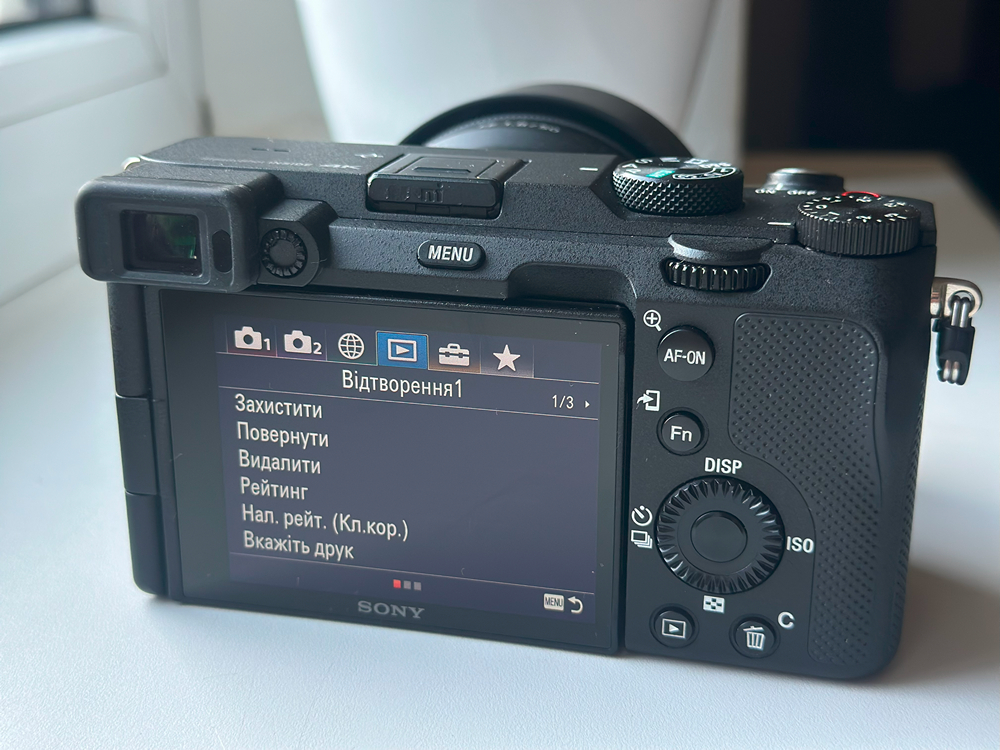
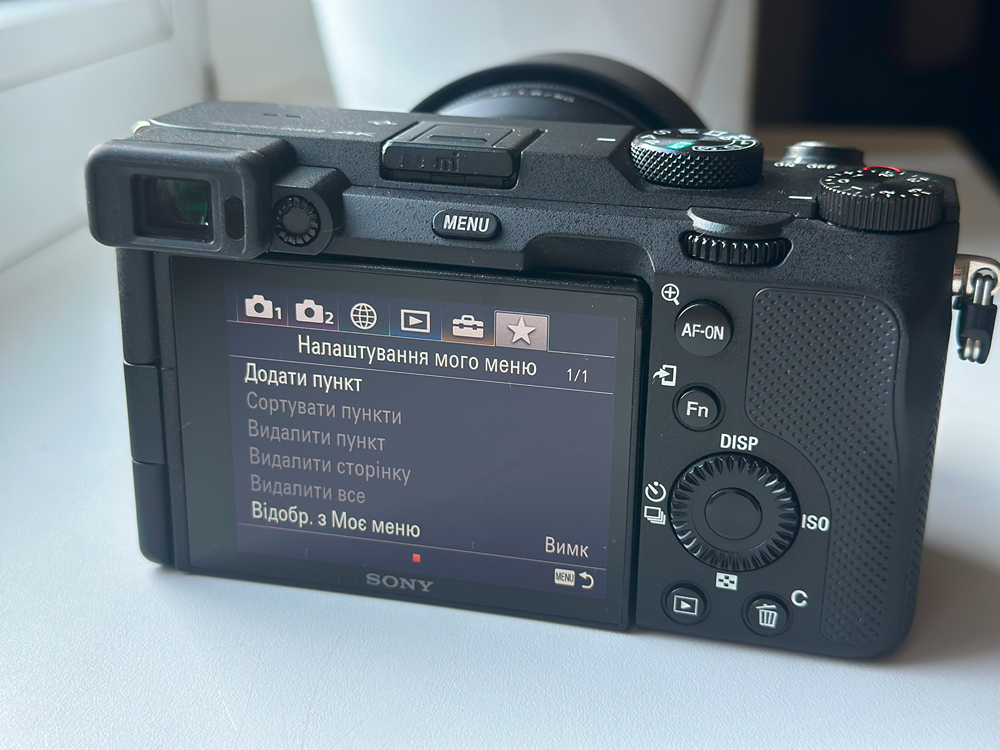
Camera controls are highly user-oriented, with three customizable buttons that can be assigned to your preferred functions. This is convenient if you frequently adjust settings like white balance or ISO and want quick access with just a few presses. I particularly like that these buttons can be configured differently for photo and video modes, adding extra flexibility.
Another significant advantage is the ability to save camera settings to memory and quickly switch between profiles. For photographers working in varied conditions – from studio to outdoor shoots – this is extremely useful. For example, I keep one profile configured for portraits and another for reportage work. It’s very convenient.


Of course, you’ll likely want to connect the camera to a smartphone to quickly review shots – whether before editing or to upload directly to social media. For this, Sony’s official Imaging Edge Mobile app is used. It not only transfers photos and videos to your phone but also lets you control the camera remotely, displaying a live view on your smartphone screen.


To connect the Sony A7C to Imaging Edge Mobile for transferring photos and videos, turn on the camera and go to the network settings menu, then select Smartphone Connection. A QR code or Wi-Fi Direct details will appear on the screen. Open the Imaging Edge Mobile app on your smartphone, tap Add New Camera, and either scan the QR code or enter the SSID and password manually. Confirm the connection on your phone, and you’ll then be able to browse files on the camera and copy them to your smartphone’s storage.
Read also: Closer Than Ever: What Is the Dead Internet Theory?
Battery life of the SONY A7C
The Sony A7C is powered by the well-known NP-FZ100 battery, used in most of Sony’s recent full-frame cameras. It has a capacity of around 2280 mAh, which is a noticeable improvement over older generations – for comparison, my A7II uses the NP-FW50, and the difference is significant.
According to CIPA ratings, the A7C can shoot about 740 frames using the LCD and around 680 through the viewfinder. In real-world use, performance is even better. During a full day of mixed photo and video shooting, the battery still showed 20–25% charge by evening. This is very convenient, especially for fieldwork, as it reduces the need for constant battery changes.
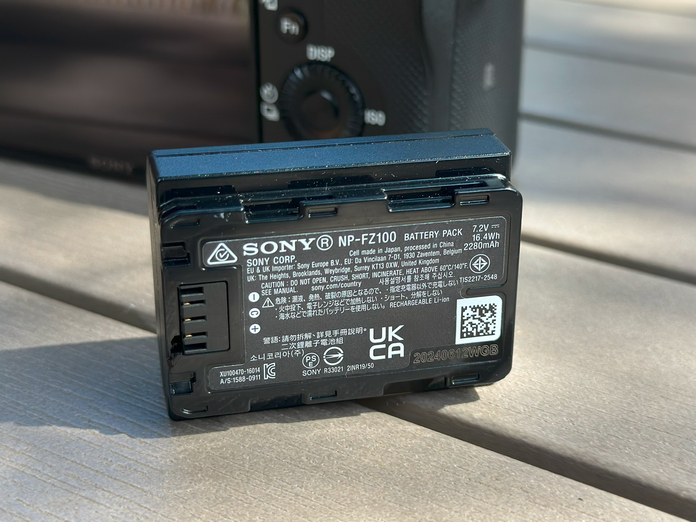
Interestingly, the Sony A7C can be powered via a USB-C power bank, but the internal battery won’t charge while the camera is in use. The camera will draw power directly from the bank, but the battery may still drain if the camera is on and actively shooting. If the camera is turned off, connecting a power bank will charge the battery. So, a power bank is useful for extended operation or on-the-go top-ups, but it cannot fully replace charging the battery via USB Power Delivery, as that function isn’t supported.
One drawback is that the kit doesn’t include an external charger – only a USB-C cable. If you want to charge multiple batteries simultaneously, you’ll need to purchase a separate charging station. This didn’t surprise me, as the A7II worked the same way and I’m used to having my own charger, but for newcomers, it could be an unexpected detail.
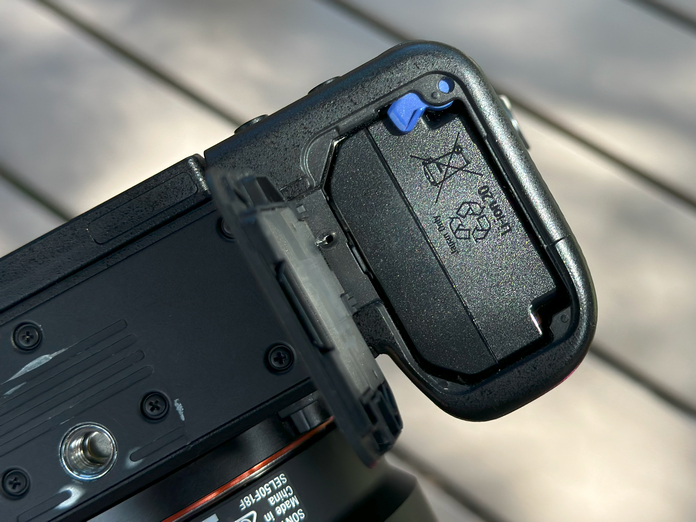
Practical tip: even with a battery this durable, I recommend carrying a spare NP-FZ100. Not because the A7C drains quickly, but because any shoot can present the chance for a perfect shot. It’s better to be prepared than risk running out of power at a critical moment.
Read also: Are Noise-Canceling Headphones Harmful? Insights from Audiologists
Conclusions and personal impressions
After several weeks with the Sony A7C, I can say this is a camera that redefines what a full-frame mirrorless can be. Its main strength is the combination of compactness and performance. For anyone accustomed to cameras like the A7II, the difference is striking: it’s lighter, more comfortable to carry, and offers significantly more capabilities – all in a body that’s easy to take on travel or long walks without feeling like you’re lugging a brick.
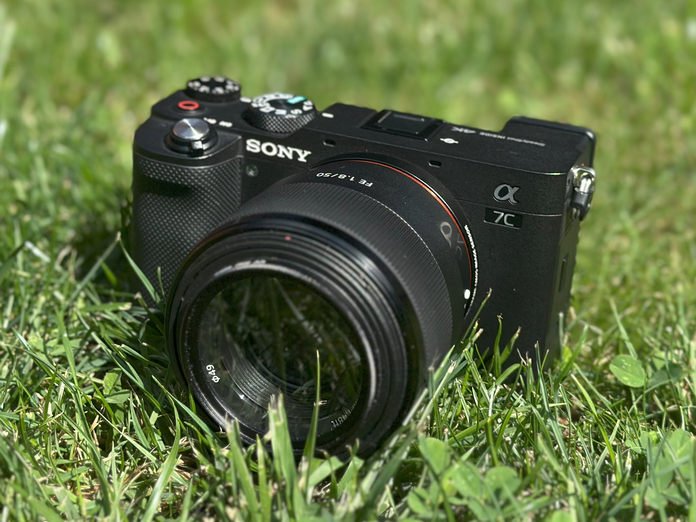
Image quality is arguably the A7C’s strongest suit. The 24.2-megapixel full-frame sensor delivers excellent detail, impressive dynamic range, and accurate color reproduction. The camera maintains focus on moving subjects, making it well-suited for reportage and fast-paced scenes. Combine that with 5-axis stabilization, and it’s a solid option for handheld shooting.
Are there downsides? Certainly. The viewfinder is small and less comfortable than on higher-end models, and having only a single memory card slot might be limiting for some users. Beyond that, there’s little to fault.
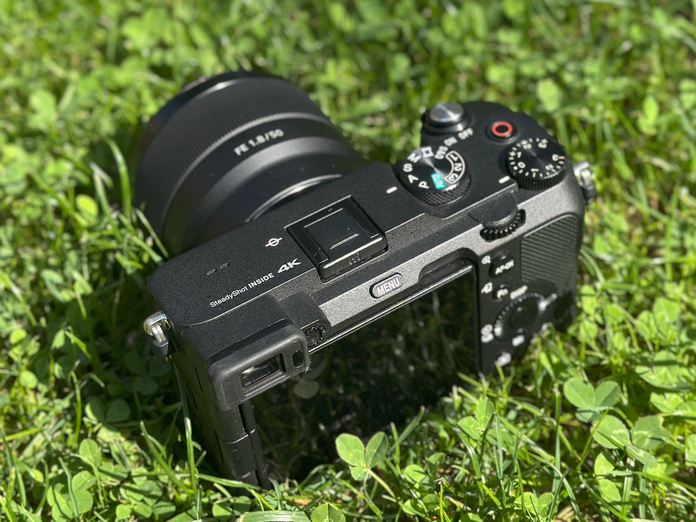
When it comes to video, the Sony A7C holds its ground: 4K, S-Log, HDR – all the essentials are there. For travel vlogs or even professional content, it’s more than enough. True, there’s no 4K at 60 fps (only 30 fps), but for most projects, that’s not a dealbreaker. If you’re into slow-motion, Full HD (1920×1080) up to 120 fps has you covered.
This camera quickly becomes that reliable partner you don’t want to part with. Lightweight, convenient, yet powerful. Letting it go feels a bit like sending your best assistant off into the vastness of space. But if you already have a star like this in your arsenal, do you really need to chase other galaxies?
Where to buy SONY A7C
Read also:
- Sony ZV-E10 II Review: Compact Camera with Strong Personality
- Use It or Lose It: How AI is Changing Human Thinking
- Moto Watch Fit Review: A Practical Companion for an Active Lifestyle