




© ROOT-NATION.com - Use of content is permitted with a backlink.
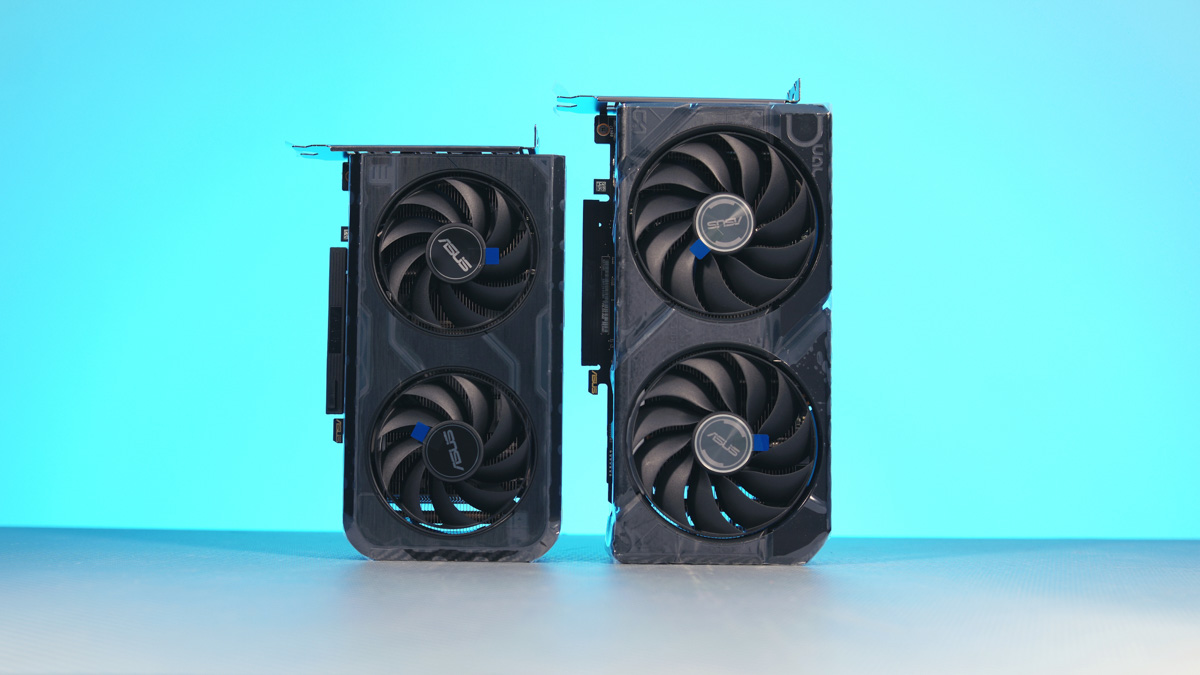
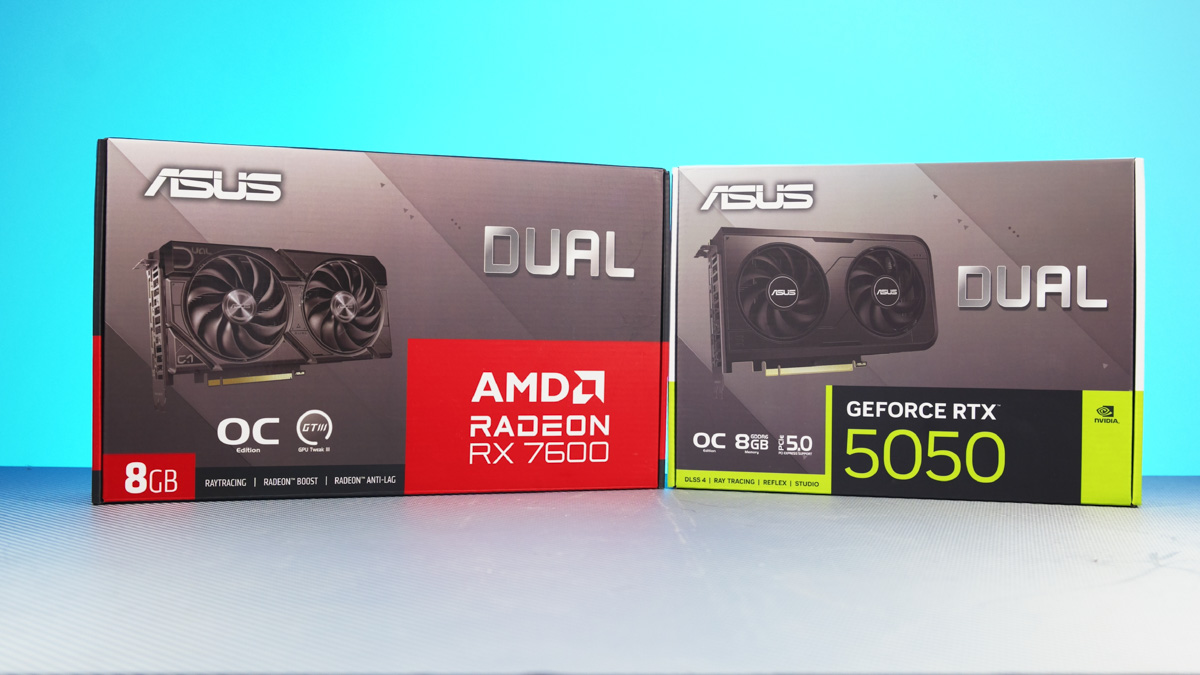
This article focuses on ASUS Dual graphics cards, specifically the ASUS Dual RTX 5050 8GB and ASUS Dual RX 7600 8GB, and examines the potential limitations of purchasing an 8GB GPU in 2025. I also provide a personal perspective on the situation from my experience as a video editor.
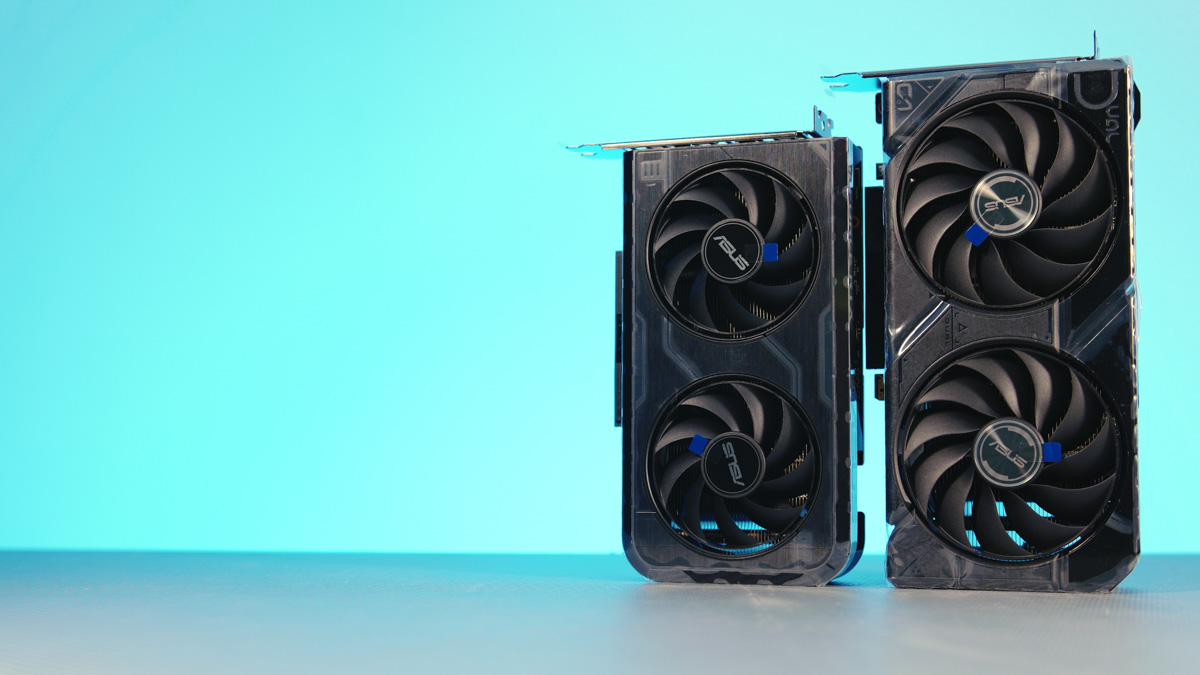
TABLE OF CONTENTS:
Video about ASUS Dual RTX 5050 8GB/RX 7600 8GB
This material is meant to cover ASUS Dual graphics cards, specifically the ASUS Dual RTX 5050 8GB and ASUS Dual RX 7600 8GB, and the risks of buying an 8GB GPU in 2025. But I wouldn’t be myself if I didn’t analyze the situation from my perspective as… a video editing director.
Because, yes, a huge number of reviewers keep insisting that 8GB of video memory won’t last long… often citing benchmarks at 1440p on high settings. In modern AAA titles. At 1440p, on high or, God forbid, ultra settings. On budget graphics cards, the cheapest models of the current generation. Which is, at the very least, curious.
Budget graphics cards aren’t expected to offer a three-year performance buffer.
Positioning
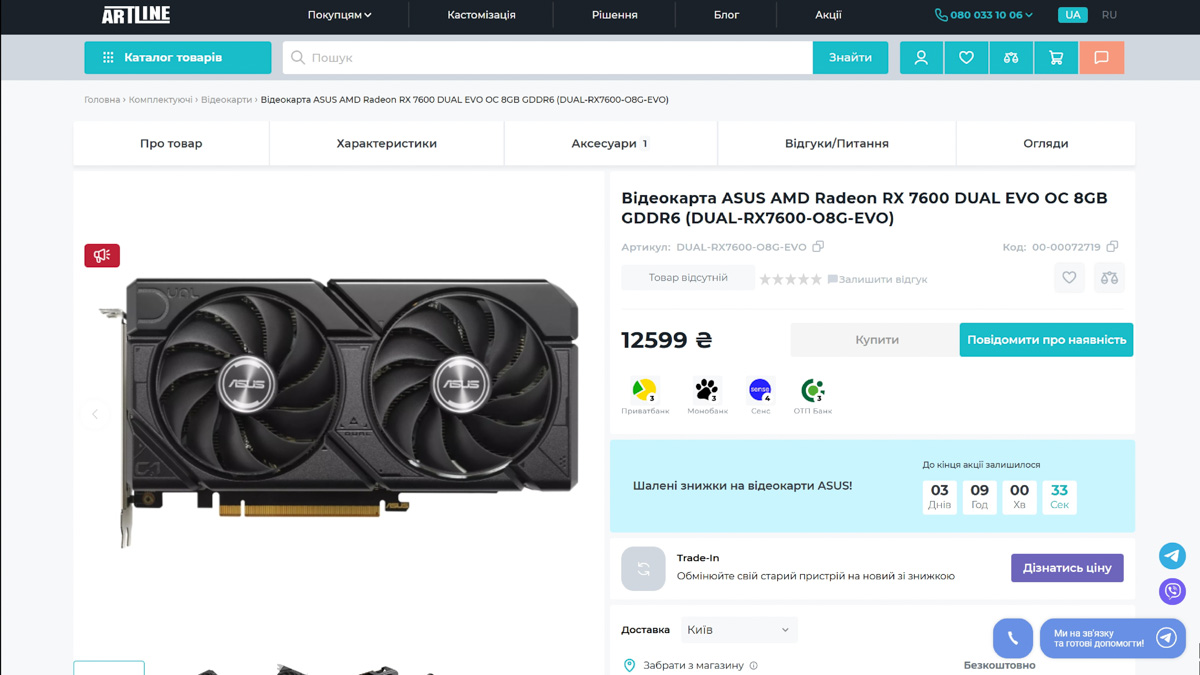
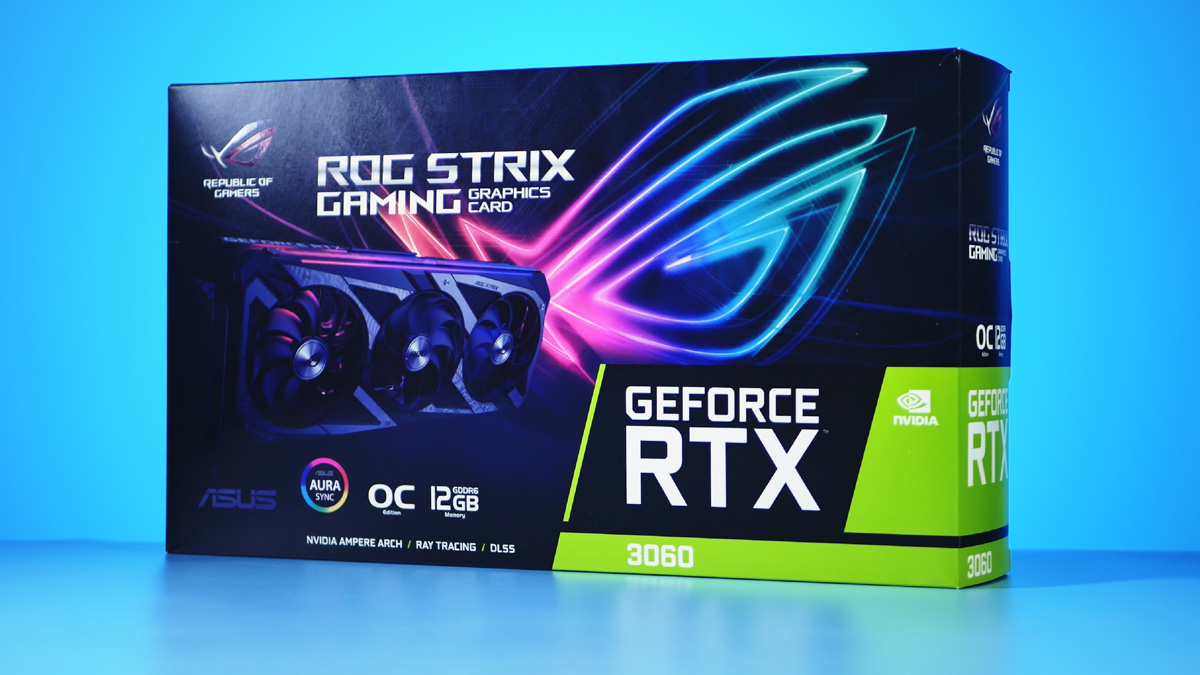
People remember and value the mid-range. I revere the RTX 3060, not the 3050. I prefer the RX 580 over the 550. And I consider the best Blackwell card to be the RTX 5060 Ti 16GB, not the RTX 5050. The issue is price and purpose. I simply can’t recommend the 5060 Ti to someone who only has the budget for an RTX 5050. This isn’t a matter of preference; it’s a matter of necessity.
Technology
There’s no point in recommending the RTX 5060 Ti to someone aiming for 144 FPS in FHD, because modern budget models can achieve that even on high settings. How they achieve it, however, is another question. The RTX 5050, for example, uses the Blackwell architecture and supports DLSS 4 MFG – not just 2×, but also 3× and 4×.
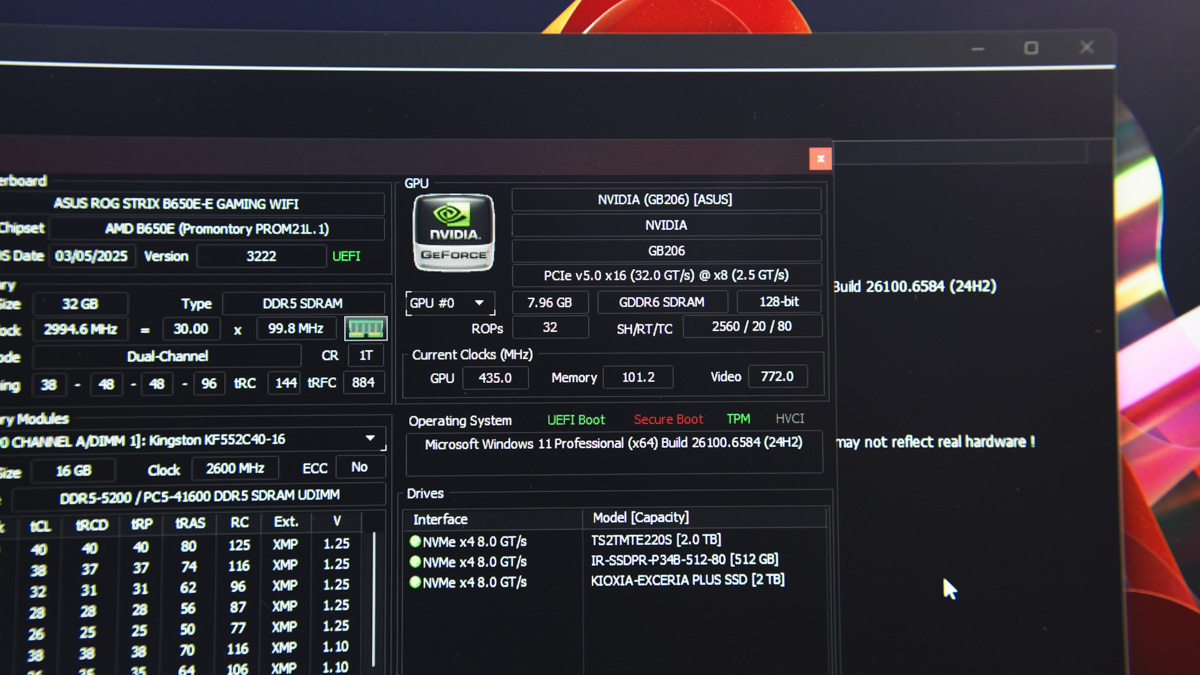
Certainly, DLSS consumes video memory, which is already limited on budget graphics cards. But video memory is also used by textures, post-processing, shadows, and many other elements. None of these options, even when “lightened,” will give you a 2× FPS boost, I’m afraid.
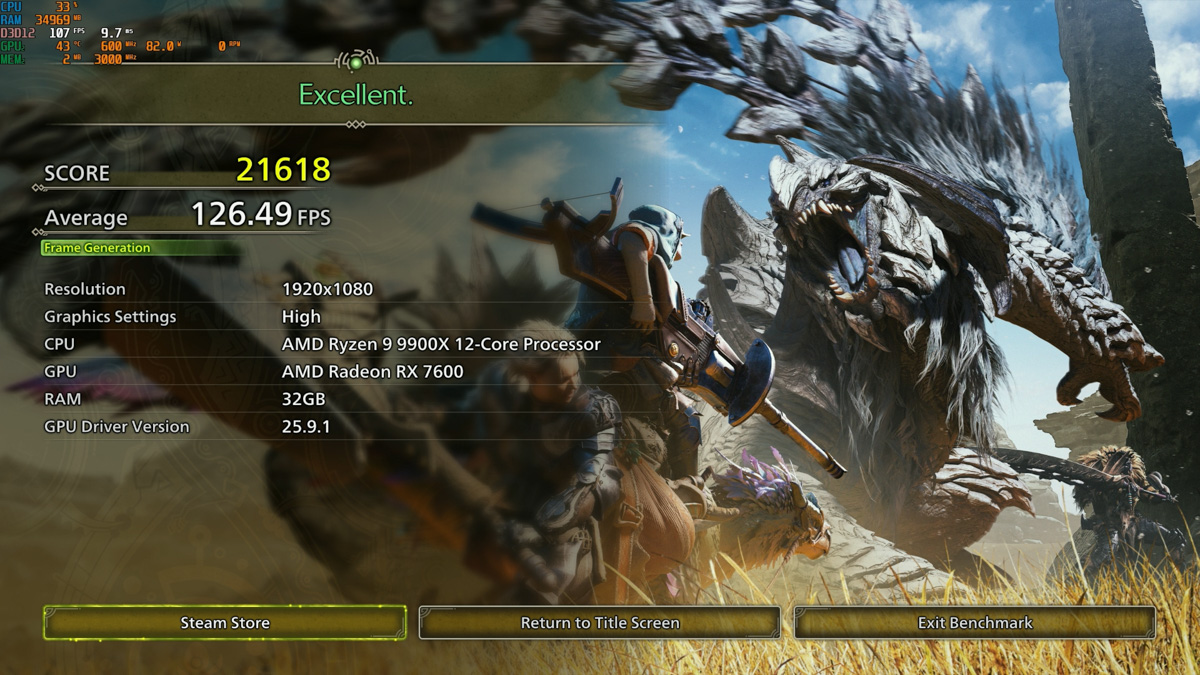
But DLSS will. Yes, input lag increases slightly, but if you’re starting around 70 FPS and multiply that with DLSS, you won’t notice the difference. In single-player games, definitely. Personally, I don’t notice it at all.

At the same time, there’s an alternative: the ASUS Dual RX 7600 8GB. This card uses last year’s architecture and is priced similarly to the newer model, but – and here’s the catch – it consumes around 20% more power, roughly 150–160W. In raw raster performance – that is, without DLSS or ray-tracing optimizations – it delivers about 15–20% higher FPS. Sometimes it doesn’t offer an advantage, sometimes it loses in optimization, but very often it’s simply more powerful.
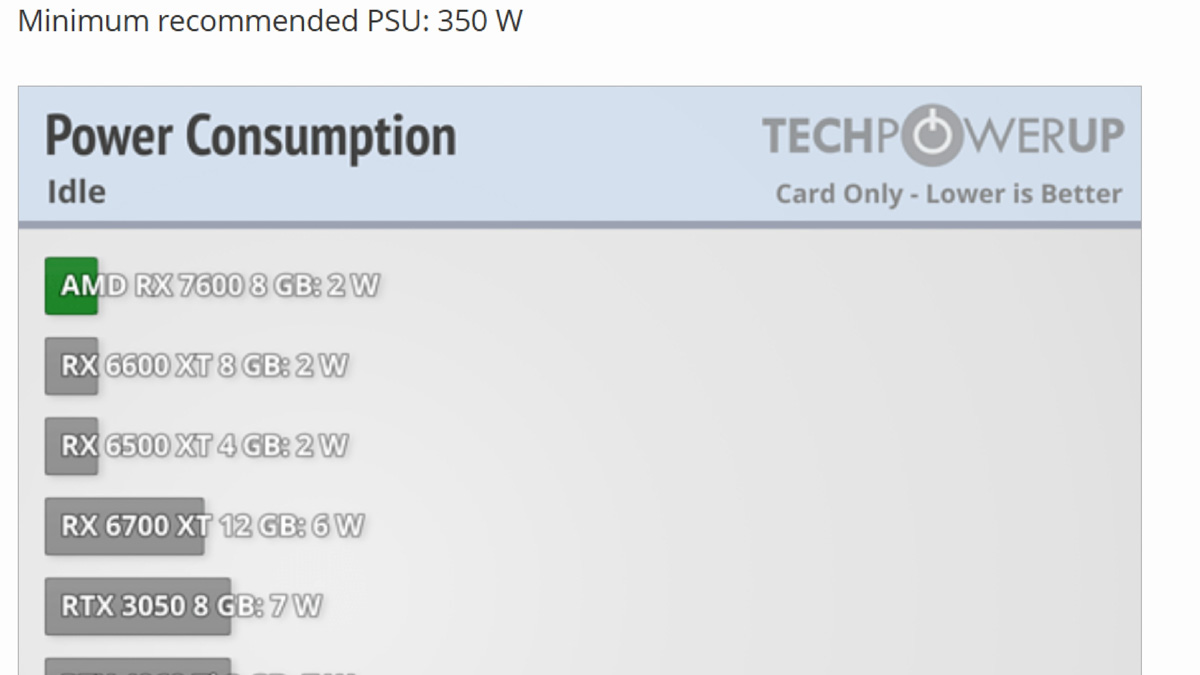
At the same price – I’ll note – the cards are almost identical in cost. Meanwhile, the RX 7600 is more power-efficient at idle. According to TechPowerUp, this card is among the record holders, drawing just 2W. For comparison, the RTX 5050 consumes 9W.
Ray Tracing
There’s an important nuance here. If you play games where ray tracing is essential, the RTX 5050 will deliver better FPS thanks to optimized ray-tracing performance. The RX 7600, on the other hand, has an older architecture with poorly optimized ray tracing. But as of now, there’s essentially only one such game: Indiana Jones. All others allow you to turn RTX off. And just so you understand – raster performance is still relevant and important. Linus Tech Tips, for example, built their gaming setup around a Radeon card for this very reason.

Neither card can run solely off the PCIe slot, as both consume more than 75W, which PCIe cannot provide. Additionally, the RX 7600 is larger, has fewer video outputs, and offers only eight PCIe 4.0 lanes, compared to eight PCIe 5.0 lanes on the RTX 5050.
Mobile Contender
Interestingly, in the context of these two cards, the RTX 5050 for laptops stands out. It can draw up to 125W and offers the same specifications as the desktop model – identical CUDA cores, the same codecs, tensor cores, and all other features.
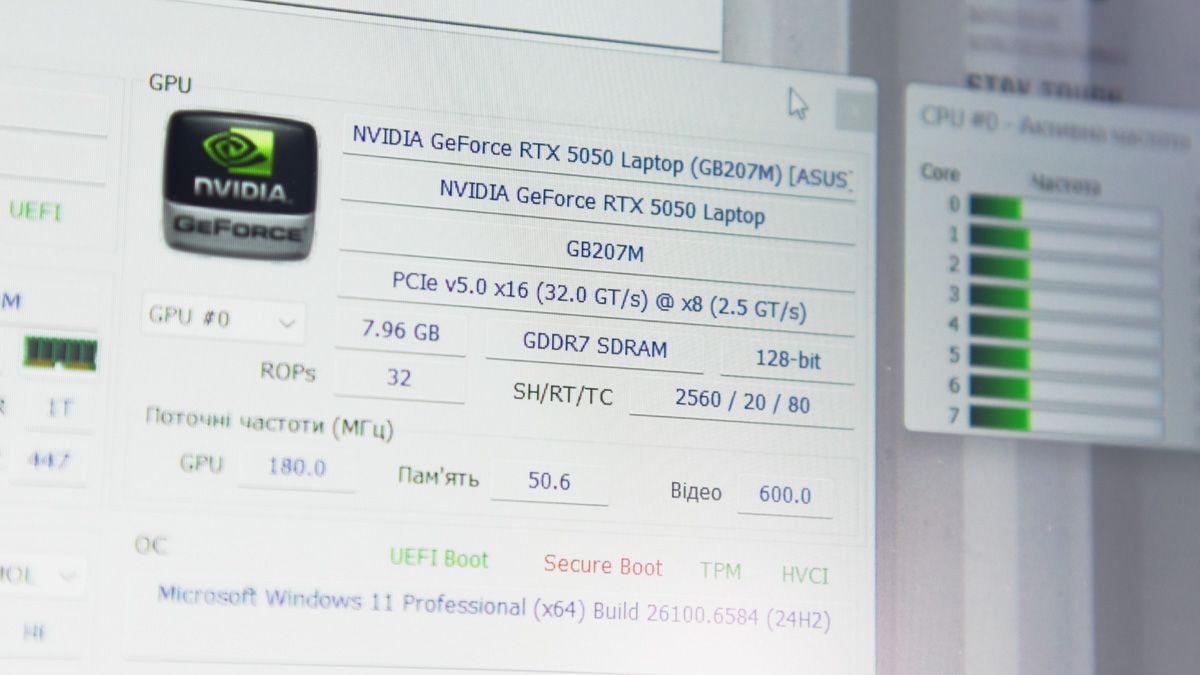
But! Because the mobile card uses GDDR7 instead of GDDR6, as in both desktop models, its performance is roughly on par with the RX 7600. I’m not exaggerating. So, if you’re looking at gaming laptops – like the ASUS TUF A series – the GPUs there are seriously capable.
Other Details
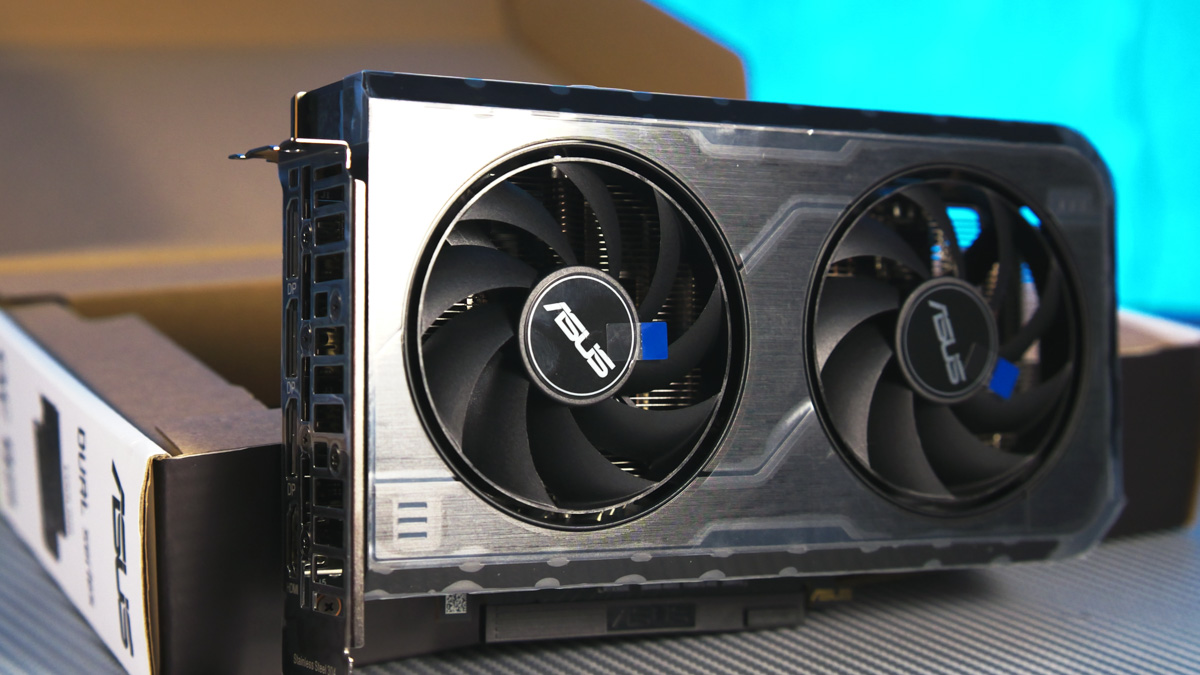
What else? Obviously, the power connectors aren’t 12V 2×6 – they use standard 6+2 pin connectors. Temperatures are perfectly normal, and both cards handle stress tests like champs. And what’s particularly nice – both cards support Zero RPM mode.
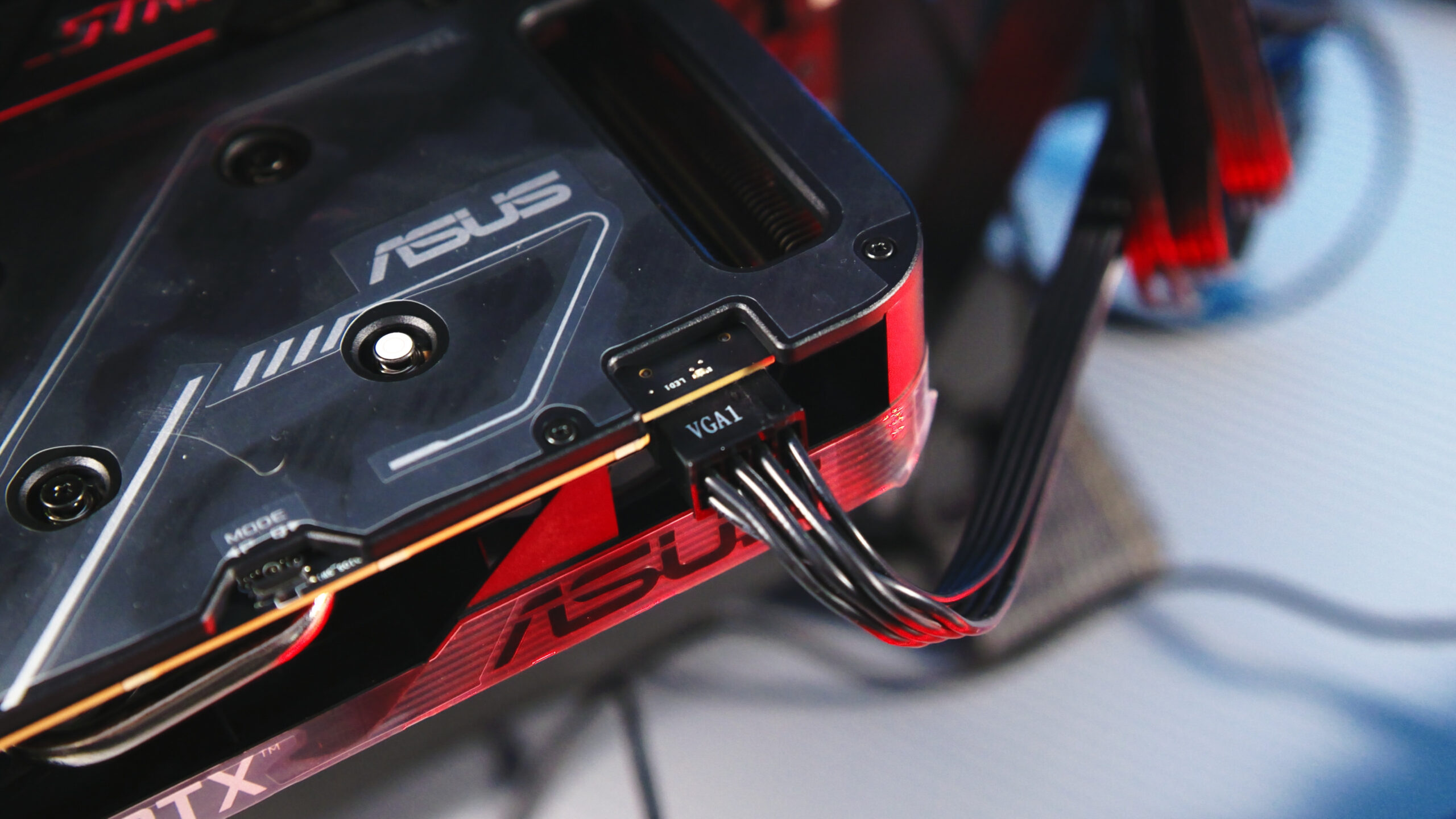
We’ve actually reached the point where even the cheapest graphics cards from major manufacturers can operate in a silent mode. Pretty neat, right? Definitely neat!
Conclusions
Brace yourselves, ladies and gentlemen, and don’t expect budget graphics cards to offer the same performance or future-proofing as higher-end models. If you’re aiming to game in FHD, both the ASUS Dual RTX 5050 8GB and ASUS Dual RX 7600 8GB will serve you well. Temperatures are stable, fans operate properly, and the cards are compact. Each has its own advantages. It’s still a bit funny that they’re essentially outperformed by the mobile RTX 5050… but, as they say, that’s just the timeline we live in.
Read also:
- ASUS TUF RTX 5080 16GB: Is the status quo finally over?
- ASUS TUF RX 7900 XT 16GB Review: 5 Key Facts and a Full Set of Benchmarks
- ASUS Prime RTX 5060 Ti 16GB Review: A Top Performer for the Price?

