





© ROOT-NATION.com - Use of content is permitted with a backlink.
The launch of three next-generation consoles is approaching rapidly, marking another major transition for the video game industry. Interest in the future extends beyond gamers to developers, investors, and analysts, all seeking to understand the next phase in the evolution of interactive entertainment.

This is not just a hardware update. The new generation is expected to reshape the approach to gameplay itself – from graphics quality and load speeds to the integration of cloud technologies, artificial intelligence, and service-based distribution models. The question is no longer what changes are coming, but how radical they will be and which manufacturers will succeed in setting the industry’s standards. Let’s examine the details.
TABLE OF CONTENTS:
Three Strategies for a Fundamentally Different Landscape
The challenge is that the environment into which these consoles are launching is fundamentally different from the one in which their predecessors were developed. Component shortages, memory market instability, rising production costs, and shifts in game consumption models all contribute to a new reality. As a result, the next generation may be not only a technological breakthrough but also one of the most challenging periods in the industry’s history.
PlayStation 6, Xbox Helix, and Steam Machine represent three distinct approaches to the same question: what will the future of living-room gaming look like?
Sony: Focus on Evolution and Technological Maturity
Sony has traditionally followed a cautious but proven strategy. The PlayStation 6 is positioned more as an evolutionary step than a revolutionary one. The company continues its partnership with AMD under the codename Project Amethyst.
Three key development areas have been confirmed: neural arrays for more efficient AI processing, Radiance cores supporting full ray tracing and even path tracing, and versatile data compression algorithms designed to reduce memory load. At the same time, the console’s lead architect, Mark Cerny, acknowledges that these technologies currently exist only at the simulation stage.

This is a crucial point. Preliminary estimates suggest the release may not occur before 2028, and given ongoing memory issues, it could be delayed to 2029. Sony is effectively taking a long-term approach, relying on proven solutions while risking a potential loss of momentum.
Microsoft: A Console as a New Type of PC
Microsoft, in contrast, is taking a markedly different approach. Project Xbox Helix aims to blur the line between a console and a personal computer.
According to Xbox head Asha Sharma, the new system is intended to be a “performance leader” and provide full support not only for Xbox titles but also for the broader PC ecosystem. Essentially, it is a Windows-based device with access to Steam, the Epic Games Store, and potentially other platforms.

The speculative specifications are ambitious: a hybrid Zen 6-based processor, RDNA 5 graphics, up to 48 GB of GDDR7 memory, and manufacturing on TSMC’s 3 nm process. The goal is stable 4K at 120 FPS and a significant performance increase compared to the previous generation.
However, price may be a major limiting factor. Even preliminary estimates place it close to the cost of a high-end gaming PC. The release is expected at the end of 2027, but availability remains uncertain.
Valve: Emphasis on Openness and Ecosystem
The third player, Valve, is taking the most unconventional approach. The new Steam Machine builds on concepts introduced with the Steam Deck but adapts them to a desktop form factor.
The device is based on a semi-custom AMD chip with Zen 4 and RDNA 3 architectures, delivering performance comparable to a mid-range gaming PC. The target is 4K at 60 FPS, with support for FSR and ray tracing.

The main differentiator will be the software. The system runs on SteamOS, avoiding Windows licensing costs and providing access to the entire Steam library through the Proton compatibility layer. This approach maximizes openness but also makes the platform dependent on developer optimization and support.
The initial release was planned for early 2026, but it has already been delayed. Valve now aims to launch the device by the end of the year, with the postponement highlighting the challenges of implementing this approach.
Read also: Apple MacBook Neo… Through Steve Jobs’ Eyes: Things That Change Everything
A Brief Look Back
The PlayStation 5 remains commercially successful, but the outlook is no longer entirely unchallenged. By the end of December, total sales reached 92.2 million units, a figure comparable to the PlayStation 4, though slightly behind by roughly 2.2 million for the same period. The PlayStation Network ecosystem reports around 132 million monthly active users, demonstrating the brand’s continued strength. However, the growth trend raises questions: in Q4 2025, 8 million consoles were shipped, 1.5 million fewer than the previous year. The market is gradually saturating, and growth rates are slowing.
The situation for Xbox Series X and Series S appears more challenging. Combined sales are estimated at 33–34 million units, representing roughly 30% of the market compared to 70% for PlayStation. Moreover, this performance is about 19% lower than Xbox One at a comparable stage, which itself was considered an underperforming generation. Last year, year-over-year sales declined by 45%, and in the UK by 39%, which many analysts have described as the worst period in Xbox’s history.

Paradoxically, part of this outcome reflects Microsoft’s own strategy. The company has been actively promoting the “Xbox everywhere” model, with its games increasingly available not only on consoles but also on PCs and even competitor platforms, including the PlayStation 5. From an ecosystem perspective, this is a logical move, but it effectively undermines console hardware sales.
In this context, Valve appears as a newcomer, but one with clear ambitions. The Steam Deck marked the company’s first serious hardware initiative, with approximately 3.7–4.0 million units sold by early last year. In industry terms, this is modest, particularly compared to over 150 million Nintendo Switch units sold.
However, the raw numbers do not convey the full story: Valve has effectively created a new segment – portable gaming PCs – and already controls a significant share of it. Within this framework, the upcoming Steam Machine is not an experiment but a logical extension of the strategy: an effort to bring its ecosystem from the “portable world” into the living room.
Read also: #MWC2026: Evaluating Progress Without Clear Objectives
Ahead of Us… RAMageddon?
Now to a factor that could upend conventional expectations. While the previous console generation faced availability issues due to the COVID-19 pandemic, the current situation is more structural, reflecting a transformation of the entire semiconductor industry.
By 2026, up to 70% of global memory production could be directed toward AI data center needs. Major manufacturers such as Samsung, SK Hynix, and Micron Technology are increasingly shifting production toward HBM – high-bandwidth memory used in AI accelerators. The rationale is straightforward: a single HBM chip generates 5–8 times more profit than standard DDR5 for consumer devices.

The effects are already noticeable and far from favorable. By mid-2025, a 32 GB DDR5 module cost around $85–100. By early 2026, the same modules are priced at $300 or more, assuming they are even available. Even DDR4, once considered a budget option, has doubled in price. IDC analysts predict a contraction in the PC market, forcing manufacturers to reassess their strategies.
Notably, Nvidia plans to reduce gaming GPU production by 30–40%. This is not due to weak demand but rather a shortage of GDDR7 memory. TrendForce has described the situation as “the craziest in the history of the memory market.”

The corporate sector is responding just as sharply. Dell’s COO, Jeff Clarke, described the crisis as “unprecedented,” highlighting rapidly rising costs. Lenovo, Dell, and HP have already increased hardware prices by 15–20%. The Crucial brand has effectively disappeared from the market, and the memory sector has entered a state of continuous price adjustment – a scenario that would have seemed impossible a few years ago.
For next-generation consoles, this has a simple but unpleasant implication: higher prices and likely delayed releases. PlayStation 6 is now being discussed with a potential launch shift to 2029. Valve has effectively acknowledged the issue by postponing the Steam Machine launch and cautiously revising its plans. Xbox Helix, with its reliance on large amounts of GDDR7 memory, risks entering the market at a price closer to a full gaming PC than a traditional console.
This creates a paradoxical situation: the next generation may be significantly more expensive without delivering a technological leap sufficient to justify the cost. Manufacturers will need to balance trade-offs: reducing memory capacity, cutting bandwidth or storage, or entering a price segment where they directly compete with PCs.
Ironically, even Valve’s approach – positioning its products as a more affordable alternative to gaming PCs – can no longer guarantee budget-friendliness. In a world where memory has become a strategic resource, low-cost solutions may simply no longer exist.
Read also: Prospects for DDR SDRAM: Future Developments and Key Challenges
Aging Gamers and Indifferent Youth: The Industry’s Demographic Challenge
There is another issue the console industry tends to discuss quietly: its core audience is aging, while younger generations are not stepping in at the same rate.
In the United States, the average gamer is now around 36 years old. Half of the more than 200 million Americans who play video games are aged 35 and older. The trend is even more pronounced in the console segment: the share of players aged 45+ increased from 19% in 2020 to 26% in 2024. These are not newcomers – they are the generation that grew up with the Atari 2600, Nintendo Entertainment System, and PlayStation, and simply never stopped gaming.
However, age brings changes not only in experience but also in lifestyle. A person over 40, balancing work, family, and financial obligations, is less willing to spend dozens of hours on large-scale AAA titles. Money is available, but time is not – and this is a critical challenge for the industry.

On the other hand, younger audiences are developing entirely different consumption habits. Instead of consoles, they turn to TikTok, YouTube Shorts, and free-to-play games like Fortnite or Roblox, where many players even pick up a ready-made Fortnite account to get a head start. Those games run on smartphones without the need to purchase expensive hardware. Whereas in the early 2000s the choice was often simply “the street or a PlayStation 2,” today the competition for attention is pervasive.
According to the Entertainment Software Association, about 60% of adult Americans play games weekly. Even among those aged 80 and older, the figure exceeds 30%. However, the composition of this demand is markedly different: older players tend to choose mobile puzzles, card games, and word games rather than costly console blockbusters.
Projections from AARP highlight the contrast even further: by 2045, the number of gamers aged 50 and older could exceed 100 million. However, this is not the demographic lining up for a new PlayStation 6 on launch day.
Manufacturers face a dilemma. Their most loyal customers have purchasing power but limited time. In contrast, younger audiences have time and scale, but lack the habit of paying and often see little value in a dedicated gaming device. This contradiction may prove to be as significant a challenge as any technological crisis.
Read also: Algorithm Without Fear or Doubt: Why AI Cannot Be Trusted with War
PC Gaming Renaissance: How Computers Are Gaining Ground on Consoles
While the console market faces new challenges, PC gaming is experiencing a notable resurgence. Steam now reports around 132 million monthly active users, with peak concurrent users exceeding 40 million – record figures for the platform. The overall PC gaming market is valued at over $90 billion, with steady annual growth. Steam’s library surpasses 100,000 titles, and the platform controls the majority of digital PC game distribution.
This growth is driven by multiple, mutually reinforcing factors.
- First, the concept of “console exclusives” is rapidly diminishing. Games from Sony are increasingly released on PC, and Microsoft has effectively made this the standard. The PC is no longer considered a “secondary platform” but is becoming a universal one.

- Second, the Steam ecosystem offers advantages that consoles often lack: frequent sales, no mandatory subscription for online play, and a large backward-compatible library. This creates a sense of long-term value rather than tying users to a specific hardware generation.
- Third, one of the key arguments in favor of consoles – “living room convenience” – has weakened. With the emergence of devices like Steam Deck and a new wave of portable PCs such as ROG Ally and Legion Go, PC gaming has become more flexible and mobile.
- Fourth, content drives demand. Streamers on Twitch and YouTube predominantly use PCs, which directly influences audience preferences. The PC is not only a gaming platform but also a content creation hub.
- Finally, there is a straightforward but important factor: the absence of online fees. Unlike console ecosystems, PC users are generally not required to pay for online multiplayer access.
In this context, Valve, with its Steam Machine, is entering a particularly distinct niche: a device that combines the simplicity of a console with the openness of a PC. It connects to a TV and functions as a straightforward gaming system, but without the constraints of a closed ecosystem.
Microsoft’s Xbox Helix appears to be moving in a similar direction, but from the opposite side. Rather than a PC adapted to resemble a console, it is a console gradually evolving into a Windows-based PC with access to the same digital platforms.
This leads to a key question: if the boundary between PCs and consoles continues to erode, where does PlayStation fit within this new landscape? Compared to its competitors, its traditionally closed model may begin to appear less stable and more conservative.
Read also: Samsung Unpacked 2026: Major Presentation Without Major Breakthrough
Power Paradox: More Hardware, Fewer Games
There is a notable pattern: as gaming hardware becomes more powerful, fewer projects are able to fully utilize that capability. This is not just a subjective impression – available data supports it.
The PlayStation 2, the most successful console in history with over 160 million units sold, accumulated more than 4,200 games over a 13-year lifecycle. During its peak years, hundreds of titles were released annually. The explanation is straightforward: lower development costs and barriers to entry allowed not only large publishers but also smaller studios to participate. As a result, the library was highly diverse, ranging from major releases like Grand Theft Auto: San Andreas to numerous niche experimental titles that would be unlikely to secure funding today.
By comparison, the PlayStation 5, after more than five years on the market, has around 650 titles, roughly half of which are nominal “exclusives.” However, if considering true exclusives not available on PC, the number is limited. Among the few examples are Astro Bot and Demon’s Souls, while most other titles eventually reach PC, reducing the distinctiveness of the platform. Against the backdrop of thousands of releases during the PS2 era, this represents a significant contraction in variety.
The underlying reason is development cost. A modern AAA title typically requires $100–300 million and 3–6 years of production. Some projects exceed even these figures – for example, Grand Theft Auto VI is estimated at $1–2 billion. The mid-tier segment is gradually disappearing, leaving the industry divided between high-budget blockbusters and relatively low-cost indie games.


This has direct implications for the next generation. Even if the PlayStation 6 is technically impressive, a straightforward question arises: who will develop games capable of utilizing its full potential? The industry is already experiencing a wave of layoffs, with tens of thousands of jobs lost in recent years. Sony, for example, shut down Firewalk Studios following the failure of one of its projects and implemented broader workforce reductions.
Developing a large-scale title now requires hundreds of people and multiple years of work. As a result, relatively few such projects are likely to be available at the launch of a new console. The PlayStation 5 cycle has already illustrated this pattern, with launch windows largely filled by remasters, cross-generation releases, and a limited number of genuinely new titles.
Against this backdrop, the PC ecosystem presents a different picture. Tens of thousands of new games are released on Steam each year. While most are indie projects, this continuous flow and diversity help sustain the ecosystem. As console libraries become more constrained, the PC platform continues to expand – not primarily through hardware capability, but through accessibility for developers.
Read also: Project Silica Explained: A Look at “Digital Immortality”
Three Consoles, Three Possible Futures
In summary, these are three fundamentally different devices targeting the same space but offering distinct approaches.
The PlayStation 6 from Sony remains aligned with the traditional model: a closed ecosystem, proprietary hardware, and a focus on exclusives. At the same time, its launch may shift to 2028–2029, and the core technologies of Project Amethyst – neural arrays, Radiance cores, and new compression methods – currently exist only at the level of concepts and simulations. The expected price appears moderate on paper, but under conditions of memory shortages, it may ultimately be significantly higher.
Microsoft’s Xbox Helix represents an attempt to reset its position through a substantial shift in concept. It is envisioned as a hybrid between a console and a PC, with access to the Steam ecosystem and potentially other storefronts. Its projected performance, including large amounts of GDDR7 memory, is notable, but also introduces its primary risk: a high price point. Such a device is likely to appeal more to enthusiasts than to the mass market, raising questions about Microsoft’s ability to quickly regain lost ground.

Finally, Valve’s Steam Machine appears to be the most pragmatic option. It combines sufficient performance with an open approach: access to the full Steam library, no strict dependence on a single ecosystem, and the use of SteamOS. However, this approach is not without challenges. The launch has already been delayed, and the pricing model has required revision due to the same memory constraints. In addition, Valve’s scale remains smaller compared to its competitors: even the relatively successful Steam Deck operates at a different volume level.
Overall, this results in three distinct strategies: cautious evolution, technological radicalism, and pragmatic openness. None of them, however, offers a guaranteed path to success.
Read also: Sony – A Ghost of Former Greatness: Why a Once-Legendary Brand Is Becoming a “Museum Exhibit”
Next-Generation Paradox: Power Without Content
The most notable aspect of the upcoming console generation is not the hardware itself, but the context in which all three devices are being introduced. Traditional assumptions of the console business are simultaneously being challenged. The so-called “RAMageddon” is driving component prices to levels that put the conventional profit model under pressure. At the same time, rising AAA development costs mean that each generation delivers fewer titles capable of fully utilizing new hardware.
Gamer demographics are also shifting: the core audience has purchasing power but limited time, making it increasingly difficult to justify spending on a console for only a small number of major releases per year. This issue is compounded by the strength of the PC as a gaming platform, which offers greater flexibility, openness, and a game library that consoles struggle to match.
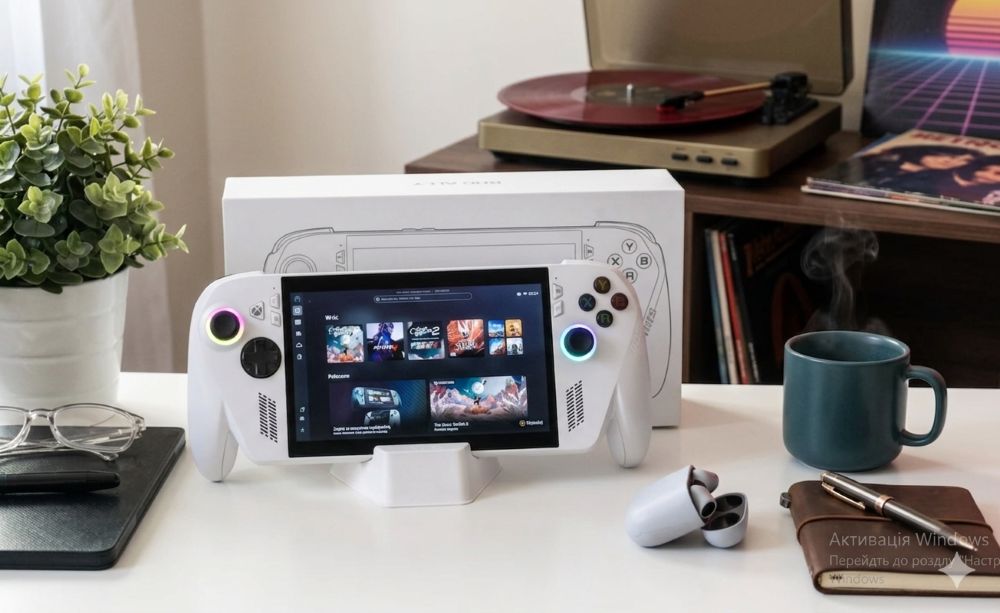

Paradoxically, Microsoft and Valve appear to recognize this most clearly. Xbox Helix is effectively a console that functions as a PC, while Steam Machine is a PC positioned as a console. Sony remains the primary proponent of the traditional closed model: it may prove effective if users continue to value simplicity and brand familiarity, or it may become an outlier in a market that is steadily moving toward more open ecosystems.
The more significant constraint, however, is likely to be content rather than hardware. Large-scale AAA games now require budgets comparable to major infrastructure projects and take years to develop. As a result, new consoles may spend their early lifecycle with limited original content, relying on remasters and cross-generation releases while the software pipeline catches up.
There is, however, a positive aspect: the transition period is likely to be dynamic and eventful. At the same time, it is expected to be costly, gradual, and uncertain. In this context, the PC platform remains a stable alternative for users seeking fewer ecosystem limitations.
Read also:
- Giant Awakens: Microsoft Publicly Acknowledges Windows Issues
- Five Affordable Ways to Improve a PC Without Excessive Cost
- RAMpocalypse: Everything About the AI Bubble and Rising PC Prices

