





© ROOT-NATION.com - Use of content is permitted with a backlink.
The Windows team has stepped away from a long-standing defensive stance and publicly acknowledged what users have been pointing out for years: the platform faces significant issues.
Read also: Instructions, Guides, How To for Windows
TABLE OF CONTENTS:
Windows and a Moment of Candor
Microsoft has published a statement that reads less like the launch of a new feature and more like a delayed acknowledgment of systemic shortcomings. It avoids the usual emphasis on innovation, omits celebratory references to Copilot, and largely steers clear of standard PR language. Instead, the company outlines specific problems and declares its intention to address them – an approach that is relatively uncommon for a corporation of Microsoft’s scale.
In recent years, Windows has evolved according to a “more is more” logic: another AI tool, another widget, another service enabled by default. Another interface experiment that does not always ask whether users want it. All of this has been presented as progress. Yet an increasing number of features does not necessarily translate into a better user experience.
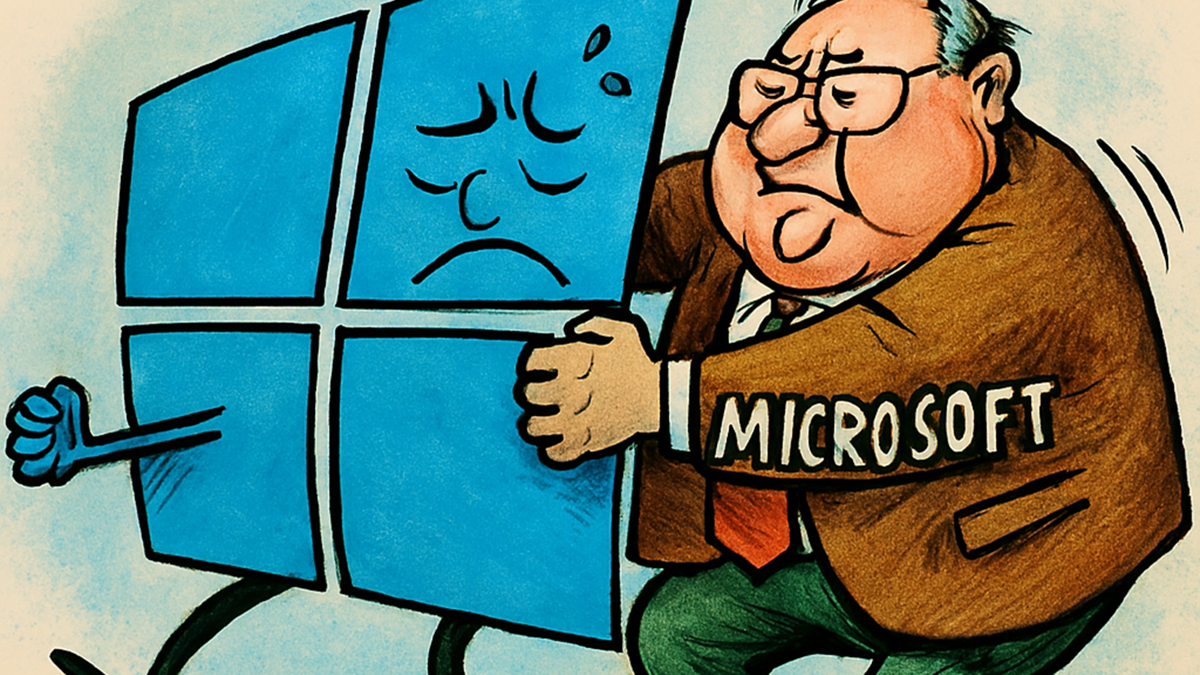
The primary criticism of Windows has not been that it changes – evolution is a normal process for any operating system. The issue is that changes have increasingly occurred without a clear sense of respect for the user as the central stakeholder. At times, it has seemed as though users were expected to adapt to shifting strategic priorities, rather than the platform adapting to user needs. This perceived shift in philosophy has gradually accumulated frustration, even among those who have traditionally been loyal to the platform.
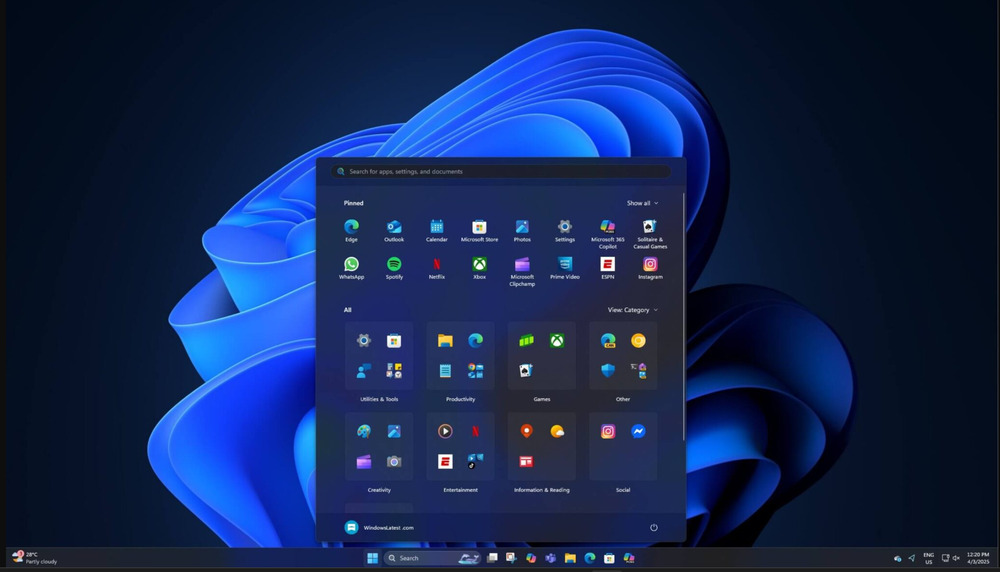
Recent months have been illustrative. Some updates affected system stability. Certain interface decisions appeared insufficiently refined. Microsoft services were actively promoted within what many users consider their personal workspace. Over time, Windows began to generate fatigue – a concerning signal for a product that has served as a de facto standard for decades.
In that context, Microsoft’s recent post is more than routine corporate communication. It represents an attempt to recalibrate the tone and acknowledge that the issue is not users “failing to understand the vision,” but rather the company losing balance between ambition and usability.
Does this signal a substantive shift? Not yet. For now, it remains a statement of intent. However, acknowledgment is a necessary first step. For the first time in a while, Microsoft appears to recognize what many users have long observed: Windows may need fewer new features and more attention to fundamentals – stability, predictability, and respect for the person on the other side of the screen.
Read also: Prospects for DDR SDRAM: Future Developments and Key Challenges
Windows Does Too Much Behind the Scenes
It is difficult to deny that Windows 11 is visually polished, technically mature, and generally stable enough for the mass market. At the same time, it has acquired a less favorable reputation. Increasingly, it is perceived as a platform that tries to be “too smart,” and in doing so, sacrifices a degree of predictability.
This is not about isolated bugs or a few poorly executed updates. The issue runs deeper – it’s about the sense of control. For years, users have complained about pop-up prompts suggesting they connect yet another Microsoft service, about features enabled by default without clear and explicit consent, and about notifications phrased in a tone that borders on being patronizing. All of this created the impression that the system “knows better” what a person needs than the person themselves.
Gradually, a narrative dangerous for any major platform began to take shape. Windows no longer feels like it works with the user, but alongside them. Background processes, telemetry, automatic cloud integrations, recommendations in the Start menu – each of these elements might seem minor on its own. But together, they create an atmosphere where the operating system stops feeling like a tool and starts resembling an active participant with interests of its own.

Recent months have been indicative. Updates that affected system stability, interface decisions that appeared underdeveloped, and the active promotion of Microsoft services within what users consider their personal workspace have all contributed to user fatigue – a concerning signal for a product that has long been a de facto standard.
The recent Microsoft post, therefore, is more than routine corporate communication. It represents an attempt to adjust the company’s tone, to acknowledge that the issue is not users “failing to understand the vision,” but rather that the company, at some point, lost the balance between ambition and usability.
Does this indicate a meaningful turnaround? Not yet. At this stage, it is primarily rhetoric. However, recognition of the issue is a necessary first step toward normalization. For perhaps the first time in years, Microsoft appears to acknowledge what users have long experienced: Windows does not need additional features, but a renewed focus on core principles – stability, predictability, and respect for the end user.
Read also: Five Mistakes to Avoid When Working with Windows 11
Promptly and on time. Users are already fatigued and have alternatives
It is difficult to dispute the obvious: in recent years, Windows has gradually lost the trust of a portion of its user base. The issue is not limited to the long-debated interface or yet another redesign of the Start button. The underlying concern is deeper, rooted in the system’s philosophy.
For decades, Windows was associated with user control. It was a system where users decided what to install or remove, which services to disable, and how their computer should behave. Windows functioned primarily as a tool rather than as a platform designed for monetization.
Recent updates, however, convey a different impression. Windows increasingly appears less like an operating system and more like a showcase for Microsoft services. Copilot, Bing, MSN, Edge, Microsoft 365, OneDrive, and Teams are integrated so tightly and prominently that the boundary between functionality and promotion starts to blur.

The issue is not the act of offering additional services itself. Any corporation of Microsoft’s scale will inevitably seek to monetize its ecosystem. The concern lies in the manner in which this is done.
When Windows 11 presents OneDrive as the default cloud storage option, that is understandable. However, when a user declines and the system repeatedly returns with the same prompt – altering wording, context, or placement – this begins to feel intrusive. It ceases to be a service or an assistive feature and instead becomes a form of persistent imposition.
This creates the impression that the operating system no longer fully trusts the device owner. It gives the sense that the system “knows better” how a user should work, what tools to use, and where to store files. This represents a fundamental shift in the operating system’s underlying paradigm.

Paradoxically, even Chinese versions of Android, which are traditionally heavily loaded with services and integrations, can sometimes feel less intrusive in this regard. This is a telling sign, because just ten years ago, a scenario like this on Windows would have seemed unimaginable.
Microsoft appears to be recognizing this, which is a significant development – timely and necessary, given that users are already fatigued. Unlike the early 2000s, users today have alternatives: macOS, Linux distributions, cloud-based environments, and even fully browser-based workflows.
Loyalty is no longer guaranteed solely by market dominance. If Windows shifts from being a tool to functioning as an advertising platform, users may start questioning whether they need it at all.
The question now is straightforward: what does Windows want to be in 2026 – a user-focused operating system or a front end for Microsoft services? These are two fundamentally different strategies, and the market will quickly determine which, if either, is viable.
Read also: Five Windows 11 Tools for Improving Productivity
A correct diagnosis is the first step toward resolution
Any systemic crisis begins with misaligned priorities and only concludes when a company acknowledges the underlying problem. If Microsoft genuinely implements the announced changes, Windows has a realistic chance of regaining its strengths – but only under one condition: the system must become transparent, predictable, and respectful of its users once again.
Beneath the recent issues with persistent prompts, promotional integrations, and interface experiments lies a different reality. Windows, as an engineering product, is built on an exceptionally robust foundation: compatibility with software developed over decades, support for a vast range of hardware, and an architectural evolution from x86 to x64, now alongside ARM64 development.
This represents complex, large-scale, world-class IT engineering, independent of anecdotal reports of “blue screens” on older devices.
In practice, Windows remains one of the few platforms that simultaneously maintains legacy support, backward compatibility, and forward progress – a substantial technical achievement.

None of these strengths matter if the system behaves as though its primary goal is to “re-educate” its users. When the interface becomes a vehicle for promoting services rather than a tool for work, trust erodes faster than bugs can be fixed.
Technical quality provides the foundation, but trust is the capital. The recent public message from Microsoft may represent the start of a course correction – a return to the era when Windows did not instruct users on “how to do better,” but simply worked. A time when the system did not require users to configure it against itself.
It is difficult to imagine a sudden transformation of a company of this scale. Yet, for the first time in years, it is possible to cautiously observe that Microsoft seems not only to be listening to the noise on social media but also beginning to understand its underlying cause.
This is no longer cosmetic; it is a strategic signal. If the diagnosis is correct, treatment is possible. The remaining question is whether the company has sufficient internal resolve to carry this process through to completion.
Read also:
- 5 Windows 11 Settings You May Want to Disable Right After Buying a Laptop
- How to Reduce RAM Usage in Windows 11
- How to Use Microsoft PowerToys

