





© ROOT-NATION.com - Use of content is permitted with a backlink.
Today, I want to discuss the prospects of DDR SDRAM: what we can expect in the coming years, the direction this technology is heading, and the key challenges it is already facing. This involves not only higher frequencies and bandwidth but also energy efficiency, latency, platform compatibility, and the economic feasibility of adopting new standards.
RAM has always been the “unsung hero” of computing systems. It rarely takes the spotlight for the average user, yet it directly affects the speed, stability, and scalability of modern computers. This applies not only to smartphones and laptops but also to hyperscale data center servers.
For the past two decades, DDR SDRAM has dominated this segment. As a synchronous dynamic memory with data transfers on both edges of the clock signal, it has provided reliable performance for a wide range of applications. Today, while the industry is transitioning to DDR5, the next evolutionary step – DDR6 – is already on the horizon.
It is clear that the future development of DDR SDRAM will not be just about pushing higher frequencies. It will require a careful balance between physical limitations, power consumption, manufacturing economics, and new architectural approaches.
TABLE OF CONTENTS:
The Evolution of DDR: From Frequency Scaling to a System-Level Approach
The early generations of DDR SDRAM developed according to a relatively straightforward and seemingly logical pattern. Each new iteration offered higher effective frequencies, increased bandwidth, and lower energy consumption per bit of data transferred. This pattern characterized the progression from DDR to DDR2, and subsequently to DDR3 and DDR4. The market became accustomed to this formula, and engineers expected that the next memory generation would address the limitations of its predecessor primarily through frequency scaling and process improvements.
Read also:
- RAMpocalypse: Everything About the AI Bubble and Rising PC Prices
- Structural Crisis of the DRAM Market and Its Impact on Consumer Electronics
DDR2 addressed the bottlenecks of DDR by implementing a doubled prefetch and improving energy efficiency. DDR3 continued this trend, making higher frequencies more widely available and relatively affordable. DDR4, in turn, became a standard in the industry, providing a balance between bandwidth, stability, and cost, while enabling platforms to scale from mainstream consumer devices to servers and data centers without requiring major architectural changes.

By the time DDR5 emerged, it became evident that further mechanical increases in frequency were no longer a universal or cost-free solution. Physical signal limitations, higher heat output, more complex PCB routing, and stricter stability requirements in multi-channel configurations began to offset the benefits of higher raw frequencies. The industry had effectively reached a point where simply increasing speed started to compromise reliability.
DDR5 addressed this scaling challenge not through incremental frequency improvements, but through structural changes. A key modification was the division of each DIMM into two independent 32-bit channels (or 40-bit with ECC), which improved memory access efficiency without requiring linear frequency increases. In practice, this results in reduced idle time, better handling of small transactions, and more predictable latency under real-world workloads.
Another significant change was the relocation of power management directly onto the memory module via a PMIC. In previous generations, the motherboard handled this function, which limited stability at higher frequencies. In DDR5, localized power control reduces electrical noise, improves voltage regulation, and enables further increases in density and frequency – albeit at the cost of greater module complexity and higher manufacturing costs.

Increasing chip density represented another subtle but critically important development. DDR5 was initially designed with servers, high-performance computing, and data centers in mind, where total memory capacity had long become more important than peak frequency. As a result, the new standard scales more effectively in large configurations and maintains performance under workloads involving tens or hundreds of gigabytes of RAM per system.
Enhanced error correction mechanisms also merit attention. DDR5 introduces a basic level of internal ECC even in standard modules, a feature previously reserved for server memory. While this does not constitute full ECC in the traditional sense, it significantly improves reliability at high frequencies and with dense memory chips. The industry has effectively acknowledged that errors are not exceptional but inherent, requiring systematic mitigation.
Taken together, these developments represent a shift in philosophy. DDR5 is no longer simply “faster memory”; it is “smarter memory,” designed to operate reliably under conditions where traditional approaches are insufficient. This perspective is shaping the future evolution of DDR SDRAM.
Future generations, regardless of their specific naming, are unlikely to return to the former frequency-driven progression. The focus is shifting toward controllability, scalability, system-level energy efficiency, and adaptation to real-world usage scenarios – from data centers to workstations and, ultimately, mainstream PCs.
Read also: Silicon–Carbon (Si-C) Batteries: An Overview of a New Trend in the Smartphone Market
DDR6: a Logical but Challenging Next Step
DDR6 is not simply a faster version of DDR5, which is a point often underestimated. According to early industry projections, the change involves more than a nominal frequency upgrade; it represents a fundamental rethinking of the internal operation of DRAM. Essentially, DDR6 attempts to redefine the memory access model in a context where the memory subsystem, rather than the processor, increasingly becomes the bottleneck.
While DDR6 will indeed support effective speeds significantly higher than DDR5, the critical metric is not peak megatransfers per second. Rather, the focus is on the system’s ability to handle large volumes of data in parallel efficiently and consistently. In other words, the industry is moving away from a race for peak specification numbers toward improving actual performance under complex and uneven workload conditions.

DDR6 is being designed with the needs of artificial intelligence, machine learning, scientific computing, and big data analytics in mind. In these applications, the critical factors are not just raw bandwidth, but also reduced access latency, minimized idle times, and the ability to handle a large number of simultaneous requests. Memory must perform predictably and efficiently under continuous load, rather than sporadically at high speed. DDR6 is structured to meet these requirements.
The new generation is expected to feature an increased number of internal banks and subchannels compared with DDR5. This allows the memory controller to distribute requests more flexibly, reducing access conflicts and increasing parallelism. Memory is thus evolving toward a complex, multithreaded system rather than a passive data store waiting its turn.
Efforts will also continue to lower operating voltages and optimize energy efficiency. This is not merely about environmental considerations or battery life for laptops. For servers and data centers, energy efficiency translates directly into operational costs, heat management, equipment density, and scalability. If DDR6 can deliver more computations per watt consumed, its adoption will be driven by economics rather than novelty.
However, DDR6 is unlikely to reach the consumer market immediately. History suggests that server platforms, HPC systems, and specialized computing solutions will be the first to adopt it, where gains in bandwidth and efficiency translate directly into profit or competitive advantage. Consumer PCs will follow later, once the technology matures, stabilizes, and becomes economically viable.
In this context, DDR6 should be viewed not as another incremental specification update, but as a response to fundamental changes in how data is processed. It is memory designed not for “higher FPS,” but for an environment in which data is the primary resource and efficient access to it is a critical factor in overall system performance.
Parallel Development Paths: LPDDR, CXL, and New Form Factors
It is important to recognize that the future of DDR SDRAM is not defined by a single standard. The industry has long been pursuing multiple parallel development paths.
LPDDR, the low-power variant of DDR, is increasingly moving beyond smartphones. Laptops, ultra-thin workstations, and even some server solutions are adopting LPDDR due to its low energy consumption and high bandwidth per watt.
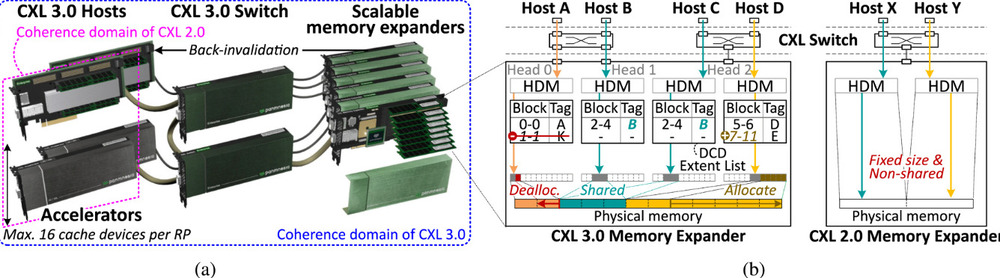

The development of the CXL (Compute Express Link) interface also deserves close attention. It effectively challenges the traditional view of system memory as a resource tightly bound to the processor. CXL enables memory pooling, the attachment of additional DRAM modules, and capacity expansion independent of the number of memory channels supported by the CPU. For data centers, this represents a substantial shift in how memory can be scaled.
Another emerging trend is the exploration of new form factors. Traditional DIMMs are increasingly ill-suited for compact systems and high-density server configurations. As a result, alternative designs are being introduced, such as horizontally oriented modules that reduce system height and improve thermal management.
Read also:
- End of Specs Race: How Many Megapixels Can Human Eye Actually Perceive?
- Atomic Horizon: How Humanity Pushes Chips to Edge of Possibility
Physical and Technological Constraints
As DDR SDRAM continues to evolve, progress is increasingly limited not by engineering creativity, but by fundamental physical constraints. Challenges that could be addressed 10 to 15 years ago through process scaling and higher frequencies now require careful trade-offs between stability, power consumption, and manufacturing cost.

As process nodes shrink, DRAM cells become progressively smaller and more fragile. Maintaining charge in the capacitors becomes increasingly difficult, leakage rises, guaranteed data retention times decrease, and individual cell behavior begins to depend on temperature, voltage, and even the activity of neighboring cells. As a result, different regions of the same chip may exhibit varying behavior despite having nominally identical specifications.
These effects force manufacturers to significantly increase the complexity of both memory devices and their controllers. Additional mechanisms for cell-state monitoring, more sophisticated refresh algorithms, and multi-layer error detection and correction schemes are being introduced. What was once limited to server platforms is gradually becoming common in mainstream solutions, simply because acceptable reliability can no longer be achieved without it. Memory is increasingly required to manage these physical limitations through more advanced internal logic.

At the same time, thermal challenges are becoming more pronounced. Higher operating frequencies, increased chip density, and greater overall memory subsystem activity mean that DRAM is no longer a cool, largely passive component of the system. Temperature has a direct impact on charge retention stability and, consequently, on error rates and the need for more aggressive refresh cycles. Under these conditions, effective cooling is no longer merely beneficial but a critical requirement for stable operation.

The industry has effectively reached a point where each incremental step forward comes at an increasing cost. Further development of DDR SDRAM requires ever more complex trade-offs between physical limits, architectural design, and economic feasibility. This is why alternative approaches are now being explored so actively, including new materials, different memory access architectures, and even entirely new classes of memory intended to alleviate at least some of these fundamental constraints.
Read also: Windows as an Agentic Operating System: Current State and Future Prospects
Memory Economics: a Subtle but Decisive Factor
The evolution of DDR SDRAM is shaped not only by what is technically achievable from an engineering perspective, but also by strict economic realities. DRAM manufacturing is among the most capital-intensive segments of the semiconductor industry. Each new memory generation requires multibillion-dollar investments in advanced fabrication facilities, costly lithography equipment, materials, and long-term research and development programs. At this scale, mistakes are too expensive to allow experimentation without a clear understanding of return on investment.
As a result, the pace of DDR development increasingly depends not on whether a given advance is technically possible, but on whether it is economically justified at a given moment. Manufacturers must carefully weigh market demand, the expected lifespan of a standard, and potential sales volumes. Consequently, new memory generations are introduced more slowly, coexist with their predecessors for longer periods, and often enter the market at high prices that decline only after production scales up.

Another important factor is competition for manufacturing capacity. Demand for memory used in artificial intelligence systems, specialized accelerators, HPC, and data centers is growing much faster than demand from the traditional consumer PC market. These products typically offer higher margins and therefore receive priority in resource allocation. In this environment, mainstream DDR for the mass market can easily fall lower on the priority list, even if overall demand remains consistently high.
This dynamic creates tangible risks of supply shortages and price volatility. Users have repeatedly experienced periods when memory prices rose sharply or, conversely, collapsed within a short time due to shifts in manufacturer strategy or the reallocation of production lines. For the PC market, this translates into instability, while for large buyers it increasingly necessitates long-term planning and contractual commitments.
DDR SDRAM today exists within a complex balance of technology, demand, and economics. Engineers can propose new architectural solutions, but the final decision is often driven by economic considerations. Increasingly, these factors determine when a new memory generation is introduced, in what volumes it becomes available, and at what price it ultimately reaches end users.
Read also: Breakthrough Development: Scientists Create Artificial Muscles Activated by Ultrasound
Competition from Alternative Memory Types
DDR SDRAM is no longer the only viable option, marking one of the most significant shifts in the history of system memory. Where the choice once centered on which DDR generation and operating frequency to use, a broad range of specialized solutions is now available for specific workloads.
For scenarios requiring extremely high bandwidth, HBM is increasingly adopted. This 3D-stacked memory is placed physically close to the CPU or GPU, which significantly reduces latency and delivers very high bandwidth. As a result, HBM has become essential for AI accelerators, scientific computing, and high-performance graphics.

More radical concepts are also emerging. For certain classes of workloads, the idea of performing computations directly in or near memory is being seriously explored. This approach challenges the traditional von Neumann model, where data is continuously moved between the processor and RAM. In such architectures, memory ceases to be solely a storage medium and begins to participate in computation itself, reducing both energy consumption and latency. While these remain niche solutions for now, their active development is indicative of broader shifts in memory design and system architecture.
Despite the growing diversity of alternatives, DDR is not disappearing. On the contrary, it remains a versatile standard that combines flexibility, relative affordability, and the ability to scale across millions of systems. DDR is particularly well-suited for the mass market, where considerations extend beyond peak performance to include cost, compatibility, ease of integration, and predictable behavior across a wide range of workloads.
The future of DDR SDRAM is no longer about simply increasing frequencies or achieving impressive specification numbers. Instead, it is about adapting to a new computational landscape. Upcoming memory generations will evolve through complex architectural innovations, deeper integration with new interfaces such as CXL, more aggressive energy optimization, and a continual balancing of speed, stability, and production cost.

In this context, DDR6 will mark an important milestone, but it is by no means the final point. It represents another stage in the evolution of memory, where DRAM moves further away from the notion of a passive data store. System memory is gradually becoming an active component of the computational ecosystem, with its own internal logic, intelligence, and a direct impact on overall system performance.
This transformation defines its core future: complex, nuanced, full of trade-offs, yet undeniably critical to the digital industry. Without efficient memory, there can be no large-scale artificial intelligence, high-performance servers, or accessible mass computing. Despite ongoing challenges and emerging alternatives, DDR will remain one of the foundational pillars of this ecosystem for the foreseeable future.
Read also:
- How Chinese Companies Circumvent the US Ban on AI Chips
- Could Thorium Be a Breakthrough in Energy Technology?
- Rare Earth Metal Situation: Whoever Controls the Resources, Rules the World

