




© ROOT-NATION.com - Use of content is permitted with a backlink.
In 2025, AM5 motherboards based on the X870E, X870, and B850 chipsets have become one of the most practical choices for new PC builds. They offer up-to-date performance, support for the latest components, and a solid level of future readiness.
Read also: PC Motherboard Reviews
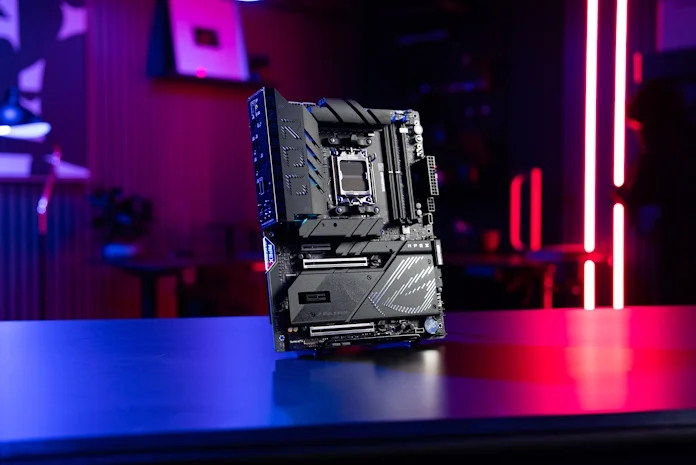
TABLE OF CONTENTS:
Key Advantages of AM5
So why has the AM5 platform become so popular? There are ten main reasons, and here are the first:
- Support for AMD’s Flagship Processors
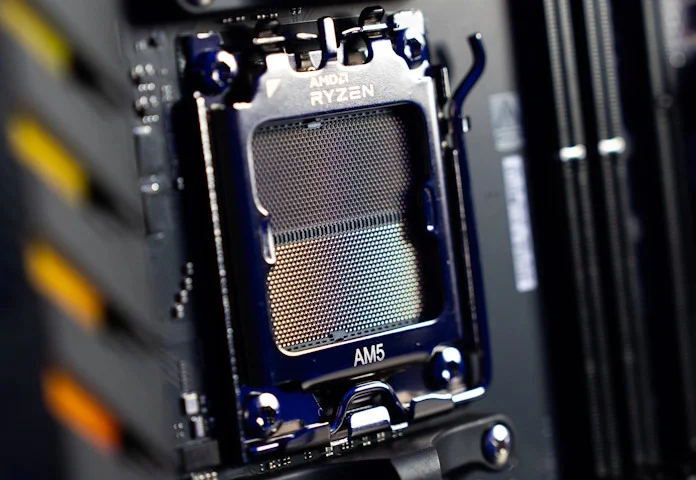
The Ryzen 9000 series processors – including models like the Ryzen 7 9800X3D and Ryzen 9 9950X3D – deliver very strong gaming performance thanks to 3D V-Cache technology. Even the more affordable Ryzen 5 9600X performs well in most modern workloads.
- Readiness for Next-Generation GPUs and Storage
Most AM5 motherboards include PCIe 5.0 slots for graphics cards and PCIe 5.0 M.2 interfaces for high-speed SSDs. This ensures compatibility with current and upcoming components without requiring an upgrade in the near future.
- DDR5 Has Become the Practical Standard
DDR5 memory has reached price parity with DDR4, and its higher bandwidth and frequencies provide noticeably faster system response under load.
- Increased Number of M.2 Slots
Modern AM5 motherboards typically include three, four, or even five M.2 slots. At least one of them usually supports the PCIe 5.0 standard, allowing users to build large and high-speed storage configurations without sacrificing performance.
Next-Generation Networking
AM5 motherboards commonly include Wi-Fi 7 and Ethernet options ranging from 2.5G to 5G, and in some cases 10G. This provides stable connectivity for gaming, large file transfers, and other high-bandwidth tasks.
- Updated USB Capabilities
Boards offer faster ports, a wide selection of connectors, and USB4 support on higher-end models. Many cases can now use a front-panel USB-C port with Fast or Quick Charge, which is convenient for charging phones and accessories.
- Improved UEFI BIOS
The Q Dashboard interface with Full HD support offers clearer navigation, and built-in tips help even inexperienced users configure key settings more easily.
- New Optimization Tools
ASUS AM5 motherboards support a range of automated tuning features, including AI Overclocking, Dynamic OC Switcher, Core Flex, AI Cooling II, and AI Networking II. The AI Cache Boost function can also improve the performance of local AI models by roughly one third, depending on the workload.
- Simplified Assembly
Tool-free SSD installation, convenient Wi-Fi connectors, well-designed layout elements, and recommendations from ASUS AI Advisor make PC building faster and more straightforward.
- Enhanced VRM Design
Higher-end models feature larger power delivery components with increased phase counts, providing stable operation even under overclocking conditions.
Read also: ASUS TUF Gaming VG259Q5A Review: Affordable Full HD Gaming Monitor with Fast IPS and 200 Hz
ROG Crosshair
The ROG Crosshair series remains a suitable option for users who want to take full advantage of the AM5 platform. These boards offer substantial power reserves and are designed for enthusiasts, overclockers, and anyone building a system with minimal compromises.
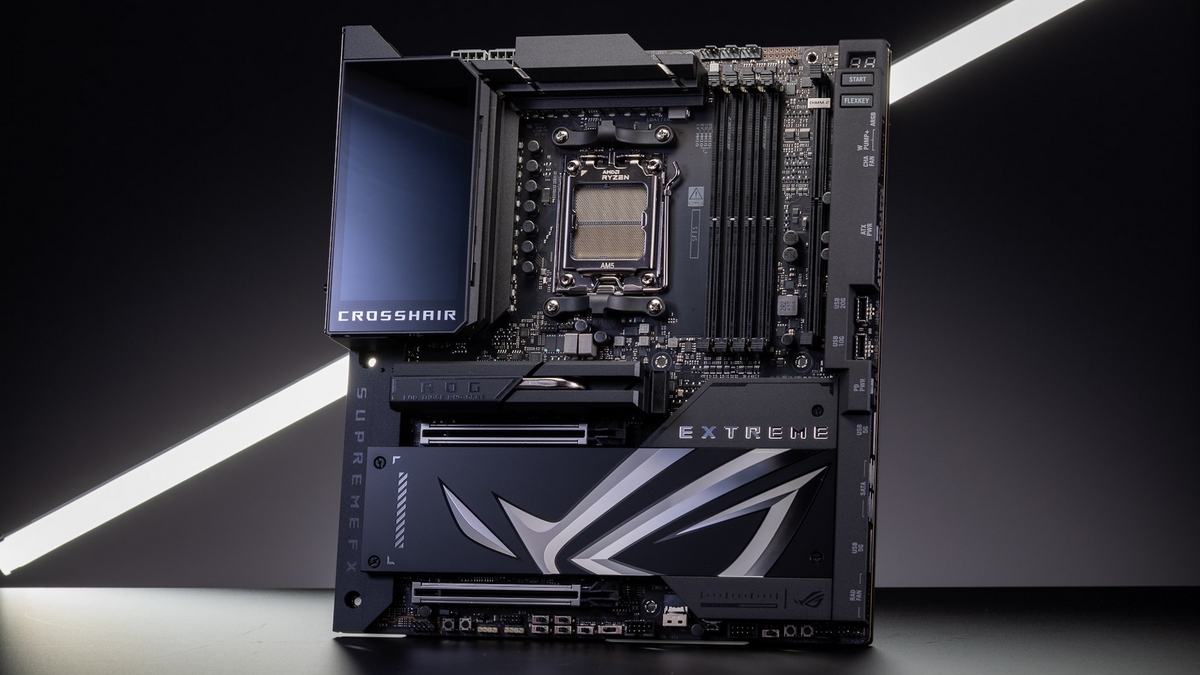
The ROG Crosshair X870E Extreme is positioned as the flagship model. It uses high-end components, features extensive cooling with large heatsinks, and provides a wide range of functionality intended for demanding, top-tier builds.
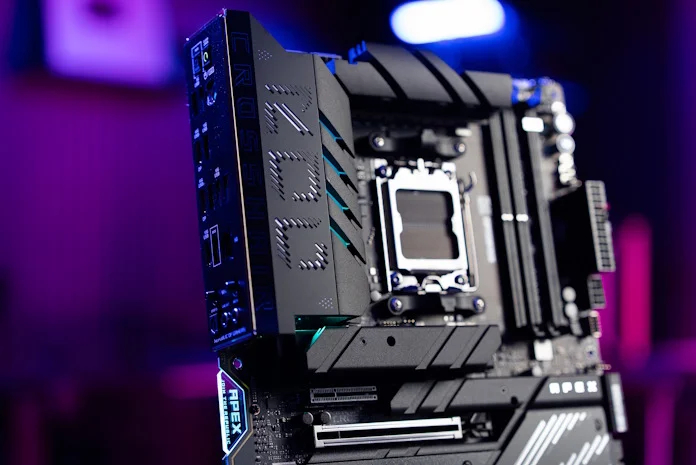
The ROG Crosshair X870E Apex is specifically designed for record-setting performance. It is optimized for extreme memory frequencies, features only two DIMM slots to enhance stability, and comes with the Extreme OC kit, including LN2 mode.
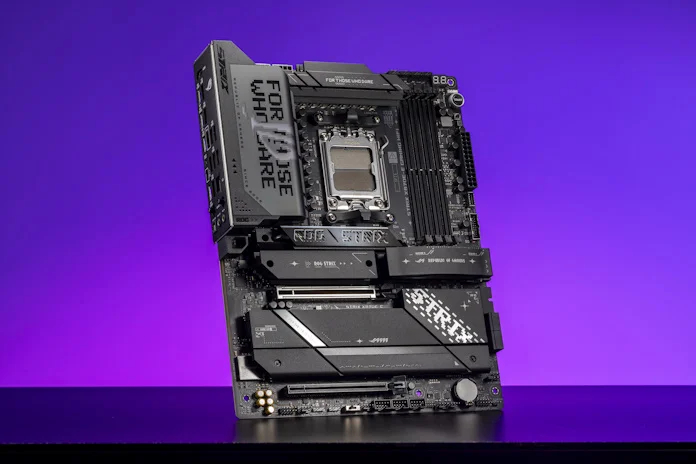
The ROG Crosshair X870E Hero is a more balanced model. It features an 18+2+2 power design, enhanced cooling, and metal capacitors, making it a versatile option for high-performance and stable systems.
The ROG Crosshair X870E Hero BTF is a unique variant where all main connectors are routed to the rear. This design provides a cleaner overall appearance and simplifies assembly, particularly in modern cases.
Read also: ASUS Gear Link Review: A New Way to Configure ROG Peripherals Online
ROG Strix
The ROG Strix series is aimed at gamers who need solid performance, modern design, and extensive customization options. These boards combine style with capable performance while remaining more accessible than the top-tier overclocking-focused models.
The ROG Strix X870E E Gaming WiFi is the most powerful model in the series. It features an aggressive design, Wi-Fi 7 support, and tool-free access to the M.2 slot, making it a practical choice for contemporary gaming systems.
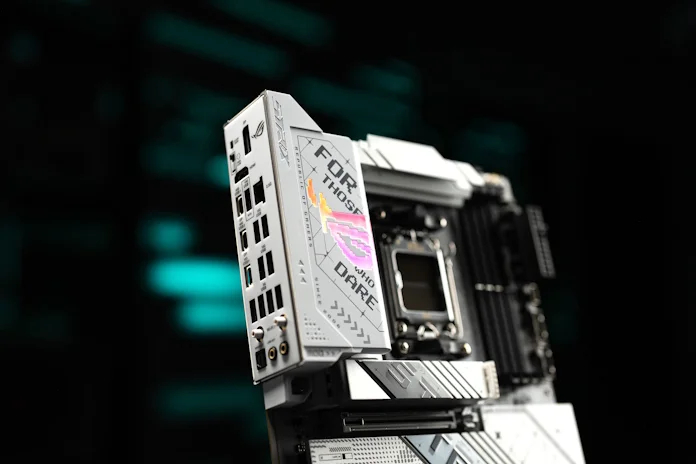
The ROG Strix X870E H Gaming WiFi7 offers a balanced combination of features and cost. It includes a 5G Ethernet port, 30W USB fast charging, and heatsinks on all M.2 slots, making it a versatile choice for most gaming builds.
The ROG Strix B850 series is aimed at users looking to build a capable yet more affordable PC. The B850 G in micro ATX and the compact B850 I in mini ITX form factor are suitable for smaller cases without compromising essential functionality.
Read also: ASUS Vivobook 16 X1607Q Review: Portable, Versatile, and Affordable
TUF Gaming
The TUF Gaming series is designed for users who prioritize reliability. These motherboards feature reinforced components, tested electrical resilience, and a focus on durability. They provide a straightforward set of features without unnecessary extras, serving as a stable foundation for modern gaming systems.
Read also: ASUS TUF Gaming X870-Plus Wi-Fi Motherboard Review
The TUF Gaming X870E Plus WiFi7 is the flagship model of the series. It supports AI Overclocking, Dynamic OC Switcher, and offers a wide range of ports, including USB4 and high-speed Type-C capable of up to 20 Gbps. This board is aimed at users seeking a combination of reliability and modern features.
The TUF Gaming B850 Plus WiFi takes a more balanced approach. It is targeted at gamers who value durability and system stability, making it suitable for daily use, demanding games, and extended work sessions.
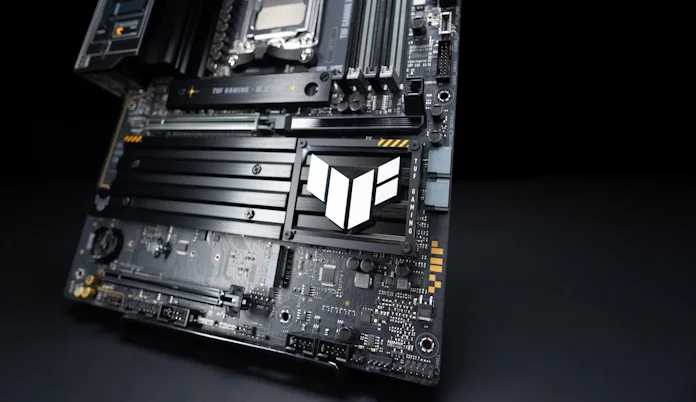
Together, the ROG and TUF Gaming series provide a broad range of options for different use cases. They cater to enthusiasts, overclockers, and users who simply want a stable, modern PC built on the AMD AM5 platform.
Read also:
- How to Improve Performance on AMD Ryzen Systems Using ASUS AI Cache Boost
- ASUS ROG Strix B850E Gaming WiFi vs B650E-E: Which One is Better?

