




© ROOT-NATION.com - Use of content is permitted with a backlink.
What can you expect from a pair of TWS earbuds priced under $100 today? Quite a lot – especially compared to what this segment offered just five years ago. The EarFun Air Pro 4 are a good example of how far budget wireless earbuds have come. In addition to being Hi-Res Audio certified, they offer strong battery life (up to 11 hours on a single charge without the case) and support adaptive active noise cancellation (ANC). There are also some thoughtful extras like auto-pause, wireless charging, and a companion app that lets you customize both the sound profile and overall functionality.
If you’re in the market for a capable and affordable wireless headset, the EarFun Air Pro 4 are definitely worth a closer look.
Read also:
- Huawei FreeBuds Pro 4 Review: Possibly the Best All-Around TWS Earbuds for Everyday Use
- SoundPEATS Engine4 Review: TWS Earbuds with Good Sound at Affordable Price
TABLE OF CONTENTS:
EarFun Air Pro 4 specifications
- Type: TWS, in-channel
- Bluetooth version: 5.4
- Audio codecs: SBC, AAC, LDAC, aptX Adaptive
- Emitters: dynamic 10 mm
- Noise cancellation: adaptive QuietSmart 3.0 (depth up to 50 dB)
- Control: touch
- Battery: headphones – 54 mAh, case – 600 mAh
- Headphones operating time: up to 11 hours without ANC, up to 7.5 hours with ANC
- Operating time with case: up to 52 hours
- Charging: wired USB Type-C, wireless
- Charging time: headphones – 1 hour, case – 2 hours
- Weight: 56 g
- Water protection: IPX5
- Colour: black, white
- Additional features: Qualcomm QCC3091 chipset, Hi-Res Audio and Snapdragon Sound certification, 6 microphones + AI algorithms for ENC, ANC, game mode, auto-pause, ability to connect up to two devices, support for Auracast, LE Audio and Google Fast Pair
Positioning and price
At the time of writing, EarFun Air Pro 4 can be purchased for about $95 or €80. Although you can occasionally grab the headset at a discount on the brand’s official website (With an extra discount code: SDAP433, the final price is $59.39) or in the Amazon store. But even at full price, Air Pro 4 is an inexpensive model. Not budget, but quite affordable. However, there are a lot of offers from dozens of brands in this segment. Can the new product from EarFun compete with them? Let’s find out.
Package contents

The packaging of the EarFun Air Pro 4 is neat and typical for this product category – it features an image of the earbuds and a list of key specs on the box. The contents are pleasantly complete: in addition to the earbuds and charging case, you get a USB-C cable, documentation, and an unusually generous five pairs of silicone ear tips ranging from XS to XL. That’s a welcome detail, as most sets usually include just three pairs. This wider range of sizes should make it easier for more users to find a comfortable and secure fit.
Read also:
- Huawei FreeBuds 6 Review – Flagship Open-Fit Earbuds
- SOUNDPEATS Capsule3 Pro+ TWS Earbuds Review: Hi-Res for $90
Design and materials
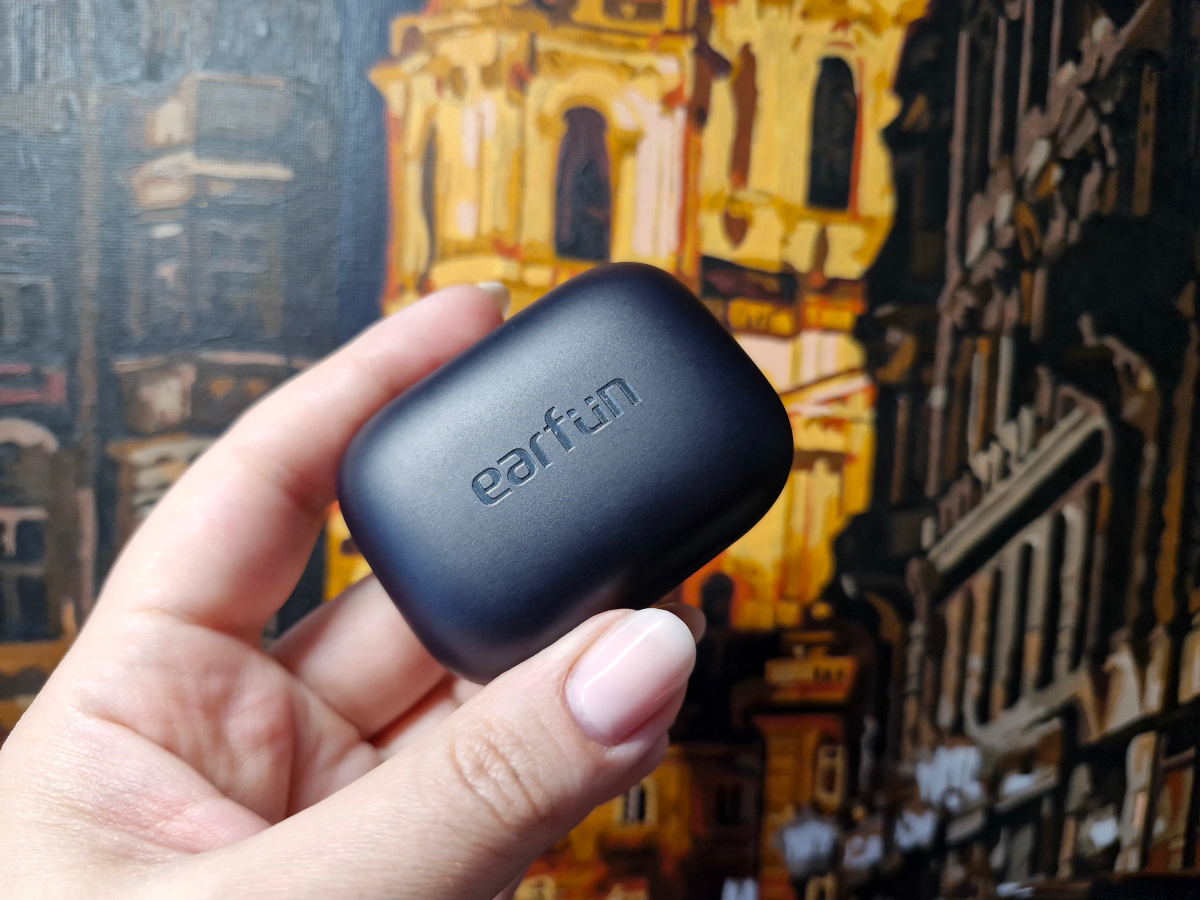
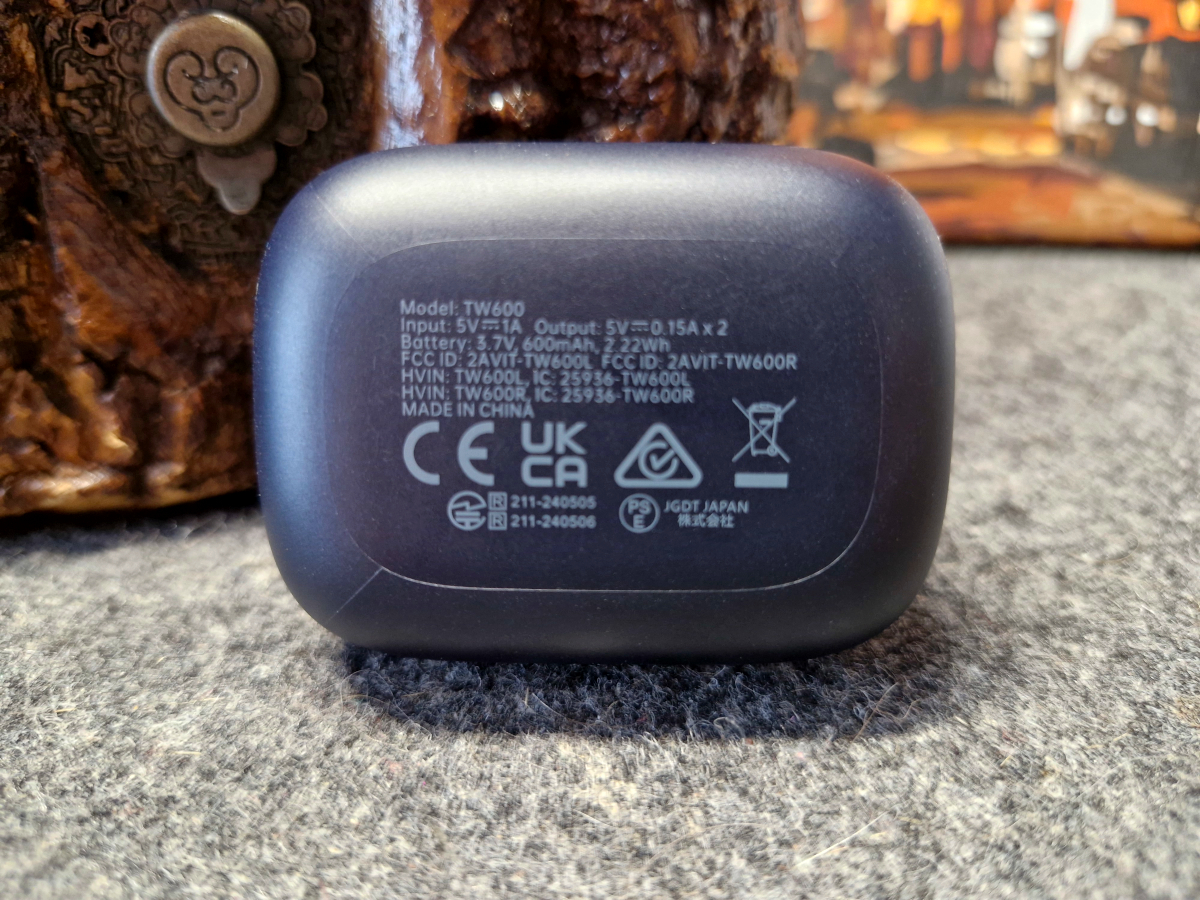
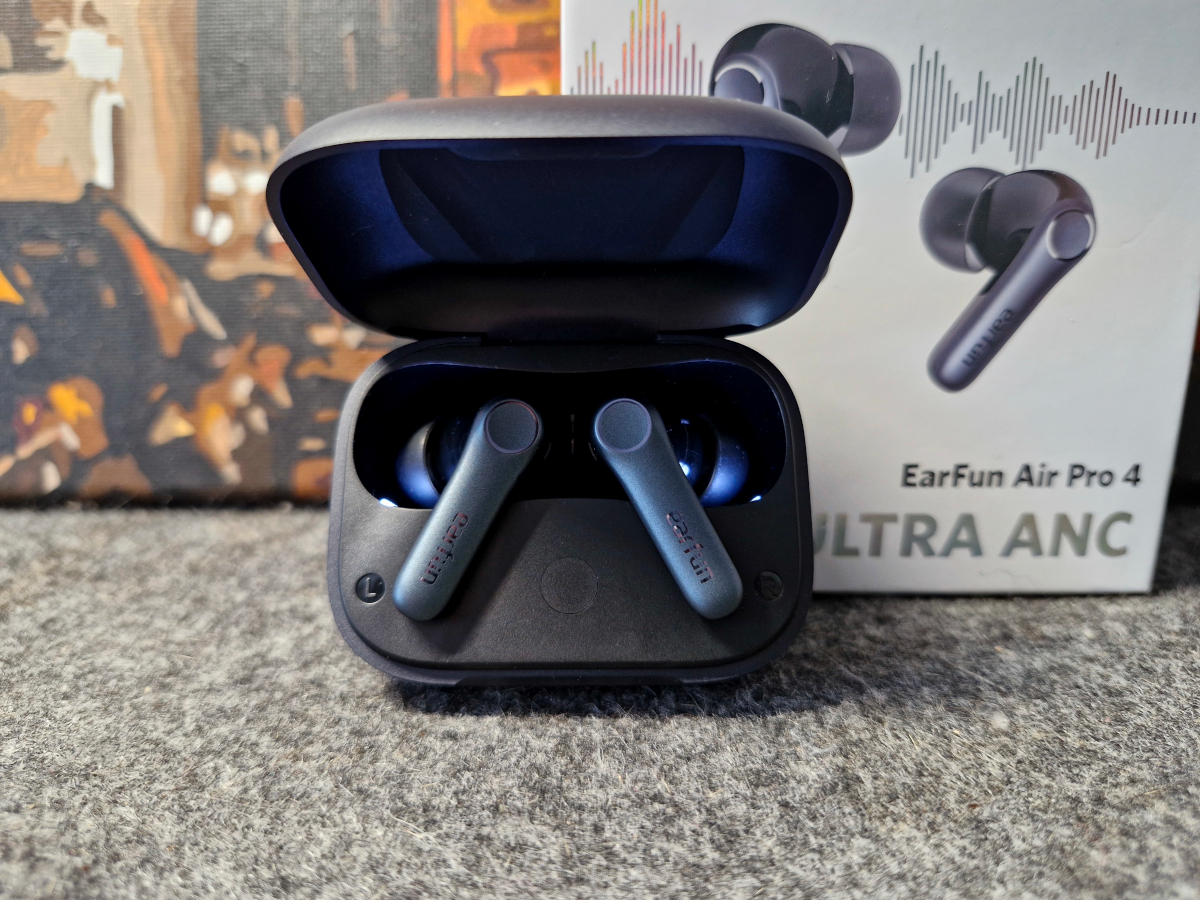
Overall, the design of the EarFun Air Pro 4 is minimalistic and fairly standard for true wireless earbuds. The case is a compact, rounded rectangle made from smooth matte plastic. It’s cleanly finished, with the brand’s logo on the lid, a charge indicator on the front, a USB-C port on the back, and regulatory markings on the bottom.
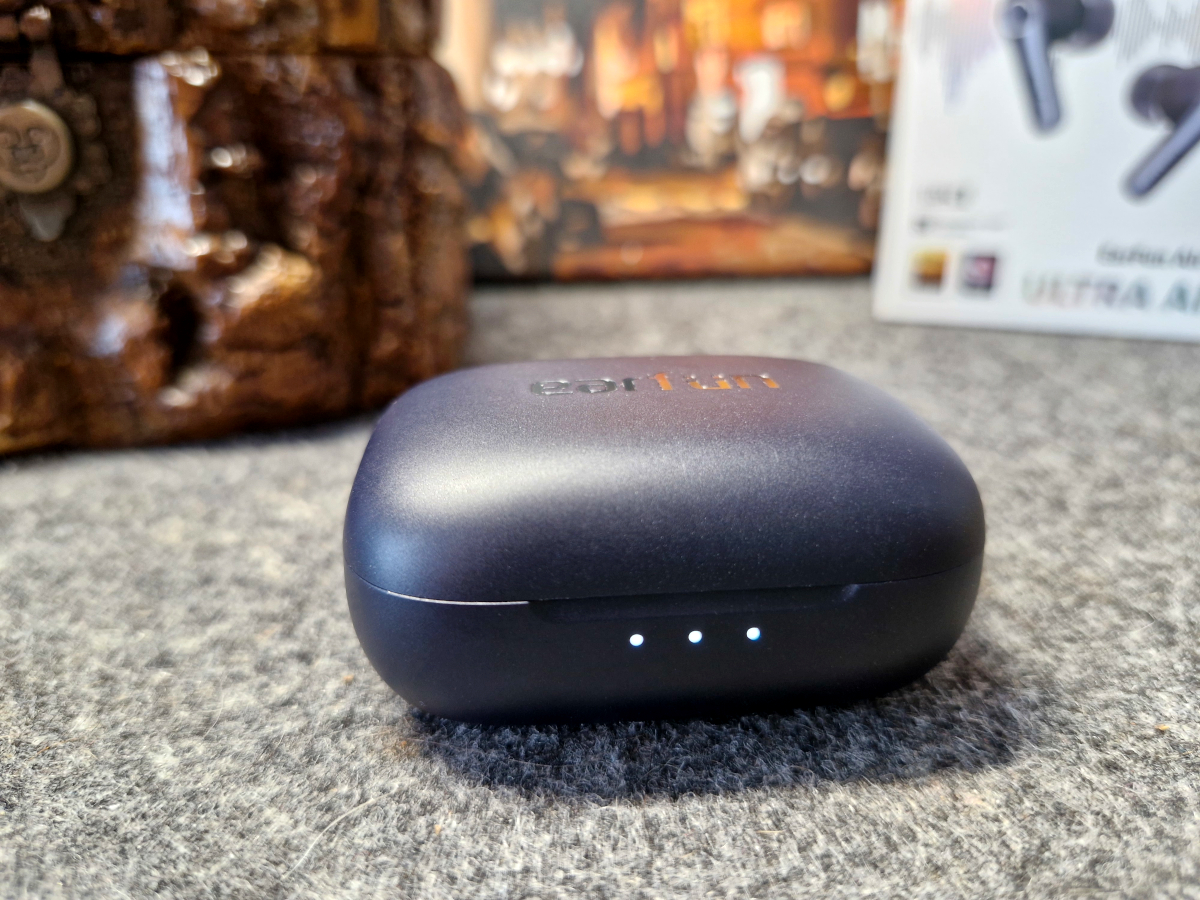

There’s a pleasant surprise once you open the case. A small internal light near each earbud turns on – hardly essential, but a nice visual touch. The earbuds sit recessed in the case and are held securely in place with magnets. To keep the lid stable when fully opened, there’s a rubberized insert on the inside that acts as a stopper. It’s a subtle detail, but it adds to the overall sense of care in the design.
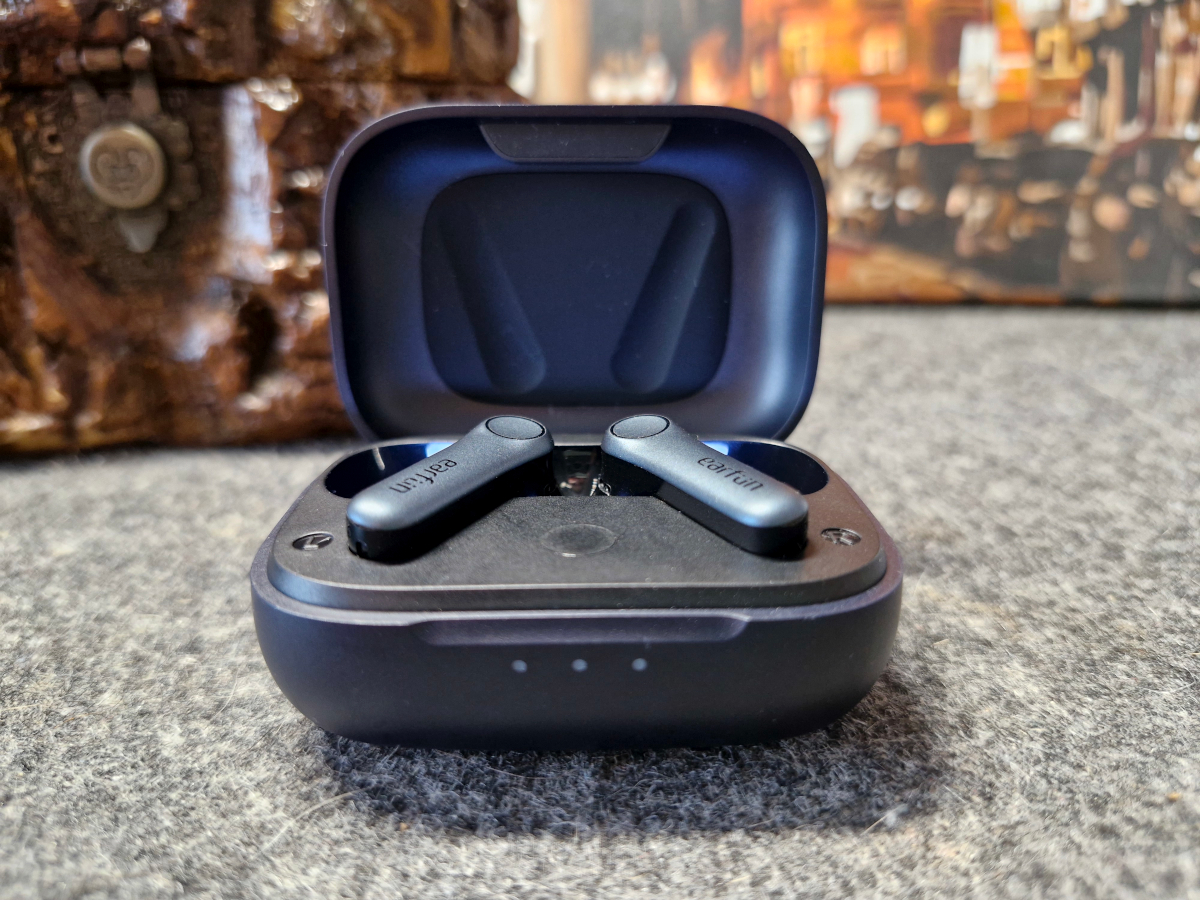
Inside the case, clear L and R markings indicate the left and right earbuds. A single pairing/reset button is positioned centrally between the two, keeping the layout simple and intuitive.

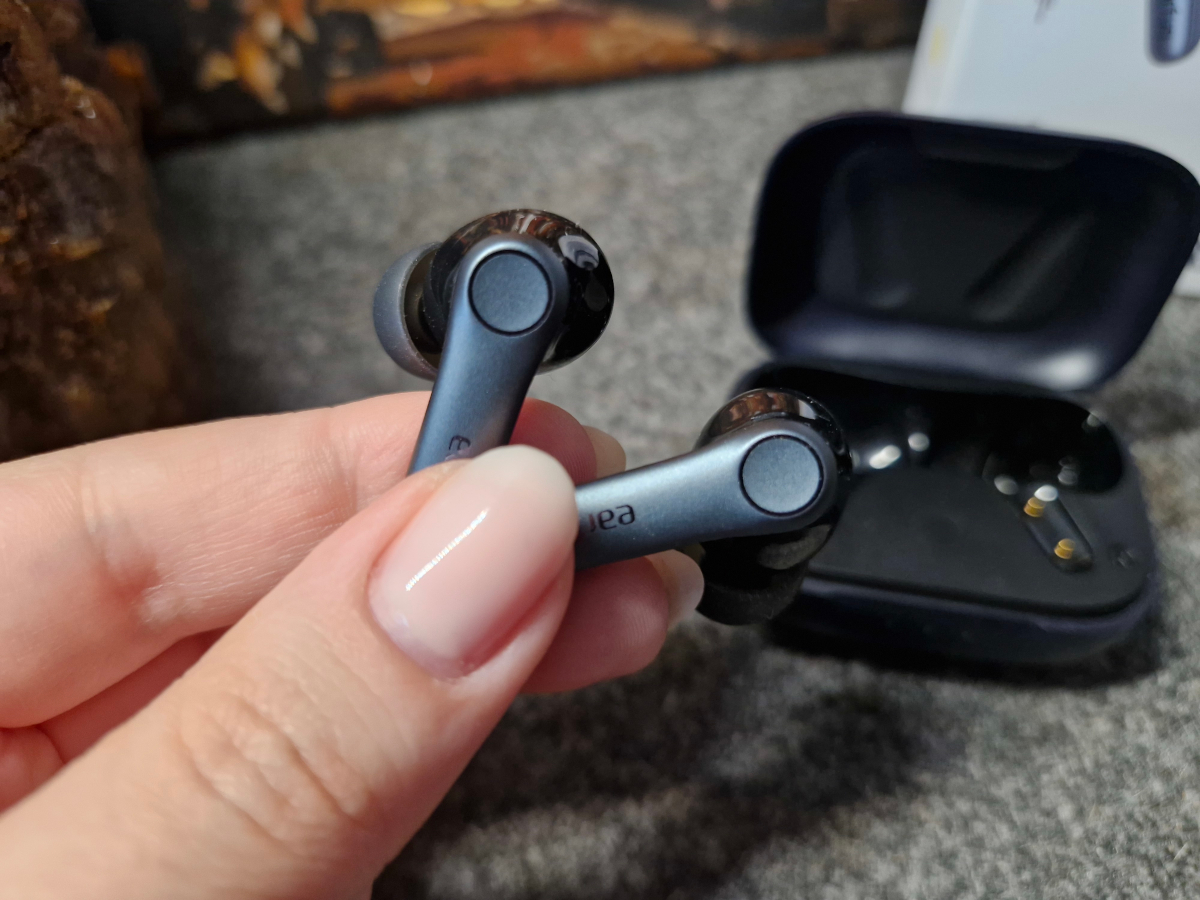
The earbuds themselves follow a familiar stem-style “comma” design. The body is made of glossy plastic, while the front panel features a matte blue-gray finish – not quite dark blue, but more muted. A touch-sensitive area is clearly marked at the top of each earbud, with the brand logo positioned just below it. Overall, the design is clean and understated, without unnecessary flair. Build quality is excellent – everything feels solid, and the materials used are clearly of good quality. No complaints here.

Ergonomics
Remember a few years ago when in-ear headphones came in all sorts of shapes and sizes? Sure, that variety still exists today, but the stem-style “comma” design has become the standard for most true wireless earbuds. There’s a good reason for that – it’s a format that tends to fit a wide range of users comfortably and securely. Many manufacturers have settled on this shape, and for good reason. Personally, I welcome this shift. I’ve rarely had a truly good experience with more unconventional designs, but with this one, it’s simple: you put them on, and they just work.

With the EarFun Air Pro 4, I didn’t even feel the need to try any of the other ear tips. I took them out of the case, put them on – and they fit perfectly right away. The earbuds stay securely in place, don’t cause any pressure, and feel practically weightless during use. Comfort is excellent, and the fit is stable enough for everyday activities. In terms of ergonomics, it’s hard to fault them – I’d rate them a solid 10 out of 10, and I suspect most users would agree.
Read also:
- Honor Earbuds X6 TWS Headphones Review: Good Sound for $35
- TOZO OpenEgo Review: affordable and elegant earbuds for less
EarFun Audio app
To access more detailed settings for the EarFun Air Pro 4, you’ll need the EarFun Audio app, available on both the Play Store and the App Store. The app offers a wide range of customization options – arguably more than most competing apps in this price segment. In fact, it might be one of the most feature-rich companion apps I’ve used for wireless earbuds. But let’s break it down step by step.



The app features three main tabs. The first one, labeled “Devices,” provides access to the core settings for the earbuds.


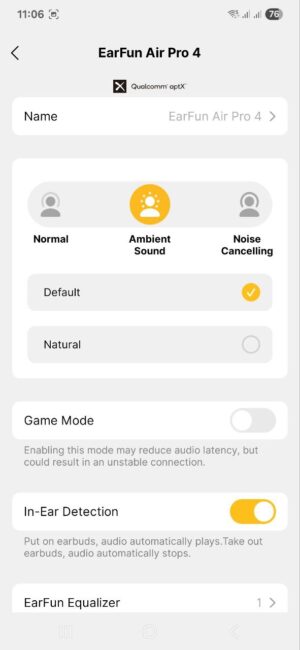
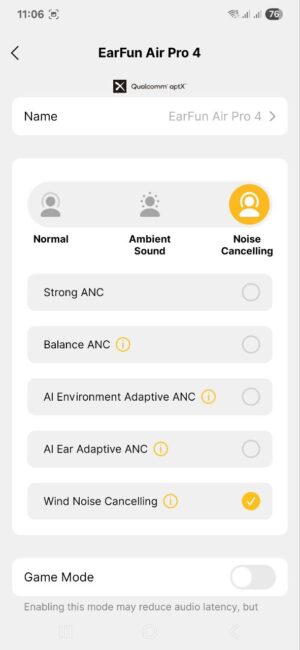
At the top, you can see the battery levels for each earbud as well as the charging case. Below that is the noise control panel, offering several modes: Normal, Transparency (with options for standard or natural sound), and Active Noise Cancellation (ANC). The ANC itself has multiple settings: Enhanced, Balanced, an Intelligent adaptive mode that adjusts based on the environment, a general Adaptive mode, and a Wind Noise Reduction mode.
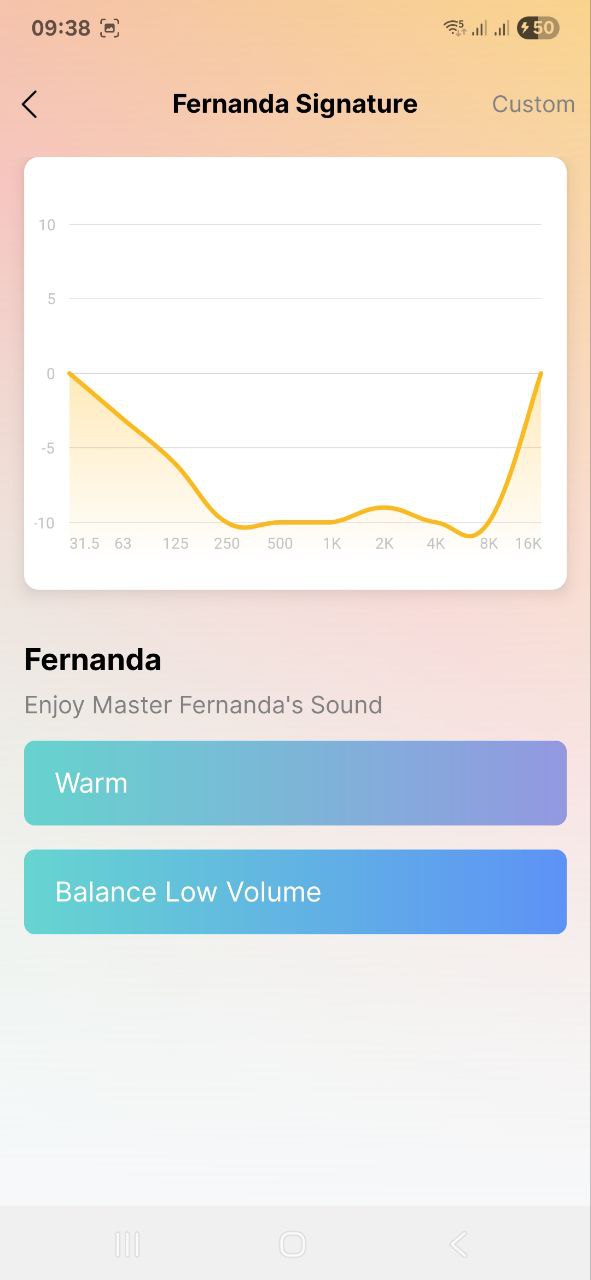
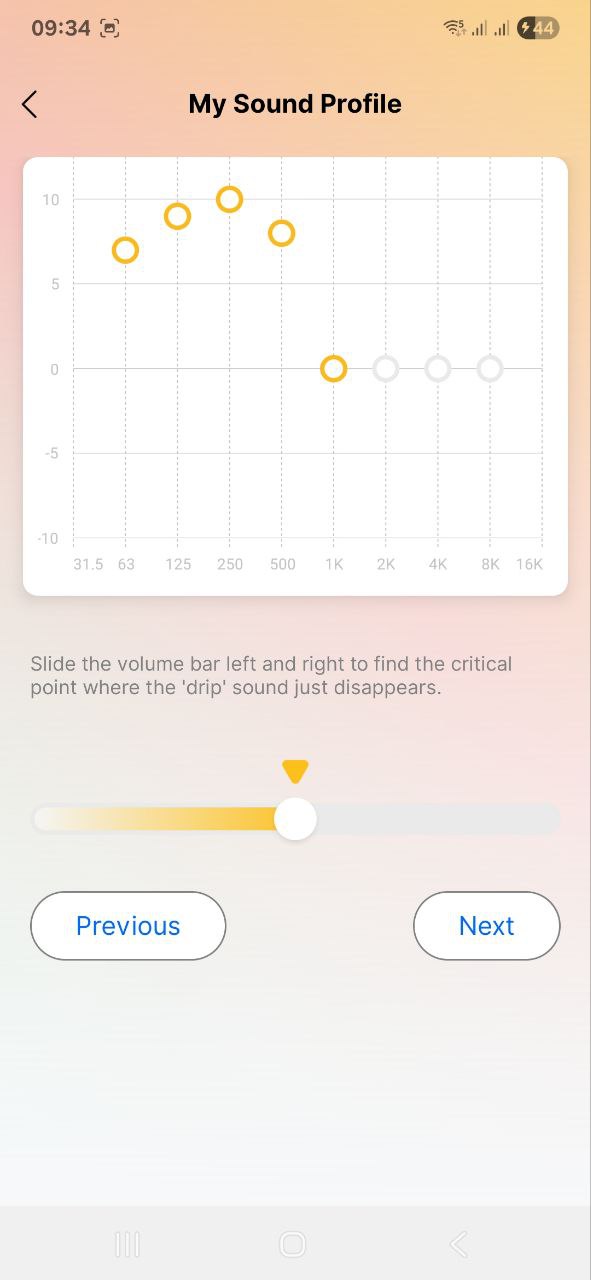
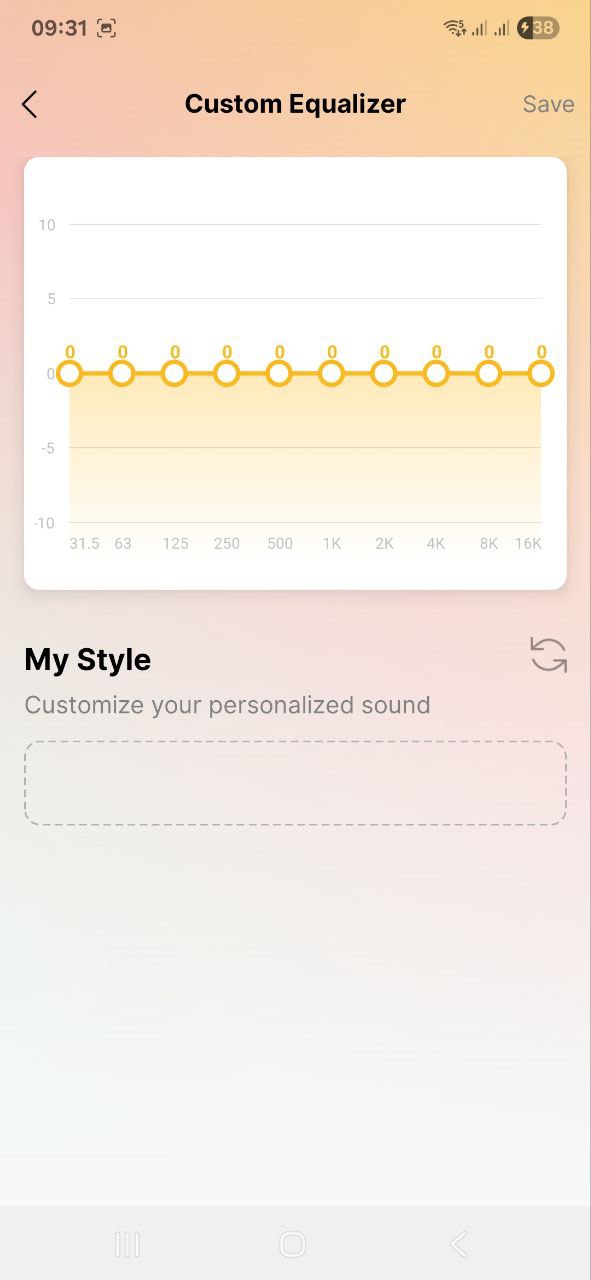
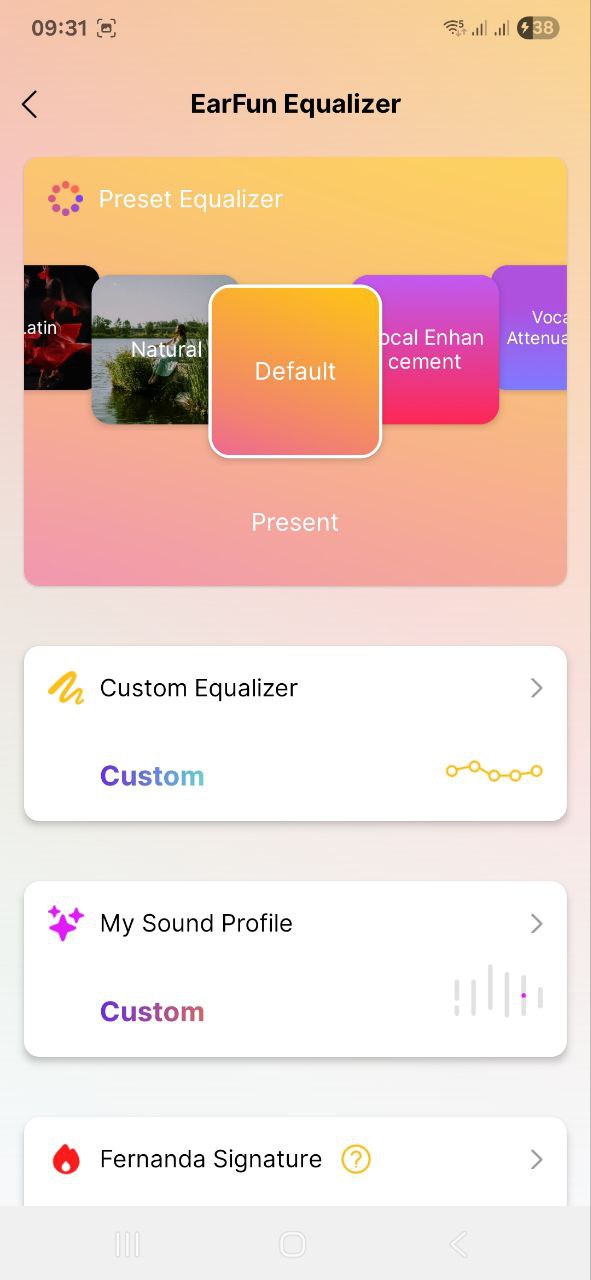
The sound settings deserve a special mention. The app offers 30 presets, categorized not only by frequency ranges but also by music genres. Additionally, there’s a built-in equalizer and an adaptive EQ feature that activates after a short audio test. Interestingly, the app also includes two presets created by an Indonesian sound engineer, labeled as Warm and Balanced Low Frequency.

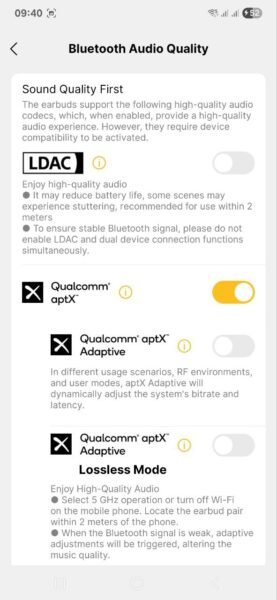
The app also lets you select the audio codec directly. It supports LDAC as well as aptX Adaptive and aptX Lossless modes.
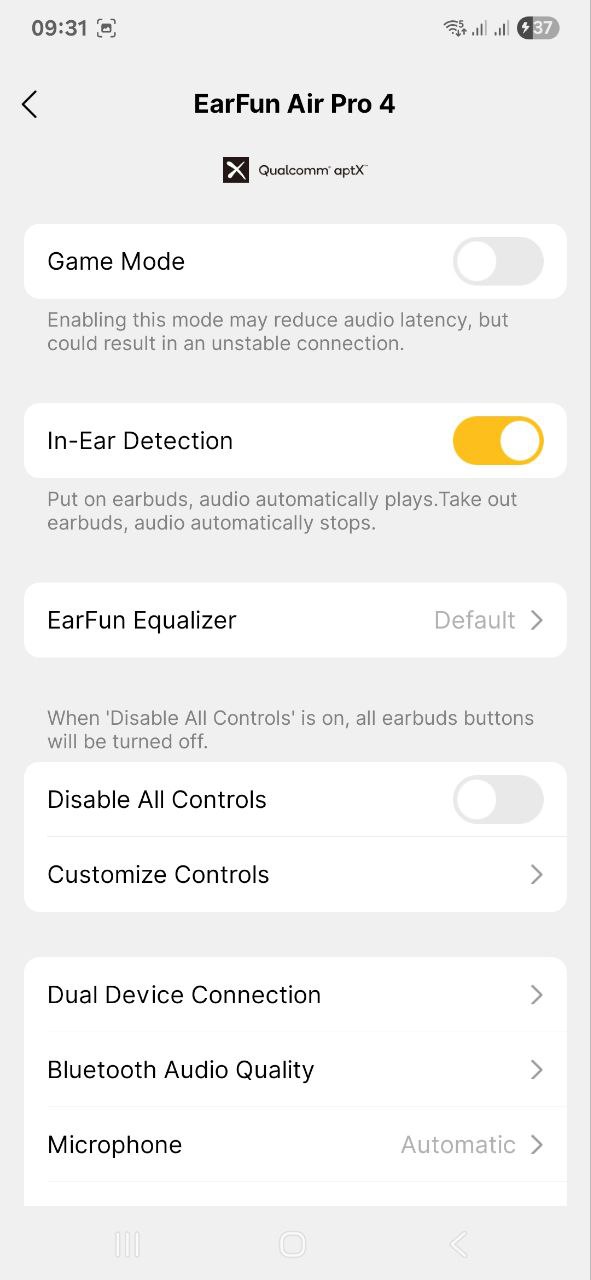
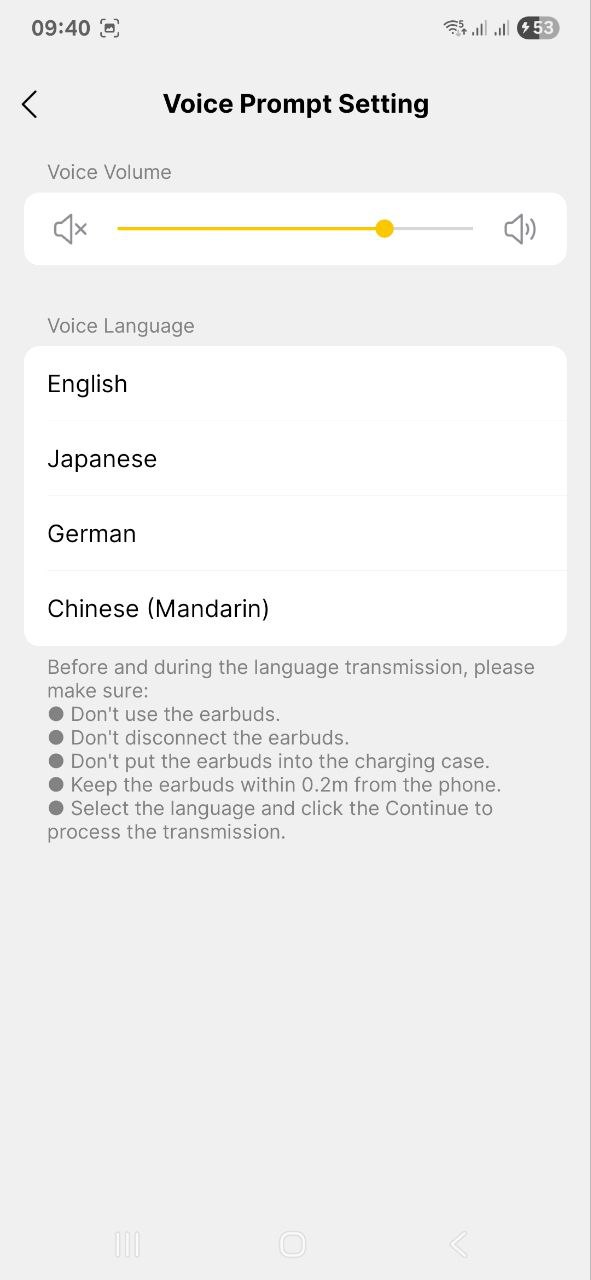
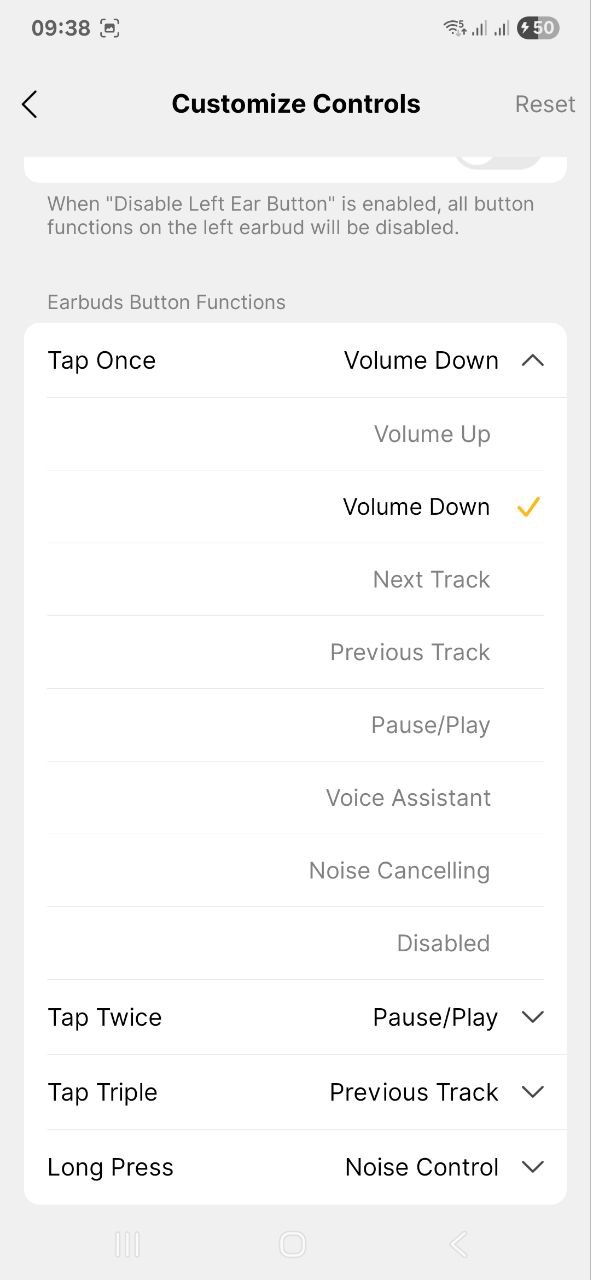
Additional features include enabling a gaming mode and auto-pause, detailed customization of the earbud controls with the option to disable them entirely, and microphone settings that allow using both mics simultaneously or just one. You can also change the voice assistant language on the earbuds, with options including English, Chinese, Japanese, and German. Other options include activating Google Fast Pair and LE Audio support. The app also allows you to download the user manual, update the firmware, and reset the earbuds to factory settings.
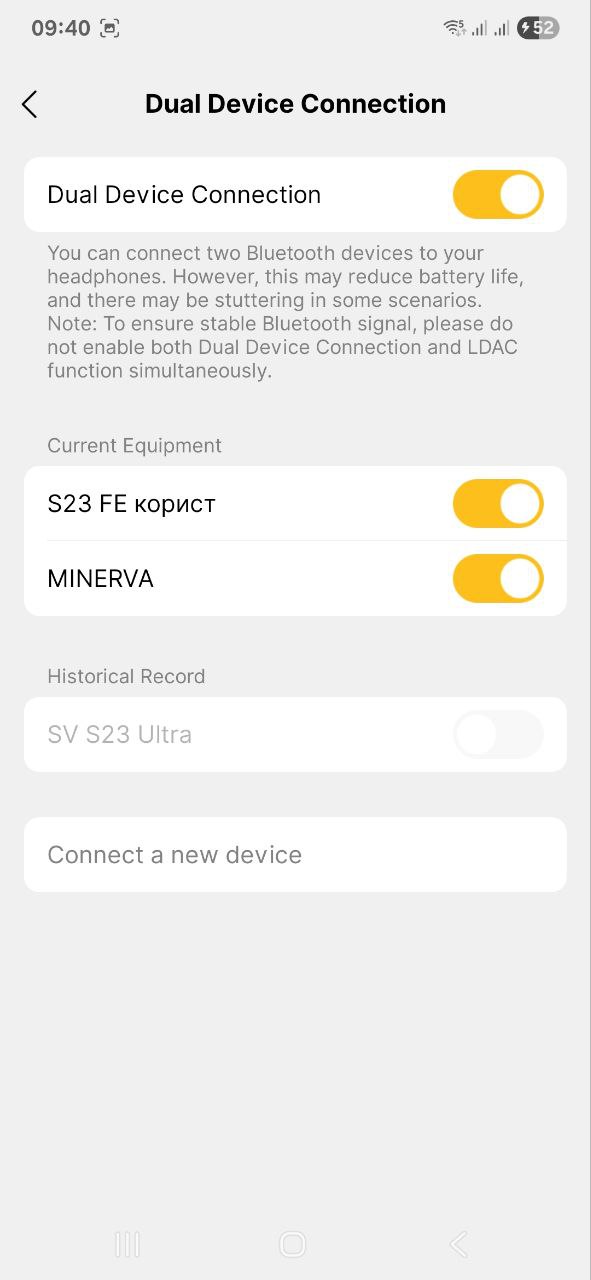


The EarFun Air Pro 4 offer support for multipoint connectivity, allowing users to stay connected to two devices at once. This feature can be toggled on or off in the settings. In testing, switching between audio sources was nearly instantaneous – pausing playback on one device and starting it on another triggered an immediate handover without noticeable lag.
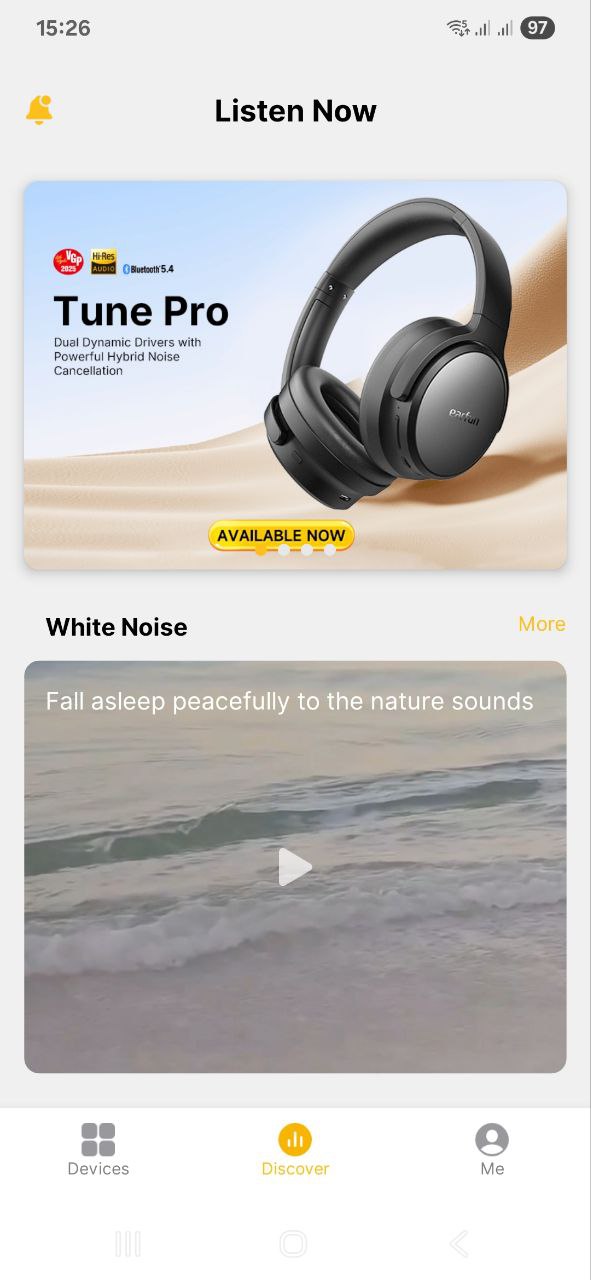
The app’s second tab includes a set of ambient soundscapes designed for relaxation or concentration. Options include rain, flowing water, campfire crackles, ocean waves, and forest sounds. There’s also a shortcut to the brand’s online store positioned at the top of the interface.



The final tab is user-focused, providing options to update personal information, manage notifications, switch the app’s language, and enable a desktop widget. Overall, the app is well-structured and gives users a solid range of customization tools for the headset. It’s a thoughtful addition that enhances the overall experience.
EarFun Air Pro 4 control

As with most TWS earbuds, the EarFun Air Pro 4 are controlled via touch-sensitive panels located on both earpieces. By default, the control layout is set up as follows:
- switch between tracks: triple tap on the left earbud to go to the previous track, tap on the right earbud to go to the next track
- control volume: single tap on the left earbud to go quieter, tap on the right earbud to go louder
- switch between ANC modes: hold down the left earbud for 2 seconds
- answer/end call: double tap on any earbud
- reject call: hold down any earbud for 2 seconds
- call voice assistant: hold down the right earbud for 2 seconds.
That said, the touch controls can be fully customized – any gesture can be reassigned to any available function. There’s also an option to disable touch input entirely, which can be useful if you want to avoid accidental commands while putting the earbuds on. To their credit, the earbuds’ design helps minimize unintentional touches. The touch-sensitive areas are slightly recessed into the housing, which reduces the chance of accidental activation when adjusting or removing the earbuds. Despite this, the sensors remain responsive and register input accurately. Overall, the control system is well thought-out and executed effectively.
Sound
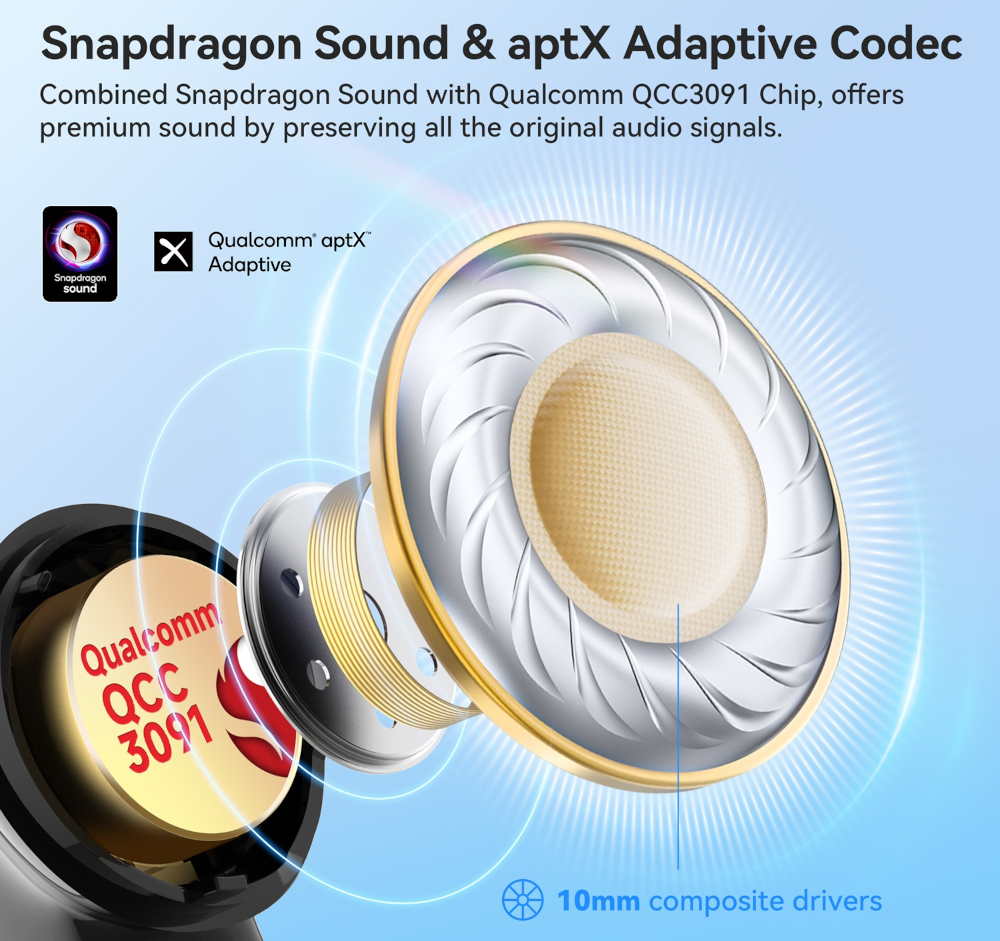
Let’s start with the technical specifications. The EarFun Air Pro 4 are equipped with 10 mm dynamic composite drivers and use the Qualcomm QCC3091 chipset. They support Bluetooth 5.4 and offer compatibility not only with standard audio codecs but also with more advanced ones, including LDAC and aptX (both Adaptive and Lossless modes).
So, how do the EarFun Air Pro 4 sound? In short – surprisingly good. This is one of those cases where you can get the kind of audio experience you’re actually looking for without needing to rely on a traditional equalizer. That’s largely because every setting adjustment here has a noticeable impact on sound quality.
Initially, I tested the earbuds with default settings, using the aptX codec without any additional tweaks. Even out of the box, the sound was clear, vibrant, bass-rich, and spacious. I typically listen to music at higher volumes, but in this case, I found myself turning it down – the volume headroom is more than sufficient. After that, I started exploring the customization options available in the companion app.
The first thing I tried was the personalized EQ test. The most noticeable change was the drop in excess loudness – the sound became fuller and more spatially detailed. Next, I switched over to LDAC mode, and the difference was immediate. The sound quality noticeably improved, to the point where it felt like a significant upgrade. What’s interesting is that this test was done using YouTube Music, which streams at a relatively modest 256 kbps. So LDAC, with its potential for up to 990 kbps, couldn’t operate at full capacity. Even so, the perceived improvement over aptX was substantial – around 40% better, based on subjective impressions.
I tested the earbuds across a wide range of music genres, but lately I’ve been using Hans Zimmer’s Dune: Part Two soundtrack as a benchmark – it’s a good way to evaluate how well a headset handles dynamic and layered soundscapes. For comparison, I listened to a lossless version alongside the same track on YouTube Music. While there was a difference, it wasn’t as dramatic as I expected. In fact, it was far less noticeable than the jump from aptX to LDAC.
Another experiment I tried was keeping LDAC enabled while turning off the custom EQ. In that setup, the sound lost some of its balance and atmosphere. Switching the EQ back on made a clear difference, and in the end, I stuck with that combination – LDAC plus the personalized EQ – as it provided the most satisfying listening experience.
So, what’s the takeaway? The EarFun Air Pro 4 have a lot of potential. There are plenty of ways to tailor the sound to your preferences, and I didn’t even explore the preset options, which offer additional flexibility. From my perspective, the sound quality is unlikely to disappoint listeners who are particular about audio but still budget-conscious.
Read also:
- OPPO Enco Air3 Pro Review: Mid-budget TWS Earbuds with Premium Sound
- Nokia Go Earbuds 2 Review: Small and Convenient
Headset function and ANC
Voice transmission relies on an array of six microphones – three on each earbud – paired with Qualcomm’s cVc 8.0 technology and intelligent noise cancellation algorithms. In indoor settings, call quality is excellent. Based on a brief informal survey, people on the other end of the line didn’t notice a significant difference between these earbuds and a phone’s built-in microphone. Performance also remains solid in environments with low background noise.
However, in louder or more challenging noise environments, voice clarity and volume tend to drop. There were occasional signal interruptions during calls, even when the phone was placed right in front of me. This issue affected both sides – sometimes I heard the other person break up, and they experienced the same with my voice. It could be related to Bluetooth version conflicts. Overall, the earbuds handle voice transmission well in indoor or relatively quiet settings, but performance noticeably declines in busy outdoor environments.
Regarding active noise cancellation (ANC), it performs well. What stands out is the multi-level noise reduction system. Unlike many models where ANC can feel overly aggressive and cause a sense of pressure inside the ears, the EarFun Air Pro 4 offer adjustable modes that strike a balance between comfort and effectiveness in noisy environments.
EarFun Air Pro 4 battery life
With the EarFun Air Pro 4, frequent charging isn’t much of a concern. Each earbud has a 54 mAh battery, and the charging case holds an additional 600 mAh. While those numbers might seem modest, in practice the earbuds deliver up to 11 hours of playback without ANC and around 7.5 hours with ANC enabled. Including the case, total listening time can reach up to 52 hours (without ANC). This means a single charge cycle should easily cover extended use, even for several hours a day.

The Air Pro 4 support both wired and wireless charging. It takes about one hour to fully charge the earbuds and around two hours for the case. So, if the earbuds are completely drained, a full recharge via cable will take roughly three hours in total. Wireless charging takes a bit longer. However, a quick 10-minute wired charge provides approximately two hours of playback time.
Conclusions and competitors
The EarFun Air Pro 4 prove to be a solid pair of earbuds that deliver more than their price suggests. Sound quality is strong right out of the box – even using aptX – but the wide range of features allows users to fine-tune the audio to their preferences without relying on equalizers or presets. The earbuds are comfortable, offer long battery life, feature multi-level active noise cancellation, maintain reliable connections with two devices simultaneously, and switch between them almost instantly. The main drawback lies in call quality. Even with environmental noise cancellation (ANC), achieving clear voice transmission in noisy urban settings remains a challenge in this category.
The market for Hi-Res certified TWS earbuds around the $100 price point is quite competitive. For example, the realme Buds Air 7 Pro offer similar specs to the EarFun Air Pro 4 but feature dual drivers and come in a variety of colors, ranging from classic to more vibrant options.
Another alternative is the Nothing Ear (a), which has a transparent design and even offers ChatGPT integration for users who find that useful. In terms of core features, it’s roughly on par with the EarFun Air Pro 4.
I would also consider the SOUNDPEATS Capsule3 Pro+, which I reviewed recently. These two models share many similarities, and SOUNDPEATS is often available at a lower price. However, subjectively, I found the EarFun Air Pro 4 to deliver a higher quality sound experience.
Read also:
- Motorola Moto Buds 120 TWS Earbuds Review: High Autonomy and Powerful Sound
- Review of OneOdio SuperEQ S10 ANC: Excellent Budget TWS Earbuds for Everyday Use


“Top for your money” is needed? This is it!
Among the competitors I can also note Anker Soundcore Liberty 4 Pro:
https://root-nation.com/en/audio-en/headphones-en/en-anker-soundcore-liberty-4-pro-review/ – You can also find it for about $100, if you try and sometimes even cheaper, but you have to catch it on sale on Ali, they were 90 bucks recently: https://s.zbanx.com/r/qWqhRbfatzdD