




© ROOT-NATION.com - Use of content is permitted with a backlink.
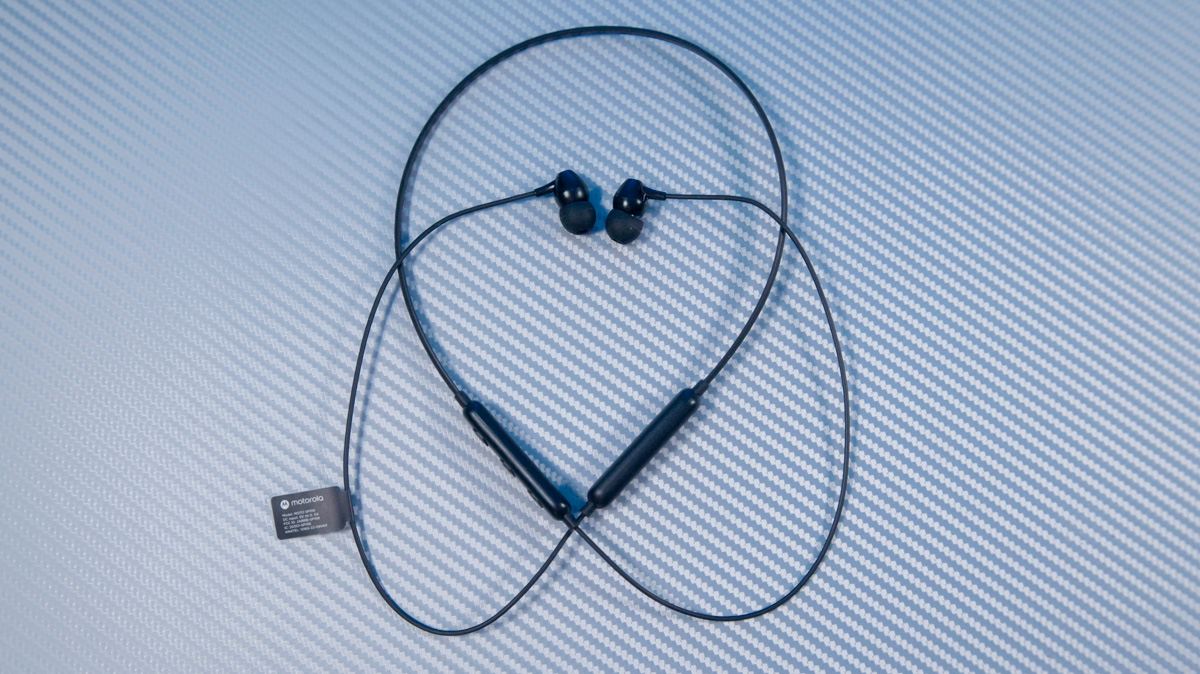
The Motorola Moto SP106 wireless headset represents one of the last models of its kind – a category that’s gradually disappearing. This trend has both positive and negative aspects, affecting everything from the form factor to the peripheral features.
Read also: Wireless earbuds reviews (TWS)
TABLE OF CONTENTS:
Technical characteristics
- Drivers: 10 mm
- Battery life (music): up to 11 hours
- Battery life (talk time): 8 hours
- Charging time: 2.5 hours
- Dimensions: 20×12×17 mm
- Weight: 14 g
Price and package contents
The headset is priced at around $35 or approximately €30. Even with the discount available at the time of this review, it clearly falls between the mid-range and entry-level budget segments.
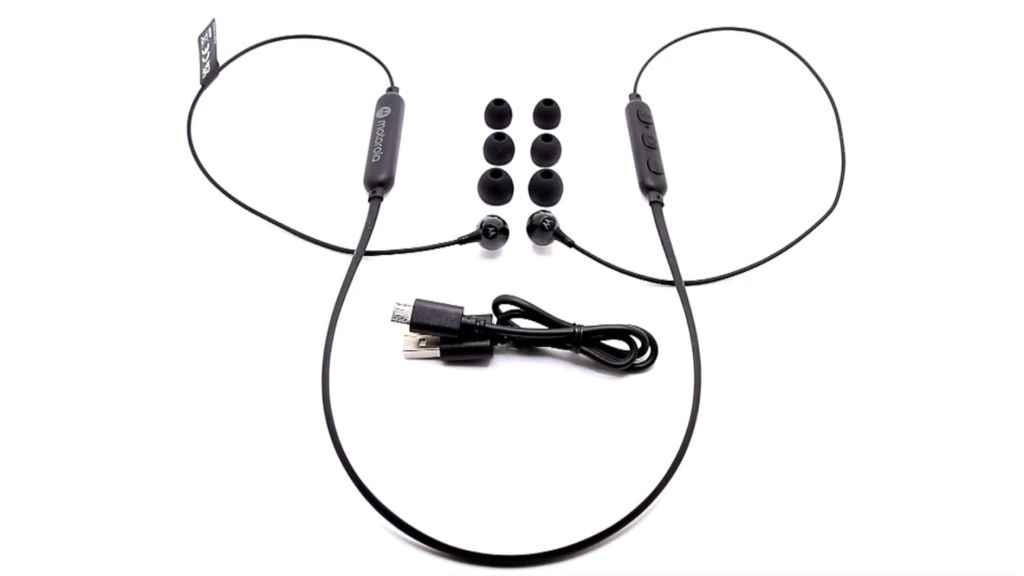
The Motorola Moto SP106 comes with a basic package that includes a USB cable, a set of spare silicone ear tips, and a user manual.
Appearance
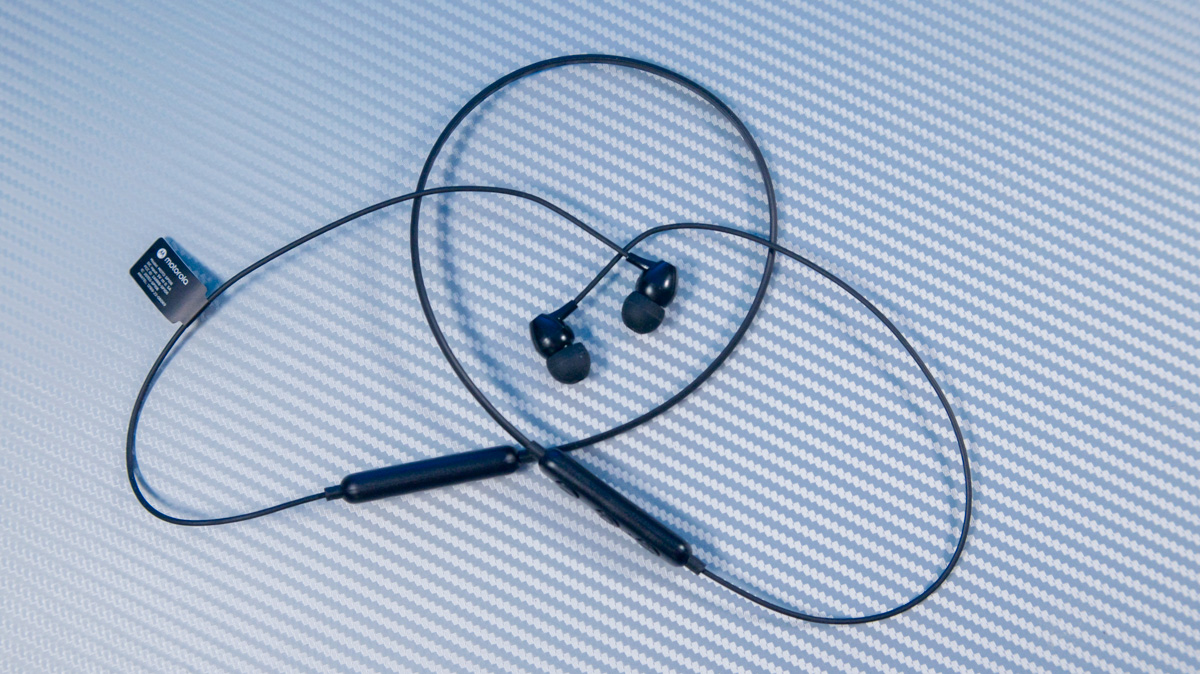
In terms of design, the headset are decidedly old-school. They feature a flexible neckband connected to two thicker plastic modules, from which thin wires extend to the earbuds. The SP106 is available only in black.
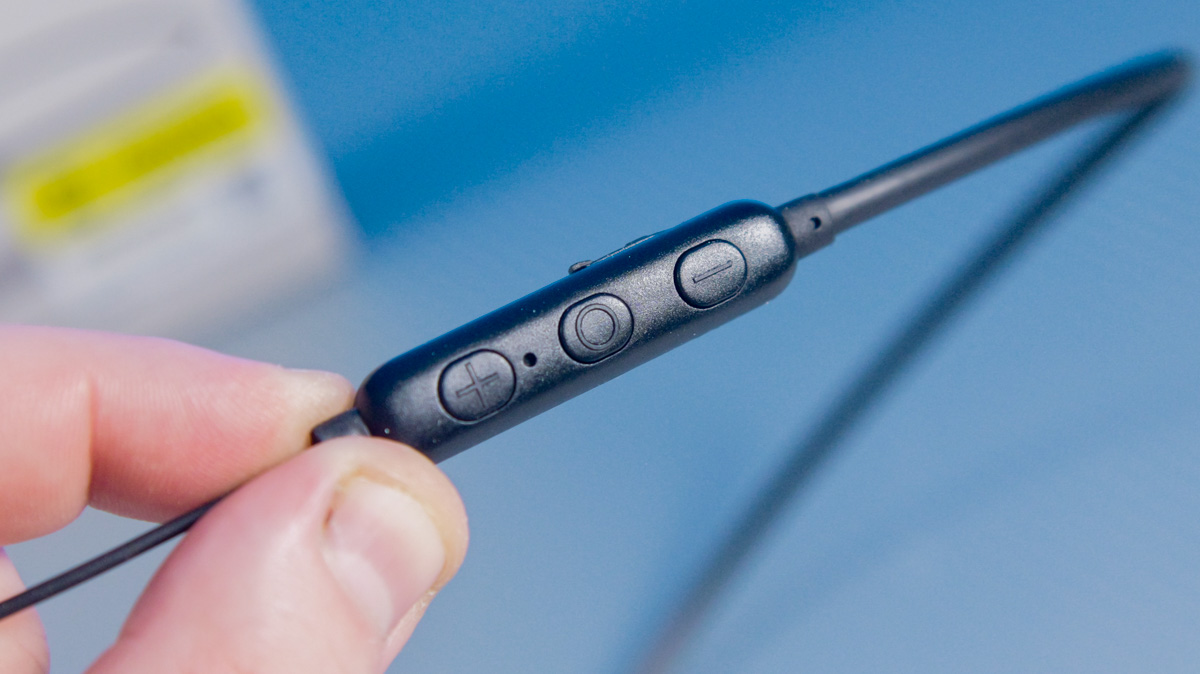
The control buttons, two microphones, and USB charging port are located on the right module. The earbuds themselves are simple, cone-shaped, with small L/R indicators where the cables connect.
Specifications
The Motorola Moto SP106 weighs just 14 grams, making them very lightweight and discreet. In fact, they are the lightest headphones of this form factor I’ve encountered. Despite this, there doesn’t seem to be a noticeable compromise in battery life – the exact capacity isn’t specified, but other performance details are provided.
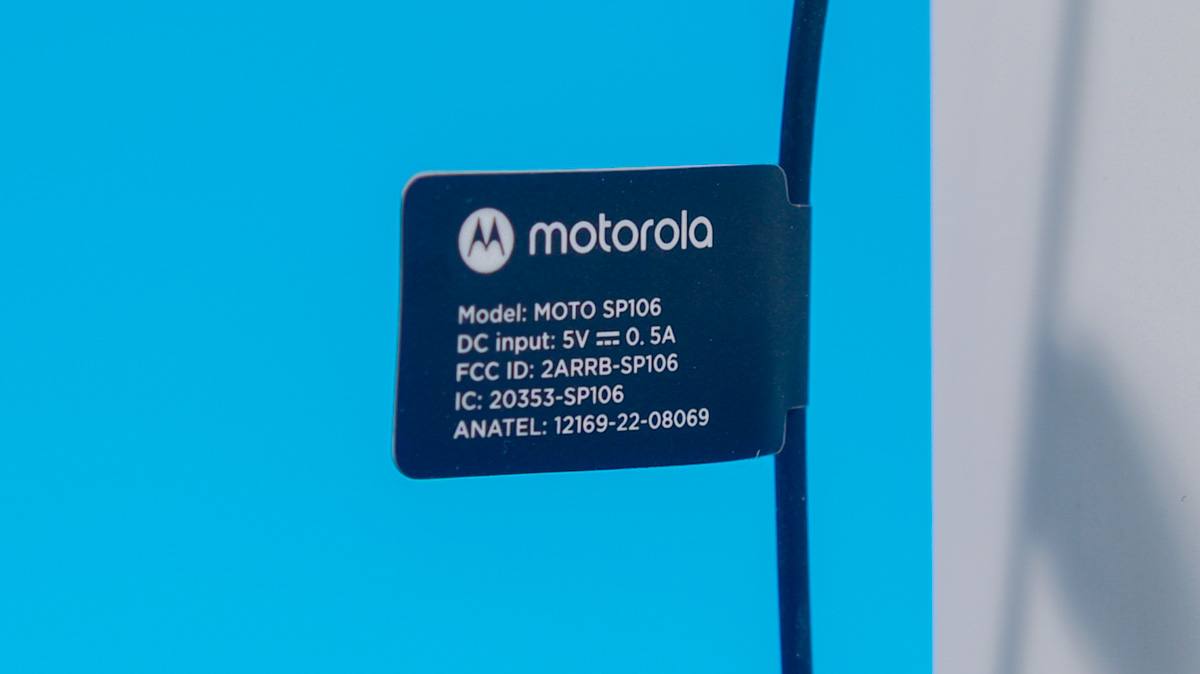
The headset have an impedance of 32 ohms and a frequency response ranging from 20 Hz to 20,000 Hz, with 10 mm drivers. The body has an IPX5 water resistance rating, aided by a silicone cover over the USB port. However, this cover is difficult to remove – too small to pull with a fingernail and challenging even with a needle, raising concerns about potentially damaging it. Codec support is limited to SBC only.
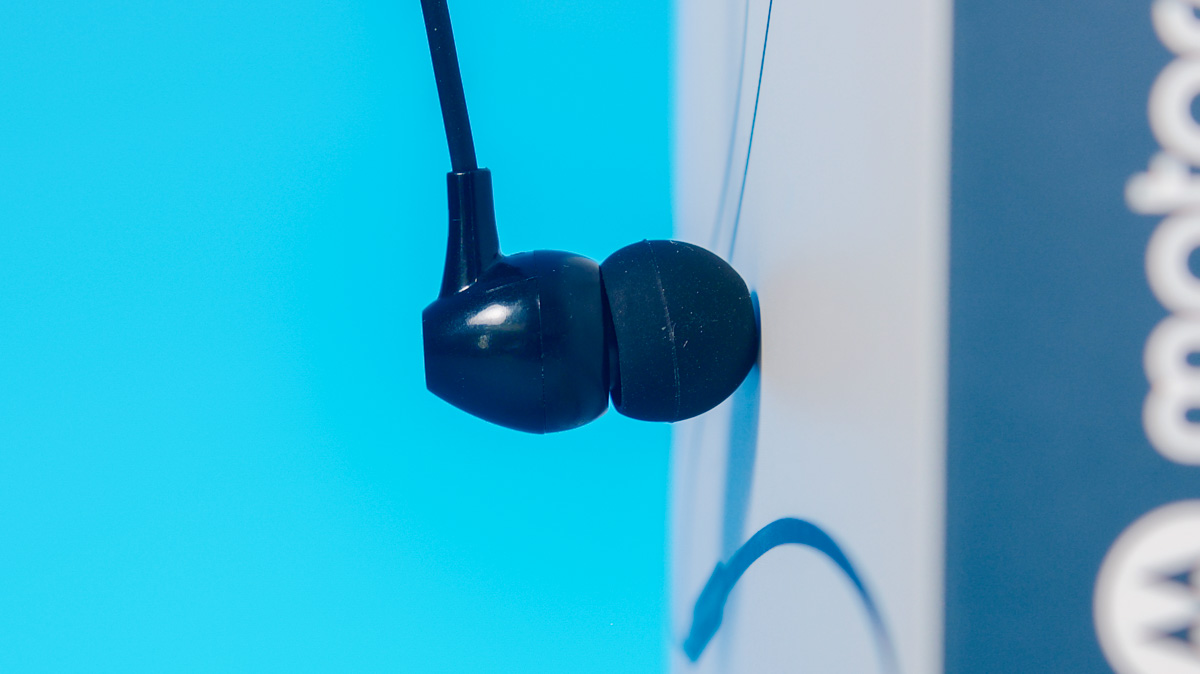
Battery life is rated at up to 11 hours of playback at half volume, around 8 hours of talk time, and a full charge takes up to 2.5 hours.
Sound and energy efficiency
The soundstage is modest but noticeable. I observed some shifts in vocal placement in tracks like Puscifer’s “Momma Sed (Tandemonium Mix),” but overall the sound is fairly dry. High frequencies can become harsh at maximum volume, as heard in Nelly Furtado’s “Say It Right.”
On the positive side, at about 70% volume, the standard ear tips provided sufficient noise isolation to block out background sounds like a running fan. Additionally, I didn’t notice any cable noise caused by the wire rubbing against my beard – though when the audio is off, this friction noise is quite pronounced.
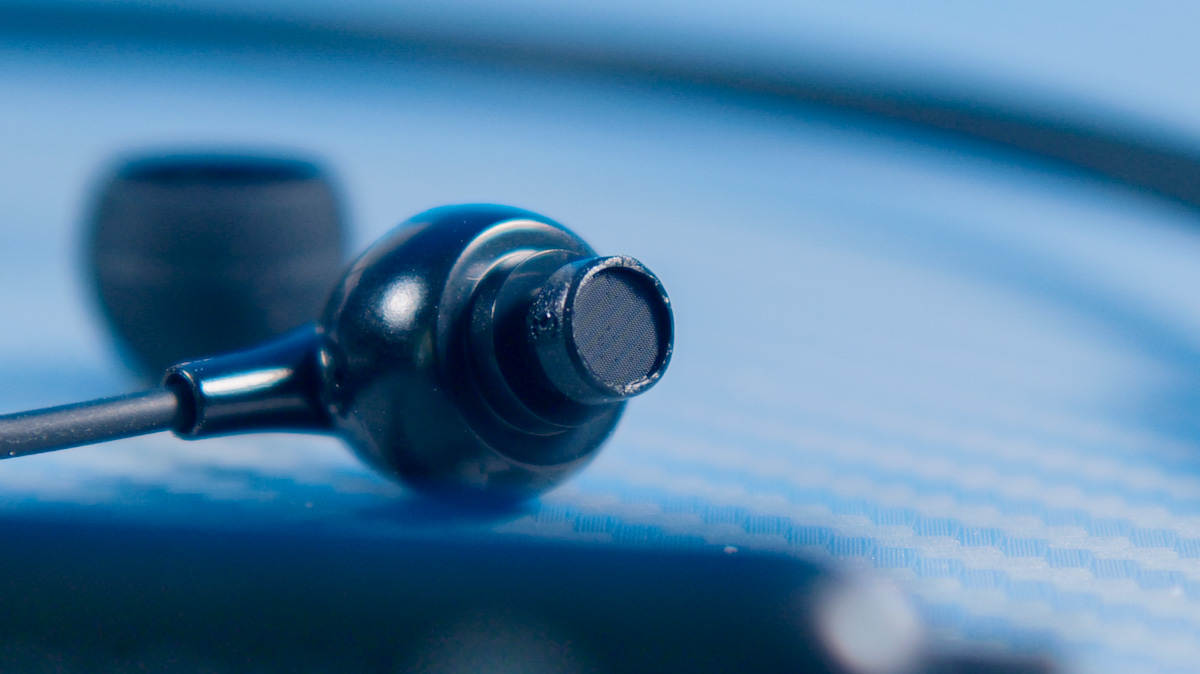
Listening to YouTube videos was comfortable, even at volumes close to 90%. The microphone quality is decent, largely because it’s positioned separately and lower on the right module, allowing you to bring it closer to your mouth. However, head movements can cause noise that noise cancellation can’t fully eliminate.
Periphery
Now, the main drawback of the Motorola Moto SP106 is its charging port. It uses microUSB rather than the more modern USB Type-C. In 2025, this feels like a significant oversight that’s hard to justify.
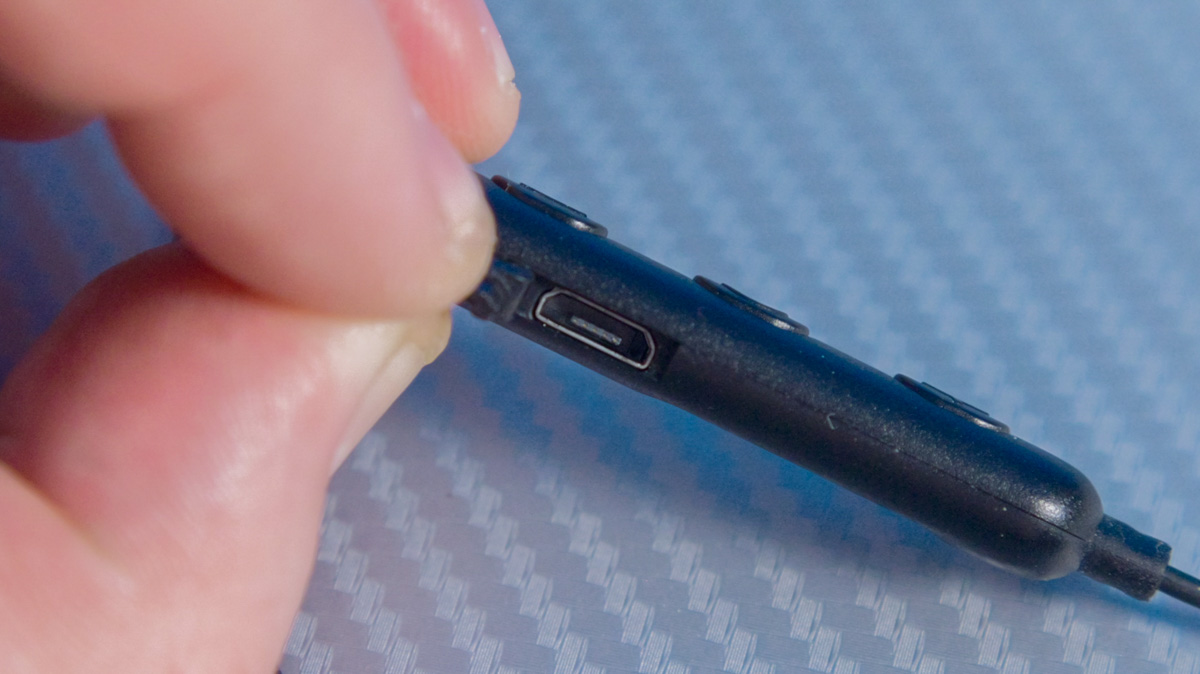
Even Apple has switched to USB Type-C, and the European Union has passed a resolution mandating it. The last widely recognized smartphone with microUSB was the Samsung Galaxy S7 Edge, released nine years ago. Considering that similarly priced true wireless models from Chinese brands offer Type-C charging, comparable battery life, and active noise cancellation, it’s difficult to find a valid excuse for this choice.
Conclusions
Despite its lightweight design – just 14 grams – and reasonable sound quality, the Motorola Moto SP106 is a fading example of headsets with microUSB charging. I would only recommend this model if you already happen to have several cables with this outdated connector on hand. Also, be prepared to have a needle nearby, since the charging port cover is impossible to remove with a fingernail.
Read also:
- Motorola smartphone reviews
- Anker Soundcore Liberty 5 Review: Multifunctional TWS Headphones
- Huawei FreeBuds Pro 4 Review: Possibly the Best All-Around TWS Earbuds for Everyday Use


I want this