





© ROOT-NATION.com - Use of content is permitted with a backlink.
When discussing dash cameras, the typical reference point is a single front-facing unit that records the road ahead. The subject of this review, however, takes a more complex approach. The Neideso AI Dash Cam N900-4CH incorporates three front-facing cameras and an additional rear camera. It also integrates artificial intelligence features designed to monitor driver behavior. This review examines the practical value of the additional cameras and assesses how these features translate into real-world use.

TABLE OF CONTENTS:
Neideso N900-4CH Specifications
Cameras:
- Front: 4K (3840×2160) with Sony STARVIS 2 IMX675 sensor
- Side: 2×1080p (1920×1080)
- Rear: 1080p with HDR
- Viewing angle: 150° per camera
- 8 infrared LEDs for night-time interior recording
Sensors and functions:
- AI driver monitoring system (DMS)
- G-sensor for impact detection
- Loop recording
- 24/7 parking mode (with optional Hardwire Kit)
- Voice control
Connectivity:
- 5 GHz Wi-Fi for fast data transfer (up to 8 Mbps)
- GPS module
- Type-C interface for power supply
Memory:
- Supports microSD cards up to 512 GB
- Comes with a 128 GB card
Power supply:
- 12-24 V from car power supply
- Type-C port
Manufacturer’s social media accounts:
- https://www.tiktok.com/@neideso_dashcam
- https://www.instagram.com/neideso.360/
- https://www.youtube.com/@Neideso
- https://www.facebook.com/profile.php?id=61578909917221
Positioning and Price
The Neideso AI Dash Cam N900-4CH is positioned as a multi-channel recording system intended for users who require extended coverage. This may include professional drivers, long-haul operators, families transporting children, owners of high-value vehicles, and others seeking comprehensive video documentation in the event of road incidents.
At the time of writing, the device is available on international marketplaces, including Amazon, with a listed price in the range of $200–250.
Package contents
The relatively compact box containing the Neideso N900-4CH includes everything you need to immediately install and use the device:
- Main recorder module with three cameras and a display
- Rear camera with cable
- Car charger with Type-C USB cable
- 3M adhesive mount and suction cup for mounting
- 128 GB microSD card (already installed in the device)
- Cable routing tool
- User manual
- Electrostatic film for 3M mount

A 128 GB microSD card is included in the package, which is relatively uncommon in this product category, as storage media are often sold separately. The recorder supports memory cards up to 512 GB, allowing users who drive frequently to store larger volumes of video footage without frequent overwriting.
Design and Ergonomics
The Neideso AI Dash Cam N900-4CH is noticeably larger than conventional dash cameras and features a horizontally elongated form factor.

The device measures approximately 180 × 50 × 20 mm. While it is relatively noticeable when mounted on the windshield, it does not obstruct the driver’s forward view.

The main unit is constructed from black matte plastic. One side houses a non-touch display, while the opposite side contains the primary 4K camera used for recording road events.

Two additional cameras are positioned on the sides of the unit. Each is equipped with four infrared LEDs to support recording in low-light conditions. The cameras are adjustable and can be oriented either toward the road or toward the driver and passengers.
Five physical control buttons are located along the bottom edge of the device for system operation.

The top side includes the mounting bracket, a connector for the rear camera, a USB Type-C port, and the memory card slot.

The recorder can be installed using the included 3M adhesive mount or a suction-cup holder.
Unlike conventional dash cameras, the Neideso AI Dash Cam N900-4CH should be mounted slightly lower on the windshield to prevent the rearview mirror from obstructing the field of view of the two side cameras. In some situations, viewing the rear camera feed on the display during parking can also be practical.
The rear camera module follows a more traditional design. It is compact, and the lens housing can be adjusted to achieve the desired angle toward the road.

Overall, I encountered no issues with the installation and connection process. On the Dodge Challenger, however, both the front and rear windshields are sharply angled, so the side cameras capture a noticeable portion of the dashboard or interior in addition to the road. This effect should be less pronounced in vehicles with more conventional glass angles. It’s also worth noting that tinted rear windows can slightly reduce the image quality from the rear camera.
Sony STARVIS 2 IMX675 Sensor and Its Features
A key feature of the Neideso AI Dash Cam N900-4CH is the use of the advanced Sony STARVIS 2 IMX675 sensor in the front-facing camera.
For the average user, this means improved low-light performance. STARVIS 2 is a Sony technology designed to enhance image quality in dim conditions. In practice, the dash cam can clearly capture license plates, road signs, and other critical details even at night or during twilight. The IMX675 sensor has larger 2.0 µm pixels compared with previous generations, allowing it to capture more light and produce clearer footage in challenging lighting conditions.

Additionally, HDR (High Dynamic Range) technology helps balance bright and dark areas in the image. For example, when exiting a tunnel into bright sunlight, the camera avoids overexposure and can capture details in both shadows and highlights simultaneously.
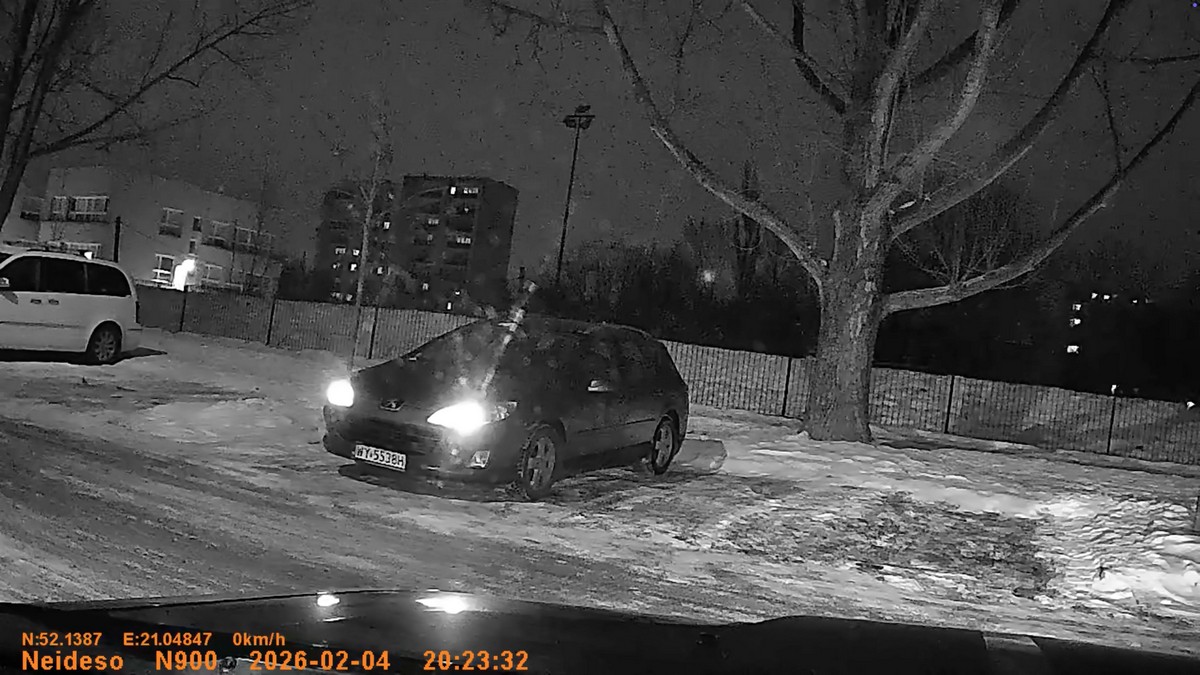
During my night tests, the recorder performed well: vehicle license plates were clearly readable at distances of 20–30 meters in low-light conditions, which is particularly important for documenting traffic violations or accidents.
Performance of the Neideso AI Dash Cam N900-4CH in 4-Channel Mode
The Neideso AI Dash Cam N900-4CH supports four simultaneous recording channels:
- Front 4K camera – the primary unit capturing the road ahead with maximum detail.
- Two side/interior 1080p cameras – monitor the vehicle cabin and partially the side windows, or can be adjusted to record the road.
- Rear 1080p camera – records activity behind the vehicle.
This setup provides near-complete 360-degree coverage, which is particularly useful in several scenarios:
- Side collisions: Side cameras can capture impacts that might be missed by a standard 2-channel recorder.
- Vandalism: Any approach to the vehicle from the side is recorded.
- Commercial drivers: Interior cameras document passenger behavior, which can be important in disputes or incidents.
- Parents: Rear-seat cameras allow monitoring of children without turning around while driving.

The recorder allows you to select different recording modes depending on your needs and memory capacity:
- 3K + 1080P
- 4K + 1080P
AI-Based Driver Monitoring System (DMS)
One of the most notable features of the Neideso AI Dash Cam N900-4CH is its AI-driven Driver Monitoring System (DMS). This is not merely a marketing feature but a practical technology, particularly useful for drivers who spend long hours behind the wheel. It can also benefit commercial fleet operators by providing enhanced oversight of driver behavior and safety.

One of the interior cameras continuously monitors the driver’s face and analyzes their state using machine learning algorithms. The system can detect:
- Yawning and drowsiness: If the driver begins yawning or their eyes remain closed for an extended period, the recorder issues both an audible alert and a visual warning. This is particularly important on long drives, especially at night.
- Distraction: The system tracks whether the driver is looking at the road. If attention shifts – for example, to reach into the glove compartment or check a phone – a warning is triggered.
- Phone use: AI recognizes when a phone is held near the ear while driving. Given regulations against handheld phone use in many regions, this feature encourages hands-free operation.
- Smoking while driving: The system can detect cigarette smoking, which, while not always illegal, diverts attention from driving.
- Driver absence: In rare scenarios where the driver leaves the seat while the vehicle is moving, the system registers this event.
In my tests, the DMS system proved highly accurate. It responded almost immediately to yawning, and when I deliberately looked away for 5–7 seconds, a warning alert was triggered. The alert itself is fairly loud, and during the first few activations, it was startling enough to make me jolt in my seat.
One important detail is that the DMS only activates above a certain speed – typically around 20–30 km/h. This makes sense, as constant alerts in traffic jams or parking situations would be unnecessarily disruptive.
Smartphone Connectivity and Mobile App
One of the advantages of the Neideso AI Dash Cam N900-4CH is its fast 5 GHz Wi-Fi module. To use the recorder with a smartphone, the proprietary TsCam app must be installed, which is available for both iOS and Android devices.




After connecting to the Wi-Fi network of the recorder for the first time (password in the manual), you will have access to all functions:
- Viewing live video from all cameras simultaneously
- Downloading recordings to your phone
- Configuring certain settings
- Updating the recorder’s firmware
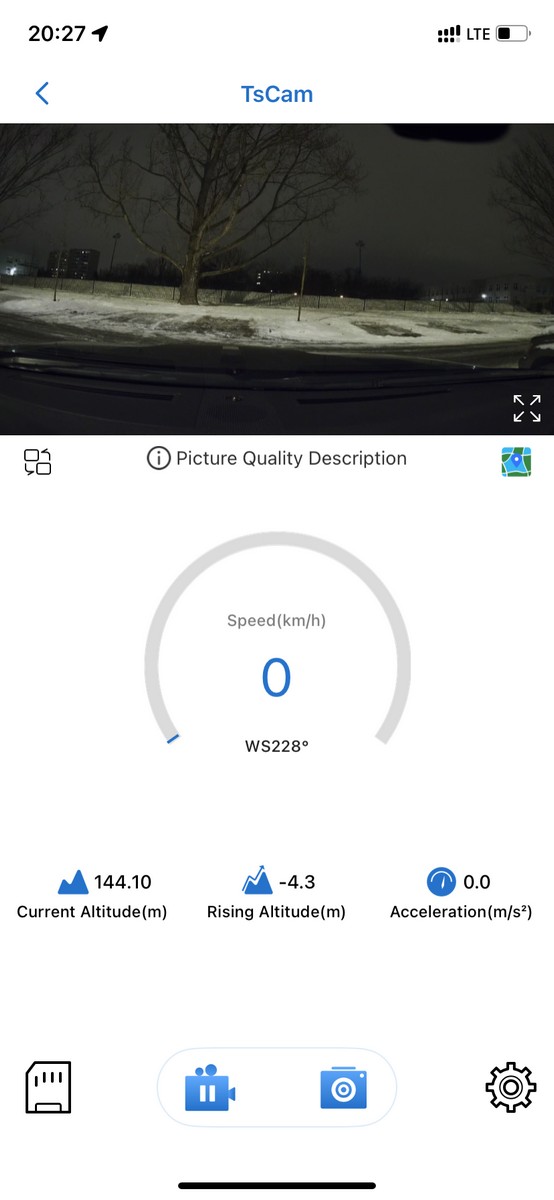
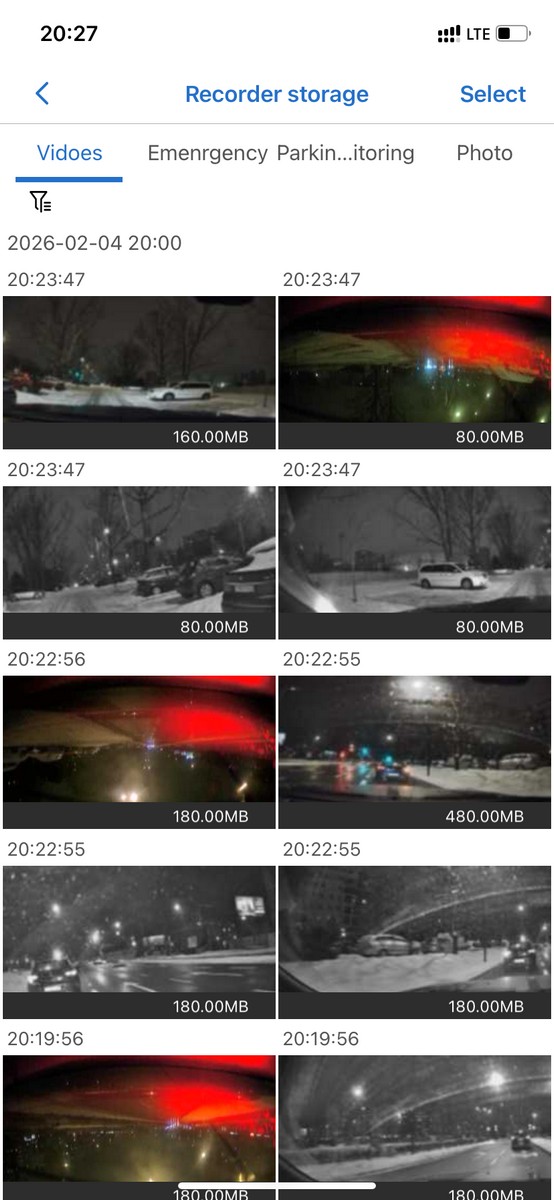
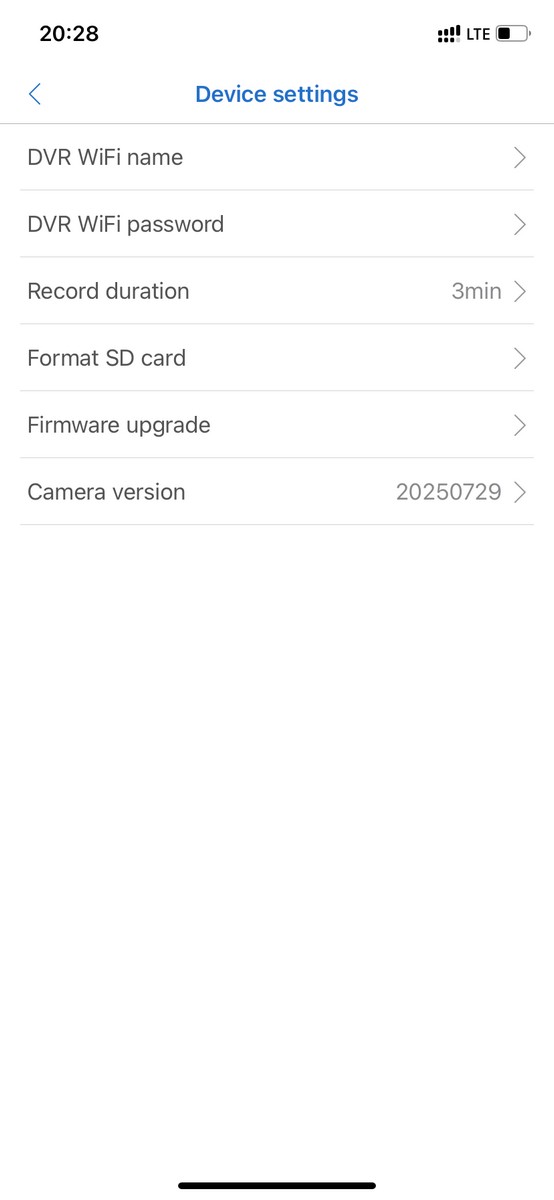
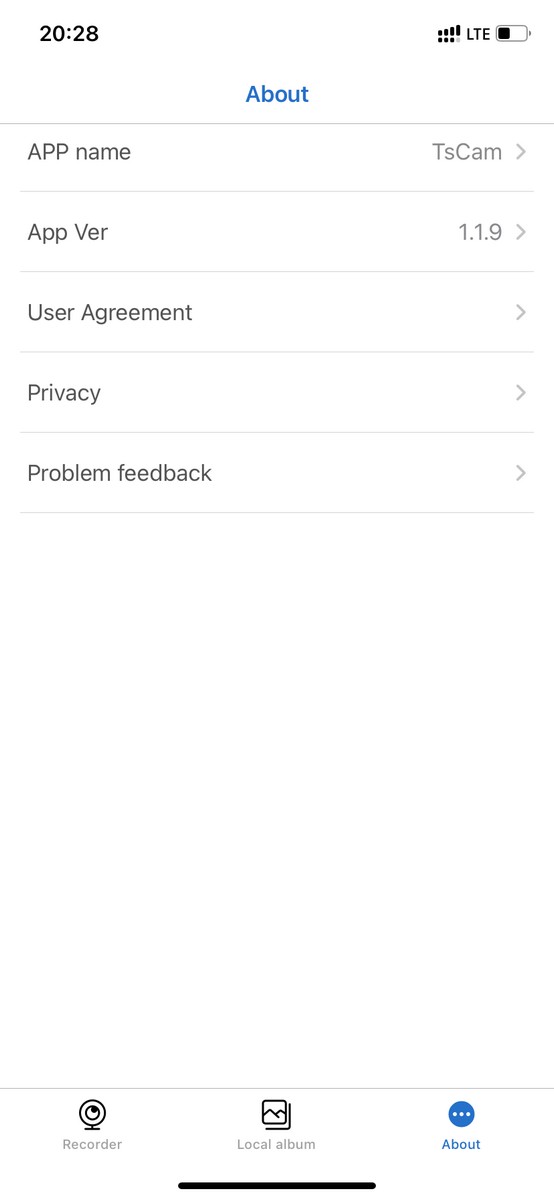
Overall, the app feels somewhat basic and could benefit from further refinement. In several instances, the video stream would interrupt, leaving only a gray screen displayed.
The dash cam’s built-in GPS module records coordinates, speed, and timestamps for each video file.

The Neideso AI Dash Cam N900-4CH supports loop recording, meaning that when the memory card fills up, the oldest unprotected files are automatically overwritten to make room for new footage. The length of each recording segment can be configured.
The built-in G-sensor (accelerometer) detects sudden acceleration, braking, or impacts. When such an event occurs, the current video file is automatically protected from deletion and marked as important. G-sensor sensitivity can be adjusted in the app, ranging from low to high.

In addition to the features already described, the Neideso AI Dash Cam N900-4CH supports 24-hour parking monitoring. This requires an optional Hardwire Kit, sold separately for approximately $40. The kit connects directly to the vehicle’s battery, providing continuous power to the dash cam even when the ignition is off. In this mode, the recorder can capture vandalism, collisions with a parked vehicle, or other incidents occurring in the owner’s absence.
Recording quality: daytime and night-time shooting
Now for the most important thing – video recording quality.

During daytime, the front 4K camera delivers clear and detailed footage. License plates are easily readable at distances of up to 15–20 meters ahead.
Road signs, lane markings, and people’s faces are all captured with high clarity and detail.
Overall, the quality of footage from the main camera demonstrates that 4K resolution remains the benchmark for modern dash cameras.

As noted earlier in the section on the Sony STARVIS 2 IMX675 sensor, night-time recording is also strong, with nearby vehicle license plates clearly recognizable without any issues.
Another example of night-time video recording:
The side cameras record in 1080p and generally deliver satisfactory results, though the image lacks the same level of detail as the main front-facing 4K camera.
However, given their auxiliary role, the side cameras effectively serve their intended purpose.

The main advantage of the side cameras is their infrared LEDs, which enhance visibility in low-light conditions.
The faces of the driver and passengers in the dark interior are clearly visible in the video footage.

Rear Camera Performance
The rear camera of the Neideso AI Dash Cam N900-4CH uses a Sony IMX307 sensor and records video at 1080p resolution.

It connects to the main unit via a long cable of approximately 6 meters, allowing for neat and discreet routing under the interior trim. The camera itself can rotate on its mount, enabling adjustment of the viewing angle after installation.

The rear camera can be installed in two ways:
- On the rear windshield – to record activity behind the vehicle.
- Inside the cabin, facing backward – to monitor the rear seats and trunk area.
I tested both configurations. When mounted on the rear windshield, the camera clearly captured license plates of vehicles behind, even while in motion.

When installed inside the cabin, the camera provides a view of rear-seat passengers, which is useful for taxi drivers or parents monitoring children.
Voice Control
The Neideso AI Dash Cam N900-4CH supports voice commands for basic functions. Users can issue commands to:
- Start or stop recording
- Capture a screenshot
- Turn Wi-Fi on or off
- Protect the current video file from deletion
Commands are recognized in English. In my tests, the system generally responded well, though in a noisy cabin, commands occasionally had to be repeated.
Conclusions
Overall, the Neideso AI Dash Cam N900-4CH is a modern dash camera that offers more than simple video recording. Its core functionality – a four-channel setup with a 4K front camera and STARVIS 2 sensor – delivers high-quality footage both during the day and at night.
The additional cameras are useful for providing a wider field of view on the road or for monitoring the cabin. This is a clear advantage for the safety and convenience of taxi or bus drivers.
Looking ahead, it would be beneficial if the manufacturer added more language support for the dash cam interface, mobile app, and voice commands. Slightly more robust mounts for the cameras would also improve the user experience, as the suction-cup installation I used was somewhat cumbersome when attaching or removing the unit. If these points are not critical for you, the Neideso AI Dash Cam N900-4CH can be confidently considered a solid option for purchase.

