© ROOT-NATION.com - Use of content is permitted with a backlink.
If we allow ourselves a bit of retrospective perspective, just how unusual does the Motorola Razr 70 Ultra really look today? Foldable smartphones are no longer seen as the pinnacle of technological innovation. We have become less willing to overlook their shortcomings, more demanding in terms of features, and, perhaps most importantly, increasingly accustomed to the tall-screen form factor. The Motorola Razr 70 Ultra presents an interesting case because, whenever I look at it, I cannot help but think of the Razr 60 Ultra. The two devices are remarkably similar, whether viewed from the front or the back, opened or folded. So here is the preliminary verdict: the Motorola Razr 70 Ultra is worth considering if you appreciate the foldable form factor and are willing to tolerate a few minor compromises. Those compromises have not disappeared. On the other hand, the list of strengths has grown. What exactly has improved? Read on.
Read also: Foldable smartphone reviews

TABLE OF CONTENTS:
Specifications
- Weight: 199 g
- Dimensions: 88.12 × 73.99 × 15.69 mm
- Display (external): Extreme AMOLED, 4″, 165 Hz, 1272 × 1080, up to 3000 nits, Corning Gorilla Glass Ceramic protection
- Display (main): Extreme AMOLED 22:9, 6.96″, 165 Hz, 1224 × 2992, up to 5000 nits
- Body protection: IP48
- Processor: Qualcomm Snapdragon 8 Elite
- Core frequency: up to 4.47 GHz
- RAM: 16 GB, expandable
- Storage: 512 GB
- Cameras: 3×50 MP
- Wi-Fi: 7
- Bluetooth: 5.4
- Android: 16 + Hello UI
- Battery capacity: 5000 mAh
- Battery type: silicon-carbon
- Wired charging speed: up to 68 W
- Wireless charging speed: up to 30 W
- Reverse wireless charging: up to 5 W


Motorola Razr 70 Ultra Video review
Price and Market Positioning
The new model is priced at $1,450 and is available in a single memory configuration featuring 16 GB of RAM and 512 GB of storage. Buyers can choose between two color options: Cocoa, which is the version featured in this review, and Oriental Blue. The differences extend beyond the color accents of the chassis, as the two variants also use different materials for the rear panel. The Oriental Blue version features an Alcantara-like finish, while we will take a closer look at the Cocoa model later in the review.
Razr 70 Ultra Package Contents
As with the previous generation, the Motorola Razr 70 Ultra comes with a fairly straightforward bundle. In addition to the smartphone itself, the box includes a protective case – this time featuring a plastic exterior with an artificial leather texture – as well as a SIM eject tool, documentation, and a USB cable.

Once again, there is no charger included in the box, and once again I consider this a drawback. That said, I can justify the decision for the same reason I did in the Razr 60 Ultra review. In fact, it may be worth revisiting that review, as I would rather not keep referring back to it throughout this one:
Please note: Motorola Razr 60 Ultra Review: True Flagship Foldable Phone
Design and Build
The reason is simple: the smartphone’s design has remained virtually unchanged over the past year. The overall structure is the same, retaining the familiar vertical clamshell form factor. The hinge is made of titanium, while the frame is constructed from aluminum with a brushed finish.

On the rear, there is the external display alongside the back panel. Last year’s model featured an eco-leather-like finish instead of the wood-inspired panel found here. However, as the owner of a white wood-finish Motorola Edge 50 Ultra, I have to admit that the “cellulose” texture feels noticeably more premium from an aesthetic standpoint.

The layout of the controls and ports has not changed either. On the left side is the dedicated assistant button. On the right are the power button, which also houses the fingerprint scanner, and the volume controls. The top edge contains one of the speakers, while the bottom houses the USB Type-C 2.0 port, the second speaker, the microphones, and the SIM card tray.

Ergonomics
The phone weighs just under 200 g and measures slightly over 7 mm thick when unfolded. As was the case with the previous generation, the placement of the controls near the top of the device makes them difficult to reach if you hold the smartphone from the bottom in the same way you would a conventional handset.

As a result, turning the phone off or adjusting the volume often requires either shifting your grip or using your other hand. The same applies when pulling down the quick settings panel. This is partially mitigated by Motorola’s decision to place certain software interface elements near the bottom of the screen rather than at the top.
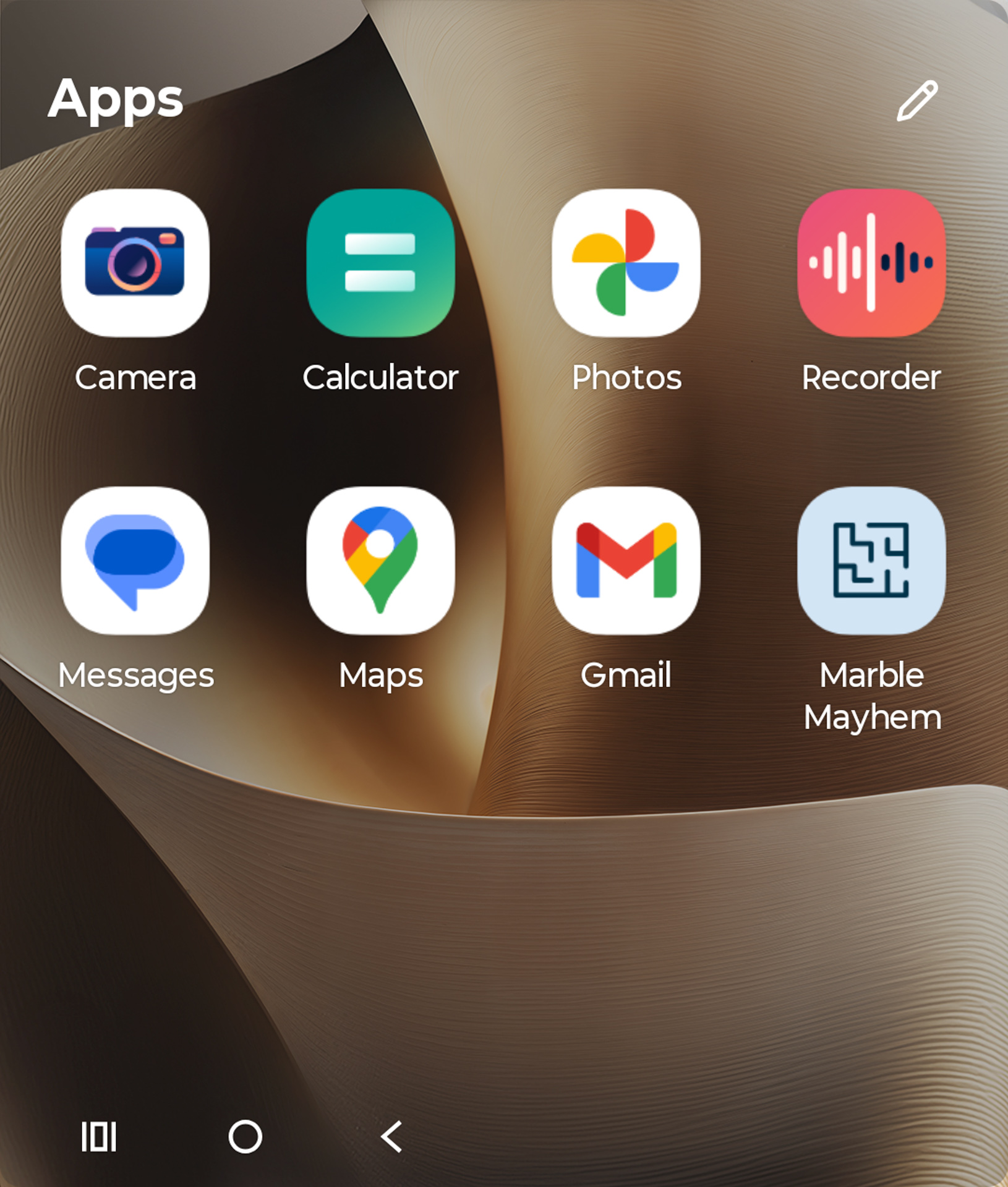


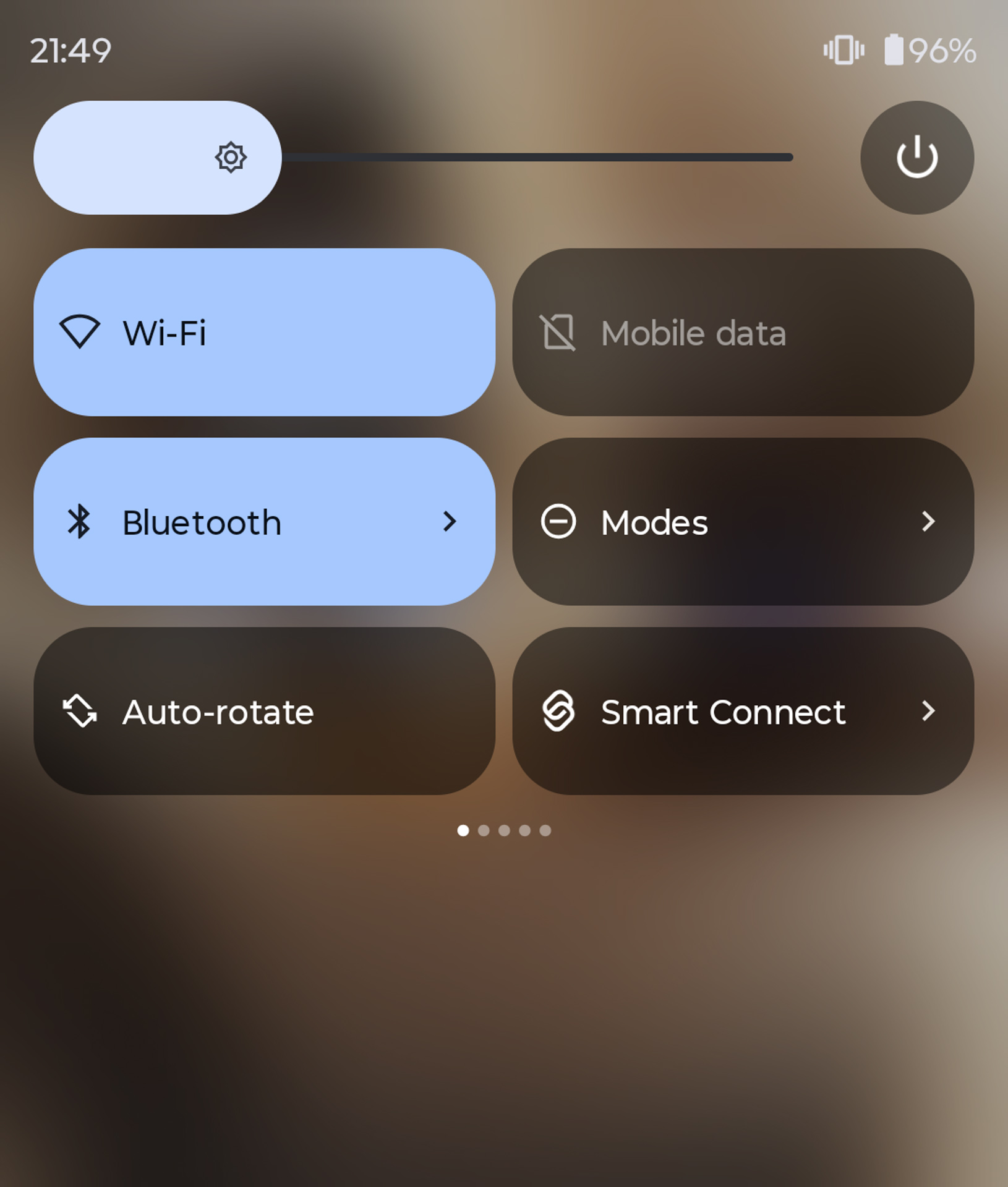
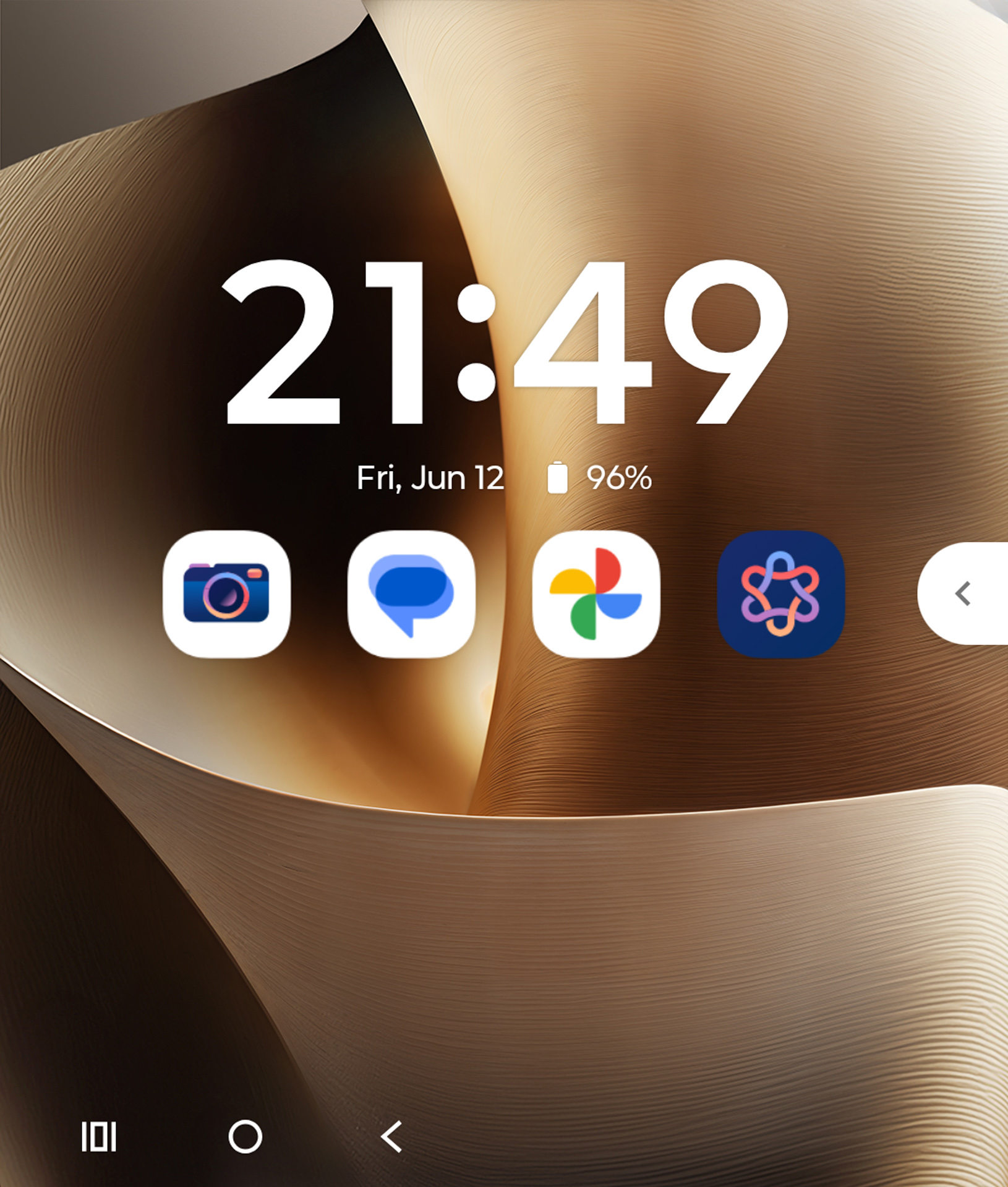
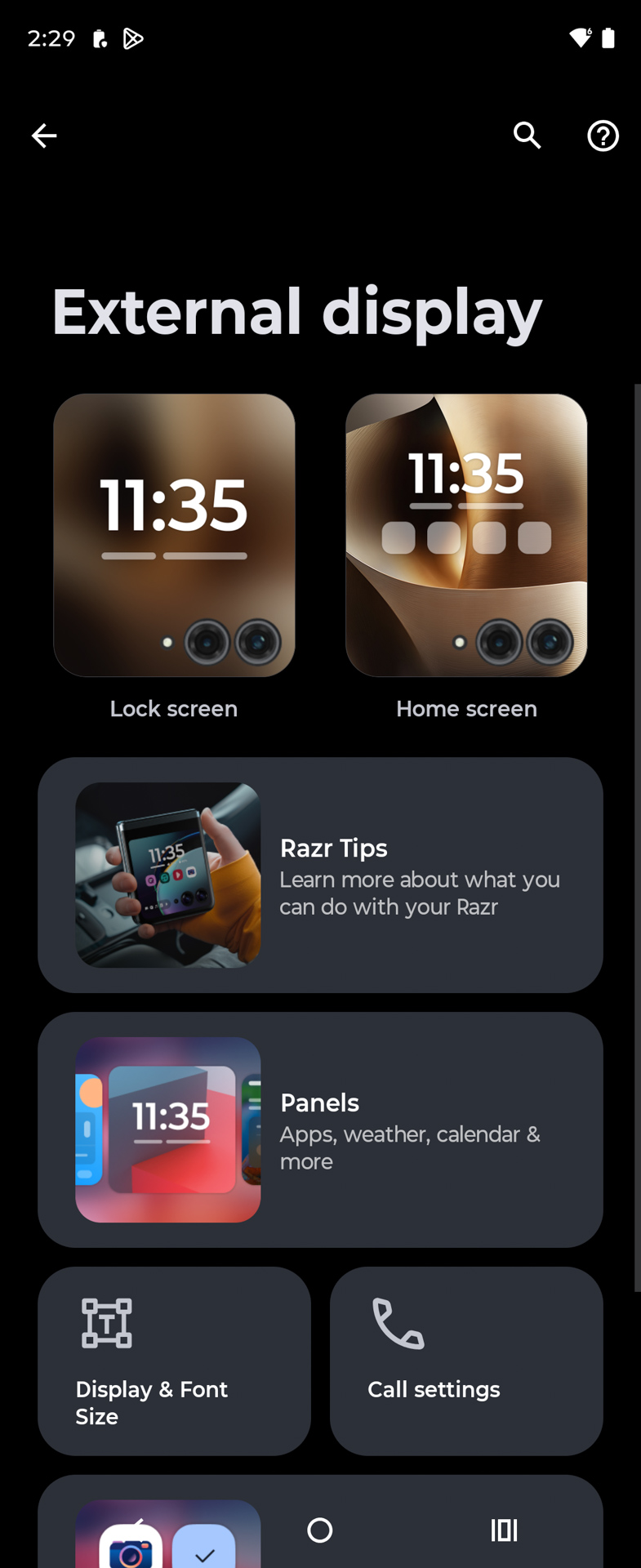
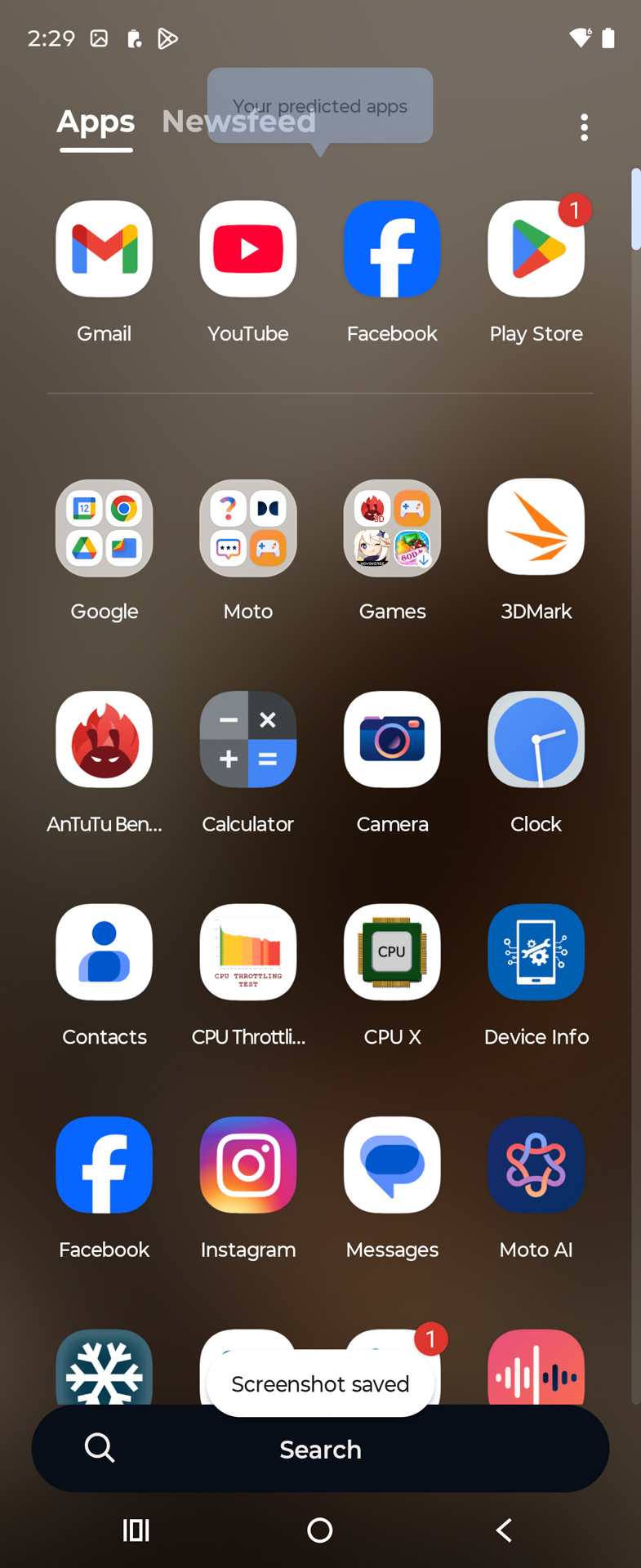
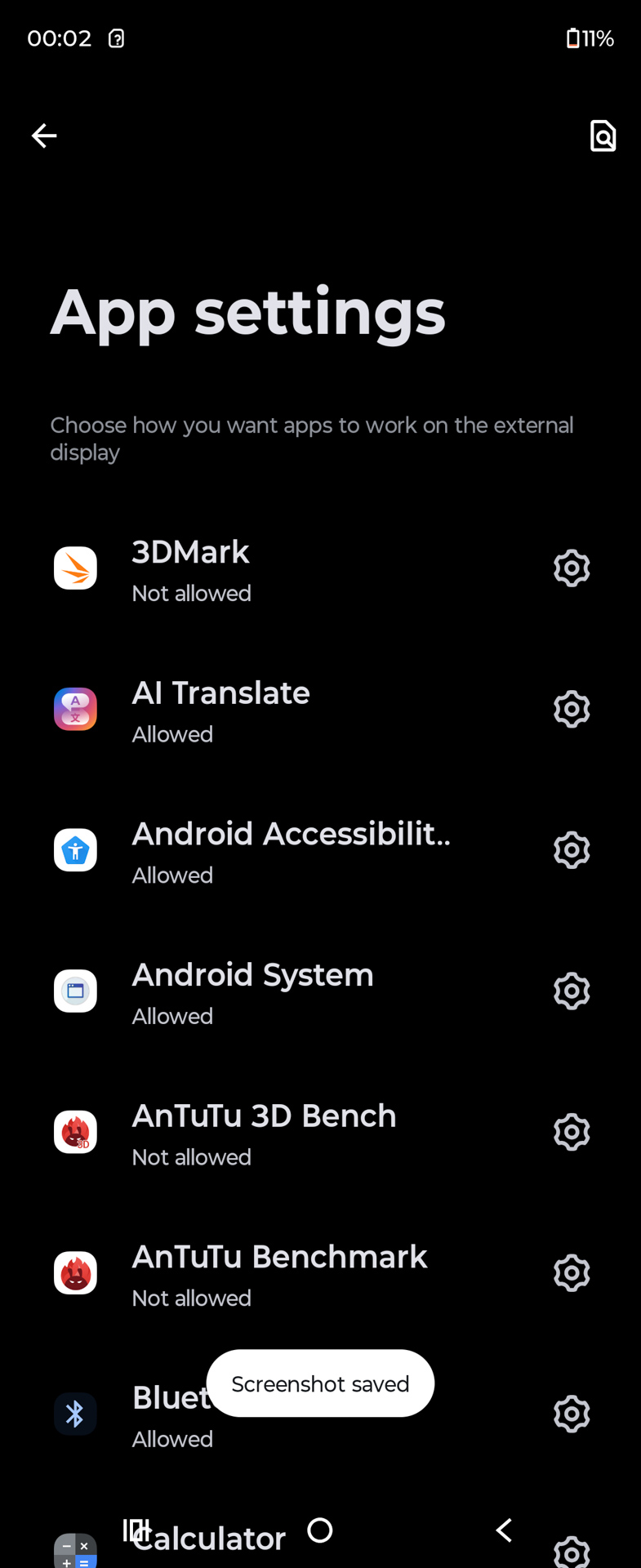
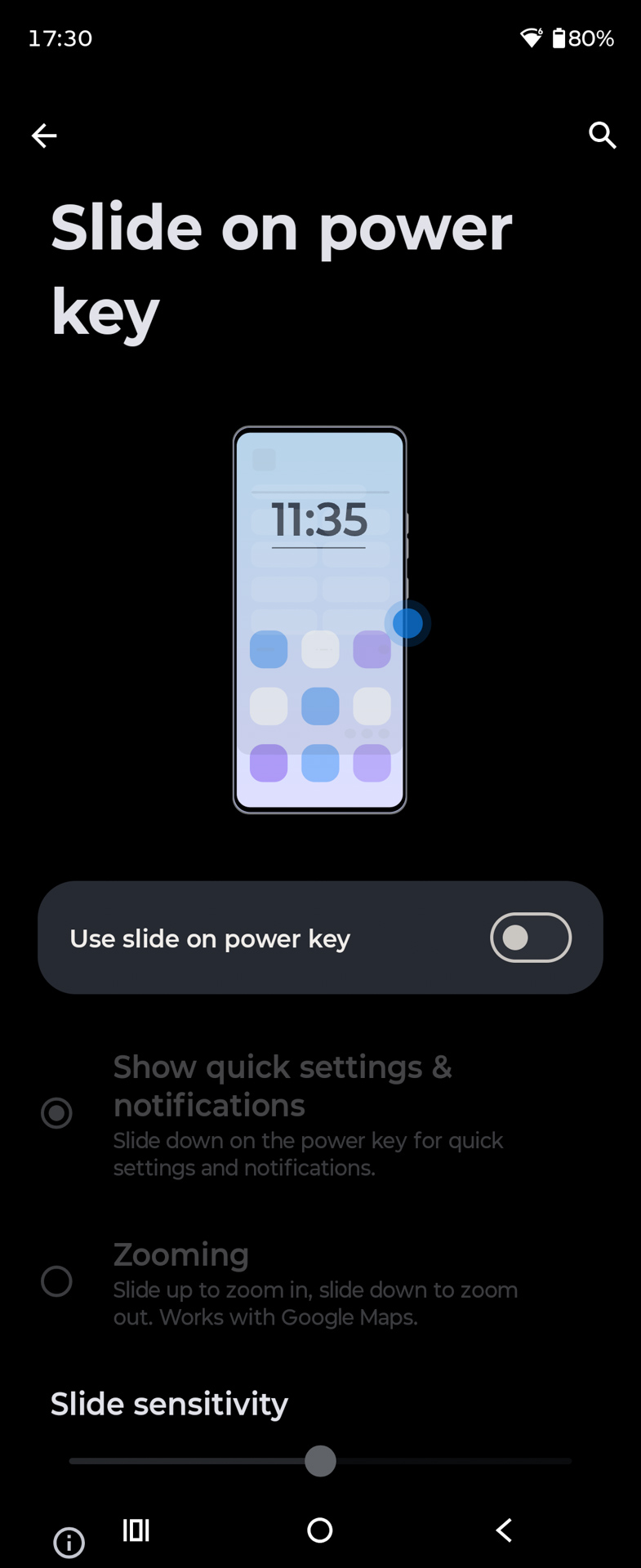
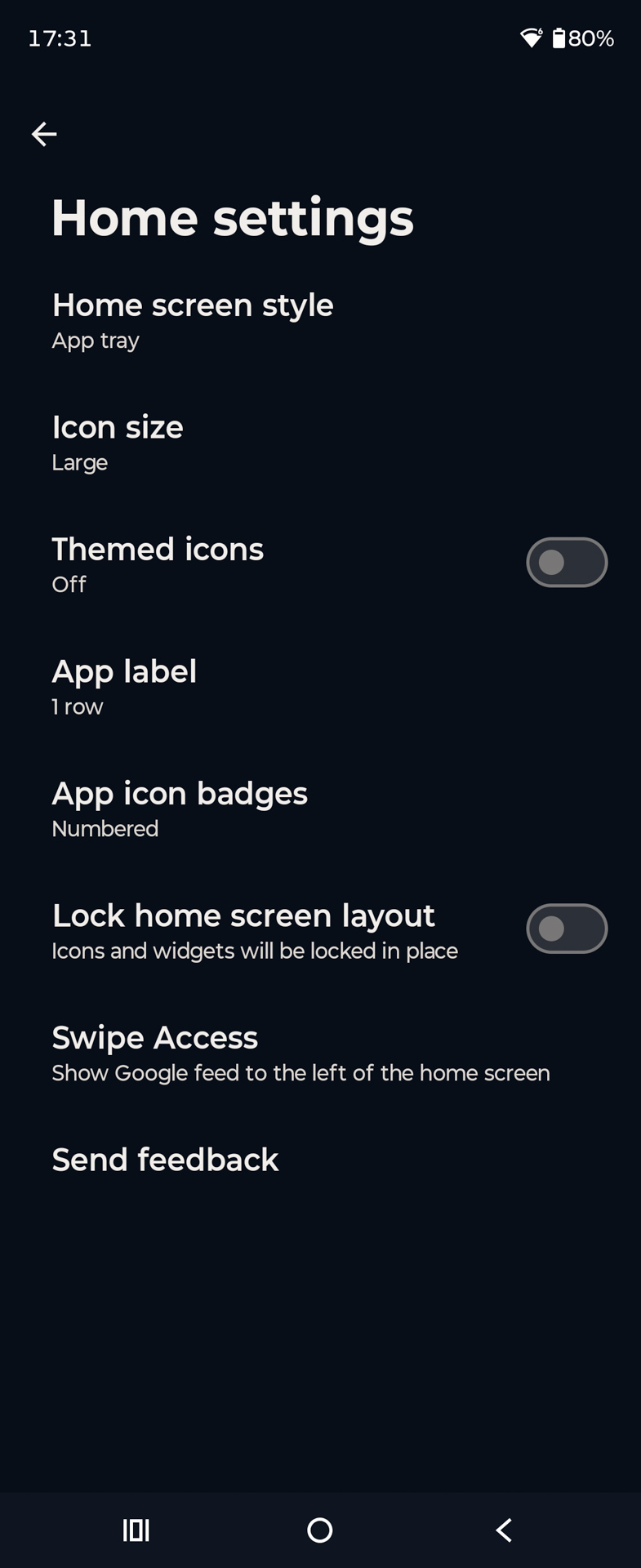
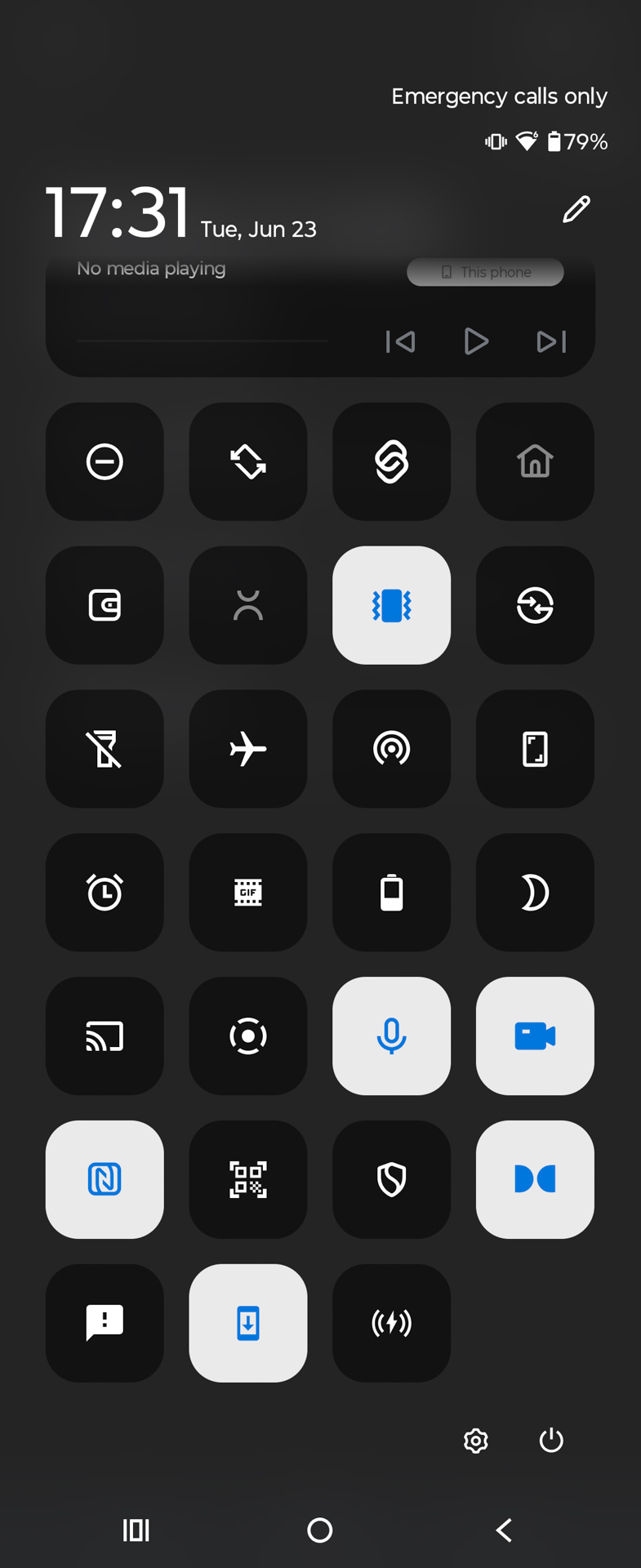
However, this is not enough. Even the upper options in the Settings menu remain out of reach without adjusting your grip. What frustrates me is that the industry largely solved this problem five years ago with One UI 2, which allowed the interface to be pulled down far enough to place key elements comfortably within thumb’s reach. Since then, this seemingly invaluable piece of design knowledge has been almost entirely forgotten. As far as I can tell, only ZTE has retained a similar approach on some of its devices. In a phone like this – and, indeed, on the Razr 60 Ultra before it – such a feature would have been particularly useful.

As for durability, the phone retains both its IP48 ingress protection rating and MIL-STD-810H certification. So, what is the difference between the two?
Read also: Everything You Need to Know About MIL-STD-810H in Smartphones: A Look at the Motorola Edge 50 Neo
Razr 70 Ultra Displays
The displays have seen very few changes in terms of design and most of their specifications. The internal screen retains its tall aspect ratio and is now slightly larger, measuring 7.0 inches compared to 6.96 inches on its predecessor. The refresh rate remains unchanged at up to 165 Hz, the resolution is still 1224 × 2992 pixels, and the panel continues to use LTPO technology with support for an always-on display. Brightness has received a modest upgrade, with peak HDR brightness increasing by 500 nits to a maximum of 5,000 nits.

The external display on the Motorola Razr 70 Ultra is virtually identical to that of its predecessor. It remains a 4-inch LTPO AMOLED panel with a resolution of 1272 × 1080 pixels and support for an always-on display. The only notable change is brightness: the peak value has been increased from 3,000 to 4,000 nits, while the typical brightness remains at 1,000 nits. Beyond that, there is little else that has changed.

Both displays look excellent and include a software-based anti-flicker feature, although the exact PWM frequency is not specified. Outdoor visibility is also impressive, with content remaining perfectly readable even under direct sunlight. Is it better than on the previous model? That is difficult to say. On paper, the numbers are higher, but those are peak brightness figures. What I can say with confidence is that readability in bright sunlight is at least no worse than before.


As for display protection, the outer screen has been upgraded from Gorilla Glass Victus to Gorilla Glass Ceramic 3. The inner display, meanwhile, remains as soft and delicate as before.

Razr 70 Ultra Performance
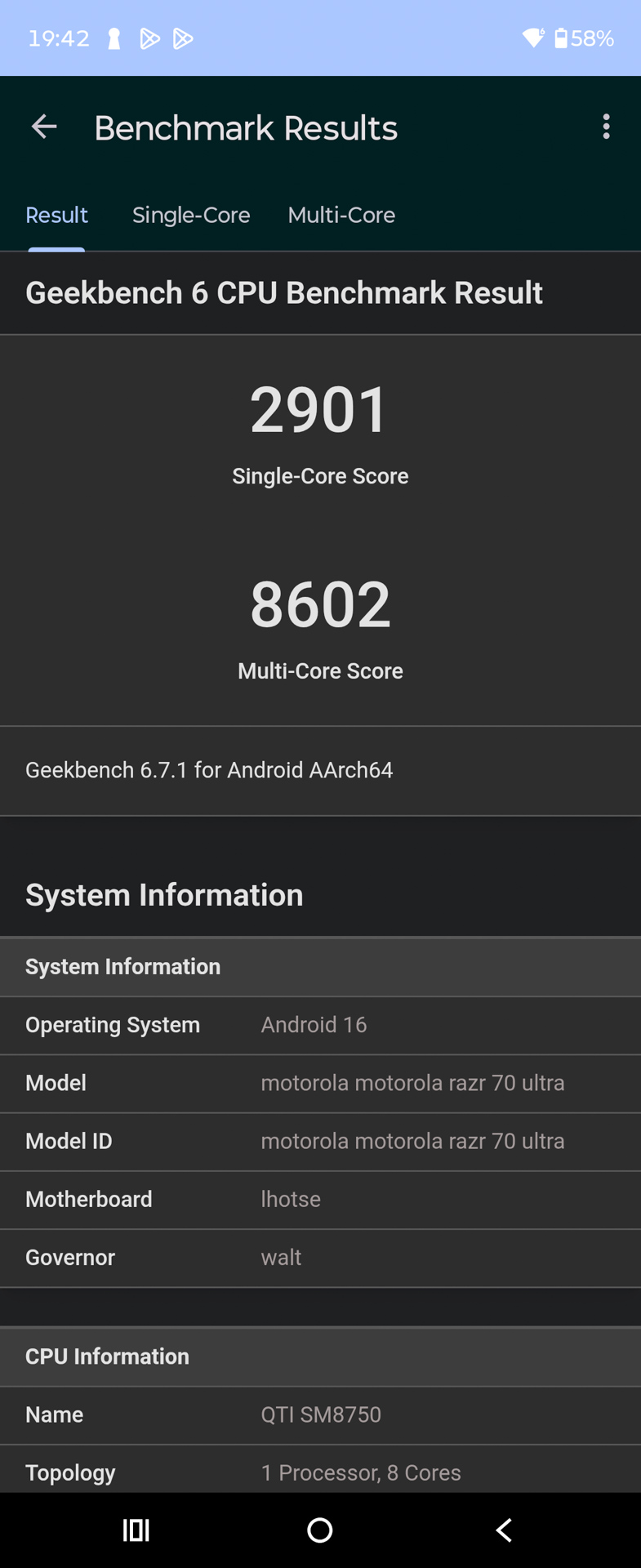
Remember when I said that the Razr 70 Ultra received very few changes in the areas where its predecessor had shortcomings? Performance is the first place where this becomes apparent. On the one hand, the phone is powered by the same Qualcomm Snapdragon 8 Elite SoC, also known as the SM8750.

The new model does, however, feature an updated version of the chip. The upgrade comes without any change in branding, which I am not particularly fond of. The core count remains the same at eight. The high-performance Oryon cluster is still a dual-core design, but its maximum clock speed has been increased to 4.47 GHz – 150 MHz higher than before. Everything else remains unchanged, including the same flagship-class Adreno 830 GPU.

Memory has now been streamlined to a single configuration: 16 GB of LPDDR5X RAM paired with 512 GB of internal storage. The storage subsystem has also received a minor upgrade, moving from UFS 4.0 to UFS 4.1. So, what was the issue I mentioned when discussing the previous generation?
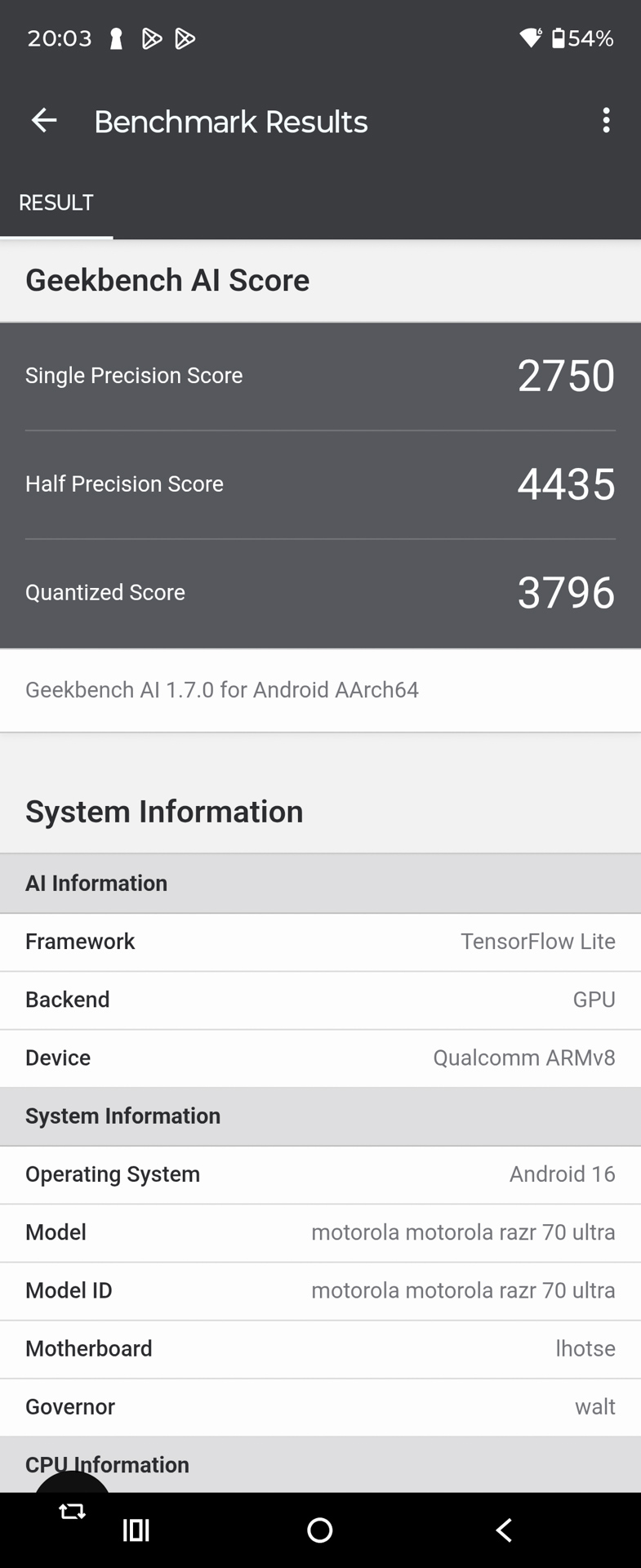
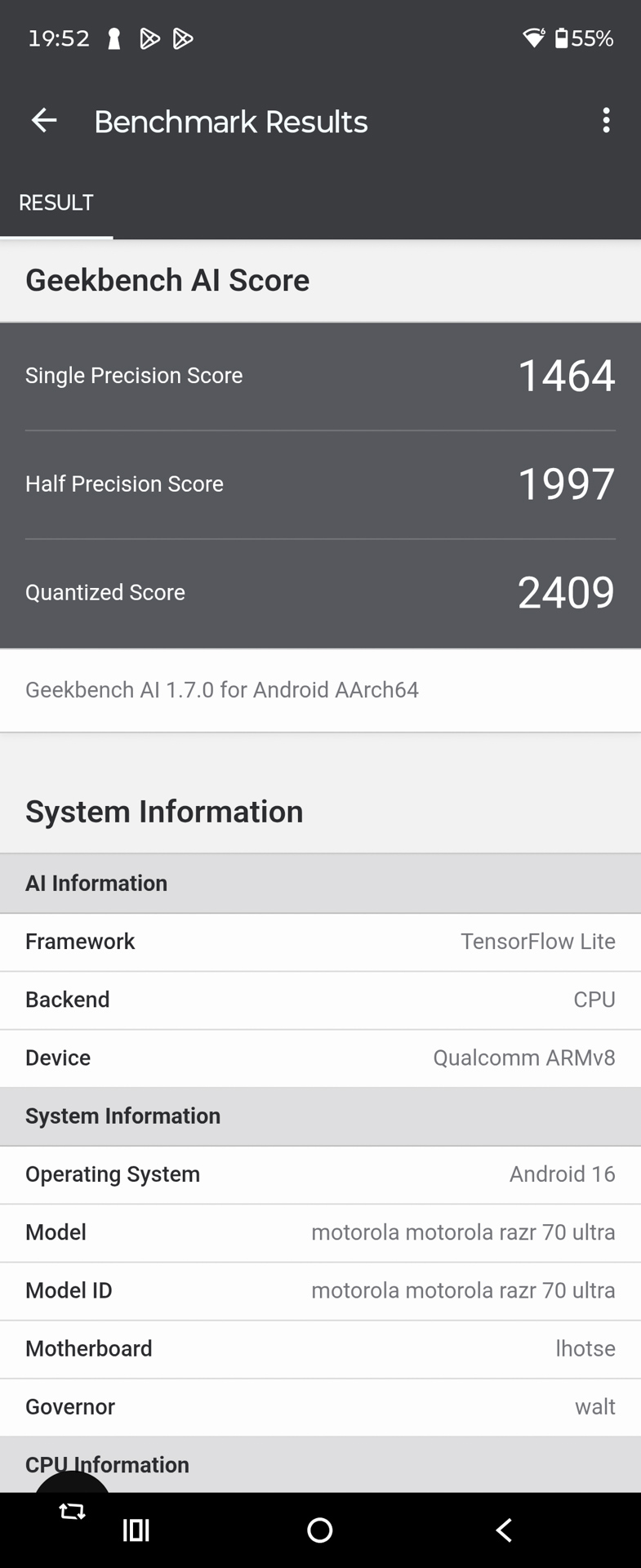
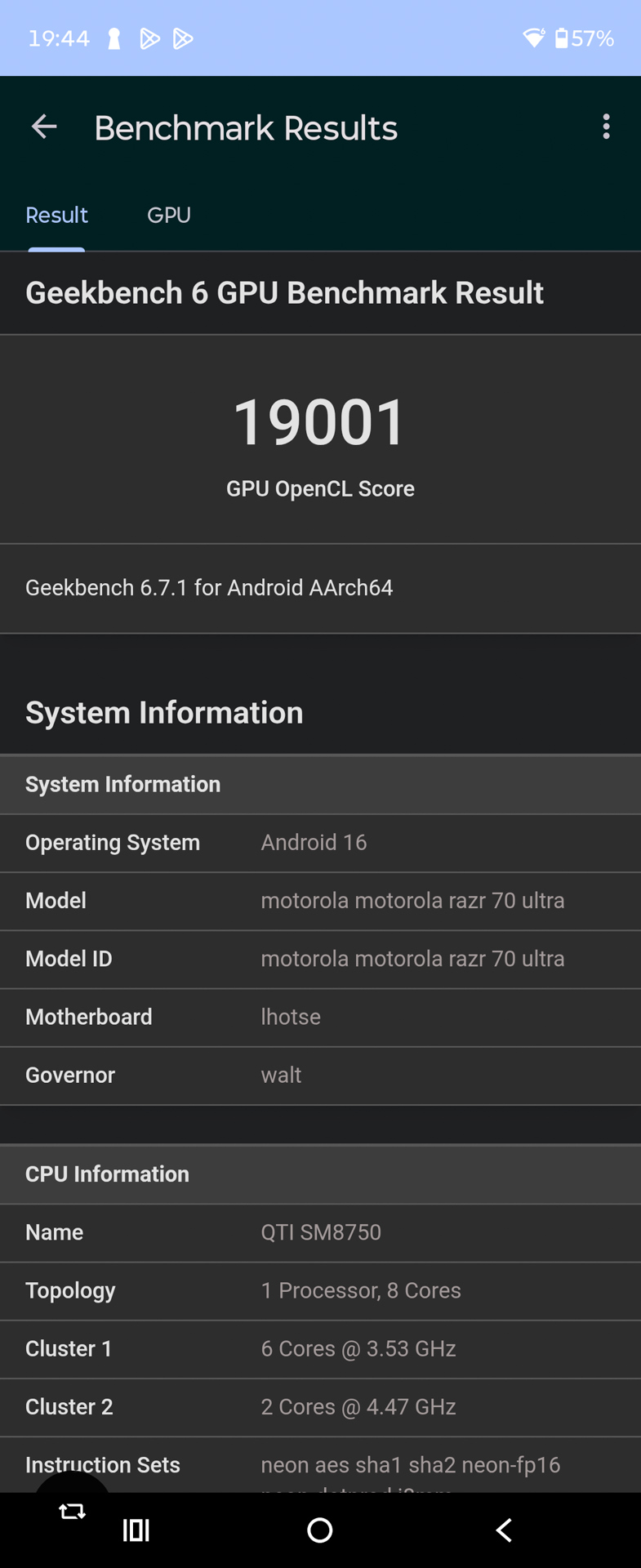
Overheating
For only the second time in my life, I have encountered a smartphone that refuses to complete the 3DMark stress test and instead displays a warning about excessive temperature. The first device to do this was, fittingly, the Razr 60 Ultra.

I should note, however, that in everyday use outside of gaming, the smartphone behaves significantly better in terms of stability. This was not something I expected – especially considering that the processor is actually faster this time around. Thermal saturation still occurs, but it takes considerably longer to reach that point. Based on my impressions, overheating sets in roughly three to four times more slowly than it did on the previous model.
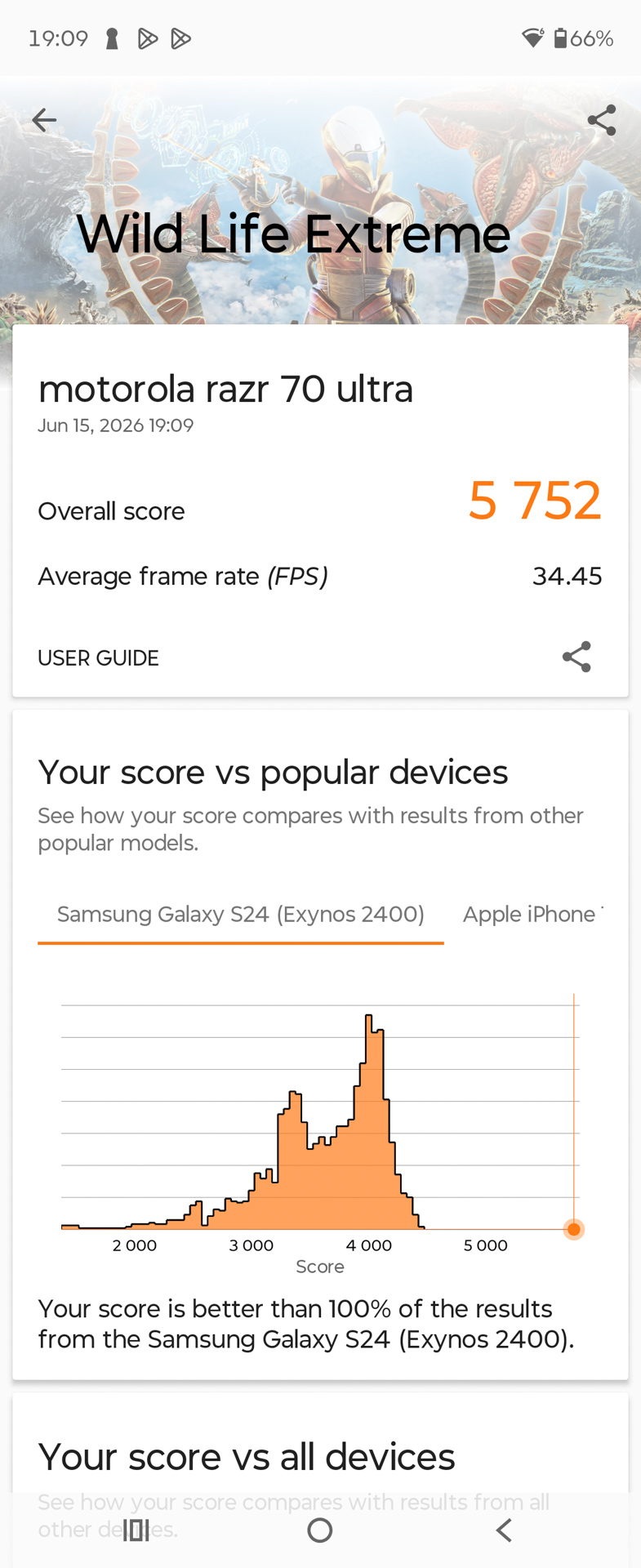
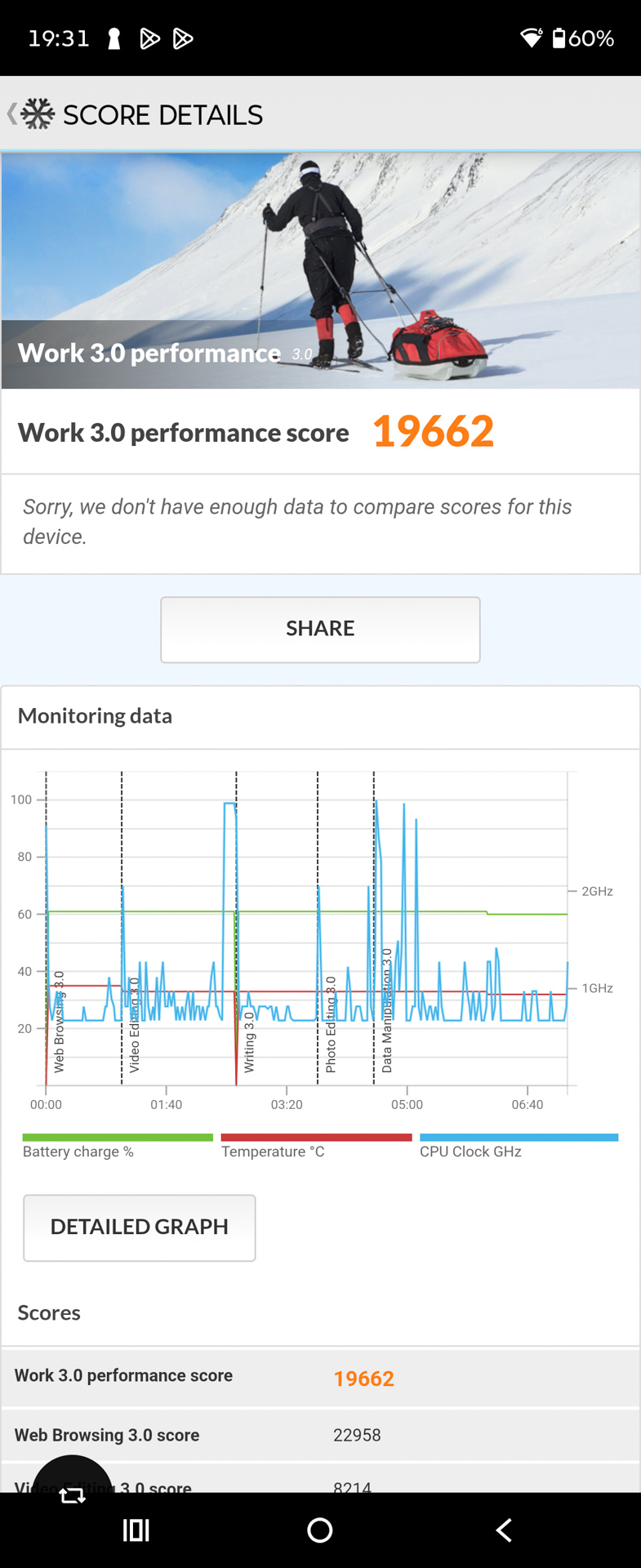
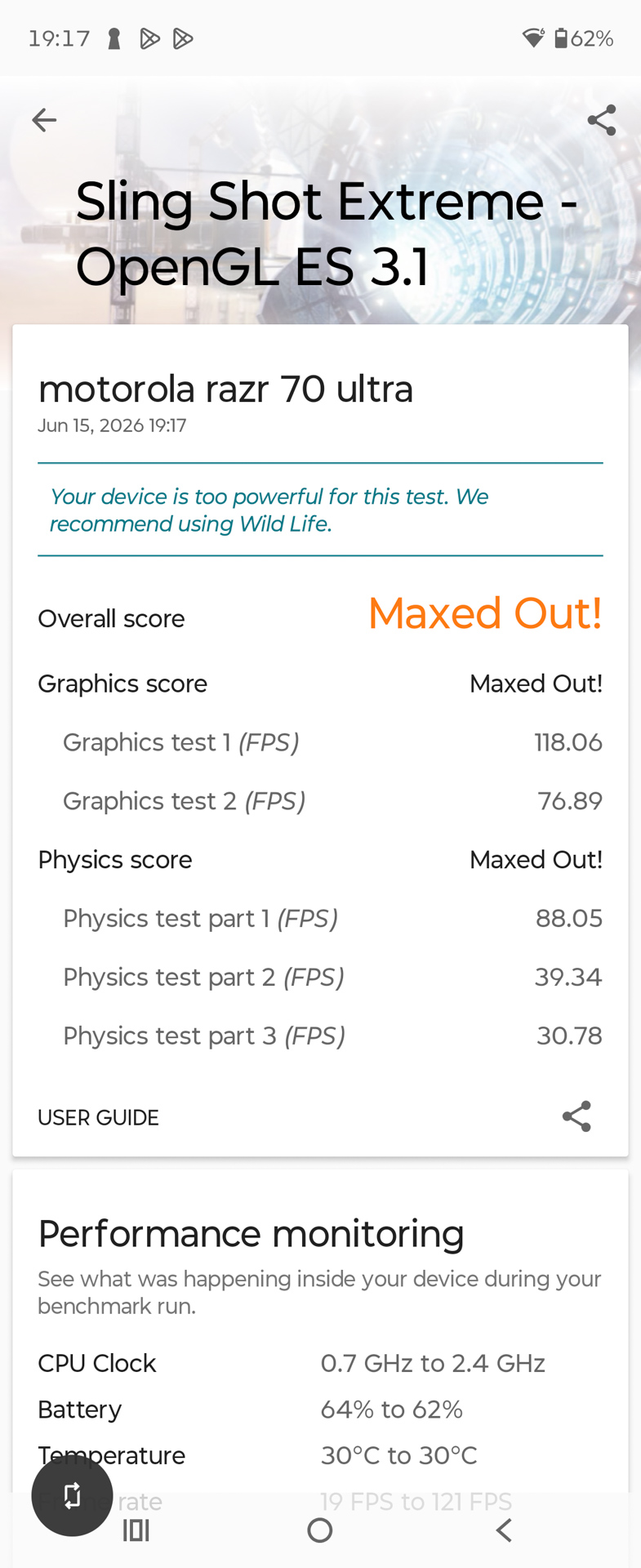
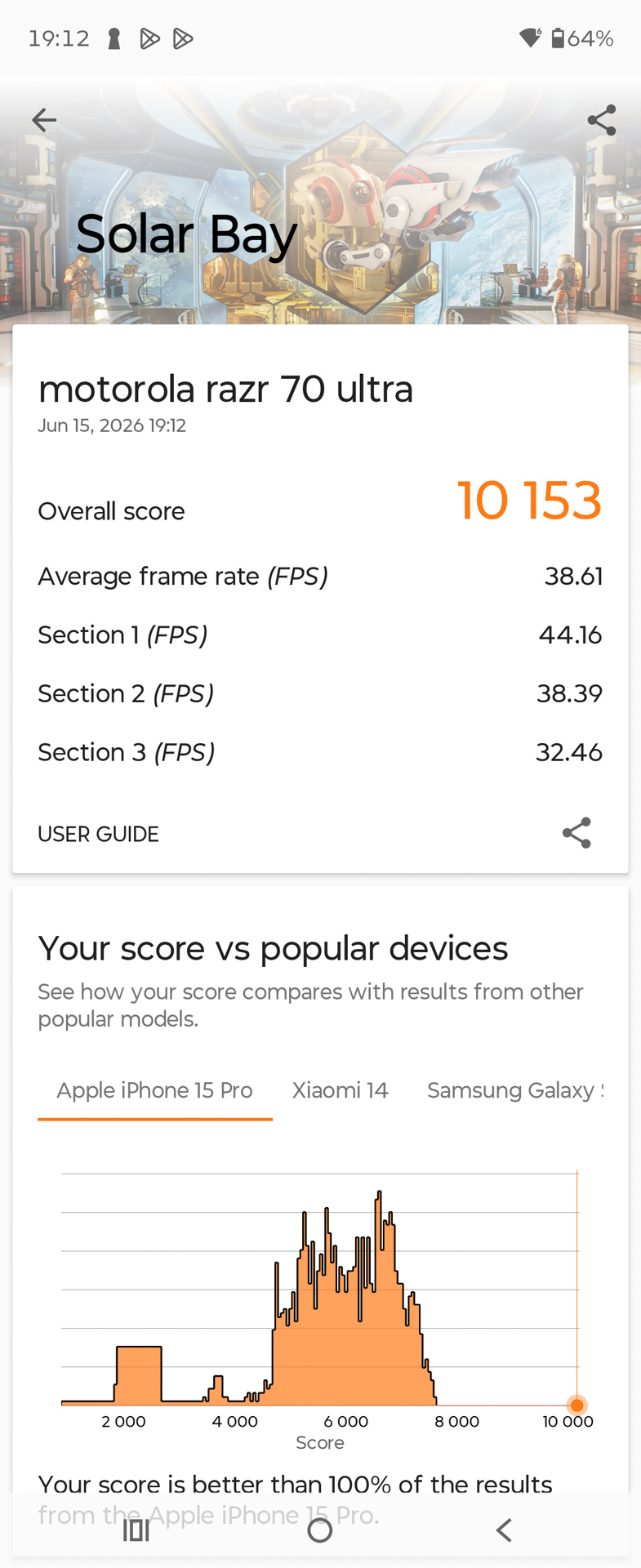
As a result, this behavior effectively removes the Motorola Razr 70 Ultra from the category of gaming-oriented devices, despite the fact that it is often placed there by default simply because it uses a flagship-class SoC. For productivity and everyday work – the very scenarios foldable phones are typically designed around – it has become a substantially better device.
Connectivity and Audio
There are no major changes here. The smartphone supports a single physical SIM card alongside eSIM functionality and offers Wi-Fi 7, Bluetooth 5.4, Ultra Wideband, and 5G connectivity. The lack of Bluetooth 6 support disappointed me before, and it still does now, although it is hardly a critical omission.

There is, of course, no 3.5 mm headphone jack, but the phone does feature stereo speakers. You can listen to a sample of their sound quality in the video review above.
Razr 70 Ultra Cameras
On paper, very little has changed in the camera department. All of the sensors still use 50 MP resolutions. The standout feature of the new model remains its primary camera: an f/1.8 unit with a 1/1.56-inch sensor, featuring 1 μm pixels, or 2 μm effective pixels when using pixel binning. The camera also supports PDAF and optical image stabilization.
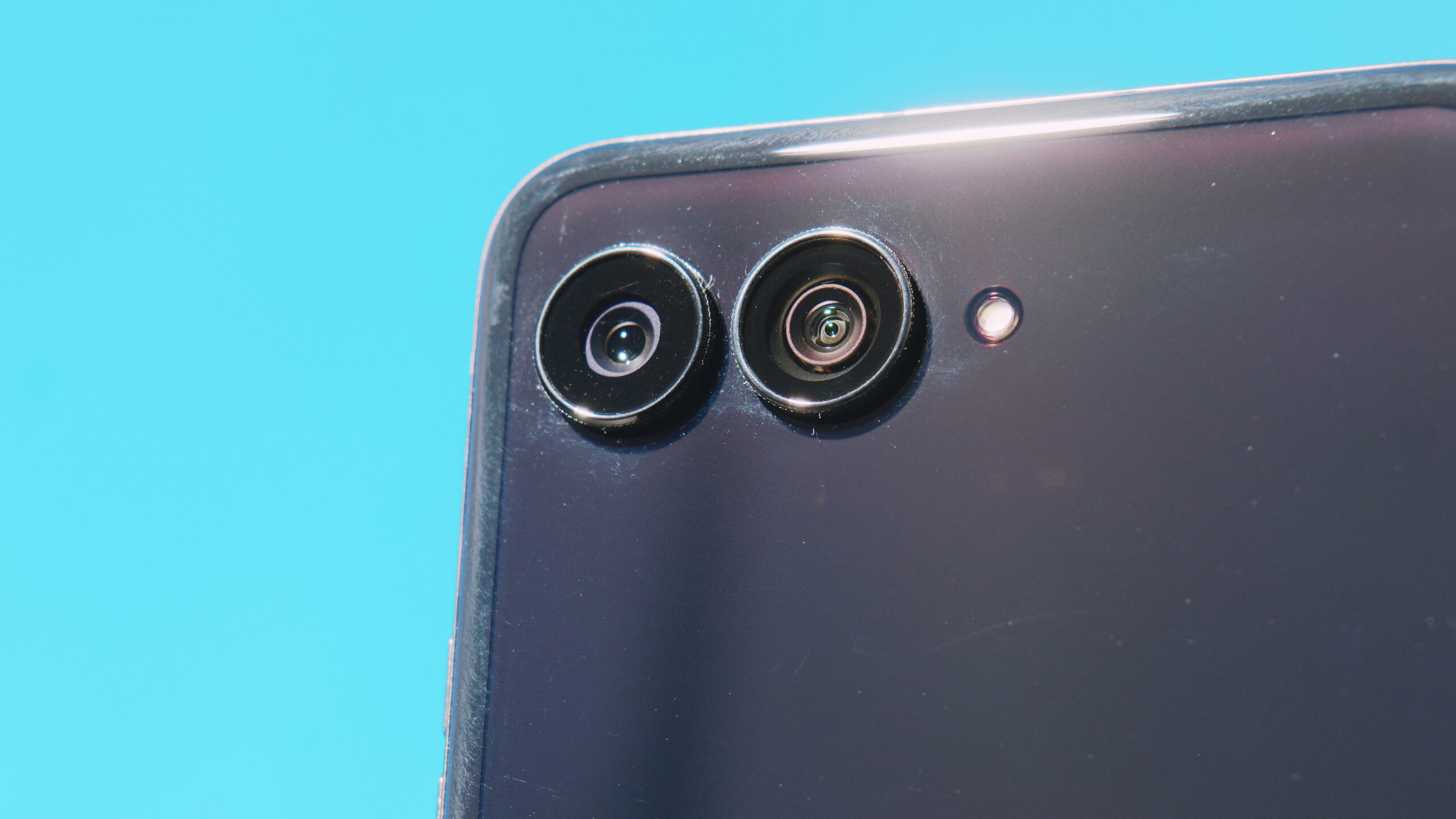
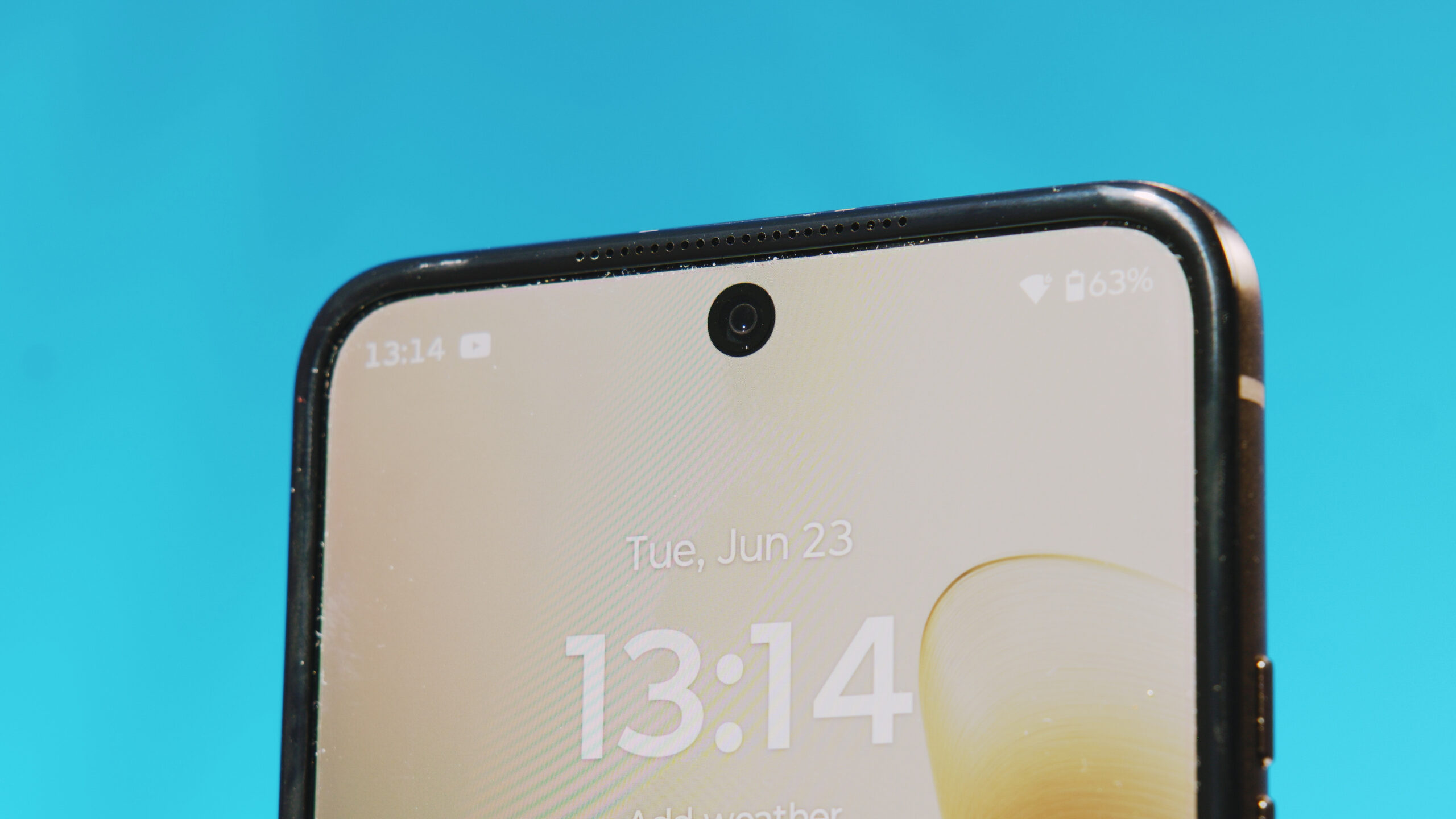
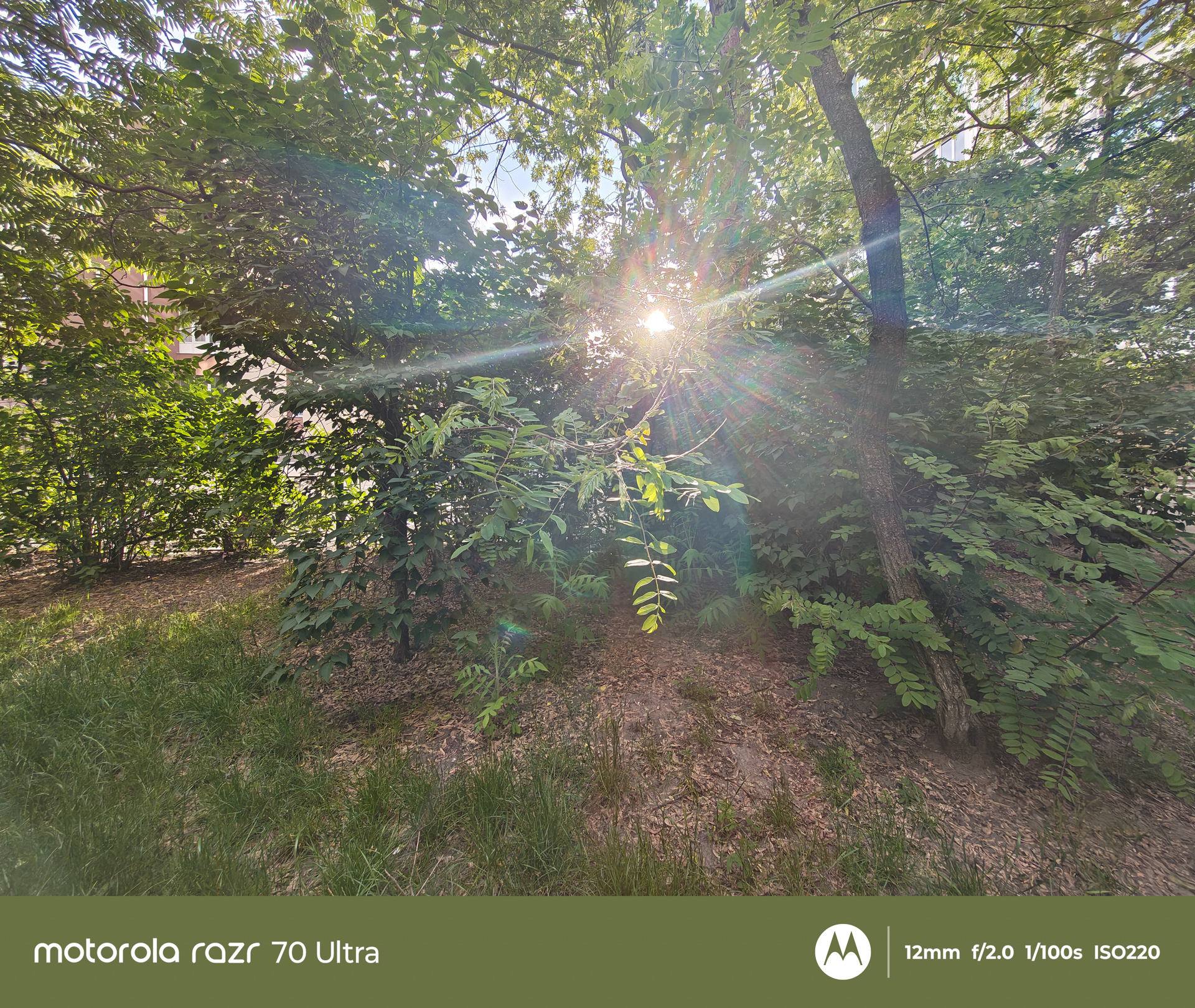
The key highlight of the primary camera, based on the OmniVision OV50T sensor, is its new LOFIC (Lateral Overflow Integration Capacitor) technology. In essence, this technology is designed to preserve up to six times more detail in scenes with challenging contrast. Examples include shooting under harsh sunlight or in environments with bright artificial lighting, such as street lamps at night.
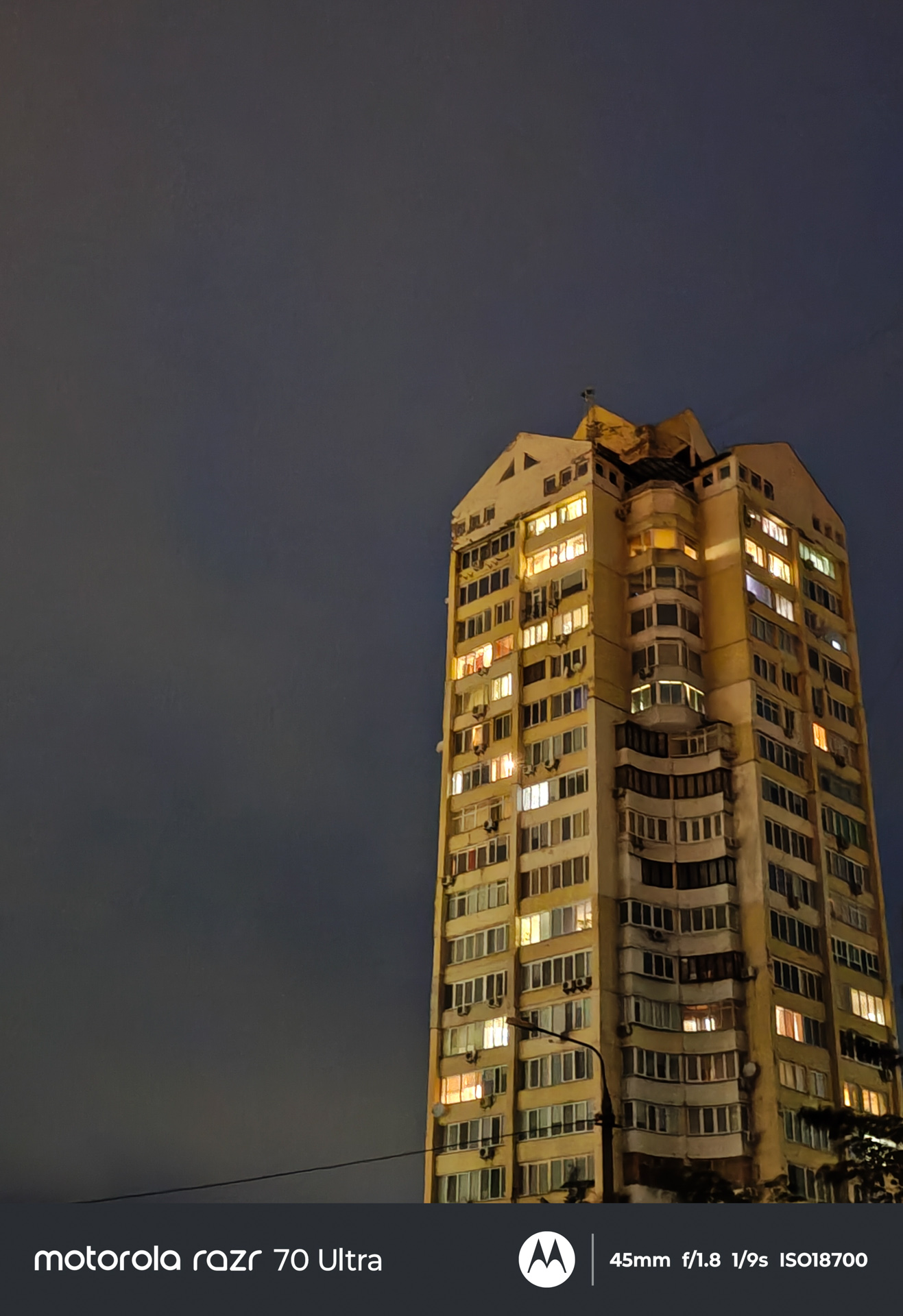

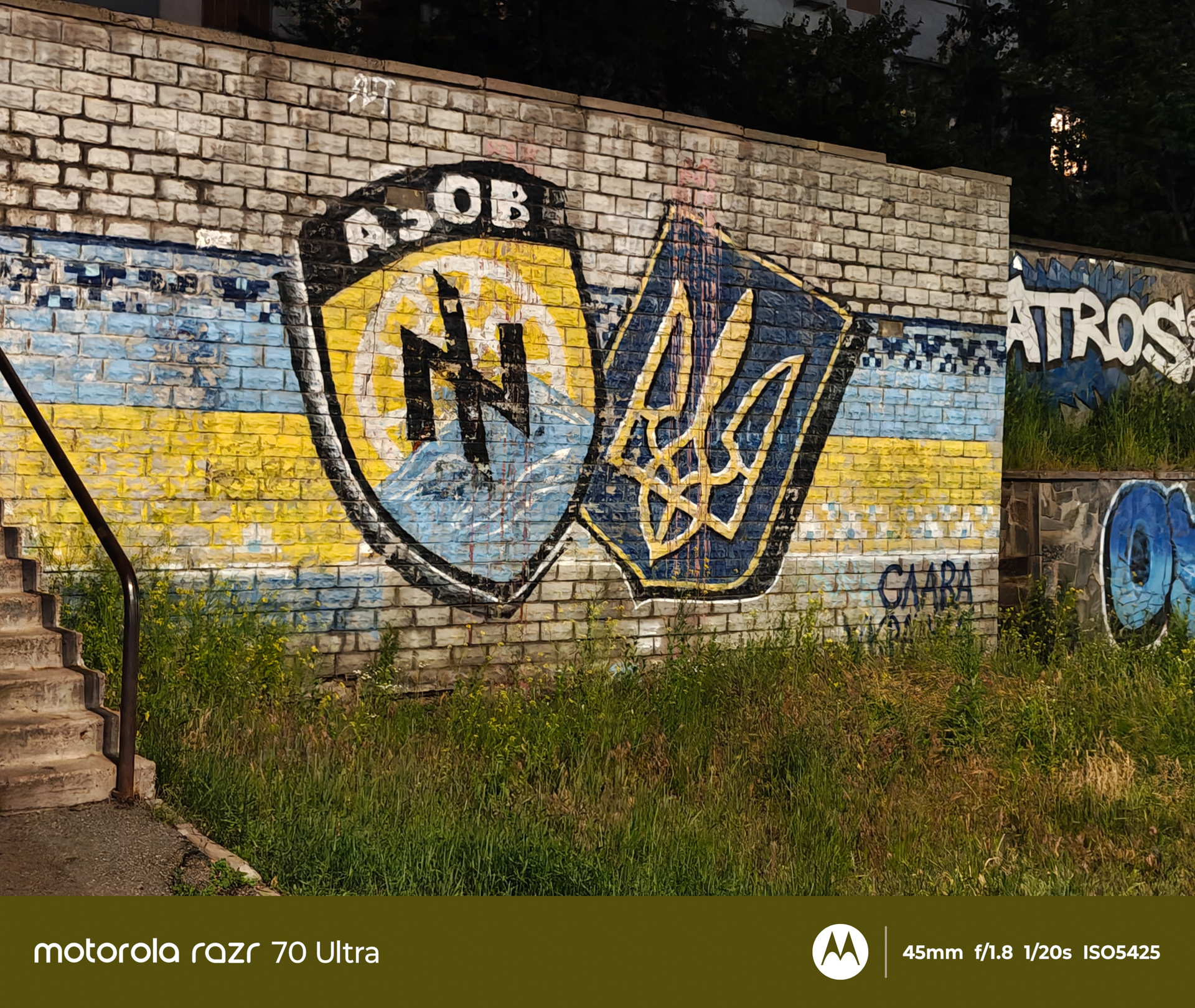

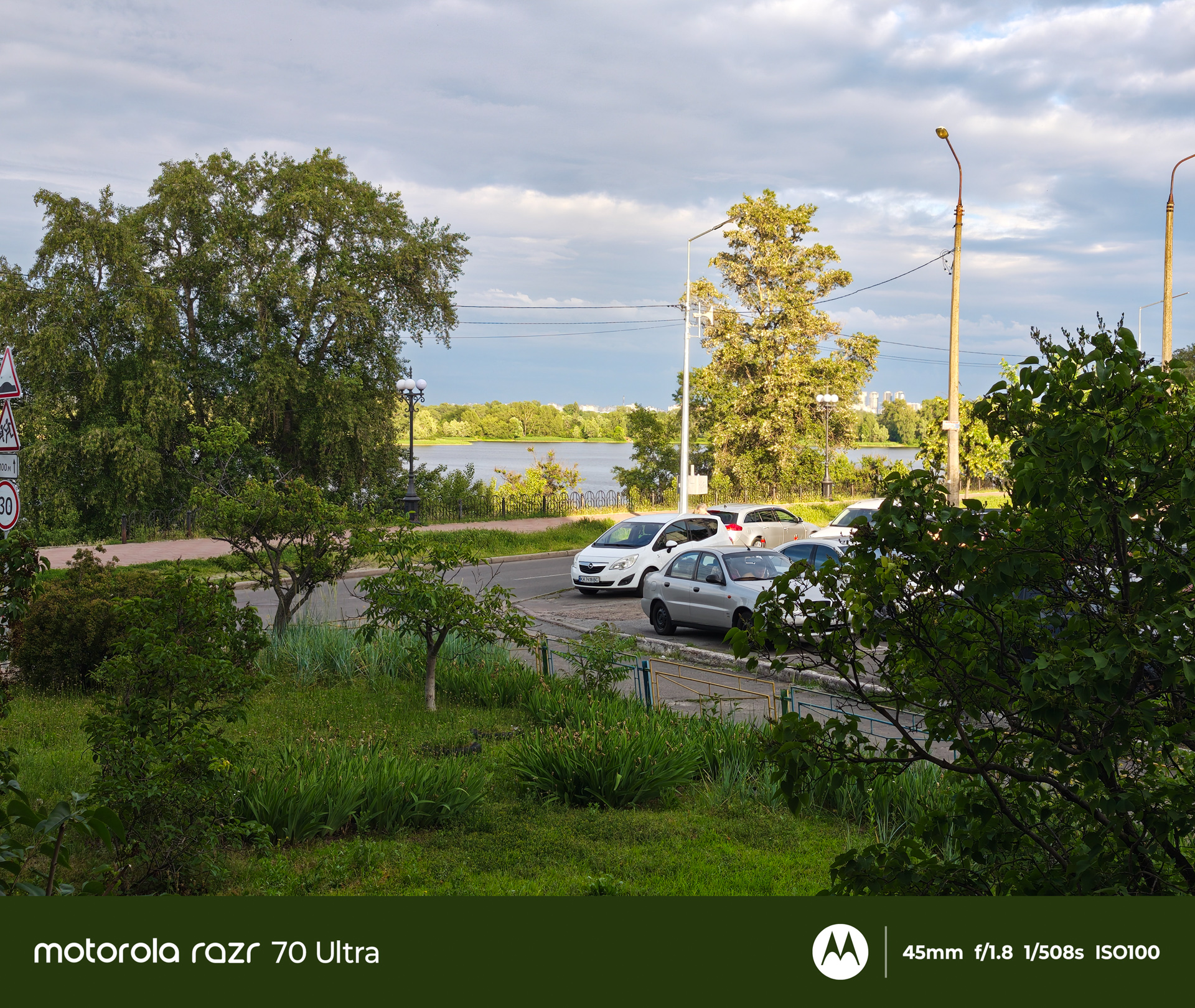
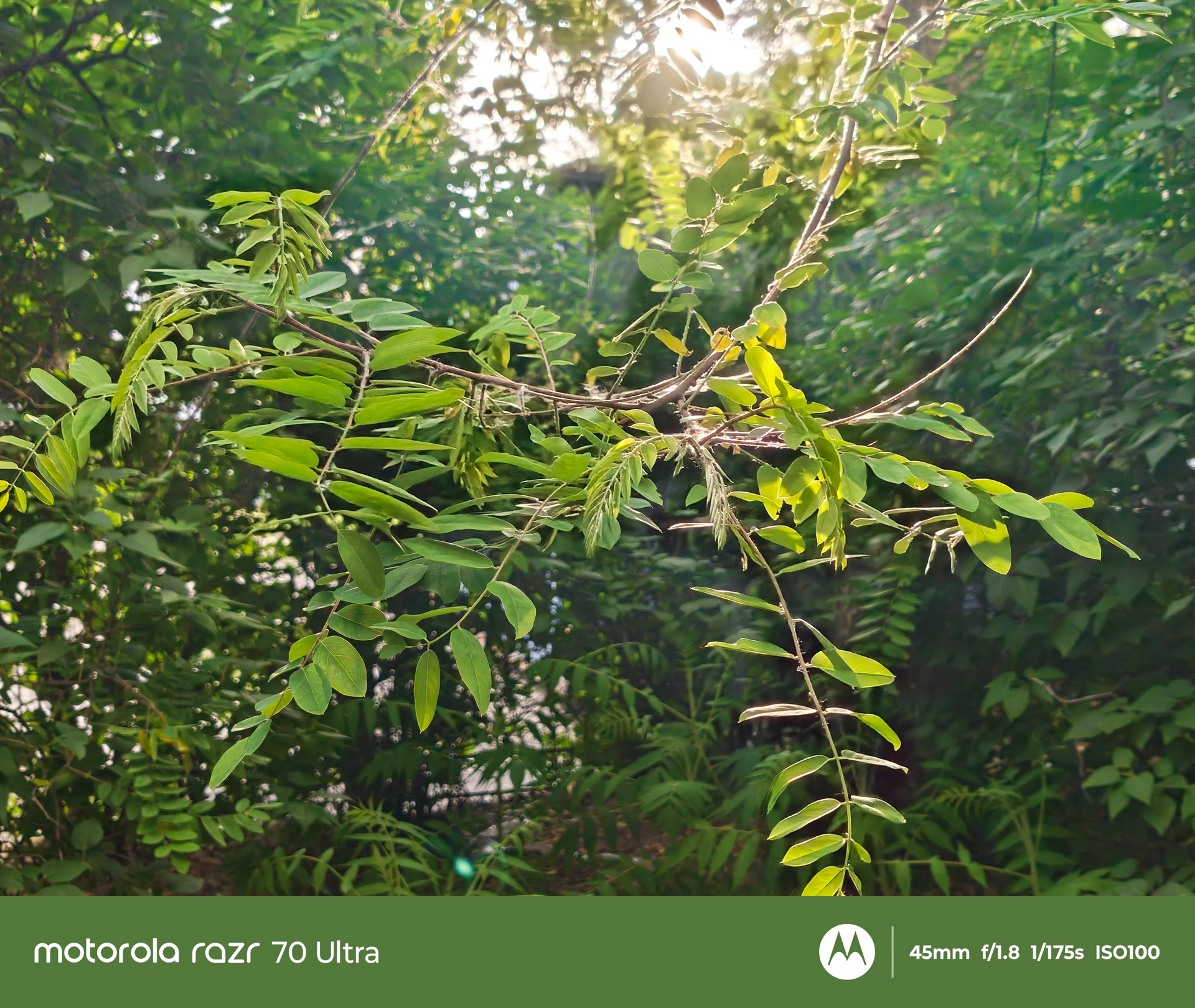
This technology does not improve overall image quality in low-light conditions, for example at night. However, under harsh, direct, and intense lighting, it significantly reduces the likelihood of blown highlights and lost detail. During the summer months, in particular, that can be a genuinely useful advantage. The secondary rear camera is a 50 MP ultra-wide module with an f/2.0 aperture, a 122° field of view, a 1/2.93-inch sensor, and 1.2 μm pixels. The front-facing camera also uses a 50 MP sensor paired with an f/2.0 aperture, an 89.3° field of view, and 1.28 μm pixels.

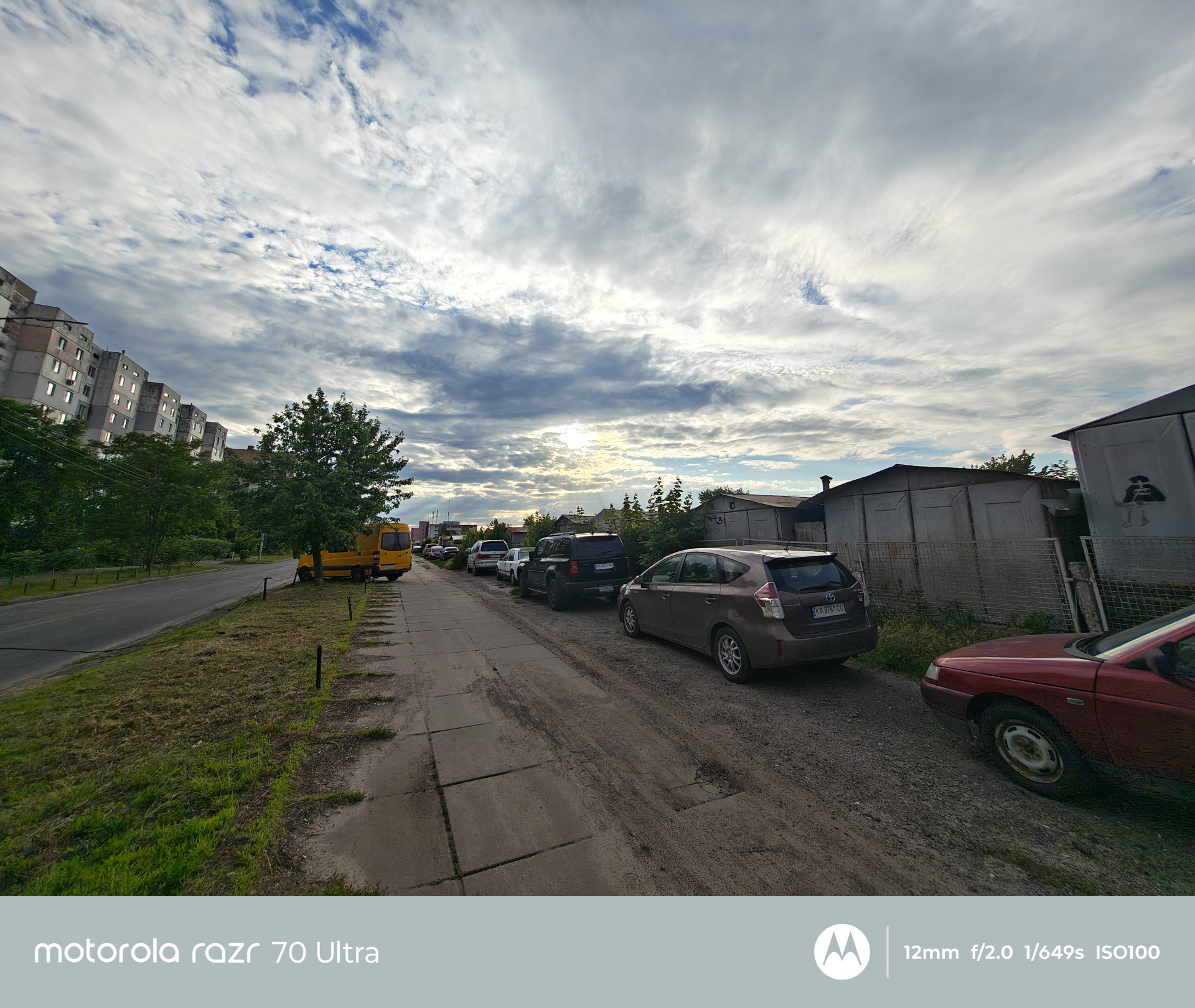
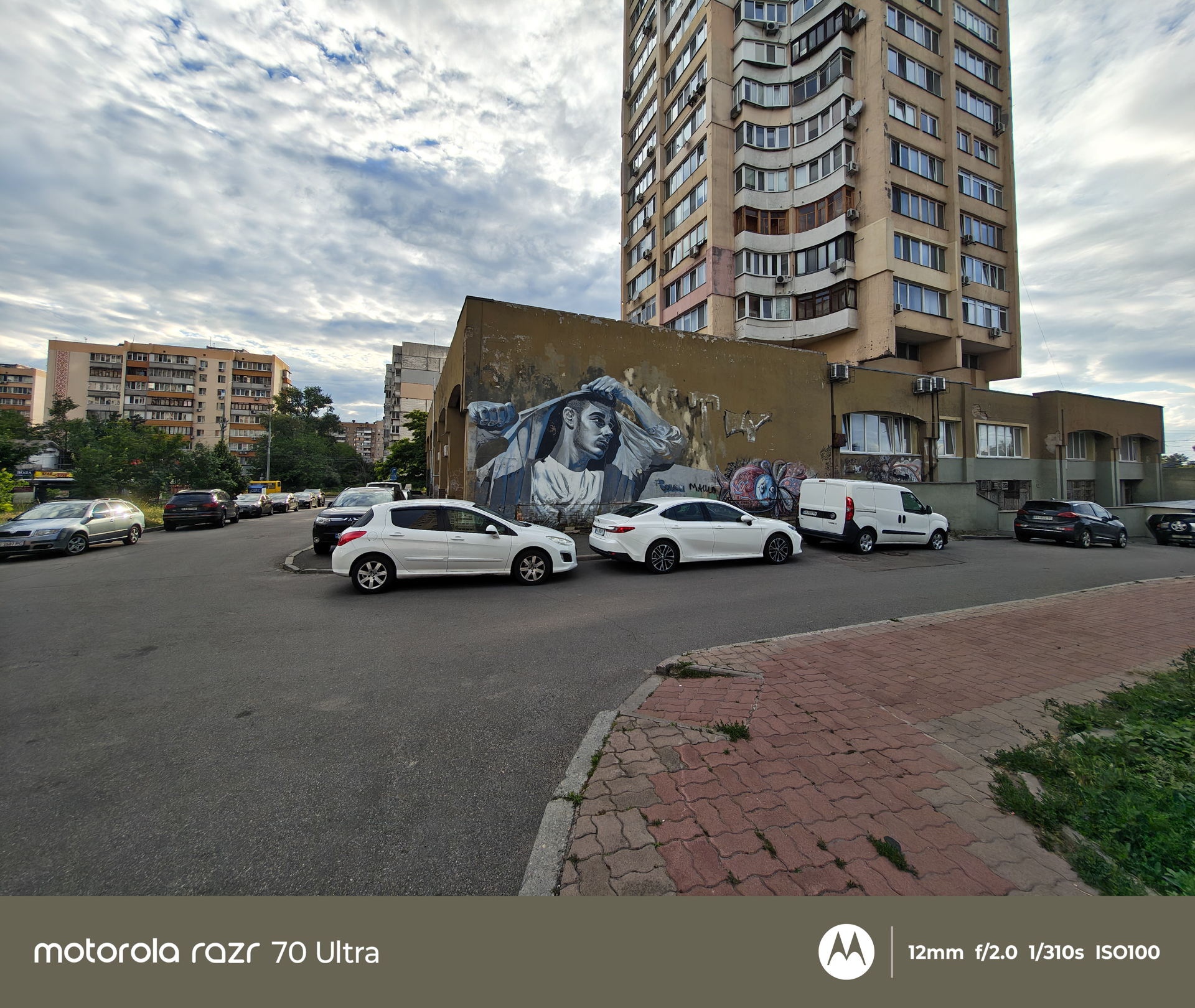


The video capabilities are largely centered around the primary camera, as it supports recording at up to 8K30, 4K120, and Full HD at 240 fps. The ultra-wide camera tops out at 4K60, while the front-facing camera also supports recording at up to 4K60. The latter was particularly surprising to me given the Motorola Razr Fold, where the selfie camera is limited to Full HD at 60 fps and nothing beyond that.
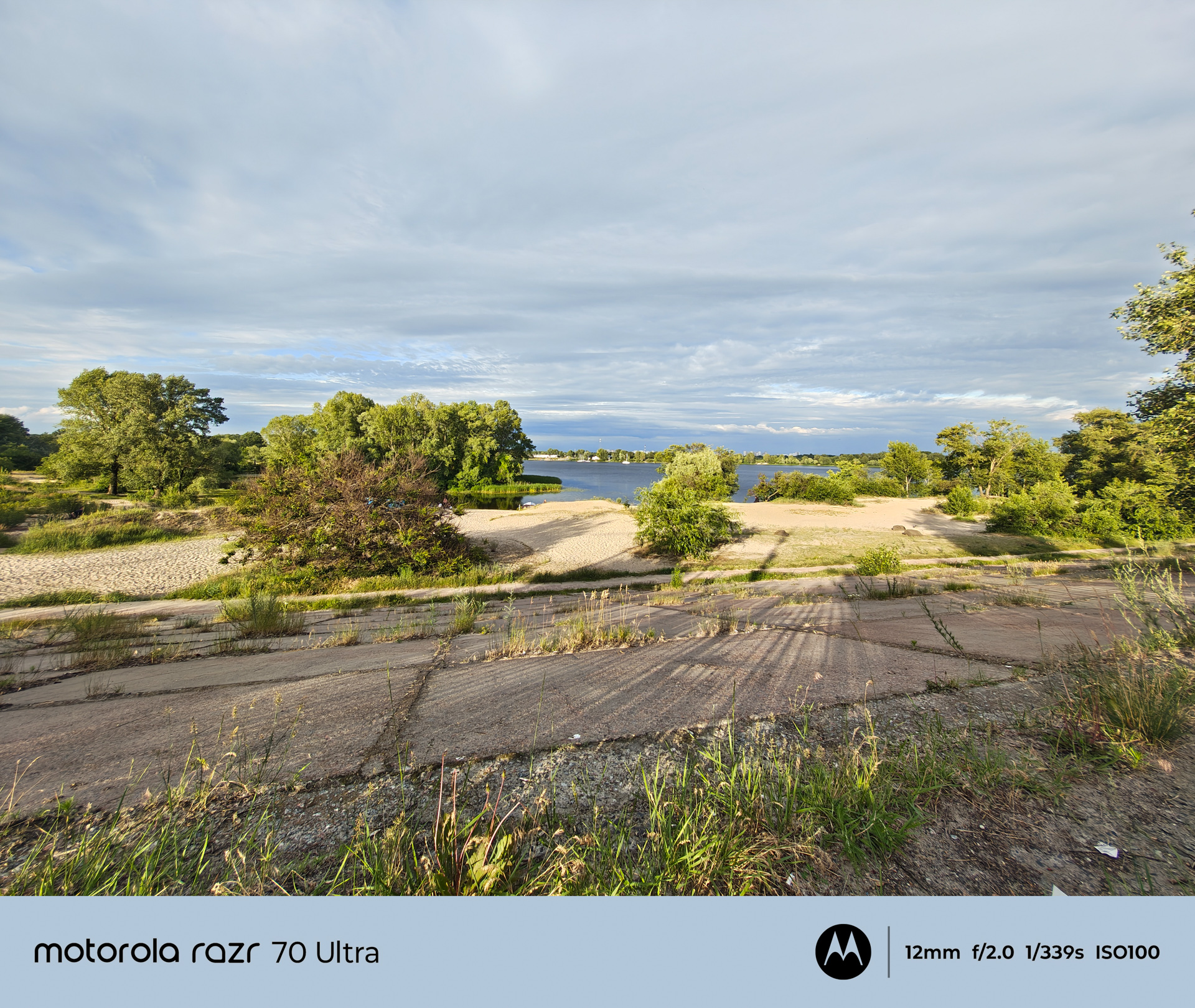
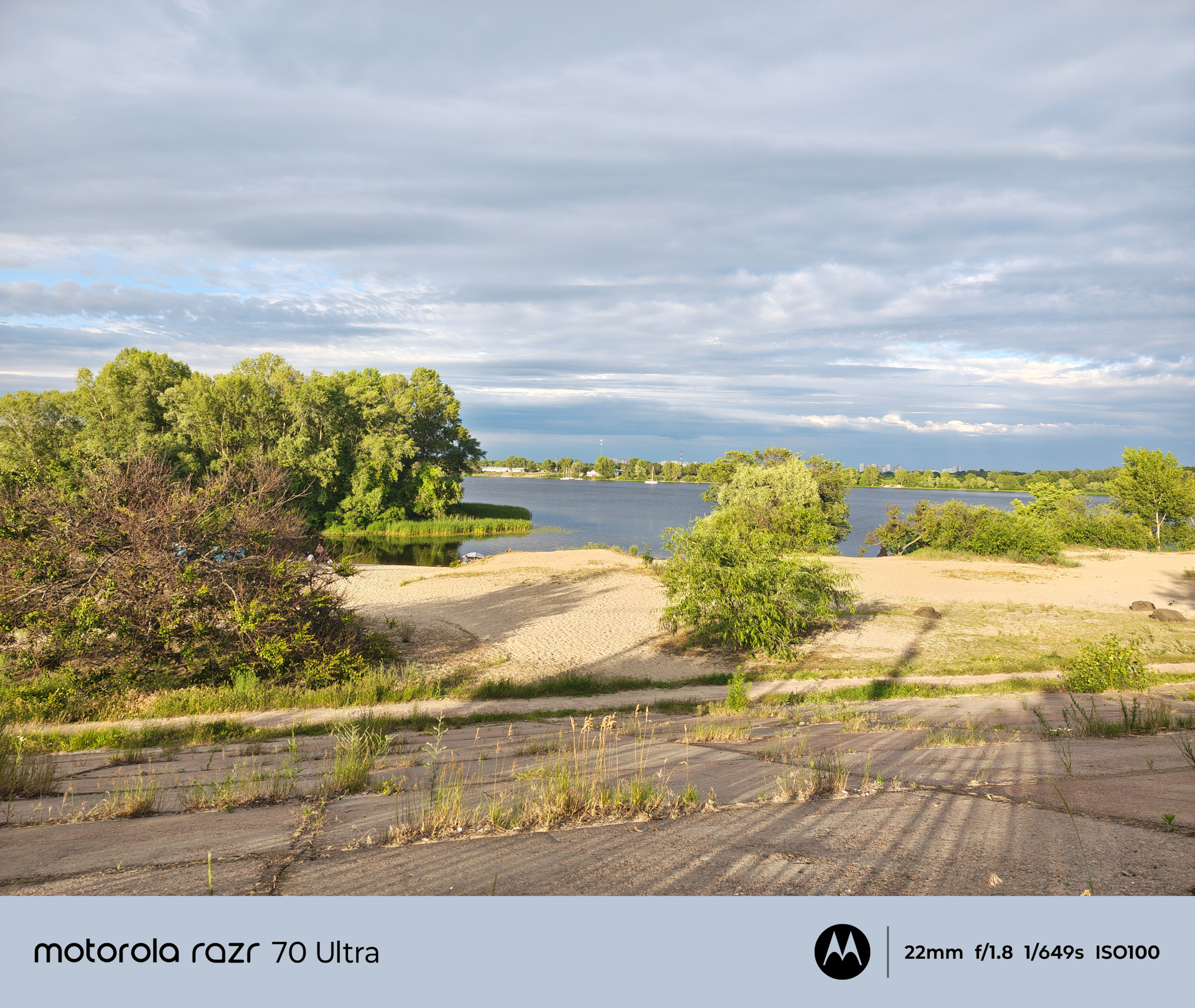
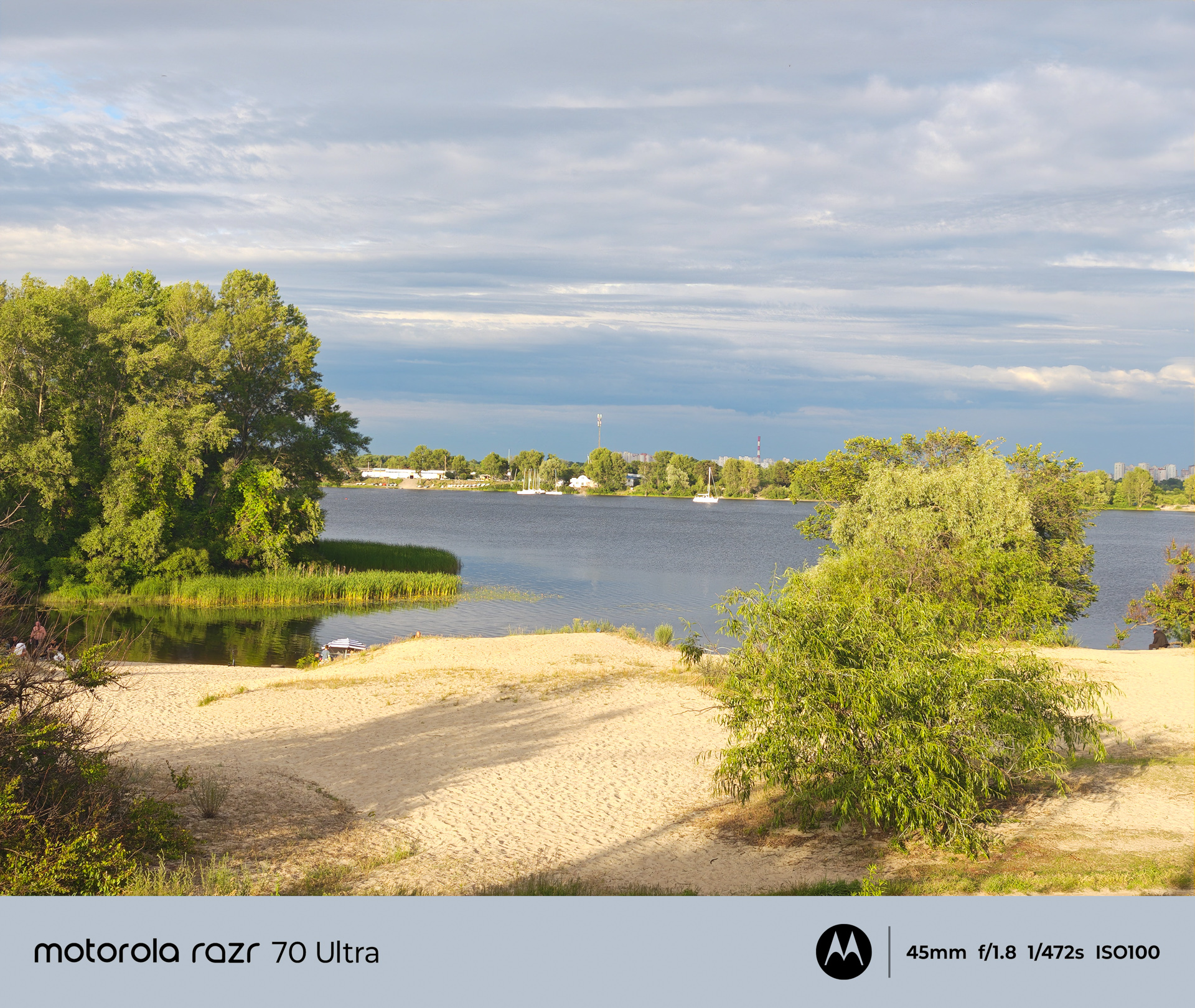
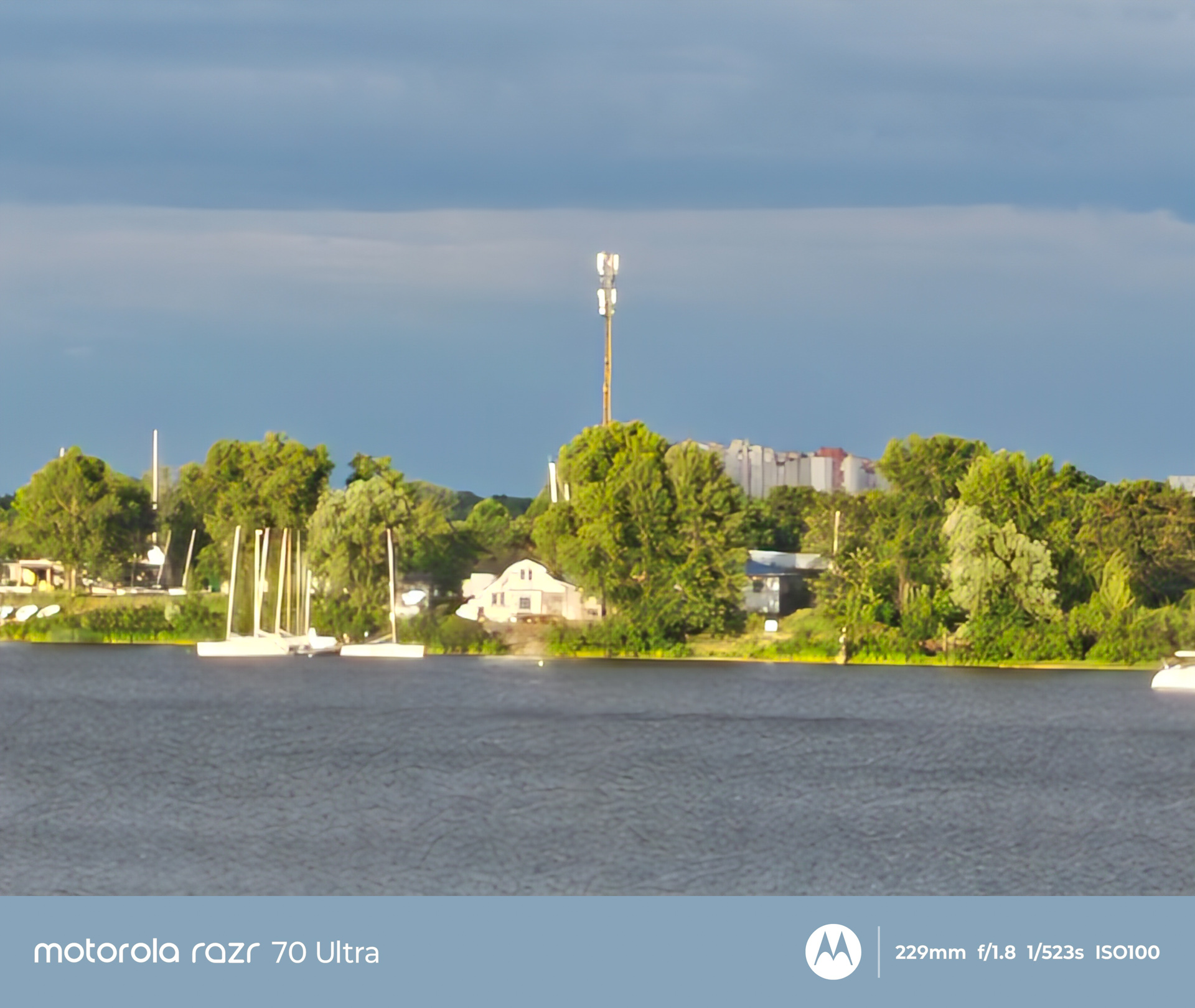
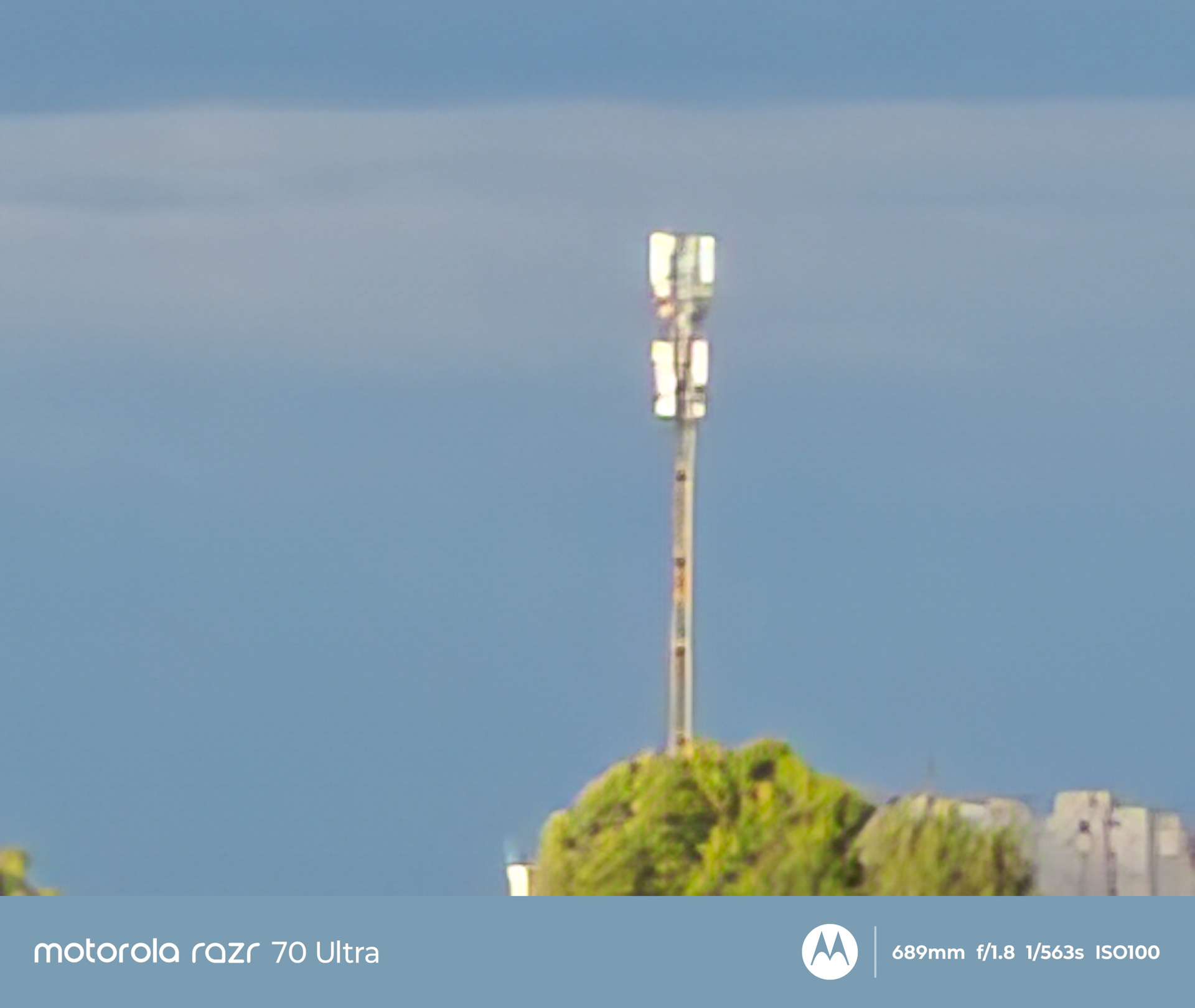
Overall, my main complaints about the Motorola Razr 60 Ultra have not been addressed in the new Motorola Razr 70 Ultra. There is still no dedicated professional video mode, the Pro photo mode still does not allow AI-based image processing to be enabled, and, for some reason, the exposure lock in automatic mode also locks focus. None of these issues are deal-breakers, but they remain noticeable shortcomings in what is otherwise a highly capable camera system.

Once again, it feels as though Motorola is primarily targeting casual users and semi-enthusiasts, improving almost every aspect of the camera experience except the professional video mode – which is still absent. That said, when the LOFIC sensor gets the opportunity to demonstrate its strengths and recover challenging contrast, it does so brilliantly.
PHOTOS AND VIDEOS IN FULL RESOLUTION – HERE
Software
The Motorola Razr 70 Ultra runs Hello UI based on Android 16. Compared to my experience with the Edge 50 Ultra, I noticed very few direct changes. I say “direct” because the Razr 70 Ultra is, of course, a foldable device. As a result, it includes features tailored specifically to this form factor. One example is the camcorder mode, where the viewfinder occupies one half of the display while the controls are placed on the other.

What else is included? The phone retains the full suite of security features inherited from Lenovo, including additional Wi-Fi protection and Motorola’s enhanced password entry system. I am not particularly fond of the latter, but some users may appreciate it. You also get the complete set of classic Motorola gesture controls, such as the chopping motion to activate the flashlight or a quick wrist twist to launch the camera, among others.
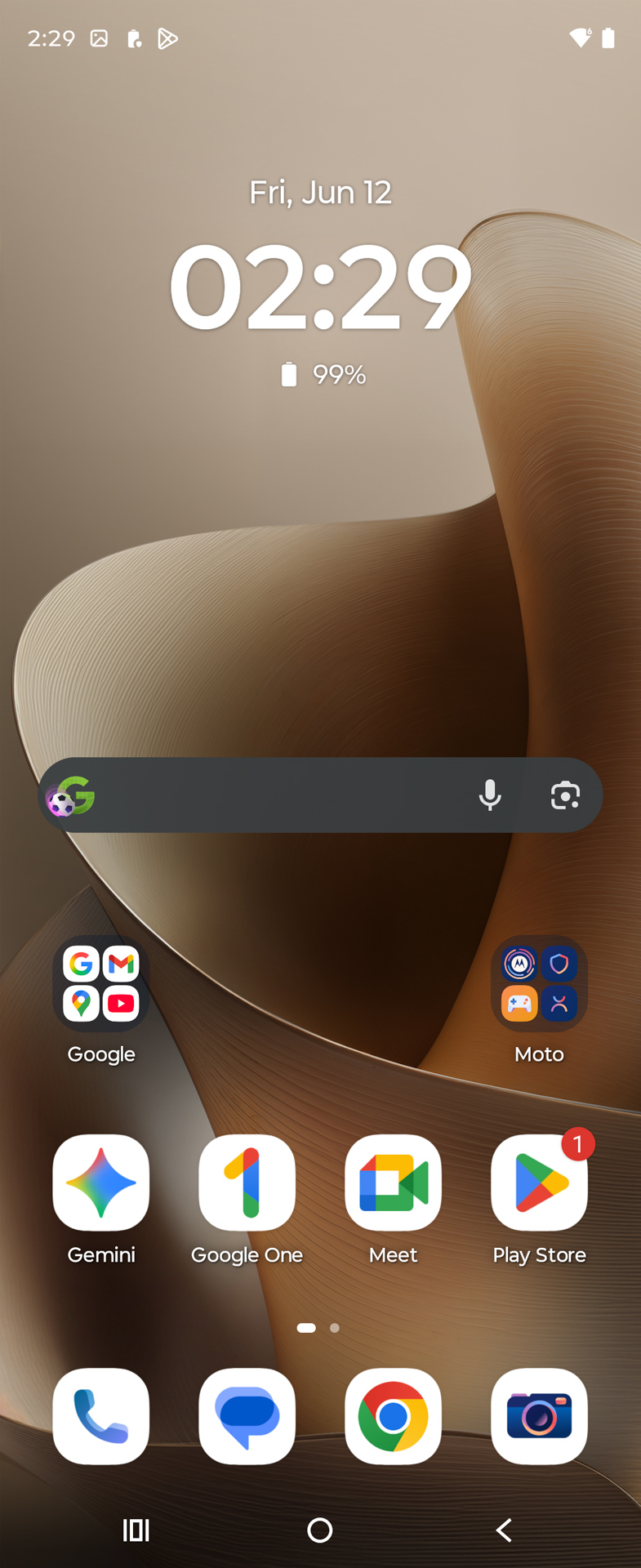
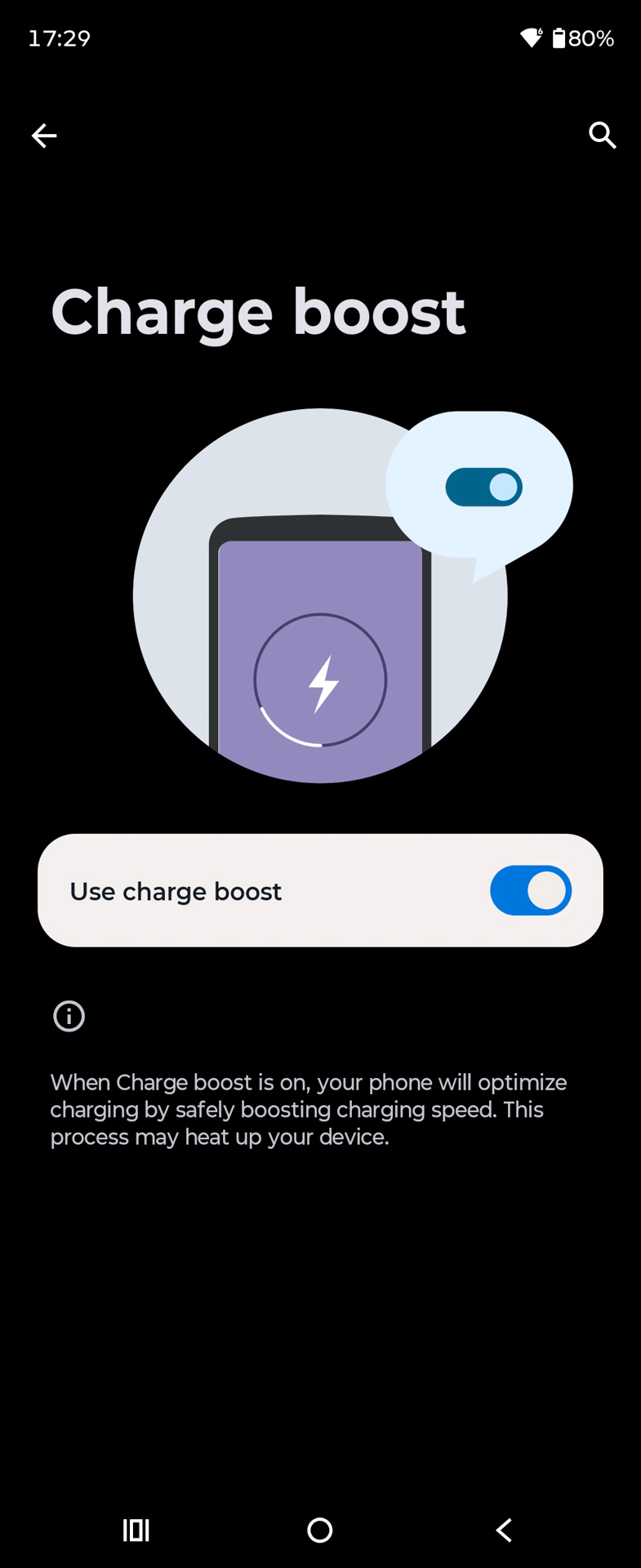
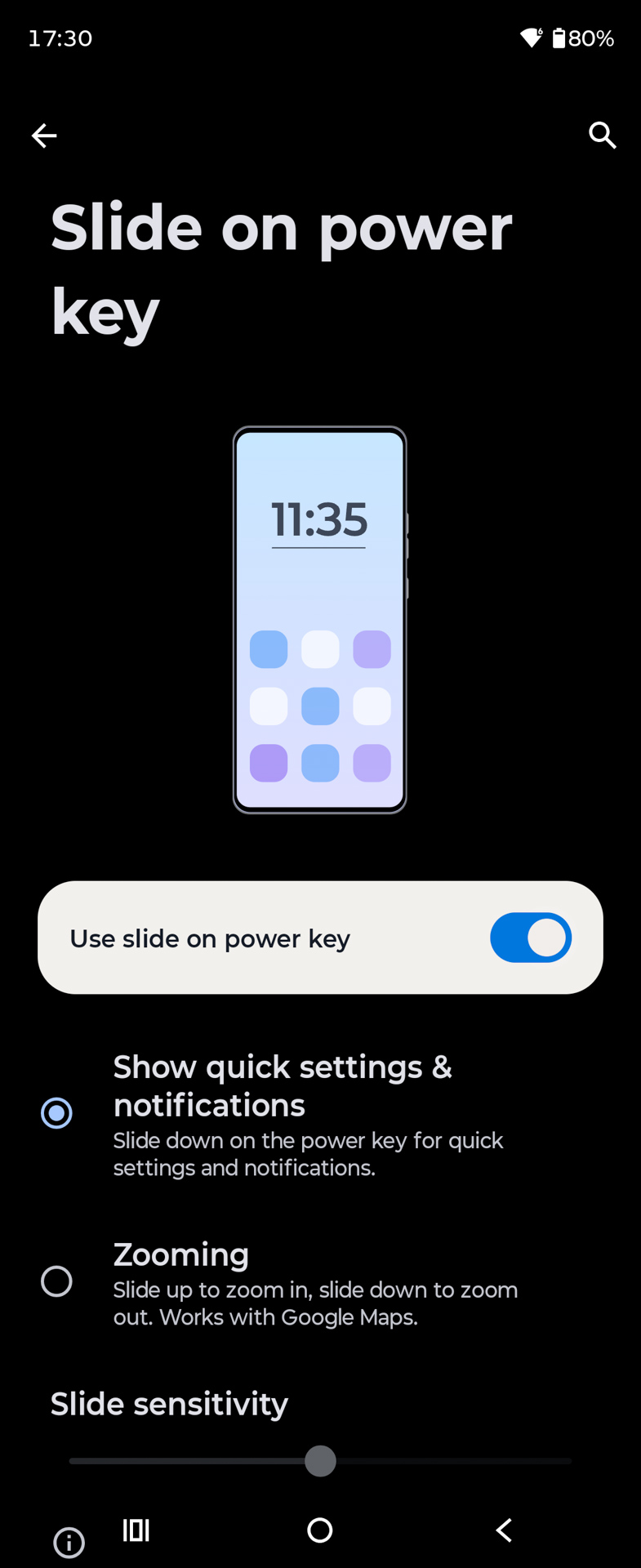
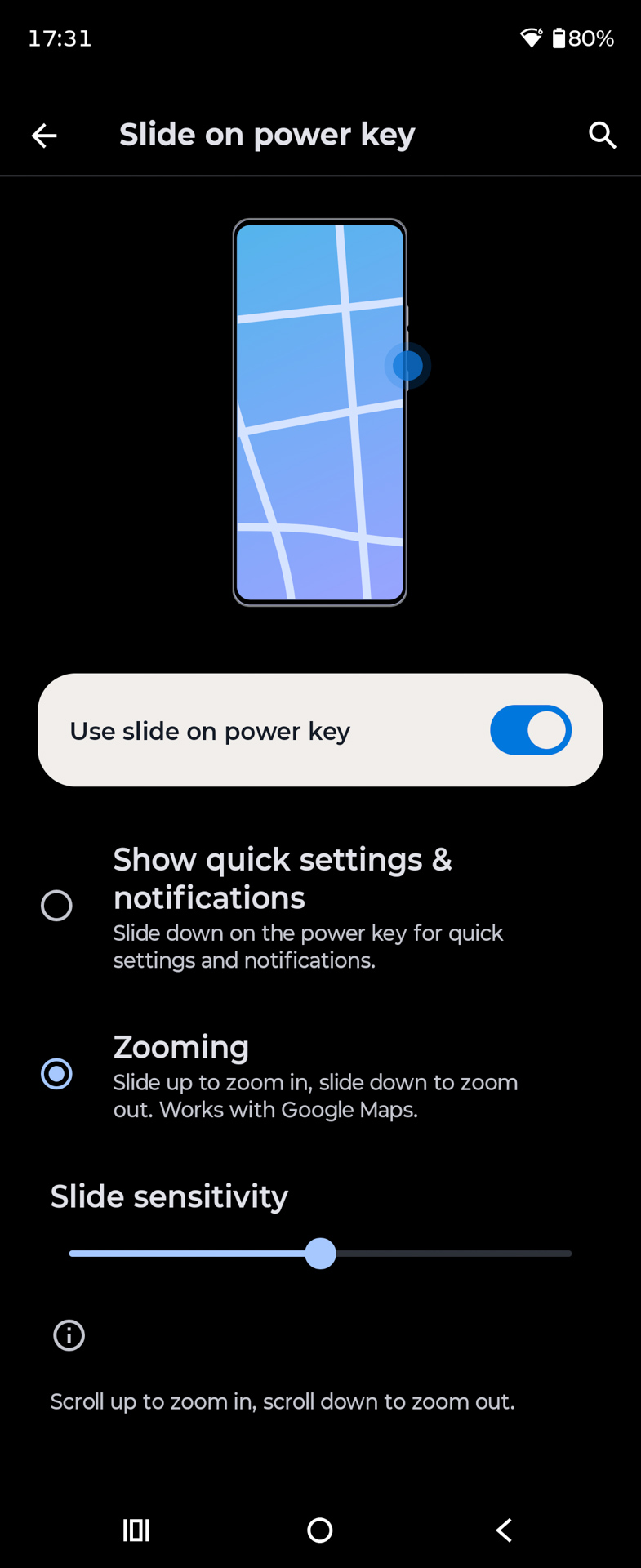
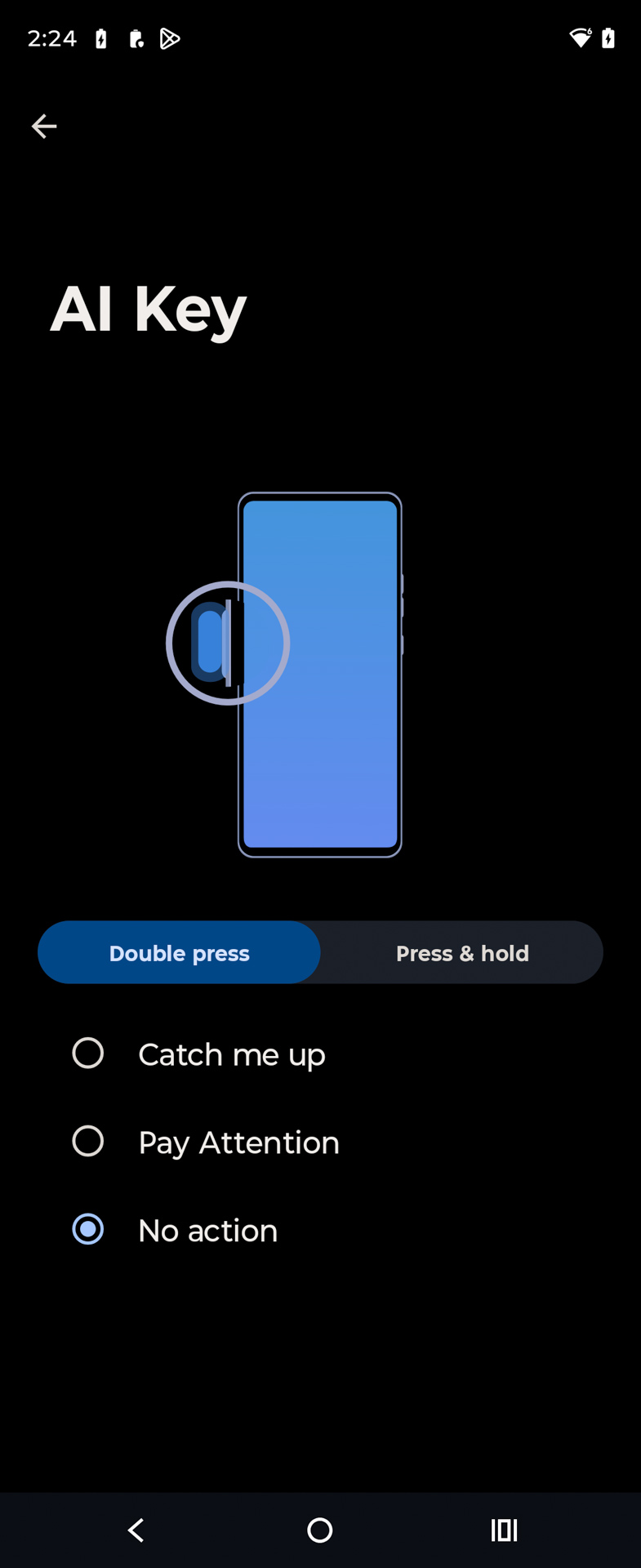
It is also worth noting that Hello UI has long since moved away from the idea of offering a “pure” Android experience without additional applications. Can these additions be described as bloatware? I do not think so. The number of Motorola’s own apps significantly outweighs the amount of pre-installed games and third-party software.
In terms of functionality, Hello UI was already impressively feature-rich even on Android 15. There were a few areas where I felt certain features were missing, but those were very much exceptions rather than the rule. Even when compared to HyperOS, the overall software experience remains highly competitive and thoroughly satisfying.
Razr 70 Ultra Battery Life
Do not expect any radical changes in battery endurance. Yes, the Motorola Razr 70 Ultra features a larger battery than its predecessor, but the increase is only 300 mAh, bringing the total capacity to 5,000 mAh. That is not enough to guarantee any dramatic improvements in real-world usage, although you can expect roughly 5–10% longer battery life compared to the Razr 60 Ultra.
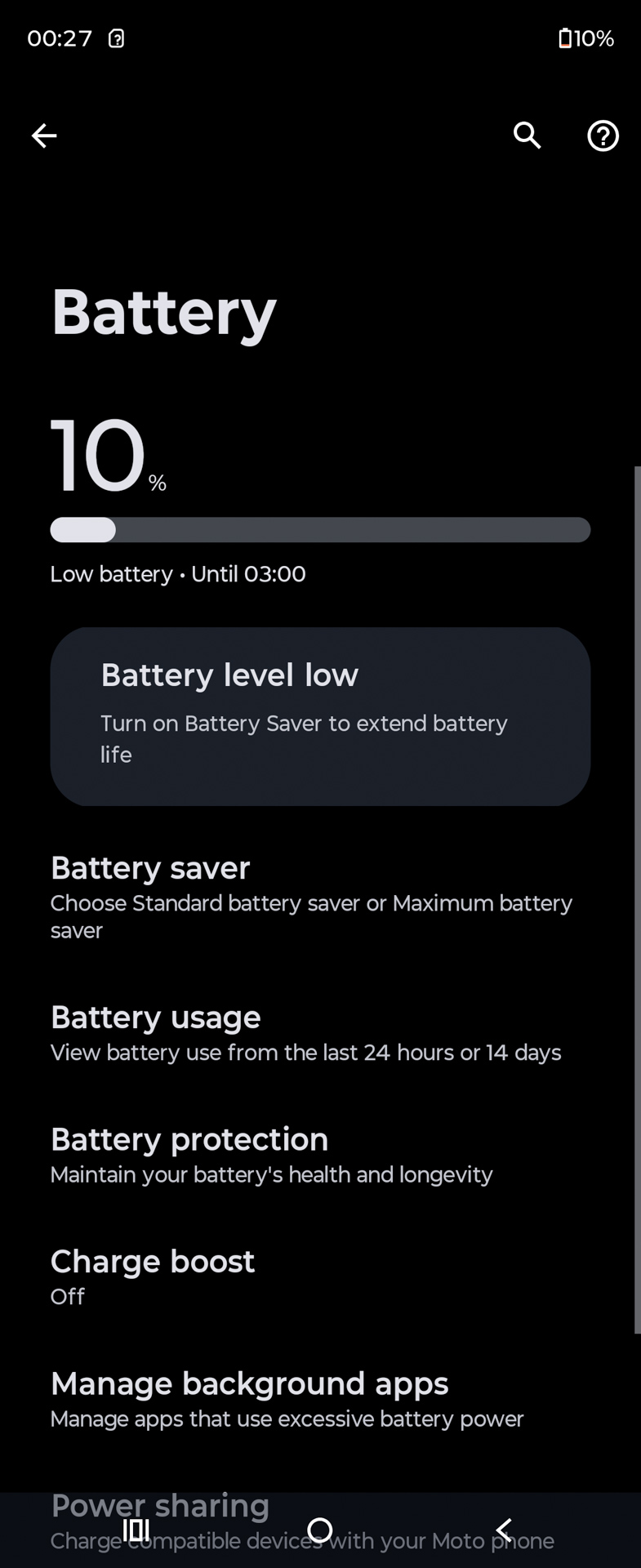
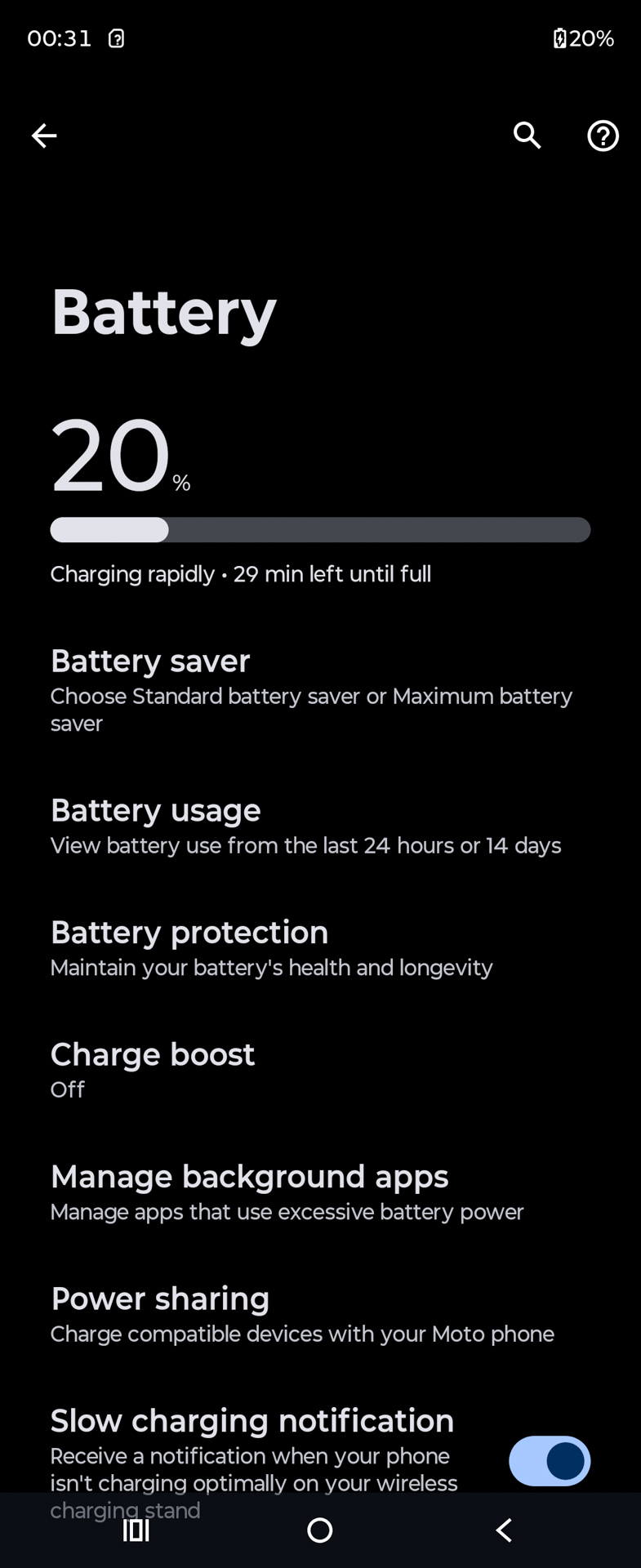
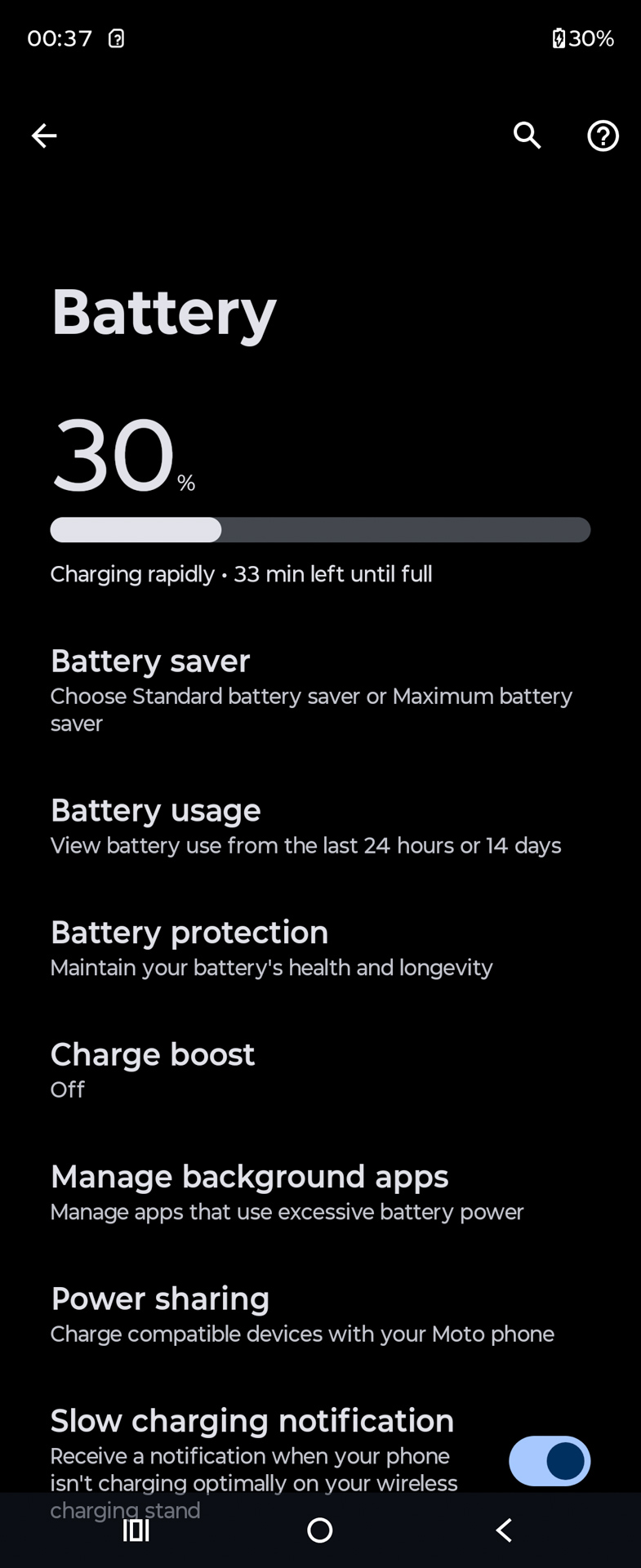
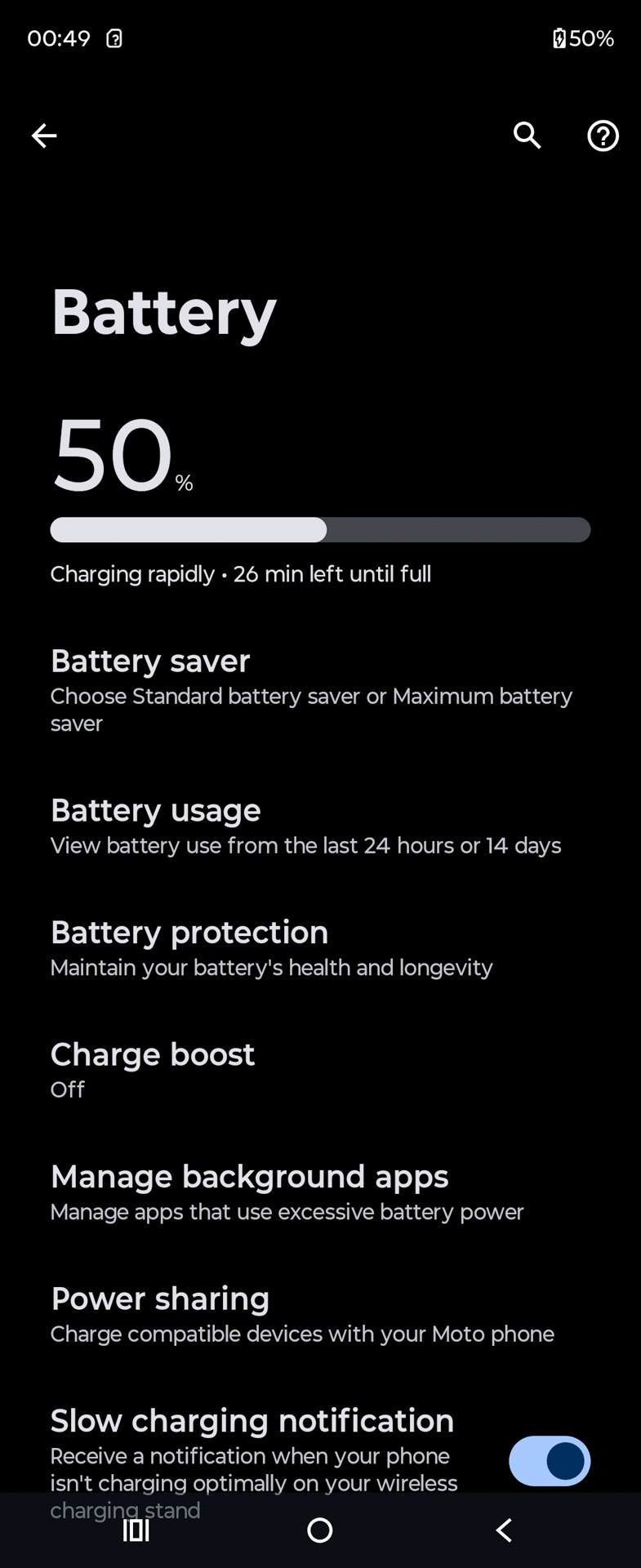
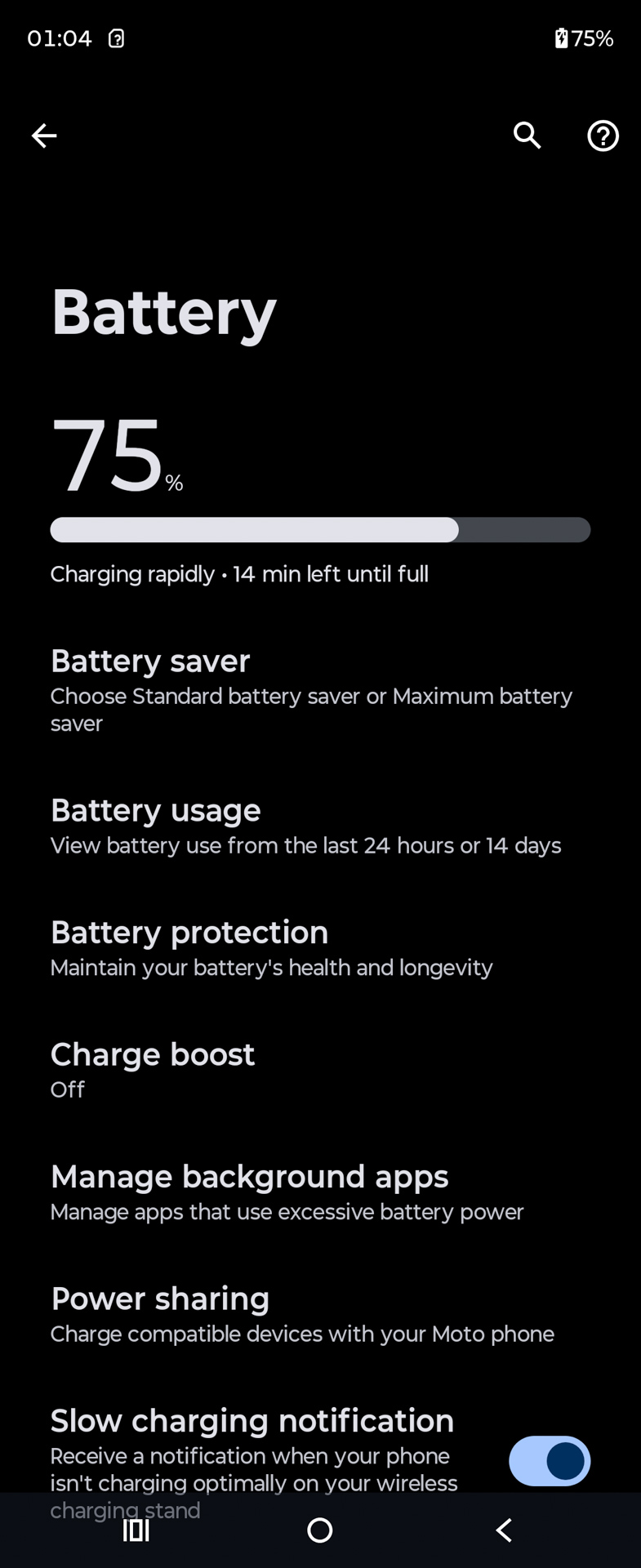
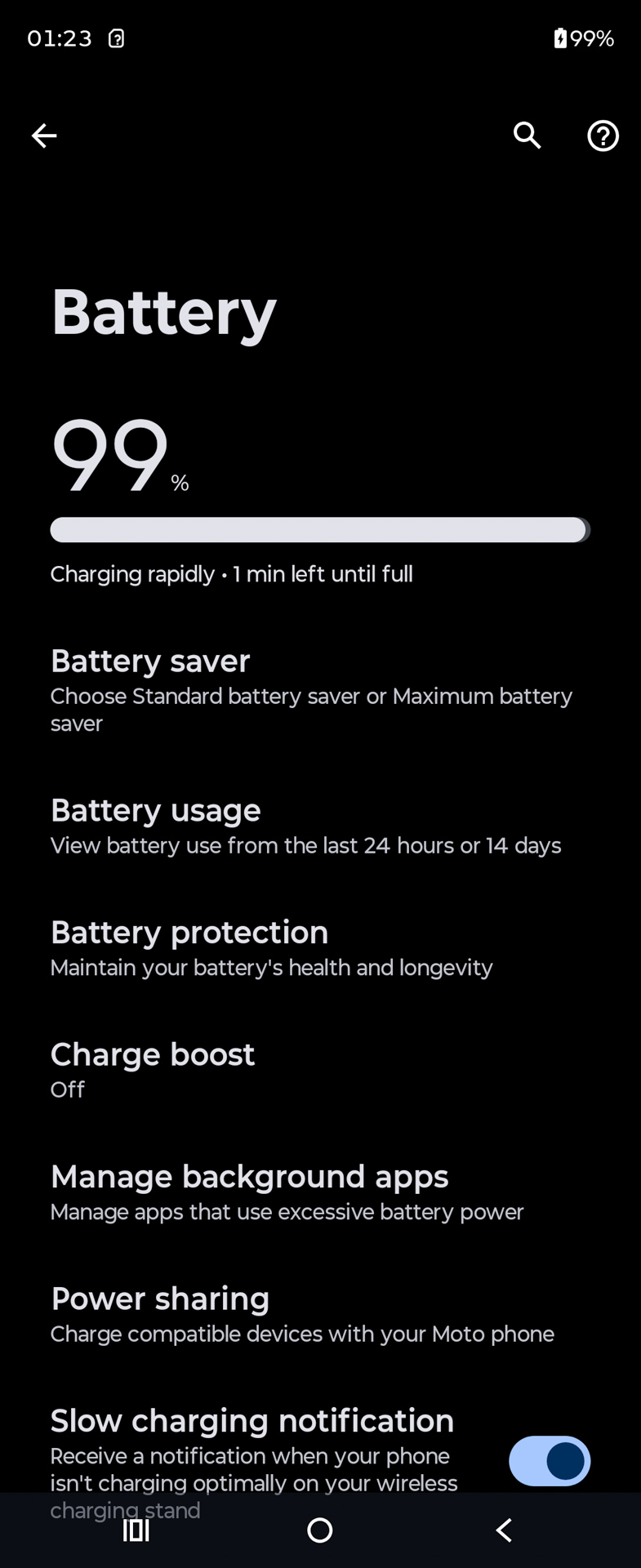
Charging speeds also remain unchanged, which is hardly surprising given that the underlying platform has not changed. Wired charging still supports up to 68 W, while wireless charging is rated at up to 30 W. As far as I can tell, Qi2 support is still absent. Reverse wireless charging is available as well, although it is limited to 5 W.
Conclusion
As one wise person once said, “Knowing when to remain silent is more important than having the ability to speak whenever you want.” In many ways, the Motorola Razr 70 Ultra illustrates this principle perfectly. The company identified the most important strengths of the Razr 60 Ultra, preserved them almost unchanged, and saw little reason to reinvent the formula. Frankly, I understand that approach.
I still disagree with Motorola’s attitude toward enthusiast users, particularly those interested in advanced video recording features. Thermal limitations of the SoC have not disappeared, and the absence of Bluetooth 6 support remains puzzling. However, these are largely my personal criticisms. The broader market is unlikely to pay much attention to these shortcomings, and the Motorola Razr 70 Ultra has all the ingredients needed to become a bestseller. So yes – this is a smartphone I can recommend.
Where to buy Motorola Razr 70 Ultra