© ROOT-NATION.com - Use of content is permitted with a backlink.
Two new additions to Samsung’s A-series – the Galaxy A57 and Galaxy A37 – arrived for review at the same time. This lineup has remained among the most popular in Ukraine for several years, which is not surprising. These devices typically represent a balanced option for users who want access to Samsung’s ecosystem and features without moving into the higher price range of the flagship S series.
This year, Samsung has updated its key mid-range models. At first glance, the differences between the Galaxy A57 and Galaxy A37 appear limited, but the distinctions become more apparent on closer inspection. Formally, these are closely positioned models with a shared foundation: similar displays, battery capacities, and even overlapping camera components.
However, the more meaningful differences lie in performance, camera implementation details, and overall user experience. These factors ultimately determine whether the higher-priced model offers sufficient advantages to justify the cost, or whether the more affordable option is the more practical choice. The following sections will examine these aspects in detail.
Read also: All Samsung smartphone reviews
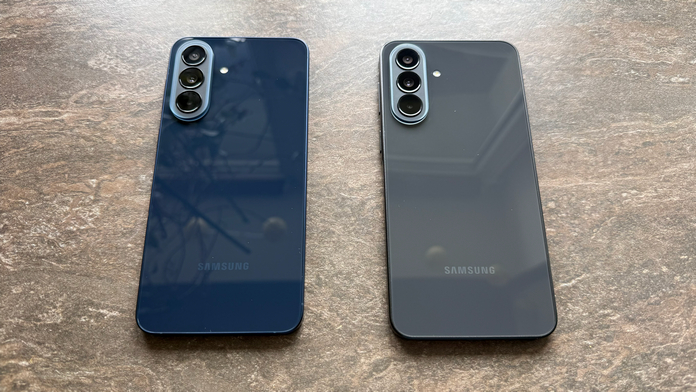
TABLE OF CONTENTS:
Technical specifications of the Samsung Galaxy A57 and Galaxy A37

Positioning and price
Within Samsung’s lineup, these two models occupy distinct and strategically important segments, addressing different user priorities. The Samsung Galaxy A37 is positioned as a baseline option in the mid-range category. It targets users looking for a reliable branded device with a high-quality display and long-term software support, without paying extra for higher performance tiers or more premium materials.
The Samsung Galaxy A57, by contrast, moves closer to the upper mid-range segment. With features such as a metal frame and more capable hardware, it is aimed at more demanding users, including mobile gamers and those who actively create content for social platforms, where camera performance and overall responsiveness are more critical.

The base version of the Samsung Galaxy A37 (6/128 GB) starts at approximately $430 or €405, while the 8/256 GB variant is priced at around $480 or €410. The higher-tier Samsung Galaxy A57 (8/128 GB) starts at about $545 or €510, whereas the top configuration with 12/512 GB can reach up to $800 or €680. This price gap clearly reflects differences in performance and build quality, which will be examined in more detail in the following sections.
- Official website
- Amazon
Read also: Samsung Galaxy S26 Review: Most Compact Flagship with Minimal Changes
Design and build quality
When you first pick up both smartphones, they give the impression of being twins with noticeably different character traits.
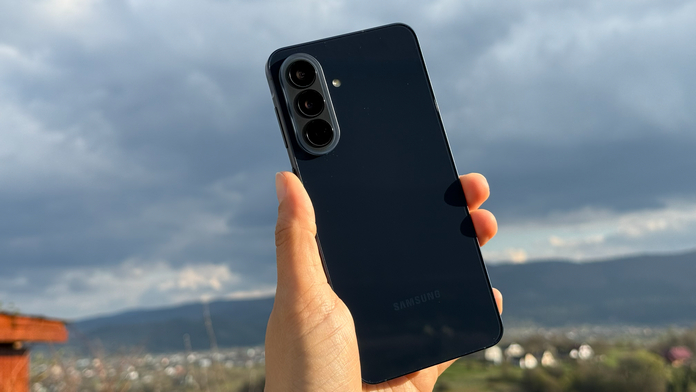
Galaxy A57
Samsung continues its minimalist design approach: separate camera islands, flat edges, and restrained color options. However, the difference in materials is immediately noticeable. The Galaxy A57, with its aluminum frame, feels cool to the touch and solid in the hand, giving a more refined impression despite its mid-range positioning.
The Galaxy A37, on the other hand, uses a plastic frame. Although the build quality is solid, with no noticeable flex or creaking, it lacks a slightly more premium feel compared to the higher model. In terms of dimensions, neither device can really be called compact. Despite minimal differences on paper, both are perceived as fairly large, slab-like phones.

For my hand, both are still rather large: reaching the top of the notification shade with one hand, without shifting grip, is quite a challenging task. Although the Galaxy A57 is slightly narrower and shorter on paper due to thinner display bezels, in practice this difference does little to reduce the overall slab-like feel of both devices.
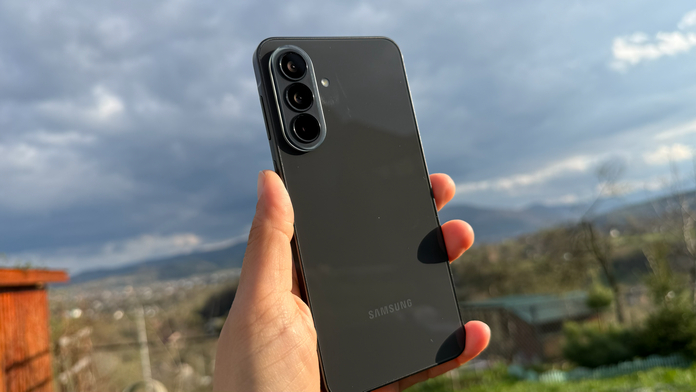
Galaxy A37
Separately, it’s worth focusing on the practicality of the surface materials. Samsung uses high-quality glass, but it is highly prone to collecting fingerprints. This is especially noticeable on darker color options – after just a few minutes of handling, the back panels quickly become covered with smudges.
The glossy finish of the Galaxy A37 picks up fingerprints just as readily as the glass on the Galaxy A57. If you do not plan to immediately use a case, regular cleaning with a microfiber cloth will likely be necessary.
The power and volume buttons on both phones are placed on the right side within the so-called Key Island – a slightly raised section that serves as a recognizable design element in the Galaxy A series.
On the bottom, both devices include a USB-C port, a primary microphone, and a dual SIM tray. The A57 additionally supports eSIM.
Both phones are equipped with a physical proximity sensor for calls, which may be useful for users who have experienced accidental touch inputs during phone conversations.


The color options for the two models do not overlap. The Galaxy A57 is available in Awesome Navy, Awesome Icyblue, Awesome Gray, and Awesome Lilac. The Galaxy A37 comes in Awesome Charcoal, Awesome Lavender, Awesome Graygreen, and Awesome White. Color choice is one of the few purely aesthetic areas where the A37 is not at a disadvantage compared to the higher-tier model.
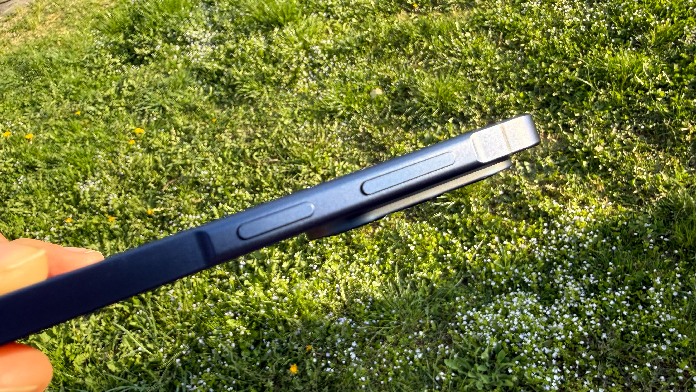
Overall, the build quality of both devices is high. The display bezels on the Galaxy A57 look slightly more modern due to their improved symmetry, while the Galaxy A37 still has a small but noticeable “chin” at the bottom of the screen. Both models carry an IP67 rating, meaning resistance to immersion in up to 1.5 meters of water for up to 30 minutes. For the A57, this represents an upgrade over the IP67 rating of the previous generation.
Both phones are equipped with an optical in-display fingerprint sensor. It performs adequately for everyday use, although it is not among the fastest solutions available. In terms of design, both smartphones look current and stylistically consistent with the lineup, with a recognizable overall appearance.
Read also: Samsung Galaxy S26 Ultra Review: Reference Flagship Without Major Changes
Displays of the Samsung Galaxy A57 and Galaxy A37
Both smartphones use Super AMOLED panels with a 120 Hz refresh rate, which remains one of the key advantages of the Galaxy A series in this price segment compared to many competitors. The interface feels smooth, without noticeable stuttering: whether scrolling through social media or launching a game, animations appear fluid and consistent. Both displays share the same FHD+ resolution (1080×2340 pixels) and a pixel density of 385 PPI. As expected from AMOLED technology, black levels are effectively infinite, with pixels fully switching off to render deep blacks.

Both models also share the same rated brightness: 1200 nits in High Brightness Mode and a peak of 1900 nits. In practical use, this translates into reliable visibility even under direct sunlight, and in this regard the A37 is on par with the higher-end model. Both devices also support HDR10+ for improved color and contrast when viewing compatible video content. Where the Galaxy A57 clearly differentiates itself is in panel quality and structure. It uses a Super AMOLED Plus matrix, which differs from standard Super AMOLED by having a higher number of subpixels per cluster. As a result, the image appears slightly sharper and more detailed, even though both phones share the same nominal resolution. The Galaxy A37 relies on a standard Super AMOLED panel – still a solid display in its own right, but the difference becomes noticeable in side-by-side comparison.

In addition, the display bezels on the A57 have become thinner on all sides, with the bottom chin reduced by 0.8 mm compared to its predecessor. This creates a more unified, almost flagship-like glass front. In terms of protection, both smartphones are on equal footing: both the Galaxy A57 and Galaxy A37 are covered with Corning Gorilla Glass Victus+ on the front and back. They also share the Eye Comfort Shield feature, which automatically adjusts color temperature to reduce eye strain in low-light conditions.
Read also: Samsung Galaxy Fold7 Review: Slim and Lightweight Foldable Smartphone
Performance, hardware, and Galaxy AI ecosystem
The technical foundation of the Samsung Galaxy A57 is based on the new octa-core Exynos 1680, manufactured using an advanced process technology. Its high-performance cores operate at up to 2.9 GHz, providing fast interface responsiveness and stable performance in demanding applications. The graphics subsystem is handled by the Xclipse 550 GPU, which enables smooth gameplay in modern titles at relatively high frame rates. In comparison, the Samsung Galaxy A37 uses the more established Exynos 1480 chipset, with a maximum clock speed of 2.75 GHz and an Xclipse 530 GPU. While the lower-tier model is less powerful in terms of raw performance, it maintains solid stability and shows minimal thermal buildup during everyday use.

Regarding the Galaxy AI ecosystem (marketed here as Awesome Intelligence), the situation is somewhat interesting: Samsung has not strictly separated AI features between the two models, and most of them are available on both devices. Through One UI 8.5, both smartphones receive the Awesome Intelligence package – a set of AI tools designed to simplify everyday tasks.
Shared AI features on the A57 and A37 include:
- Voice Transcription, introduced in the Voice Recorder app for the Galaxy A series: the phone can transcribe meetings, lectures, or calls and translate them into multiple languages.
- Circle to Search now supports multi-object recognition, allowing users to circle an entire scene and get information about multiple elements in a single query.
- AI Select, accessible via a long press in the Edge Panel, now supports drag-and-drop in Multi-Window mode, speeding up workflows in Samsung Notes and Photo Editor.
- Object Eraser has improved edge detection accuracy for more natural removal of unwanted elements from images.
- Both devices also include Best Face and Edit Suggestions in the Gallery, Custom Filters, Voice Transcription for calls, Read Aloud in the browser, and Bixby 4.0 with integration of Perplexity and Gemini.
The only AI feature exclusive to the A57 is Auto Trim for automatic video editing, which is tied to the more powerful NPU in the Exynos 1680. For example, Best Face on the A57 can handle continuous shooting with a larger number of frames, benefiting from the same additional processing capability. Both phones are guaranteed six years of OS updates and six years of security patches, which is arguably the most important shared aspect in terms of long-term use.

Memory configurations also differ between the two models. The Galaxy A57 is available in 8/128 GB, 8/256 GB, and 12/512 GB variants, using LPDDR5X RAM and UFS 3.1 storage. The Galaxy A37 starts with either 6 or 8 GB of RAM, depending on the configuration. There is also a less visible hardware difference: the A57 features a vapor chamber that is 13% larger than in the previous generation, which helps maintain stable performance during sustained gaming sessions or video recording. The A37 also includes a vapor chamber, but with a more limited cooling capacity. In terms of connectivity, the A57 is again ahead, supporting Wi-Fi 6E and Bluetooth 6.0, while the A37 is limited to Wi-Fi 6 and Bluetooth 5.4.
Read also: DLSS 4.5: Why This Technology Changes the Approach to Path Tracing
Cameras of the Samsung Galaxy A57 and Galaxy A37
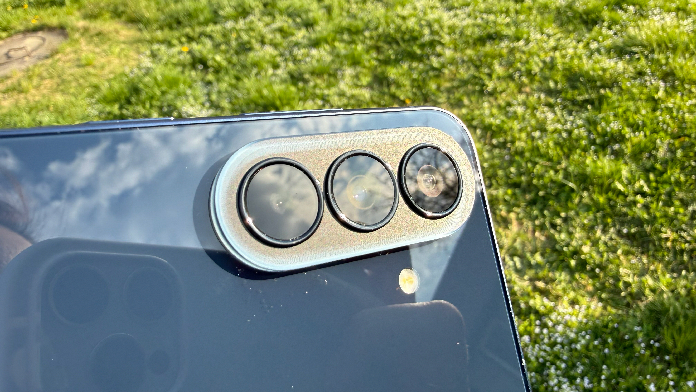
Both smartphones use a similar camera layout: a triple rear camera setup consisting of a main wide lens, an ultrawide lens, and a macro camera, along with a front-facing camera. At first glance, the configurations appear almost identical, but there are meaningful differences in detail. The main camera is the same on both models: a 50 MP sensor with an f/1.8 aperture, 1/1.56″ sensor size, optical image stabilization (OIS), and phase-detection autofocus (PDAF). Notably, this is the same sensor format used in the flagship Galaxy S26, which is a strong point for mid-range devices. The A37 has closed the gap this generation: its predecessor, the A36, used a smaller 1/1.95″ sensor, whereas the new model now also adopts the 1/1.56″ sensor size.

The main camera has a 23 mm equivalent focal length, and both devices support video recording up to 4K at 30 fps and 1080p at 60 fps. The key difference between the two models lies in the ultrawide camera. The Galaxy A57 is equipped with a 12 MP sensor with a 123° field of view and a 13 mm equivalent focal length. The Galaxy A37 uses an 8 MP sensor with a 16 mm focal length. An interesting detail is that despite the difference in megapixel count, the A37 effectively outputs 12–13 MP files due to interpolation, so the resolution gap is less noticeable in practice than it might appear on paper. The more visible difference is the field of view: the A57 provides noticeably wider framing, which is especially relevant for landscapes and group shots. In terms of video, the A57’s ultrawide camera supports 4K at 30 fps, while the A37 is limited to 1080p at 30 fps on this module. The macro camera is identical on both devices: a 5 MP sensor with fixed focus and an f/2.4 aperture.
Below you can view compressed sample images taken with the Samsung Galaxy A57 5G. Full-resolution photos, along with an extended selection of shots in different modes and complete EXIF data, are available via the link.









Frankly speaking, this is the weakest part of the camera system on both devices. The macro lens requires a working distance of around 3–5 cm from the subject, which makes it inconvenient in real-world use. In practice, the main camera in 2x zoom mode often produces better macro results than the dedicated macro module itself. The front-facing camera is nominally the same on both models – 12 MP, f/2.2 – although EXIF data suggests a slight difference in effective focal length between the two devices.
In daylight conditions, both cameras perform well: detail levels are high, colors look natural, and dynamic range is solid. The 2x zoom on the A57 delivers decent results – not class-leading, but generally competitive.
In low light, the differences become more noticeable. The A57 tends to preserve sharper detail, but its processing can occasionally struggle with white balance and color consistency. The A37 produces softer images, but its exposure handling is more stable and predictable. Its night mode does not significantly degrade image quality, unlike the A57, where more aggressive processing can sometimes negatively affect the final result. The ultrawide camera remains a weak point on both devices in night conditions.
Below are a few compressed sample photos taken with the Samsung Galaxy A37 5G to provide a quick overview of the overall image quality. For maximum detail, full-resolution originals, as well as a larger set of images across different shooting modes with complete EXIF data, are available separately via the link.









Images tend to appear soft, with noticeable noise and limited dynamic range. The difference between the two models in this regard is minimal. The front-facing camera produces very similar results on both devices in good lighting conditions: high detail, natural skin tones, and a fairly wide dynamic range. In low light, the A57 has an advantage, as images from the A37 become noticeably softer. In terms of video, both phones support 4K at 30 fps and 1080p at 60 fps on the main camera, as well as 4K at 30 fps on the front camera. Stabilization on the A57 performs at a strong level. Neither device supports HDR video recording or 4K at 60 fps, which is a noticeable limitation for this price segment.
Read also: Xiaomi Watch 5 Review: Wear OS and 6 Days of Battery Life
Common characteristics
Despite their different market positioning, the Samsung Galaxy A57 and Galaxy A37 share a notable level of consistency in key areas that define everyday user experience. This is most evident in their design language and build quality: both smartphones follow Samsung’s established aesthetic approach, using premium materials and offering IP67 water and dust resistance.

You get devices that not only look modern but are also capable of withstanding short-term immersion in water or exposure to dust, effectively making them reliable tools for use in a wide range of weather conditions. Technological continuity is also evident in battery life and peripheral capabilities. Both models are designed to last a full day of intensive use, while fast charging support allows for relatively quick battery top-ups.
It is also important to note that Samsung did not cut corners on connectivity modules: both the A57 and A37 include full 5G support, modern Wi-Fi and Bluetooth standards, as well as high-precision navigation systems. This level of standardization ensures that, regardless of the chosen model, signal stability and data transfer speeds remain consistent. The final common element is software support and the ecosystem approach.

Users of both devices receive the same duration of guaranteed Android updates and security patches, which improves long-term software support predictability. The One UI interface provides seamless integration with other Samsung products, including Galaxy Buds headphones and Galaxy Tab tablets. As a result, both smartphones offer a comparable level of ecosystem integration and access to Galaxy AI services, reducing the practical gap between mid-range and more advanced models in everyday use.
Read also: Top 10 Gaming Chairs
Differences
Despite sharing a large number of core similarities, the Samsung Galaxy A57 and Galaxy A37 still have clearly defined differences driven by their respective market positioning. The first and most obvious distinction is computational performance. The higher-end model is powered by the Exynos 1680 chipset with a peak clock speed of 2.9 GHz, while the A37 uses the Exynos 1480 with a maximum frequency of 2.75 GHz. In more demanding scenarios – such as processing complex AI tasks or handling heavier graphics workloads via the Xclipse 550 GPU – the Galaxy A57 delivers faster responsiveness and a larger performance headroom for future use cases. The Galaxy A37, by contrast, is focused on balanced day-to-day performance rather than peak computational output.

The second important difference concerns the auxiliary camera setup. While image quality from the main 50 MP sensor is largely similar on both devices, the Galaxy A57 features a more detailed 12 MP ultrawide module. This results in higher sharpness when capturing landscapes or architectural scenes compared to the 8 MP solution in the Galaxy A37. In addition, the higher-end model is equipped with an improved cooling system featuring a larger vapor chamber. This provides better sustained performance during mobile gaming, where maintaining stable frame rates without thermal throttling is important.

Finally, the financial aspect and perceived positioning should also be considered. The Samsung Galaxy A57 is positioned closer to a “sub-flagship” device, aiming to approach the capabilities and material finish of the premium S series in terms of processing power and build quality. The higher price of the A57 is justified not only by more capable hardware, but also by expanded on-device AI processing capabilities through its neural processing unit. At the same time, the Galaxy A37 remains a more rational choice for users who want access to Samsung’s ecosystem and core Galaxy AI features at a lower price point, accepting minor technical compromises that have limited impact on everyday usability.
Where to buy the Samsung Galaxy A57 and Galaxy A37
- Official website
- Amazon
Read also:
- Samsung Galaxy S26 Plus Review: Is It Worth the Price?
- Samsung Galaxy S26 Review: Most Compact Flagship with Minimal Changes
- Interview with founders of Ukrainian Global Drone Academy: How drone warfare culture and operator mindset are shaped