





© ROOT-NATION.com - Use of content is permitted with a backlink.
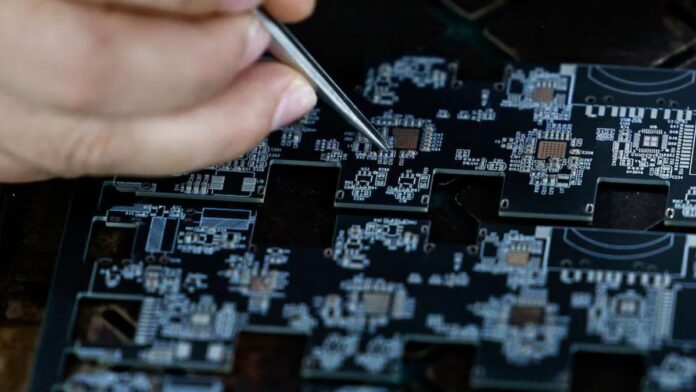
The war in the Middle East has disrupted the supply of raw materials, according to tech executives and industry representatives. As a result, prices for printed circuit boards, which are used in almost all electronic devices, from smartphones and computers to AI servers, have risen.
These disruptions are yet another blow to electronics manufacturers, who are already struggling to survive the skyrocketing prices of memory chips. The war in Iran, which has already wreaked havoc on supply chains, plastics production, and oil supplies, has thus expanded its impact.

In early April, Iran struck at the Jubail petrochemical complex in Saudi Arabia, forcing the production of high-purity polyphenylene resin (PPE) to be suspended. This critical base material is used in the manufacture of printed circuit board laminates.
Read also: AI vs. the Pentagon: Iran finds a new way to hit US bases

PCB prices are already on the rise due to the demand for AI servers. According to three industry sources, demand has accelerated sharply since March as manufacturers try to secure raw material supplies and mitigate the impact of skyrocketing costs. According to Goldman Sachs analysts, just in April, prices for printed circuit boards increased by 40% compared to March. But cloud service providers are ready to put up with further price increases, as they are confident that demand will exceed supply in the coming years.
Prismark’s report shows that the PCB segment will grow by 12.5% globally to reach $95.8 billion in 2026. South Korean PCB manufacturer Daeduck Electronics, which works with Samsung Electronics, SK Hynix, and AMD, among others, has already begun negotiations with customers to raise prices.
Read also: Samsung Smartphone Reviews
A Daeduck Electronics executive told Reuters on condition of anonymity that his priority has shifted from meetings with customers to meetings with suppliers, as the waiting time for chemical supplies has increased to 15 weeks, up from three weeks.

One source claims that the sharp rise in PCB prices was also caused by shortages of other key materials, including fiberglass and copper foil. Copper foil prices have risen by as much as 30% since the beginning of this year, with the growth picking up in March, the source added.
According to Victory Giant Technology, a Chinese supplier of PCBs to NVIDIA, copper accounts for about 60% of the total cost of raw materials in PCB production. And the conflict in the Middle East is likely to drive up prices for key materials, including resin and copper. As a result, multilayer PCBs can cost about $204 per m², and high-end models for AI servers will cost about $1975.
Read also:
- Ukrainian “Sky Map” Supports U.S. Operations: Pentagon Deploys Ukrainian Drone Control System Following Iranian Attacks
- Filming for Netflix’s live-action Gundam begins: Ukrainian actor joins the cast