





© ROOT-NATION.com - Use of content is permitted with a backlink.
Prologix has been on our radar more than once, mostly thanks to its budget and mid-range computer components – everything from RAM to uninterruptible power supplies. Until now, PC cases haven’t been part of that lineup. That changes today, as we take a look at three of their models: the Prologix Axon, Prologix Lumi and Prologix Lumi Mesh.
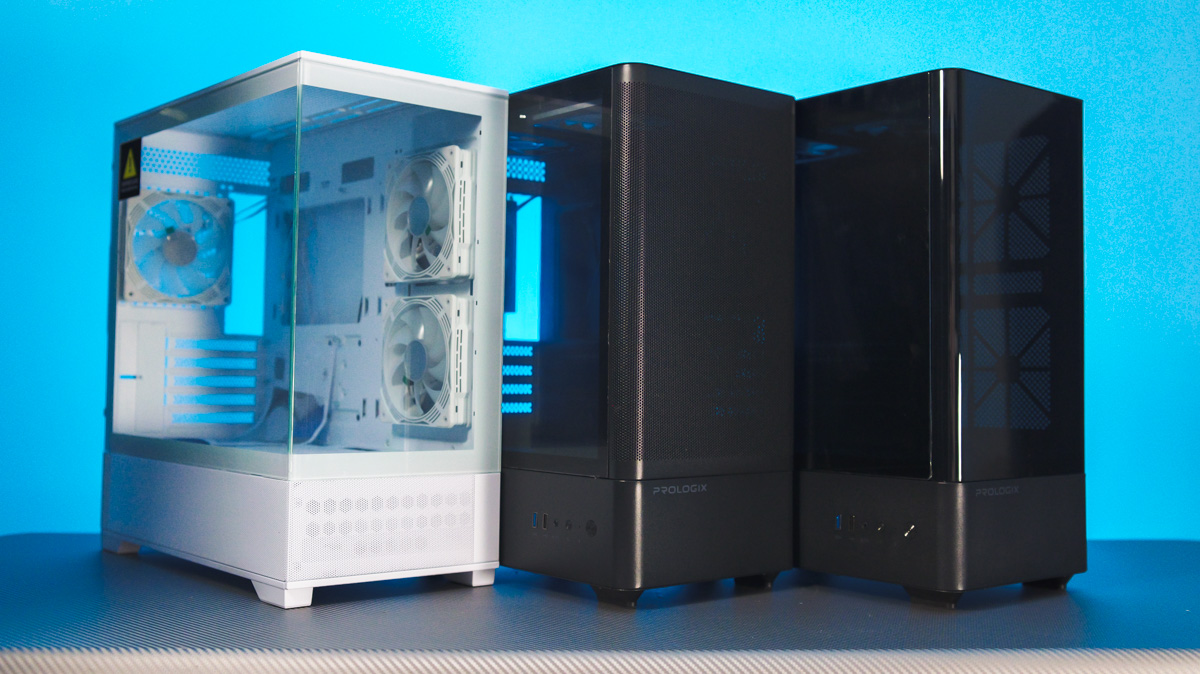
TABLE OF CONTENTS:
Price and package contents
All three cases come in at a relatively affordable price point. The Prologix Axon, available in either black or white, tops out at around $70 or €60. The Prologix Lumi, also offered in black or white, is priced at approximately $50 or €44. The Lumi Mesh version is similarly priced, coming in at $50.
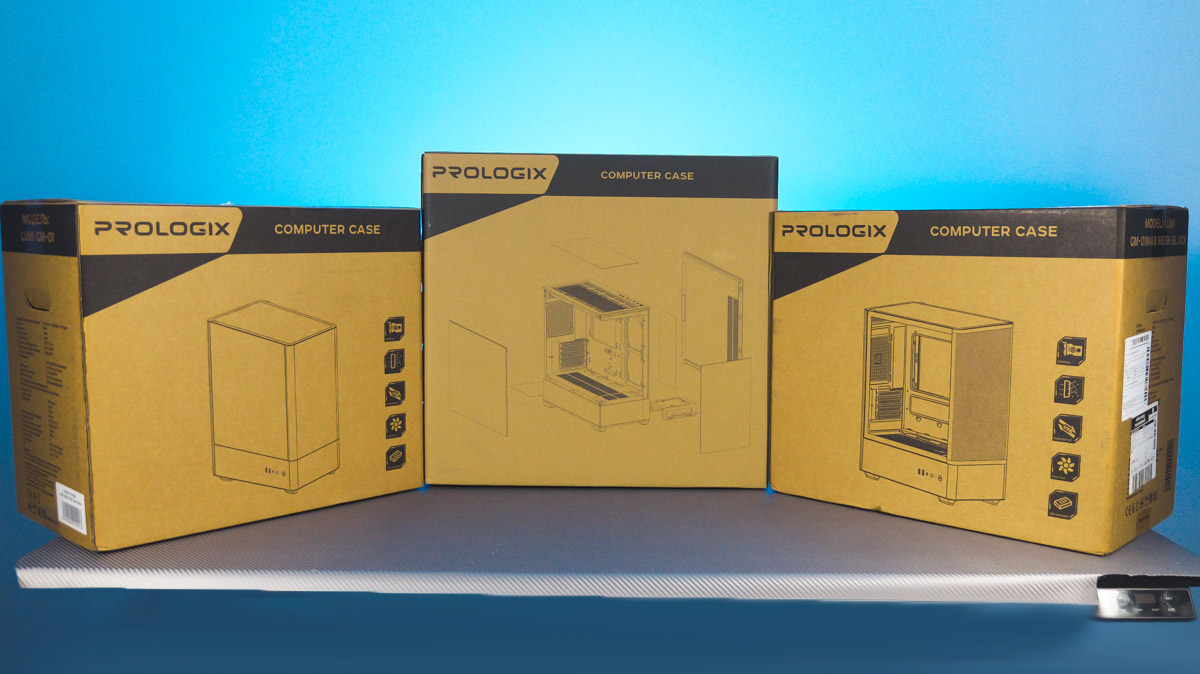
Let’s get the accessories out of the way first, since all three cases come with nearly identical bundles. In the box, you’ll find cable ties, standoffs, screws, and an RGB remote control. There’s also a warranty card included. What’s missing? A user manual. None of the cases include one, and you won’t find it on the official website either – it simply doesn’t exist. Where is it? That remains an open question.
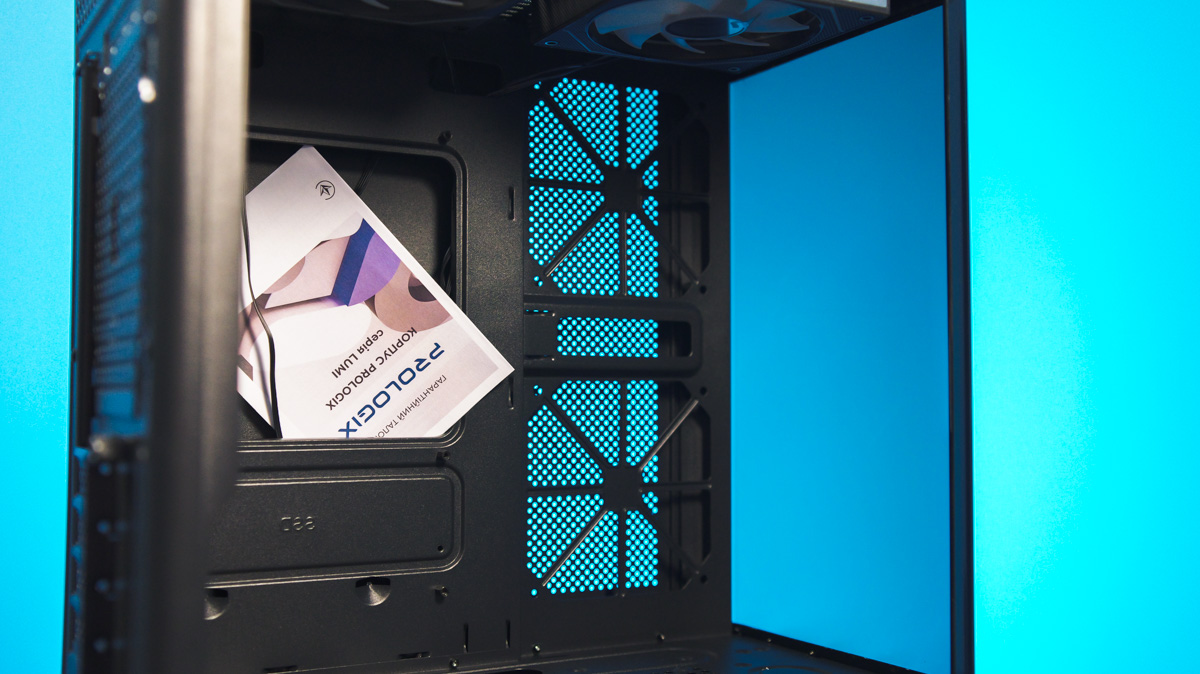
You’ll find the manuals via the QR code printed on the warranty cards. For convenience, I’ll also include direct links to them below:
Prologix Axon
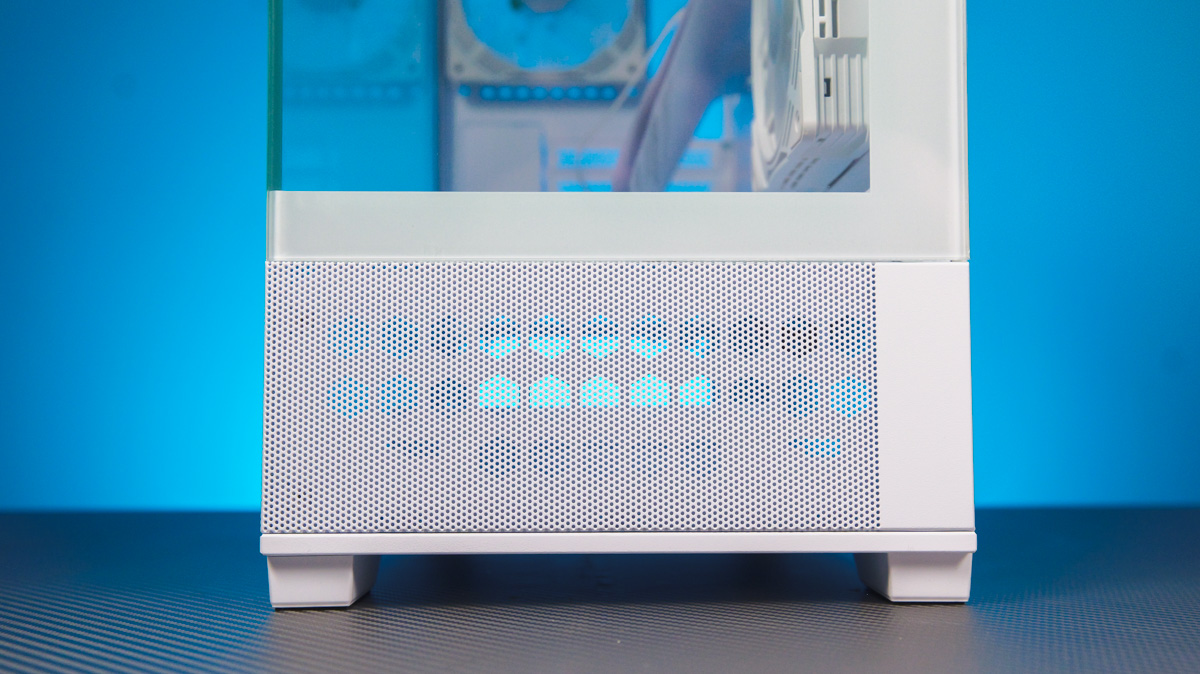
What makes this case particularly interesting is how well it blends the “aquarium-style” design with a focus on airflow. The upper section – both the front and side panels – is made of 4 mm tempered glass, giving it a clean, open look. Meanwhile, the lower section, where the power supply and storage drives are housed, is covered in 0.6 mm perforated metal to support ventilation without compromising structure.
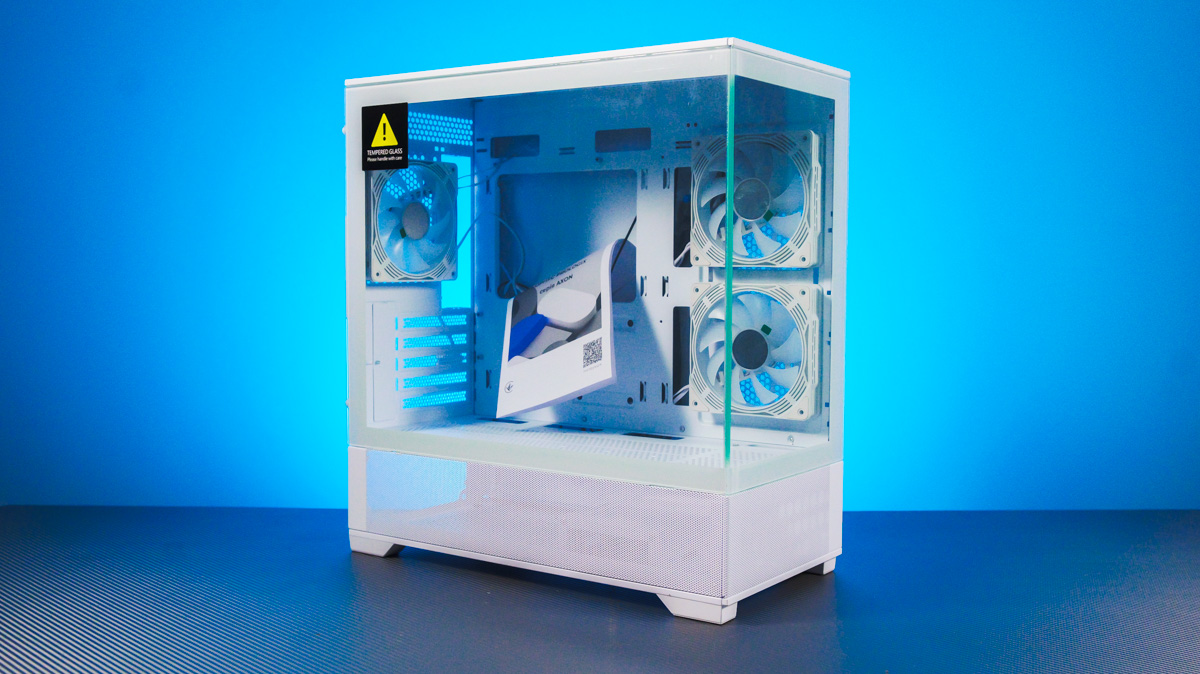
In other words, building a high-end gaming PC in this case shouldn’t be an issue. With dimensions of 355×210×446 mm and a weight of 6.25 kg, it falls into the Mid Tower category. So don’t be surprised by the presence of only five PCIe expansion slots or the lack of support for 420 mm radiators – those are expected limitations for its size class.
In fact, even 360 mm radiators can only be mounted in one location – the front panel.
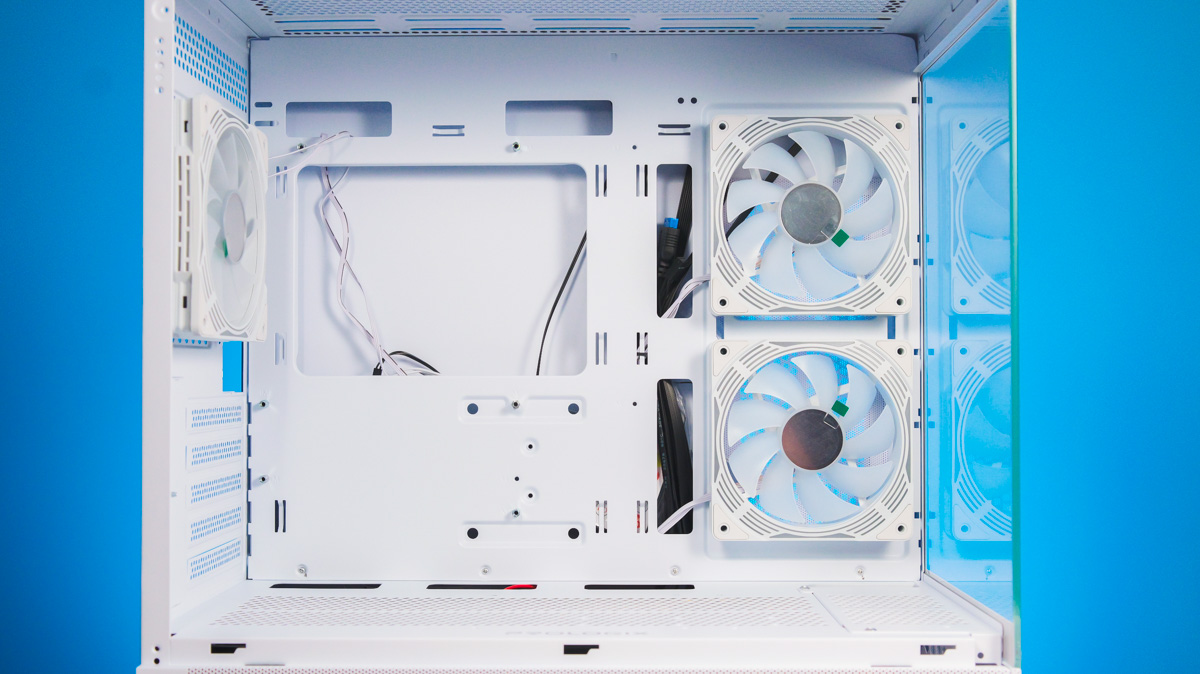
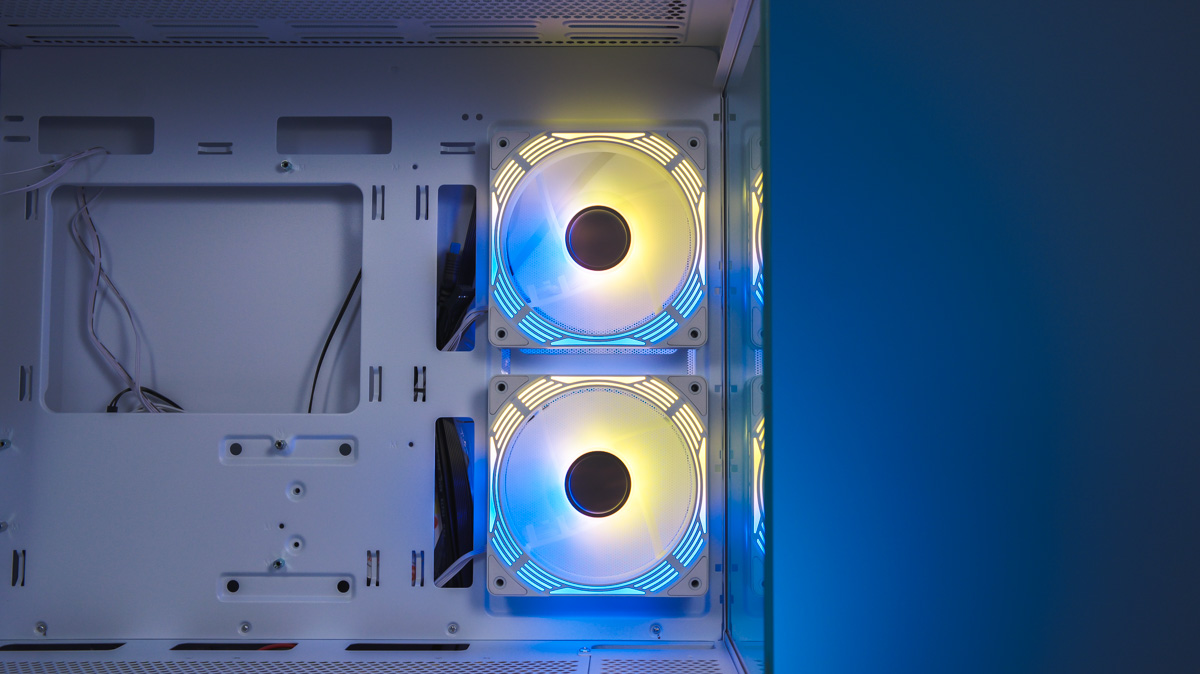
Fan support is surprisingly decent. The top panel can accommodate up to two 140 mm fans, while the bottom allows for up to three 120 mm units. By default, the Prologix Axon comes pre-installed with three 120 mm fans featuring center-mounted mirrored RGB lighting.
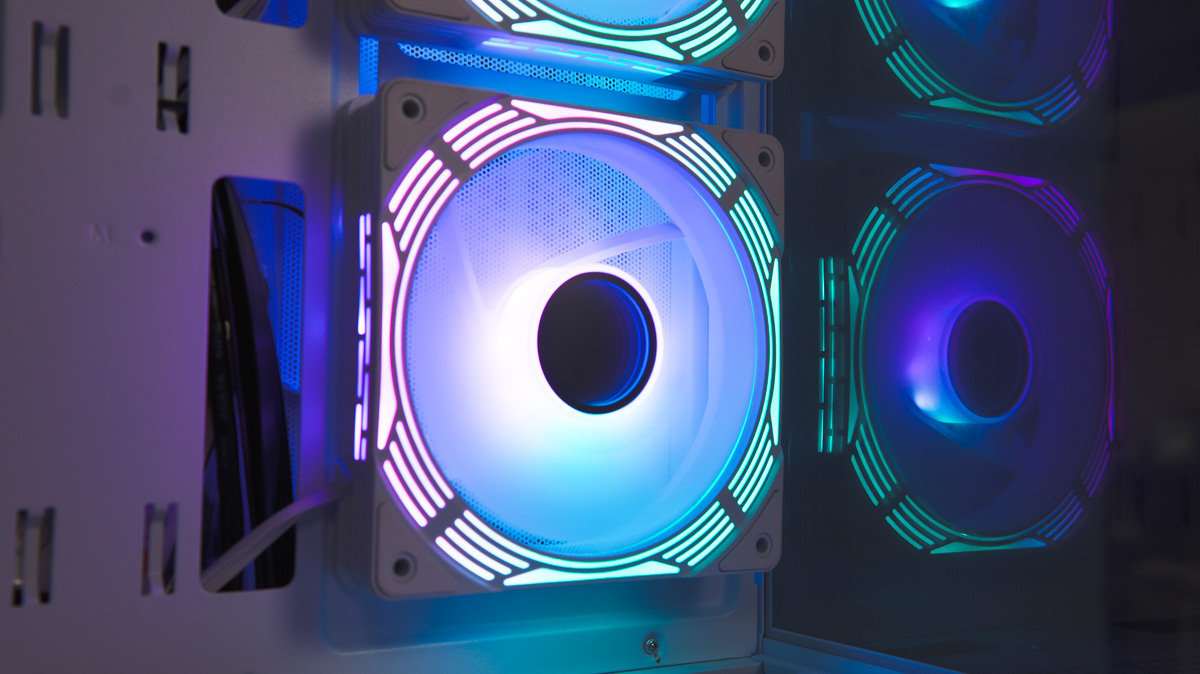
Control for these fans is handled via the included magnetic hub, which offers a surprising level of flexibility. It can be managed through the motherboard, the case’s front panel button, or even the included remote. And – this part really stood out to me – the remote lets you control both lighting effects and fan speed. That’s something I often find missing even in significantly more expensive cases.
The maximum CPU cooler height supported is 165 mm, while the maximum GPU length reaches up to 410 mm – though that’s only possible if there’s no radiator installed on the front panel.
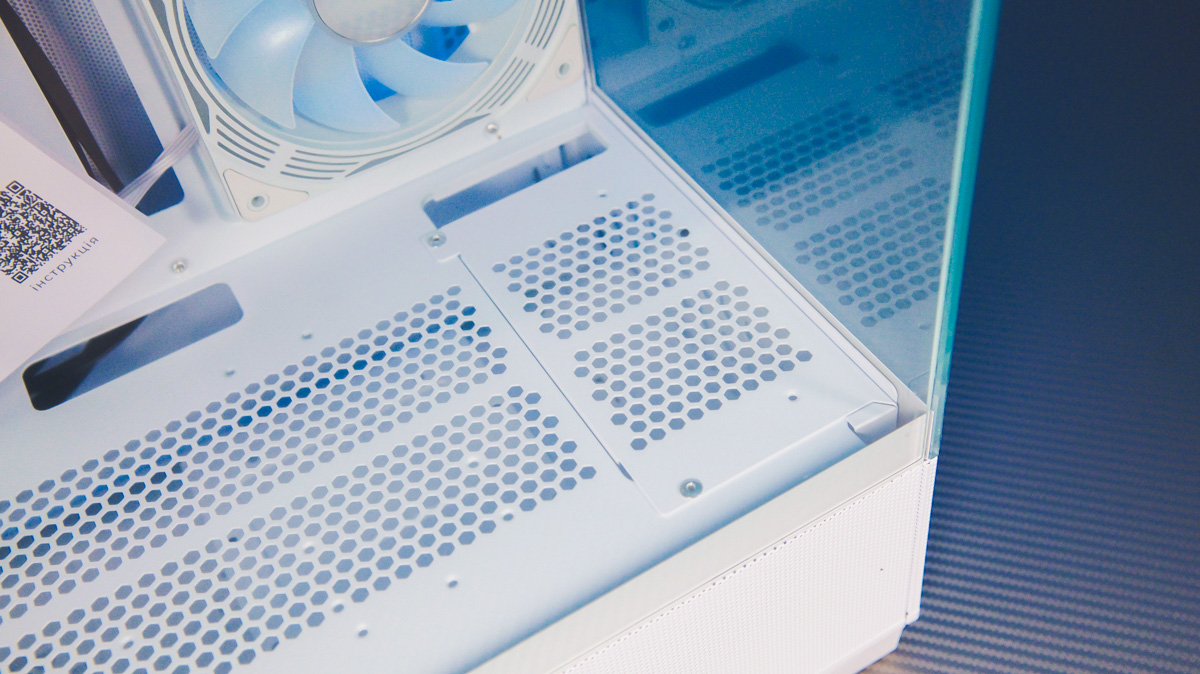
The Prologix Axon supports up to four storage drives: two 2.5-inch and two 3.5-inch units. The larger drives are mounted inside the cage at the top, while the smaller 2.5-inch drives attach to a plate also located at the top.
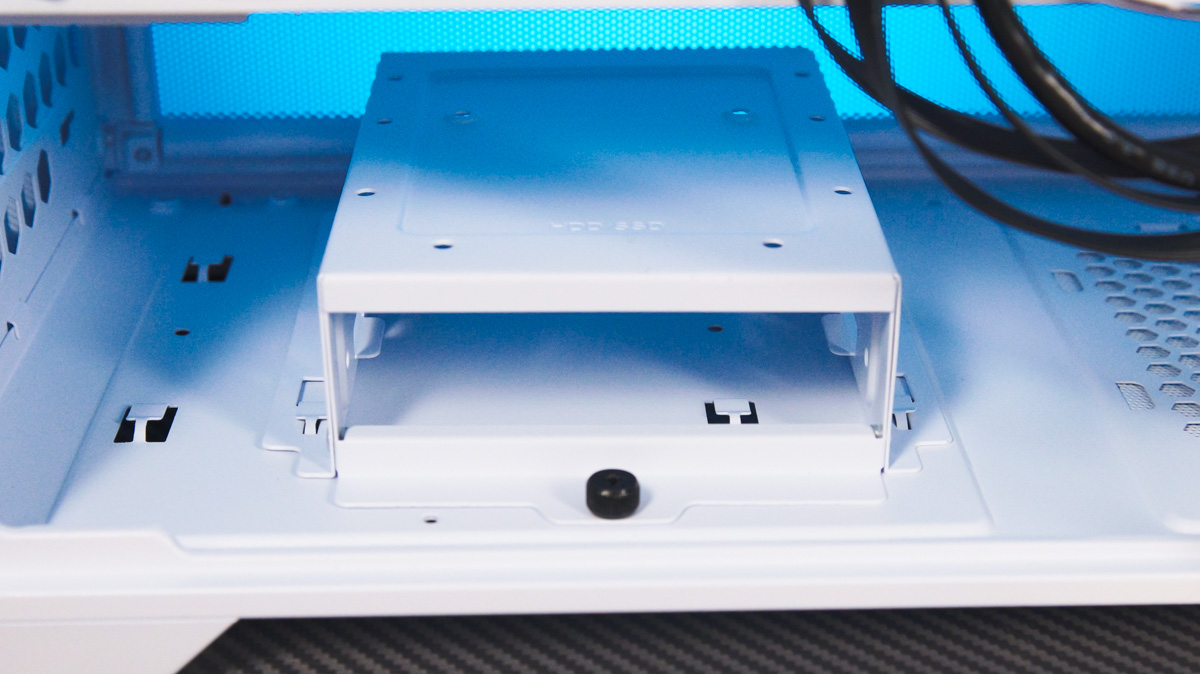
There are plenty of cable management cutouts both at the top and bottom of the case. Magnetic dust filters are also included, even on the side panel, helping to keep the interior clean.

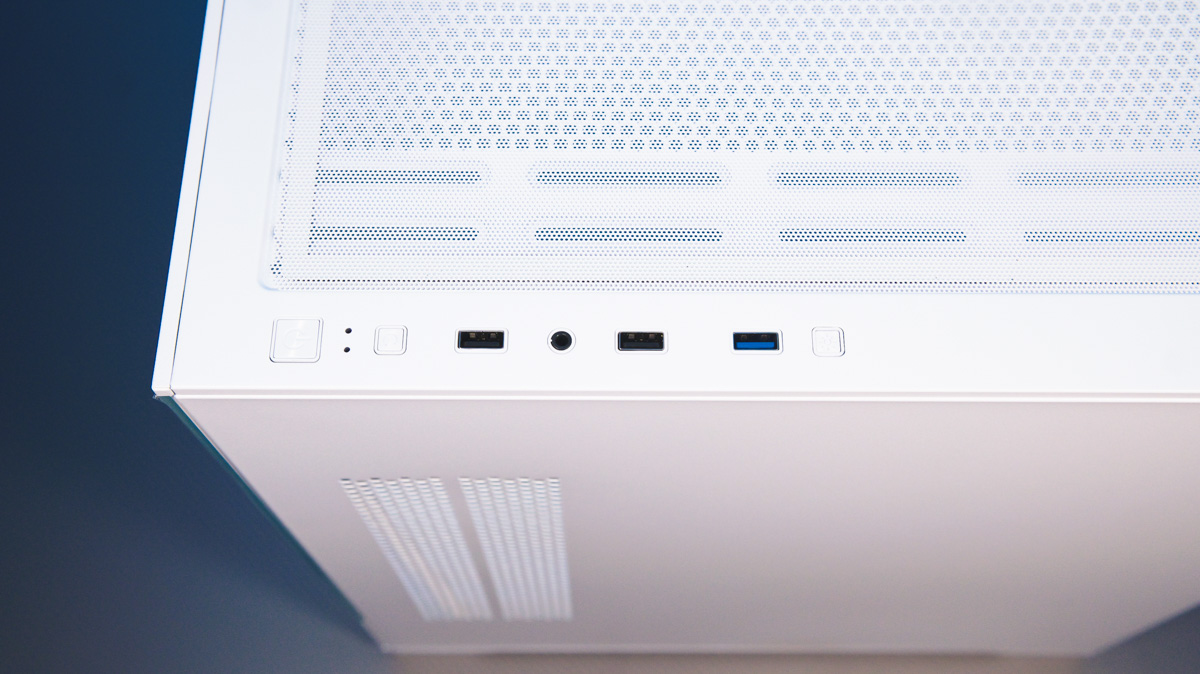
The front I/O panel is basic, featuring a single combined audio jack and three USB Type-A ports – one of which is USB 2.0. However, it does include a dedicated button for controlling the lighting.
Prologix Lumi/Lumi Mesh
Of the three cases, the Prologix Lumi caught my attention the most – mainly because its design is anything but conventional.
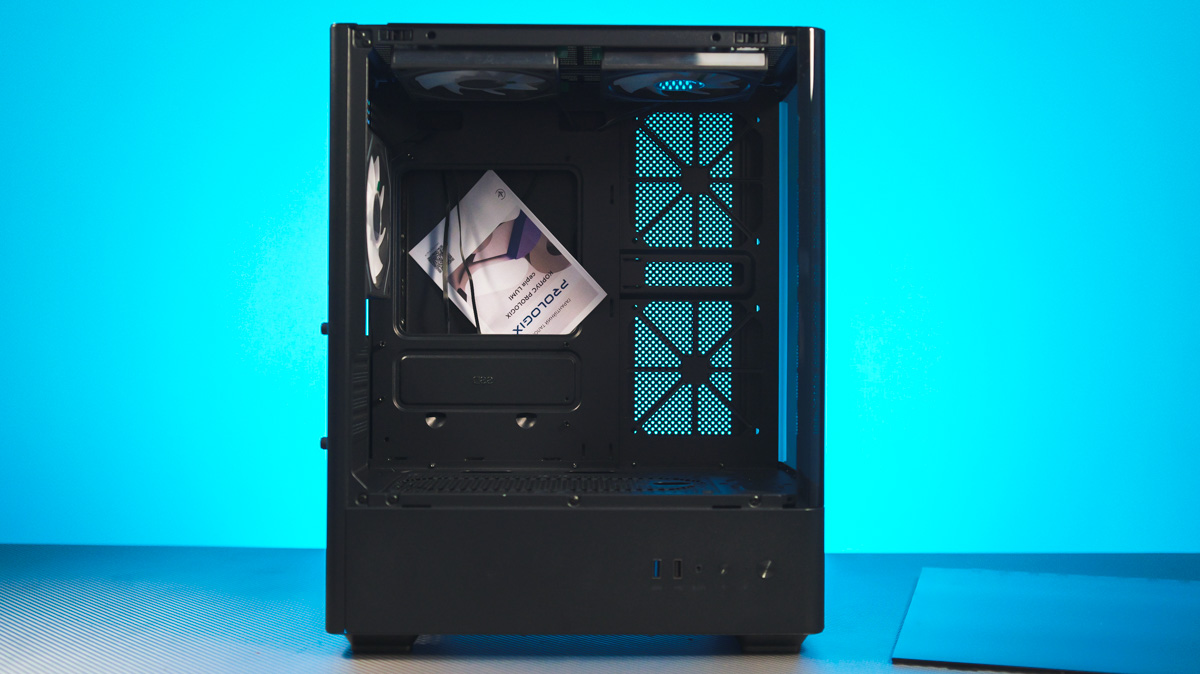
It’s not just about the curved acrylic front panel. The acrylic is tinted, and the side fan mounting panel has an unconventional design. What really surprised me was the number of SSD mounting points – but more on that later. The accessories included with the Prologix Lumi and Lumi Mesh are similar to the more expensive Axon, except the safety spacers here are made of simple foam rather than foam polypropylene.

The case itself is compact, designed for Micro ATX motherboards, measuring 355×210×446 mm, and offers just four expansion slots. The steel thickness is 0.7 mm, and it supports cooling radiators up to 280 mm in length. Both the Mesh and the standard versions weigh 4.5 kg. Aside from the mesh front panel and a slight price difference, there are no major distinctions between the two models.
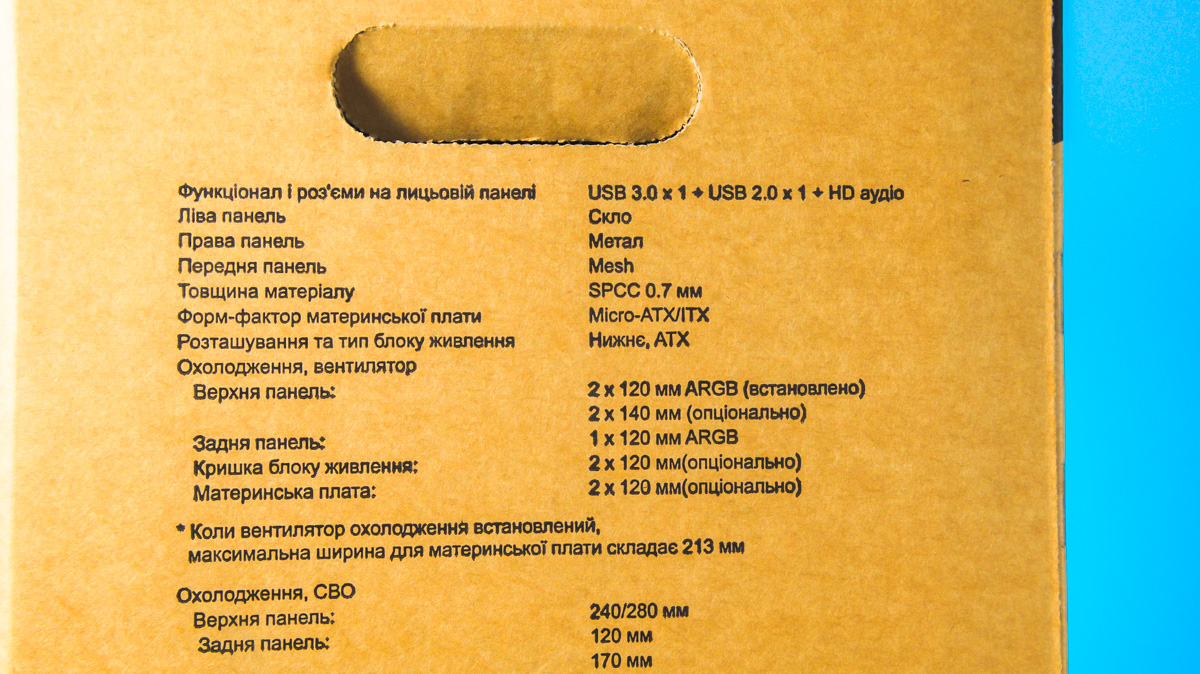
The case supports graphics cards up to 340 mm in length – provided there’s no front radiator installed, which applies to the Mesh model. CPU cooler height compatibility reaches up to 160 mm.
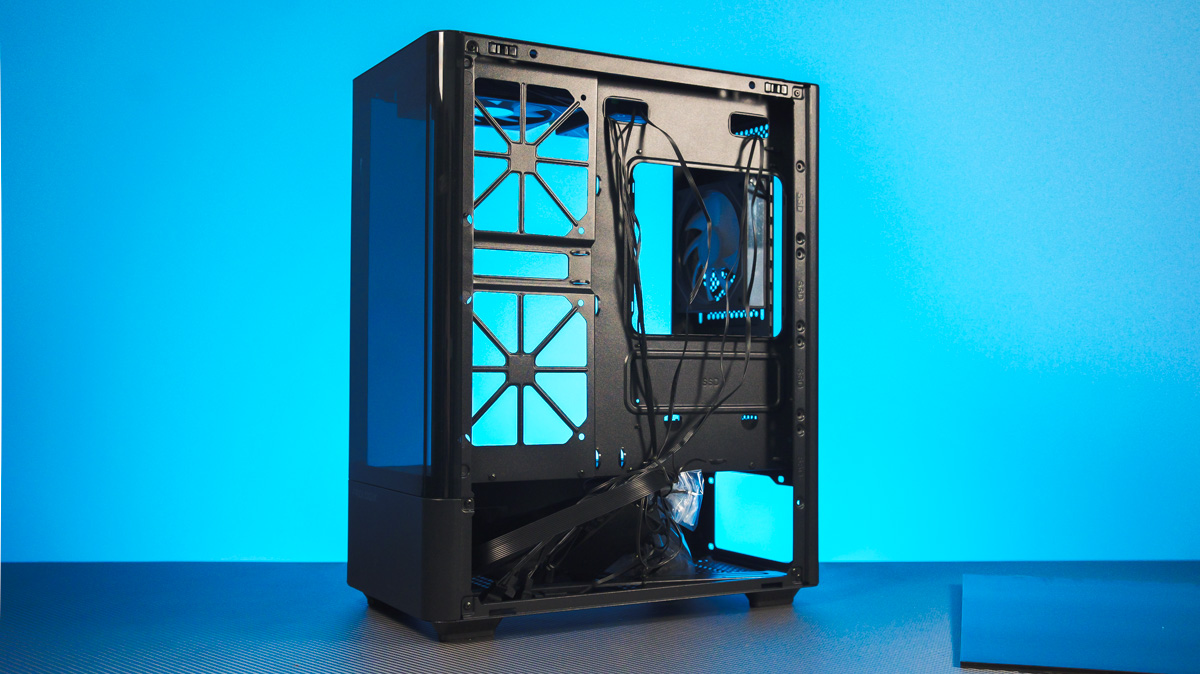
Motherboard compatibility is a bit nuanced. Without side panel fans installed, you can fit a Micro ATX board up to 244×244 mm using the included additional mounting bracket. Without this bracket, the maximum supported width is 213 mm.
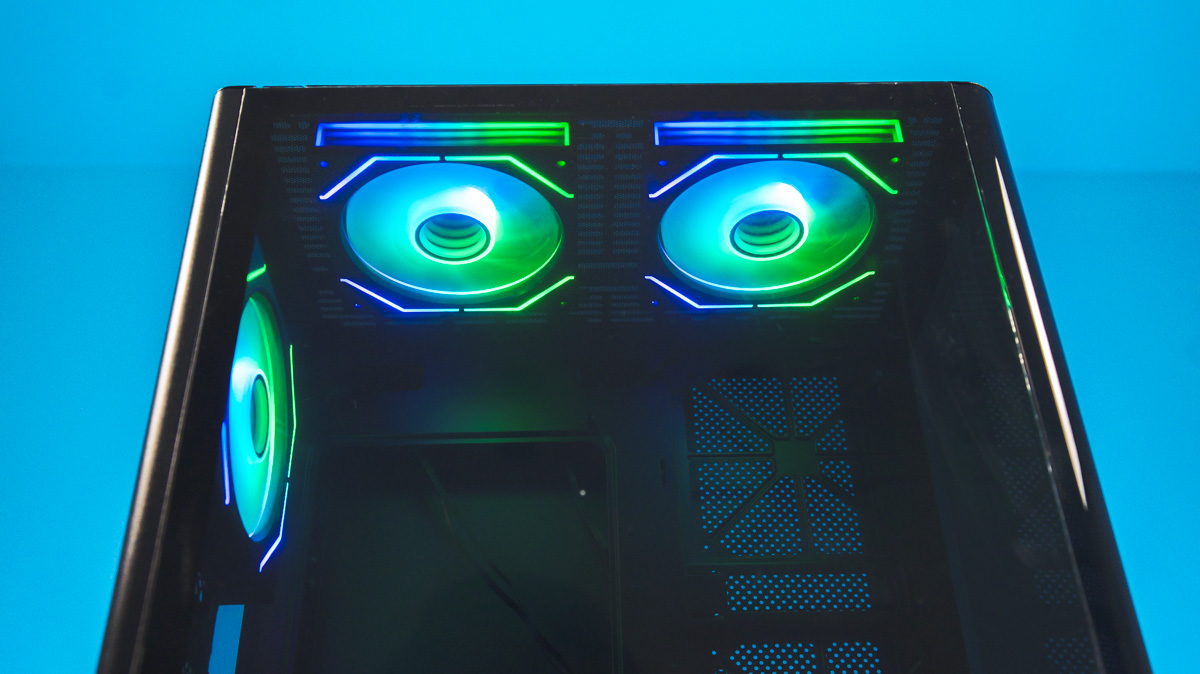
Overall, the case supports up to seven fans. The top panel is the only one compatible with 140 mm fans or 280 mm radiators. It also comes pre-installed with three 120 mm fans featuring quality lighting and an “infinity mirror” effect.
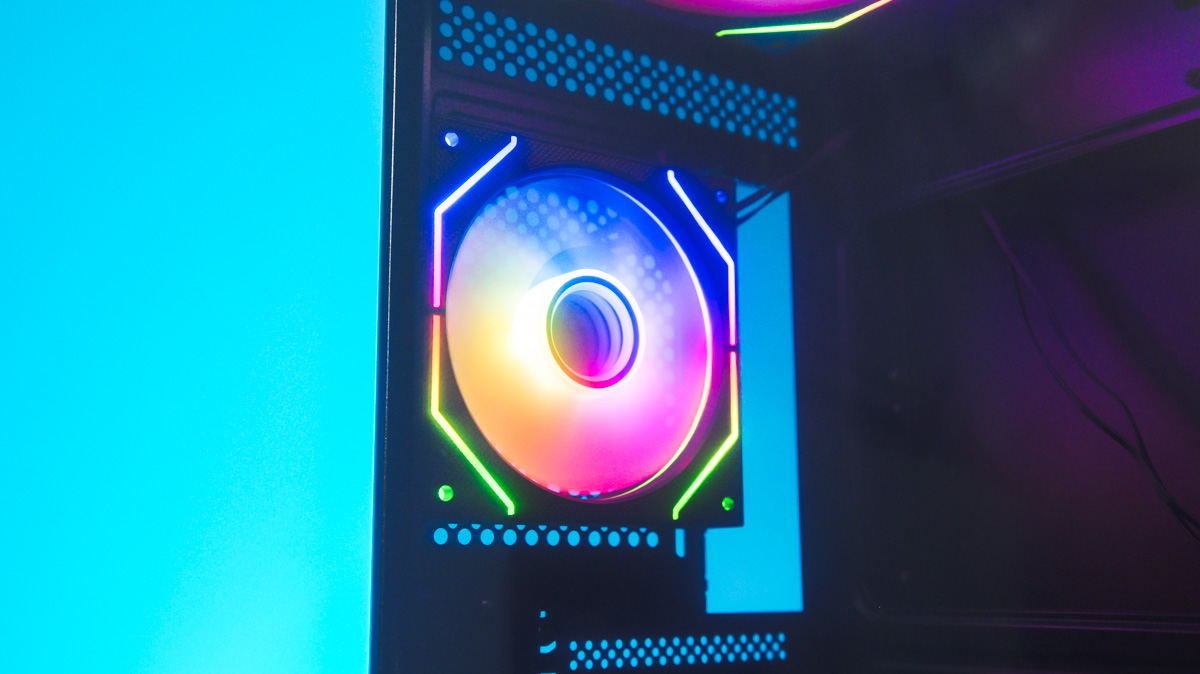
The lighting isn’t just mirrored in the center of the fans but also along the sides, with additional RGB strips at the base. While the fans are somewhat loud, they look impressive and add a visual appeal that I would normally expect from much more expensive cases.
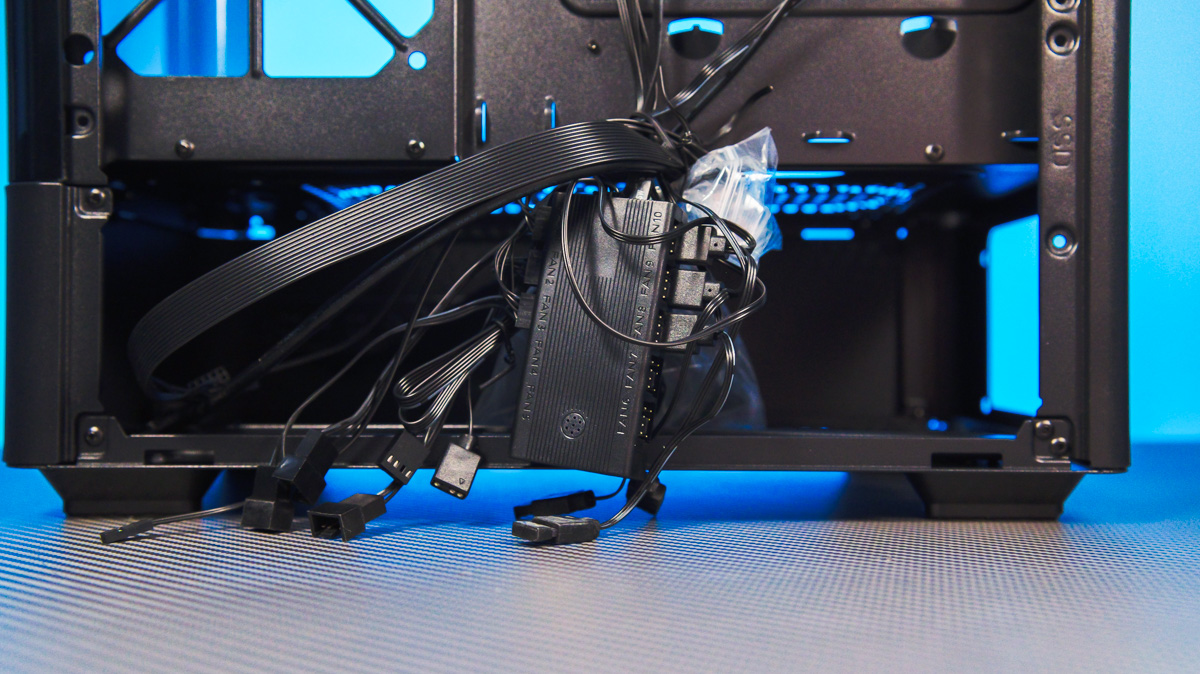
The case’s hub matches the Axon in quality, and the remote control offers the same functionality.
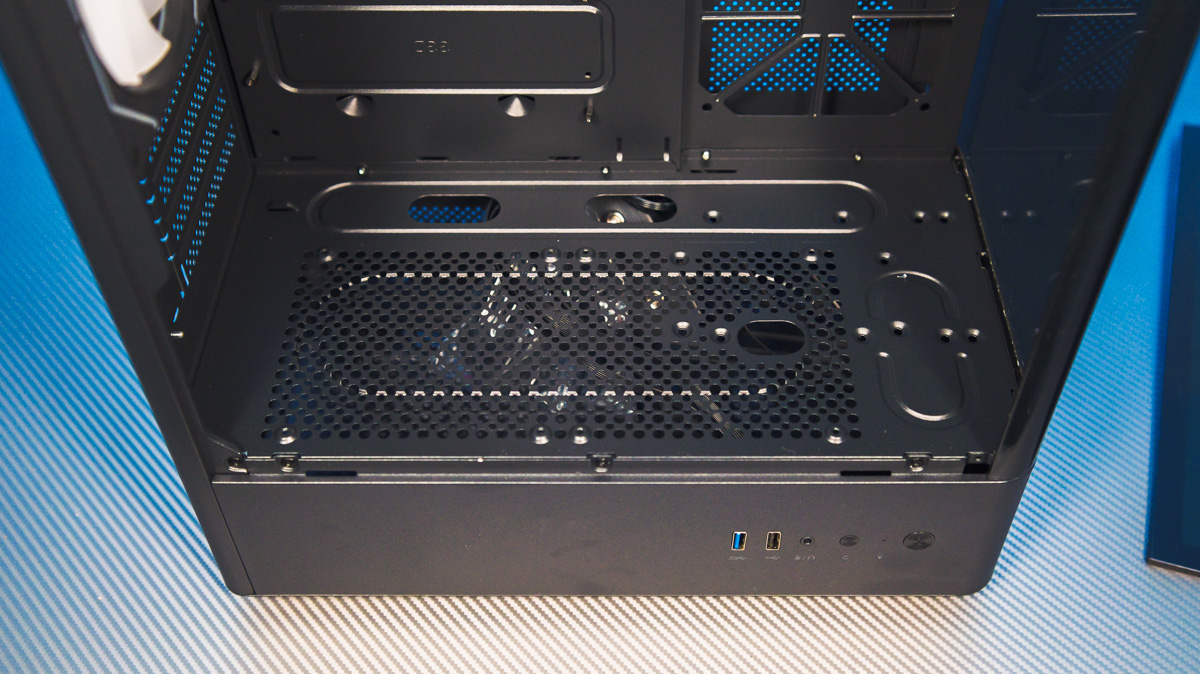
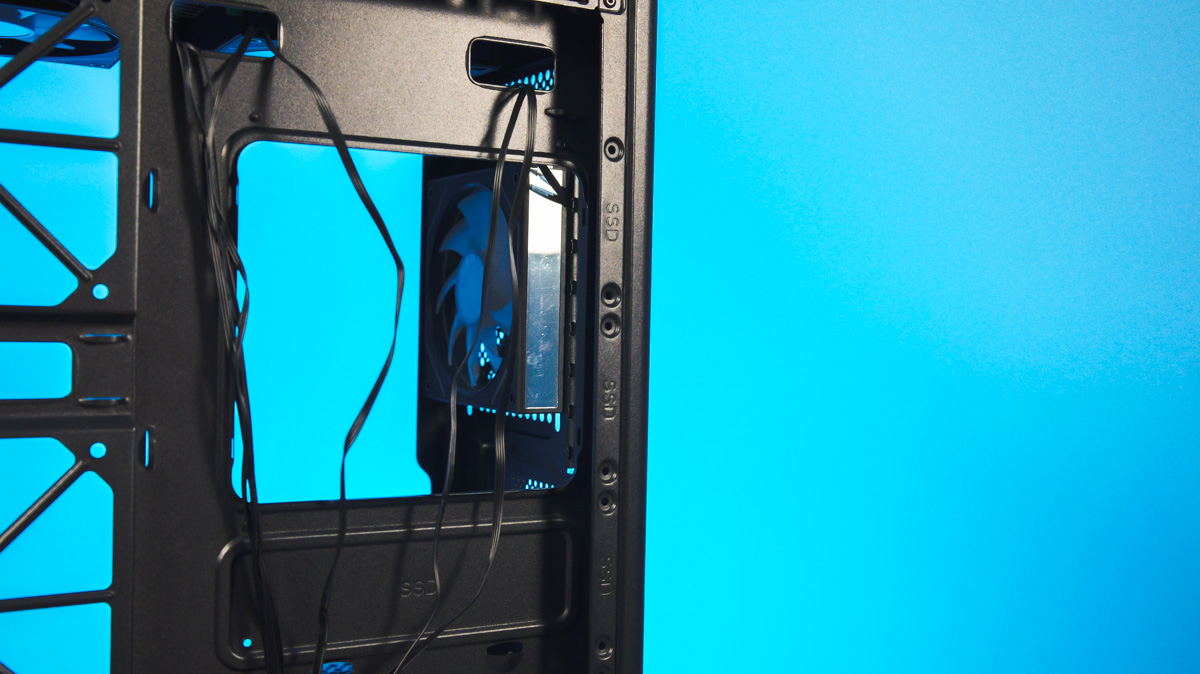
Regarding storage, this is the first time I’ve seen a manufacturer recommend mounting drives by screwing them directly to a structural rib at the base. In practice, the case can accommodate up to seven 2.5-inch drives and two 3.5-inch drives, or as many as nine 2.5-inch drives. We’ve even had comments on our YouTube channel asking about fitting five to six 2.5-inch drives, so there’s clearly demand for this kind of capacity.
Overall, the acrylic front panel makes the Prologix Lumi stand out as quite unusual. Typically, transparent panels are designed to showcase maximum lighting, but here the brightness is noticeably subdued. This gives the case a unique visual character that’s hard not to appreciate.
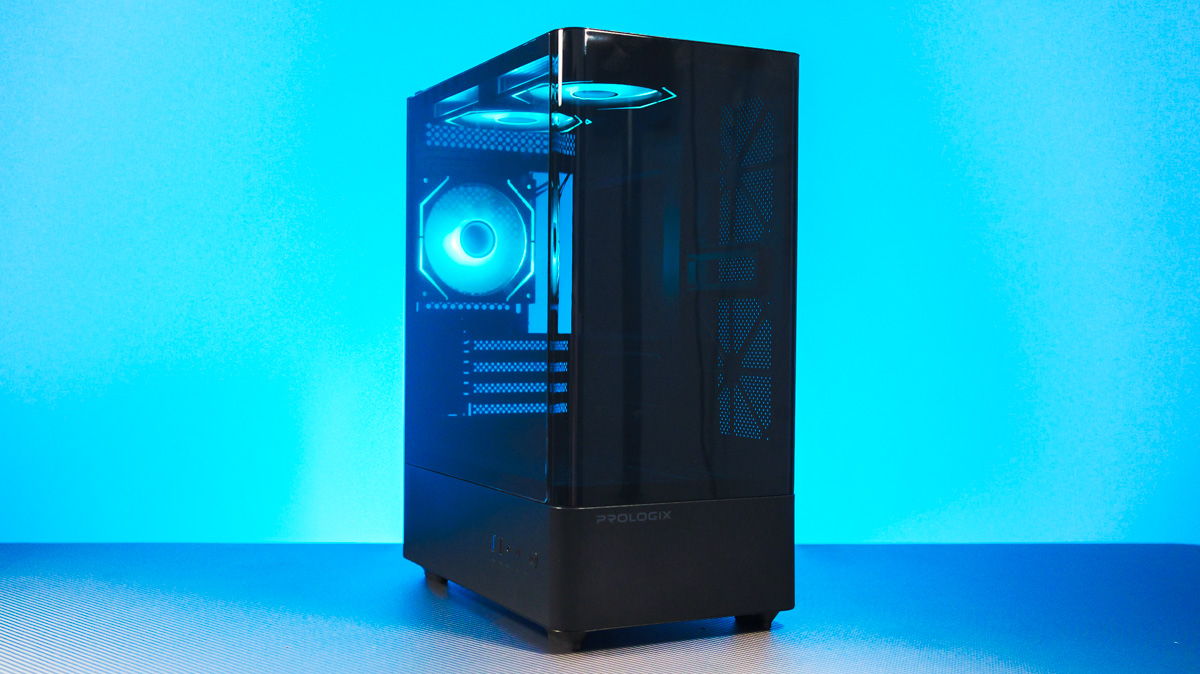
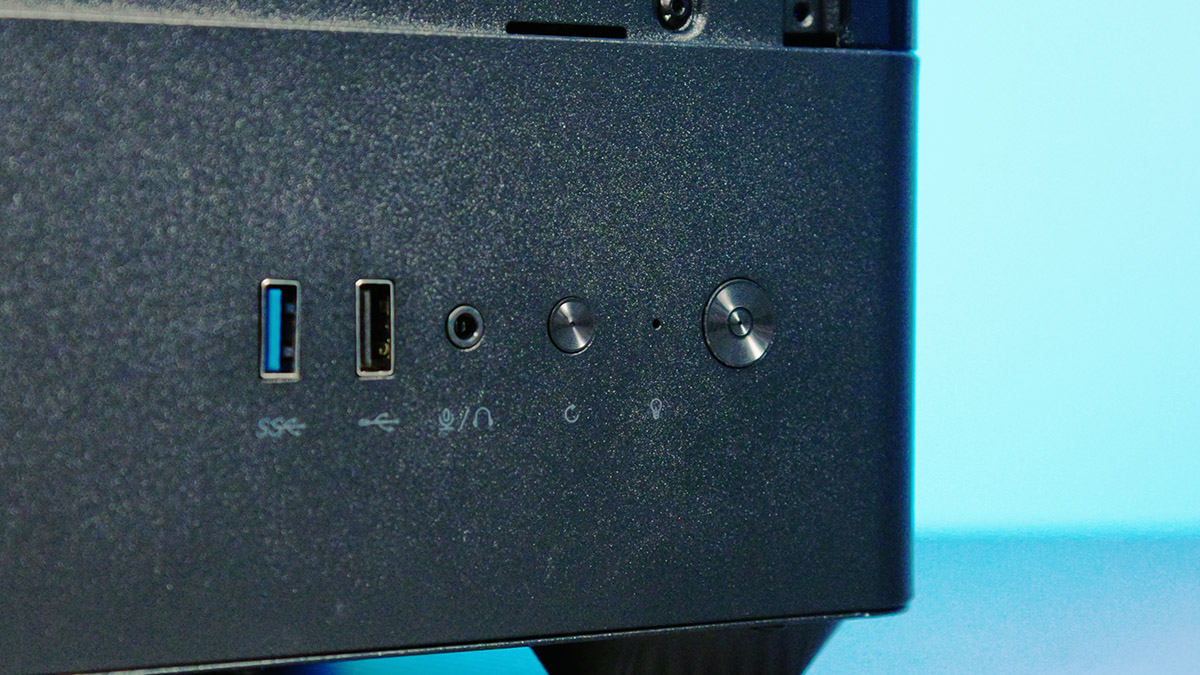
By the way, the tinted panel can be quite practical if you plan to keep the Prologix Lumi or Lumi Mesh on your desk. For example, the front I/O panel is located at the bottom side rather than the top. It includes two Type-A USB ports – one of which is USB 2.0 – along with audio jacks, and power and reset buttons.
What might surprise you is the ability to remove the side panels without screws. The latches are very tight and secure, but there are subtle metal tabs to help with opening them by hand. As for cable management, it’s generally not as good as in the Axon, but not dramatically worse – the cutouts are there, though smaller at the bottom, and one of them interferes with installing a fan.
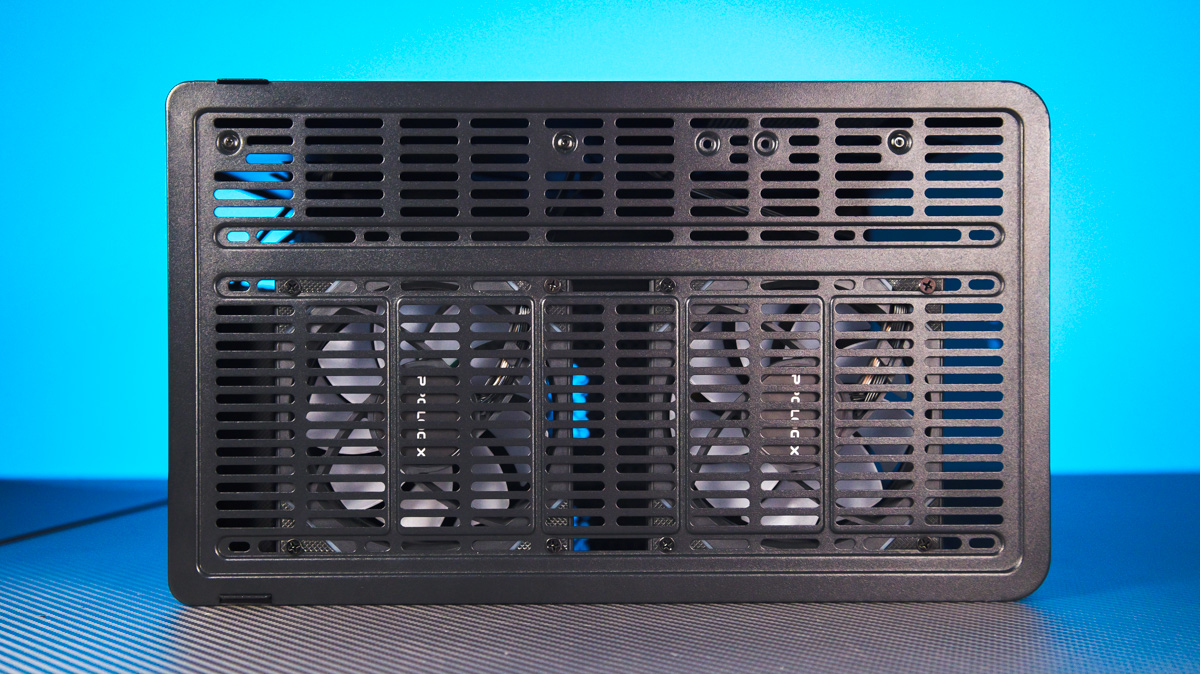
Other details I noticed: the bottom of the case has markings indicating where to mount 3.5-inch and 2.5-inch drives. The top ventilation features elongated slits rather than a simple mesh. Additionally, the bottom area near the hard drives is fully perforated to allow airflow along the entire length. This design supports installing fans on the top cover, enabling you to configure either intake or exhaust airflow from the bottom.
I recommend setting up the airflow as exhaust because there’s no dust filter on the bottom – just perforations. However, since the case is designed primarily for desktop use, this isn’t a major issue.
Conclusions
In these cases, I noticed several unexpected features. The design is well thought out without compromising airflow. There is a large number of mounting spots for SSDs. Fan hubs with speed control are included. A curved transparent panel – though made of acrylic – is offered at an affordable price point. So, it’s not surprising to see models like the Prologix Axon, Prologix Lumi and Prologix Lumi Mesh appearing in prebuilts, as they offer solid value.
Read also:
- Strange Relationship Between Microsoft and OpenAI
- ChatGPT Destroys the Competition: Era of Super Apps Has Arrived
- Gabe Newell’s Starfish Neuroscience Сhallenges Neuralink

