
© ROOT-NATION.com - Use of content is permitted with a backlink.
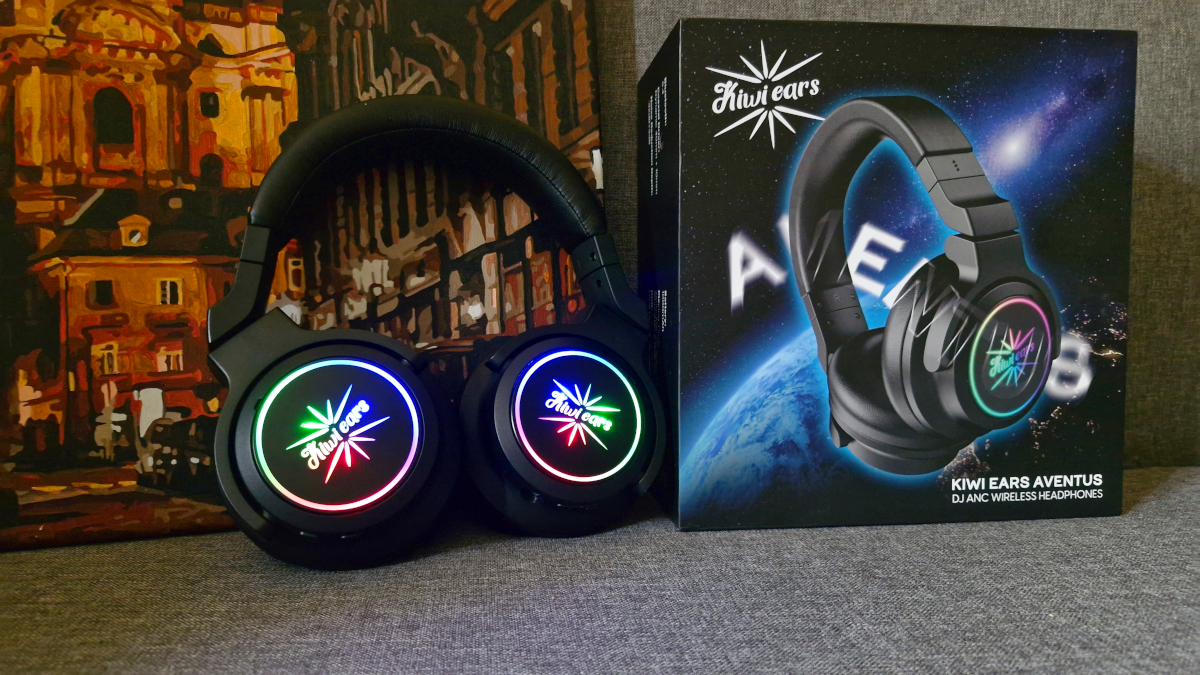
Today, I’m taking a look at an interesting pair of full-sized headphones – the Kiwi Ears Aventus. This model is marketed as a headset for both gamers and DJs, which is an unusual combination and immediately caught my attention. But are these headphones truly tailored only to such specific audiences, or could they also appeal to users outside those groups? That’s the question I’ll be exploring. Along the way, I’ll take a closer look at both the strengths and weaknesses of the Kiwi Ears Aventus.
Read also:
- Kiwi Ears Airoso Review: 5-driver IEM Headphones for Audiophiles at an Affordable Price
- Kiwi Ears Orchestra Lite IEM headphones review: Wired, modular, honest
TABLE OF CONTENTS:
Kiwi Ears Aventus specifications
- Type: full-size, closed
- Drivers: dynamic, 40 mm + 10 mm, coaxial configuration
- Frequency range: 20 Hz – 40 kHz
- Connection: Bluetooth 5.4
- Codecs: SBC, AAC
- Noise cancellation: ANC (array of 5 microphones, up to -32dB)
- Connectors: USB Type-C, 3.5 mm
- Battery: 1000 mAh
- Battery life: up to 82 hours
- Weight: approx. 350 g
- Features: Harman tuning, Multi-Device, foldable design, case included, illuminated ear cups, voice assistant support
Price and positioning
The positioning of the Kiwi Ears Aventus is somewhat unconventional – it’s aimed at both gaming enthusiasts and DJs. The headphones are priced at around $90 (or €80), though they’re occasionally available for just over $70 through the brand’s official website thanks to periodic discounts.

So while the Aventus isn’t exactly a budget model, it’s still reasonably priced and accessible. What makes it stand out, though, are its specifications. The headphones use a dual dynamic driver setup – one 40 mm and another 10 mm – which is relatively uncommon in the world of full-sized headsets. That alone suggests the potential for solid audio performance, and it’s something I’m particularly interested in testing for myself.
Package contents

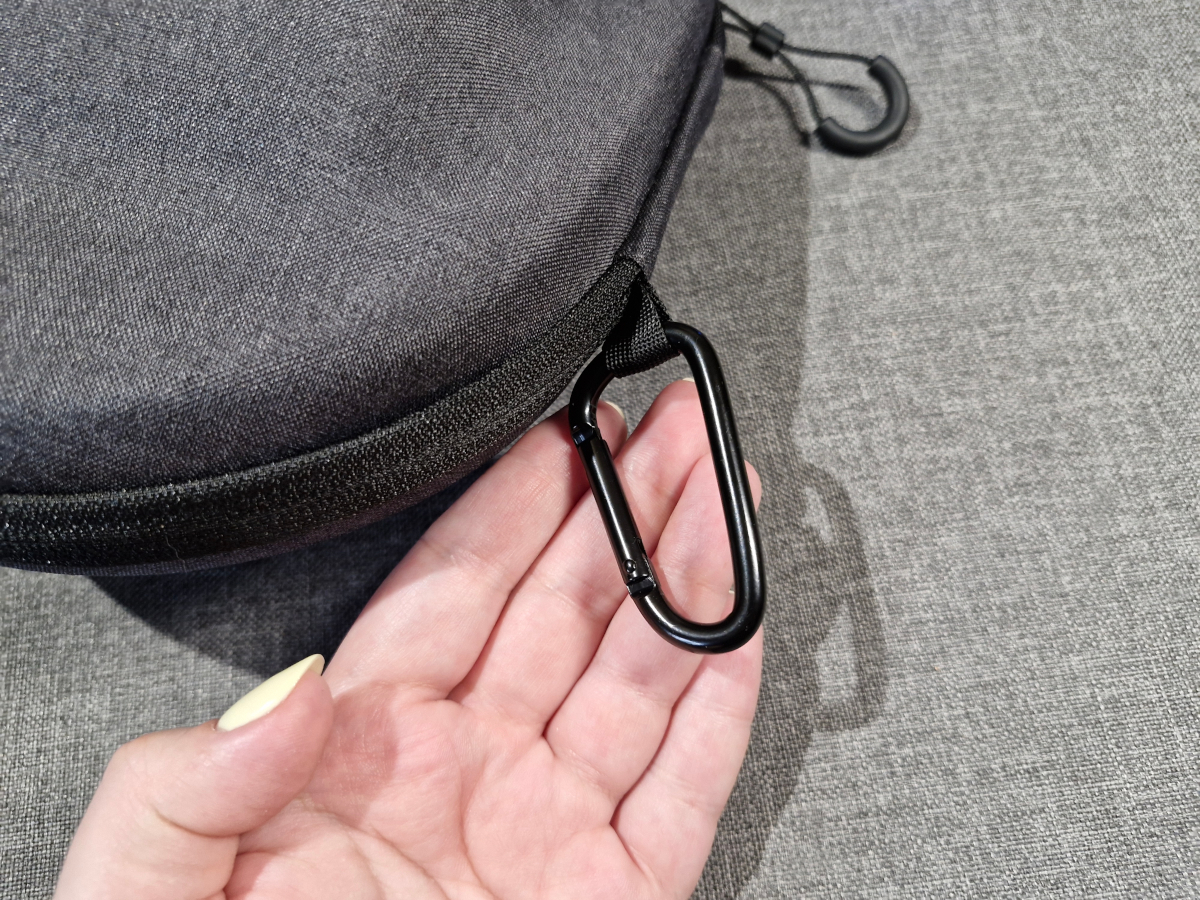
The Kiwi Ears Aventus headphones arrive in a fairly large, branded box that resembles a storage case. To open it, you pull a small tab on the side. Inside, the first thing you’ll notice is a rigid carrying case. It’s covered in fabric, includes a carabiner for attaching it to a backpack, and features an unusual, angular shape. The design is clearly intended to accommodate the headphones in their folded state, helping reduce the amount of space they take up during transport.
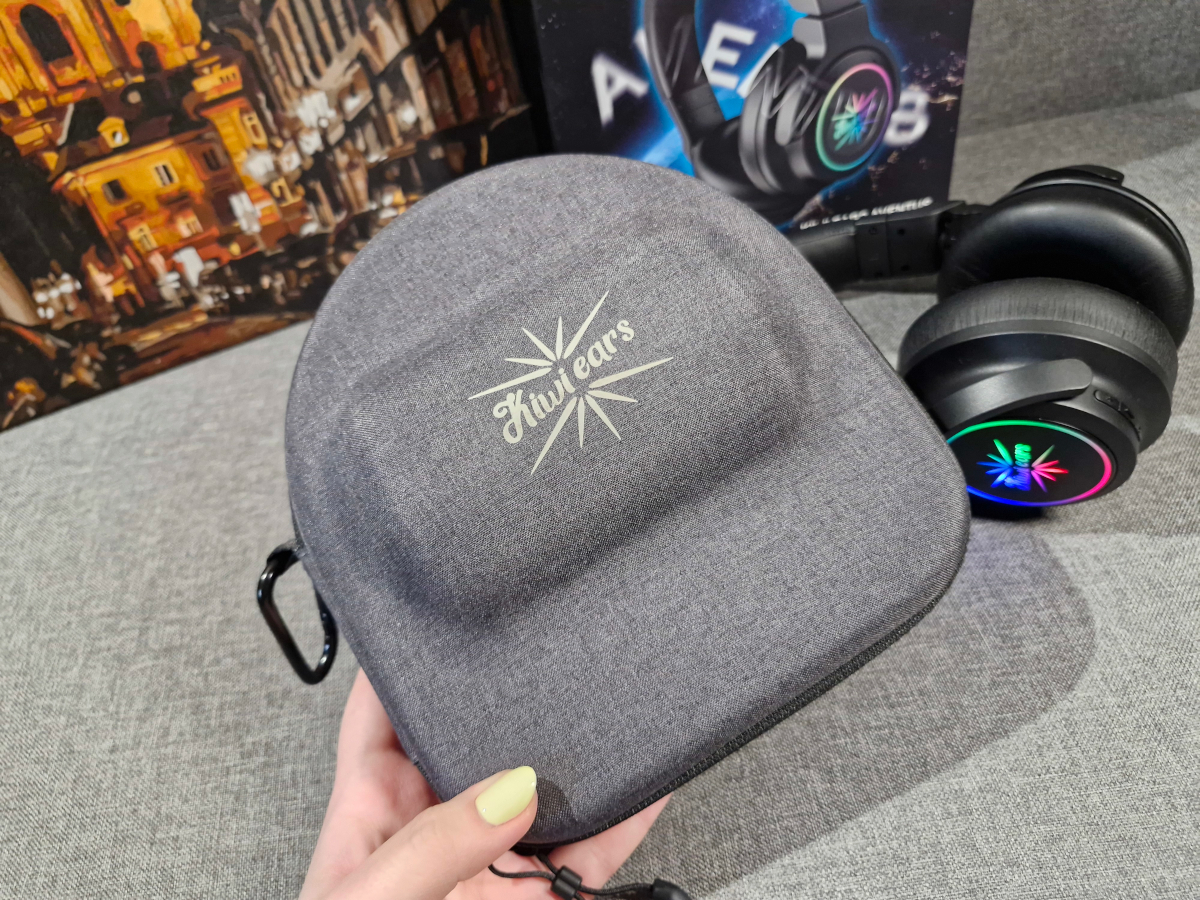
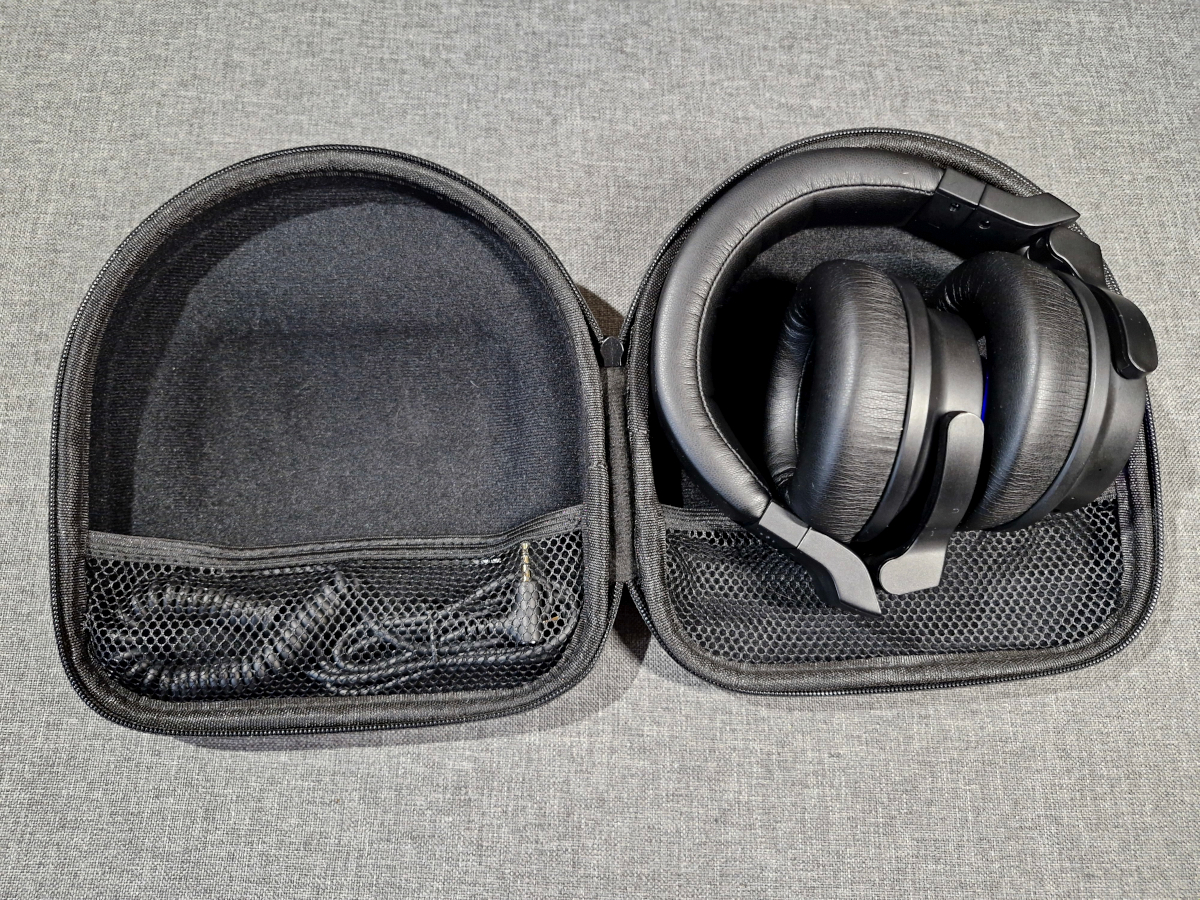
Inside the case, you’ll find the headset itself along with a few internal pockets that hold the included cables. There are three in total: a short USB-A to USB-C cable for charging, as well as two full-sized options for wired use – a 3.5 mm to 3.5 mm cable and a 3.5 mm to USB-C cable.
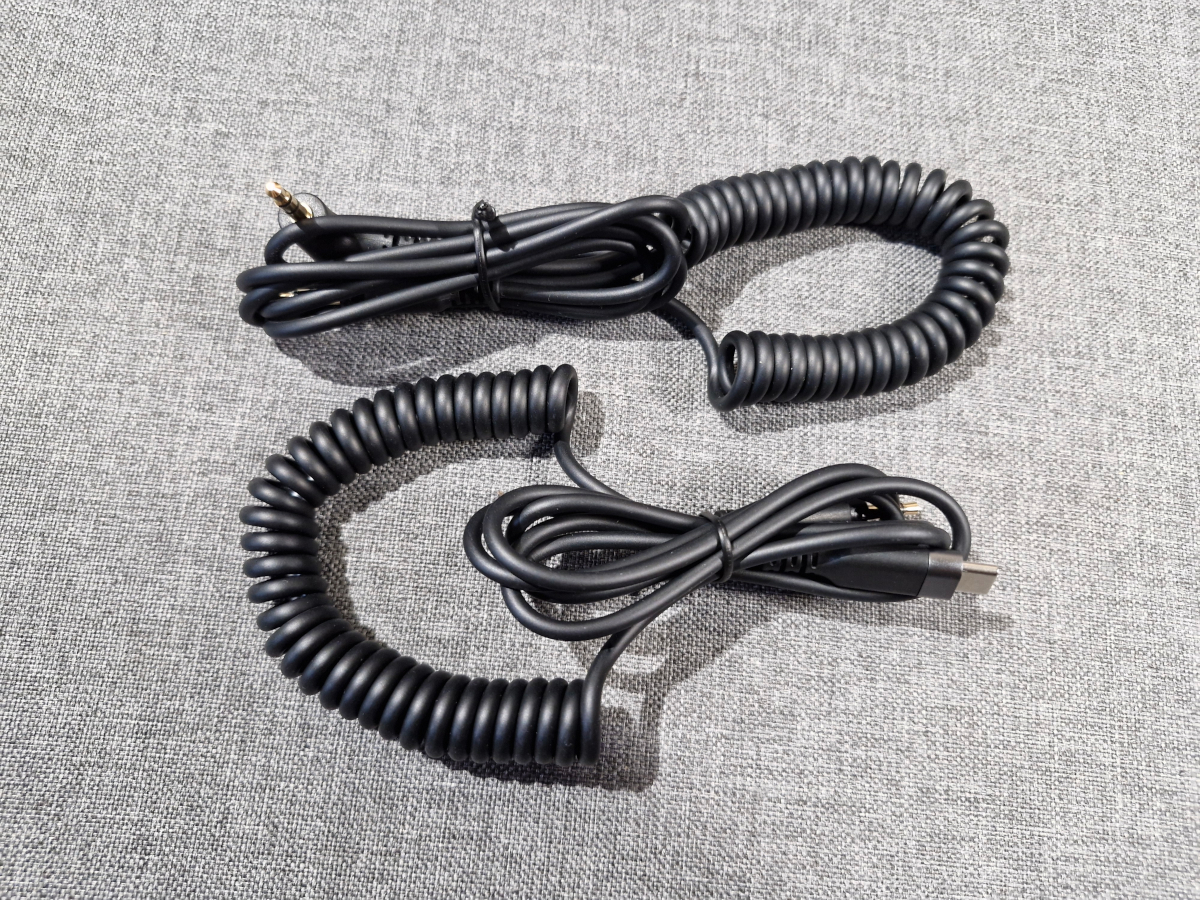
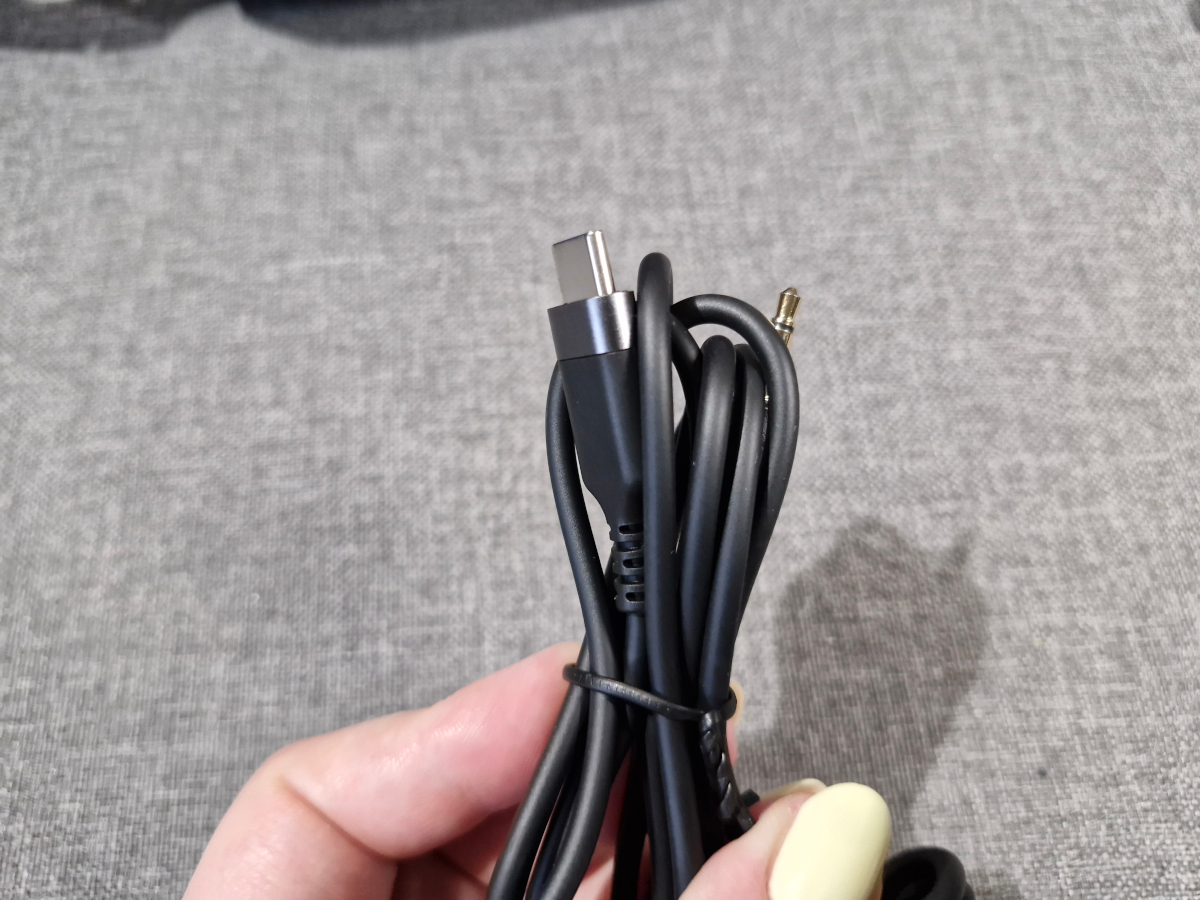
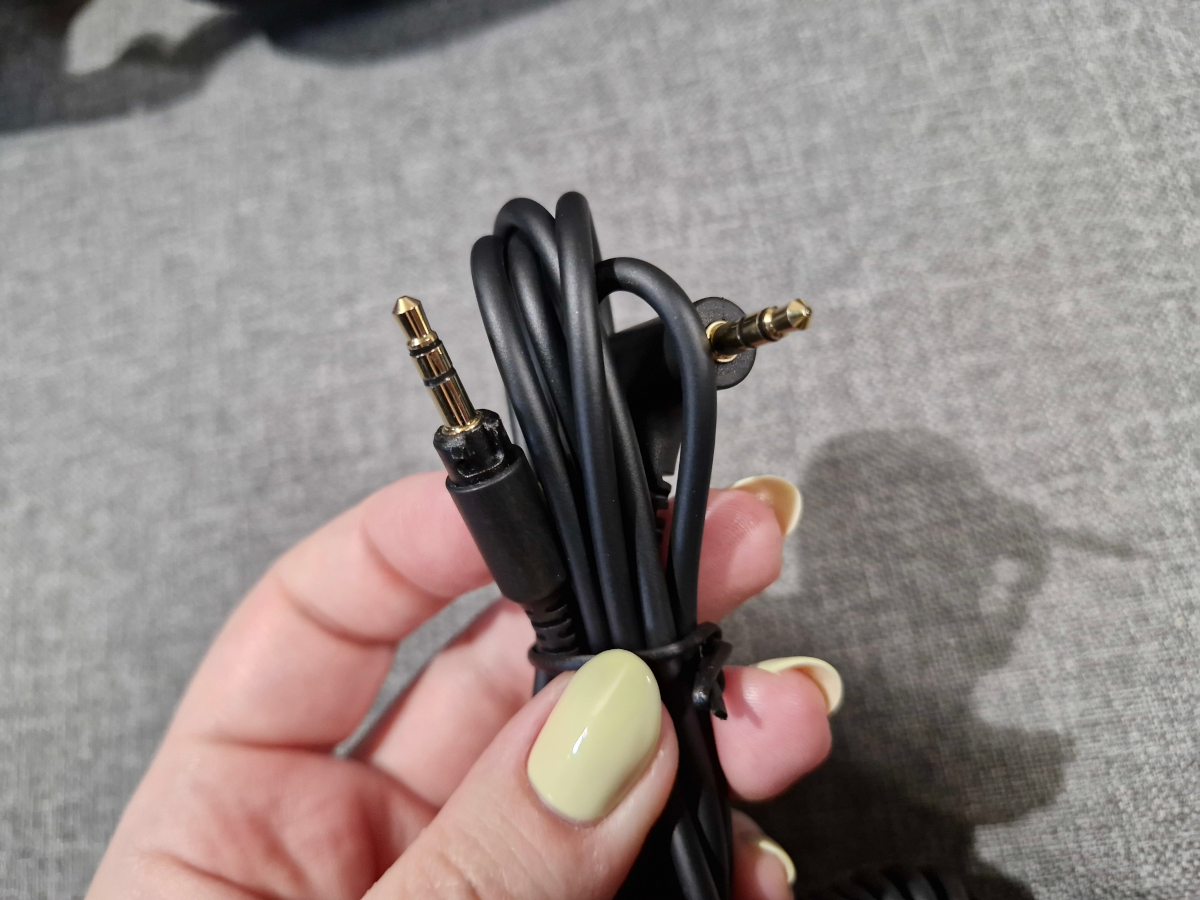
One interesting detail is that part of the cable on both audio connectors is coiled. This gives a bit more flexibility during movement – useful for DJs during sets, or simply if your PC tower is positioned farther away. It’s been a while since I’ve seen coiled cables on headphones, but here they serve as a practical, slightly nostalgic touch. It reminded me of an old pair of DJ-style wired headphones I once had from SVEN, which even came with a 3.5 mm to 6.35 mm adapter. I used those for years – so this detail brought back some memories.
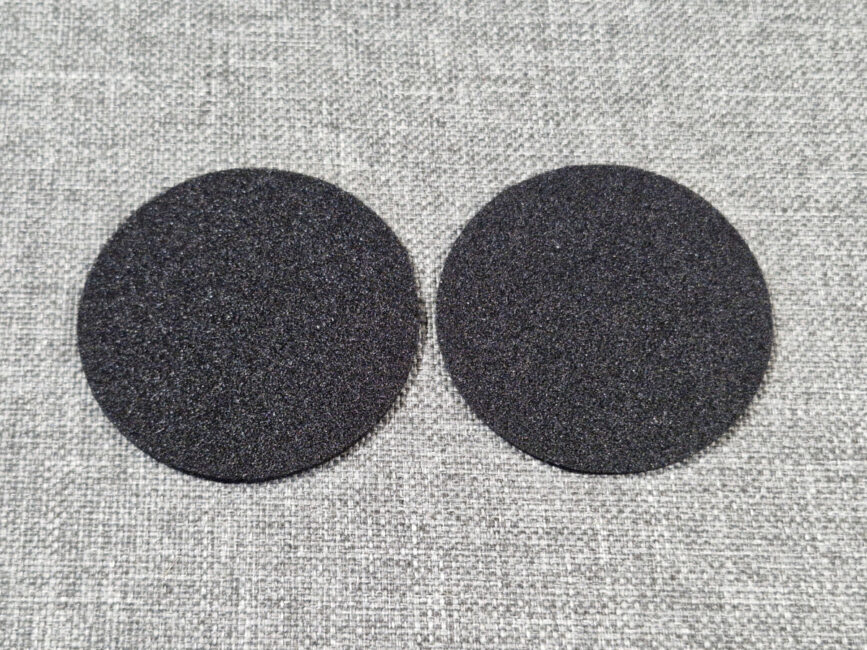
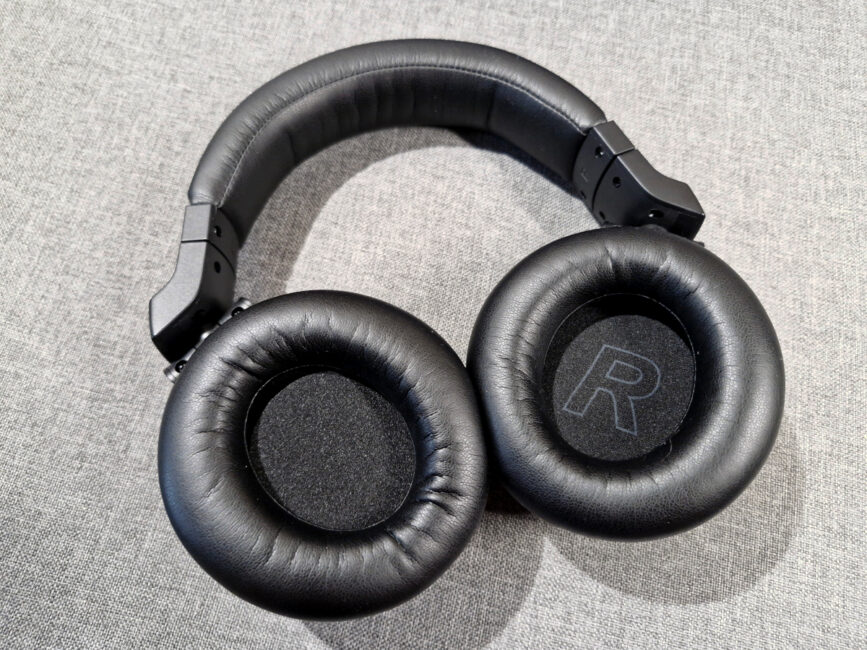
As for the rest of the kit, beyond the usual documentation, you also get a set of foam inserts for the earcups. These can be used to slightly soften or balance the sound, depending on your preference.
Read also:
- Kiwi Ears Quartet Review: Impressive IEM Headphones With Built-in Tone Switches
- Kiwi Ears Quintet Headphones Review: Symphony of Balanced Sound
Design, construction and main elements
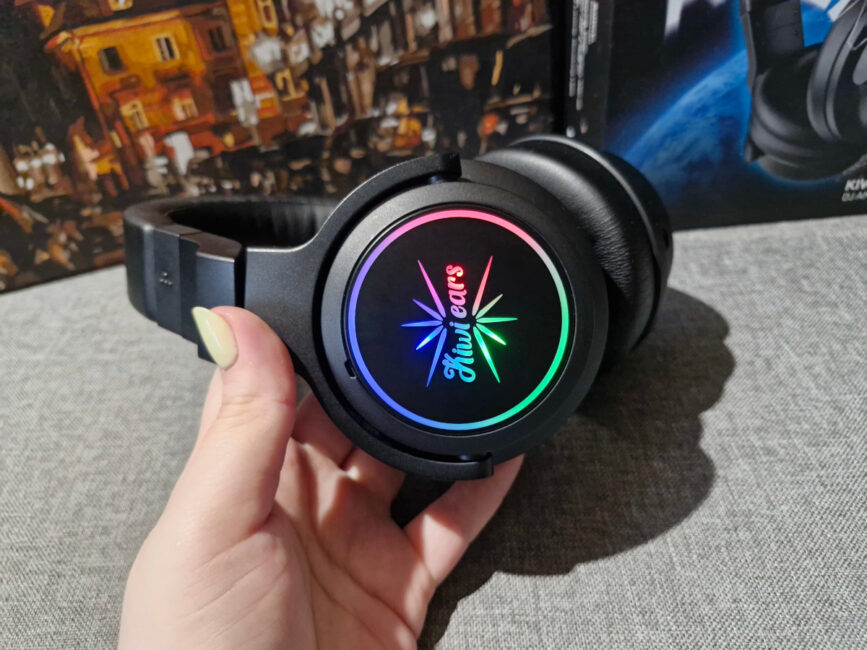
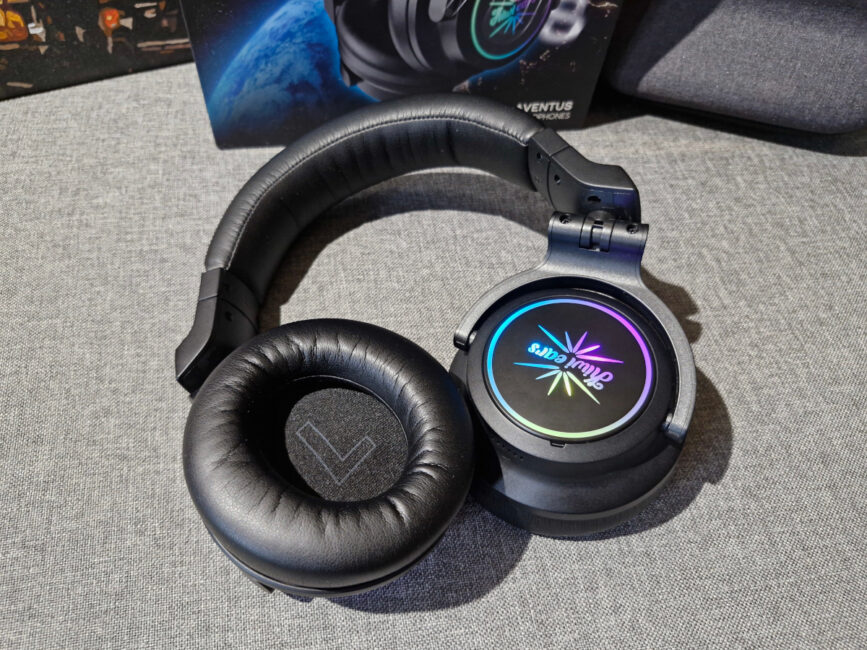
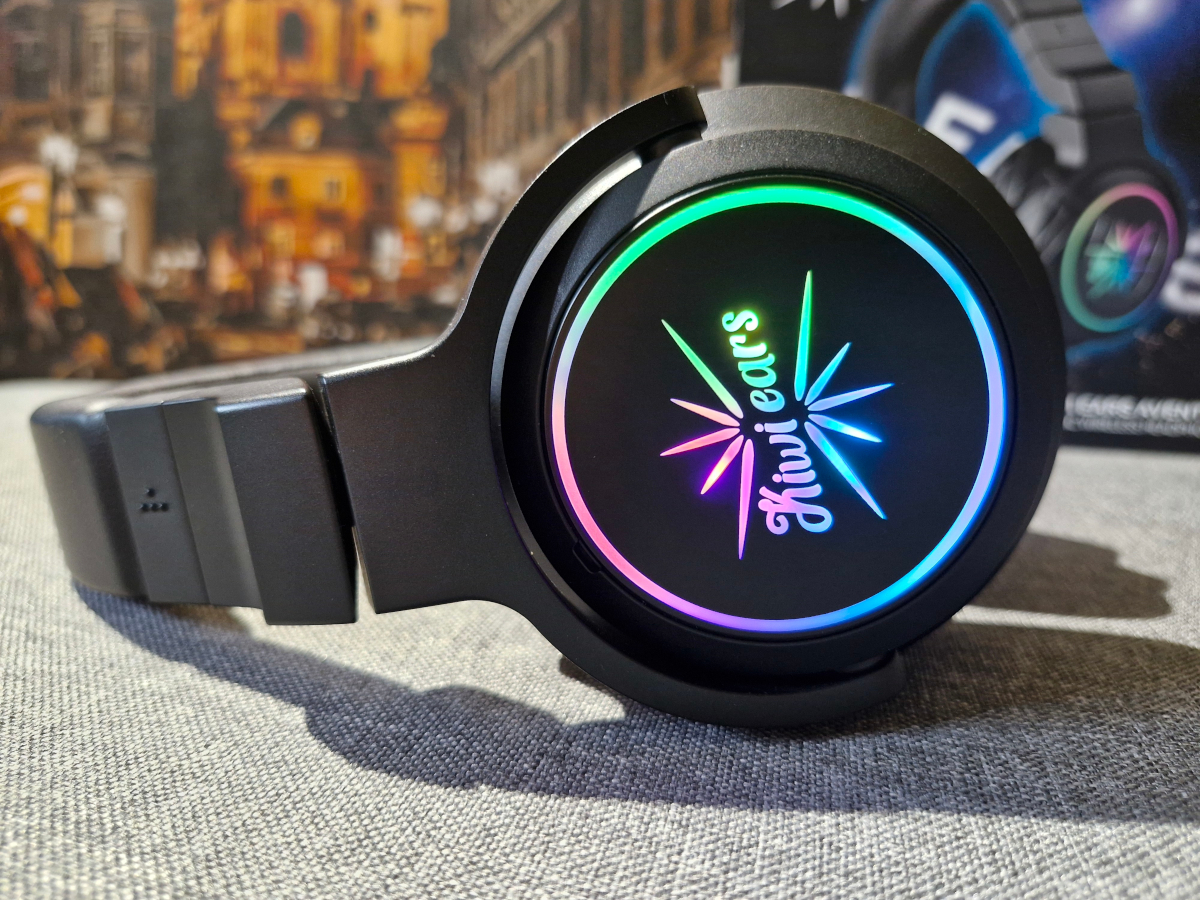
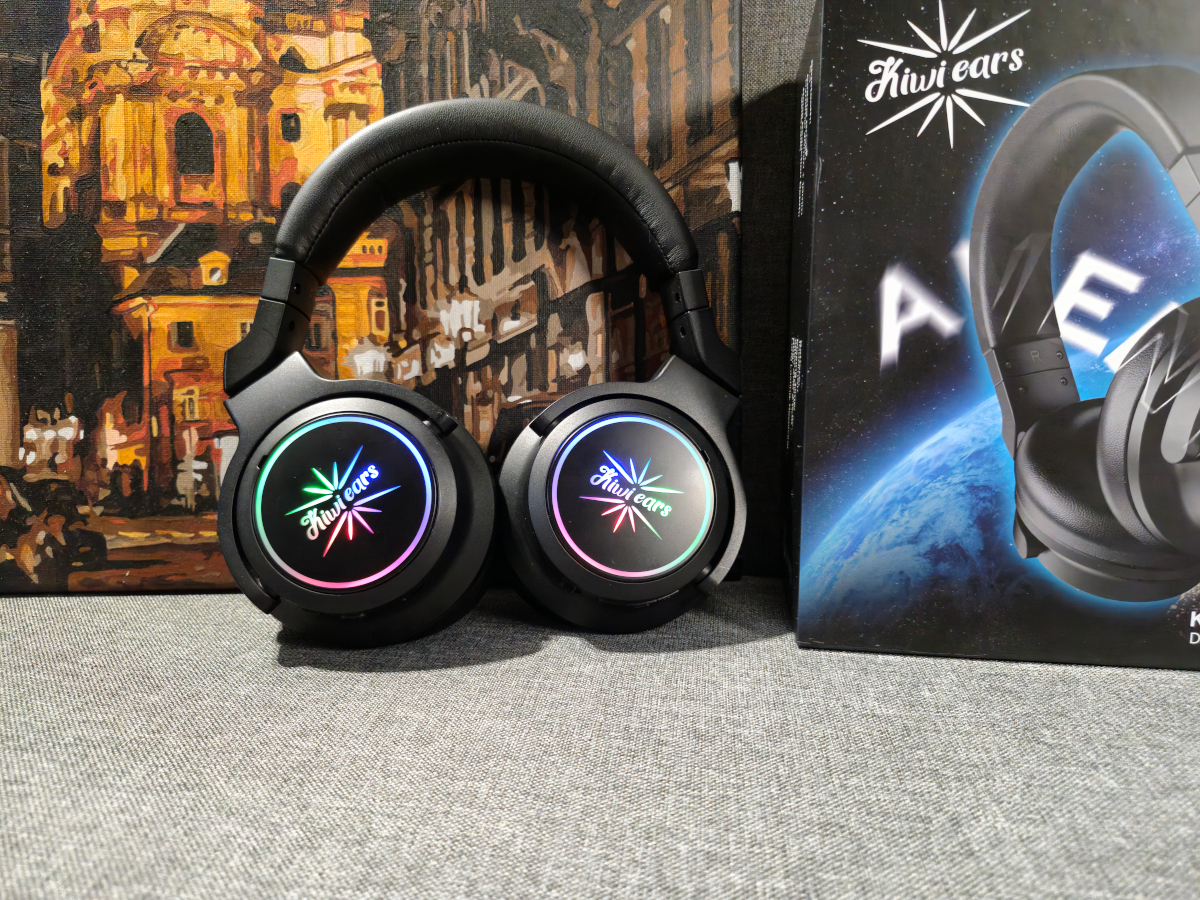
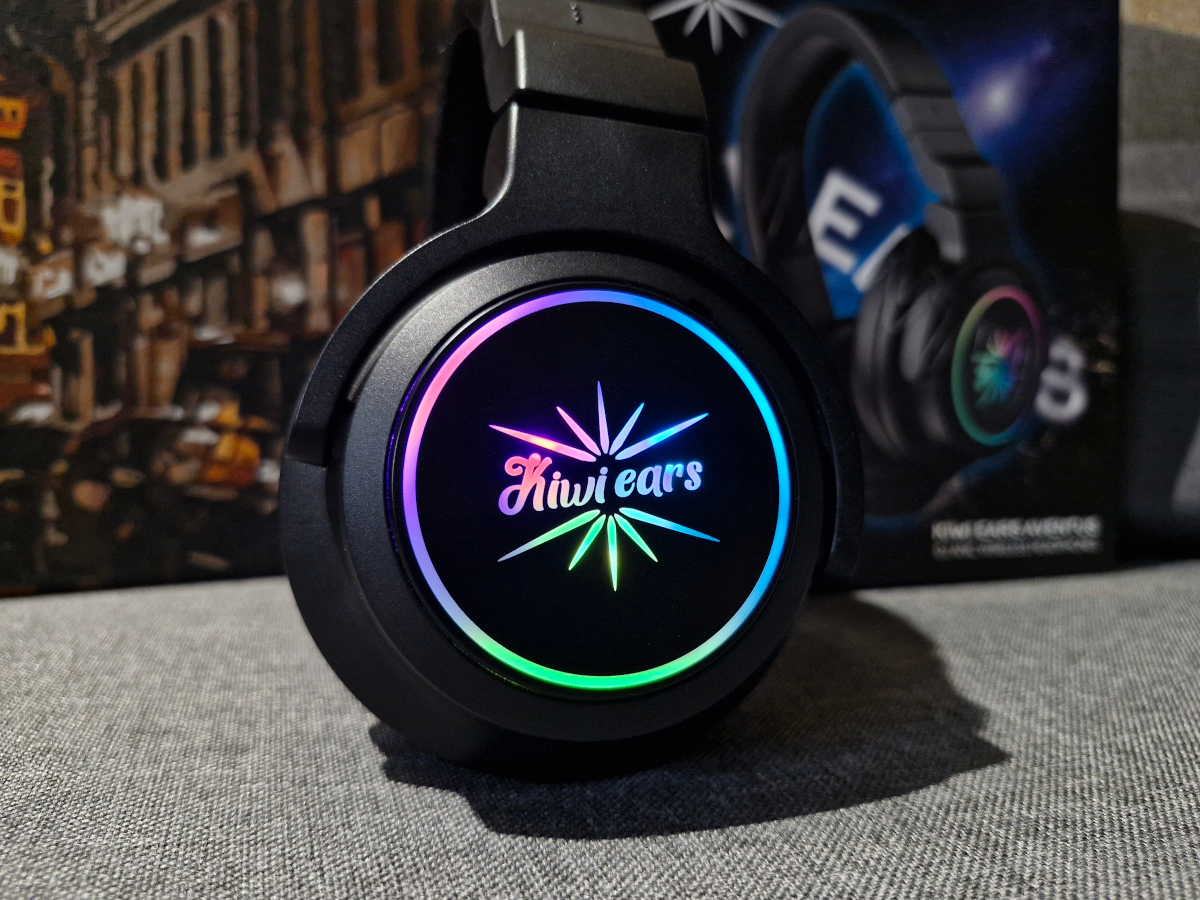
The design of the Kiwi Ears Aventus strikes a balance between familiar and distinctive. On one hand, it follows the standard form factor of full-sized headsets. On the other, it stands out thanks to a prominent lighting feature – the brand’s logo illuminated on the outer side of each earcup. This lighting serves as a visual accent and can be set to one of three modes: solid, pulsing, or off entirely.
While RGB elements are nothing new in this category, the implementation here feels more refined than in many competing models. In terms of aesthetics, it’s one of the more visually polished lighting designs I’ve seen on a headset in this price range.
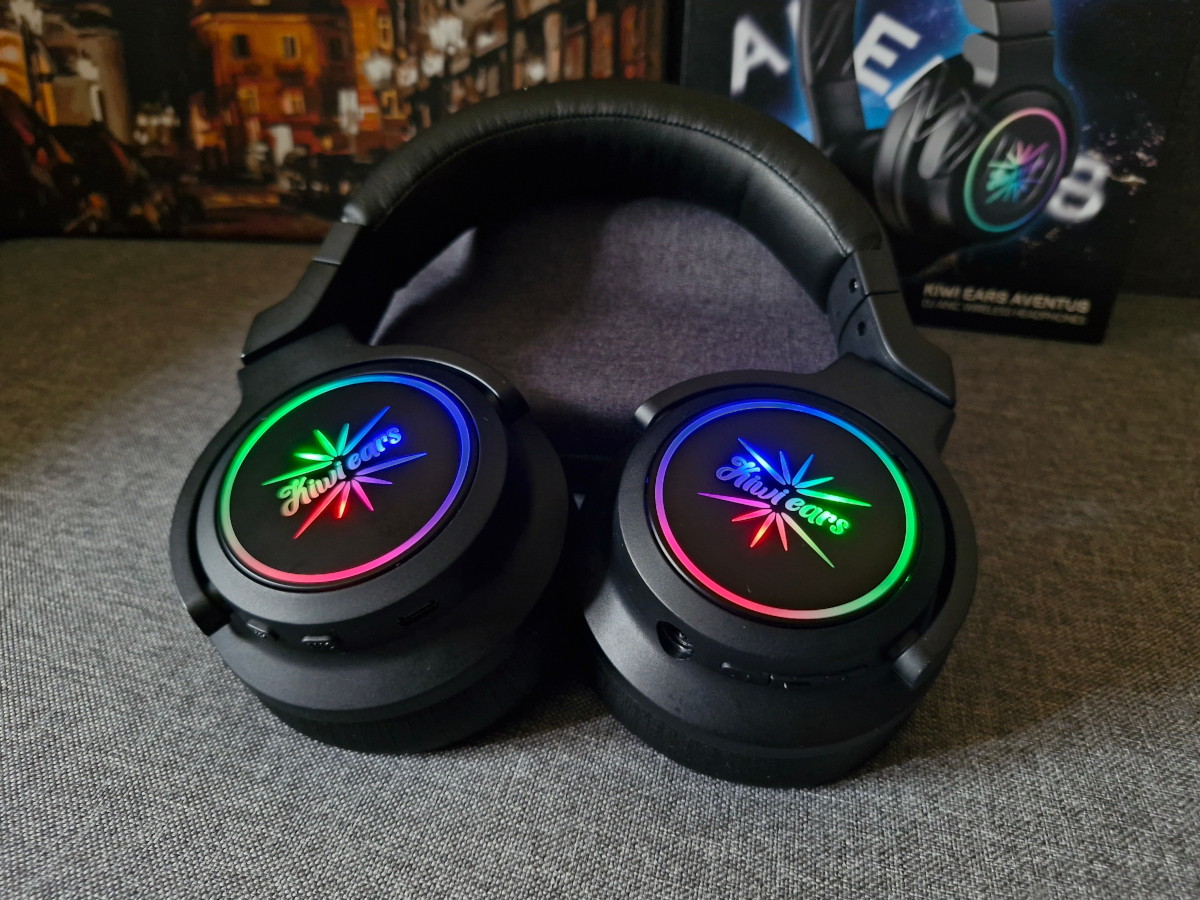
The main parts of the Aventus housing are made from high-quality matte plastic that does a good job of resisting fingerprints and visible wear. There are also some metal elements, but these are limited to the outer side of the headband extension. If you don’t adjust the headband size during use, the metal components remain mostly hidden.
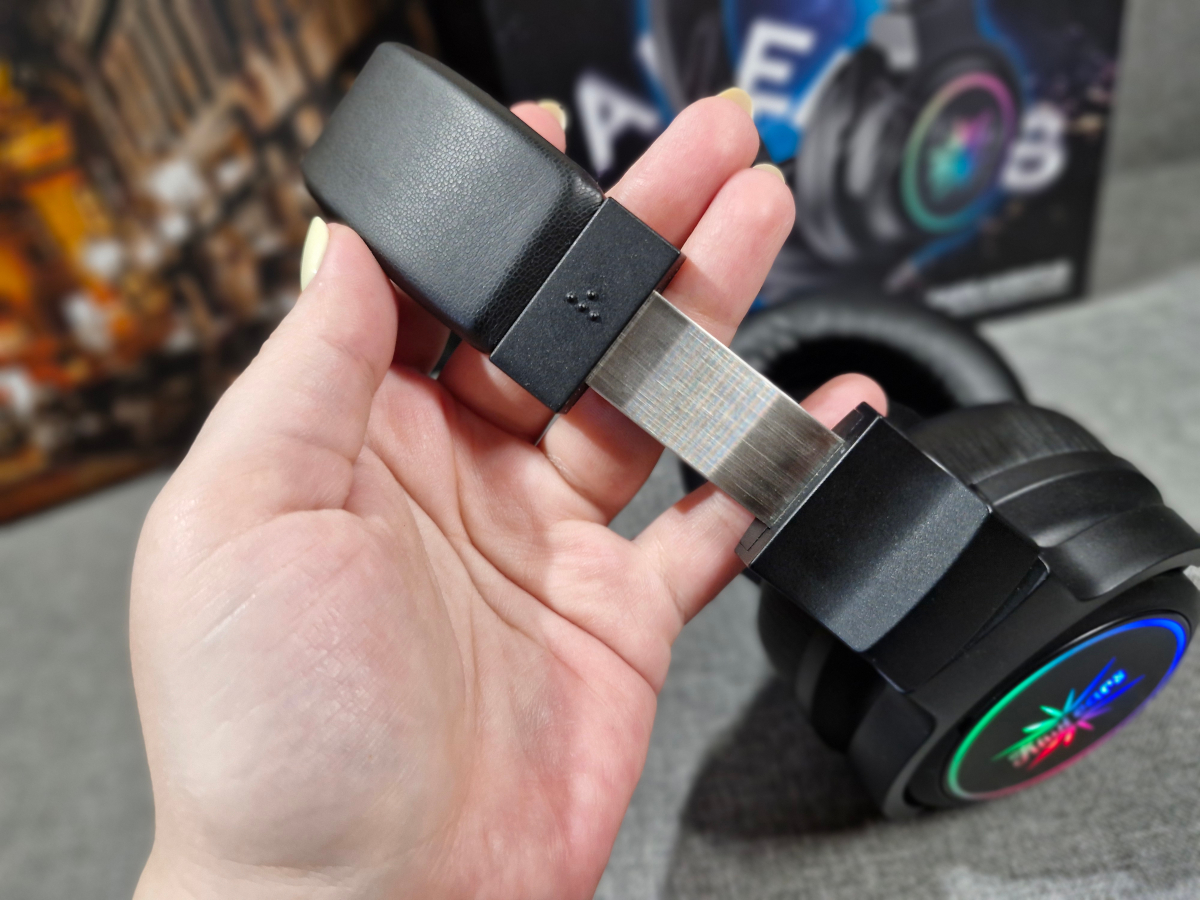
The headband is covered with soft protein leather and features a layer of foam padding on the underside for comfort. On the outer side of the headband, there are raised Braille-style markings indicating “L” and “R,” designed to help users easily identify the correct earcup in low-light conditions or for those with visual impairments.
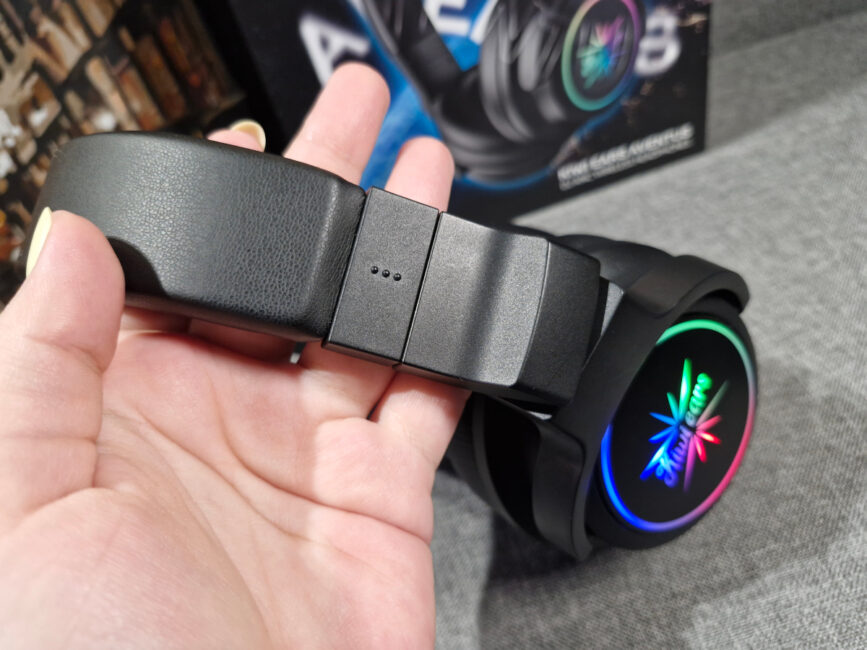
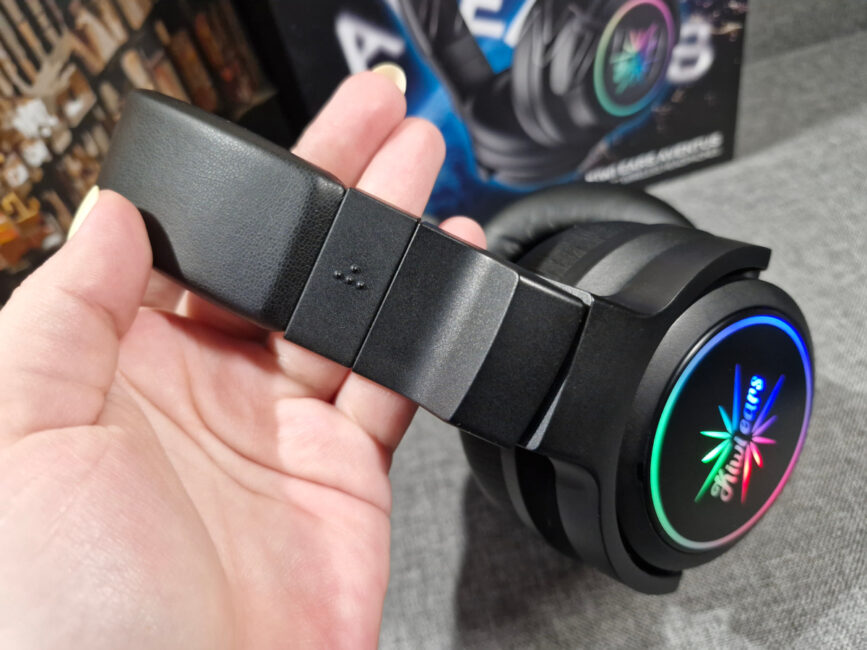
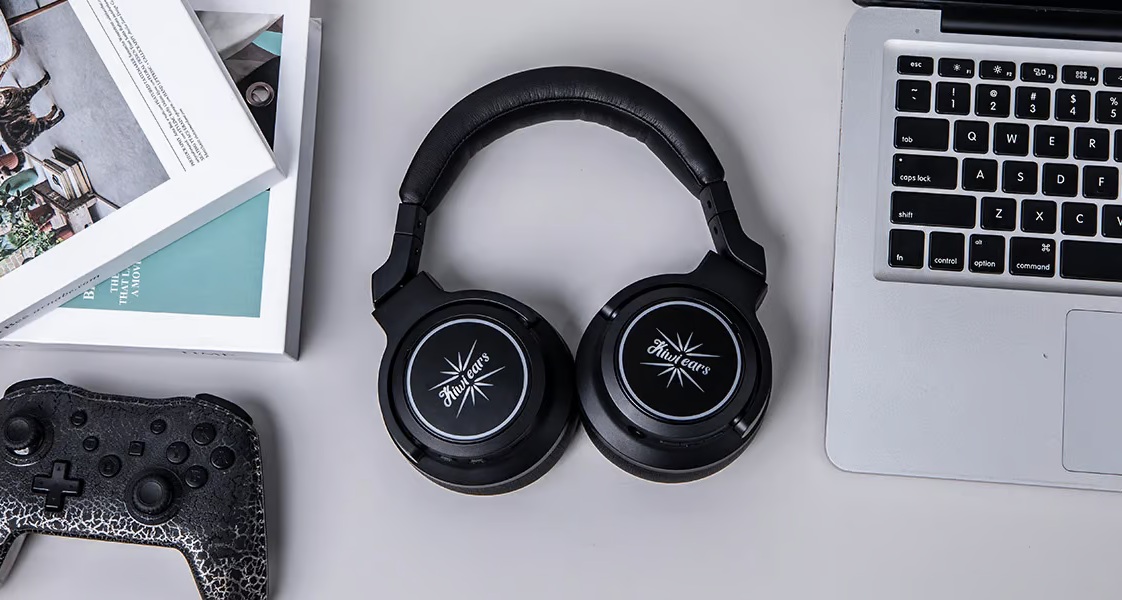
Moving on to the earcups – they are perfectly circular and, as mentioned earlier, feature decorative panels with lighting on the outside. The ear cushions use the same protein leather material as the headband and include a generous layer of soft foam for comfort.
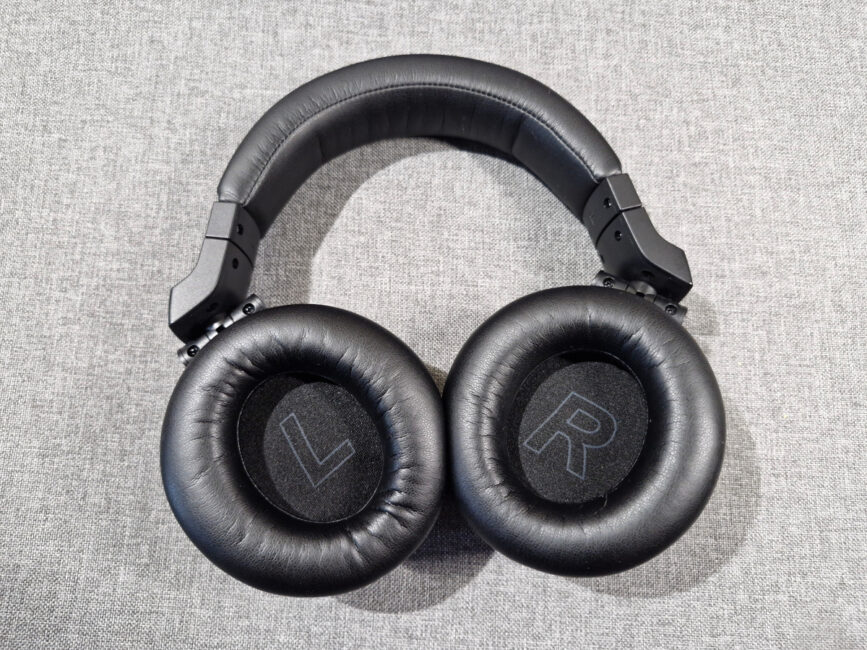
Another important feature of the Kiwi Ears Aventus is their foldable design and swivel earcups. This makes them easier to store and transport, and also more comfortable to wear around the neck when not in use, as the ear cushions won’t press uncomfortably against the chin.
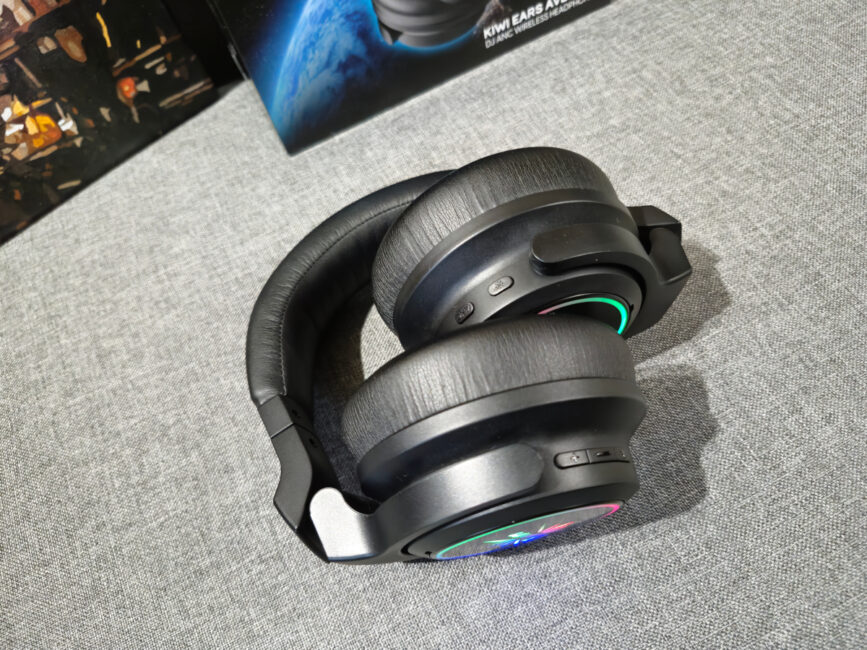
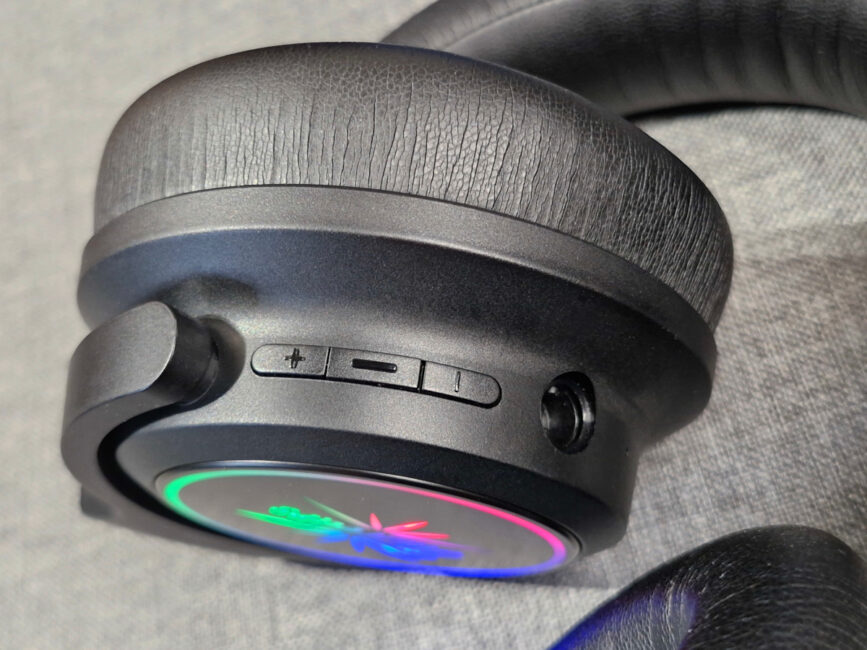
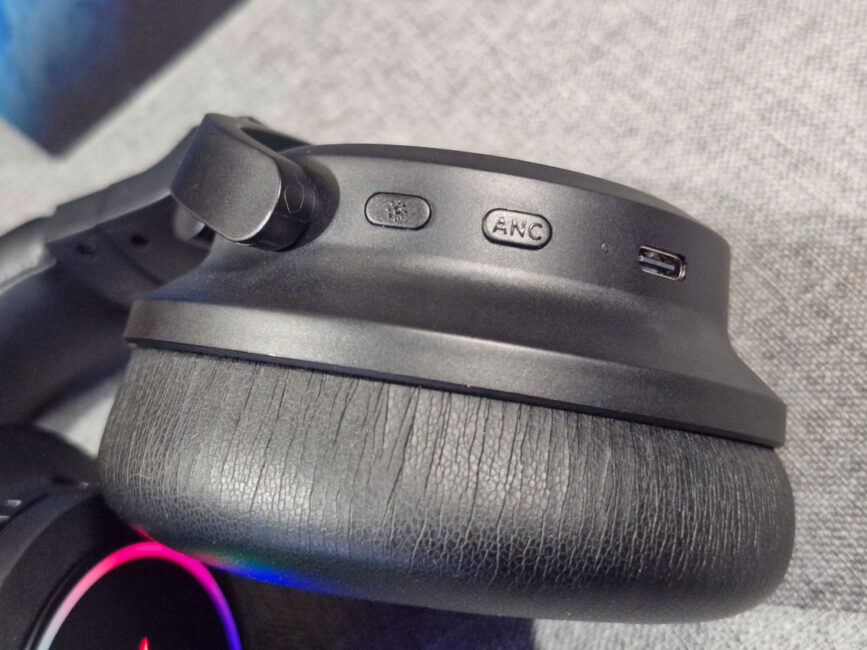
Finally, let’s look at the controls and ports. On the left earcup, there’s a hole for one of the five microphones used for active noise cancellation (ANC), an LED indicator, a 3.5 mm audio jack, volume buttons, and a multifunction button. The right earcup houses the USB-C charging port, an ANC toggle button, and controls for the lighting.
Ergonomics
Despite a weight of around 350 grams, the Kiwi Ears Aventus are fairly comfortable to wear. The fit is secure yet doesn’t feel tight, thanks in part to the soft ear cushions. However, these cushions are made from synthetic leather, which can cause some sweating during long sessions in warmer weather – something to keep in mind, especially for extended use in summer.
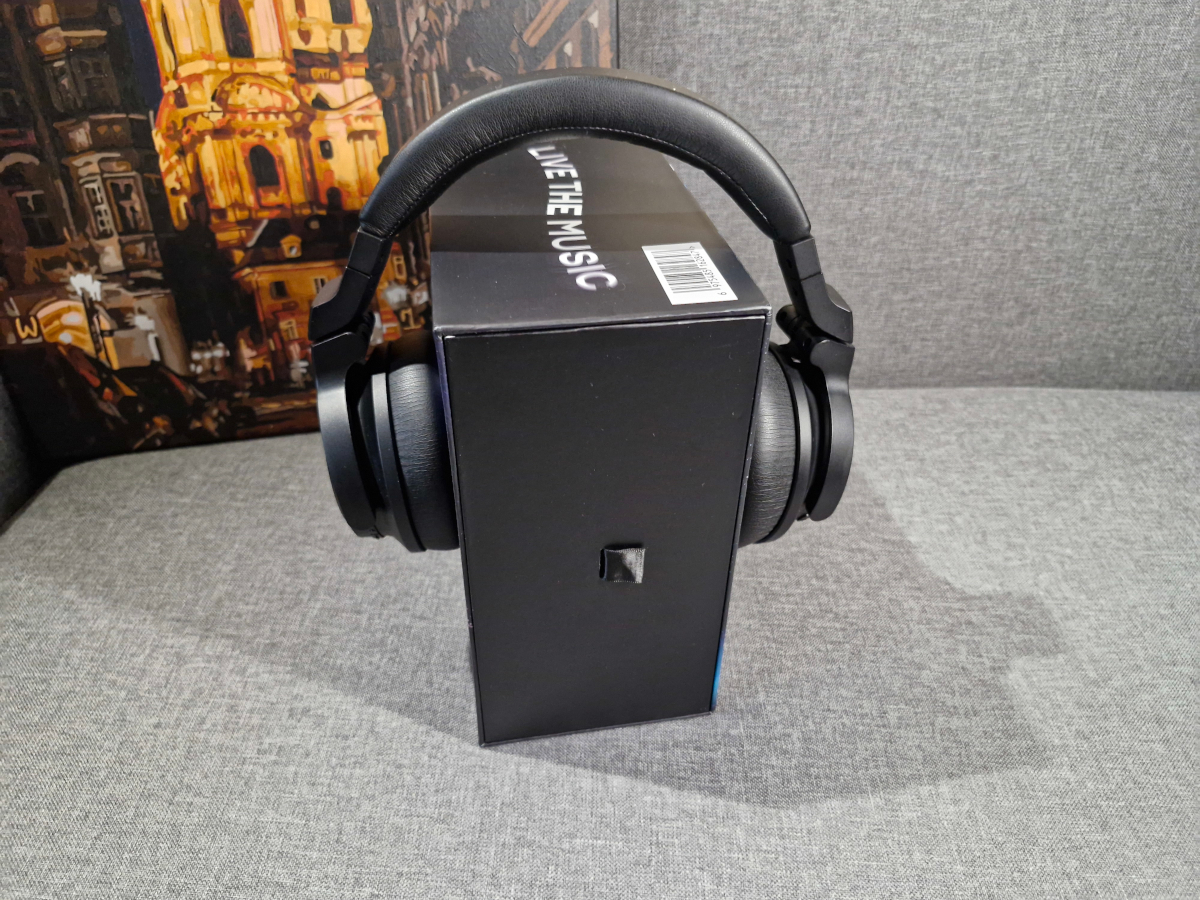
Thanks to the foldable design and the included carrying case, transporting and storing the headphones is straightforward. The case itself is practical, with compartments for cables and small accessories. I also appreciate the swivel earcups – if you need to take the headphones off briefly and hang them around your neck, the earcups rotate downward so they won’t press uncomfortably. Another useful feature is the inclusion of two cables – a 3.5 mm and a USB-C – making it easy to connect the headphones to a wide range of modern devices. For example, my phone lacks a headphone jack, so having a compatible cable included is especially convenient. Additionally, the coiled section on the cables helps avoid movement restrictions while preventing excess cable length from getting in the way.
Read also:
- Anker Soundcore Liberty 5 Review: Multifunctional TWS Headphones
- Kiwi Ears Quintet Headphones Review: Symphony of Balanced Sound
Connection
In addition to wired connections, the Kiwi Ears Aventus supports Bluetooth, using version 5.4 of the protocol. There is no dedicated app for the headphones, so they connect directly to audio sources. To enter pairing mode, you press and hold the multifunction button for five seconds, after which a voice assistant announces “Pairing.” From there, you simply select Aventus from the list of available devices to connect.
Notably, the headphones can connect to two Bluetooth audio sources simultaneously. Switching between them is fairly quick, though there is a slight delay. Simply pause playback on one device and start playing on the other, and within a few seconds the headphones will automatically switch to the active source.
Kiwi Ears Aventus Control
You won’t miss having a dedicated app for managing the headphones, as all controls are handled directly through the physical buttons on the device. Each button serves multiple functions, allowing for easy adjustment of settings and modes. The control scheme is as follows.
Volume buttons:
- single press – increase/decrease volume;
- long press – switch tracks.
Multifunction button (located between the volume buttons);
- hold for 3 seconds – turn the headset on or off;
- press once – Play/Pause, answer a call;
- hold for 1.5 seconds – reject an incoming call;
- double press during a call – switch between lines;
- double press – call the voice assistant.
ANC button:
- single press – switch between ANC, normal and transparent modes;
- double press – switch between music and normal playback modes.
Backlight button:
- Press once to switch between steady, flashing and off modes.
Read also:
- SteelSeries Arctis Nova 3X Wireless Review: The New King Of The Sweet Spot
- FiiO FT1 Pro review: Another triumph
Sound
Now, onto the most interesting part: the sound. The Kiwi Ears Aventus uses a coaxial driver system with two speakers – a 40 mm main driver paired with an additional 10 mm driver. This setup aims to deliver clear, detailed, and well-separated audio. For wireless connectivity, the headphones rely on Bluetooth 5.4 but support only basic codecs – SBC and AAC. For users accustomed to Hi-Res certification or advanced codecs like aptX or LDAC, this may be seen as a drawback. That said, real-world testing is necessary to understand how this impacts the listening experience. I’ll share my observations based on actual use.
To start, my testing setup is fairly typical for everyday use: a smartphone (Galaxy S23 FE), and two laptops (a work-focused ASUS Zenbook 14 and a gaming-oriented GIGABYTE G5 MF). For music playback, I used YouTube Music. Here’s what I heard during my listening sessions.
Bluetooth sound
This is the connection method I used most, so it was my main focus. What did I get from the Kiwi Ears Aventus? Right away, I’ll say the sound didn’t impress me on the first try. It wasn’t bad – there was solid bass and rich mids – but the highs were noticeably recessed. This imbalance was especially evident in vocal sibilance, as well as in some brass instruments, cymbals, and even guitars when they reached higher frequencies.
In certain genres, though, this wasn’t a major issue. For example, electronic styles like trance and EDM, as well as pop music, sounded fine out of the box. Fans of these genres might appreciate the default tuning, but listeners expecting a more balanced sound – say, fans of David Bowie – might find it lacking. So, I was hoping for a more versatile sound profile. I also tried the included foam inserts for the earcups to help smooth out the high-frequency drop-off. While they did improve the balance somewhat, the result still fell short of what I would ideally want.
I didn’t give up and kept searching for the optimal sound since the headphones’ technical specs looked promising. During this process, I discovered that the Aventus offers two playback modes, which you switch between by double-pressing the ANC button – “standard” and “music.” By default, the headphones operate in the standard mode, but switching to the music mode delivers a noticeably better experience. In music mode, the sound becomes brighter and more nuanced, with improved separation and a clearer stereo effect. Complex, layered tracks reveal more detail. The bass feels full-bodied, mids are clean, and the high frequencies are smoother and better balanced. Still, from my personal taste, the highs remained slightly too prominent.
I generally consider adjusting sound through an equalizer to be a bit of a workaround, so instead I tested the headphones with Dolby Atmos enabled on my smartphone. That made a significant difference – the sound instantly felt like a 10 out of 10 for me. Besides getting slightly louder (though volume wasn’t really an issue to begin with), the high and mid frequencies softened, background instruments became clearer, and overall the sound gained more detail, richness, and brightness.
Under these conditions, the headphones deliver a real sense of space and separation – where the mix allows – making it easy to distinguish between instruments and vocals, especially in tracks with multiple performers. This improvement was consistent across genres, whether instrumental, indie pop, alternative, jazz, or metal. It’s exactly the kind of performance I expected from the Kiwi Ears Aventus – and in some ways, even better.
When using the headphones wirelessly with a laptop, the sound was immediately softer compared to the phone. Switching to music mode made it even more pleasant and balanced, though the highs were still a bit on the strong side. While I could adjust the sound on my phone using Dolby Atmos, on the laptop the only option is to tweak the equalizer settings. Overall, though, the sound quality was noticeably better on the laptop right from the start.
Sound over wire
Overall, the wired connection performs as expected – there’s no need for any special adjustments. The sound is rich, full, and detailed by default, though the slight excess in high frequencies remains noticeable. This suggests that the headphones are intentionally tuned this way. At that point, it’s a matter of either accepting the sound signature as is (which might suit some listeners perfectly) or applying corrections through an equalizer.
How does Kiwi Ears Aventus perform in games?
Wired performance is simply excellent. Thanks to the dual drivers, the sound is more detailed, making it easier to pick up subtle nuances – useful for tasks like accurately locating an opponent in games. Over Bluetooth, however, the sound becomes simpler, less rich, and loses some detail, which is to be expected. If the Aventus supported a radio frequency connection, it might offer a closer balance between wired and wireless sound quality. But Bluetooth still falls short compared to both in terms of speed and transmission accuracy.
As an initial conclusion, the Kiwi Ears Aventus reminded me that, no matter how trendy Hi-Res certification is nowadays, it’s not the only factor that determines good wireless sound quality – especially in headphones with dual drivers like these. So if you’re hesitant because this model lacks support for higher-end audio codecs, it’s probably unwarranted. The sound quality here is quite respectable.
Headset mode and ANC
Voice transmission indoors is handled very well by the Kiwi Ears Aventus. The person on the other end often can’t tell the difference between the headphones and the phone’s built-in mic. However, when background noises like wind or street sounds come into play, clarity, volume, and overall quality decline. So, indoors, the headphones are reliable for calls, but outside it’s better to switch back to the phone’s microphone.
The noise cancellation in these headphones is powered by an array of five microphones, and it does a fairly good job filtering out ambient sounds. For example, if a vacuum cleaner is running in another room about 50 meters away, ANC reduces that noise to around 15-20% of its original level. The noise cancellation feels quite strong, which can create a slight pressure on the ears, but overall it works effectively. The opposing feature, transparency mode, is also reasonably effective. While it doesn’t reproduce the outside environment as naturally as wearing no headphones at all, it significantly improves awareness – useful if you need to have a quick conversation without removing the headphones or stay aware of your surroundings in an urban setting.
Read also:
- SoundPEATS Engine4 Review: TWS Earbuds with Good Sound at Affordable Price
- JBL Tune 245 NC Review: TWS Headphones with Deep Bass
Kiwi Ears Aventus battery life
One positive aspect is that you won’t need to charge the headphones frequently. With a 1000 mAh battery, the manufacturer claims up to 82 hours of playback on a single charge – this assumes both the lighting and ANC are turned off. Enabling noise cancellation reduces battery life to about 45 hours, while turning on the lighting drops it further to around 18 hours. The headphones also support fast charging, allowing for up to 4 hours of playback after just 10 minutes of charging. So even if you’re in a hurry and the battery is completely drained, a short charge will still give you several hours of use.
Conclusions and competitors
Are the Kiwi Ears Aventus headphones exclusively for DJs and gamers? Certainly not. I don’t identify with either group, yet I found this model quite enjoyable. They worked well for casual music listening after work, watching movies, and gaming alike.
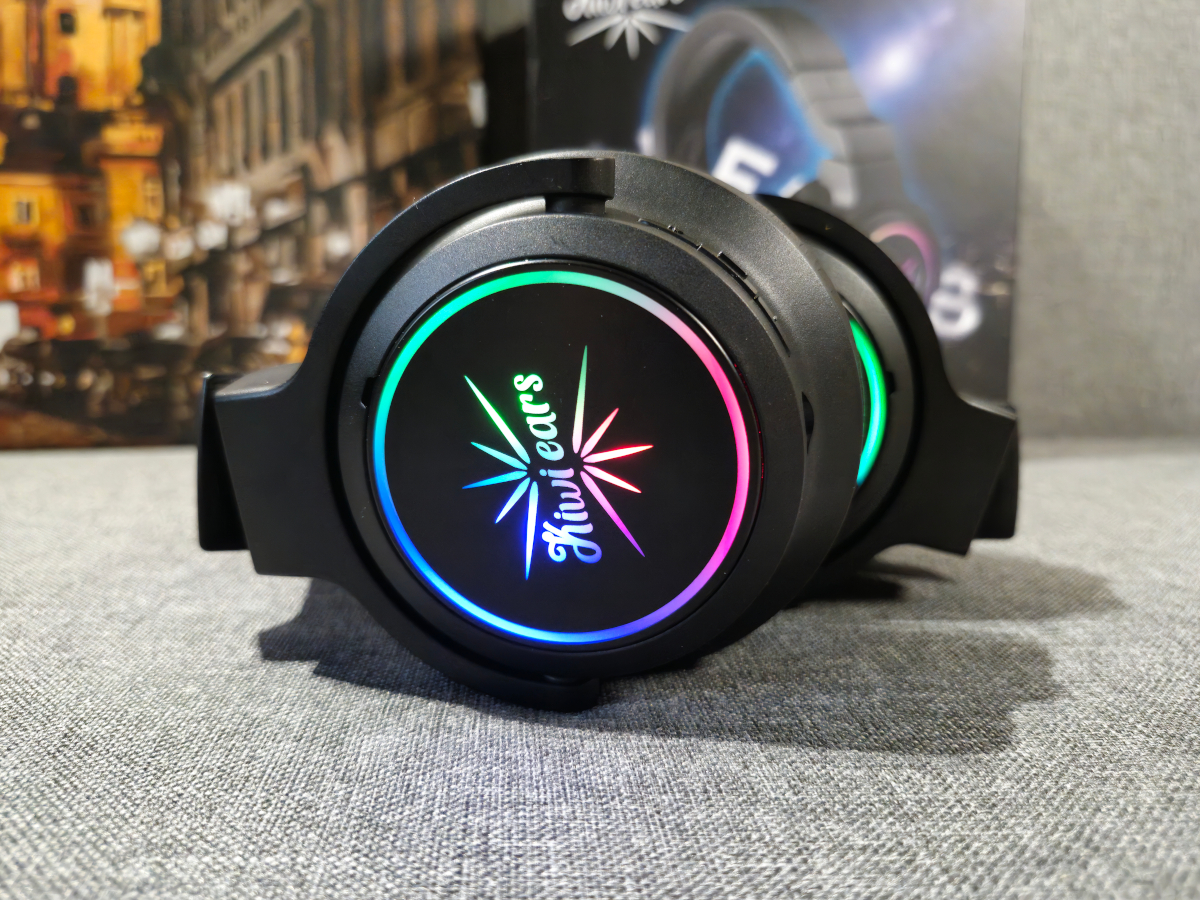
What did I like about the Kiwi Ears Aventus? First, the design, foldable build, and overall ergonomics. Second, the support for both wired and wireless connections. And third, of course, the sound quality. Dual drivers naturally provide a more spacious and detailed audio experience compared to typical models. So don’t worry about the lack of Hi-Res certification – the Aventus delivers solid sound performance. Additional positives include full physical controls on the headset, attractive lighting, strong battery life, a decent microphone for indoor calls, and effective noise cancellation. On the downside, the only real issue I noticed was a slight emphasis on the high frequencies. Of course, that’s a matter of personal taste and might not bother many users, but I tend to prefer a more balanced sound – or, if anything, a tilt toward stronger bass.
What alternatives are worth considering instead of the Kiwi Ears Aventus? For DJ-focused models, the OneOdio Studio Wireless Pro C is an option. These are entry-level headphones priced at about half the Aventus, and they come with Hi-Res certification. They also feature a foldable design and decent battery life, but use single 50 mm dynamic drivers and have a bulkier build.
Within Kiwi Ears’ own lineup, there’s the Ardor model, which shares similar specs – likely including dual drivers – but is aimed more at traditional music listening. The Ardor headphones are slightly more expensive, though the price difference isn’t significant. They’re also more compact and offer somewhat better battery life.
If you’re looking specifically for headphones with dual drivers without focusing on a particular target audience, the EarFun Tune Pro is worth considering. Priced similarly to the Aventus, they feature 40 mm and 10 mm dynamic drivers and also carry Hi-Res Audio certification.
Read also:
- OneOdio Focus A5 Headphones Review
- FiiO FT1 review: FiiO’s most stylish headphones yet do not disappoint
Where to buy