





© ROOT-NATION.com - Use of content is permitted with a backlink.
Today, we’ll take a closer look at this newly identified hantavirus strain, what makes it potentially dangerous, how people can reduce their risk of exposure, and – most importantly – why this is not the beginning of an apocalypse. Three deaths. The luxury expedition cruise ship MV Hondius. And a pathogen more commonly associated with abandoned sheds or remote rural buildings than with the open ocean. The combination was almost guaranteed to generate panic, conspiracy theories, and headlines along the lines of “MYSTERIOUS VIRUS KILLS PEOPLE AT SEA.”
However, once the sensational framing is set aside and the available facts are examined more carefully, the situation becomes both more nuanced and, in many ways, less alarming than it initially appears. At least not in the way dramatic headlines often suggest.

Today, we’ll try to understand what hantavirus actually is, how it ended up becoming associated with a ship outbreak investigation, and what practical conclusions can realistically be drawn from it. To do that, some background information is necessary. The topic involves virology, transmission pathways, and a bit of epidemiology – but we’ll keep the explanation as clear and accessible as possible.
Read also: Notepad++ for Mac Controversy: Detailed Breakdown of Conflict
TABLE OF CONTENTS:
Let’s start with the basics: what is hantavirus?
Hantavirus is not a newly discovered pathogen, not a laboratory creation, and not a mutation originating from some unknown marine organism. It has been known to science for decades and belongs to the Hantaviridae virus family. Some of the first large documented outbreaks were recorded during the Korean War in the early 1950s. So while online discussions framed the situation as a “mysterious new virus from the ocean,” virologists were largely dealing with a pathogen that already has an extensive body of research behind it.
The natural reservoirs of hantaviruses are rodents – primarily mice, rats, voles, and lemmings. These animals usually do not become visibly ill themselves. Instead, they carry the virus asymptomatically and shed it through urine, saliva, and feces.
For humans, the main concern is indirect exposure to contaminated particles, especially in enclosed or poorly ventilated spaces where rodent activity has occurred.
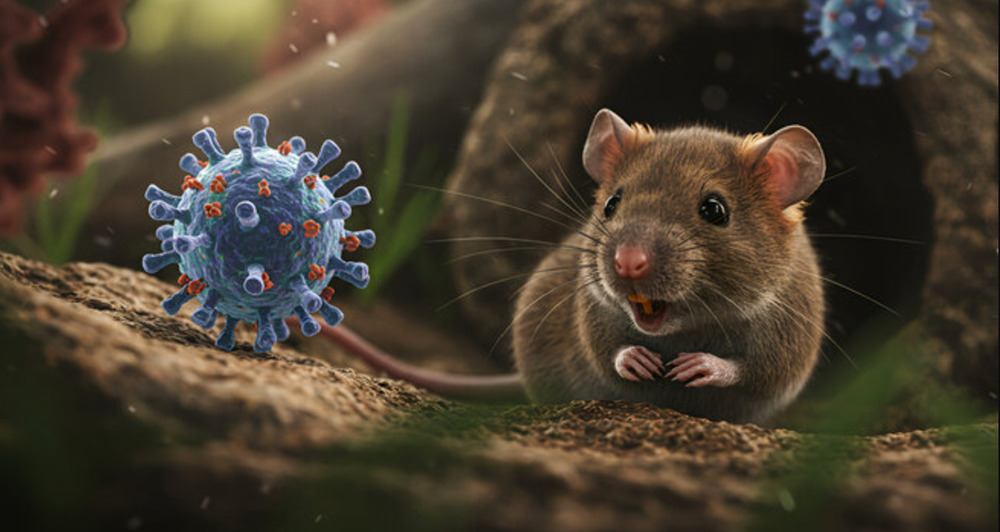

Human infection occurs primarily through one route: inhalation of aerosolized particles contaminated with dried rodent excretions. In practical terms, this can happen when dust is disturbed in enclosed spaces where infected rodents have been present. Examples include abandoned buildings, storage areas, barns, basements, cabins, or grain facilities with poor ventilation. For this reason, hantavirus infections have historically been associated with activities such as cleaning neglected structures, handling stored agricultural products, or working in environments where rodent infestations may go unnoticed for extended periods.
Read also: Windows 11 and “K2 Plan”: How Microsoft Is Trying to Fix What It Broke
The main point that will likely reassure most readers
Hantavirus is not transmitted from person to person.
In practical terms, you cannot contract it through casual contact with an infected individual – not during a conversation, in the same room, in a hospital corridor, or while standing in line for coffee. It does not spread in the same way as influenza, COVID-19, or chickenpox. Infection occurs through contact with biological material from specific rodent species, and not through routine human interaction.
The only documented exception is the Andes virus strain identified in South America, for which limited cases of person-to-person transmission have been reported. Even in those cases, transmission was associated with prolonged and close physical contact, not brief proximity in public settings.

This means that hantavirus is fundamentally incapable of causing a global pandemic on the scale of COVID-19 or the 1918 influenza pandemic. Large-scale spread requires efficient human-to-human transmission, which is absent in this case.
This distinction matters because much of the public concern surrounding the reported “shipboard outbreak” appears to have been based on the assumption that passengers could infect one another simply by being nearby. Current evidence does not support that scenario, and the known transmission mechanisms do not align with it.
Read also: Computers in Space: Limitations as an Advantage
How did a virus associated with remote forest environments end up on a luxury cruise ship?
This is where the situation becomes more medically interesting – and the explanation is far less dramatic than many online discussions suggested.
Hantavirus has an incubation period ranging from roughly one to eight weeks. In other words, symptoms may appear anywhere from a few days to nearly two months after exposure. During that time, an infected person can feel completely healthy, remain unaware of the infection, purchase a cruise ticket, board the ship, and only later begin to develop symptoms.

The most plausible explanation is that the affected passengers were exposed on land – either before the cruise began or during a shore excursion at one of the ports of call. Possible exposure sites could include caves, abandoned buildings, forest shelters, or other environments where rodents are present and contaminated dust may become airborne. In this scenario, the infection would have developed silently over time, without immediate symptoms. The noticeable decline in health would then have coincided with the period spent onboard, creating the impression that the illness originated or spread on the ship itself.

A less likely but theoretically possible scenario involves infected rodents in the ship’s cargo holds. Ships are not sterile environments, and rodents can occasionally be present in such areas. However, in that case, the first individuals affected would be expected to be technical staff and cargo-handling personnel with direct access to lower-deck and storage spaces, rather than passengers located on upper decks.
The investigation is ongoing, but the presence of the virus in a shipboard context is not, in itself, unusual or unexpected. From an epidemiological standpoint, it is a predictable situation given the known transmission route and the ecology of the pathogen.
Read also: What Happens to Astronauts’ Brains in Space?
Why is it considered dangerous if it is transmitted only through rodents?
Hantaviruses cause two distinct clinical syndromes, depending on the geographic region and the specific viral strain. In Europe and Asia, the most common manifestation is hemorrhagic fever with renal syndrome (HFRS). Hemorrhagic fever with renal syndrome In this form, the virus primarily affects the renal and vascular systems, leading to kidney impairment. The condition can be severe and, in some cases, fatal, but its clinical progression is relatively well-characterized and medically predictable.

In the Americas, the situation is more severe. The dominant form there is hantavirus pulmonary syndrome, which is likely the condition underlying the reported cases in the ship incident.
The early stage is nonspecific. It typically begins with fever, chills, and intense muscle pain, especially in the thighs and back. Clinically, it can resemble a severe influenza-like illness, and patients often assume it will resolve within a few days.
However, after approximately four to ten days, the condition can progress rapidly. Hantavirus pulmonary syndrome primarily affects the pulmonary vasculature, increasing capillary permeability in the lungs. As a result, fluid accumulates in the lung tissue (pulmonary edema), leading to acute respiratory failure. At that point, deterioration can be rapid, sometimes occurring over a short time window, which is why the transition from mild symptoms to critical illness may appear abrupt.
The mortality rate for this form of the disease ranges from thirty to fifty per cent. It is not ‘dangerous but treatable’. It is genuinely fatal – and that is precisely why what happened on the ship, far from any proper intensive care facilities, ended as it did.
Read also: Digital Detox in 2026: Why Going Offline Is Becoming the New Luxury
Treatment: there are both unfavorable and more practical aspects to consider
The unfavorable part is straightforward: there is no specific antiviral therapy approved for hantavirus infection. In other words, there are no targeted “anti-hantavirus pills.” There is also no widely available, globally approved vaccine, aside from a few experimental or regionally limited immunization approaches used for specific strains in parts of Asia.
Claims circulating online about “supplements” that can prevent or treat hantavirus infection are not supported by clinical evidence and should be regarded as misinformation rather than medical guidance.
The more realistic side of treatment focuses on supportive care. In intensive care settings, outcomes can improve significantly with timely intervention. This typically includes oxygen therapy, and in severe cases mechanical ventilation. In the most critical situations, extracorporeal membrane oxygenation (ECMO) may be used, where a machine temporarily takes over the gas exchange function of the lungs, allowing time for the body to recover from the underlying vascular injury.

The key factor here is early diagnosis. If hantavirus pulmonary syndrome is recognized during the initial flu-like stage and the patient is promptly transferred to appropriate care, the chances of survival increase significantly.
The challenge is that, in its early phase, the illness is clinically indistinguishable from common influenza-like infections. As a result, clinicians who do not routinely encounter hantavirus may not consider it an immediate diagnosis.
This can help explain why cases in confined environments, such as a ship, may appear to deteriorate suddenly. The issue is not that the virus behaves differently in such settings, but that onboard medical facilities are typically limited and not equipped for advanced respiratory support such as extracorporeal membrane oxygenation (ECMO).
Read also: Claude Mythos: Too Intelligent for Its Users?
What should we take from all of this?
If you are reading this and planning a cruise, the overall risk perspective is reassuring. The likelihood of encountering hantavirus on a modern cruise ship exists in theory, but it is not higher than in many routine real-world situations where people are exposed to rodent-contaminated environments.
The more relevant risk groups are people who clean seasonal basements, work in abandoned buildings, explore caves, or handle grain storage and other poorly ventilated spaces where rodent activity may have occurred.
The preventive measures are straightforward, but often overlooked. First, avoid dry sweeping or disturbing dust in enclosed, neglected spaces. This is exactly how contaminated particles can become airborne. Second, ventilate the area before starting work by opening windows and allowing air exchange for some time. Third, dampen surfaces with water and a disinfectant solution before cleaning to reduce dust dispersion. And finally, use appropriate respiratory protection such as an FFP2 or FFP3 respirator; standard surgical masks are not designed to filter fine aerosolized particles in this context.
This is not about alarmism. It is simply about understanding a specific transmission pathway and applying basic preventive measures accordingly.
Read also: Quantum Networks as Alternative to Classical Internet: What to Expect
The apocalypse is not on the table
To summarize, hantavirus is a real and serious pathogen, but its risk is concentrated in specific environments and exposure scenarios. It can cause severe disease and, in some cases, rapid deterioration, which makes individual cases medically significant and epidemiologically important.
However, the available evidence does not support the idea of a new pandemic. The virus does not have efficient human-to-human transmission in its known forms, and it is not behaving like a respiratory virus capable of sustained global spread. The reported shipboard cases are best understood within the context of environmental exposure rather than ongoing transmission chains.
It is also important to separate established medical facts from unverified claims. There is no credible evidence that dietary supplements or similar products provide protection against hantavirus infection.
Overall, this is a serious but ecologically constrained zoonotic disease, not a scenario consistent with a large-scale outbreak mechanism.

This is a zoonotic virus known since the 1950s, with a well-characterized transmission mechanism, no established human-to-human contagiousness, and clearly defined preventive measures. Its risk does not lie in the potential for widespread transmission, but in the non-specific early symptoms and the possibility of rapid clinical deterioration without timely medical care.
Scientific research is ongoing, including work on potential vaccines. In the meantime, the most effective protection against hantavirus is awareness: understanding where exposure can occur, avoiding inhalation of contaminated dust, and recognizing when to inform a healthcare provider – particularly if flu-like symptoms develop after exposure to basements, abandoned structures, or caves.
Less panic. More ventilation before cleaning enclosed, neglected spaces.
Read also:
- Childbirth in Space: Science Fiction or Biological Catastrophe?
- How and Why Brands Collaborate with Film
- Silicon–Carbon (Si-C) Batteries: An Overview of a New Trend in the Smartphone Market
- Atomic Horizon: How Humanity Pushes Chips to Edge of Possibility
- Breakthrough Development: Scientists Create Artificial Muscles Activated by Ultrasound


The current widespread HYPE and FEAR-MONGERING propaganda about Hantavirus is the same global HYPE and FEAR-MONGERING propaganda the governing gang of criminal psychopaths unleashed on the never-learning foolish public with their FAKE Covid-19 narrative.
Who, in 2026, STILLL falls for the endless lies and deceptions of the government authorities, official experts, mainstream doctors and mainstream scientists?
“[Reality-based people ] believe that solutions emerge from your judicious study of discernible reality. That’s not the way the world really works anymore. WE’RE AN EMPIRE NOW, AND WHEN WE ACT, WE CREATE OR OWN REALITY. And while you’re studying that reality – judiciously, as you will – we’ll act again, creating other new realities, which you can study too, and that’s how things will sort out. We’re history’s actors . . . and you, ALL OF YOU, WILL BE LEFT TO JUST STUDY WHAT WE DO.” — Former Senior Adviser of the US Empire/Regime, in 2002 (https://archive.is/8wG4Y)
“… doctors and scientists are now on the same level of public confidence as the scum living in the swamp.” — Unknown in 2022
“There are large numbers of scientists, doctors, and presstitutes who will sell out truth for money, such as those who describe people dropping dead on a daily basis [after getting a Covid-19 jab] as “rare” when it it happening all over the vaccinated world.” — Paul Craig Roberts, Ph.D., American economist & former US regime official, in 2024
“Growing up means realizing that none of the worst villains are in prison.” — Caitlin Johnstone, Independent Journalist (https://archive.ph/zDqoh)
The fake FEAR-MONGERING campaigns about a dreaded Covid-19 viral pandemic was/is the ruling gang of predatory criminals’ intent to get everyone to take their Covid “vaccines” (bioweapons, see https://www.rolf-hefti.com/covid-19-coronavirus.html)!
The fake FEAR-MONGERING campaigns about a dreaded Hantavirus pandemic is the ruling gang of predatory criminals’ intent to get everyone to take their Hantavirus “vaccines” (bioweapons, see https://www.globalresearch.ca/video-worldwide-fear-campaign-the-hantavirus-pandemic/5925941 & https://www.globalresearch.ca/vaccine-cartel-us-army-developing-13-hantavirus-vaccines-gene-therapies/5925277)!
The Covid variant FEAR propaganda, just like the Hantavirus FEAR propaganda, are more of the psychopathic authorities’ typical screwing with the public’s mind, for THEIR benefits, of course. Nothing else. It’s “predictive programing” of the masses for them to mindlessly accept the next PLANNED event of theirs and their “solution” for it … their “vaccines”/bioweapons!
The officially falsely propagated “Covid-19 pandemic” was from the beginning a Planned FEAR-MONGERING Pandemic (but never a VIRAL pandemic, see https://rumble.com/v71c5w0-excess-mortality-what-really-caused-it-really.html) — it was an Officially Staged PsyOp in order to get everyone jabbed with their toxic “vaccines”!!
The mRNA Covid “vaccines” are not health-promoting agents but health-destroying poisons/bioweapons that have killed MILLIONS OF PEOPLE globally, and it’s still ongoing — https://www.rolf-hefti.com/covid-19-coronavirus.html
“I kept an extensive record of sudden deaths of mRNA vaccinated doctors during 2021-2023, after COVID-19 mRNA Vaccines were forced via mandates. The data showed a SKYROCKETING MORBIDITY AND MORTALITY OF DOCTORSfollowing injection with mRNA products. I stopped keeping track as it became clear that for the medical and political establishments, THESE SUDDEN DEATHS WERE DEEMED “ACCEPTABLE” TO ENSURE COMPLIANCE. And doctors themselves, stayed silent.” — William Makis, M.D., September 2025 (https://archive.is/R9G0j)
“The term ‘mRNA vaccine’ is a cover for nanotechnologies that are being used as gene-editing technologies and agents of biowarfare on US and global citizens. The cationic liposome nanotechnologies are being used to introduce non-human DNA into the cells of adults and children to turn their cells into disease-causing, toxic spike-protein bioweapon factories.” — Karen Kingston, former Big Pharma employee, in 2023 (https://archive.md/GTmQ1)
“There are essentially no usable, relevant and unbiased policy-grade clinical trials of COVID-19 vaccine efficacy, and COVID-19 vaccine efficacy has never been reliably demonstrated in observational or ecological studies free of design bias.” — Denis G. Rancourt, Ph.D., Independent Research Scientist on Covid-19 “Vaccines” in 2025 (https://archive.ph/uWpzR)
“Despite the extensive documentation, most mainstream doctors and media dangerously continue to ignore my findings and refuse to speak about the self assembly nanotechnology that is in every human being now. The blood contamination is greatly accelerating in the amount of nanotechnology seen due to C19 bioweapon shedding, geoengineering and food contamination, to name a few sources.” —Ana Maria Mihalcea, M.D., Ph.D., Oct 2023 (https://archive.ph/GbMtm)
“This is why they have to make yard signs that say “Science is Real”. Because this new science ISN’T. It is a total in-your-stupid-face conjob. When something is real and people know that, you don’t have to make yard signs promoting it. You don’t need yard signs saying “trees are real”, “the sky is blue”. You only need yard signs promoting things that AREN’T real. Like new science and, say, political candidates.” — Miles Mathis, American author, in 2025
“I just cannot understand why all these damn anti-vaxxers and conspiracy theorists don’t trust a government that actively works against the public interest 100 percent of the time. I mean if you can’t trust institutions that are deliberately constructed to subvert the common good for the benefit of the wealthy and powerful at every turn, who can you trust?” — Caitlin Johnstone, Independent Journalist
“Ignorance is the root cause of all Evil. Since only Knowledge eradicates ignorance, it is our duty and moral obligation to educate ourselves, as well as the masses around us.” — Anonymous
Speaking of ignorance is evil, how can the masses get out of this mess? First, everyone needs to learn, and teach others, what true morality is (it’s NOT the same as religious morality): https://www.whatonearthishappening.com/news/988-mark-passio-interviewed-by-axel-dahi-2026-04-16