





© ROOT-NATION.com - Use of content is permitted with a backlink.
Today I will discuss silicon–carbon (Si-C) batteries in smartphones, which have emerged as a notable trend in the market.
In 2025, smartphone manufacturers began to adopt and promote one of the more significant battery innovations of recent years in a systematic way: silicon–carbon (Si-C) cells. What was until recently viewed as an experimental approach or limited to a small number of flagship devices is now increasingly appearing even in more affordable models. As a result, users gain a measurable increase in battery capacity without a corresponding rise in device thickness or weight. Battery life, once a largely abstract specification, is gradually becoming a practical and meaningful factor in device selection.
Read also:
- All articles about interesting technologies
- Motorola Edge 70 Review: A Blend of Elegance, Performance, and Endurance
TABLE OF CONTENTS:
Silicon–Carbon (Si-C) Batteries: A New Baseline for Battery Life
Overall, the smartphone market has long been in a phase of incremental development. Processors continue to improve in performance, cameras become more complex, and displays grow brighter and more energy-efficient. However, one fundamental limitation remains largely unchanged: constrained battery life. As a result, battery technology has become one of the primary areas of engineering focus. Against this backdrop, silicon–carbon (Si-C) batteries are being discussed with increasing frequency. These cells are gradually moving beyond laboratory research and are beginning to see widespread adoption in mass-produced smartphones.

The first smartphones using this type of battery reached the global market in 2024, but at that stage the technology remained largely limited to higher-priced, more technologically advanced devices. Its primary advantage – significantly higher energy density – made it possible to surpass the psychological and practical 5,000 mAh threshold without requiring major changes to device form factors. By 2025, this situation had shifted: a distinct segment of smartphones with noticeably higher-capacity batteries has emerged, where increased capacity is no longer an exception but is gradually becoming the new baseline.
Read also: All about the STRATUS system: An invisible shield against drones
The Limits of Conventional Lithium-Ion Technology
Traditional lithium-ion batteries, which have dominated the market for more than two decades, have effectively reached a technological plateau. The primary limiting factor in this architecture is the graphite-based anode. It is well understood, relatively inexpensive to manufacture, and stable in everyday use, but it also has a clearly defined physical constraint: a specific capacity of roughly 372 mAh per gram. Under these conditions, any meaningful increase in energy storage runs into a simple geometric problem – the battery must become larger, thicker, and heavier.
For smartphone manufacturers, this has become a persistent engineering challenge. Modern devices feature thin enclosures, large high-refresh-rate displays, increasingly complex multi-module camera systems, and more powerful processors that draw substantially more power. Internal space is steadily shrinking, while the option to simply install a larger battery is largely no longer viable. Software optimization and improvements in chip efficiency help mitigate the issue, but they do not fundamentally resolve it.

At this point, the industry began looking for an alternative to the graphite anode, and silicon emerged as a candidate. In theory, silicon can store several times more lithium than graphite, offering a much higher specific capacity. This creates a pathway to significantly increased energy density without enlarging the physical size of the battery. However, silicon also presents substantial drawbacks: during charge and discharge cycles, it undergoes significant expansion and contraction, which leads to material degradation and accelerated battery wear.
Silicon–carbon (Si-C) solutions represent a compromise between theoretical potential and practical constraints. By incorporating silicon into a carbon matrix, engineers have been able to substantially increase anode capacity while maintaining an acceptable level of stability and cycle life. This balance is what allowed the technology to move beyond laboratory settings. It does not require a complete overhaul of existing manufacturing processes, yet it delivers a tangible and measurable improvement in battery life. For the smartphone market, this represents not an abrupt revolution, but a gradual and systematic shift toward new baseline standards for power storage.
Read also: End of Specs Race: How Many Megapixels Can Human Eye Actually Perceive?
Silicon as an Alternative to Graphite
From an electrochemical perspective, silicon appears close to an ideal anode material. It can accommodate many times more lithium ions than conventional graphite, with a theoretical specific capacity of around 4,200 mAh/g. For engineers, this translates into the potential for a substantial increase in battery energy density without changing the battery’s physical dimensions. On paper, such characteristics suggest a solution capable of significantly redefining expectations for mobile device battery life.
In practice, however, the situation is considerably more complex. The main challenge of silicon-based anodes lies in their physical behavior during operation. As silicon absorbs lithium ions during charging, it expands – by up to 300% of its original volume at peak levels. During discharge, the material contracts again. These repeated expansion and contraction cycles introduce significant mechanical stress within the electrode structure, leading to cracking, loss of electrical contact, and accelerated degradation.
Below is a brief overview of silicon–carbon battery technology based on a silicon–carbon negative electrode, focusing on how these challenges are addressed in practical implementations.
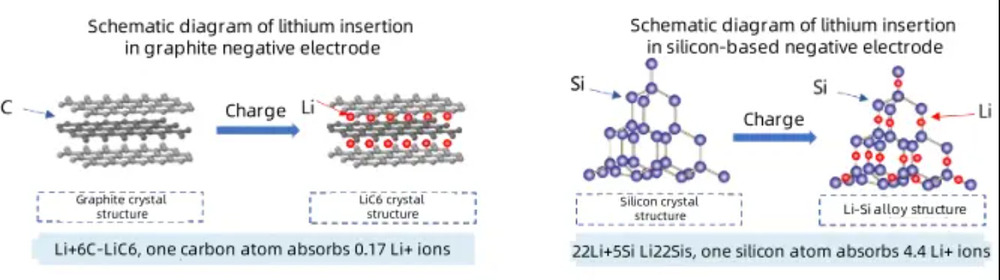
As a result, the material structure gradually degrades. Microcracks form, electrical contact between the active material and the current collector is disrupted, and internal resistance increases. These effects directly impact key battery parameters: degradation accelerates, the number of effective charge–discharge cycles decreases, and usable capacity begins to decline noticeably after a relatively short period of operation.
Because of these limitations, fully silicon-based anodes remained unsuitable for mass adoption for many years. While they could deliver impressive results under laboratory conditions, they failed to meet real-world requirements for longevity, stability, and safety. Only by combining silicon with carbon-based materials – and by applying more advanced engineering approaches, ranging from nanostructured designs to specialized binders – has the technology gradually moved closer to commercial viability.
Read also: Atomic Horizon: How Humanity Pushes Chips to Edge of Possibility
The Compromise: Silicon–Carbon (Si-C) Architecture
Silicon–carbon (Si-C) batteries represent an engineering compromise. In this design, silicon does not fully replace graphite but is integrated into a carbon matrix. This approach allows manufacturers to:
- Significantly increase energy density
- Reduce mechanical stress during charge–discharge cycles
- Maintain an acceptable battery lifespan

Carbon acts as a structural “scaffold” that restrains silicon expansion and stabilizes the electrode. The result is batteries with 10–25% higher capacity within the same physical dimensions compared to conventional lithium-ion cells.
Read also: Elon Musk Plans to Shade the Sun with Satellites: Brilliant Strategy or Another Whim?
Si-C Batteries Are More Important Than You Think
First, it is important to clarify the specific technology in question and why it has attracted so much attention. For many years, smartphones relied almost exclusively on lithium-ion or lithium-polymer batteries. During this period, the industry refined production to a high level of maturity: manufacturing processes are well established, defect rates are minimal, and costs are relatively low. These batteries were not revolutionary, but they were predictable – reliable, safe, and well understood by both manufacturers and users.

However, it eventually became clear that further progress was constrained not by a lack of engineering solutions, but by fundamental physical limits. Modern smartphones simply do not have the space to accommodate ever-larger batteries. Thin enclosures, large displays, multi-camera modules, cooling systems, and complex circuit boards leave progressively less room. The physics are straightforward: the smaller the battery module, the lower its energy capacity, measured in watt-hours (Wh) or milliamp-hours (mAh). In mobile devices, the principle “bigger is better” holds true – higher capacity directly translates into longer battery life and reduced dependence on charging.
At this stage, manufacturers began seeking ways to overcome the limitations of conventional lithium-ion designs without radically altering smartphone form factors. This led to practical interest in silicon–carbon (Si-C) batteries. Their key advantage is significantly higher energy density compared to traditional lithium-ion or lithium-polymer modules. As a result, manufacturers can offer 10–25% more capacity within the same battery dimensions, without compromising device thickness or design.
In real-world conditions, a difference of more than 20% for a battery around 5,000 mAh is highly noticeable. This is no longer just a marketing figure – it translates into additional screen-on hours, more stable energy reserves under load, and fewer compromises in everyday use. Beyond the quantitative gain, silicon–carbon (Si-C) cells offer several qualitative advantages: improved performance at low voltages, greater stability in energy delivery, support for faster charging modes, and significantly better behavior under challenging operating conditions, including temperatures below 0 °C.

It is also worth noting the potential for a longer lifespan, measured in effective charge–discharge cycles. In theory, an optimized silicon–carbon (Si-C) structure can degrade more slowly than conventional solutions, retaining a larger portion of its initial capacity over time. At the same time, some caution is warranted: this remains a relatively young technology for the mass market, and definitive conclusions about long-term durability will only be possible after several years of real-world use across millions of devices. Nevertheless, it is already clear that silicon–carbon (Si-C) batteries represent one of the few innovations capable of meaningfully addressing the longstanding limitations of smartphone battery life.
Read also: Breakthrough Development: Scientists Create Artificial Muscles Activated by Ultrasound
Practical Benefits for Smartphones
For the end user, silicon–carbon (Si-C) batteries offer more than just higher mAh figures on paper. Their impact is tangible in everyday use, not merely when comparing specifications in a store.
First, they provide a real increase in battery life. Thanks to higher energy density and more stable energy delivery, a smartphone equipped with a nominally 5,000 mAh Si-C battery can outperform a device with a conventionally sized lithium-ion cell. Lower energy losses, more efficient operation at low charge levels, and slower degradation make the available energy more “useful” in practical scenarios – from video streaming and gaming to mobile navigation.
Second, faster and more consistent charging is a notable advantage. Silicon interacts more effectively with higher currents, enabling more efficient implementation of ultra-fast charging modes. This allows manufacturers to increase charging power without significantly raising temperatures or accelerating battery wear. For users, this translates into shorter charging times and fewer compromises between speed and battery longevity.
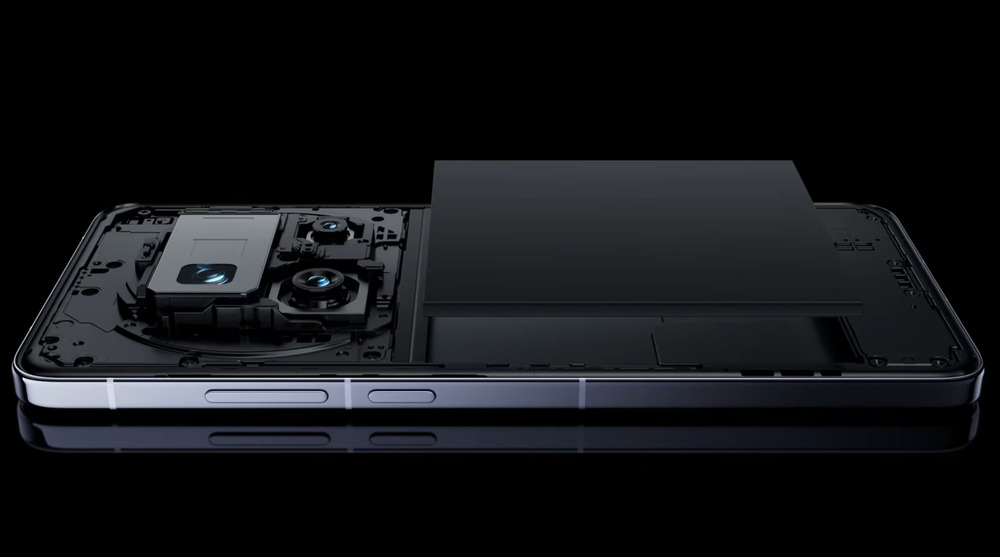

Third, silicon–carbon (Si-C) batteries give manufacturers significantly greater flexibility in smartphone design. Companies can choose to either substantially increase battery life without changing device dimensions or make the device thinner and lighter without sacrificing runtime. This makes Si-C batteries appealing both for mainstream models focused on maximum battery life and for flagship devices with slim enclosures and complex internal layouts.
For users, this translates into a more predictable and convenient experience. Smartphones require less frequent recharging throughout the day, handle peak loads more effectively, and recover more quickly when connected to a charger. This is the core value of silicon–carbon (Si-C) batteries: they do more than boost specification numbers – they fundamentally change how modern smartphones are used.
Read also:
- Could Thorium Be a Breakthrough in Energy Technology?
- How Chinese Companies Circumvent the US Ban on AI Chips
From Flagships to the Mass Market
Due to their relative novelty, silicon–carbon (Si-C) batteries were, until recently, more expensive to produce than conventional lithium-ion or lithium-polymer solutions. This was particularly evident in the early stages: higher capacity and new chemistry almost automatically placed these batteries in flagship devices with corresponding price points. In effect, they became another marker of “technological elite,” alongside top-tier processors and premium camera systems.

However, by 2025 the situation had shifted noticeably. Scaling up production, refining manufacturing processes, and intense competition among Chinese brands have driven wider adoption. Silicon–carbon (Si-C) batteries are now appearing not only in flagship devices but also in mid-range and even budget models. For Chinese manufacturers, this provides both a strong marketing point and an engineering advantage: increased battery life is easy to promote and well received by users.
There are already numerous examples among current models:
- Xiaomi Redmi Note 15 Pro+ – 6,500 mAh
- OnePlus 15 – 7,300 mAh
- Honor Magic 8 Pro – 7,200 mAh
- Oppo Find X9 – 7,025 mAh
- realme GT 8 Pro – 7,000 mAh
And these are just a few representative examples – there are now many more smartphones using such batteries. The most important point is that 6,000–7,000 mAh batteries are no longer exclusive to devices priced above $1000; they are steadily entering more affordable segments. The Xiaomi Redmi 15, retailing for around $160, would have seemed extraordinary in terms of battery life just a few years ago. Surpassing the psychological 5,000 mAh threshold was once rare, but today capacities around 7,000 mAh are becoming increasingly common, gradually establishing a new standard.
The practical impact of such capacity is hard to overstate. While software optimization in smartphones from some Chinese brands may not always be exemplary and system energy efficiency can lag behind competitors, the raw numbers speak for themselves. An additional 10–20%, and in some cases even 30%, of capacity can provide several extra hours of active screen time or comfortably cover two days of moderate use without recharging. Ultimately, silicon–carbon (Si-C) batteries do more than improve specifications on paper – they reshape the everyday smartphone experience, restoring battery life as a key advantage for users.
Read also: How to Spot Fake Photos: New Challenges of the Digital Age
Limitations and “Growing Pains”
Despite their clear advantages, silicon–carbon (Si-C) batteries are not yet perfect. They have significantly advanced the market and opened new possibilities for smartphones, but several limitations remain, particularly when it comes to widespread adoption in budget devices.
Cost
Manufacturing carbon anodes with silicon additives is more technologically complex than producing traditional graphite anodes. Specialized processes for synthesis, treatment, and material composite formation are required, which naturally increases production costs. In practice, this meant that in the early stages, the technology was limited to flagship models, where device pricing could absorb the additional expense without significantly affecting profitability.

Long-Term Degradation
Although combining silicon with carbon significantly improves stability compared to pure silicon anodes, the battery’s overall lifespan still falls short of conventional graphite-based solutions. Gradual formation of microcracks, structural changes in the material, and cyclical mechanical stresses remain challenges that affect the number of effective charge–discharge cycles. As a result, while users benefit from substantially higher initial capacity, long-term stability remains an open question requiring further research.
Thermal Management
Silicon–carbon (Si-C) batteries handle high charging currents more effectively, but this creates additional demands for thermal management systems. Higher currents generate more heat during charging, requiring advanced thermal regulation, materials with high thermal conductivity, and optimized electronic layouts. Without proper management, elevated temperatures can accelerate battery degradation and impact device safety.
Due to these factors, silicon–carbon (Si-C) batteries are currently implemented mainly in flagship and near-flagship models, where manufacturers can allocate higher budgets and experiment without posing significant risk to users or product profitability. For the mass market, the technology is still in an optimization phase, but it already shows real potential for gradually raising baseline standards of battery life.
Read also: Cryptography: What It Is and How It Works
Who Is Adopting the Technology and Why
Chinese manufacturers were the first to actively implement silicon–carbon (Si-C) batteries. For them, it provides a way to stand out in a saturated market by offering a tangible advantage: longer battery life. Western brands are approaching the technology more cautiously, but their investments in silicon anodes are already evident.
This is not a short-term marketing trend; rather, it represents a strategic direction for battery development over the next five to seven years.
Read also: How Taiwan, China and the US are fighting for technological dominance: the great chip war
Place in the Evolution of Battery Technology
Silicon–carbon (Si-C) batteries are not the “end point” of battery development. They represent an intermediate – but highly important – step between conventional lithium-ion cells and future solutions such as solid-state batteries.
Their key value lies in not requiring a radical overhaul of manufacturing processes. This allows the technology to be scaled relatively quickly, making it attractive for the mass smartphone market.

Silicon–Carbon (Si-C) Batteries: Practical Evolution in Smartphone Power
Silicon–carbon (Si-C) batteries are a rare example of a technology that is both evolutionary and immediately tangible for users. They do not promise a “paper revolution,” but already deliver practical benefits: longer runtime, faster charging, and greater design flexibility for manufacturers.
In the coming years, this technology is likely to become the new standard for flagship smartphones, gradually replacing conventional graphite anodes. While questions around longevity and cost remain, the overall trajectory of the industry is clear: the future of smartphone battery life is increasingly tied to silicon.
Read also:
- AI in Medicine: Is the Future Already Here?
- Everything You Need to Know About NVIDIA DLSS 4.0 and Reflex 2: What They Offer and Why They Matter
- Use It or Lose It: How AI is Changing Human Thinking

 batteries in smartphones, which have emerged as a notable trend in the market.)