





© ROOT-NATION.com - Use of content is permitted with a backlink.
Scientists have introduced a new generation of artificial muscles capable of operating without electronics, batteries, or wired power sources. Their function relies on ultrasound waves, which transmit energy wirelessly.
The key component of this technology is a specialized polymer containing resonant microbubbles within its structure. When exposed to ultrasound, these bubbles change in volume, producing mechanical deformations that generate movement in the “muscle.” This approach allows for highly precise control over both the force and direction of motion, offering potential applications in robotics, medical implants, and microsurgical instruments.

Effectively, this represents a step toward fully autonomous microrobots that could operate inside the human body without the need for wires or onboard power sources. If the technology can be scaled, it has the potential to significantly change the development of biocompatible robotic systems and drive the next generation of medical devices.
Read also: Trump vs. Microsoft: Conflict That Could Escalate into Scandal
TABLE OF CONTENTS:
Soft robots instead of rigid machines
Modern robotics faces a fundamental limitation: despite decades of engineering progress, machines remain rigid and mechanical, unable to replicate the flexibility, sensitivity, and energy efficiency of biological muscles. Most contemporary robots rely on metal frames, electric motors, or pneumatic systems, which constrain their reaction speed, precision, and safe interaction with humans.
The emerging field of soft robotics addresses this challenge, aiming to create mechanisms that mimic living tissues in both structure and behavior. Such systems could fundamentally transform approaches to prosthetics, microsurgery, and tactile interface development, enabling robots to operate not with brute force, but with the delicacy of human hands.
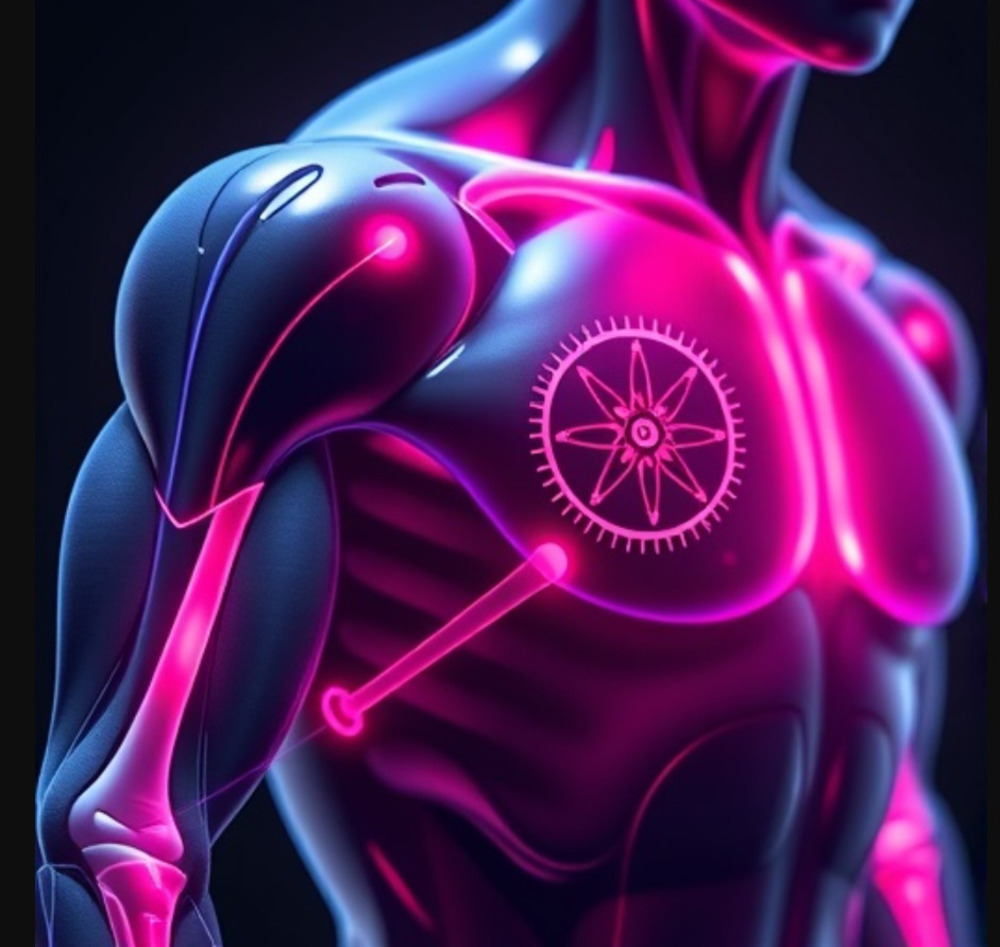
A recent development represents a significant advance in this field. Researchers have created artificial muscles from a soft polymer containing thousands of microscopic gas bubbles. These bubbles act as miniature actuators: when exposed to external stimuli – particularly ultrasonic waves – they change volume, producing controlled mechanical deformation. This allows the material to move, contract, and expand in a manner closely resembling the behavior of living muscles.
This approach not only eliminates the need for bulky power sources or complex mechanical systems, but also opens the door to wireless, biocompatible robotic systems capable of operating inside the human body. From an engineering perspective, it is one of the most promising directions in modern biomechanics, potentially integrating advances in materials science, acoustics, and robotics into a unified technological platform.
Read also: What’s Wrong with AI Browsers?
How Bubbles Move the Robot
According to Nature, the operation of this technology is based on the physics of acoustic resonance. The polymer material contains thousands of microscopic gas bubbles, each with its own resonant frequency – meaning the frequency at which it responds most strongly to ultrasonic vibrations. When ultrasound at the appropriate frequency is applied to these bubbles, they begin to oscillate vigorously, converting acoustic energy into mechanical motion.
These oscillations generate localized fluid flows around the microbubbles, and their collective interactions produce a macroscopic thrust force. This force causes the material to bend or compress, effectively resulting in the “contraction” of an artificial muscle. This mechanism can be compared to the operation of biological muscle fibers, which also work in a coordinated manner to produce controlled movement.
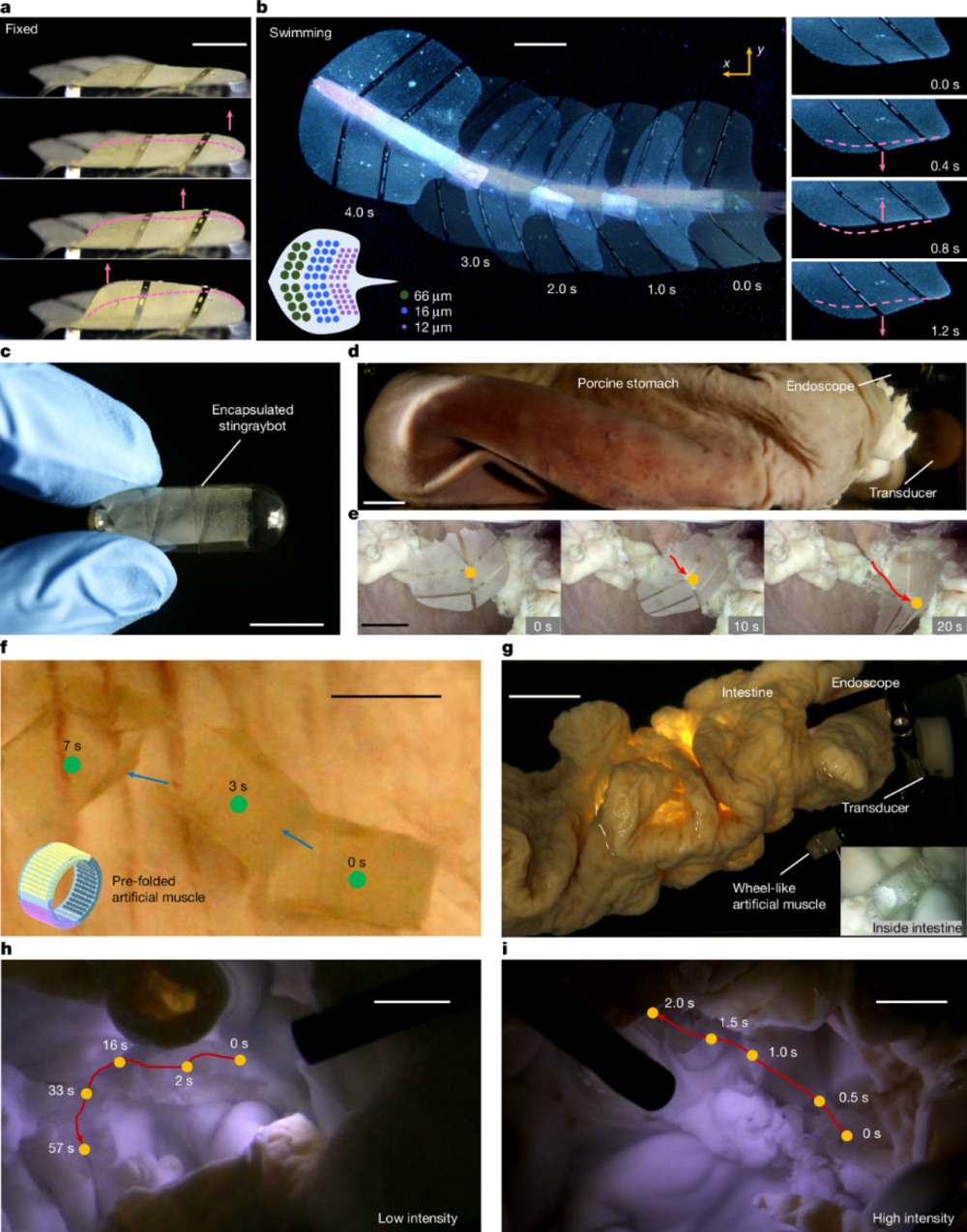
The main advantage of this system lies in its structural and functional hierarchy, which mirrors the architecture of living tissues. Thousands of microactuators operate synchronously, providing precise control over material deformation without complex mechanical systems. Additionally, the properties of the artificial muscle can be adjusted by changing the size or density of the microbubbles, thereby tuning the resonant frequency and the nature of the movement.
In this way, researchers have developed a material that not only replicates the behavior of biological muscles but can also be “programmed” at the level of physical parameters. This approach opens the possibility for creating intelligent robotic systems that can adapt to external conditions without relying on conventional electronics.
Read also: Can a Modern Human Live to 150 Years?
Programming with Sound
A key innovation of this technology is the use of microbubbles of varying sizes. Since the resonant frequency of each bubble depends on its diameter, researchers can control the artificial muscle with high precision. By changing the frequency of the ultrasonic signal, an operator can selectively activate specific groups of bubbles, causing them to oscillate either synchronously or sequentially. As a result, the material is capable of performing complex, coordinated deformations – bending, compressing, “grasping” objects, or even moving in a wave-like manner, mimicking natural biomechanical processes.
The main advantage of this approach is that the entire system is fully wireless. There are no wires, batteries, or embedded electronics – only acoustic energy transmitted from an external source. This principle not only simplifies the design but also enables the development of miniature robots capable of operating within biological environments where traditional power sources are not feasible.
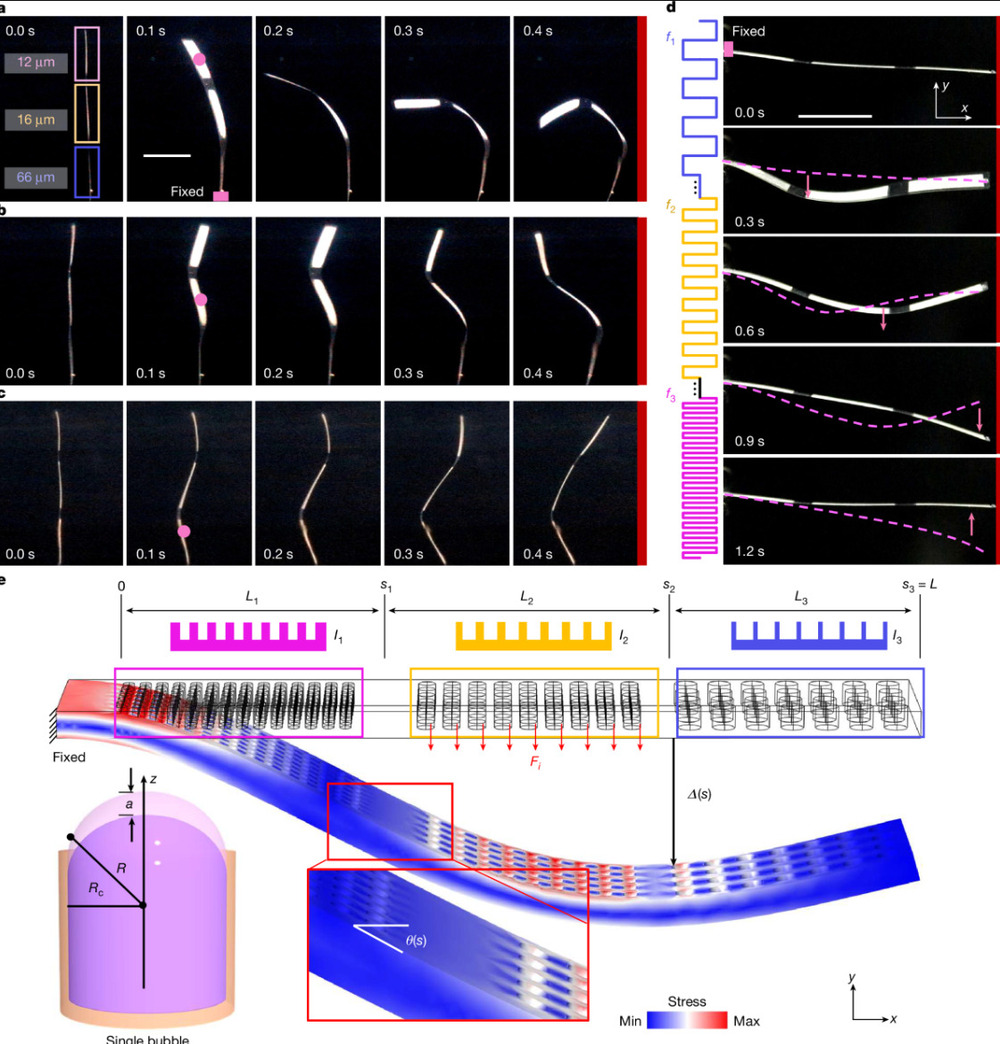
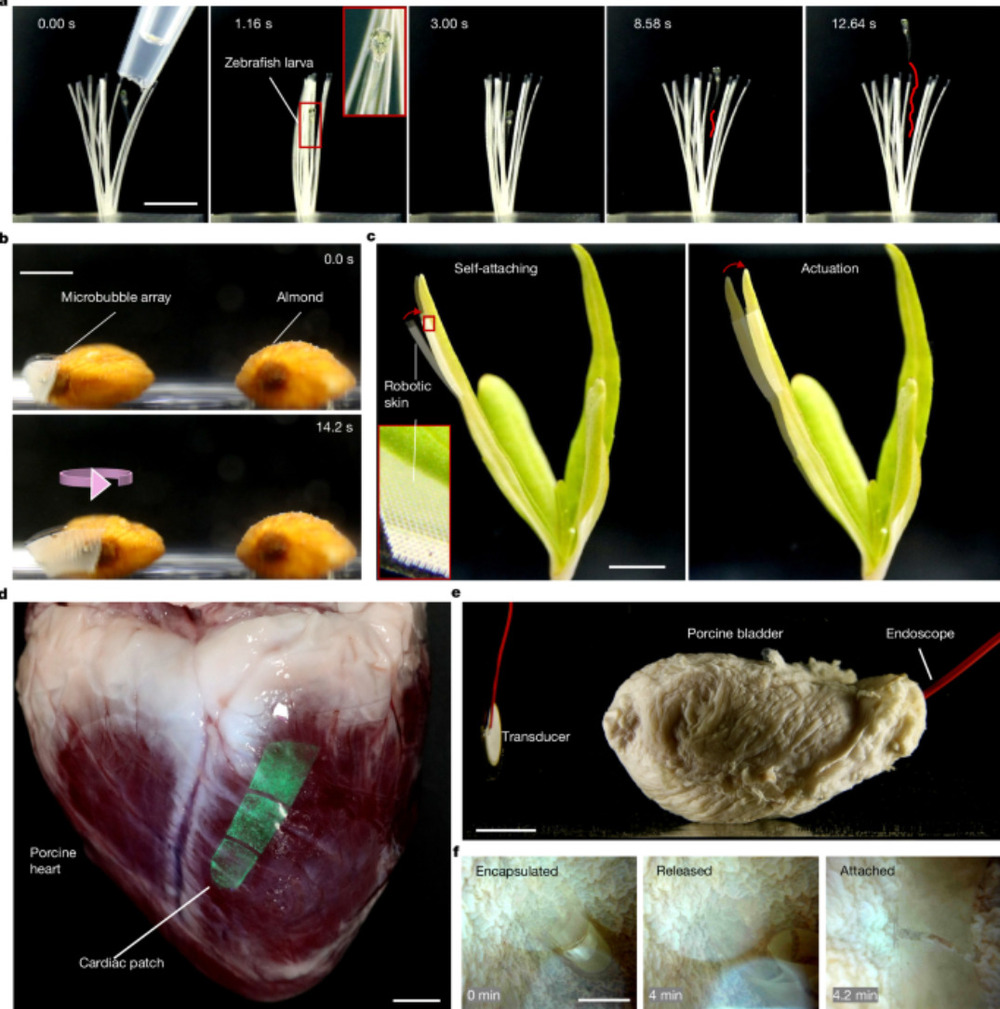
In a series of demonstrations, researchers confirmed the viability of the approach. In one experiment, artificial muscles were used to create a soft manipulator capable of holding a live Danio rerio larva without causing any harm or overheating the surrounding environment. In another case, researchers produced a flexible polymer cast that could adhere to an excised pig heart. Activation via ultrasound induced localized contractions, providing mechanical stimulation to the tissue – potentially useful for targeted therapy or accelerating organ regeneration.
The most striking experiment involved a stingray-like robot, which demonstrated active locomotion in water. Two artificial muscles functioned as fins, and their coordinated activation enabled the robot to move smoothly, resembling a living organism. The robot was placed inside a biodegradable capsule, which was then positioned in a section of pig stomach. Once the capsule dissolved, ultrasound control allowed the device to navigate the complex internal geometry of the organ.
This technology illustrates not only an engineering advancement but also the potential for biointegration – creating soft robots that can interact with living tissues without causing damage. It opens the possibility for a new class of acoustically controlled medical microrobots capable of performing precise surgical tasks, delivering drugs, or conducting diagnostics directly within the body.
Read also: How Chinese Companies Circumvent the US Ban on AI Chips
Is this the future of medicine?
One of the main advantages of the new technology is its high compatibility with medical systems. The frequencies used to activate these robots (approximately 1–100 kHz) are in a completely different range from those used in clinical ultrasound imaging (1–20 MHz). This means that a clinician can simultaneously control a soft robot and monitor its movement on an ultrasound screen without risking electromagnetic or acoustic interference. Such compatibility represents a significant advantage over other wireless systems, such as magnetically controlled microrobots, which can distort or even prevent the use of MRI.
In other words, ultrasonic “muscles” are not only safe for biological environments but also integrate with existing medical infrastructure – an important factor for potential clinical applications. However, the path to practical implementation remains far from complete.
Current prototypes have several limitations that prevent their full application in medical settings. Specifically, after approximately 30 minutes of continuous activation, microbubbles begin to grow in size, altering their resonant frequency and destabilizing the system’s operation. In addition, the efficiency of energy transfer decreases sharply with distance: the force exerted on the material can drop by half over a range of just one to five centimeters from the ultrasound source.
The most significant challenge lies in the behavior of ultrasound within real biological environments. In living tissues, bones, and heterogeneous structures, waves scatter extensively, losing energy and reducing the precision of focus. What functions perfectly under laboratory conditions may behave unpredictably within a living organism. Overcoming this barrier – controlled propagation of ultrasound through complex biomedia – will be a key challenge for further research.
If this issue can be addressed, the technology could form the basis for a new class of invasive but fully externally controlled medical microrobots, capable of operating with micrometer-level precision – without incisions, electrodes, or risk to the patient.
Read also:
Engineering Elegance
This can be described as engineering elegance in its purest form. Rather than pushing robotics into a dead end of increasingly complex servomechanisms, gearboxes, and batteries, researchers took a different approach – toward a solution that appears almost self-evident in its simplicity: using the physics of resonance as the driving force. Controlling thousands of microbubbles with an invisible sound wave is not merely a visually striking demonstration; it represents a shift in the very paradigm of motion. This is the level of technological sophistication that soft robotics has anticipated for decades.
The appeal of this approach lies in how naturally it mimics living biology while simultaneously addressing key medical challenges. It incorporates all the characteristics of real muscles: a hierarchical structure, where thousands of microbubbles function like muscle fibers, and programmability, allowing different regions to be controlled simply by adjusting the ultrasound frequency. As a result, the robot does more than move – it responds to its environment, adapts its behavior flexibly, and can even perform complex biomechanical actions without any electronics.

Perhaps the most important aspect is compatibility with the clinical ecosystem. The technology operates not in conflict with medical instruments but in harmony with them. Unlike magnetic systems, which can interfere with MRI, ultrasonic “muscles” neither create disruptions nor require separate monitoring; they can function under the control of the same devices that observe them in real time.
This represents a significant breakthrough: the boundary between the laboratory and the operating room begins to blur. What was until recently an experiment with microbubbles in a polymer is now evolving into a prototype for a new class of bioengineering tools – capable of operating inside the human body with a level of precision, speed, and delicacy previously found only in nature.
Read also:
- AI in Medicine: Is the Future Already Here?
- Strangest Deal of Year: TikTok to Lease Out Its Algorithm
- Samsung Galaxy XR: Analytical Look at Attempt to Reboot the XR Market

