




© ROOT-NATION.com - Use of content is permitted with a backlink.
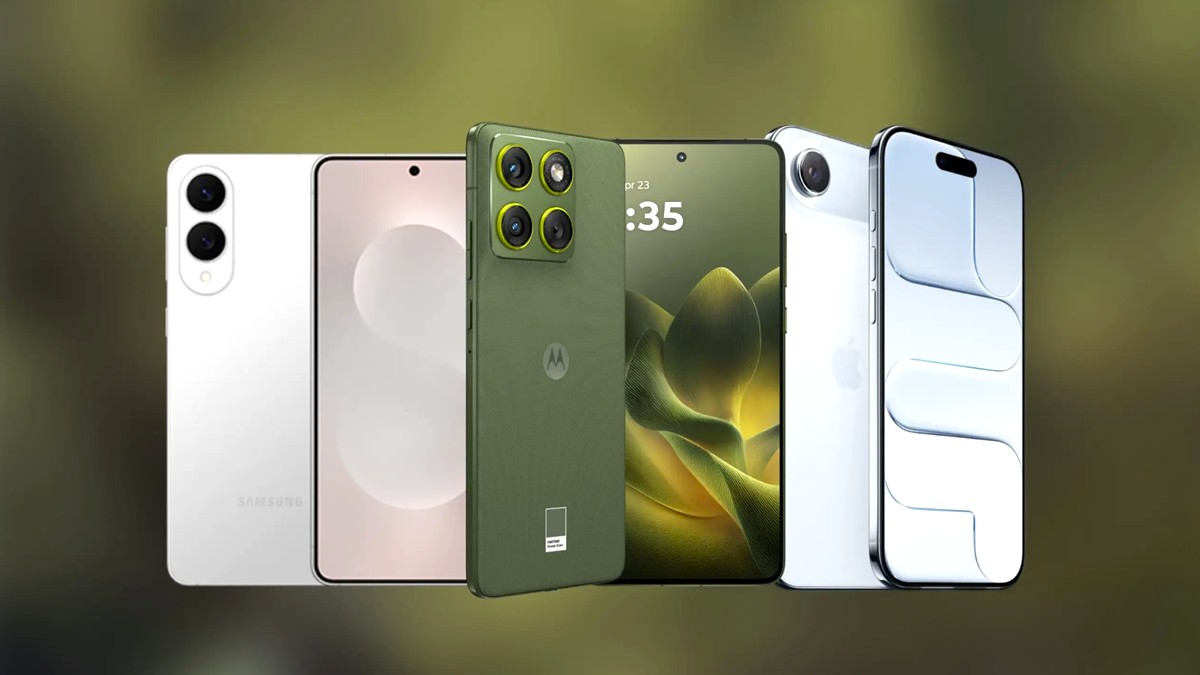
iPhone Air, Galaxy S25 Edge, and Motorola Edge 70 represent three different answers to the question: “Can modern smartphones be thin without becoming weak?”
After several years of manufacturers steadily moving toward larger and heavier devices, the market reached a point of saturation. Smartphones grew bulkier due to larger camera modules, more advanced cooling systems, and higher-capacity batteries. The sense of compactness – once a defining criterion – has largely disappeared.
Against this backdrop, ultra-thin smartphones are making a return. Not as niche products, but as a response to user fatigue with “brick-like” devices in the pocket. A new generation of lightweight models is attempting to rethink the balance between design and hardware capabilities, aiming for a compromise that, until recently, seemed difficult to achieve.
Read also: Motorola Edge 70 Review: A Blend of Elegance, Performance, and Endurance
TABLE OF CONTENTS:
Do we really need a new category of smartphones?
The smartphone market often behaves like a pendulum, constantly swinging between priorities such as maximum performance, advanced camera systems, and experimental form factors. In 2025, however, that pendulum has clearly shifted in a different direction – toward lightness, thinness, and a new interpretation of everyday comfort.
This is no longer just about “thin” devices. These are products designed to be so refined that the form factor itself becomes a key argument in their favor. Ultra-thin, ultra-light, and close to weightless models have effectively become one of the defining trends of the year.
A kind of “big three” has already emerged in this new segment: the iPhone 17 Air, Samsung Galaxy S25 Edge, and Motorola Edge 70. These models are not direct competitors in the traditional sense. They represent three different concepts and three different attempts to answer the same question: what can a smartphone become if you remove everything unnecessary – size, thickness, and the sense of bulk.
Despite their differences, all three address a single question that users are asking more often: do we actually need a new category of ultra-thin smartphones?
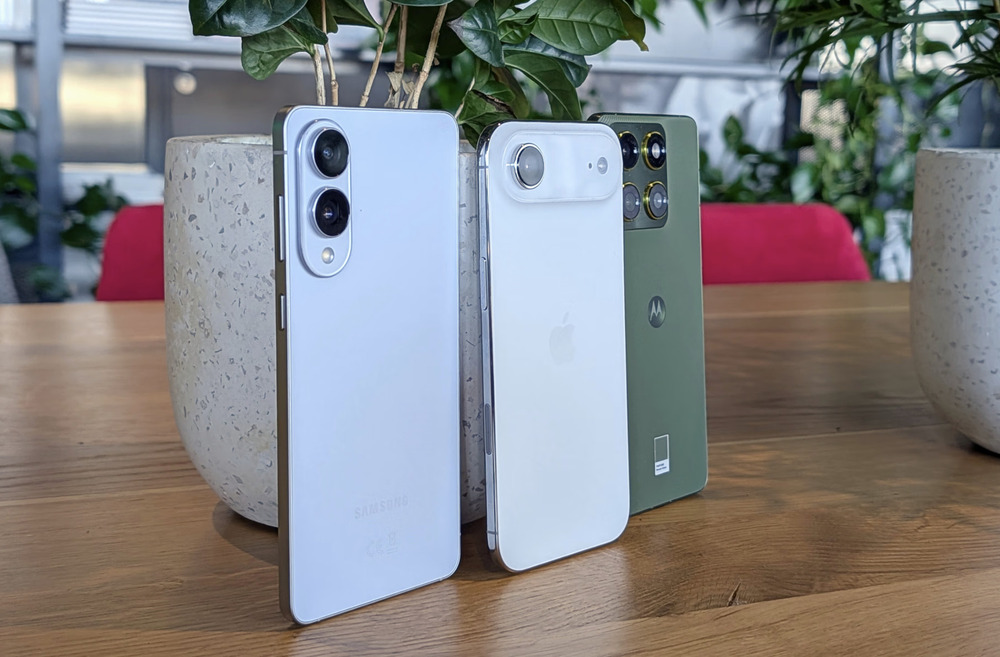
It turns out this is not just another design experiment or an attempt to attract attention with unusual shapes. It is, instead, a response to fatigue.
Recent flagship smartphones have become progressively heavier and bulkier, driven by large camera modules, oversized batteries, and increasingly complex cooling systems. Usability – once a core aspect of true mobility – has gradually moved into the background.
Ultra-thin models are trying to bring back what smartphones have lost: a natural feel in the hand, ease of movement, and comfortable day-to-day use. These are devices that aim to reduce friction rather than add to it.
This is the real meaning of the trend. It is not about making phones as thin as possible, but about restoring the feeling that the smartphone is once again designed for the user, rather than for showcasing technical achievements.
The iPhone Air, Samsung Galaxy S25 Edge, and Motorola Edge 70 have become symbols of this new wave. Each has its own priorities and its own vision of what a smartphone can be when excess thickness and weight are removed.
Read also: Gift Ideas for a Canyon Enthusiast This Christmas
Ease of Use
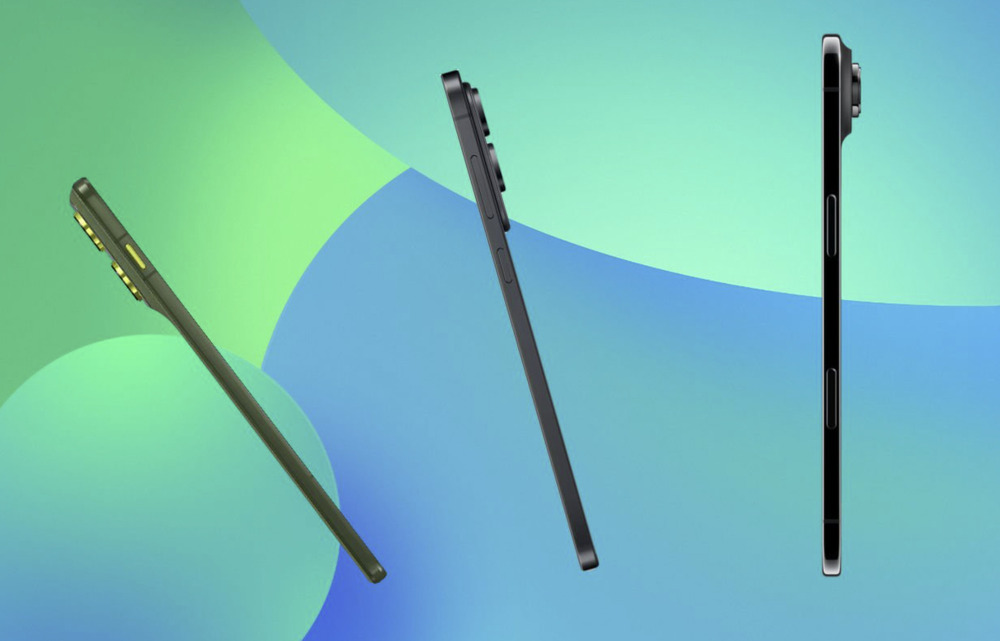
The race for grams and tenths of a millimeter looks impressive in presentations, but the real value of an ultra-thin smartphone isn’t found in specification tables. It is felt in everyday use – when you slip a phone into the front pocket of your jeans, hold it for several hours, or try to operate it with one hand in a crowded commute. This is where the difference between 147 g and 163 g, or between 5.6 mm and 6 mm, stops being abstract and becomes a matter of practical comfort.
iPhone Air
Thickness: ~5.64 mm
Weight: 147 g
The iPhone Air is the thinnest and most compact of the three. It feels like a return to a time when mobile devices were genuinely light, rather than “portable mini-computers.”
Its body, just 5.64 mm thick, creates an impression of near-weightlessness. It is one of the few modern smartphones that truly disappears in a pocket.
In the hand, it feels closer to button phones from the late 2000s than to the heavy flagships of recent years. For Apple, this represents the most radical rethink of mobile ergonomics since the first iPhone.
Samsung Galaxy S25 Edge
Thickness: ~5.8 mm
Weight: 163 g
The Galaxy S25 Edge is noticeably larger than the iPhone Air, and this is clear from the first contact. Samsung relies on curved side edges that create the illusion of an even slimmer profile. In practice, this works – the device feels thinner than it actually is.
In hand, it is the most comfortable of the three, thanks to the combination of a larger surface area, rounded edges, and well-positioned grip zones. It is designed not only to look refined, but also for long
Motorola Edge 70
Thickness: ~5.99 mm
Weight: ~159 g
The Galaxy S25 Edge is noticeably larger than the iPhone Air, and this is clear from the first contact. Samsung relies on curved side edges that create the illusion of an even slimmer profile. In practice, this works – the device feels thinner than it actually is.
In hand, it is the most comfortable of the three, thanks to the combination of a larger surface area, rounded edges, and well-positioned grip zones. It is designed not only to look refined, but also for long periods of use, especially if you often hold your phone in landscape orientation.
Read also: Christmas Gift Ideas for Film Enthusiasts
In the ultra-thin smartphone category, the Motorola Edge 70 most clearly combines slimness, comfort, and confidence in everyday use. This is a rare case where “balance” becomes the decisive factor.
- iPhone Air: +1
- Samsung Galaxy S25 Edge: +0
- Motorola Edge 70: +1
Build Quality
An ultra-thin body isn’t just a design choice – it’s always an engineering challenge that forces manufacturers to rethink materials, internal structure, and even the very philosophy of the product. When a smartphone’s thickness drops below 6 mm, every millimeter matters for chassis rigidity, heat dissipation, and impact resistance. That’s why different brands adopt different approaches – sometimes aesthetic, sometimes pragmatic, and often a mix of both.
iPhone Air
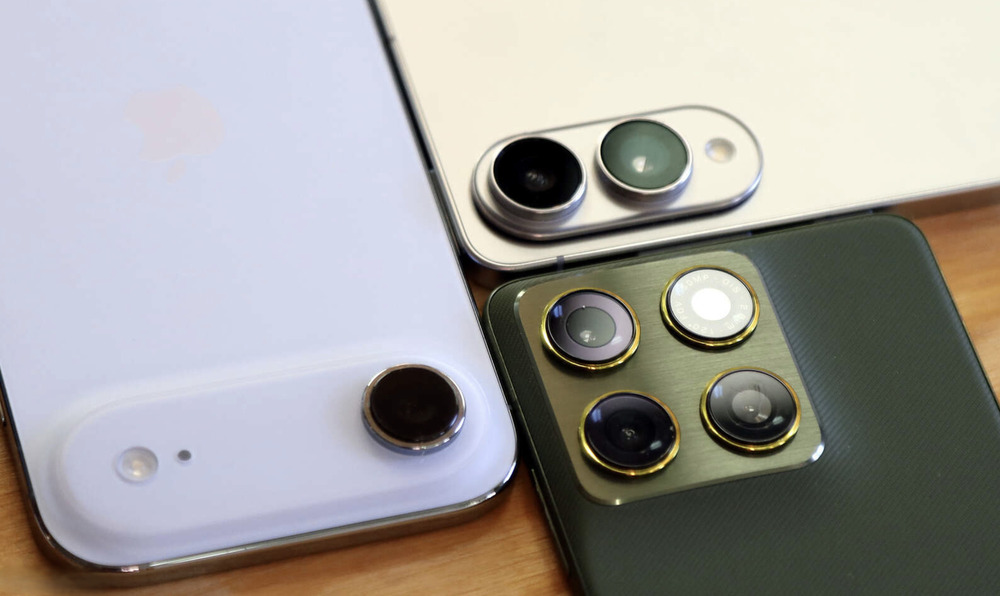
Titanium Frame + Glossy Glass
For the iPhone Air, Apple emphasizes premium feel primarily through materials. The titanium frame looks flawless – light, strong, and associated with the top-tier segment. The glossy glass complements the look, giving the smartphone a visually refined appearance.
However, this approach has its downsides. In an ultra-thin body, even titanium cannot fully compensate for reduced structural rigidity. And glossy glass – despite all its aesthetic advantages – remains a material that handles impacts and point pressure poorly.
The iPhone Air looks luxurious, but it’s a smartphone that requires a careful user. This isn’t a form factor that forgives drops or careless handling. Its strength lies in style, not durability.
Samsung Galaxy S25 Edge
Metal frame + durable curved glass
The Galaxy S25 Edge continues the Edge series tradition, emphasizing visual impact. Its metal frame and curved glass create the impression of a premium, high-end device. Samsung clearly positions the S25 Edge not only as a thin smartphone but also as one that stands out among competitors.
The curved edges give the model a distinctive look, but they also increase the risk of side impacts. The ultrathin construction is compensated by reinforced glass, yet fully addressing the structural challenges of a curved form factor is difficult even with strong materials.
The S25 Edge is the most striking smartphone in the comparison – a device with a bold character and recognizable design. It appears sturdier than the iPhone Air, but it’s still a product where looks play an equally important role as functionality.
Motorola Edge 70
Aluminum frame + high-quality polycarbonate
Motorola has taken the most pragmatic approach – a choice that becomes obvious at first glance. The combination of aluminum and polycarbonate may sound less “premium” compared to titanium or glass, but in the ultrathin smartphone category, it offers strong practical advantages.
Polycarbonate absorbs shocks much better and doesn’t crack like glass. Aluminum, while lighter than titanium, provides sufficient rigidity for the frame while allowing the body to flex slightly under stress – often preventing critical damage.
The lower weight of the Edge 70 also plays a key role: a lighter smartphone hits the ground with less inertia, automatically reducing the risk of damage. Its MIL-STD-810H certification reinforces this point. For a device this thin, passing a military standard is no small feat. Complemented by IP68 and IP69 ratings, the Edge 70 is equally protected against dust, full immersion in water, and even high-pressure water jets.
The Motorola Edge 70 is the most rational choice for everyday use. It may appear more modest compared to the titanium- and glass-clad competitors, but in terms of practicality and durability within the ultrathin segment, it represents the most well-thought-out approach.
- iPhone Air: +0
- Samsung Galaxy S25 Edge: +1
- Motorola Edge 70: +1
Read also: Gift Ideas for ASUS Fans at Christmas
Screen quality
By 2025, a thin body is no longer just a design whim – it has become a demonstration of a brand’s technological maturity. But no matter how sleek a smartphone is, the display remains the main battlefield. It shapes up to 90% of daily experience: how we read news, watch videos, take photos, and interact with artificial intelligence. And here, the three models take very different approaches.
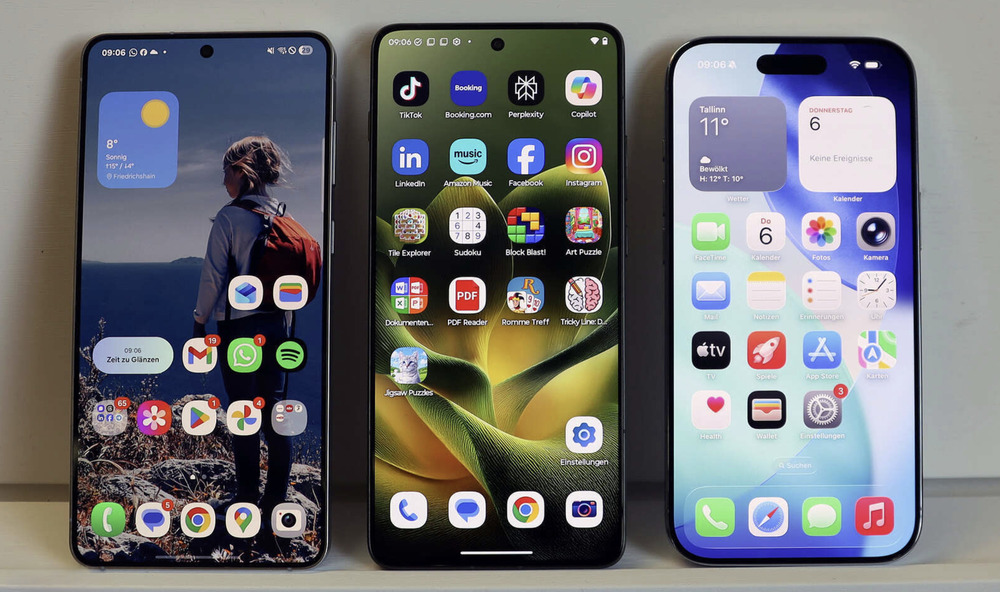
iPhone Air: Focus on naturalness and consistency
Apple traditionally avoids chasing flashy numbers, instead emphasizing a sense of “rightness” in the image.
The iPhone Air features a 120 Hz OLED panel, optimized for the iOS ecosystem. Its peak brightness ensures comfortable use under sunlight, but the standout feature is its reference-level color accuracy – Apple knows how to calibrate it better than anyone else.
This is a display for users who want to see content exactly as it was captured: no oversaturation, no artificial “punchiness,” no dramatic contrasts.
Of course, the ultrathin body poses certain challenges – the panel experiences increased stress, so Apple had to carefully engineer the glass and backing. Yet the balance is perfectly maintained.
Samsung Galaxy S25 Edge: The king of brightness and dynamism
In 2025, Samsung continues to show why its displays are considered the benchmark. The Galaxy S25 Edge sports a 6.7-inch next-gen AMOLED panel with record-breaking brightness, deep blacks, and extended HDR capabilities.
This is a screen designed to impress. Maximum viewing angles, high contrast, and vivid colors that literally “pop” on the ultrathin body. The panel’s performance under direct sunlight is particularly striking – Samsung effectively crushes the competition, making the display readable in virtually any condition.
While Apple emphasizes restrained naturalness, Samsung plays in the arena of emotional “wow effect” – and it does so convincingly.
Motorola Edge 70: honest and competitive balance
Motorola continues its “smart premium” strategy. The Edge 70 features a pOLED panel that delivers rich colors, smooth performance, decent brightness, and pleasant contrast.
It may not match Samsung’s ultimate AMOLED panels – but it doesn’t need to. Motorola focuses on energy efficiency, comfortable visuals without aggressive saturation, and an excellent price-to-performance ratio.
Within its segment, it’s one of the best screens available. Importantly, the pOLED allows the device to remain ultrathin and lightweight without compromising durability.
In 2025, a screen is more than just a spec on paper – it defines how fresh a device feels. In this regard, the Samsung Galaxy S25 Edge clearly takes the lead, offering the brightest, most dynamic, and technologically advanced display among ultrathin smartphones.
The iPhone Air prioritizes accuracy and consistency, Motorola Edge 70 focuses on balance and practicality, but the Galaxy S25 Edge earns the title of undisputed display champion of 2025.
- iPhone Air: +0
- Samsung Galaxy S25 Edge: +1
- Motorola Edge 70: +0.
Read also: Gift Ideas for Athletes This Christmas
Performance: three different approaches
In the world of ultrathin smartphones, performance isn’t just about benchmark numbers. What matters is the balance between raw power, energy efficiency, and thermal management. In this respect, the iPhone Air, Samsung Galaxy S25 Edge, and Motorola Edge 70 each demonstrate a distinct strategy.
iPhone Air – optimization above all
- Processor: Apple A19 Pro
- Process technology: 3 nm
- Cores: 6 (2 high-performance + 4 energy-efficient)
Apple continues its tradition of deeply integrating processor power with software. Thanks to iOS, even a modest increase in clock speed feels like a significant boost in real-world performance.
- Real performance: smooth interface, fast application launch, no freezes in any scenarios.
- Energy efficiency: optimised energy consumption, the smartphone hardly overheats during everyday use.
- Who it’s for: users who value stability and predictability rather than record-breaking benchmark scores.
Of course, it is not worth comparing the iPhone Air with the iPhone Pro version, because it is not Pro-level, but for everyday life and many years of Apple support, the chip is more than sufficient.
Samsung Galaxy S25 Edge – absolute performance
- Processor: Qualcomm Snapdragon 8 Elite Gen 4
- Process technology: 3 nm
- Cores: 8 (2 high-performance + 6 energy-efficient)
Samsung has taken a performance-focused approach. The Snapdragon 8 Elite is the most powerful Android processor available in 2025. It is designed for users handling demanding tasks such as running games at maximum settings, processing RAW photos, editing 4K video directly on the device, and utilizing AI features.
- Benchmarks indicate a CPU performance increase of 30–35% and a GPU improvement of around 40% compared to the previous generation.
- Features include a liquid cooling system and thermal management that help maintain stable operation under heavy load.
- Target users are those who require flagship-level performance without compromises and are prepared to accept higher battery weight and occasional thermal peaks.
Motorola Edge 70 – efficiency with balance
- Processor: Snapdragon 7 Gen 4
- Process: 4 nm
- Cores: 8 (1×Cortex‑A720 2.8 GHz + 4×Cortex‑A720 2.4 GHz + 3×Cortex‑A520 1.8 GHz)
Motorola has focused on practical performance. The chip does not lead in benchmark figures, but it offers a balanced experience: it stays cooler, consumes less power, and maintains stable operation during everyday use.
Real-world performance: Adequate for modern games, photo editing, AI tasks, and multimedia.
Energy efficiency: Lower heat generation and longer battery life per charge.
Target users: Those who value a balance between performance and battery life and do not require maximum processing power.
In summary, the iPhone Air delivers smooth and stable performance through iOS optimization. The Samsung Galaxy S25 Edge prioritizes maximum power for any task. The Motorola Edge 70 focuses on practical efficiency: fast, cool, and energy-conscious.
In 2025, “efficiency” goes beyond raw processor specifications. It encompasses a balance of speed, energy consumption, and thermal management, with each manufacturer taking a distinct approach.
- iPhone Air: +1
- Samsung Galaxy S25 Edge: +1
- Motorola Edge 70: +0.
Read also: What to Get a Car Enthusiast for Christmas
Batteries and Charging
Ultra-thin smartphones are often associated with style and elegance, but this usually comes at the expense of battery capacity. The slimmer the body, the less space is available for the battery. This is where a modern market paradox becomes apparent.
iPhone Air – aesthetics over volume
Battery capacity: approximately 3149 mAh
Apple is once again focusing on iOS optimisation and energy-efficient chips, but even such perfect integration cannot fully compensate for the small battery. For active users, this means:
- intensive use of social networks, cameras and games may require recharging in the middle of the day
- battery life is lower than most Android competitors
- the ultra-thin body remains aesthetic, but at the expense of a smaller battery.
This is a smartphone for those who value compactness and premium quality rather than record-breaking battery life.
Samsung Galaxy S25 Edge – a step forward, but not a record
Battery capacity: approximately 3900 mAh
Samsung has taken a compromise approach: the body is still slim, but the battery is larger, which allows for longer battery life.
- The increase compared to the iPhone Air is about 750 mAh, which provides a noticeable extension of battery life.
- With normal use, the smartphone can last a day and part of the next without recharging.
- However, in the category of ultra-thin smartphones, this is still not a record, but only a solid average battery life.
The Galaxy S25 Edge demonstrates that it is possible to combine a slim body with a battery larger than 3500 mAh, but this requires compromises in design or materials.
Motorola Edge 70 – the magic of engineering
Battery capacity: approximately 4800 mAh
And here comes a real surprise: Motorola has managed to fit a battery into a slim body less than 6 mm thick, which many consider to be a record for ultra-thin smartphones in 2025.
- This battery capacity provides 1.5-2 days of active use
- The smartphone is less prone to overheating
- At the same time, the weight and thinness remain comfortable for prolonged use with one hand.
This is a rare situation where a smartphone that is not the most expensive offers the best battery life, and by a large margin compared to the top flagships. For many users, the Edge 70 is the clear leader in the ‘thin but durable’ category.
- iPhone Air: +0
- Samsung Galaxy S25 Edge: +0
- Motorola Edge 70: +1
Read also: Why the Motorola Edge 70 Makes the Perfect Holiday Gift
Audio
Ultra-thin smartphones inevitably face compromises in audio performance. Limited body thickness and insufficient space for larger speakers push manufacturers to implement technical and acoustic solutions to deliver clear and loud sound. This is where differences between brands become noticeable.
iPhone Air – detail over loudness
Apple prioritized sound quality in the iPhone Air. The device features stereo speakers with spatial audio support, along with Dolby Atmos and adaptive audio. Combined with iOS optimization, this setup maintains a balanced response across high and low frequencies.
As a result, even in an ultra-thin body, the iPhone Air’s speakers deliver detailed and clear sound, although peak volume is not particularly high. The audio is geared toward users who value accuracy and naturalness over maximum loudness.
Samsung Galaxy S25 Edge – loudness and presence in a slim body
Samsung continues to emphasize impactful audio. The Galaxy S25 Edge features the loudest stereo speakers among the three devices, offering a wide dynamic range and clear mid frequencies. It also supports Dolby Atmos and Samsung Sound by AKG. The implementation delivers bass with noticeable presence, even without a dedicated subwoofer. Peak volume is roughly 15–20% higher than the competition.
This setup is suitable for users who watch videos, listen to music, or play mobile games, as the sound fills the space effectively despite the slim form factor.
Motorola Edge 70 – adequate, but unremarkable
The Motorola Edge 70 delivers clean, sufficient sound that handles basic tasks well but does not stand out. Its stereo speakers provide reasonable volume and clarity, though there is a noticeable lack of pronounced bass and special effects. Standard audio codec support is included.
The Edge 70 is adequate for watching videos or making calls in noisy environments, but it does not create the “wow” effect present in the iPhone Air or Galaxy S25 Edge.
Among ultra-thin smartphones, the Galaxy S25 Edge stands out in the audio category, showing that even a slim device can produce powerful and rich sound.
- iPhone Air: +1
- Samsung Galaxy S25 Edge: +1
- Motorola Edge 70: +0
Read also: All reviews of Motorola smartphones
Cameras, or who will compromise less?
Photography has long moved beyond being just a specification – it is a major selling point in the smartphone market. In 2025, with ultra-thin designs limiting space for large sensors and complex lenses, each manufacturer adopts its own approach.
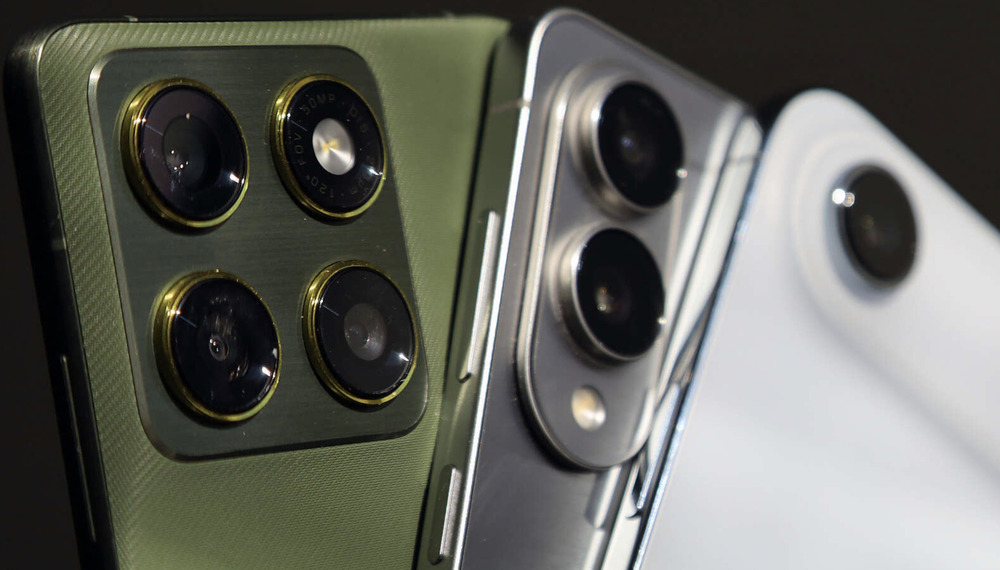
iPhone Air – stability and predictability
Apple has maintained its consistent approach: rather than chasing high megapixel counts, the focus is on predictable performance.
Key specifications:
- Main camera: 12 MP, f/1.8
- Smart HDR 5 and Deep Fusion support
- Video: 4K at 60 FPS, full-axis stabilization
Performance: Photos are consistently predictable, with accurate colors and white balance, while video quality ranks among the best in its class. The iPhone Air does not aim to impress with numbers; it prioritizes a reliable and consistent user experience.
Samsung Galaxy S25 Edge – numbers that deliver
Samsung has focused on maximizing detail and versatility. The 200 MP camera is not just a marketing feature but a functional system designed to perform across a range of scenarios.
Key specifications:
- Main sensor: 200 MP, f/1.7
- Night mode with multi-frame processing
- 10× optical zoom and precise autofocus
Performance: The camera delivers high levels of detail, strong low-light performance, and consistent color reproduction even in challenging lighting. The Galaxy S25 Edge is suited for users who want extensive photographic capabilities without being limited by lighting or conditions.
Motorola Edge 70 – practical camera
Motorola maintains a balance between quality and cost. The Edge 70 features a 50 MP main camera, an ultra-wide module, and a capable front-facing camera, allowing for solid performance in most conditions.
Key specifications:
- Main camera: 50 MP, f/1.8
- Ultra-wide sensor: 50 MP
- Front camera: 50 MP with AI enhancements
Performance: The camera performs adequately for social media and everyday use, without delivering standout results. The Edge 70’s pricing positions it as the most cost-effective option among the three.
In the realm of ultra-thin smartphones, camera design reflects each brand’s philosophy: Samsung emphasizes maximum functionality, Apple prioritizes predictable quality, and Motorola aims for practical balance.
- iPhone Air: +0
- Samsung Galaxy S25 Edge: +1
- Motorola Edge 70: +1
Price makes the difference
In this comparison, there is no absolute winner, but some conclusions are clear:
- iPhone Air – suited for those who prioritize style, comfort, and a premium feel.
- Samsung Galaxy S25 Edge – aimed at users seeking a true flagship in a slim form factor.
- Motorola Edge 70 – designed for those looking for a practical, cost-effective device with good battery life and everyday usability.
Notably, the Motorola Edge 70 challenges typical assumptions. It shows that a slim smartphone does not have to be expensive, and that compromises can be a deliberate balance rather than a drawback.
Price can indeed make a difference – especially when a more affordable device can last two days on a single charge while remaining slim and well-designed.
- iPhone Air: +0
- Samsung Galaxy S25 Edge: +0
- Motorola Edge 70: +1
Read also: Revolution Beyond Pixels: How AI Is Rewriting Future of Television
Conclusions
In the world of ultra-thin smartphones in 2025, there is a clear battle of concepts: slimness, performance, battery life, audio, and camera. Each brand follows its own approach, and although these devices may look similar at first glance, their underlying strategies differ significantly.
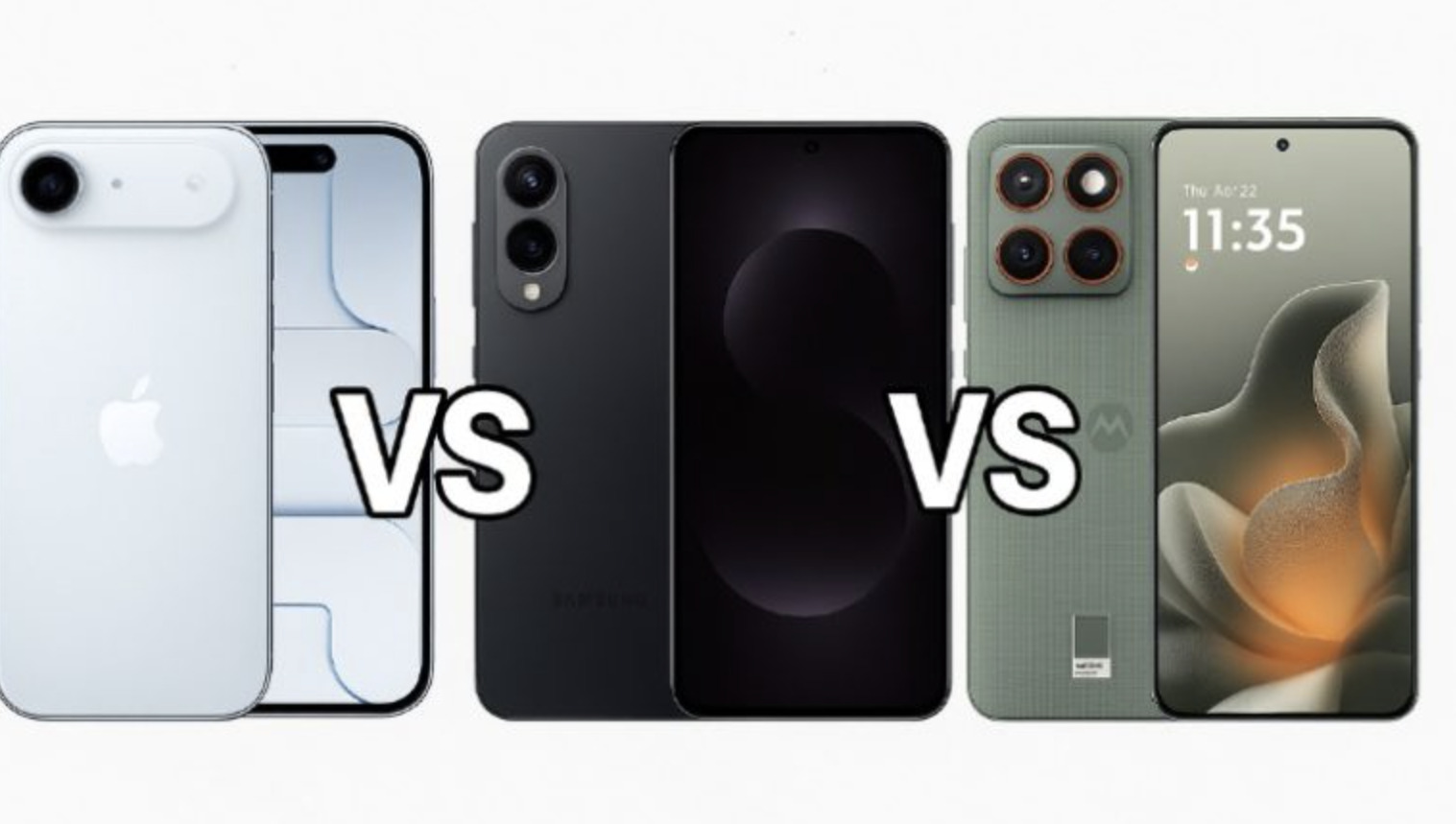
- The iPhone Air focuses on style, premium feel, and smooth performance. Its slim body, titanium frame, and 120 Hz OLED display contribute to a sense of a lightweight, high-end device, while iOS optimization and the Apple A18 chip provide stable performance. However, the relatively small 3149 mAh battery limits overall battery life, making the device less suited for highly active users.
- The Samsung Galaxy S25 Edge represents a “flagship without compromises” approach. Its powerful Snapdragon 8 Elite, 200 MP camera, large AMOLED display, and the loudest stereo speakers among its competitors make it technically capable. The device is slim yet highly functional, suited for users who want top-tier performance across all areas.
- The Motorola Edge 70 stands out for its balanced approach. The Snapdragon 7 Gen 4 provides stable performance, a 4800 mAh battery offers up to two days of autonomy, and the slim, stylish design does not compromise usability. Its 50 MP camera, pleasant P‑OLED display, and overall practicality make the Edge 70 the most cost-effective option among the three.
Here are the overall results of our comparison, but most importantly, it is up to you to decide:
- Apple iPhone Air: 3 points
- Samsung Galaxy S25 Edge: 5 points
- Motorola Edge 70: 5 points
Read also:
- Motorola Edge Series: Development History, Achievements, and Future Plans
- Why Motorola makes the most romantic smartphones
- Marshall Major V Headphones Review: Life’s better when it rocks
- Life is confusing: Selection of dystopian books in which the world ‘takes a wrong turn’

