




© ROOT-NATION.com - Use of content is permitted with a backlink.
Motorola Edge 70 impresses with its slim body, strong performance, and excellent cameras. But is that enough to win over the global market?
Motorola’s lineup has plenty of solid mid-range devices, yet in recent years it often felt like the brand had hit the brakes. After the bold, almost audacious Edge 60 series, expectations were sky-high. And just when it seemed that Motorola had lost some momentum, the company suddenly swung back into action. The smartphone world has been shifting toward an “ultra-thin aesthetic” – the Galaxy S25 Edge series and the iPhone 17 Air only fueled this trend. The race for sub-6 mm bodies has become the industry’s new obsession. And Motorola, a company that practically mastered this art back in the Moto Z era, decided to make a move that would surprise anyone except those who closely follow the brand.
Read also:
- Motorola smartphone reviews
- Motorola Edge Series: Development History, Achievements, and Future Plans
TABLE OF CONTENTS:
Motorola Edge 70 positioning and price
That’s how the Motorola Edge 70 stepped into the spotlight – a smartphone instantly labeled “the thinnest in its class” and, from day one, a hot contender against established favorites. Not just another model in the lineup, but a challenge – an unapologetic statement of ambition.
And I’ll admit, that caught my attention. What exactly is Motorola planning to surprise buyers with in 2026? What engineering tricks did they pack into this almost weightless design? And, most importantly, will this ultra-thin build become a beautiful but problematic whim – something the industry has seen before?
So when Motorola’s team offered the chance to test the Edge 70, I agreed without a moment of hesitation. The device was simply too intriguing to ignore. And today, I’m ready to share my impressions with you. No embellishments, no marketing gloss. Trust me – there’s genuinely a lot to talk about.
Motorola Edge 70 isn’t just another incremental step in the lineup – it feels like a complete rethinking of the brand’s design philosophy. Its standout feature, the one that will leave many genuinely impressed, is the ultra-slim 5.99 mm body paired with a weight of just 159 g. And yes – the display is now entirely flat, without the signature curve that defined the Edge series for years.
Imagine a smartphone that doesn’t just look futuristic, but feels like something crafted for people who value form just as much as function. The Motorola Edge 70 enters the club of ultra-thin and ultra-light devices confidently, almost aggressively. It’s not chasing the “thinnest in the world” title – instead, it embraces an aesthetic designed to evoke emotion. Premium materials, perfect symmetry, and small design touches that you instinctively want to examine up close.
This is the kind of phone you pull out not to impress anyone – but because you genuinely enjoy using it. Although, to be fair, it does have plenty to impress with.

But if we set aside that almost unreal silhouette for a moment, what we’re left with is… a very solid mid-ranger. Inside, you’ll find the fresh Qualcomm Snapdragon 7 Gen 4 – more than enough power for everything you do daily. Add 12 GB of fast LPDDR5X RAM and a generous 512 GB of UFS 3.1 storage, and you get a configuration that confidently says: “Yes, I know exactly what you expect from a 2026 smartphone – without costing a fortune.”
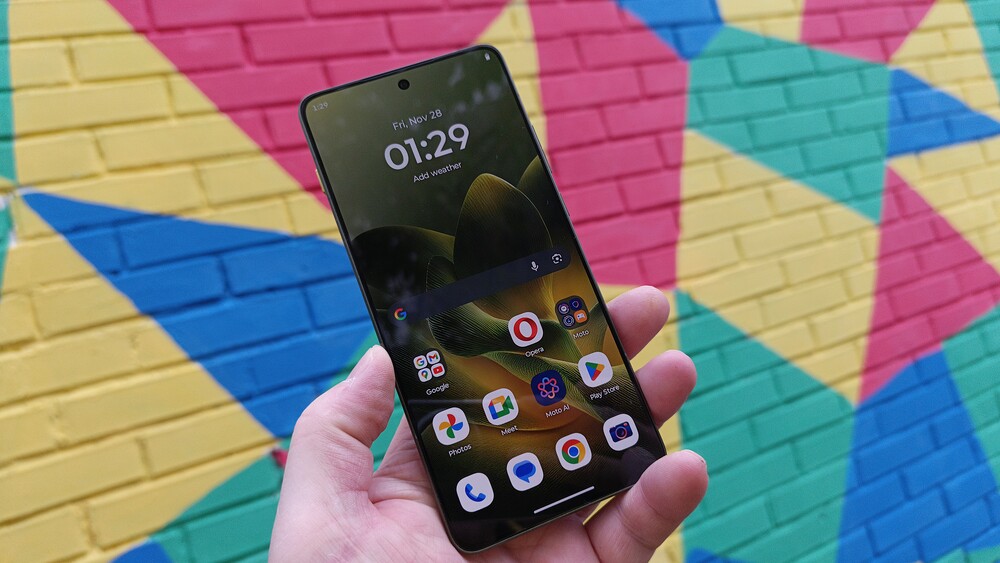
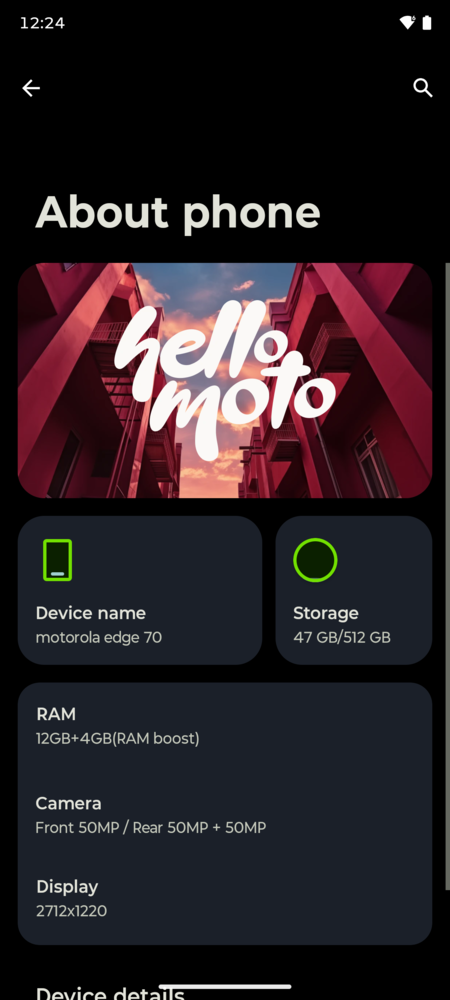
The display is a completely flat pOLED panel with a 2712×1220 resolution and a 120 Hz refresh rate. Contrast, brightness, smoothness – everything here works at a level that will easily make you forget this isn’t a flagship. The camera setup includes three 50-MP modules: the selfie shooter, the main camera, and the ultrawide – a clean, sensible trio without unnecessary gimmicks, but with a clear focus on consistent everyday quality. And of course, there’s a 4800 mAh battery with 68 W wired charging and wireless support – a promising formula for solid endurance without sacrificing convenience.
Does the Edge 70 qualify as a flagship? The answer is obvious – no. But it isn’t trying to be one. There’s no ultra-powerful SoC, no UFS 4.0/4.1, no periscope lens, none of those “wow features” brands often use to justify aggressive price tags. And this is exactly where the real story begins.
For the starting price of $715/€615 in the 12/512 GB configuration, Motorola isn’t offering a “flagship killer,” but rather an honest, well-balanced, genuinely enjoyable smartphone – one that puts the emphasis not on dry numbers but on emotion, feel, and design. On the things that actually make you stop and wonder later: “Why would I switch to another brand at all?” The Edge 70 bets on being the most comfortable, pleasant-to-use device in its class.
If you’re looking for a smartphone that blends style, performance, and everyday comfort, this review will explain why the Motorola Edge 70 definitely deserves a spot on your shortlist.
Motorola Edge 70 Specifications
- Display: pOLED; 6.67″; Super HD (2712×1220); 20:9; 446 PPI; 120 Hz; 4500 nits; HDR10+; 100% DCI-P3; 10 bits; screen-to-body ratio 96.32%; touch sampling rate up to 300 Hz; Water Touch water resistance technology; Corning Gorilla Glass 7i
- Display certification: HDR10+, Amazon HD streaming, SGS Low Blue Light, SGS Low Motion Blur, Pantone Validated, Pantone Skintone Validated
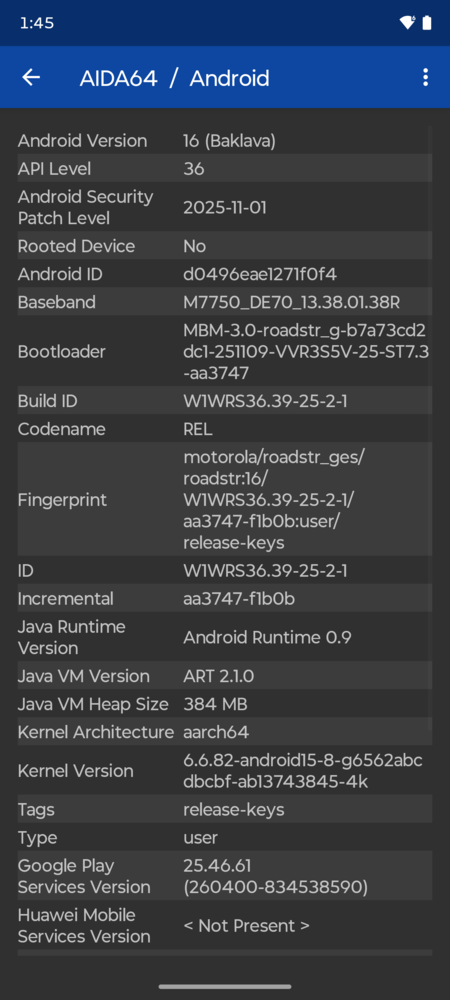
- Processor: Qualcomm SM7750-AB Snapdragon 7 Gen 4; 8 cores (1×2.8 GHz Cortex-720 and 4×2.4 GHz Cortex-720 and 3×1.8 GHz Cortex-520); 4 nm process technology; Adreno 722 graphics
- RAM: 12 GB LPDDR5X
- Storage: 512 GB UFS 3.1
- Memory card support: no
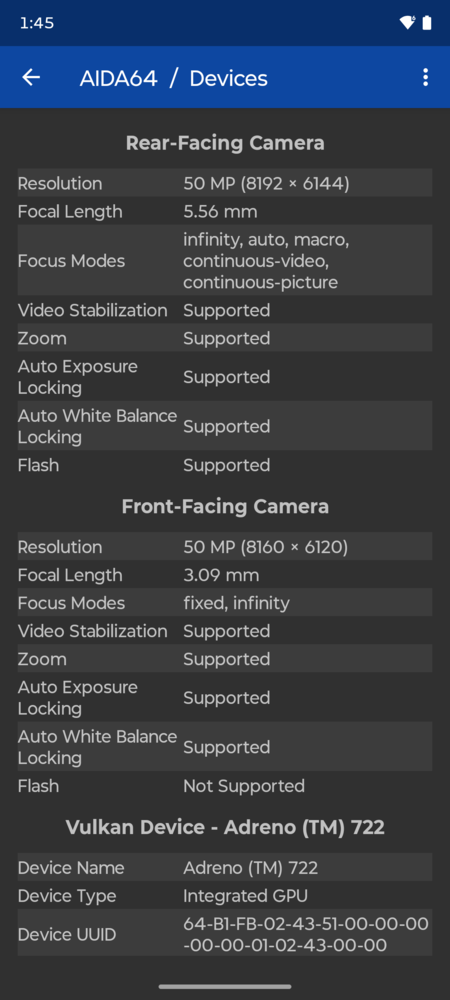
- Rear camera: 3 modules (main, ultra-wide, auxiliary). Main lens: 50 MP; f/1.8, 24 mm (wide angle), 1/1.56″, 1.0 µm, multi-directional PDAF, OIS. Ultra-wide lens: 50 MP, f/2.0, 12 mm, 120˚ (ultra-wide angle), 1/2.76″, 0.64 µm, PDAF. Video recording: 4K@30/60 fps, 1080p@30/60/120/240 fps, gyroscopic electronic image stabilisation. Features: LED flash, HDR, panorama
- Front camera: island (in display); wide angle; 50 MP, f/2.0, (wide angle), 0.64 µm, HDR; Video recording: 4K@30 fps, 1080p@30/120 fps
- Audio: stereo speakers, Dolby Atmos and Hi-Res Audio support
- Battery: Lithium-ion silicon/calcium 4800 mAh
- Charging: Motorola TurboPower 68 W
- Operating system: Android 16
- Shell: Hello UI
- Communication standards: 2G, 3G, 4G, 5G
- SIM card: 1×nano-SIM + eSIM
- Wireless technologies: Wi-Fi 6e (802.11ax), Bluetooth 5.4, NFC
- Geolocation services: GPS, AGPS, LTEPP, SUPL, GLONASS, Galileo
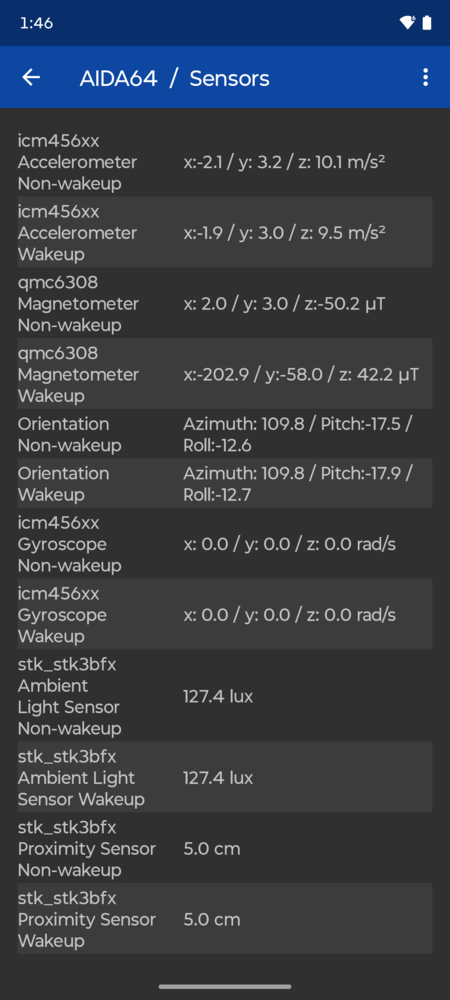
- Sensors and detectors: presence sensor, external light sensor, accelerometer, gyroscope, Sar sensor, microcontroller for processing data from various sensors, magnetometer (electronic compass)
- Security: on-screen fingerprint scanner, face control, ThinkShield
- Connectors and ports: Type-C (USB 2.0), OTG
- Protection: IP68/IP69 moisture protection (high-pressure water jets; can be submerged to a depth of 1.5 m for 30 minutes), MIL-STD-810H shock protection
- Available colours: Pantone: Gadget Grey, Lily Pad, Bronze Green
- Dimensions: 159.9×74.0×5.9 mm
- Weight: 159 g
- Package contents: smartphone, branded case, USB-C to USB-C cable, SIM tray removal tool, user manual, warranty documentation, branded scented plastic-free packaging.
Package contents
The smartphone arrives in Motorola’s signature, fully plastic-free packaging. And once again, the company couldn’t resist adding its trademark “special touch”: a subtly scented box. It has already become part of the brand’s identity – a small, almost theatrical gesture that makes the unboxing experience feel a bit more emotional and memorable.
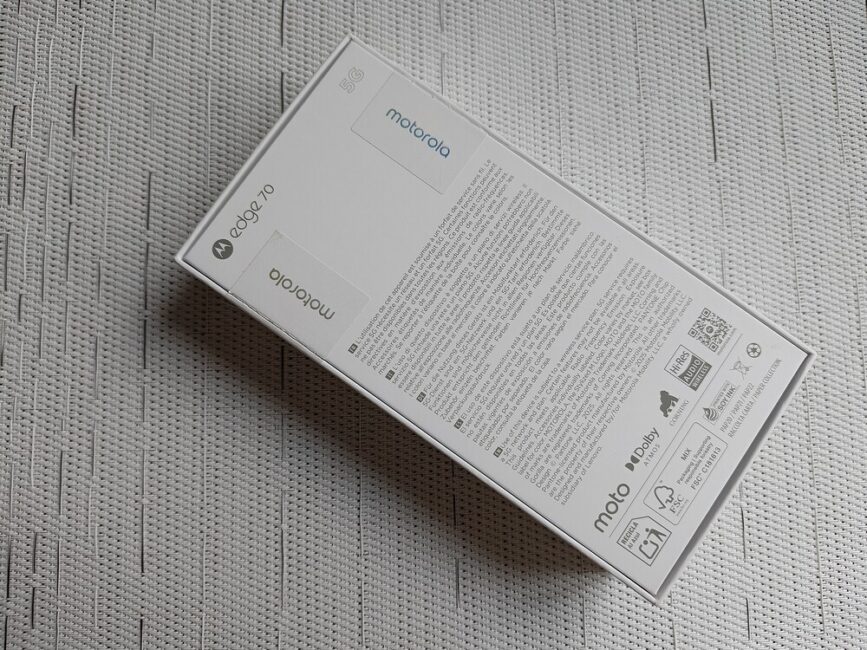
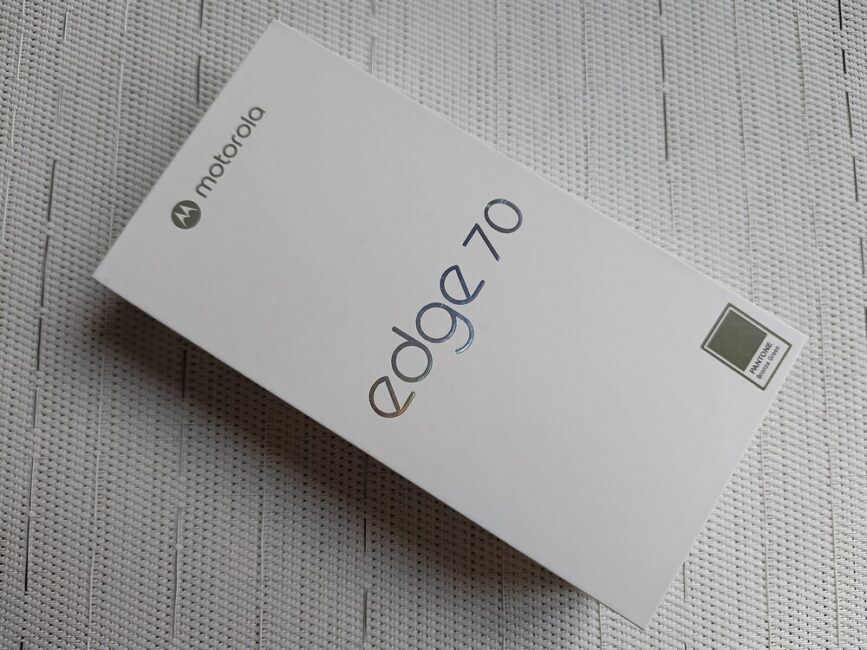
As soon as you lift the lid, you’re greeted by a light, delicate scent – not overpowering or sharp, but balanced and pleasant. It feels almost as if the device is welcoming you personally. The fragrance is, as usual, crafted by the Swiss perfumery giant Firmenich, and they clearly know how to create just the right effect.
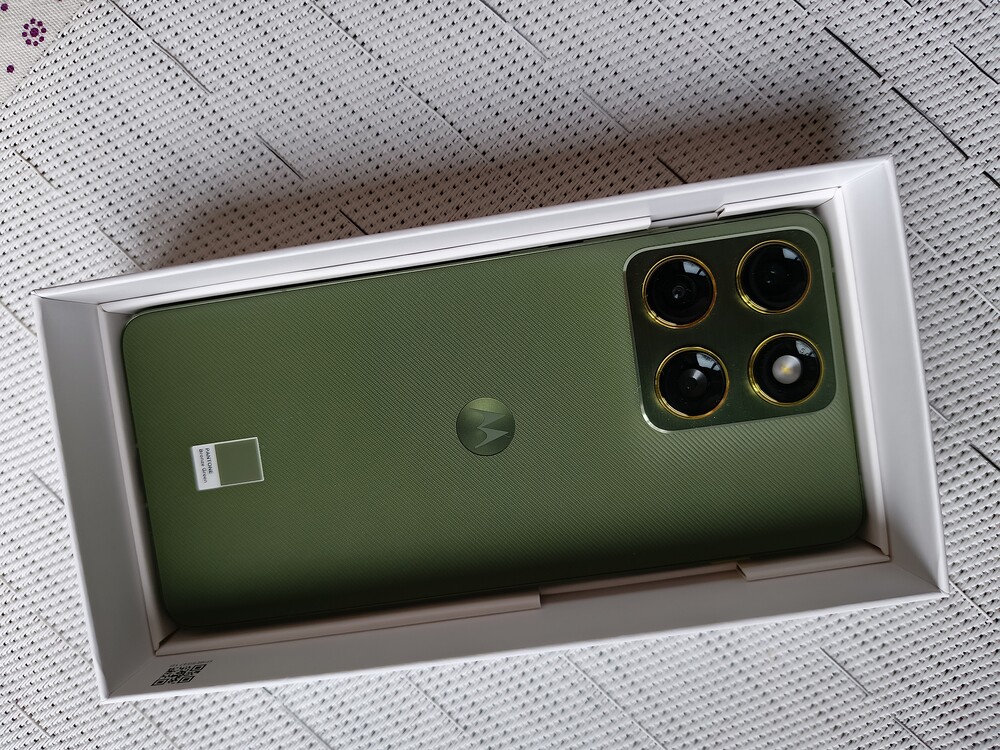
The box isn’t just scented – it’s environmentally conscious too: plastic-free, with text printed in soy-based ink – a small but appreciated detail. Inside, you’ll find the full basic kit: the Motorola Edge 70 itself, a fairly sturdy clear silicone case with a magnetic ring compatible with MagSafe chargers, a USB-C to USB-C cable, a SIM-eject tool, and the usual paper documentation.
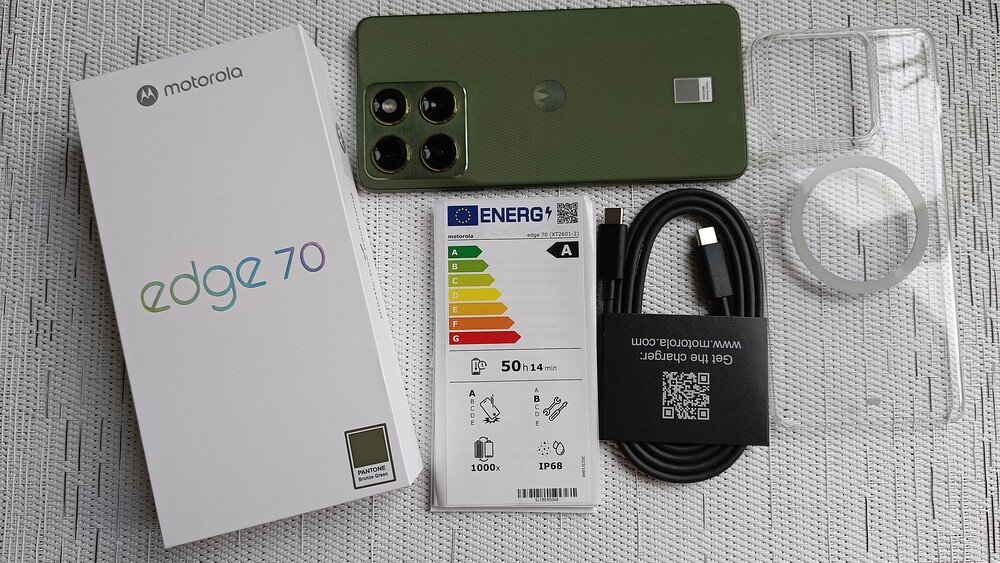
There’s no charging adapter included. In the past, this might have caused concern or even disappointment, but today it’s become an industry standard. People are used to it, environmental considerations take priority, and honestly, few would expect a charger in the box in 2026. So Motorola Edge 70 shouldn’t be judged for this – the package is exactly what a modern smartphone should include: no surprises, but also no disappointments.
Read also: Motorola Moto G86 Review: Smartphone That Outclasses the Competition
Modern, attractive design
By 2025, it might seem nearly impossible to surprise anyone with smartphone design. The market has long settled on clear standards: proportions, materials, and form factors. Yet Motorola somehow manages to strike that rare balance between minimalism, boldness, and engineering precision – the kind that genuinely grabs your attention. The Edge 70 is exactly one of those cases where first impressions aren’t formed in seconds, but from the very first moment you interact with it.
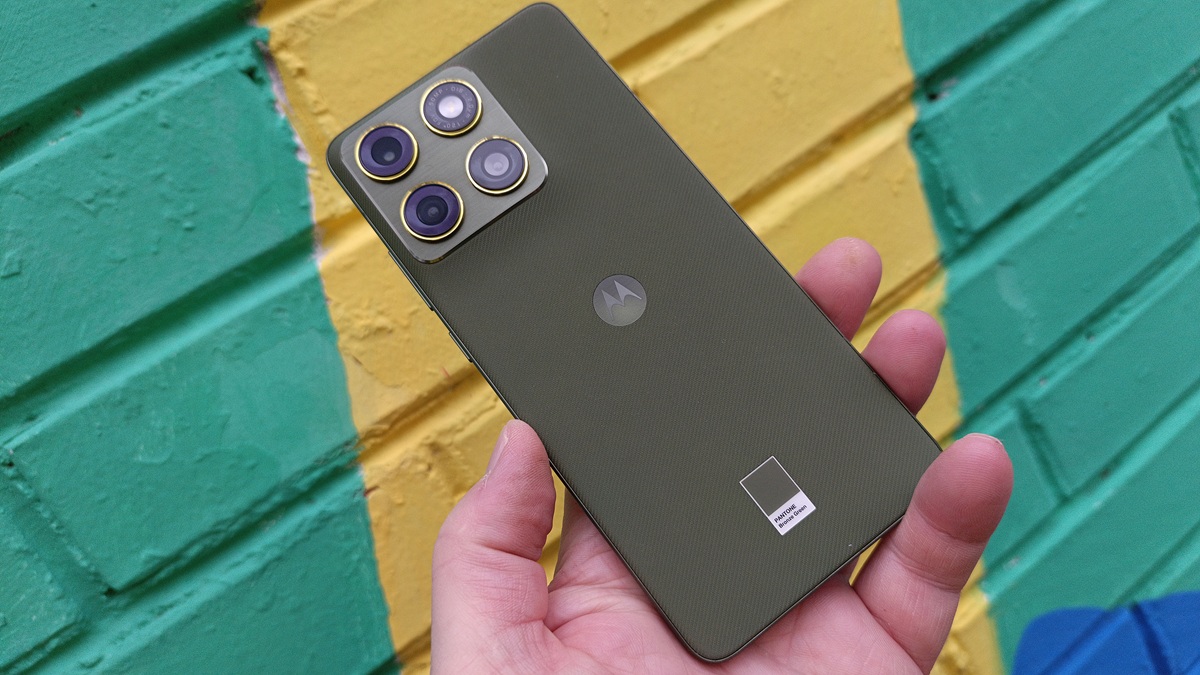
The main impact comes from its thickness – just 5.99 mm (excluding the camera bump). At this point, it’s no longer just a thin smartphone.
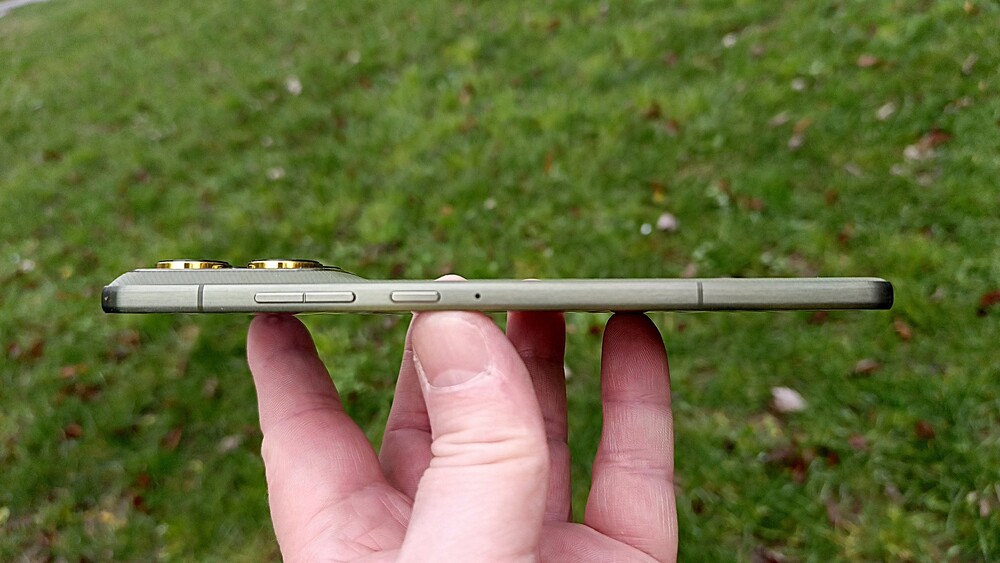
It belongs to the “ultra-thin” category, yet without the fragility that often comes with such models. On the contrary, the body feels remarkably solid, almost monolithic, with no hint of flex or compromise.
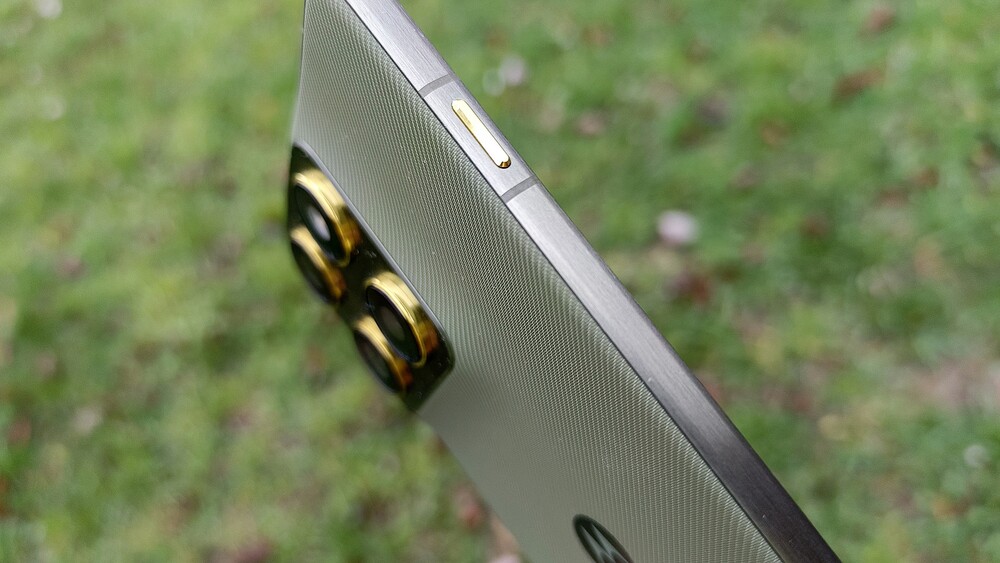
A body this thin requires the right materials. The Motorola Edge 70 is made from aerospace-grade aluminum – a metal alloy chosen for its exceptional strength-to-weight ratio. This ensures the phone won’t bend or warp while maintaining an almost ethereal lightness.
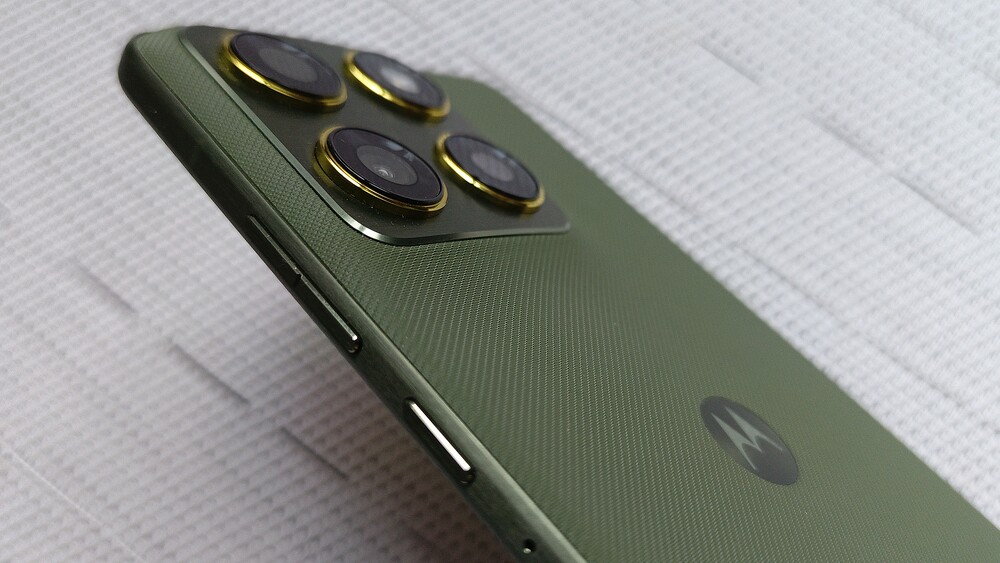
Motorola claims the Edge 70 is highly durable – and this doesn’t feel like mere marketing. Just a few minutes in hand make it clear that the focus wasn’t only on external thinness, but on achieving the right internal geometry.
The MIL-STD-810H certification reinforces this claim. For a smartphone this thin, meeting a military-grade standard is no small feat. It’s designed to withstand drops, temperature fluctuations, and mechanical stress that most ultra-thin devices simply couldn’t endure.
Read also: Everything You Need to Know About MIL-STD-810H in Smartphones: A Look at the Motorola Edge 50 Neo
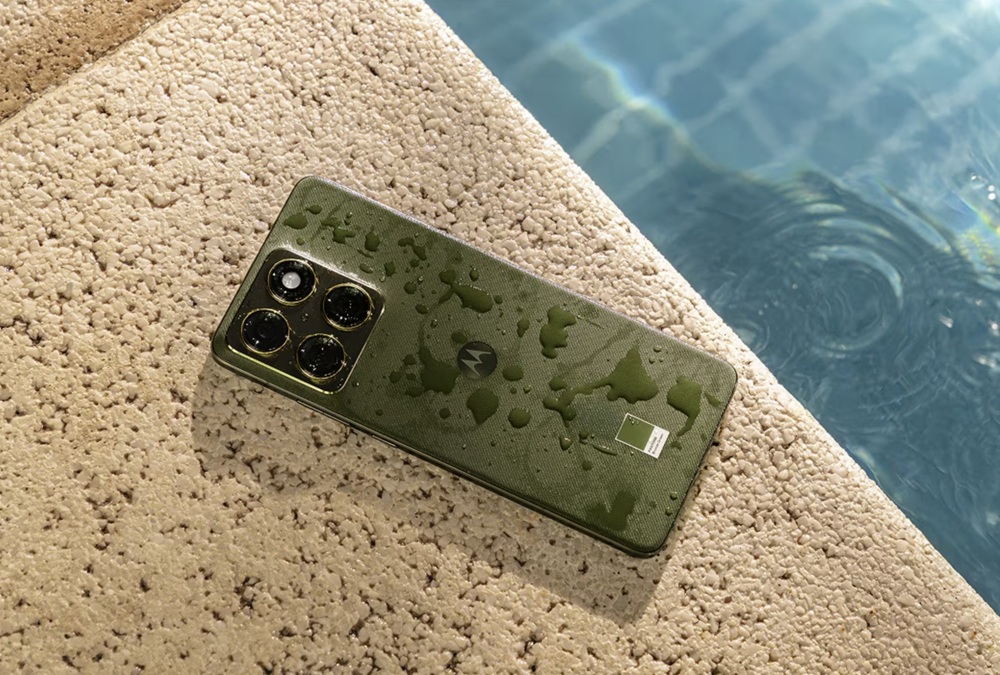
Complementing this, the IP68 and IP69 ratings complete the picture: the Edge 70 is protected against dust, full submersion in water, and even high-pressure jets. In other words, it’s a rare case where elegance doesn’t come at the expense of durability.
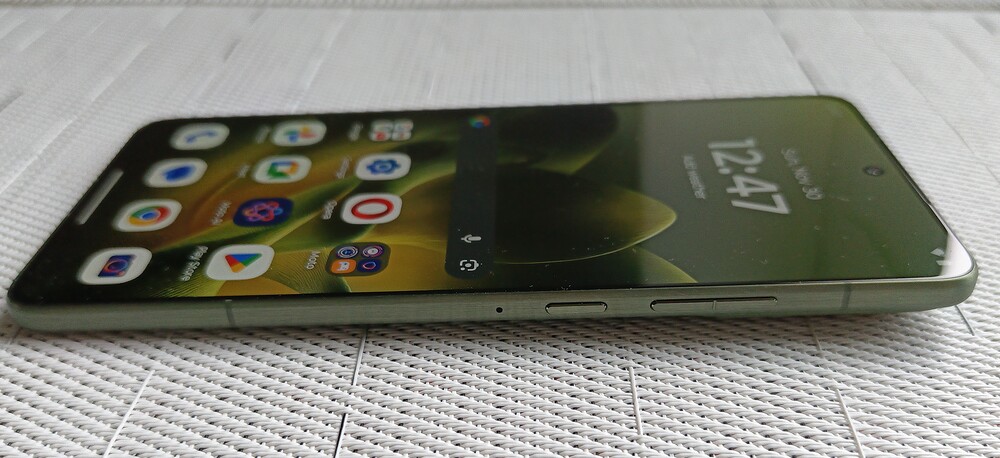
The display is protected by Gorilla Glass 7i – not the absolute top of Corning’s lineup, but a choice that balances strength and weight effectively. It’s a logical selection for a smartphone weighing just 159 g, noticeably lighter than many contemporary models in a similar form factor. The aerospace-grade aluminum frame adds rigidity while maintaining lightness. In hand, the Edge 70 feels like a precisely carved tool rather than a device assembled from separate parts.
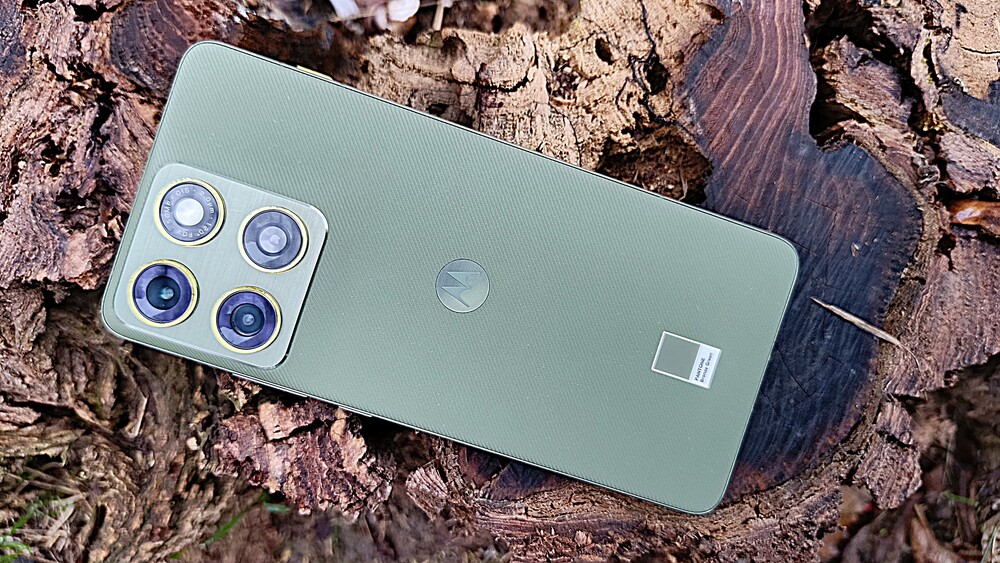
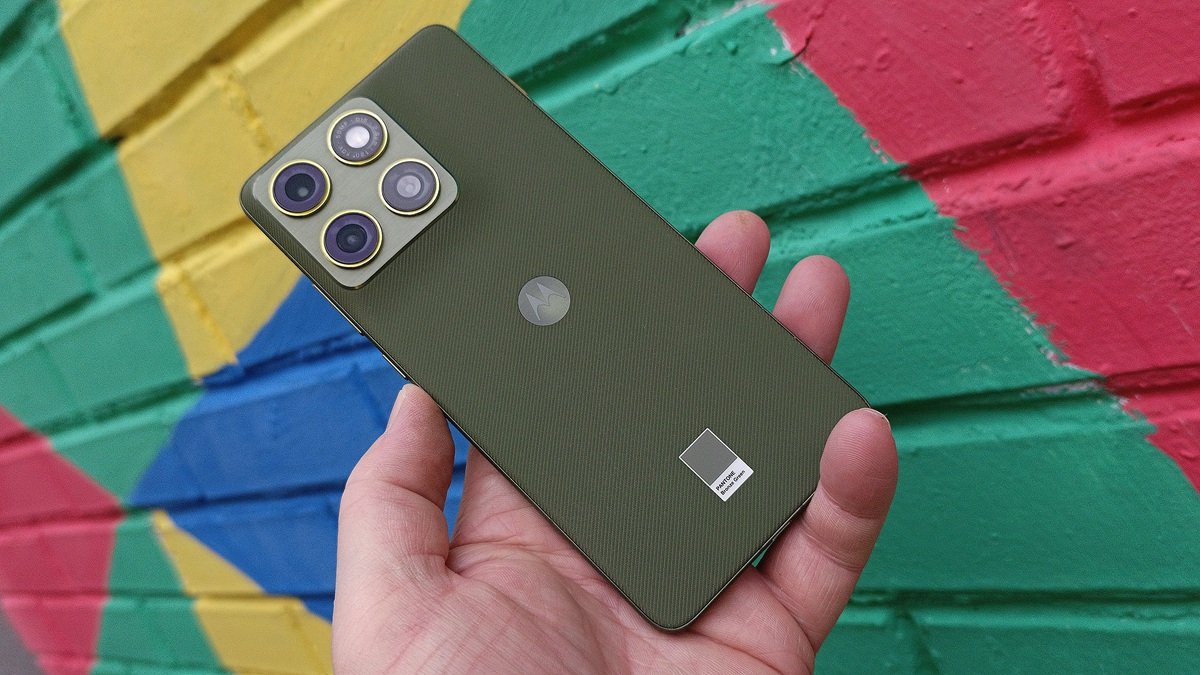
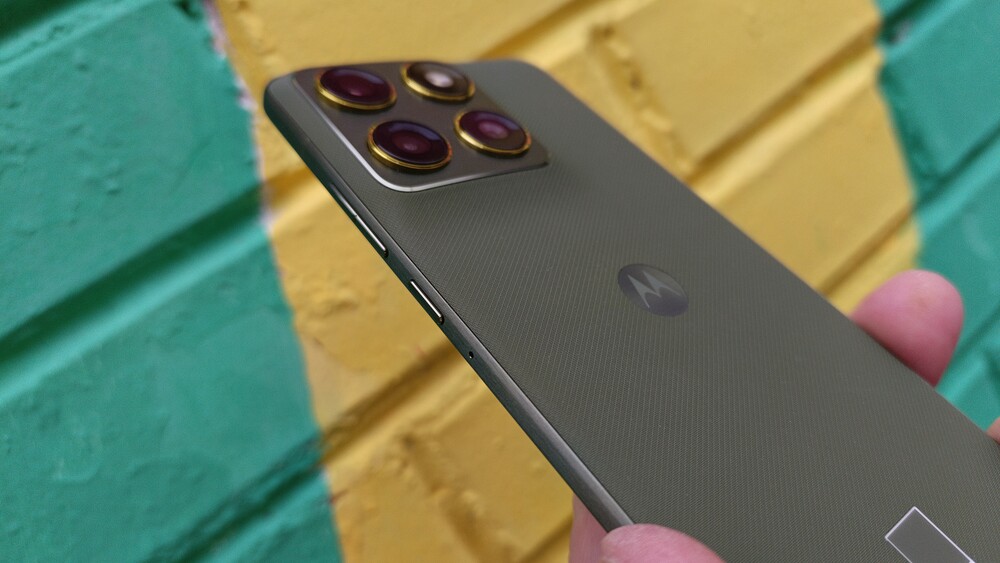
The design here isn’t just decorative – it’s part of the phone’s identity. Motorola doesn’t shift direction; it evolves within its own stylistic DNA. The bronze-green color, inspired by a Pantone palette, doesn’t just look striking – it conveys a sense of maturity and refinement. The matte aluminum frame, carefully finished metal camera plate, and subtle Moto logo aren’t just design choices; they’re a language of details that communicates without loud statements.
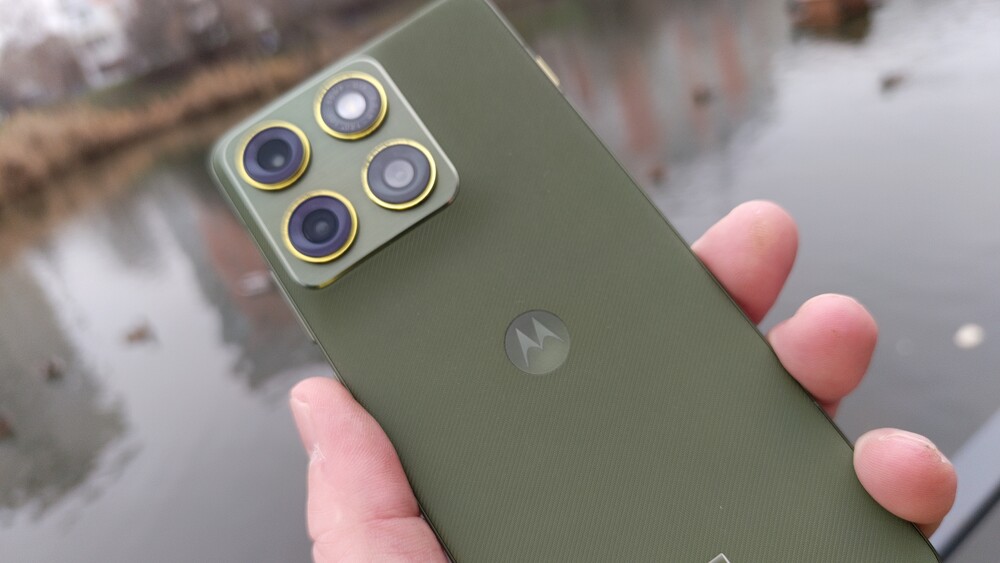
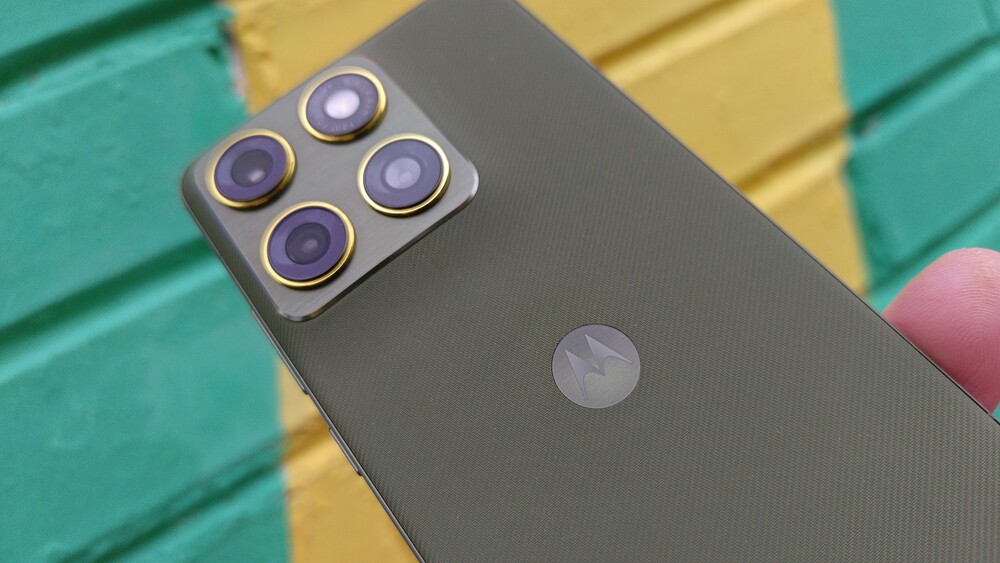
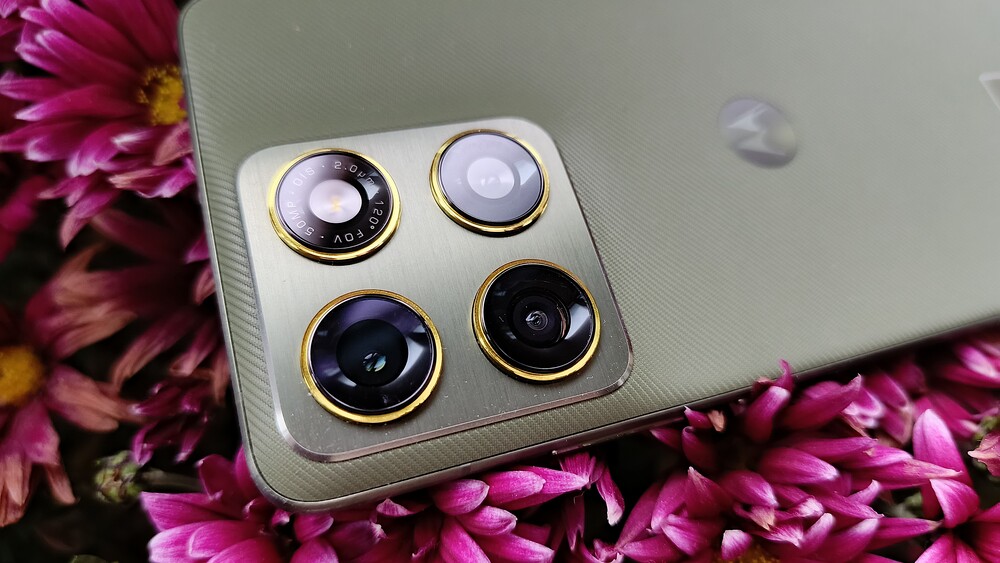
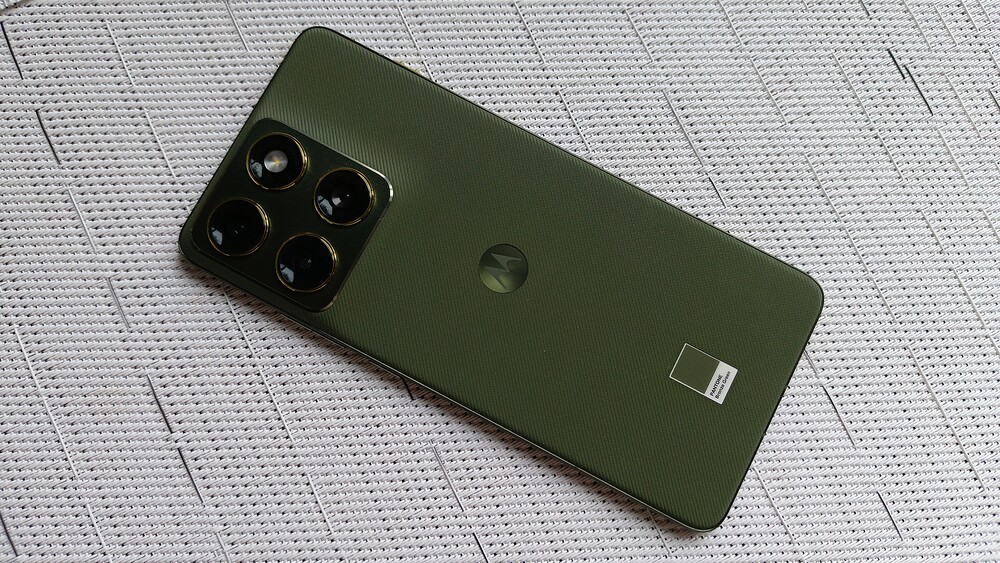
The back panel is covered with a nylon-textured material – easily one of the most pleasant surfaces you’ll find on a smartphone today. It feels tactile, grippy, and warm, reminiscent of premium technical fabrics from the outdoor industry. It’s not glossy or cold glass; it’s a material designed for everyday handling, carrying, and use.
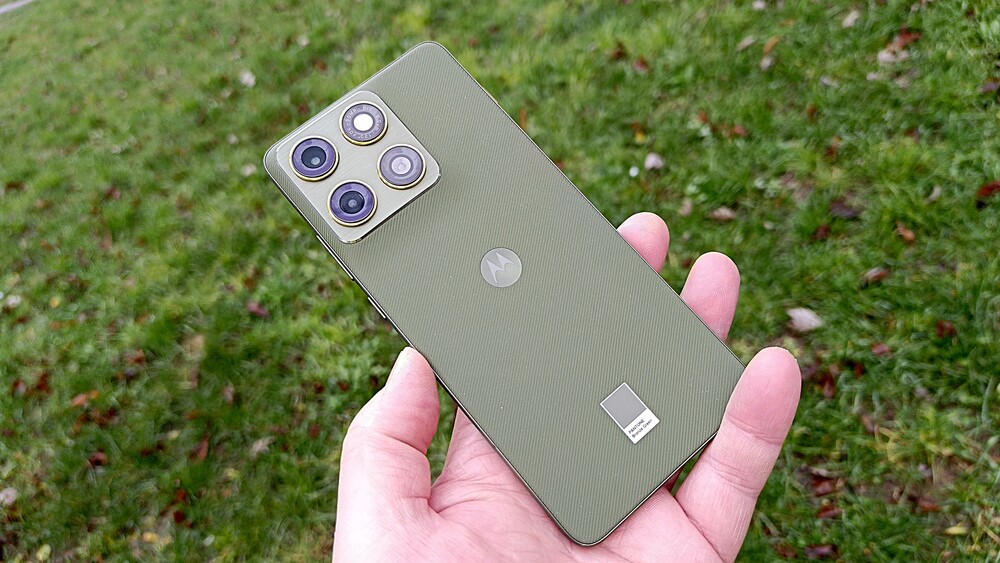
The combination of aluminum and nylon creates a construction that not only looks appealing but also genuinely contributes to durability. There’s no sense of “premium for the sake of premium” here – it’s thoughtful, functional design that takes real-world usage into account.
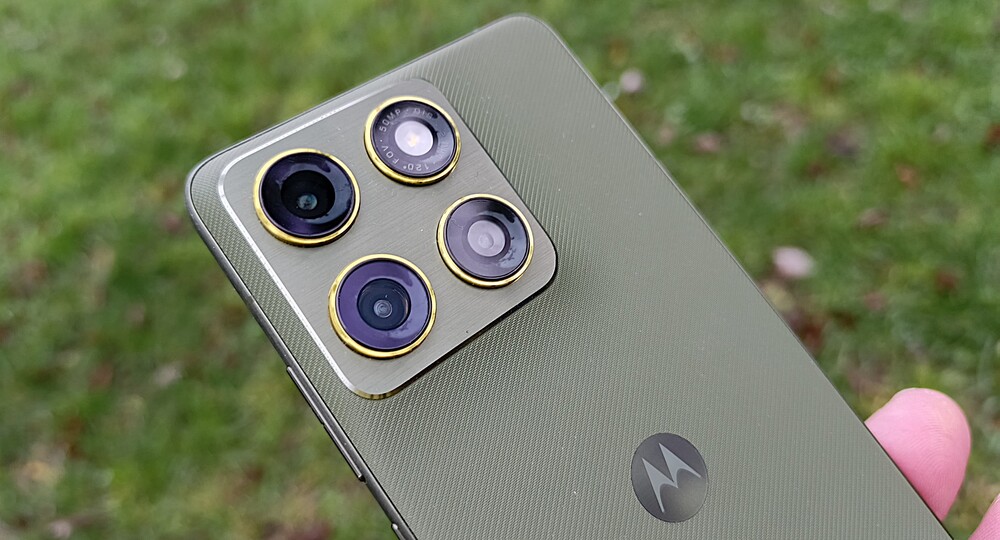
The flat, slightly sharp edges give the smartphone a confident feel in hand. They seem to anchor the device, preventing it from slipping. Even the control buttons, ports, and connectors are stylistically considered, though not all of them are strictly necessary.
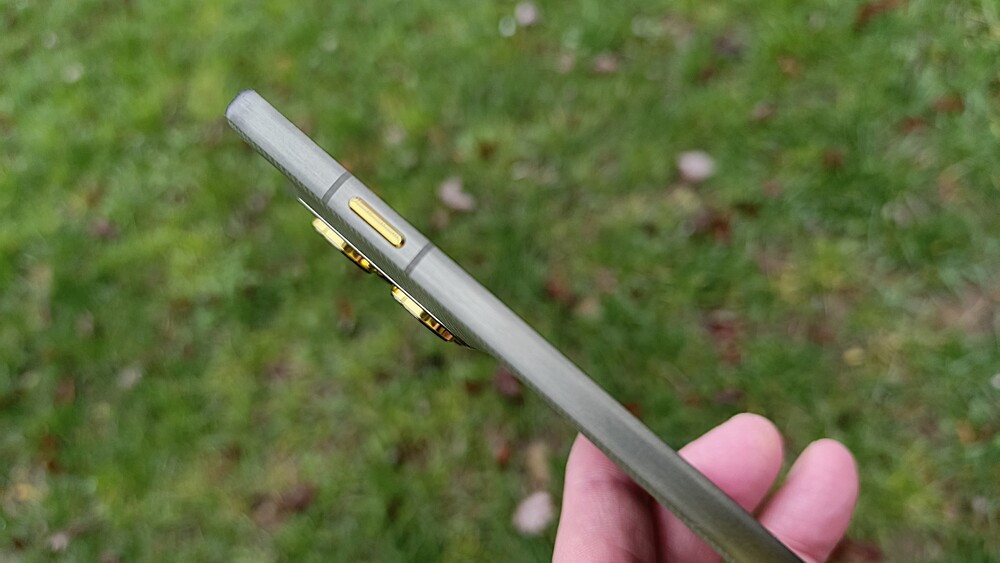
On the upper left edge, the designers placed a dedicated button for quick access to Moto AI, adding a more structured layer to device interaction. Some might question the need for it, but the answer is straightforward – the AI trend is present here as well.
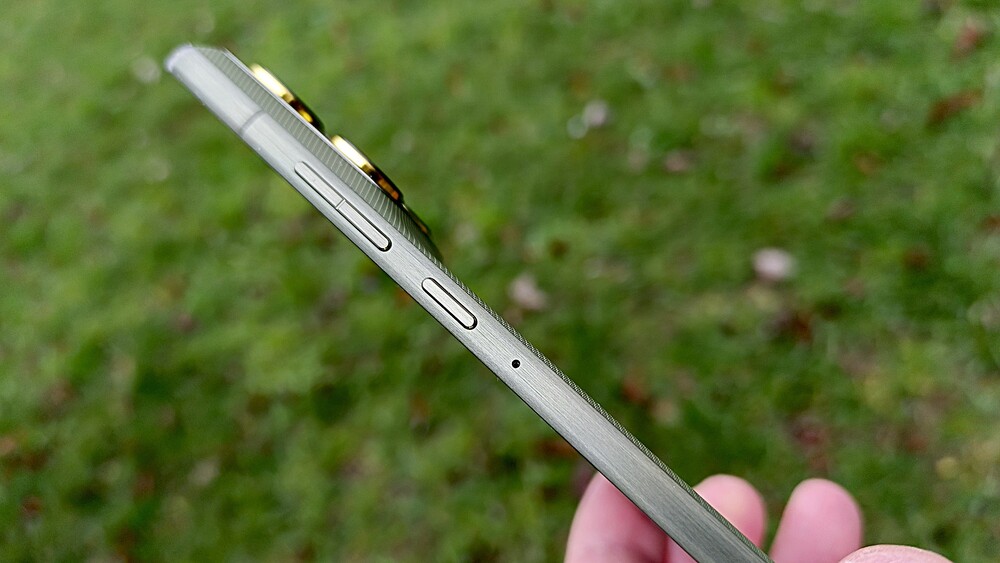
On the right side, there are the standard volume and power buttons, positioned at a comfortable height and offering a satisfying tactile feel.
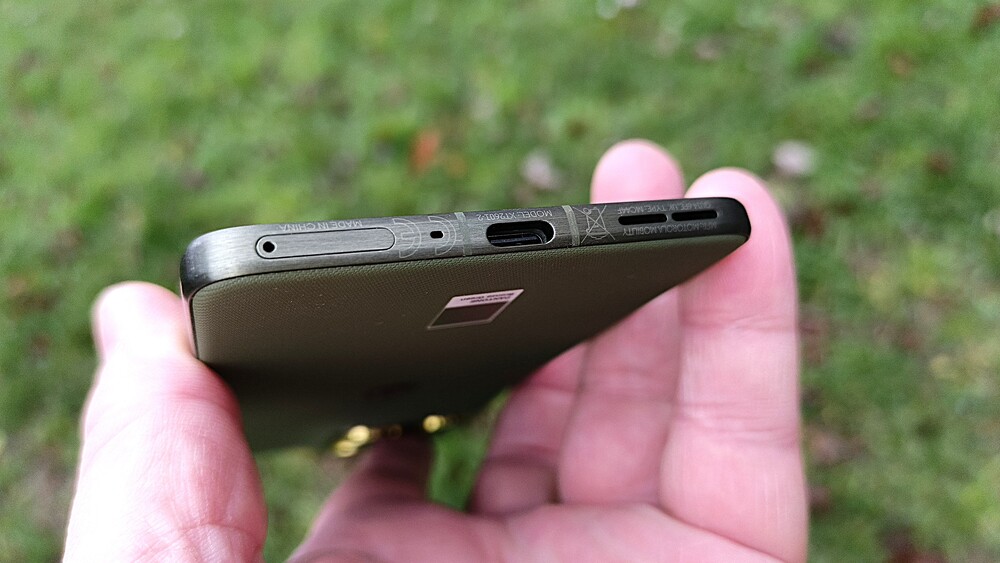
The bottom follows a mostly standard layout: a USB-C port for charging and PC connection (unfortunately, only 2.0), speakers, and the SIM card tray.
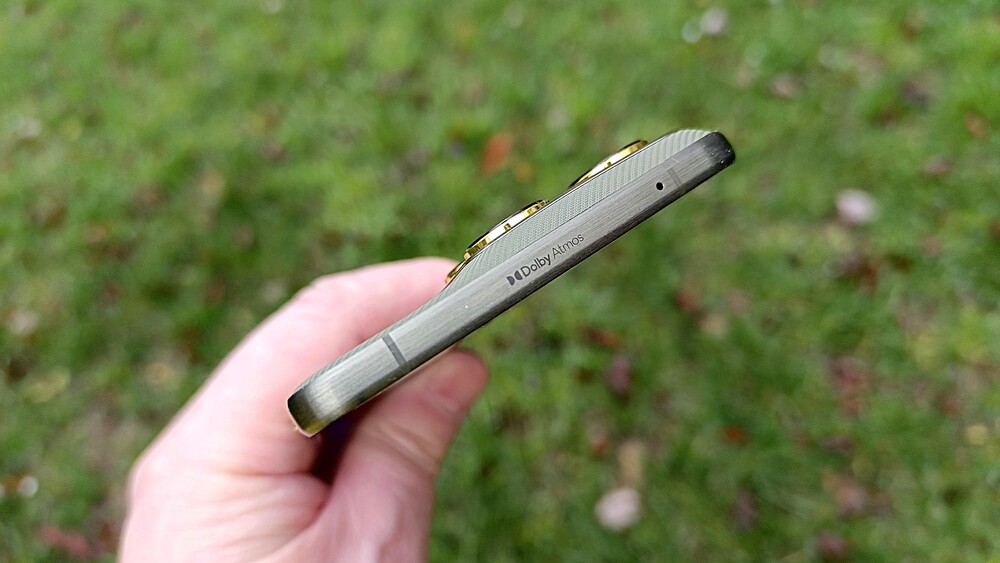
On the top edge, the signature Dolby Atmos logo indicates the phone’s support for this spatial audio technology. There’s also an additional microphone and a secondary speaker, which works with the bottom speaker to produce a loud, clear stereo sound, though the bass response is relatively modest.
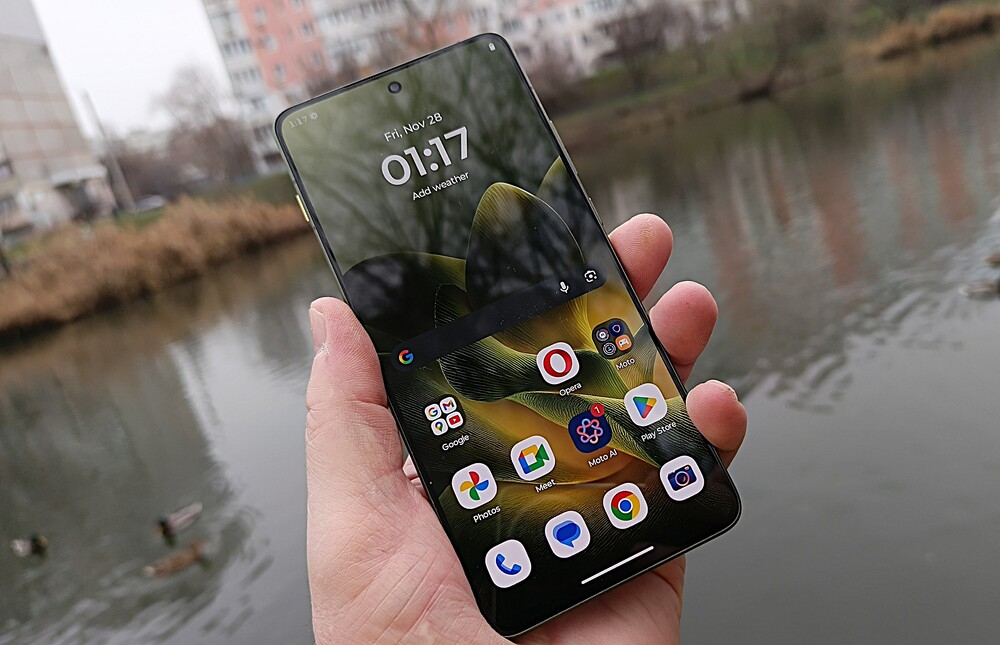
The ergonomics deserve a special mention. The Motorola Edge 70 fits exceptionally well in hand, almost as if it naturally balances between your fingers. It feels especially stable in the right hand, and the protruding camera module doesn’t interfere with that sensation. Left-handed users may find it slightly less comfortable – a typical nuance of symmetrical designs, but nothing critical.
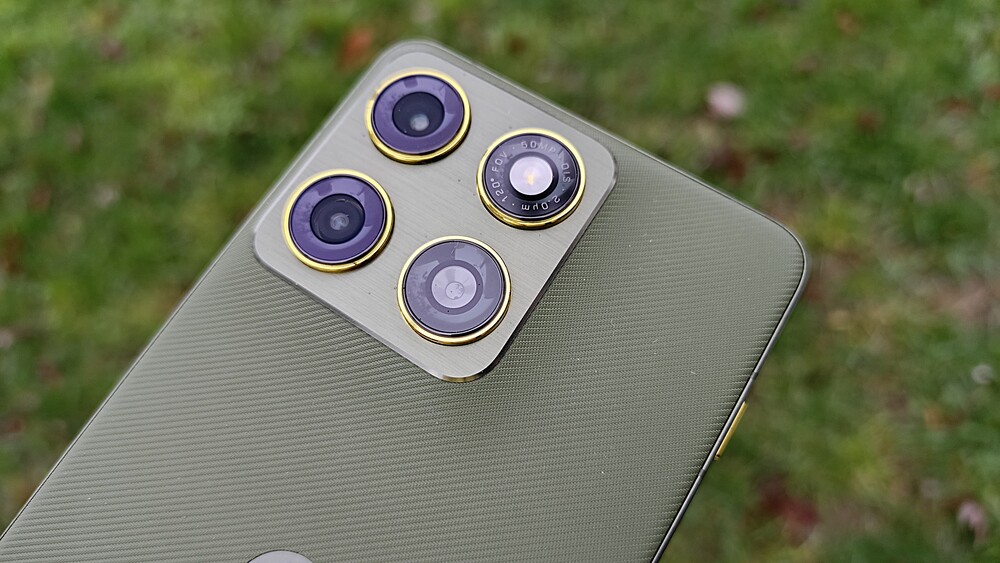
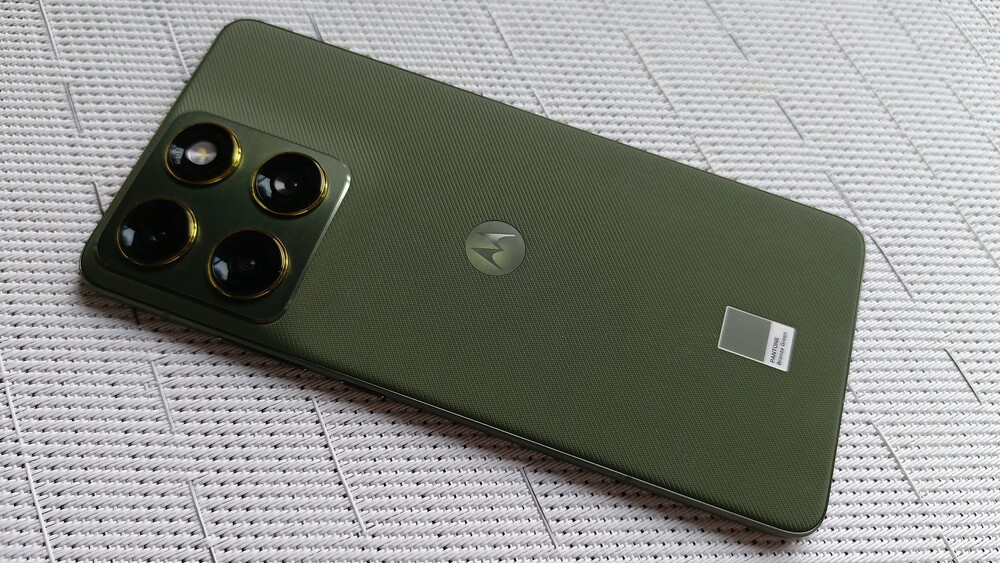
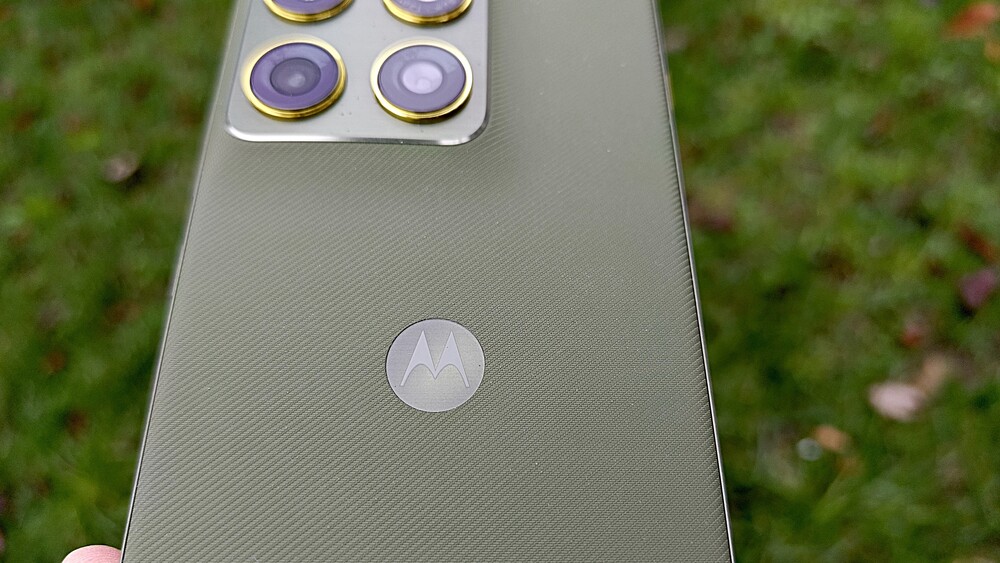
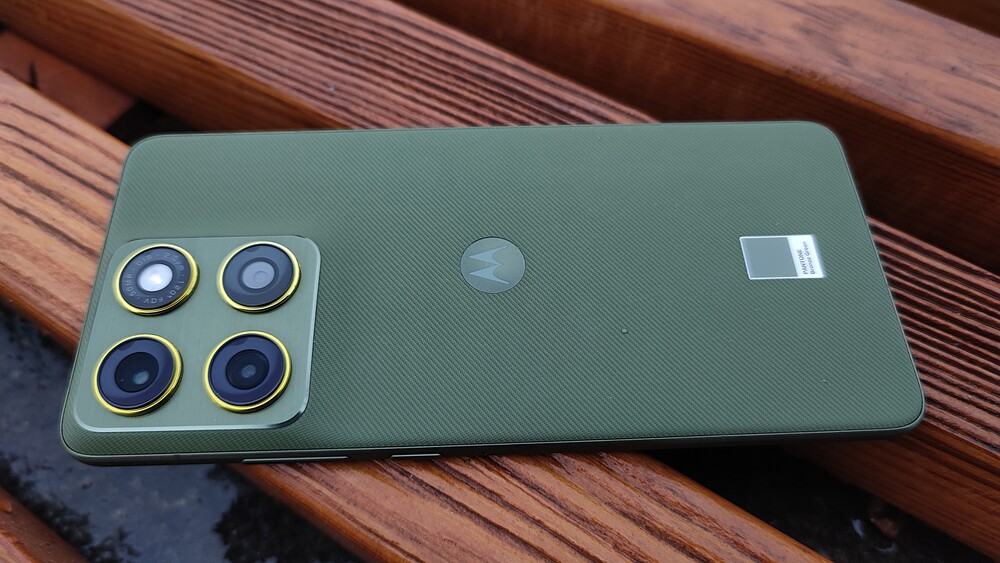
The back panel prominently features a refined square camera island. It protrudes slightly but is designed so neatly that it feels organic. The cameras are arranged in three circular modules, with a fourth circle dedicated to the flash.
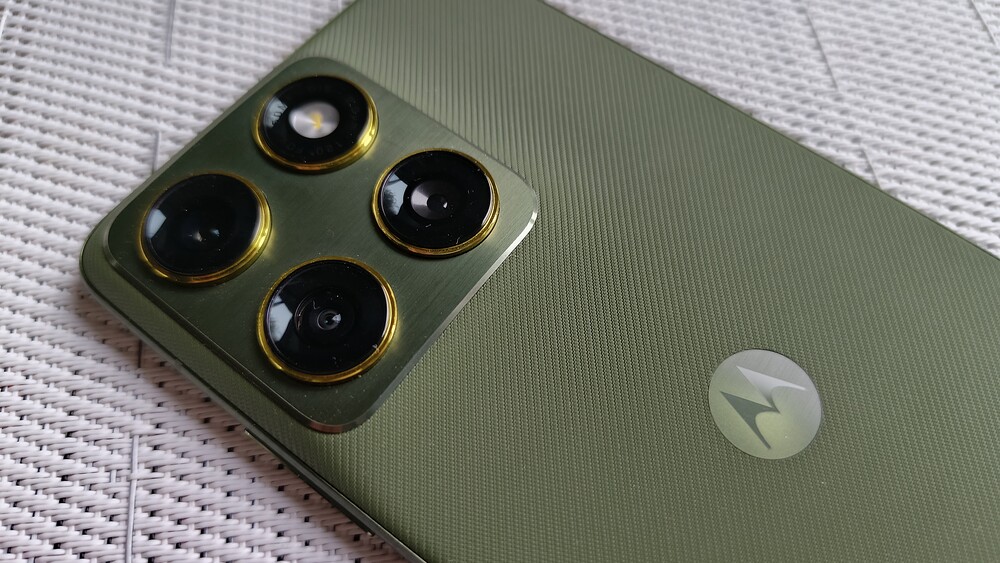
There’s something calming about this symmetry: it keeps the back panel minimalist and visually balanced. The Motorola logo sits at the center, while a Pantone color label is positioned at the bottom. I reviewed the Pantone Bronze Green version, though two other options are available: Pantone Gadget Grey and Pantone Lilly Pad.
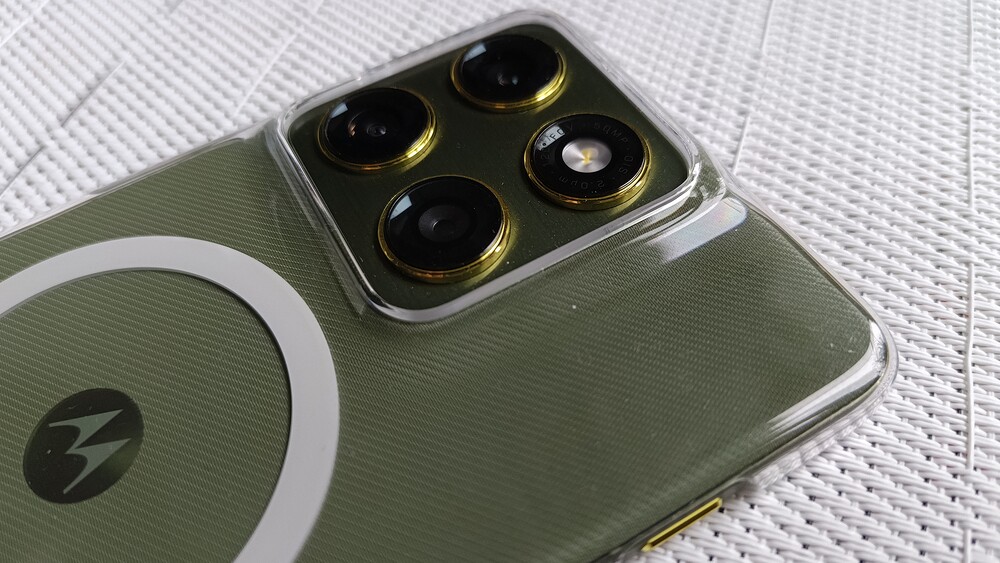
If you choose to use a protective case, Motorola has implemented a simple yet effective solution.

The included clear case preserves the phone’s design and color while providing a snug fit. It follows the contours closely, adding a protective layer without interfering with the visual intent of the designers.
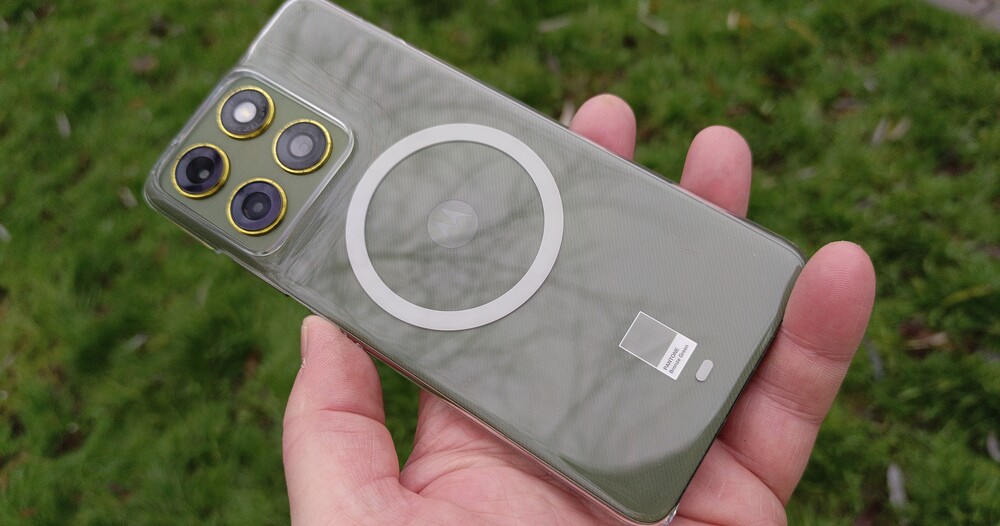
An added bonus is the magnetic ring around the logo, compatible with MagSafe, which opens up additional usage scenarios.
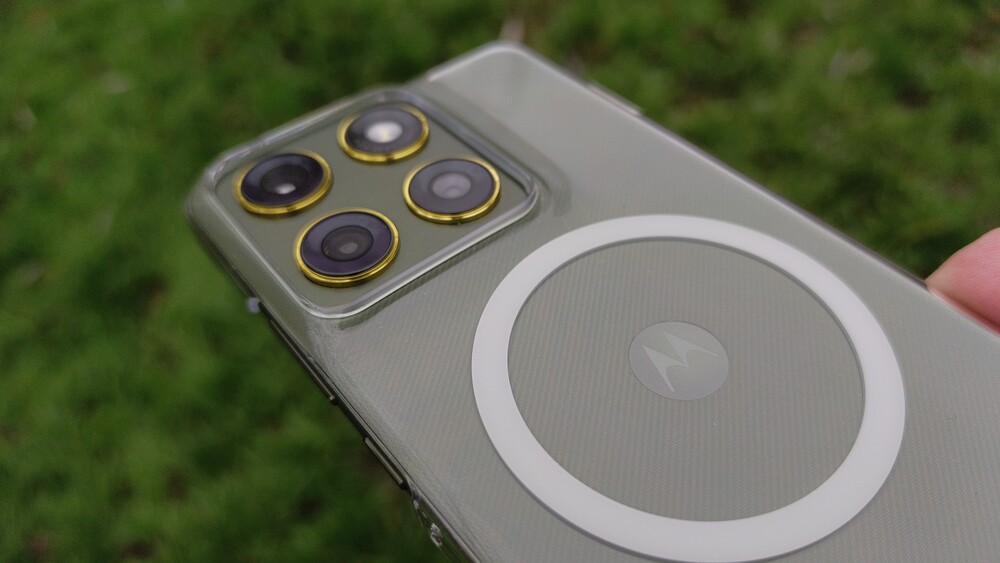
In summary, the design of the Motorola Edge 70 stands out as a notable example of technological craftsmanship. The Pantone-inspired Bronze Green variant demonstrates a distinct elegance, evident in every carefully considered detail.
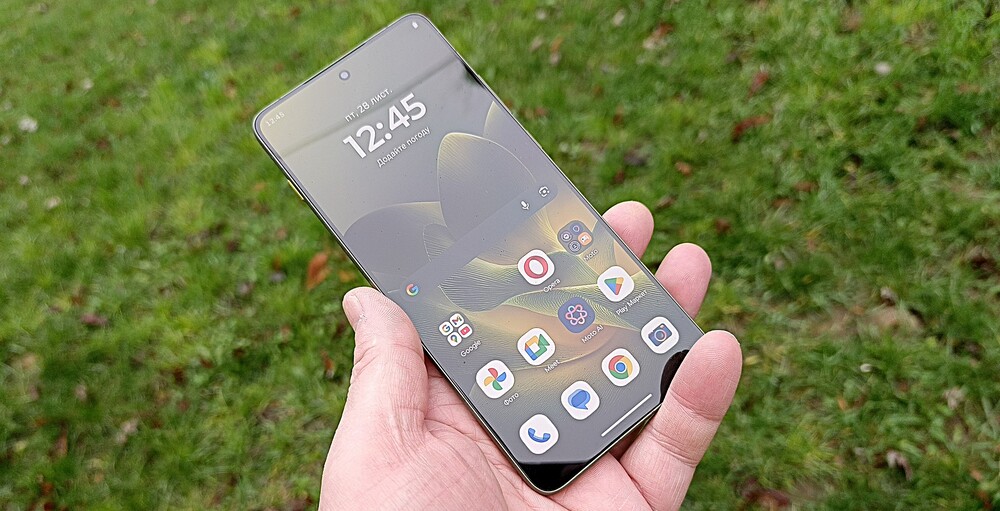
The matte aluminum frame, complemented by the meticulously finished camera plate and Moto logo, creates a visual and tactile experience rarely seen in other devices in this category. The back panel, covered with a nylon-textured material, feels like raw fabric to the touch, offering a secure grip and an exceptionally pleasant user experience.
Read also: Motorola Moto Buds Loop Review: More Than Just a Stylish Accessory
Motorola Edge 70 Display
In a world where most manufacturers favor heavily curved screens, Motorola makes a bold and practical choice. Its new Edge 70 features a perfectly flat display. For users who interact with their smartphone daily, this isn’t just an aesthetic gesture – it’s a genuine advantage.
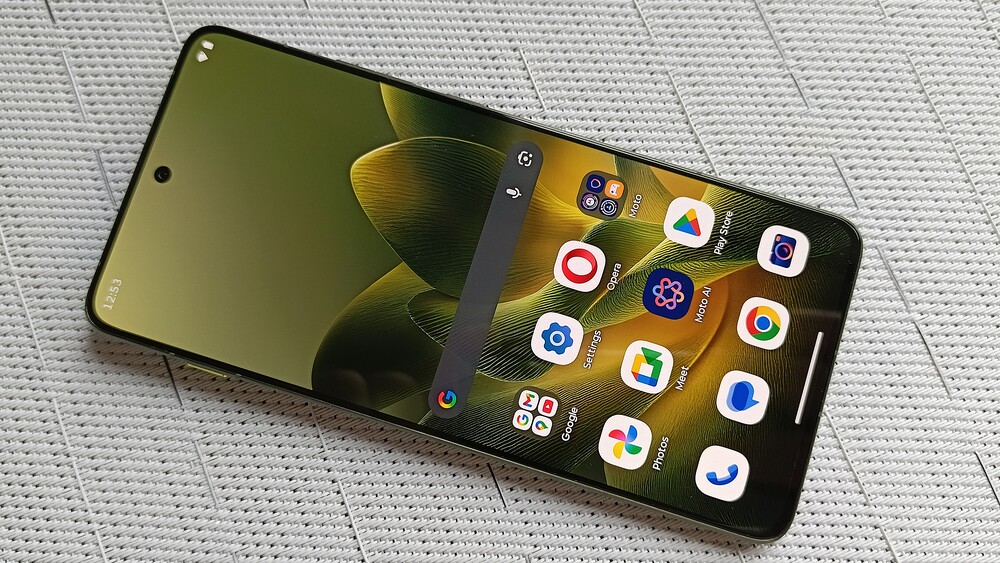
The lack of a curve means saying goodbye to accidental touches along the edges – a particularly frustrating issue during gaming sessions or intense scrolling. The flat surface ensures perfect readability from any angle, without the color or light distortions often seen on curved displays. Additionally, applying a protective film or glass is now possible without the risk of edge defects – a small but meaningful detail for the practical user.
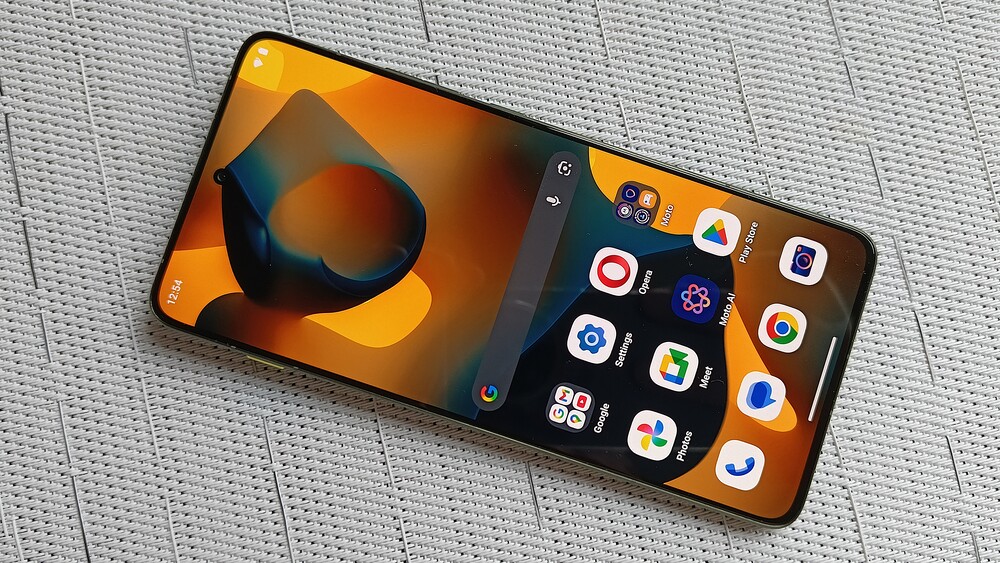
Fortunately, the display does not disappoint. The Motorola Edge 70 features a 6.67-inch pOLED panel with Super HD resolution (2712×1220). Support for 10-bit color and certifications including DCI-P3, Pantone, and Pantone SkinTone ensure exceptional color accuracy. Skin tones appear natural, while vivid accents remain controlled – without any artificial exaggeration. HDR10+ support and a peak brightness of up to 4500 nits deliver detailed, lifelike HDR content, and readability under direct sunlight remains comfortable.
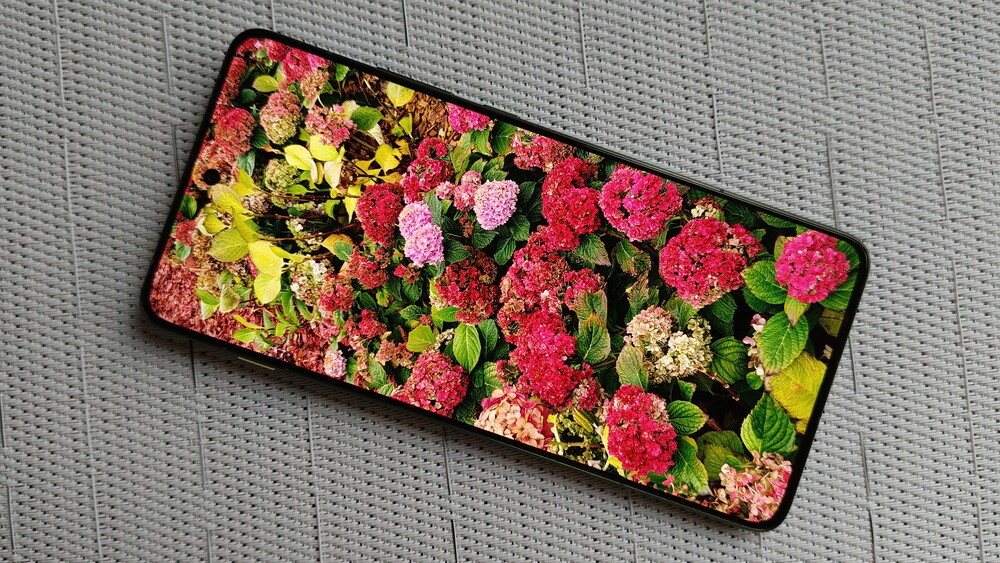



When it comes to smoothness and responsiveness, the display does not disappoint. Its refresh rate of up to 120 Hz, combined with a 300 Hz touch sampling rate, ensures highly precise interaction with the interface. Scrolling, camera gestures, and dynamic gaming scenes are rendered without the slightest delay. Additionally, adaptive refresh rate technology automatically switches between 1 and 120 Hz depending on the scenario, helping conserve battery life without sacrificing smoothness.
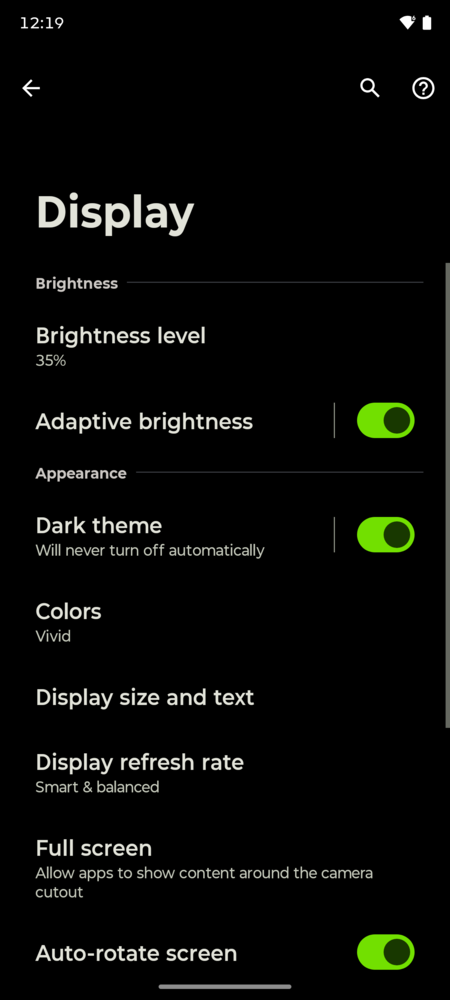

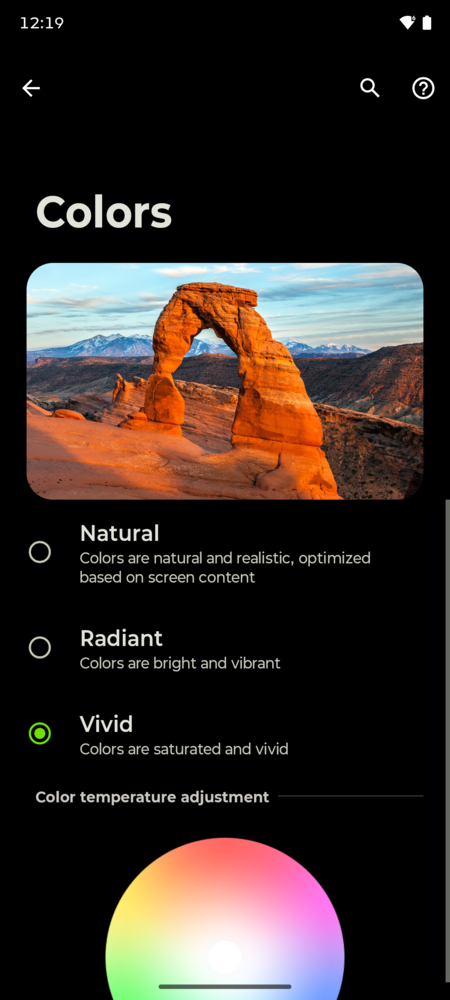
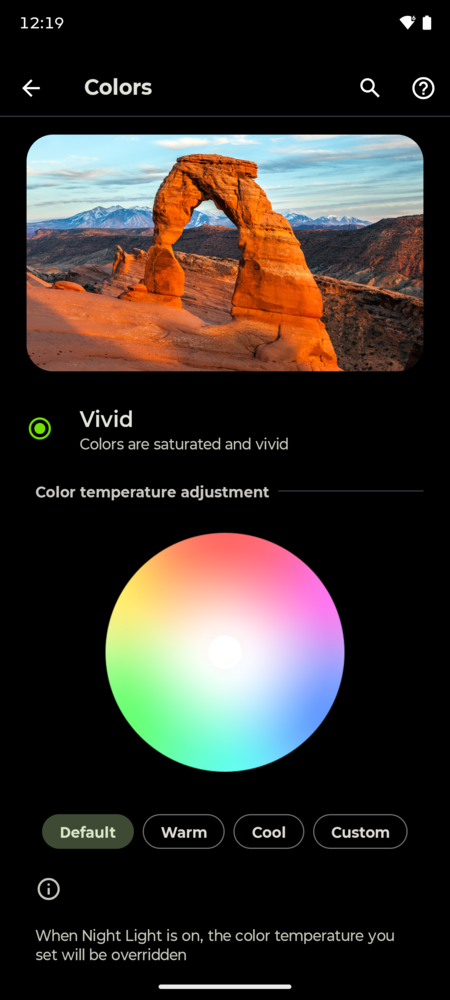

The display features a classic 20:9 aspect ratio and extremely slim bezels, with a screen-to-body ratio of 96.32%, allowing for full immersion in content. SGS certification reduces blue light and minimizes motion blur, making extended reading or video viewing less straining on the eyes.
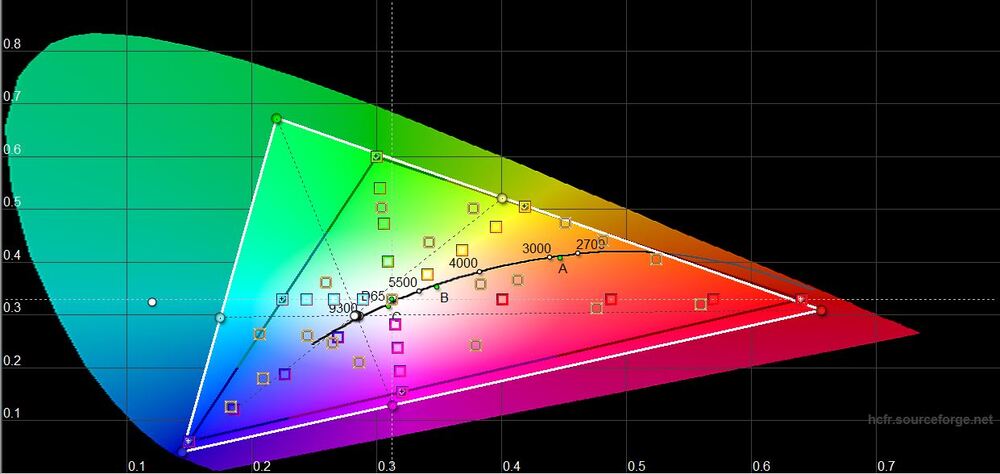
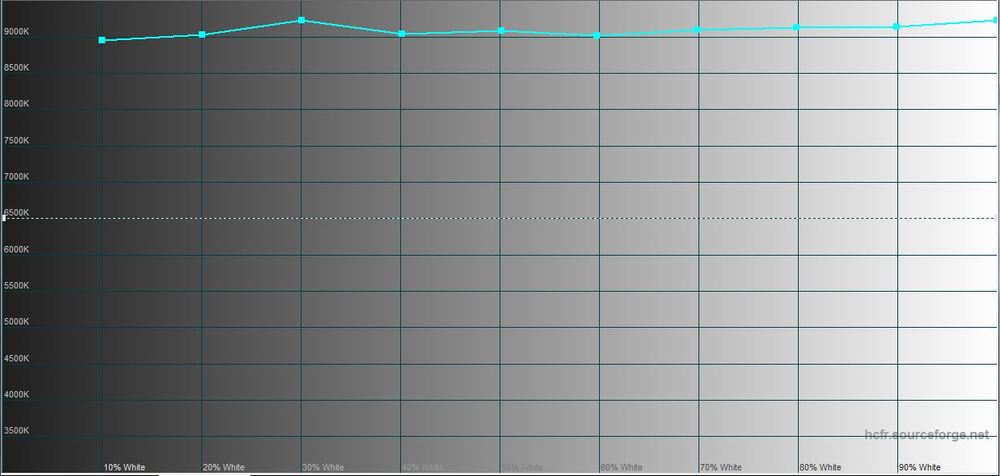
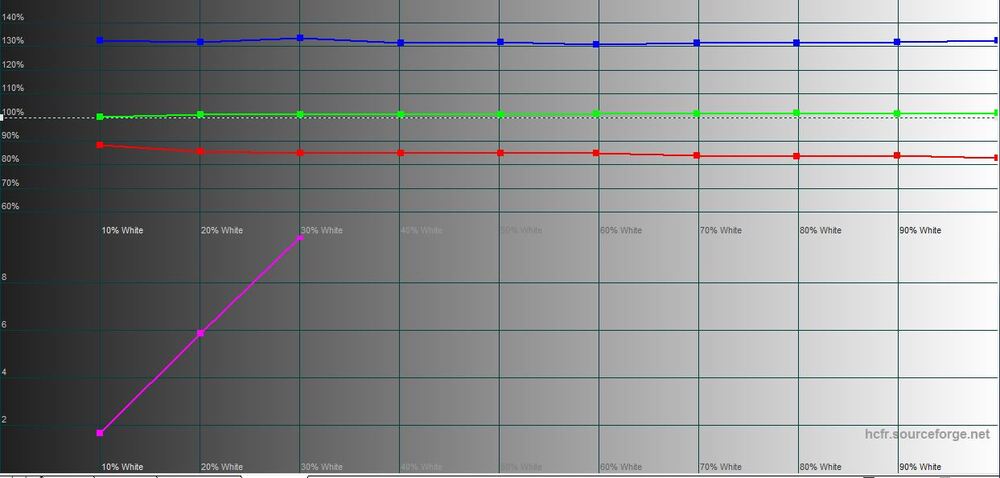
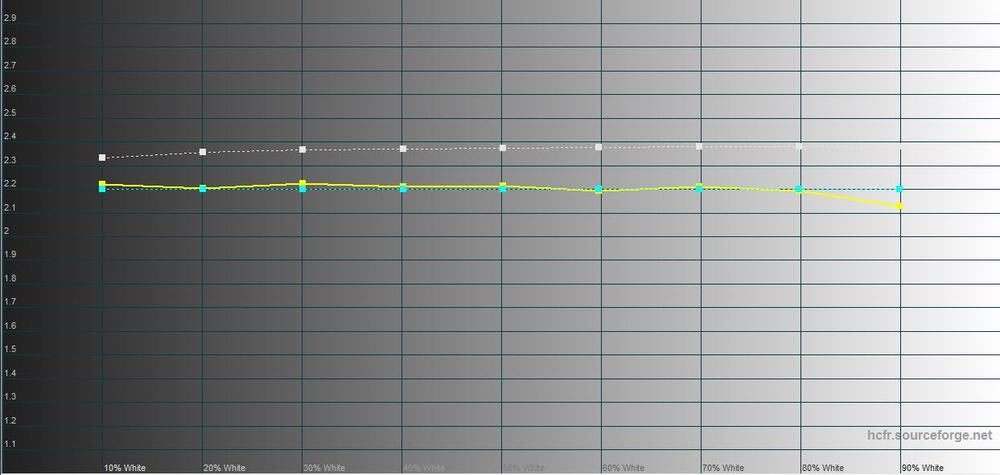
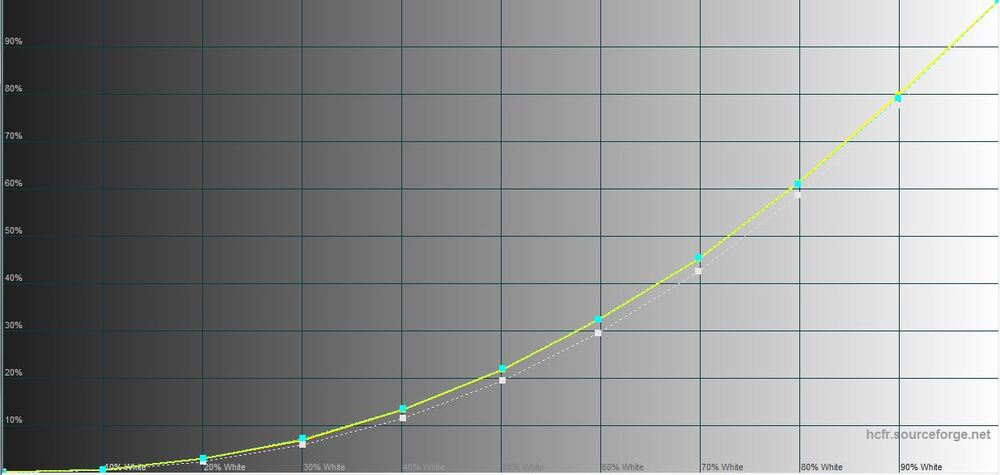
OLED technology ensures true blacks and infinite contrast, which, combined with the high refresh rate, creates an impression of remarkable smoothness and image depth. However, the real standout feature is the Pantone™ Validation certification. This guarantees professional-level color accuracy, crucial for content creators and imaging professionals. For everyday users, it means realistic colors in movies and photos; for photographers and video editors, it allows working on content on the go with confidence that the on-screen colors match professional standards.
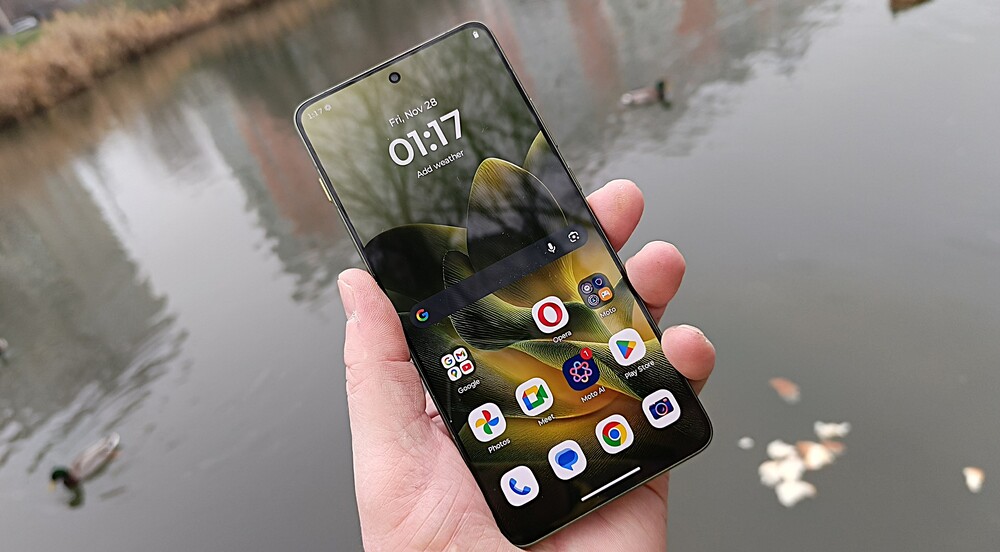
In summary, the Edge 70 display is more than just a bright and sharp screen; it is an engineering achievement that combines precision, ergonomics, and practical usability. It highlights Motorola’s commitment to creating products for users who value both comfort and functionality.
Read also: Moto Watch Fit Review: A Practical Companion for an Active Lifestyle
Sound and connectivity
The Motorola Edge 70 features a dual-speaker system that delivers relatively immersive sound with Dolby Atmos support. The volume is sufficient for comfortably watching movies or playing games without headphones, and the speakers provide clear dialogue and distinct effects. Measurements showed a sound pressure level of up to 88 dB – more than adequate for most everyday use scenarios.
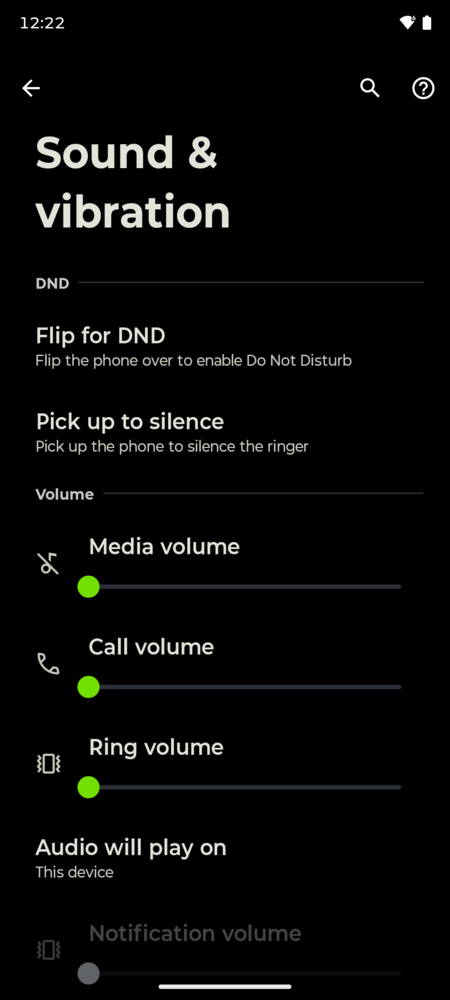
However, the slim-body design does impose certain limitations on sound. Due to limited resonance, the high frequencies are more prominent – they can be bright and even piercing at maximum volume. The bass lacks depth and richness, slightly reducing the overall fullness of the soundstage. Still, the overall speaker quality is convincing for a mobile device, especially considering the compactness and slim profile.
The Edge 70 also features two microphones, which deliver clear recordings, making them useful for video capture and online calls.
As for connectivity, the smartphone lacks a 3.5 mm jack and a built-in DAC. To use wired headphones via USB‑C, you’ll need either an adapter or headphones with a built-in DAC. Wired audio can sound slightly metallic, but the equalizer allows you to quickly adjust the sound profile to your preferences. Bluetooth provides a stable connection and supports HD audio as well as active Dolby Atmos modes.
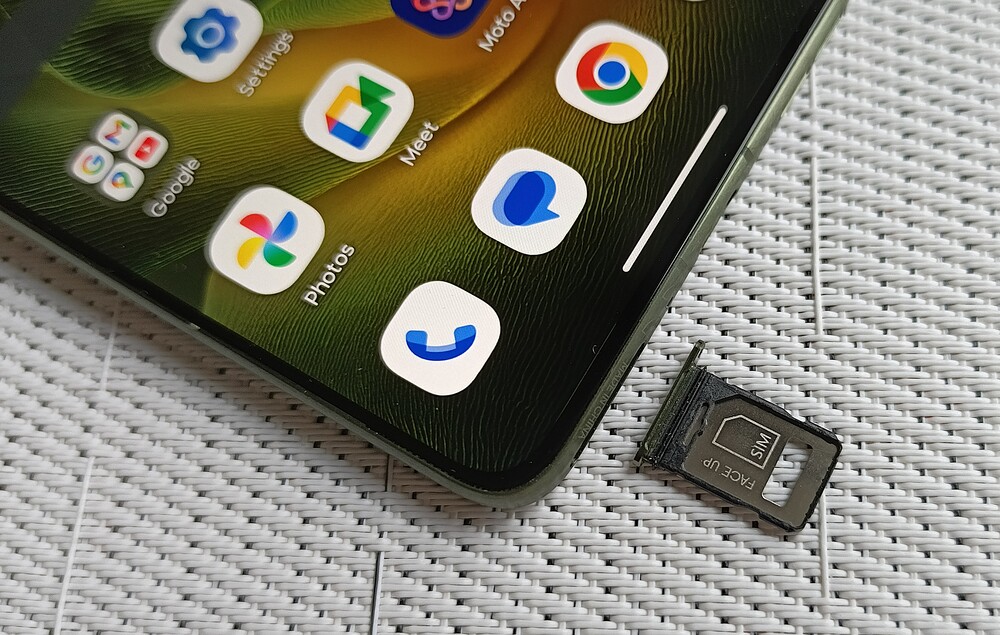
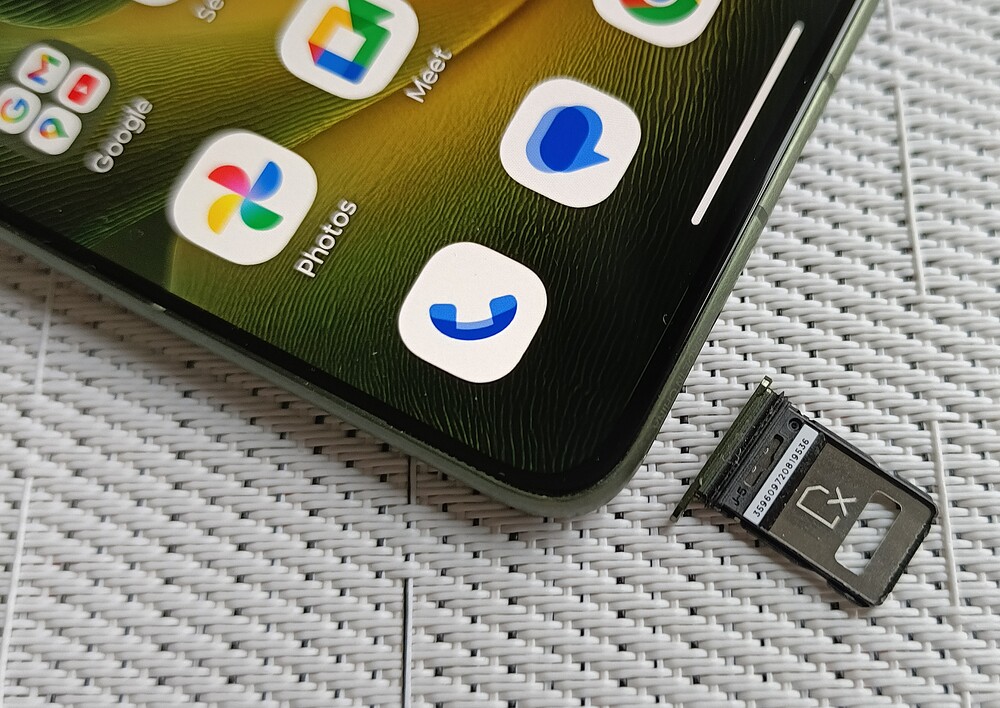
Network capabilities of the Edge 70 meet modern standards: 5G, Wi‑Fi 6E, Bluetooth 5.4, NFC, and eSIM, in addition to USB‑C. Connectivity is fast, reliable, and versatile, making the smartphone ready for any scenario – whether for work or entertainment.
Read also: Motorola Edge 60 Pro Review: Two Steps Forward, One Step Back
Motorola Edge 70 Performance
The Motorola Edge 70 is powered by the Qualcomm Snapdragon 7 Gen 4 chipset with an octa-core configuration (1×Cortex-A720 2.8 GHz + 4×Cortex-A720 2.4 GHz + 3×Cortex-A520 1.8 GHz). This system-on-chip is manufactured using TSMC’s 4 nm process, ensuring energy-efficient performance and high transistor density.
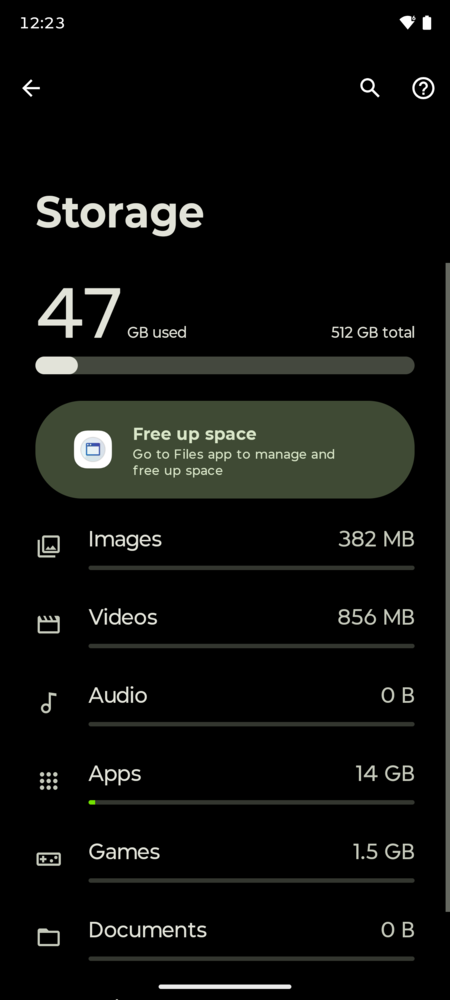
The package includes 12 GB of LPDDR5X RAM and 512 GB of UFS 3.1 storage, while graphics are handled by the Adreno 722 GPU.
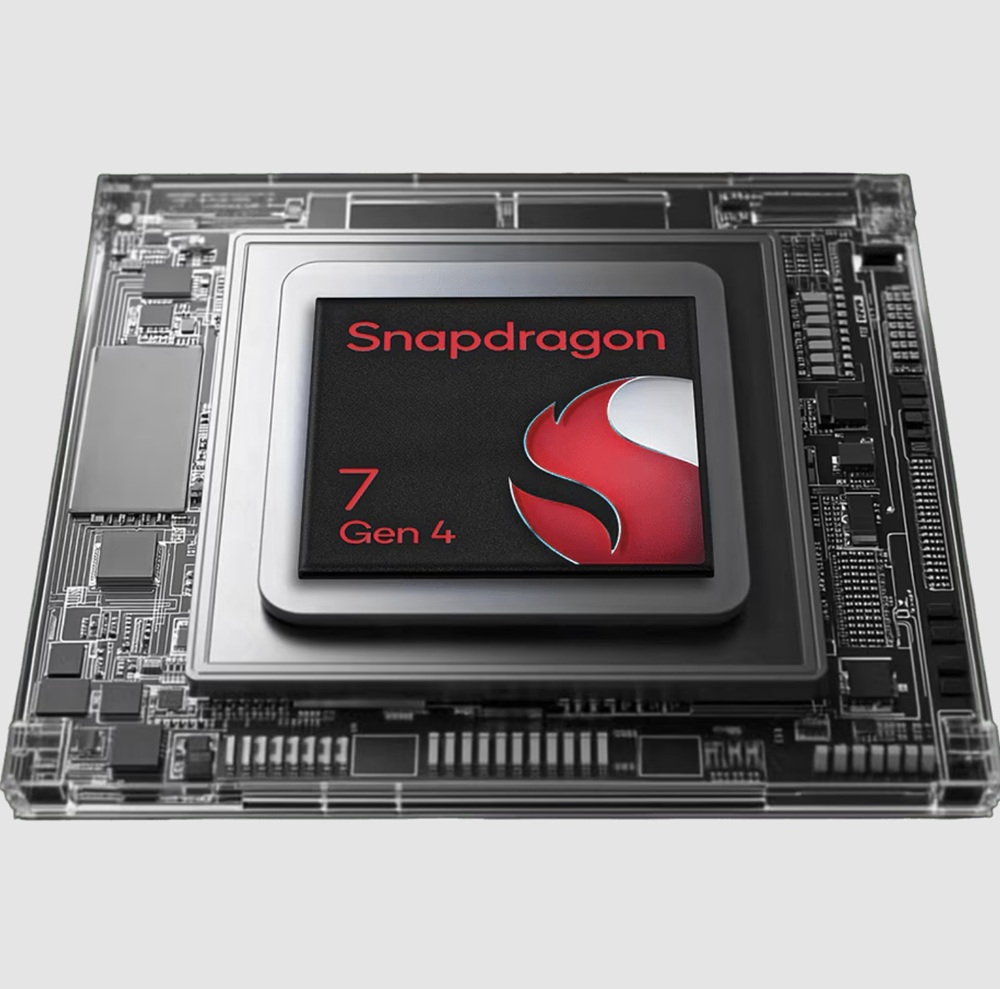
This SoC acts as a “bridge” between mid-range and near-flagship performance, delivering smooth system operation in any scenario – from web browsing and social media scrolling to mid-tier mobile gaming. Both the CPU and GPU have received significant upgrades, noticeably boosting performance, especially during extended sessions.
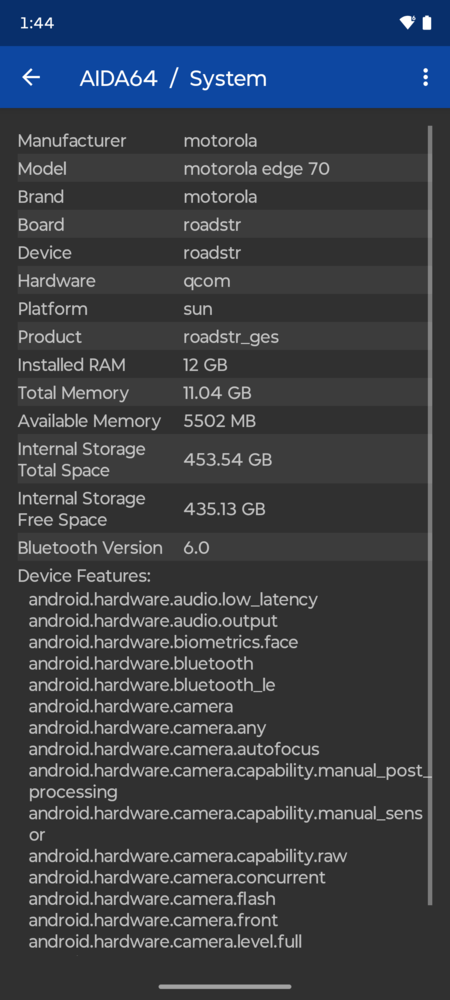
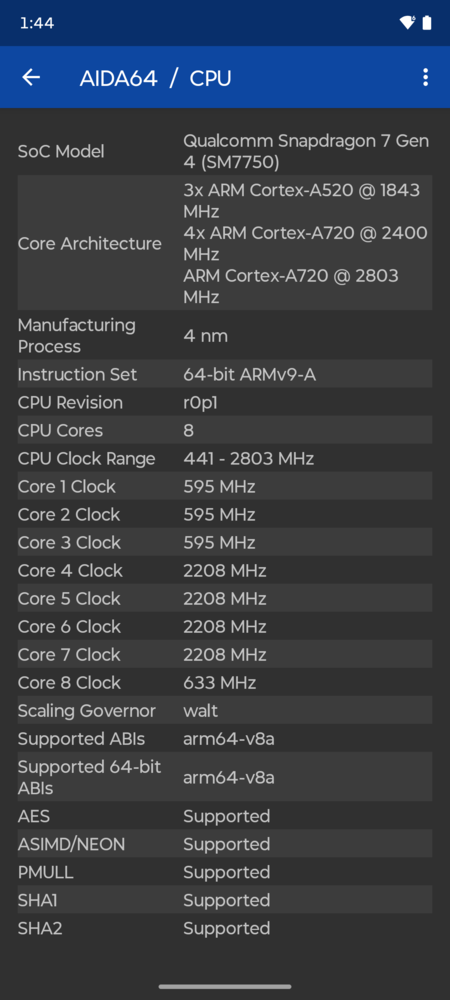


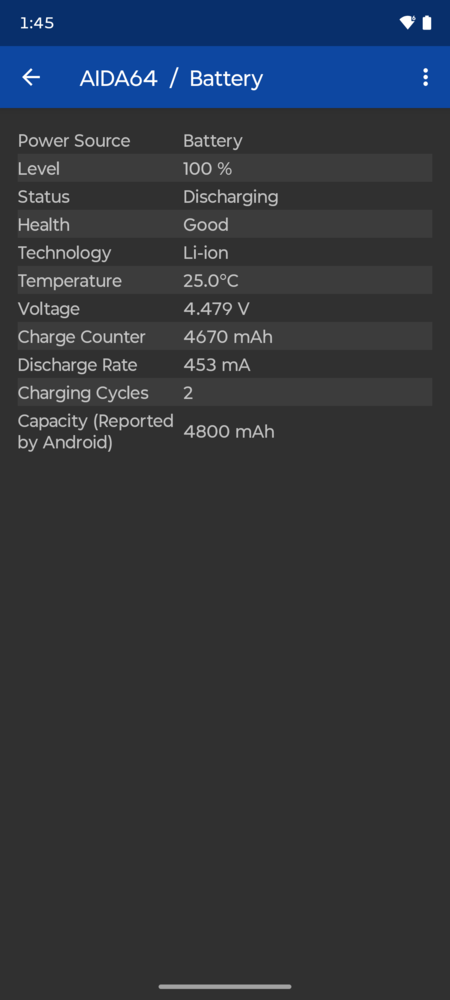
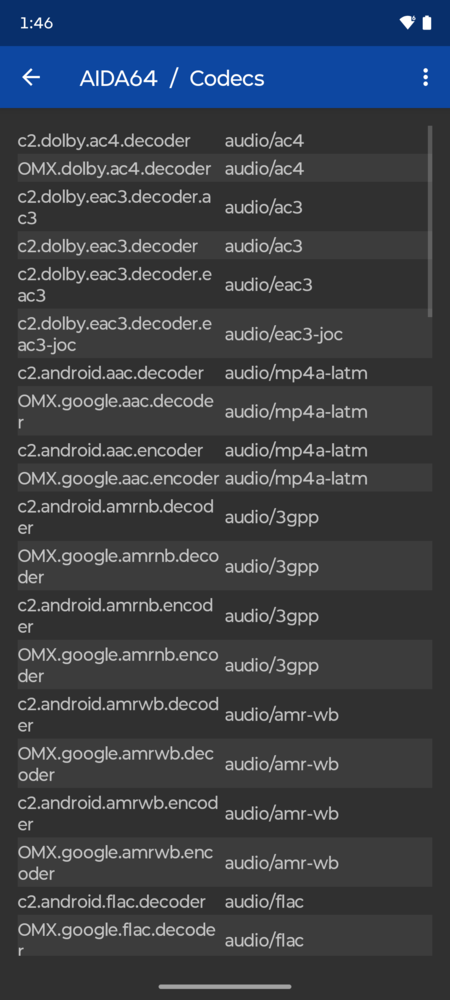
The AI front stands out in particular: the enhanced neural processing unit (NPU) accelerates AI algorithms, making interactions feel instantaneous. Additionally, Motorola offers RAM Boost technology, which can dynamically expand the device’s RAM up to 24 GB.
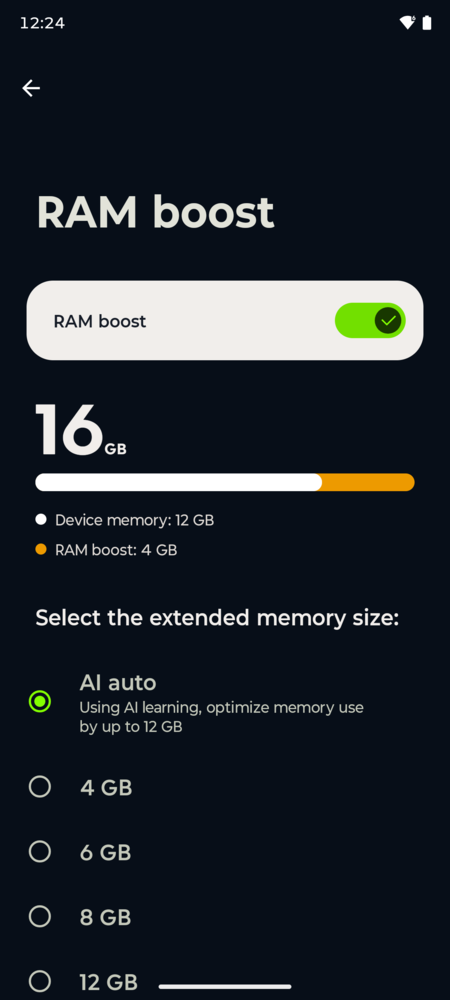
This ensures impressive multitasking, allowing you to keep dozens of apps open simultaneously and switch between games, messengers, and video editors without the slightest hint of lag.
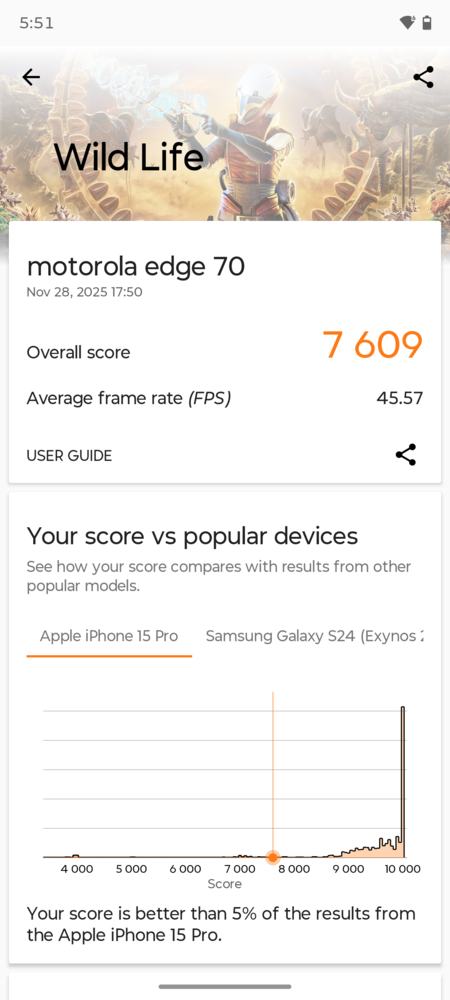
What do benchmarks say? AnTuTu shows strong overall performance for a mid-range device, Geekbench demonstrates solid computational power, and GFXBench allows for a detailed assessment of graphics capabilities. The UFS 3.1 internal storage ensures fast read and write speeds, noticeably speeding up app launches and system file operations.
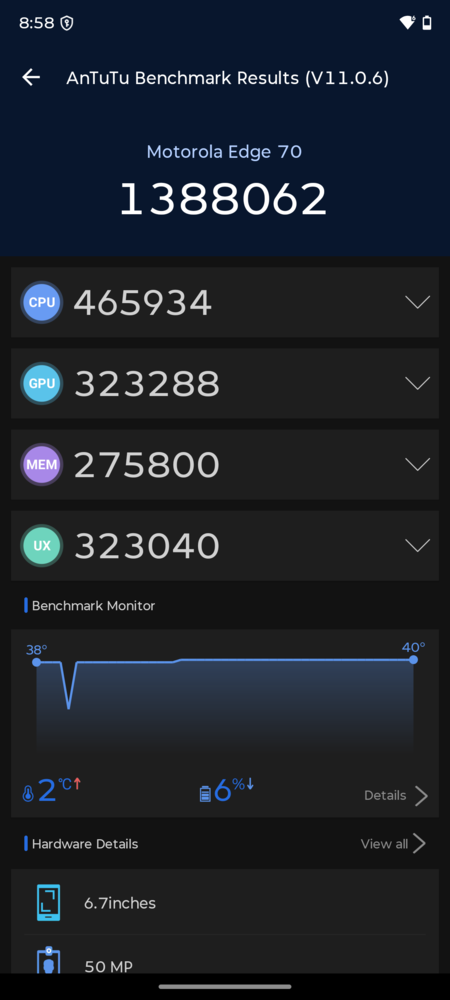
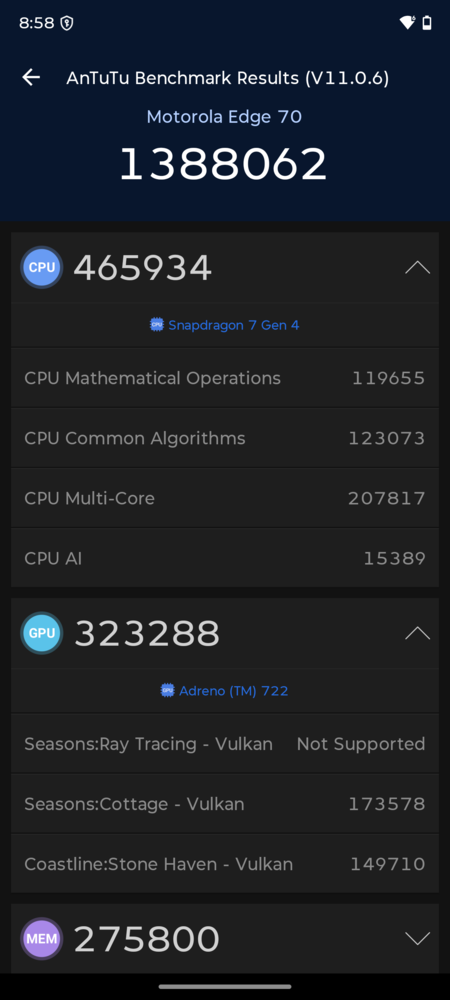
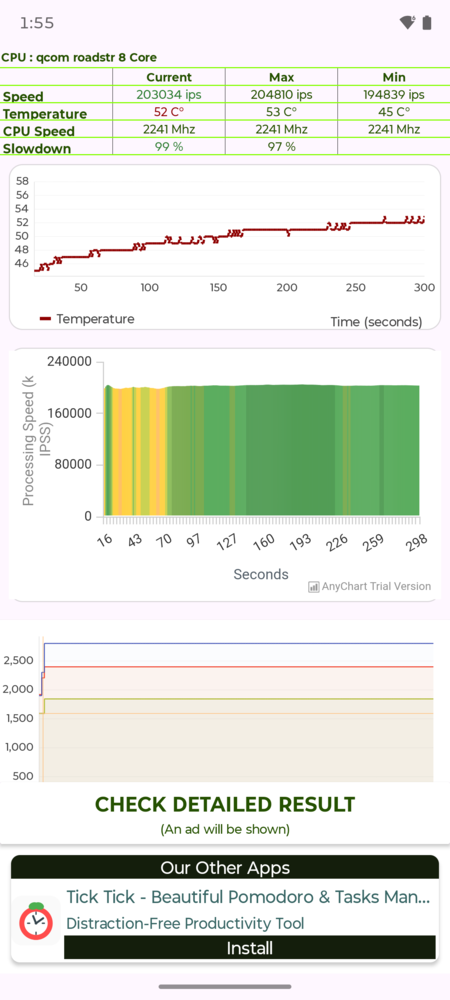

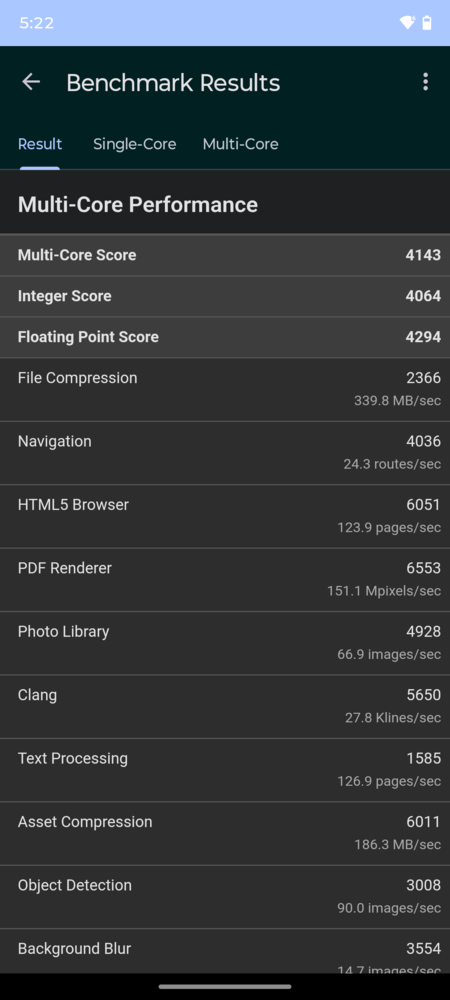
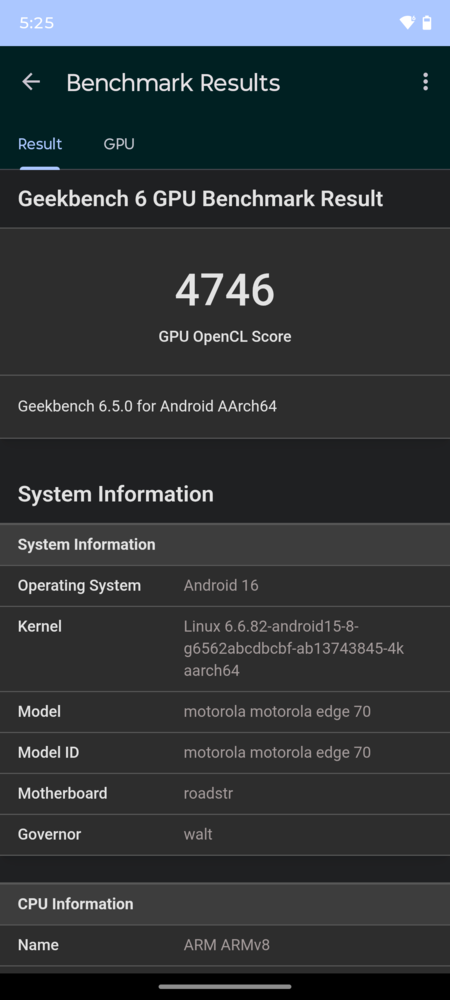
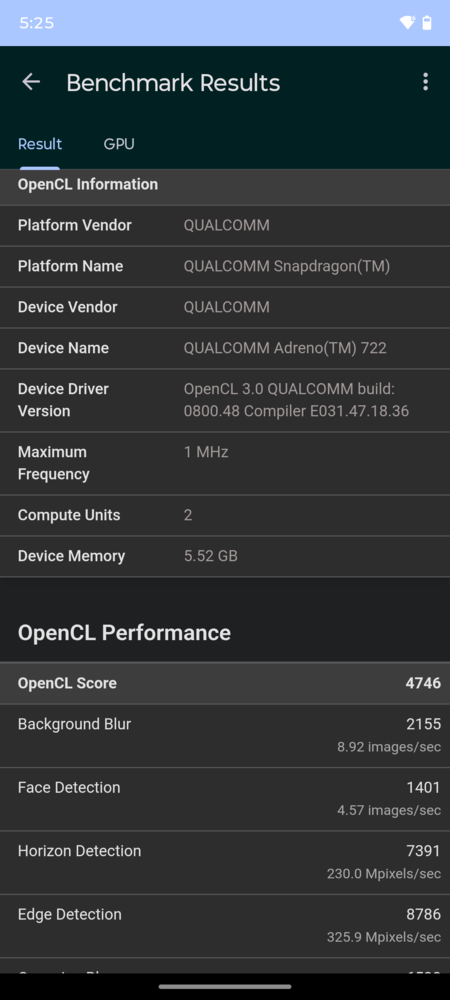
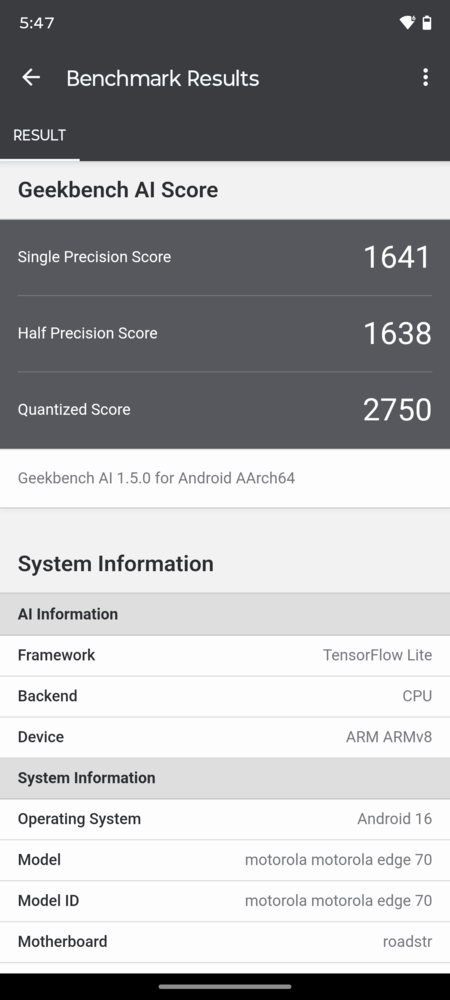
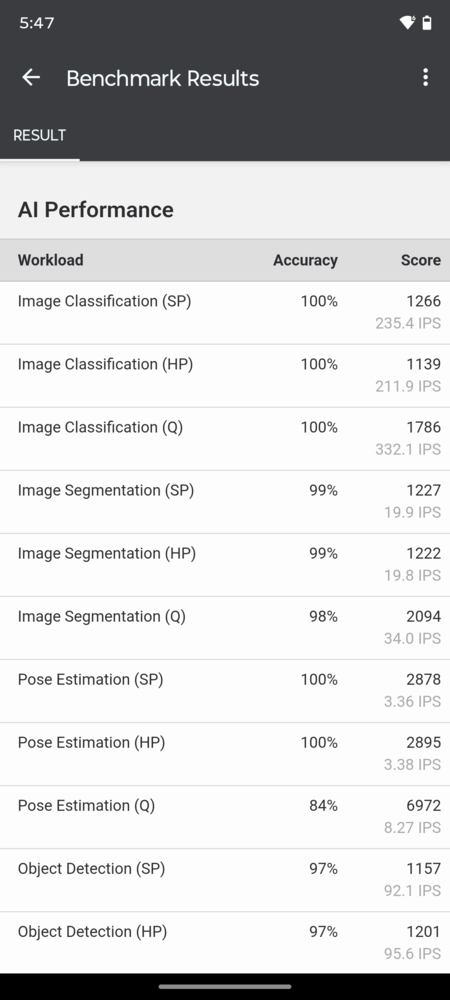
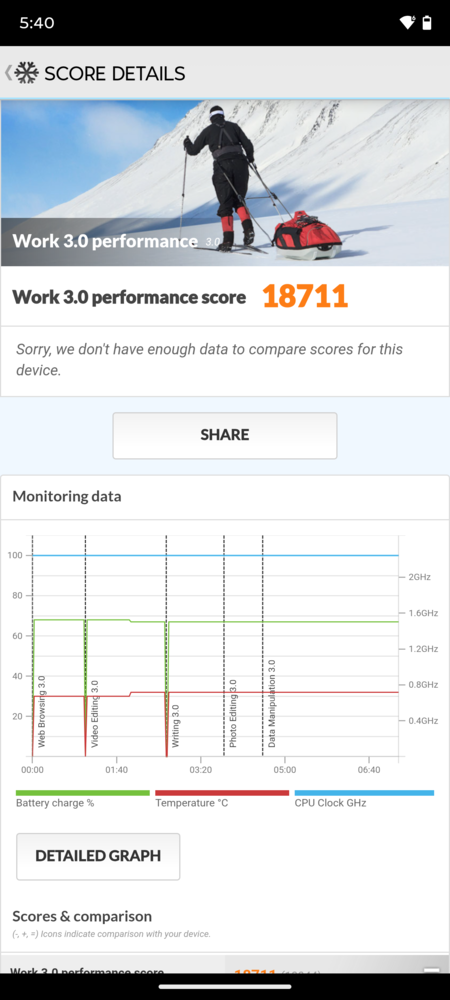
However, the Snapdragon 7 Gen 4 doesn’t claim flagship status. It’s slightly more powerful than its predecessor and the Exynos 1580, yet noticeably lags behind the Dimensity 8300/8350/8400. Compared to the Dimensity 7300 used in previous Edge models, though, the performance boost is significant. The Adreno 722 GPU delivers average results: in demanding games like Genshin Impact, medium or low settings are applied automatically, but gameplay remains smooth and comfortable.
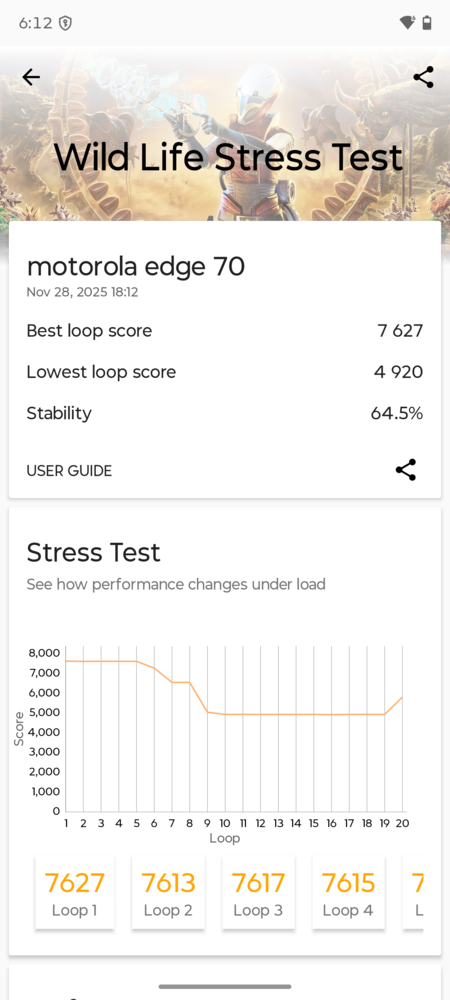


For gamers, the Edge 70 includes Moto Gametime – a suite of tools for performance monitoring, CPU/RAM load tracking, and optimizing game modes.
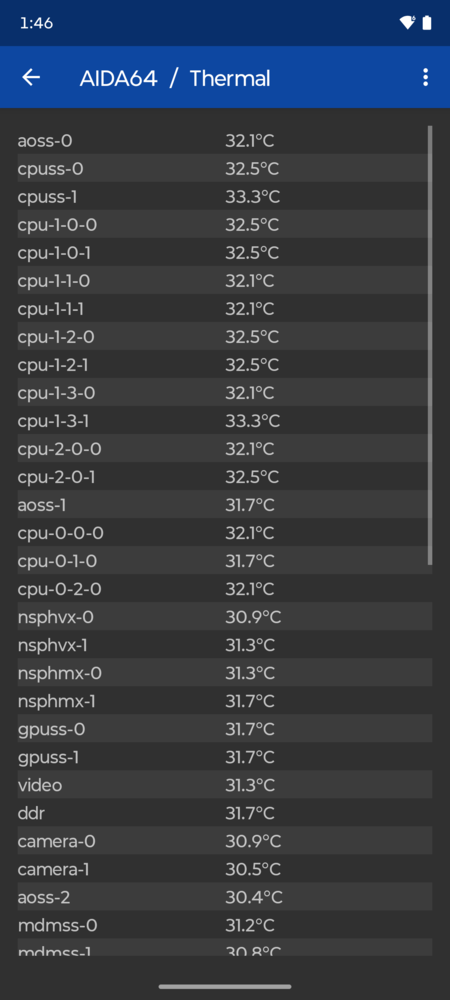
In real-world use, the phone feels fast, smooth, and highly responsive to touch. There are no lags or stutters – performance is more than adequate for both typical and advanced users. The Edge 70 strikes an excellent balance between speed and energy efficiency, remaining cool even during extended gaming sessions.
Read also: Inside Motorola Solutions: How Trust and Security Are Built
Software and user experience
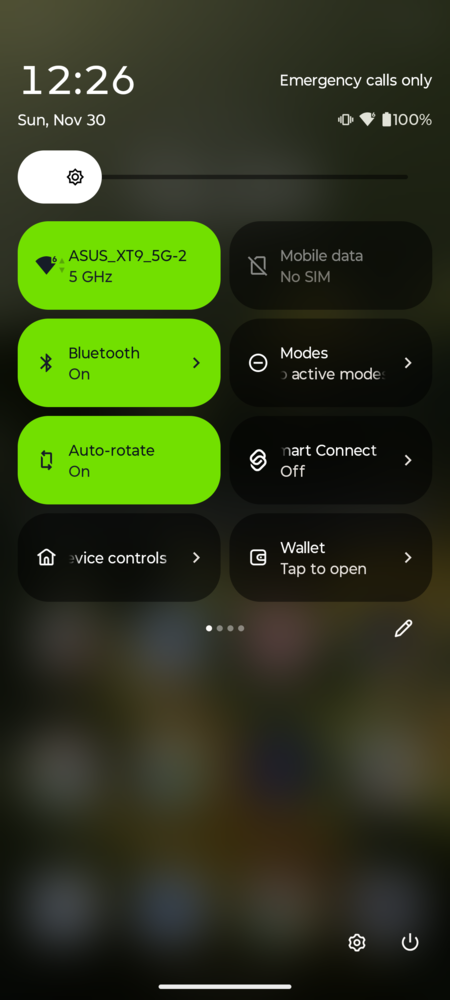
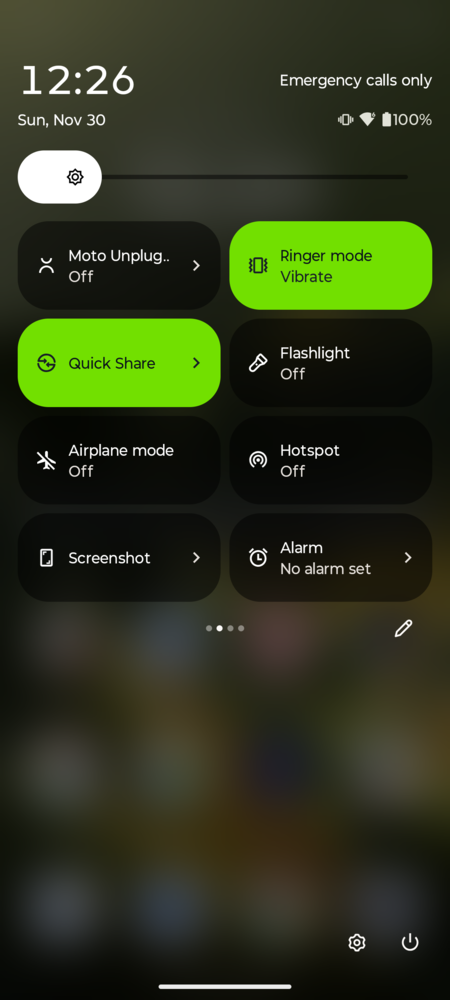
One of Motorola’s traditional strengths is its software. The Edge 70 runs on Android 16 with Motorola’s Hello UI, which closely resembles stock Android and evokes the interface of a Google Pixel. This clean approach appeals to Android purists, offering a predictable and intuitive user experience.
Yet a closer look reveals that Motorola adds its own touches, extending functionality with thoughtful features that enhance everyday use without cluttering the system.
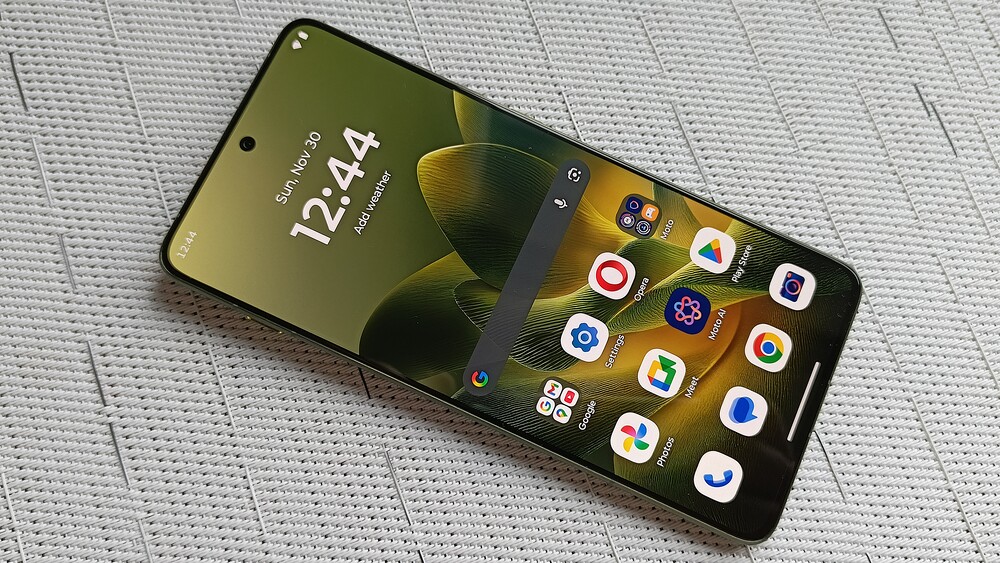
It’s important to consider the market context. Today, smartphones in the $400–500 range or lower often come loaded with pre-installed apps, which generate extra revenue for manufacturers and help reduce the retail price. Motorola has followed this approach for years, but for the Edge 70, priced around $800, it feels less justified.
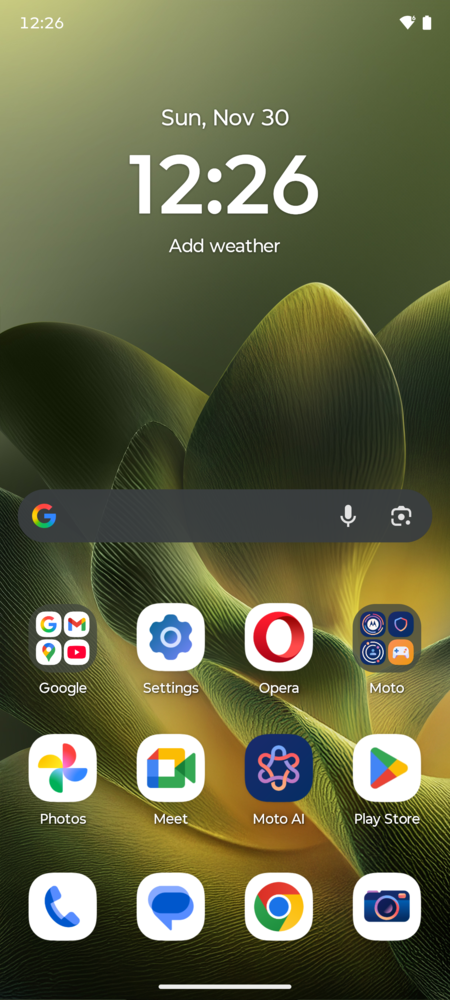
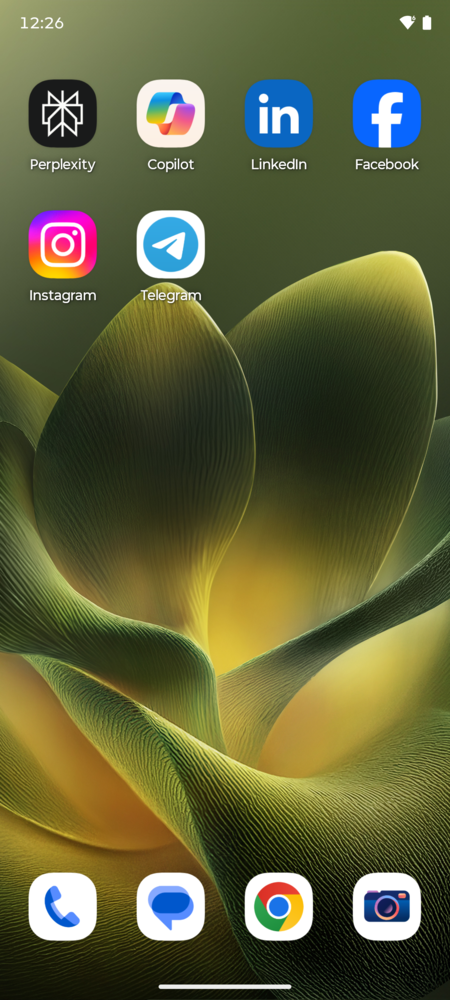
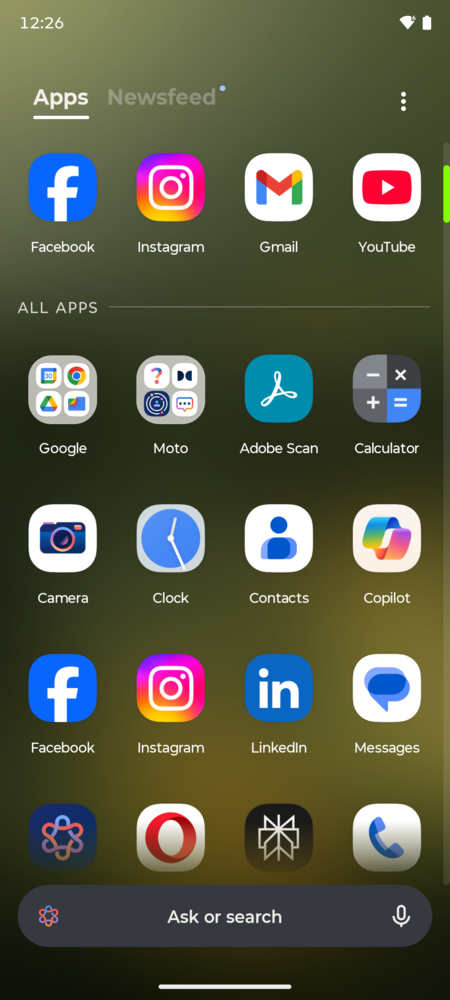
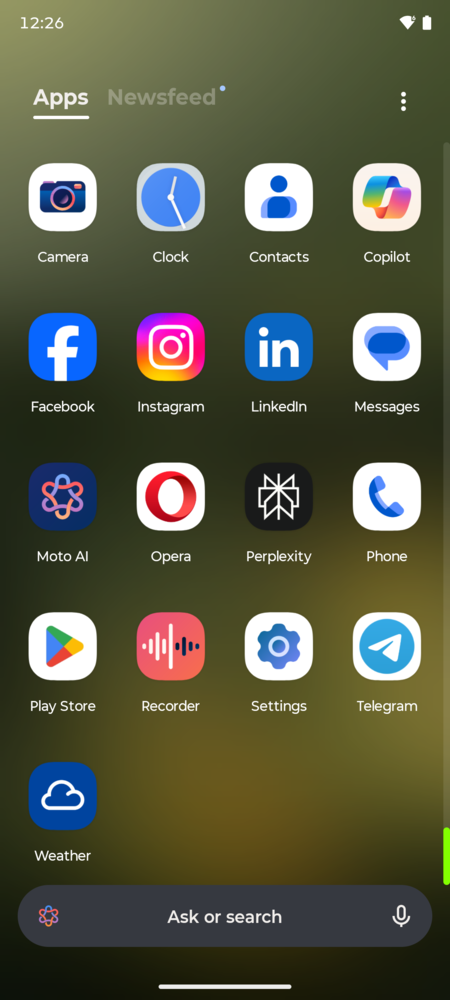
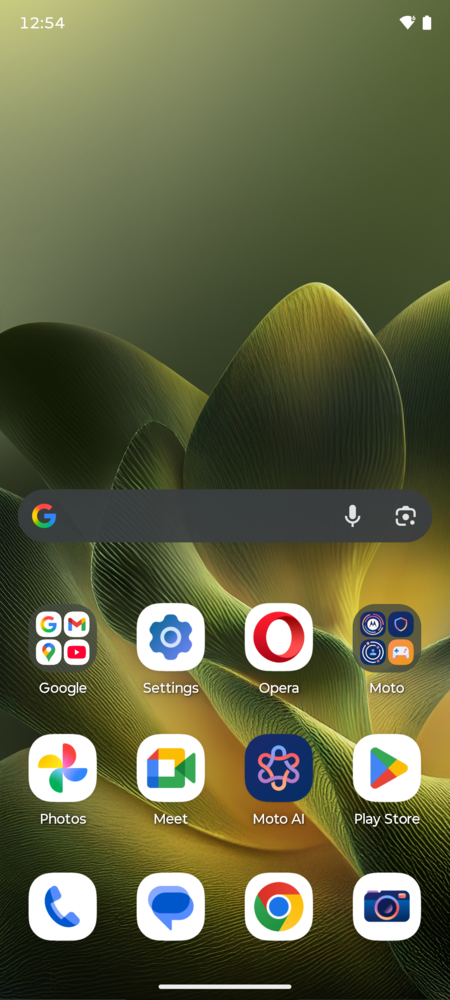
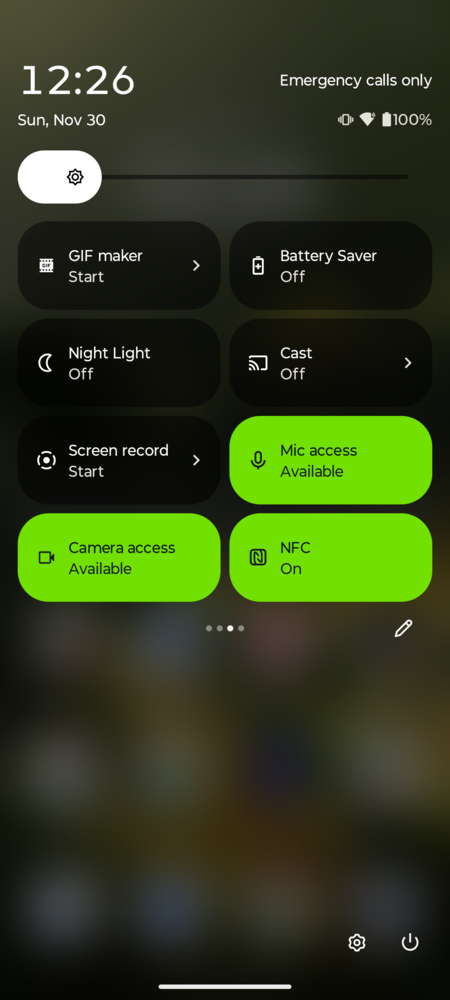
At initial setup, the device asks whether the user wants additional apps, but even if declined, a noticeable amount of unnecessary software remains: TikTok, Perplexity AI, Booking.com, and ads in the default weather app.
Most of these apps can be uninstalled, but having to do so on a premium smartphone feels unnecessary and gives a sense of a cluttered system. Regardless of the usefulness of some of them, anything not essential for the device’s core functionality is considered bloatware – and this remains the only notable drawback that slightly mars the overall impression of the Edge 70.
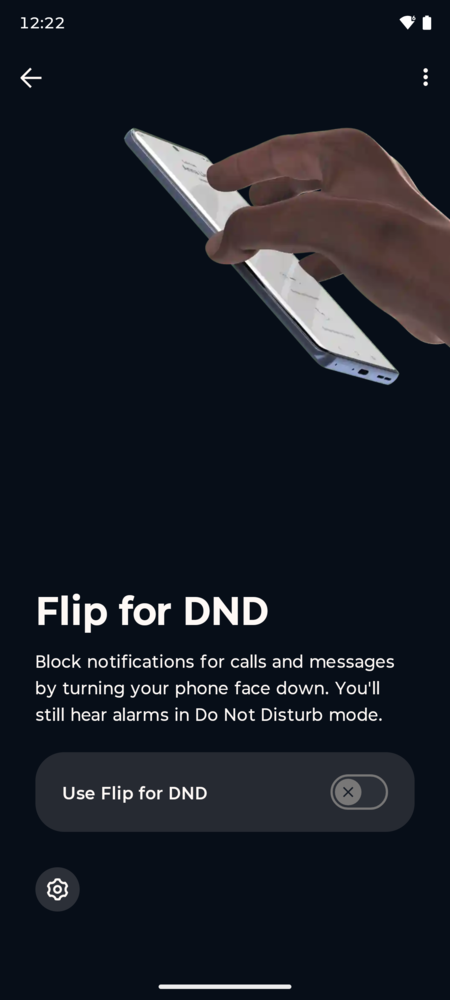
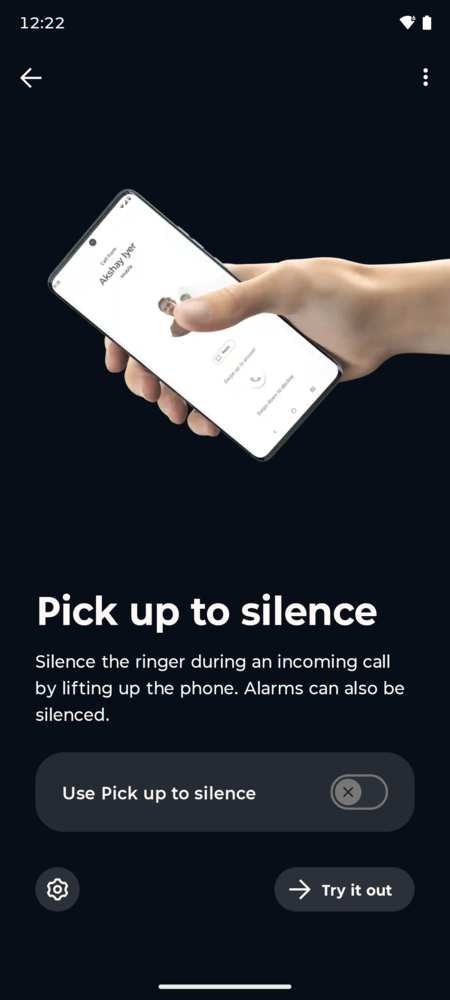
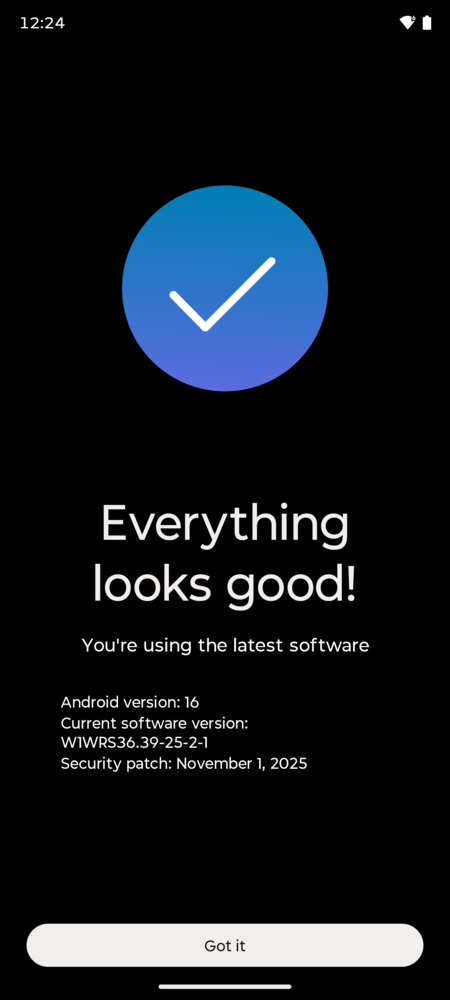
From a support perspective, Motorola provides four years of Android updates (up to Android 20) and five years of security updates. This is a respectable level of support, allowing the device to remain up to date for an extended period, although it still falls short of Samsung and Google, which offer longer update cycles even for mid-range devices.
Motorola retains its well-known and functional gestures, such as shaking the phone to turn on the flashlight or twisting the wrist to launch the camera, along with expanded interface customization options. These features help mitigate the issue of pre-installed software by allowing users to tailor the system to their preferences. However, it is clear that for a fully satisfactory user experience, Motorola could adopt a more conservative approach to pre-installed apps, particularly in the premium smartphone segment.
Overall, the Edge 70 runs a relatively clean and cohesive version of Android with useful features, though minor “surprises” in the form of unnecessary apps can feel out of place on a flagship device.
Read also: Motorola Razr 60 Ultra Review: True Flagship Foldable Phone
Moto AI
Using the dedicated AI button, which opens the Moto AI environment, Motorola emphasizes its strategic focus on integrating AI services within its ecosystem. Essentially, this provides a form of “quick access” to intelligent functions, similar to solutions from competitors, but with a notable focus on multi-agent capabilities. Pressing and holding the button launches Moto AI, an interface that allows immediate actions such as creating a voice note, quickly drafting text, or requesting the system to summarize received notifications.
In practice, however, the feature proves less useful than anticipated: not all apps support notification summarization, and the overall use case appears relatively niche.
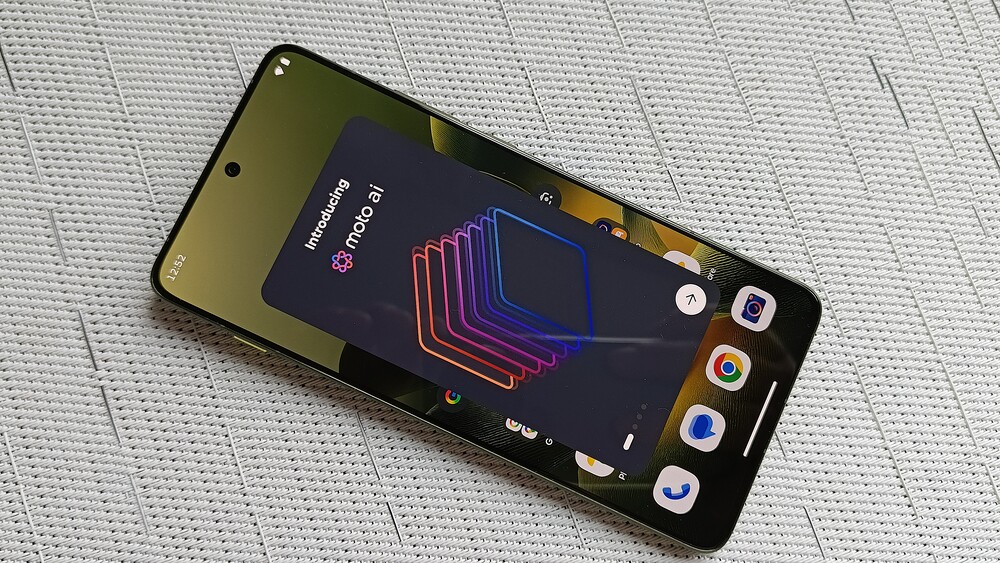
Another notable aspect of Moto AI is its ability to “remember” information from photos or screenshots. The system analyzes the content of an image and then allows users to ask questions about it, effectively creating a local knowledge base. This represents a step toward on-device private AI functionality. However, there is a significant limitation: currently, all of these features operate exclusively in English. Automatic transcription of meetings or interviews in Ukrainian is not yet possible. Motorola acknowledges this limitation and plans to expand language support, but no timeline has been provided.
The Moto AI suite also includes Image Studio and Playlist Studio. Image Studio allows users to generate images and backgrounds, with Motorola partnering with Perplexity AI; the feature functions reliably but comes with the typical limitations of generative graphics. Playlist Studio generates music playlists, but only within the Amazon Music ecosystem and only with a paid subscription. This lack of universality reduces the practical value of the tool.
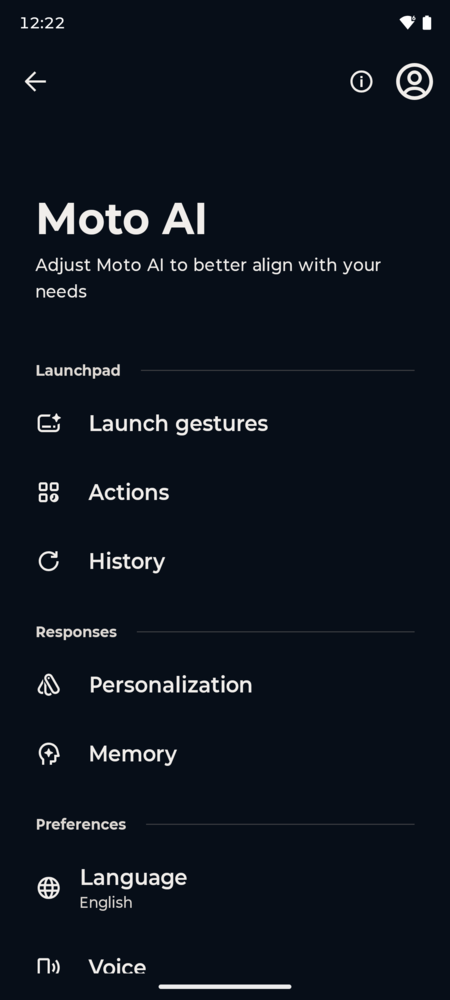
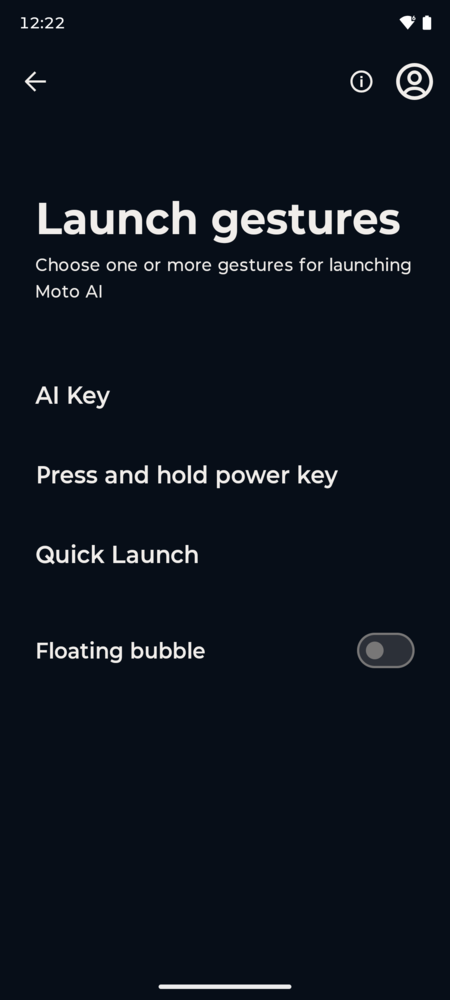




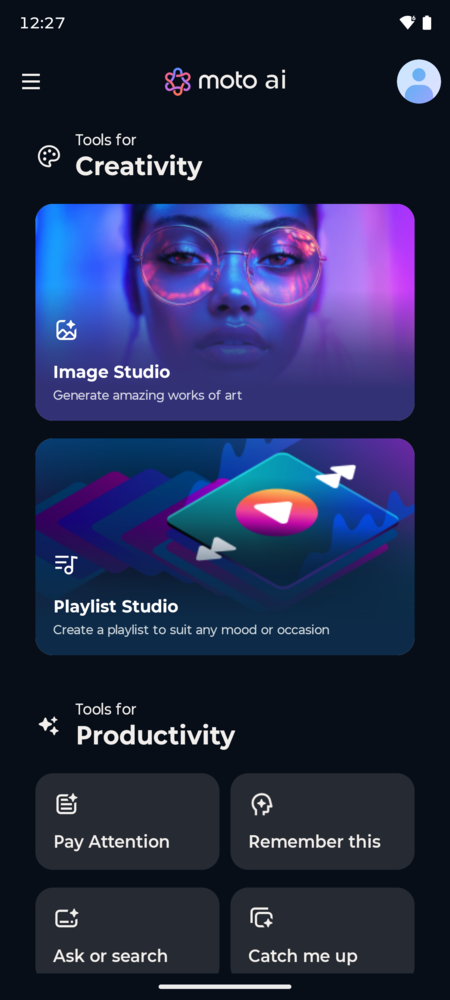

Despite the presence of multiple AI mechanisms, Moto AI currently feels underdeveloped and somewhat fragmented. It operates on Perplexity, but the system also includes Microsoft Copilot and Google Gemini. This creates a paradox: while the phone is formally controlled by one AI, most user tasks are actually handled through another. Moreover, the dedicated AI button cannot be assigned to Copilot or Gemini – it only activates Moto AI. By contrast, the power button can be freely customized, although this is a standard feature in Android.
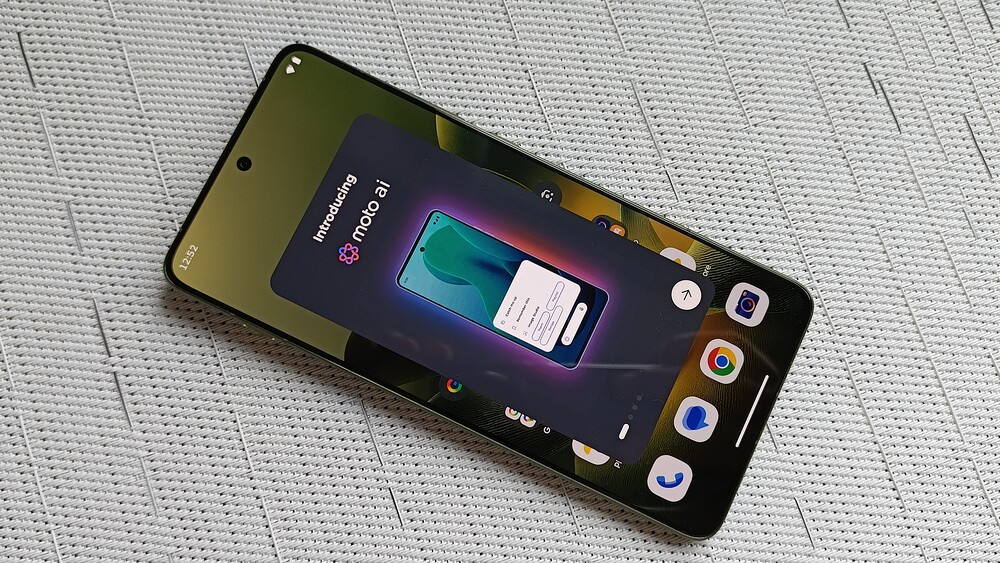
As a result, Google Gemini provides essentially the same functionality available on other Android devices: image generation, answering questions, and simple video creation. It is Gemini, rather than Moto AI, that delivers a stable and coherent user experience.
The concept behind Moto AI is interesting, but its implementation remains in a “beta” state. Until Ukrainian language support and broader compatibility are introduced, users are unlikely to see a practical reason to rely on Motorola’s AI, especially when Gemini and Copilot already offer more mature solutions.
Read also: Motorola Edge 50 Ultra: What the Qualcomm Snapdragon 8s Gen 3 Is Really Capable Of
Motorola Edge 70 Cameras
If the specifications indicate that the device has three 50-megapixel lenses, it’s worth tempering expectations. The marketing presentation emphasizes numbers, but in reality, the rear panel does not feature three identical “supersensors,” even if the module’s design suggests advanced technology is hidden within.
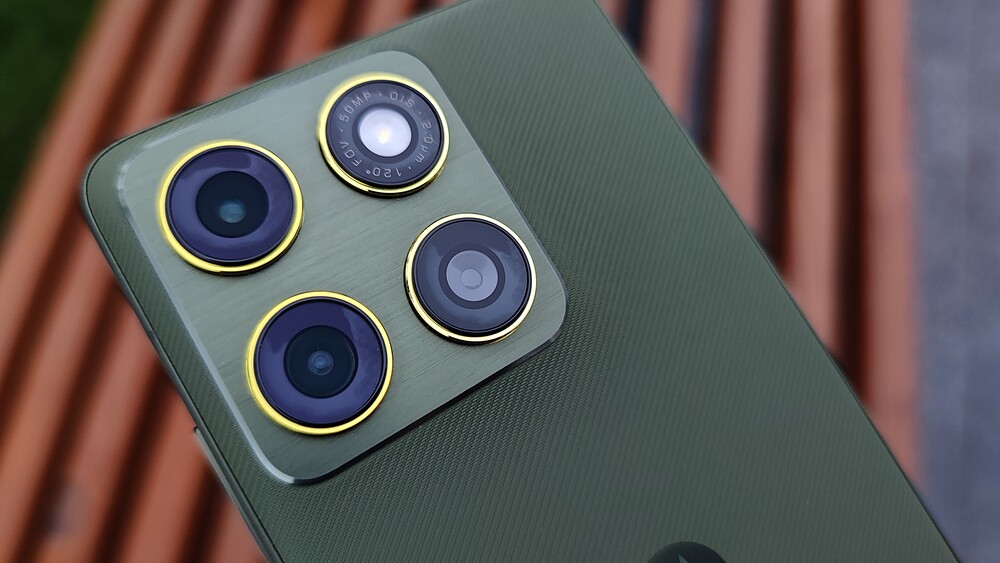
The reality is more modest: the device includes a main camera with optical image stabilization and an ultra-wide camera – this constitutes the full rear setup. The third 50-megapixel module is actually the front-facing camera, located on the opposite side of the device.
The third opening on the rear is not a “secret camera” but a standard depth sensor, used solely for portrait shots with blurred backgrounds. The fourth ring houses the flash.
Despite the marketing confusion, the camera performance is generally satisfying. The dynamic range is broad, and under normal lighting conditions, the camera maintains a reliable balance between highlights and shadows.
















Automatic HDR is inconsistent: in scenes with very high contrast, shadows can appear underexposed while highlights may be blown out. The AI mode increases color saturation compared to the standard shooting mode.

























When the camera is activated, a Pantone Validated watermark briefly appears in the corner of the screen – a subtle but effective touch. Thanks to Pantone certification, photos reproduce realistic colors and accurately render skin tones as they appear in reality.
In low-light conditions, the device performs better than expected. The large sensors combined with optical image stabilization deliver detailed images, with shadows retained and highlights controlled. The ultra-wide module underperforms compared to the main camera in the dark, showing less accurate colors and lower sharpness, but it remains competent for its category. Overall, the results maintain a natural and acceptable quality.





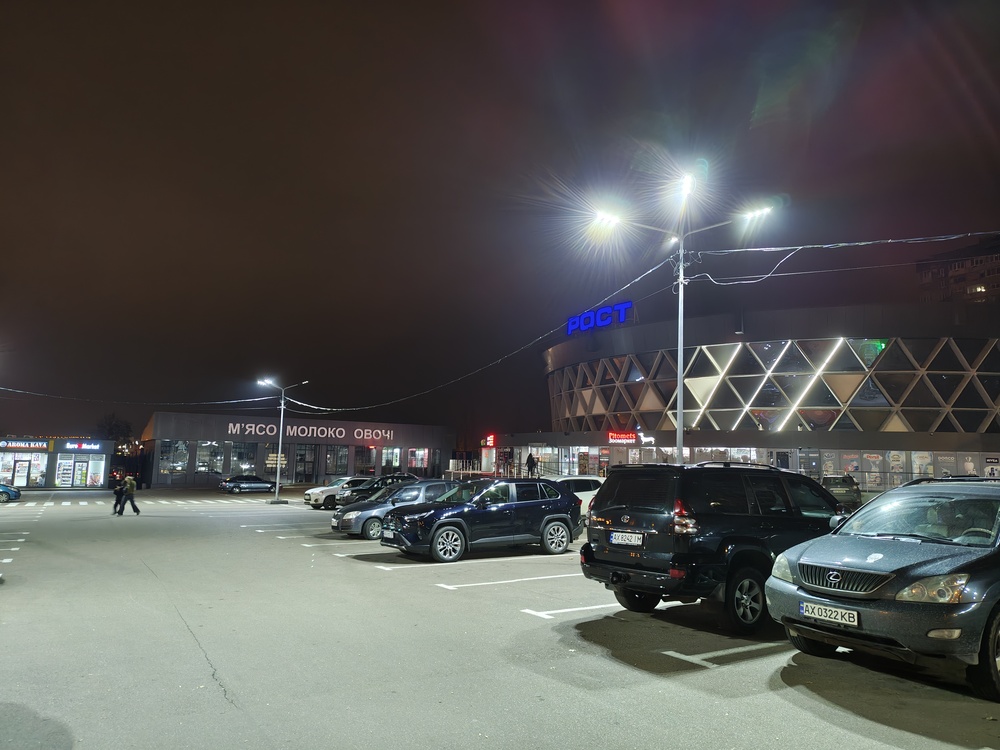






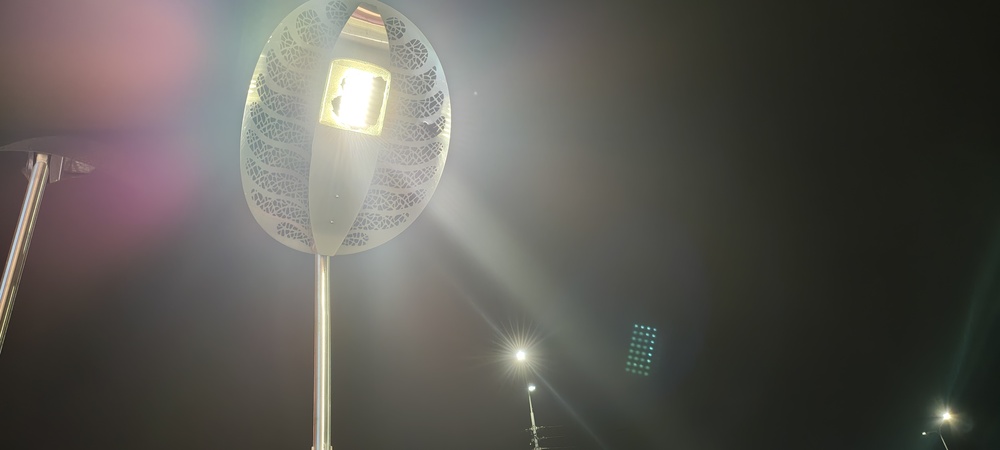


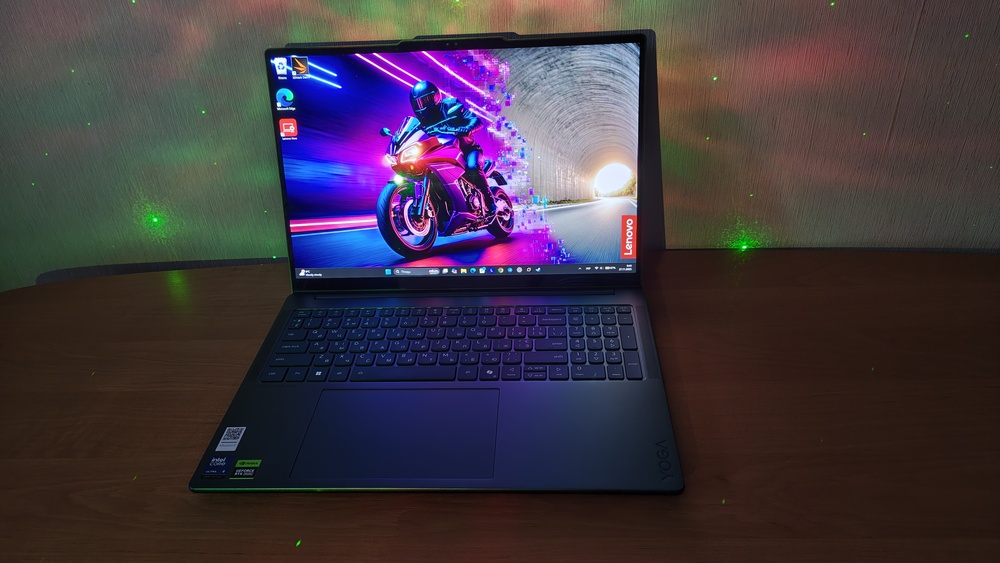
In the era of selfies and vlogging, the high-resolution front camera ensures good-quality capture. Portrait shooting is supported with three focal lengths (24/35/50 mm), six levels of background blur, and a dynamic bokeh effect, which can give images either a natural sense of depth or a more cinematic appearance.




However, the camera system has several notable shortcomings. First, video recording is limited to 4K at 30 fps, with no alternative frame rates. Stabilization only functions fully at 1080 p/30 fps, which feels like a compromise in 2026. Second, manual focus can sometimes cause abrupt changes in exposure during recording, producing a jarring rather than visually pleasing effect.
The main drawback is the complete absence of a telephoto lens. Any zoom is purely digital, although software algorithms attempt to compensate for detail loss. Results can be acceptable at times, but digital zoom cannot replace optical zoom, particularly when capturing distant subjects without pixelation. It should be noted, however, that competitors such as the S25 Edge and iPhone 17 Air also lack telephoto lenses, suggesting that the thin design of this generation was prioritized over camera versatility.
PHOTOS AND VIDEOS IN FULL RESOLUTION – FOLLOW THE LINK HERE
Read also: Motorola Edge 60 Fusion Review: Moto AI, MIL-STD 810H and Elegant Design
Battery life
Another strong point of the Edge 70 is its impressive battery life. The 4,800 mAh battery is unusually large for a device this slim. The key appears to be the use of a silicon-carbon battery, which allows the phone to maintain a slim profile while delivering notably long endurance.
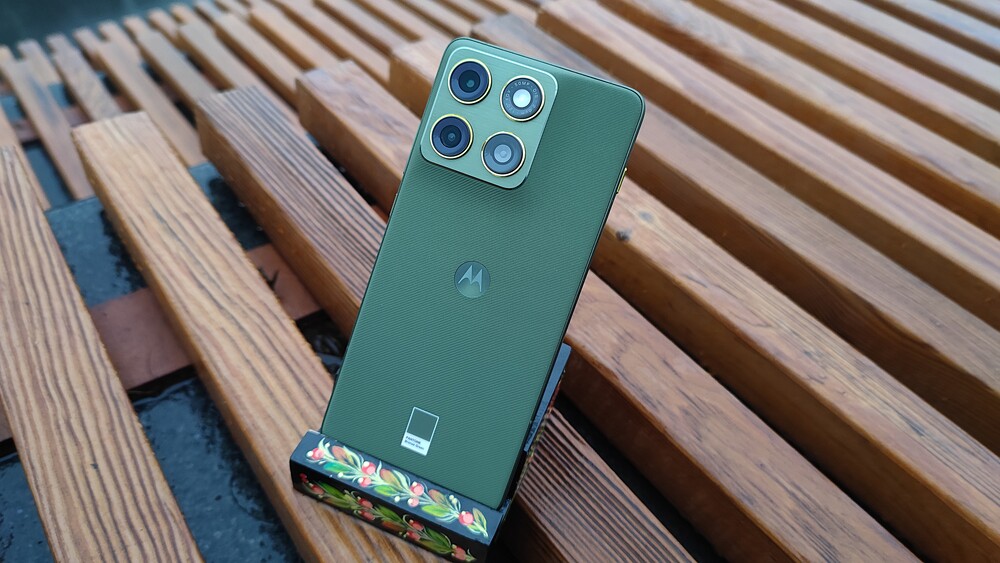
As a result, the Edge 70 becomes a slim yet remarkably enduring device, capable of easily lasting through a full day even under heavy usage.
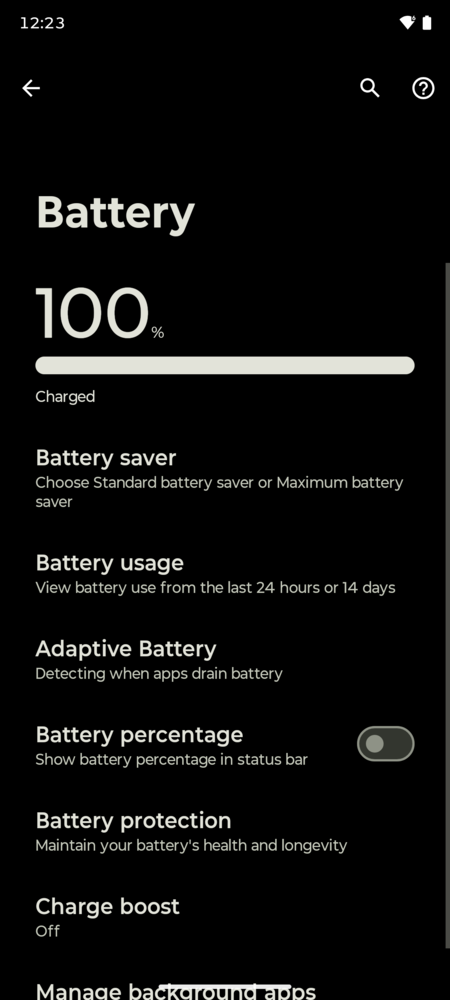
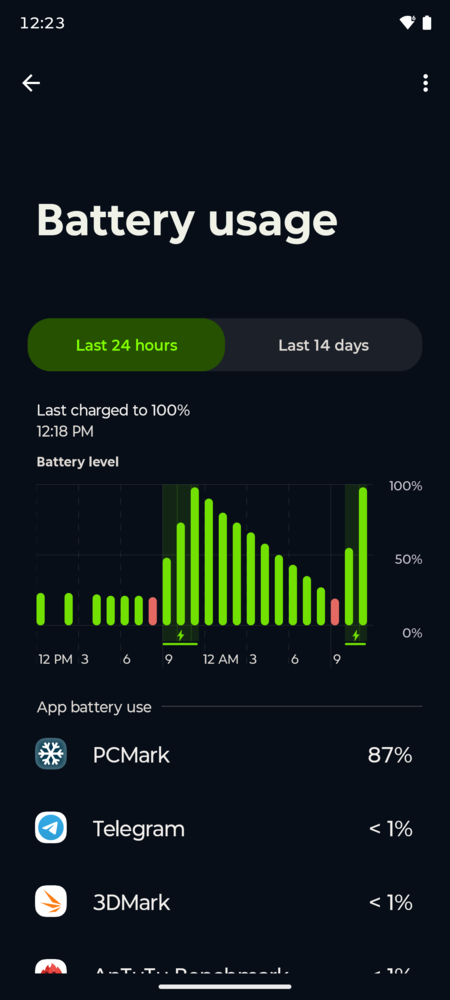
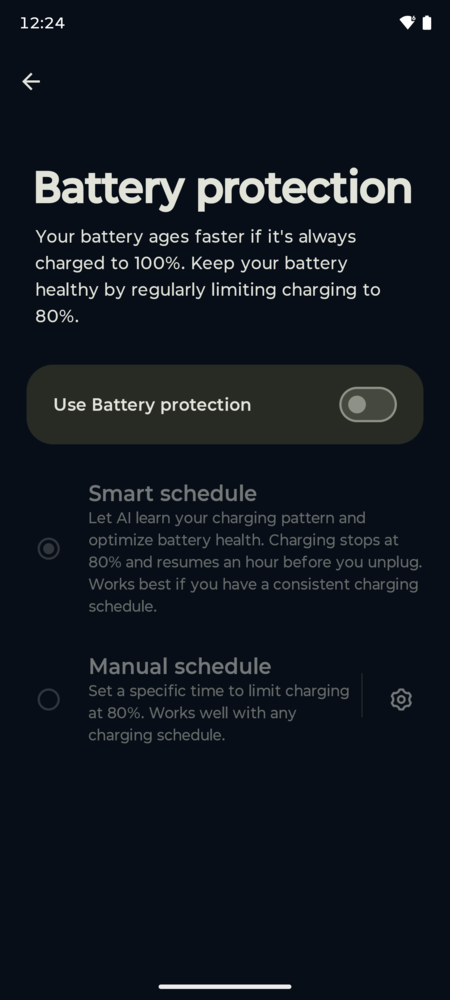
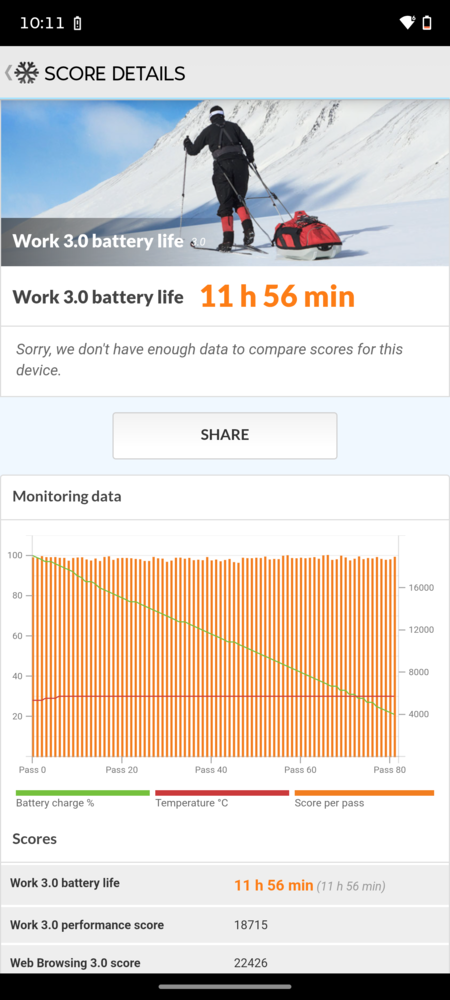
In other words, whether taking photos, gaming, messaging, scrolling feeds, or watching videos, the phone handles it all without constantly worrying about running out of battery. Under moderate use, a single charge can last up to 50 hours – a figure that seems almost unbelievable for a device of this size, but the performance speaks for itself.
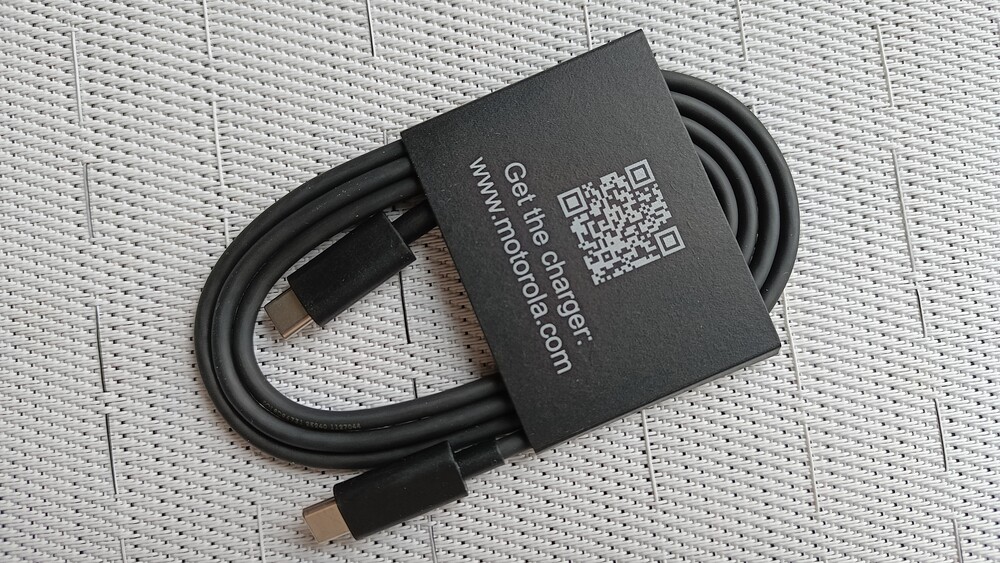
When it comes time to recharge, the Motorola Edge 70 supports TurboPower 68 W fast charging, which can provide up to 12 hours of use in just 15 minutes. One caveat: this speed is only achievable with the official Motorola TurboPower 68 W charger, which is sold separately. Additionally, the battery must be sufficiently depleted, and fast-charging mode must be enabled. As the battery approaches full capacity, charging speed naturally slows, which is normal but worth noting. The phone also supports the Qi2 standard, allowing the use of MagSafe accessories such as stands, wallets, and chargers. Reverse wireless charging is not available.
Read also: Motorola Edge 50 Ultra Review: Again the Top? Yes, Again!
What about the competition?
Compared to the Galaxy Edge S25 (5.8 mm, 162 g, 3,900 mAh) and iPhone Air (5.6 mm, 165 g, 3,149 mAh), the Motorola Edge 70 is almost paradoxical. It is slightly thicker by fractions of a millimeter, yet noticeably lighter, while housing a battery that performs on a completely different level. This combination is unusual for an ultra-thin smartphone and makes the Edge 70 stand out against both competitors. It challenges the common perception that ultra-thin phones exist only for design purposes, as it comfortably lasts a full day with additional endurance to spare.
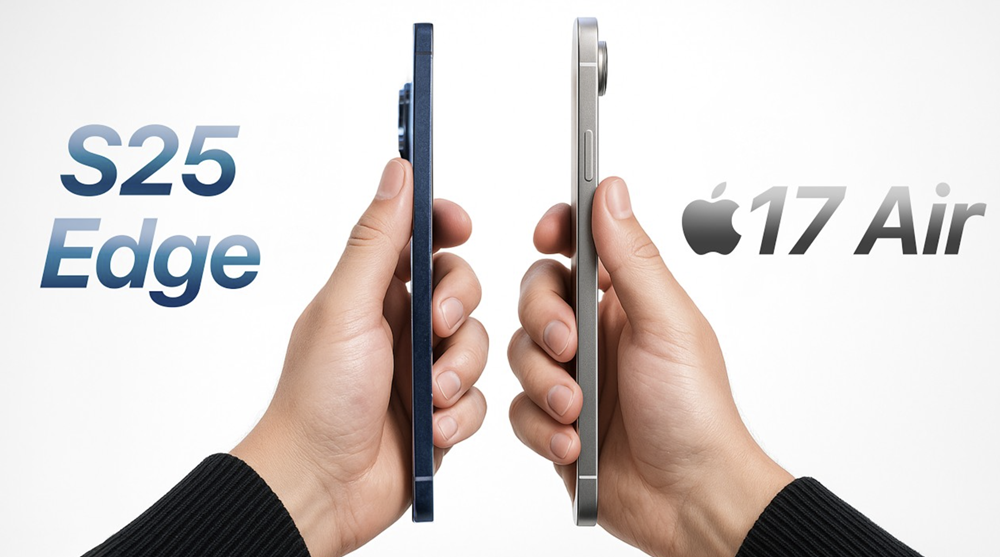
The absence of a telephoto lens is a standard compromise in this class, and Motorola has not attempted to reinvent the wheel. However, the ultra-wide module with macro capability adds versatility: while it does not deliver the highest level of detail, it offers greater shooting flexibility than typically expected from an “ultra-thin” device.
The Edge 70’s display performs without compromise. With a 120 Hz refresh rate, very high peak brightness, and accurately calibrated colors, it ranks among the best screens in its class.
However, the device is not without flaws. Its camera falls short of thicker competitors in the same price range, particularly for video recording. The software experience is also somewhat surprising – Motorola, long known for a restrained and clean interface, has included more pre-installed apps than expected. This feels slightly out of step with the brand’s usual approach, which typically does not require users to spend significant time removing unwanted software after initial setup.
Read also: Report from the Motorola Future Express Presentation: Style, Technology, and the Spirit of Modernity
Who is the Motorola Edge 70 for?
The Motorola Edge 70 can be seen as a notable step forward in its category. It is a rare example of a manufacturer showing that an ultra-thin smartphone can be more than just a stylish accessory – it can function as a fully capable device, offering impressive endurance, balanced specifications, and thoughtful design. With this model, Motorola effectively sets a benchmark for what an ultra-thin flagship should be in 2026, challenging competitors to match it.
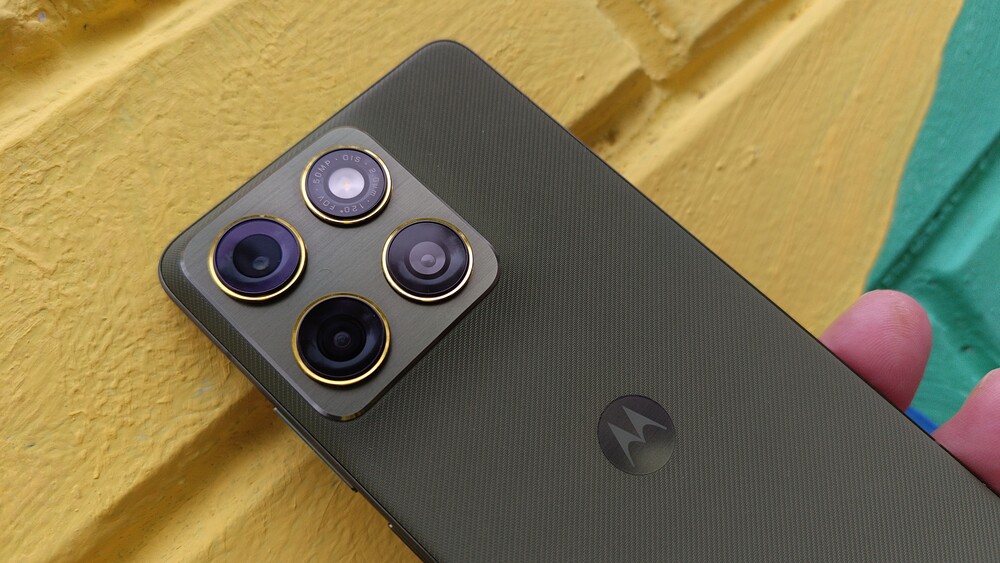
Another important factor in its success is the price. The Edge 70 is positioned as an ultra-thin flagship without reaching exorbitant cost levels. At 29,999 UAH, it represents a reasonable value. For this price, it delivers more than expected: a capable camera setup, a full-day battery, and a modern yet elegant design. While it is not intended for demanding gaming at maximum settings, it performs reliably, quickly, and predictably in everyday use.
A clean or near-stock version of Android, an excellent display, Qi2 support with MagSafe, and a convenient magnetic charging case all contribute to an experience free of unnecessary complexity. Combined with an attractive price point, it becomes clear why the Edge 70 stands out among its competitors.
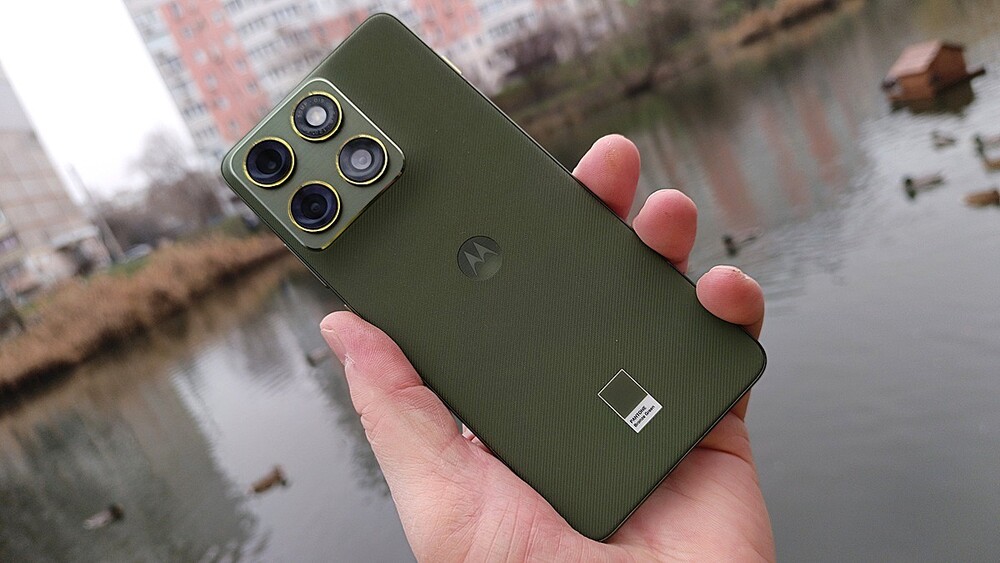
The Motorola Edge 70 does not aim to lead in every category – and this may be its smartest strategy. It focuses on balance in areas where other ultra-thin models often fall short, which makes it feel more convincing overall. This is a smartphone that does not loudly advertise its uniqueness; it demonstrates it through everyday use.
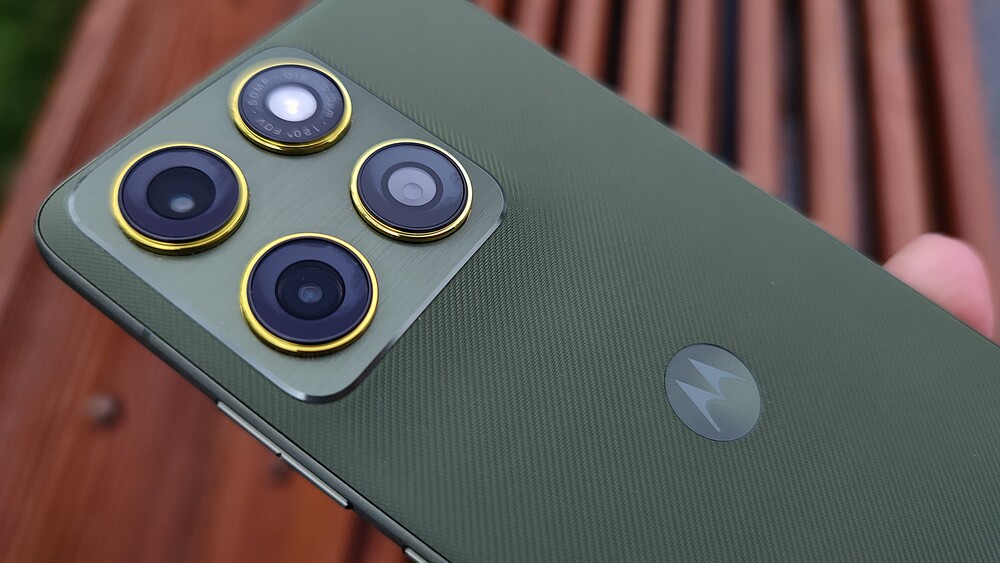
If you are looking for a smartphone that is very thin, very light, and long-lasting, the Edge 70 meets all three criteria with confidence. Add a fabric back panel, Pantone-certified colors, and straightforward software that requires no learning curve, and it becomes an exceptionally well-rounded combination.
Advantages
- Very light, slim device with premium finish
- Robust and durable
- Excellent, clear screen
- Long battery life
- Supports fast wired charging (68 W)
- Smooth operation without overheating
- Relatively competitive price
- Unique and attractive colours and textures, certified by Pantone.
Drawbacks
- No optical zoom on the camera
- Poor video recording
- Too much unwanted pre-installed software.
Read also:
- Motorola Moto Buds+ TWS Review: High-Quality Hi-Res Audio and “Sound by Bose”
- Why Motorola makes the most romantic smartphones
- To out-innovate your rivals. How Motorola keeps us entertained


Et l’OS dans tout ça ? Ce machin truc sensé piloter le matériel, la dernière mouture (16) de chez Google… j’hésite sur le qualificatif ! La surcouche de Motorola ajoute au summum du ridicule, abolissant même la notion d’utilisateur. Car ce téléphone s’auto-utilise tout seul et n’a finalement besoin de personne puisque presque toutes les options sont activées par défaut, les IA sont PARTOUT et contrôle tout.
L’HDR de l’appareil photo est activé par défaut, et il faut l’accepter. Attention ne pas éteindre l’appareil non plus (si on trouve comment faire)… Il ne s’éteint pas car il ne sait pas se réveiller tout seul (un non sens en 2026) !!! Résultat si on programme un alarme et qu’on l’éteint ça ne sonne pas ! On ne peut donc logiquement pas non plus programmer une extinction ! Donc on force l’usage de l’appareil H24 (en ne l’éteignant plus) mais on se targue d’avoir utilisé sur la boite de l’encre au… quoi déjà.. soja?!
Gmail est buggué et tourne en boucle sur le 1er démarrage, demandant une synchronisation qui est soit-disant déjà activé (option inexistante dans les menus, google gère tout avec 1 seul curseur).
Les multiples et inutiles écrans de veille, de vérrouillage et notifications inutiles où la dite-notification n’est possible qu’avec une connexion et il n’y en a pas si on ne déverrouille pas l’écran pour en obtenir une (et ainsi on est déjà sur l’accueil… C’est le syndrome du chien qui se mord la queue), ou encore les Bloatware en veux-tu-en-voilà, tu n’a pas le choix : installe-les !
Ce téléphone, bien que joli, puissant et agréable en main, ne vaut absolument pas la moitié de son prix ! Je suis très déçu de l’avoir payé 800€ sans même un adaptateur digne de ce nom.. juste un câble et une coque rigide qui ne protège absolument de rien !
The most important point is left blank here. Will the display be with LTPO technology finally? So that a full AoD is integrated?
Currently the only Motorola device with a full AoD is the Edge 50/60 Neo -> LTPO display.
If this is the most important point in a smartphone, then I don’t understand something in this life :)
And the display doesn’t necessarily have to be LTPO to support AoD. Even the most primitive OLED-AMOLED is suitable. My smartphone (S23U) has support for full AoD, but I don’t use it (because I have a smartwatch on my wrist, why do I need a smartphone screen that constantly displays information?).
IMHO, you exaggerate the importance of this problem.