




© ROOT-NATION.com - Use of content is permitted with a backlink.
Televisions stopped being just bright rectangles in the living room long ago. Modern models no longer act as passive displays – they’ve evolved into intelligent platforms where the real magic happens deep within their algorithms. AI is reshaping the industry faster than any jump in screen size ever could, turning the TV into a dynamic tool that reacts to context, mood, and user habits in real time.
In the evening, when you come home, a short voice command is enough for the TV to come alive – offering not just a video, but a scene tailored specifically to you, with the right depth, colors, and atmosphere. People are no longer buying a device; they’re buying a personalized media experience that blends seamlessly into their lifestyle. And in this new landscape, the lead role belongs not to the screen itself, but to the intelligence working behind it – anticipating your desires before you even articulate them.
Read also: End of Specs Race: How Many Megapixels Can Human Eye Actually Perceive?
TABLE OF CONTENTS:
The Birth of a New Visual Sensibility
Next-generation TVs transport us into a reality where impressions matter more than raw specifications. Modern screens grow in size not for showmanship, but to amplify immersion – to create a sense of presence so tangible that the boundary between your room and the story begins to dissolve. Large panels act as home-scale portals, making every motion and every detail appear as if you’re not simply looking at a device, but sitting inside a private cinema.
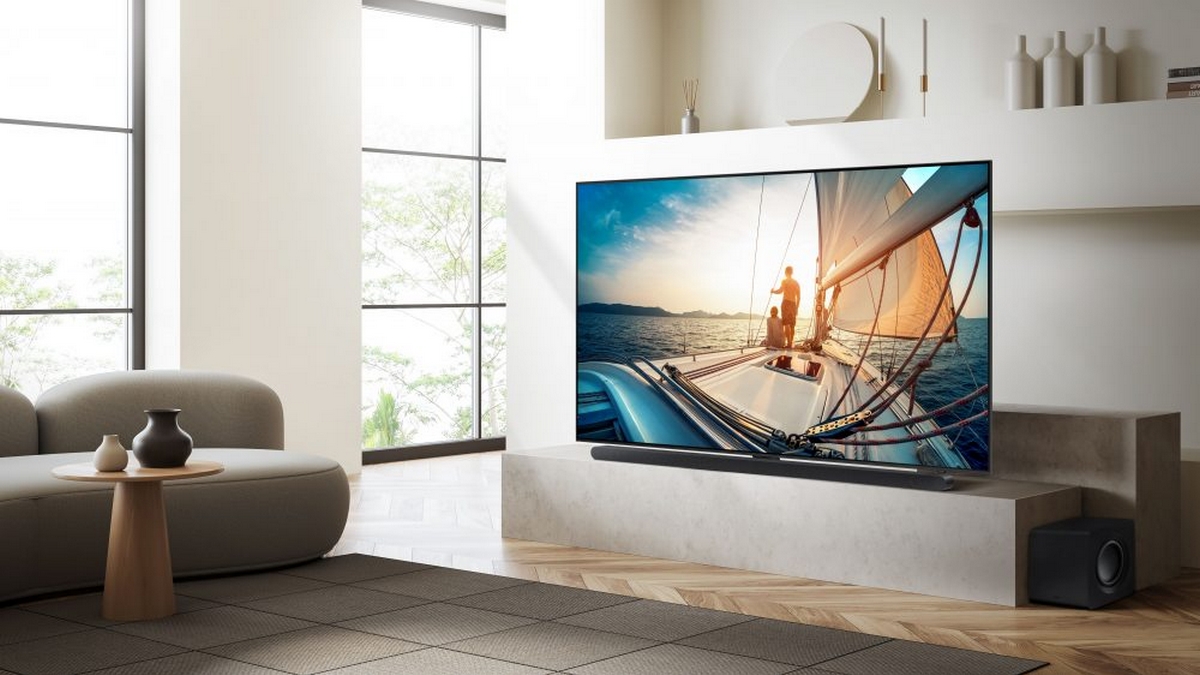
Here, a new aesthetic of intelligent formats is born – one where your space and the image begin to interact with each other. Larger screens provide a cinema-like immersion, placing you at the center of the action with impressive clarity. Modern viewers combine this sense of grandeur with practicality, gravitating toward displays with stable brightness, ultra-thin bezels, and minimalist elegance that makes the content feel like a natural extension of the interior.
Modular, reconfigurable designs are now perceived as architectural elements: mount the TV on the wall to create a gallery-like effect, or place it on a stand to open up new viewing angles for any room. All of this contributes to the feeling that technology no longer occupies space but seamlessly blends into it, enriching your everyday rituals.
Read also: What’s Wrong with AI Browsers?
The intelligence that works silently – yet changes everything
New televisions no longer try to impress you solely with bright panels or gigahertz refresh rates. Their real power lies in what you don’t see. Deep inside, artificial intelligence becomes the invisible command center of your entertainment.
It listens to the room, senses the rhythm of your day, responds to light, mood, and even the surrounding chaos. This quiet mentor transforms the TV into a personal assistant that intuitively knows when it’s time to immerse you in a gripping drama – and when to create a soft, unobtrusive backdrop for a relaxing evening.
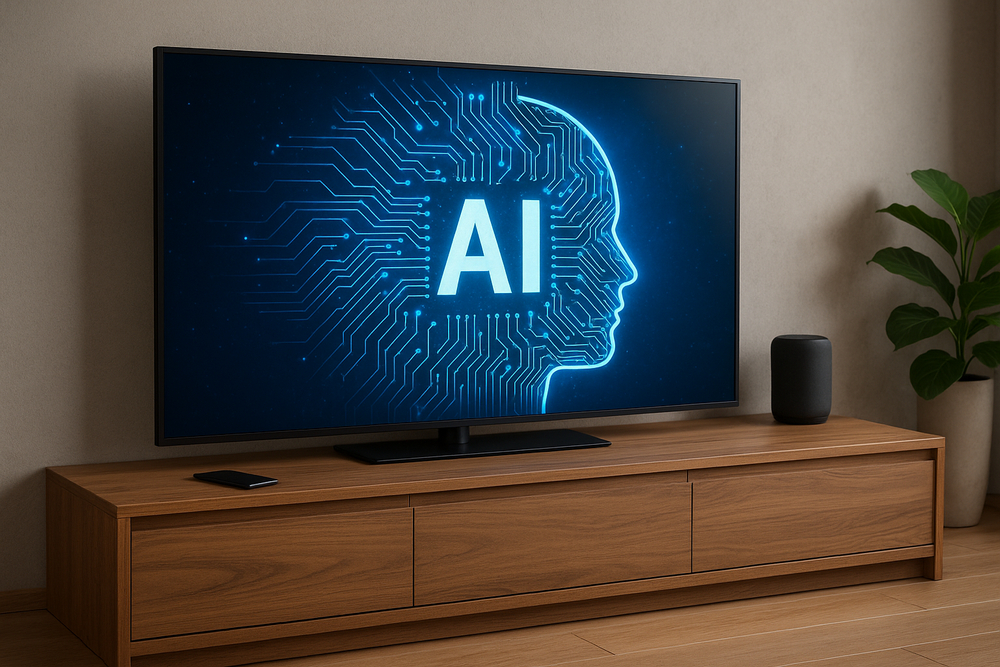
In the premium segment, this sense of controlled comfort has effectively become standard. Buyers increasingly prioritise intelligent features: more than 38% say that voice commands and adaptive optimisation of picture and audio quality have the greatest impact on their experience. The idea of a TV analysing the environment is no longer theoretical. A simple command like “Prepare the room for a movie” triggers automatic adjustments to brightness, ambient lighting balance, and, if available, synchronisation with smart lighting. The process works quietly in the background, creating the impression that the room adapts itself to the viewing scenario.
The AI system also observes usage patterns. It notes what you watch, when you pause content, and which services you tend to use on weekends. As a result, recommendations shift from generic suggestions to more consistent, personalised options. Instead of scrolling through endless menus, users receive content proposals aligned with their preferences, along with contextual prompts such as: “Your match starts in ten minutes – switch to the broadcast?”

Integration with smart-home systems takes this experience a step further. The TV effectively becomes a control hub, interacting with the thermostat, checking the security camera feed, and adjusting the lighting. In practice, it shifts from being a standalone device to functioning as part of the home’s broader automation setup. As AI continues to develop, this interaction is likely to feel increasingly natural – less about navigating menus and more about straightforward, conversational control of the environment.
Read also: Samsung Galaxy XR: Analytical Look at Attempt to Reboot the XR Market
Technologies that make the world brighter
Display technology is increasingly focusing on light itself as a primary medium for visual rendering. Each new generation of panels improves on the previous, but the current advances represent a notable shift in how images are perceived. Quantum dots (QD) contribute to more precise color reproduction, enhancing the fidelity of hues rather than simply increasing brightness. This results in more lifelike representation of landscapes, night cityscapes, and sports arenas, with a level of detail that can give the impression of looking through a window rather than at a screen. Expanded color gamut, higher peak brightness, and smoother tonal transitions together establish a higher baseline for realism, applicable across both documentary and fast-moving content.

At the same time, another approach is emerging: Samsung’s Micro RGB technology, which fundamentally rethinks light generation. Tiny LEDs, smaller than 100 micrometers, act as independent emitters of red, green, and blue light. Each pixel illuminates on its own without requiring a backlight, eliminating bloom and the common “gray black” effect. Infinite contrast moves from marketing terminology to a measurable reality: blacks appear as true absence of light, whites as pure bursts, and scenes gain a depth that draws the viewer’s attention. Certified for the wide BT.2020 color gamut, Micro RGB establishes a new standard of color accuracy and delivers an immersive visual experience unattainable with traditional display technologies. This represents not just an evolution in panels but a new framework for visual expression.
Read also: When Math Meets Art: How JPEG Magic Works
A future that adapts to you
Future televisions are moving toward a model in which technological innovations operate unobtrusively, serving as a background to the user’s experience rather than demanding attention. They retain the scale of large displays while introducing brightness and adaptability that integrate smoothly with everyday routines. Artificial intelligence manages complex tasks such as navigation, optimisation, and configuration, making each interaction feel intuitive and seamless. Meanwhile, displays based on QD and Micro RGB technologies render scenes with precise colors, deep shadows, and minimal technical compromise, producing an effect comparable to viewing a live canvas.
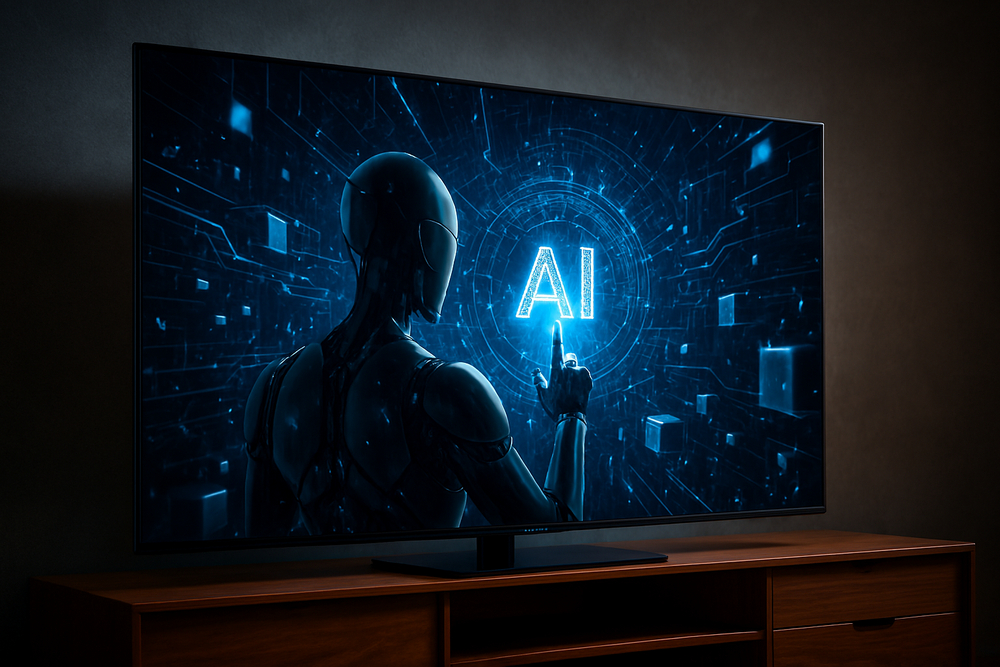
This evolution is expected to extend beyond entertainment. In the coming years, televisions may increasingly become part of wellness routines, supporting slower breathing during meditation, guiding workouts, or creating a calming environment for relaxation. The device transitions from being a simple screen to a platform where technology and well-being intersect. Brands that successfully balance scale, intelligence, and immersive experience are likely to define the standards for this emerging market.
Read also:Vocaloids and AI: How Hatsune Miku Redefined the Music Industry
Conclusions
The future of televisions is being shaped not merely by new features, but by artificial intelligence, which is gradually redefining the industry from within. AI is becoming part of the home environment alongside the light of the screens, which are evolving not just in size or brightness, but in functional intelligence. Whereas users once issued commands to devices, the technology is now beginning to interpret context, atmosphere, and mood.
What once seemed futuristic is now becoming commonplace. AI manages displays, interprets user presence, anticipates choices, and suggests content before it is actively sought. Technologies ranging from QD and Micro RGB panels to voice commands and SmartThings now operate as part of a single intelligent ecosystem, with AI acting as the central processing unit that integrates visuals, sound, lighting, and spatial interaction into a cohesive environment.
This represents a fundamental shift. The television of the future is no longer defined by technical specifications alone. It is about the experience crafted by AI: creating a calm atmosphere before a film, controlling light that responds naturally, and offering recommendations that align with the user’s mood. Technology moves from being a distraction to providing intuitive interaction.
Within this landscape, Samsung stands out as a key driver of the market. The company has led the global TV market for 19 consecutive years and is shaping the pace of innovation through its AI initiatives. Its premium models, produced at European facilities, exemplify the television of the new era: combining a central intelligence system, large display sizes, and advanced technologies such as QD and Micro RGB. Samsung holds nearly half of the global premium TV market, leads in the 75-inch-and-larger segment, and maintains strong positions in QLED and OLED categories. Its AI systems, under Vision AI, function as intelligent media hubs, analyzing user behavior, predicting intent, and transforming viewing into a personalized experience.
Overall, this demonstrates a clear point: companies that integrate scale, intelligence, and a creative approach to content – Samsung foremost among them – are defining the future of home displays.
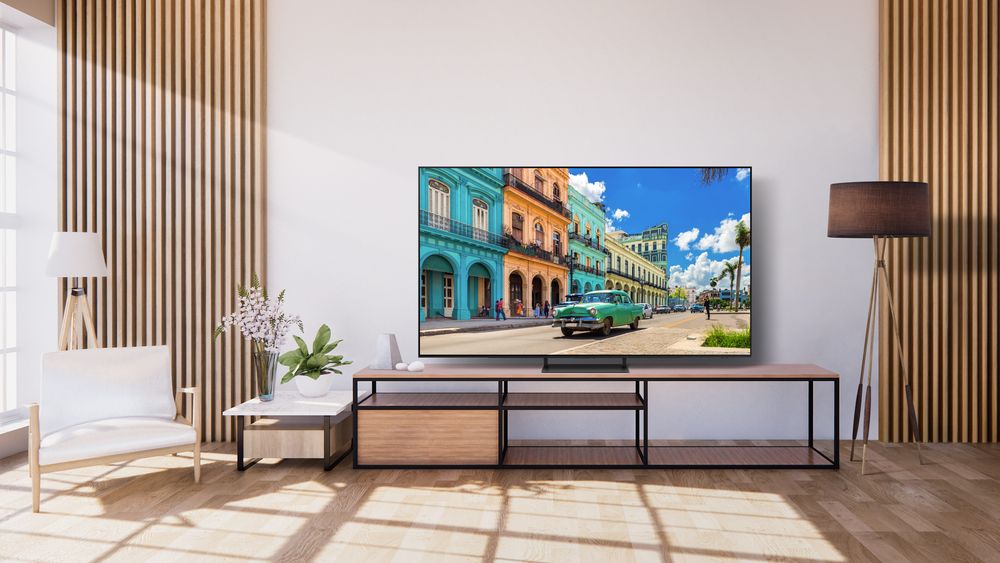
Technology has become smarter by learning to recognize the user. It has become more human-centric by understanding how to provide value without unnecessary complexity. The companies that successfully combine the depth of artificial intelligence with intuitive interaction are shaping a new chapter in the television industry. Each press of the “play” button no longer simply starts a film; it opens access to a personalized environment crafted by AI.
Read also:
- Breakthrough Development: Scientists Create Artificial Muscles Activated by Ultrasound
- Samsung Innovations: How OLED and QLED Are Reshaping the Premium TV Market

