





© ROOT-NATION.com - Use of content is permitted with a backlink.
There was a time when my primary photographic tool for an expedition to Svalbard was a classic Leica M9. To capture the vast scale of the Arctic glaciers, I relied on a 28 mm lens. For candid documentary-style images, a standard 50 mm lens was my go-to choice, while a 90 mm lens proved ideal for isolating details of the wildlife or photographing cautious reindeer from a distance.

TABLE OF CONTENTS:
Xiaomi 17T Pro and 17 Ultra: Pocket-Sized Photographic Magic?
Today, holding the new Xiaomi 17T Pro and 17 Ultra in my hands, I am reminded of how much of that classic photographic experience has found its way into our pockets. The smartphone industry is no longer competing over ever-increasing – but often meaningless – megapixel counts. Through its collaboration with Leica, Xiaomi has focused instead on combining the fundamentals of optical engineering with increasingly sophisticated computational photography.
In the following sections, I will explain in straightforward terms how the camera systems of these two devices work and why they are capable of producing images that approach professional quality. That said, from an engineering perspective, it is important to set realistic expectations: every imaging system involves trade-offs, and the fundamental limits imposed by physics still apply.

As the photo illustrates, I had the opportunity to compare the capabilities of these two smartphones side by side in real-world use. This included testing them under conditions that would be considered challenging even for professional camera equipment.

The Physics of Photography: The Laws of Optics and the Limits of Image Sensors
Every imaging system – from large-format studio cameras to compact smartphones – is governed by the same fundamental physical principles. At its core, image quality depends on how effectively a camera can capture incoming light (photons) and convert it into an electrical signal while introducing as little noise and distortion as possible. Two factors are particularly critical in this process: the physical size of the image sensor and the optical characteristics of the lens itself.
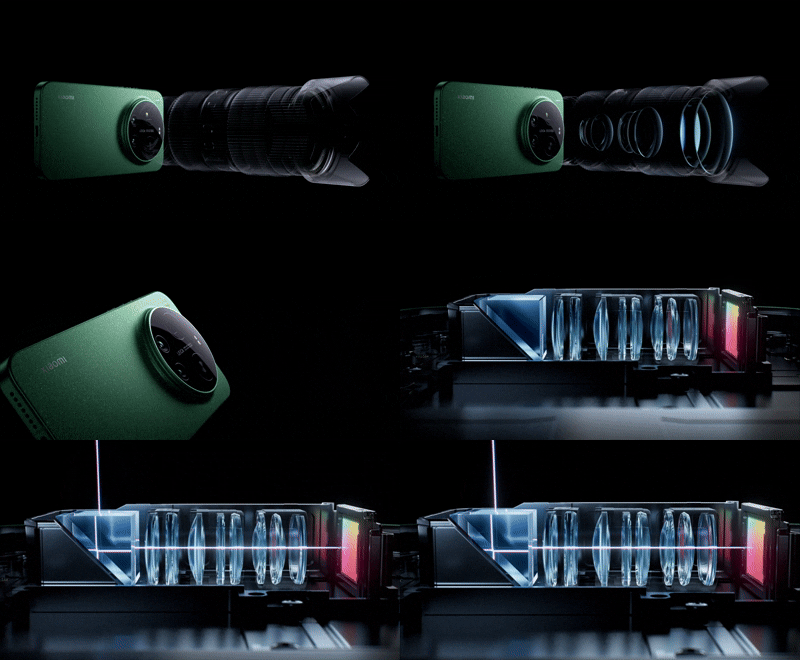
Image Sensor Architecture
An image sensor consists of an array of millions of light-sensitive pixels. The physical size of each pixel determines its full-well capacity – the maximum number of photo-generated electrons it can accumulate before reaching saturation. Once this limit is exceeded, the pixel can no longer record additional light, resulting in highlight clipping or overexposed regions of the image.
This is one of the key reasons why large full-frame (36 × 24 mm) sensors are capable of capturing substantially more light than smaller sensors. Their larger pixels generally provide a higher signal-to-noise ratio (SNR) and a significantly wider dynamic range, allowing them to preserve both shadow detail and highlight information more effectively.

My own Leica M9 is, in fact, a full-frame camera. Its sensor measures 35.8 × 23.9 mm, giving it a physical area of approximately 864 mm². Now let’s compare that with the sensors used in these smartphones.
Xiaomi 17 Ultra (1-inch sensor)
Despite the marketing term “1-inch sensor,” its actual active imaging area is approximately 13.2 × 8.8 mm, corresponding to a surface area of about 116 mm². In other words, the sensor in the Leica M9 is roughly 7.4 times larger by area than this flagship smartphone sensor.
Xiaomi 17T Pro (1/1.31-inch sensor)
The sensor in the Xiaomi 17T Pro measures approximately 9.8 × 7.3 mm, providing an active area of about 72 mm². Consequently, the Leica M9’s full-frame sensor has roughly 12 times the surface area of the sensor used in the 17T Pro.
There is also a noticeable difference between the smartphones themselves: the 17 Ultra’s sensor is approximately 1.6 times larger in area than the 17T Pro’s sensor.
For those who find it easier to take in information visually, I have generated a clear diagram of the dimensions using Gemini (with my own adjustments):

In smartphones, engineers face severe spatial constraints. However, recent device generations demonstrate remarkable progress.
In the Xiaomi 17 Ultra, the Light Fusion 1050L sensor is used. Its surface area already brings smartphone imaging closer to compact cameras such as the legendary Sony Cyber-shot RX100 or Canon PowerShot G7 X. In addition, it employs the innovative LOFIC (Lateral Overflow Integration Capacitor) technology. This approach allows the sensor to efficiently manage excess charge in bright regions by redirecting it into dedicated capacitors. As a result, the effective pixel well capacity increases by 6.3× compared to previous generations, significantly expanding dynamic range in high-contrast scenes.
The Xiaomi 17T Pro uses the Light Fusion 950 sensor with a dynamic range of 13.5 EV. Despite its smaller physical size compared to a one-inch-class sensor, pixel binning technology (combining 4 pixels into one effective 2.4 μm pixel) enables it to reliably capture light even under challenging conditions.
To structure the specifications of the base sensors in the lineup:
Light Fusion 1050L sensor (Xiaomi 17 Ultra)
- Physical size: 1-inch (1.0″)
- Resolution: 50 MP
- Effective pixel size: 3.2 μm (4-in-1 binning)
- Base lens aperture: f/1.67
- Key HDR technology: LOFIC HDR
Light Fusion 950 sensor (Xiaomi 17T Pro)
- Physical size: 1/1.31″
- Resolution: 50 MP
- Effective pixel size: 2.4 μm (4-in-1 binning)
- Base lens aperture: f/1.67
- Key HDR technology: evolutionary native HDR
Light Fusion 800 sensor (Xiaomi 17T)
- Physical size: 1/1.55″
- Resolution: 50 MP
- Effective pixel size: 2.0 μm (4-in-1 binning)
- Base lens aperture: f/1.7
- Key HDR technology: HDR10+ recording support
And once again, to give you a better visual understanding – this time of all three sensors in each of the smartphones:

Optical engineering: the Z-axis constraint and periscope systems
The second critical factor is optics. The laws of physics dictate that achieving a longer focal length (i.e., implementing a telephoto lens) requires a greater physical distance between the lens’s optical center and the image sensor. In smartphones, this creates a major engineering challenge – the so-called “Z-axis problem,” referring to device thickness.
An elegant solution is the periscope-style optical design. Light enters through a primary lens, is reflected by a prism at a 90-degree angle, and then travels along the length of the smartphone body, where the remaining lens groups and the image sensor are positioned. This configuration makes it possible to implement telephoto systems with an equivalent focal length of 115 mm, as in the 17T Pro, and even more complex variable optical zoom mechanisms in the 75–100 mm range, as in the 17 Ultra, without turning the smartphone into a brick.

But there is another engineering detail to consider here: the sensor is now also positioned at a 90-degree angle to the rear panel. The periscope solves the problem of the optical path, but creates a new one – the device’s thickness is now also affected by the physical size of the sensor itself. You can see this architecture in detail in the illustration provided by Xiaomi:

Focal length philosophy and the legacy of the Leica M9
Evaluating the capabilities of modern mobile optics is difficult without understanding the philosophy of focal lengths in classical photography. My experience with the Leica M9 across a wide range of shooting conditions clearly demonstrates how focal length shapes the psychological perception of an image.
The classical Kodak KAF-18500 sensor used in the Leica M9 is still considered a benchmark for micro-contrast and color rendering. Due to the absence of an optical low-pass (anti-aliasing) filter, it delivered exceptionally high per-pixel sharpness. Its “color science,” characterized by deep blue shadows and a warm shift toward magenta, produced highly cinematic skin tones.
Today’s smartphones, relying on CMOS sensors, attempt to reproduce this analog-like character through computational methods. This includes the use of Leica-branded processing profiles such as Leica Authentic (featuring higher local contrast and vignetting) and Leica Vibrant, which emphasizes more saturated and perceptually enhanced color rendering.
Practical use of focal lengths, as implemented in Xiaomi devices, is grounded in established photographic principles:
28 mm – Ultra-wide angle for landscapes
On Svalbard, I used 28 mm to capture vast snow-covered expanses. This field of view expands spatial perception and adds a sense of scale and grandeur to the frame. In smartphones, this range is now typically covered by 14 mm or 15 mm ultra-wide modules, enabling capture of maximum environmental context.
50 mm – Standard for documentary and portrait work
Often referred to as approximating a “natural human field of view” (although biologically the situation is more complex), this focal length serves as a versatile tool for street photography and documentary work. In smartphones, it is typically achieved either through cropping from a high-resolution main sensor or via dedicated portrait-oriented modules.
90 mm – Perspective compression and portraiture
This focal length proved essential both during endurance racing coverage at Le Mans and while photographing wildlife in northern regions. At 90 mm (and closer to 115 mm in the 17T Pro), space appears optically compressed, bringing background elements closer to the subject while preserving flattering facial geometry with minimal distortion.
200 mm – Super-telephoto range
This represents extreme reach for sports and distant subjects. In mobile devices, it is no longer purely an optical implementation but relies heavily on digital zoom techniques. In smartphones from Xiaomi, this is achieved through multi-lens systems and AI-assisted processing. However, it is worth being explicit: image quality at this range still falls significantly behind dedicated cameras. For social media use it is generally sufficient, but for large-format printing, such results are not reliably suitable.
The photo below does not include all the lenses I have owned or used for shooting. However, in my view, it was still important to include it in order to provide additional context for understanding the interaction with the camera system and Leica optics (and Leica cameras in general).

Xiaomi 17 Ultra: The architecture of an uncompromising tool
The Xiaomi 17 Ultra is positioned as an ultimate camera in a smartphone form factor. It represents an engineering response to the requirements of the most demanding photographers.
VARIO-APO-SUMMILUX optical system
The camera system in the Xiaomi 17 Ultra uses a complex VARIO-APO-SUMMILUX setup (f/1.67–2.9 / 14–100 ASPH). The main highlight here is the 200 MP telephoto module, which features a mechanically variable focal length ranging from 75 to 100 mm.
The APO (apochromatic) designation indicates the use of special low-dispersion optical elements. These elements are designed to bring different wavelengths of light into the same focal plane, effectively minimizing chromatic aberration (color fringing at high-contrast edges), which is particularly critical in telephoto imaging.
In practice, however, most users will not pay attention to these optical distinctions, as camera apps are typically opened and used in a straightforward point-and-shoot manner. In this case, the 200 MP mode is placed in a separate option within the camera’s mode carousel. It is also not intended for dynamic scenes, but rather for static subjects.
By default, the system operates in a 50 MP output mode. The full 200 MP capture requires combining multiple exposures (a 9-frame process), which takes roughly one to two seconds to complete. While slower and less suitable for motion, this mode can produce a noticeable increase in detail when conditions are stable.

More details about the Xiaomi 17 Ultra will be covered in upcoming materials, including the Photography Kit Pro, where there will also be a deeper dive into 200-megapixel photography.
Software authenticity: Leica Essential Mode
For enthusiasts of classical rendering, the system includes an exclusive Leica Essential Mode. Rather than applying a conventional filter, it algorithmically simulates the behavior of iconic camera systems.
For example, the emulation of my Leica M9 introduces a distinctive tonal curve, pronounced micro-contrast, and a fixed white balance characteristic of CCD-based systems. This produces a more constrained but predictable rendering style, closer to the behavior of early digital rangefinders.
The M3 mode, in turn, emulates a cinematic black-and-white film aesthetic inspired by Leica MONOPAN 50, including its characteristic grain structure and high-contrast tonal response.

An important feature is support for the CAI (Content Authenticity Initiative) standard. In the age of generative AI, the smartphone uses a dedicated hardware chip to apply a cryptographic signature to RAW and JPEG files, guaranteeing to the press that the photo was NOT generated by a neural network.
Xiaomi 17T Pro: The “Telephoto Master” concept
If the Ultra is positioned as a professional-grade tool with corresponding size and price, the 17T Pro represents an attempt to democratize these capabilities, with a particular focus on a key imaging component – the telephoto system.
The “Telephoto Master” concept is expressed through a 50 MP periscope module with a 115 mm equivalent focal length (approximately 5× optical zoom). This range is well suited for portraits and concert photography, where optical compression naturally separates the subject from the background by flattening perspective.
These characteristics were evaluated in highly demanding conditions, including the 24 Hours of Le Mans endurance race, where maintaining sharpness in fast-moving scenes is challenging even for dedicated professional camera systems.
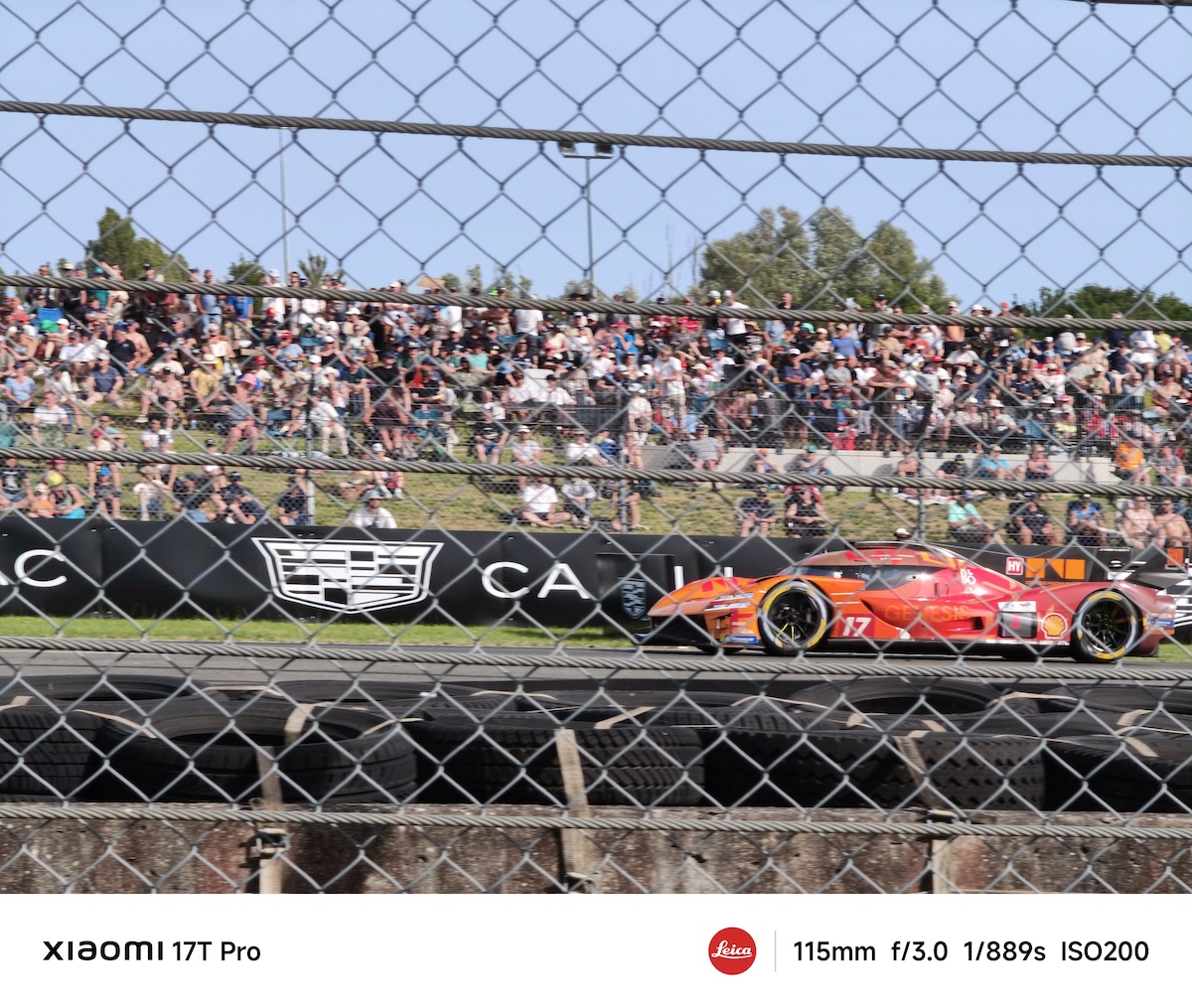
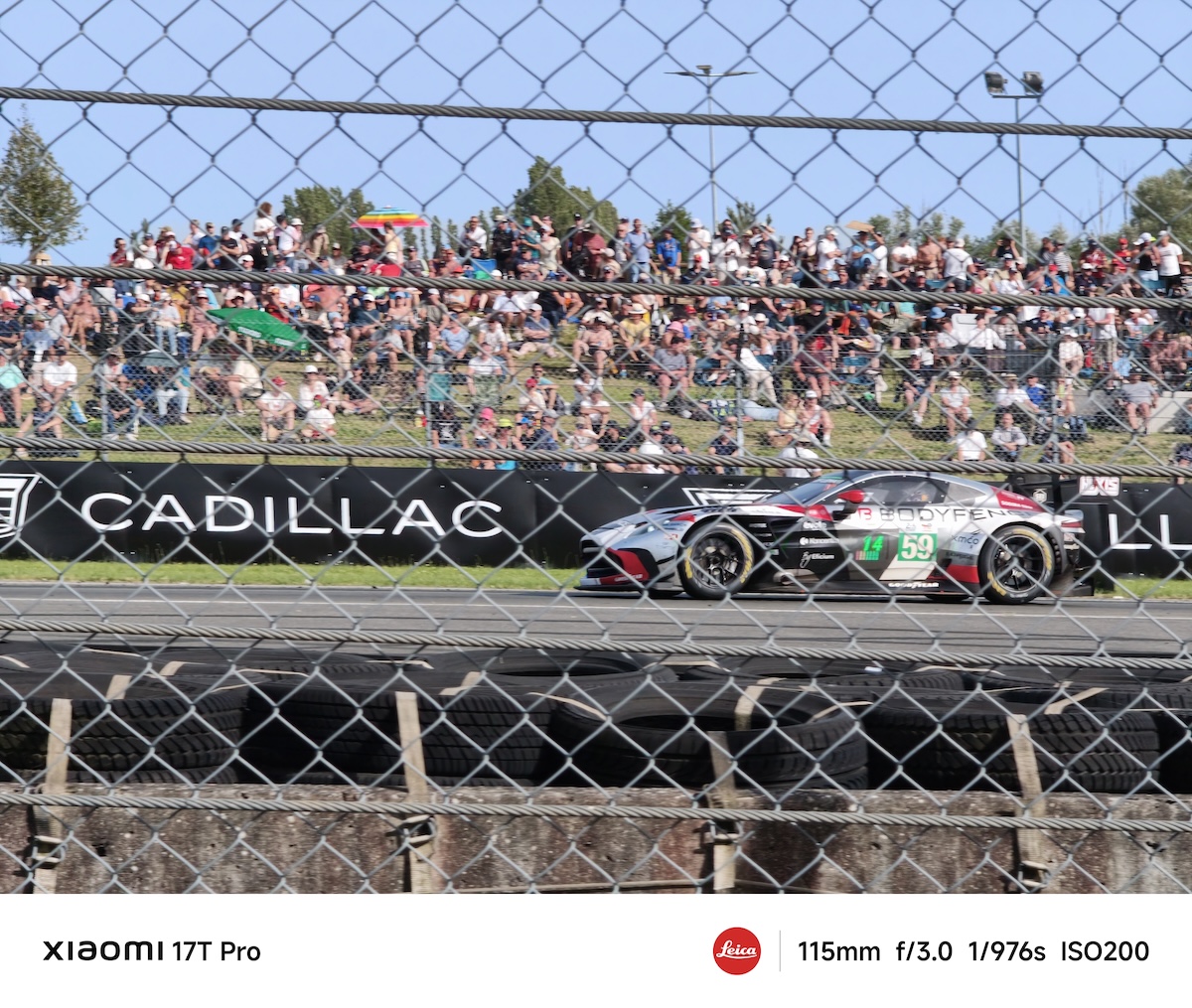

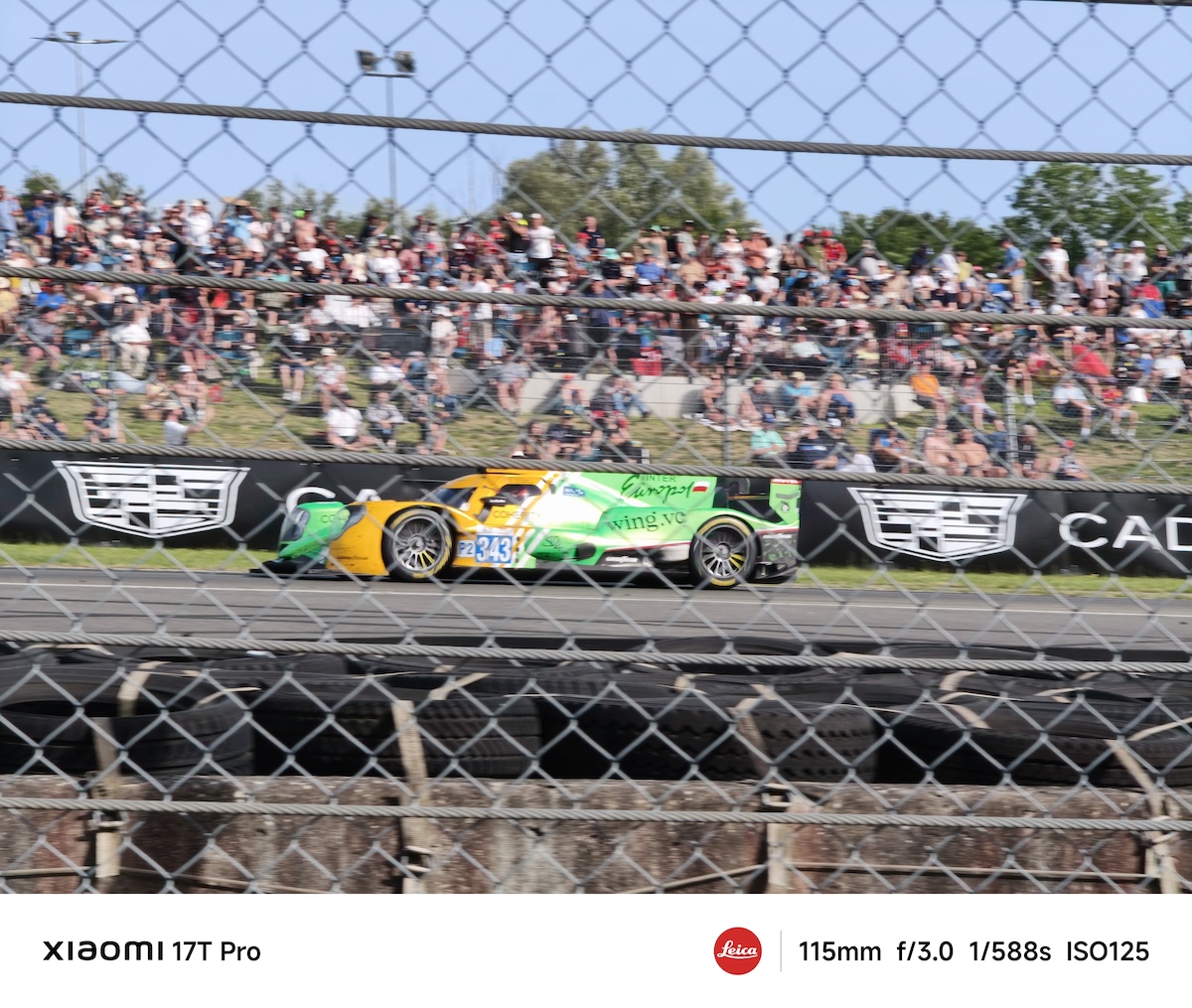
It should be noted that no miracles occurred: capturing good shots like the one above was not easy, and there are also quite a few frames like the one below.


I also took a considerable number of photos using the telephoto lens with additional digital cropping, reaching an equivalent focal length of around 230 mm.
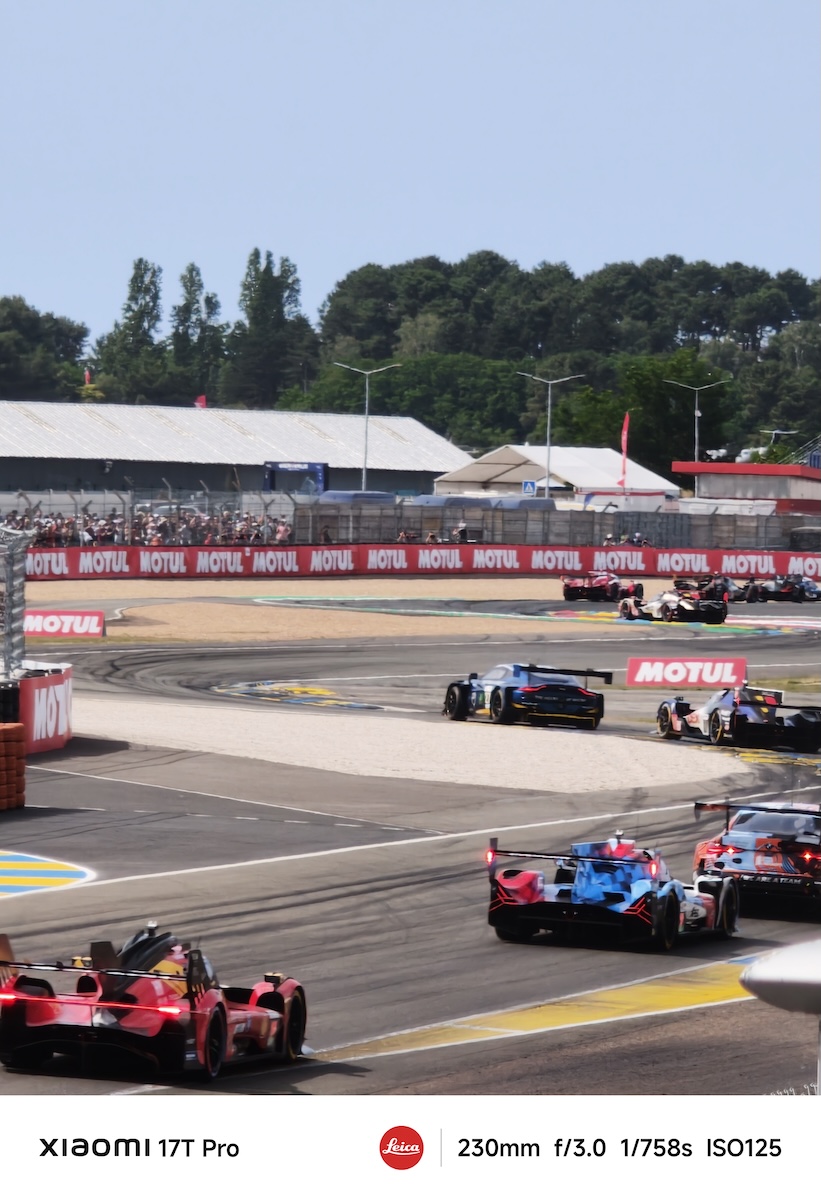
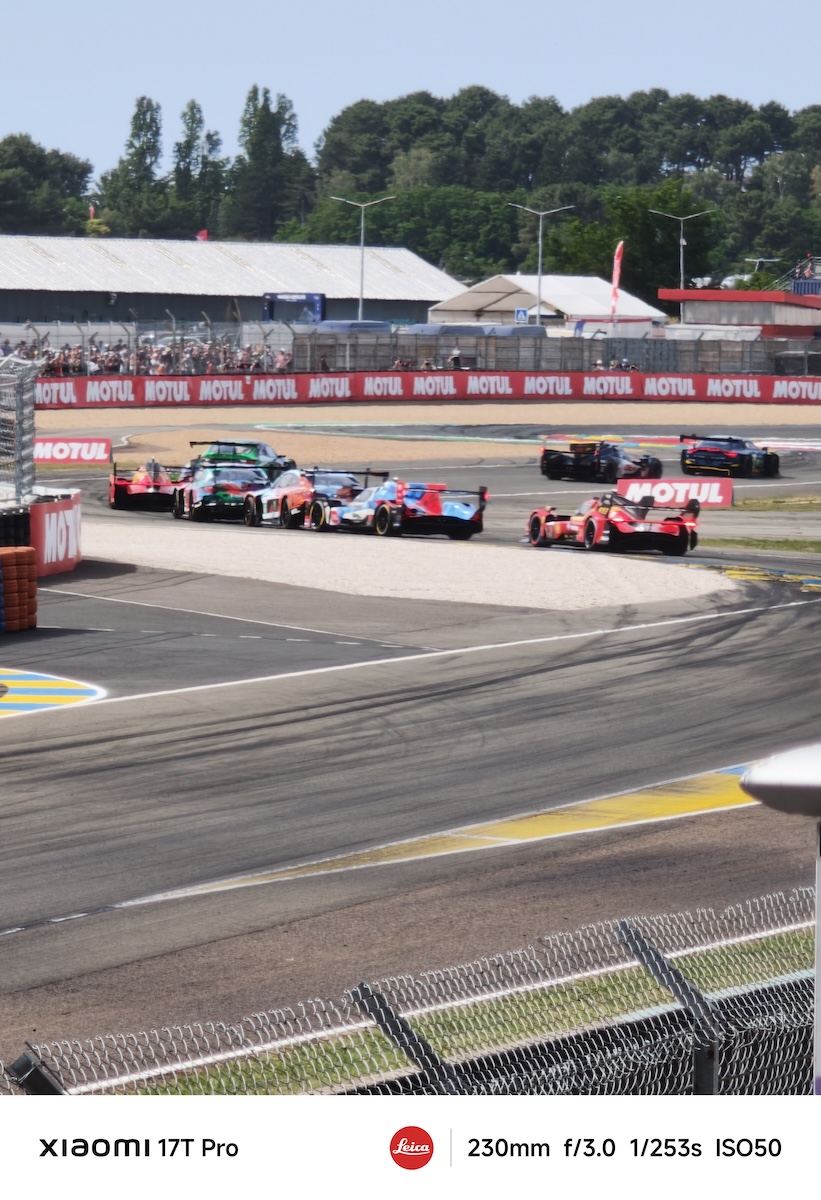
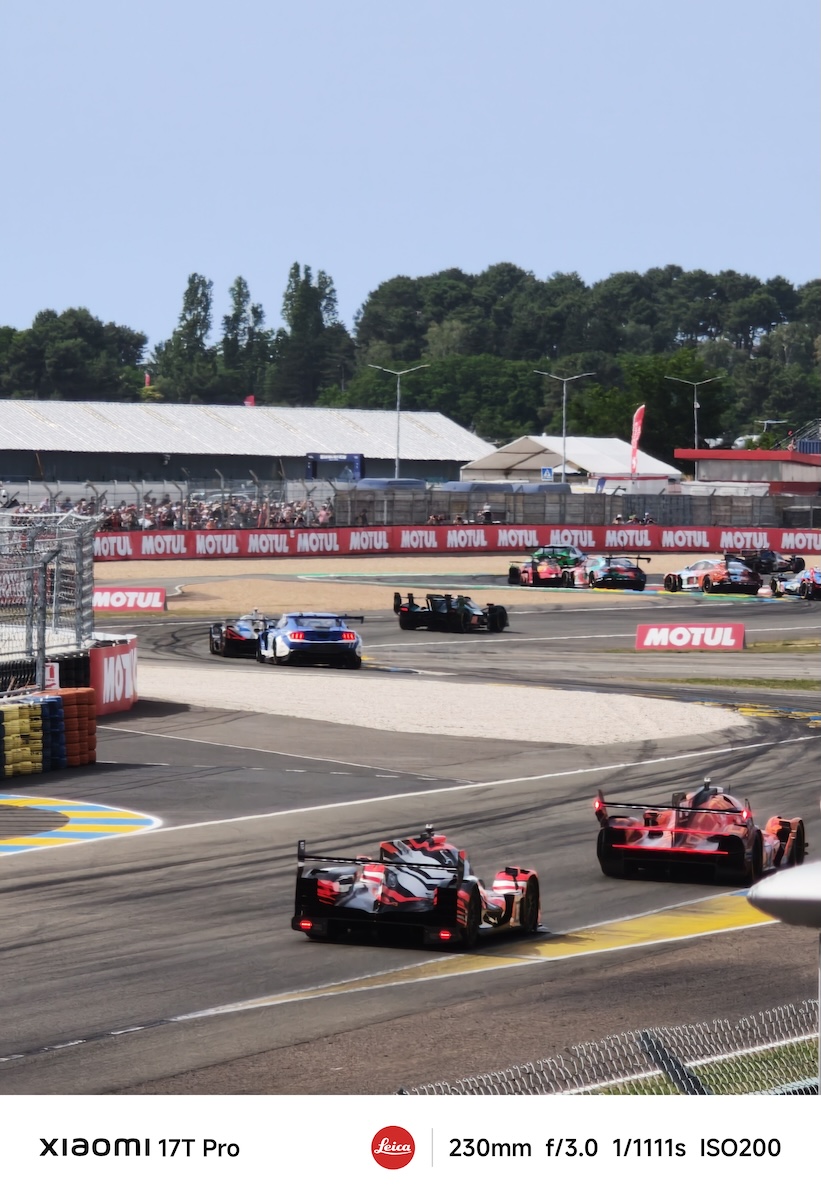
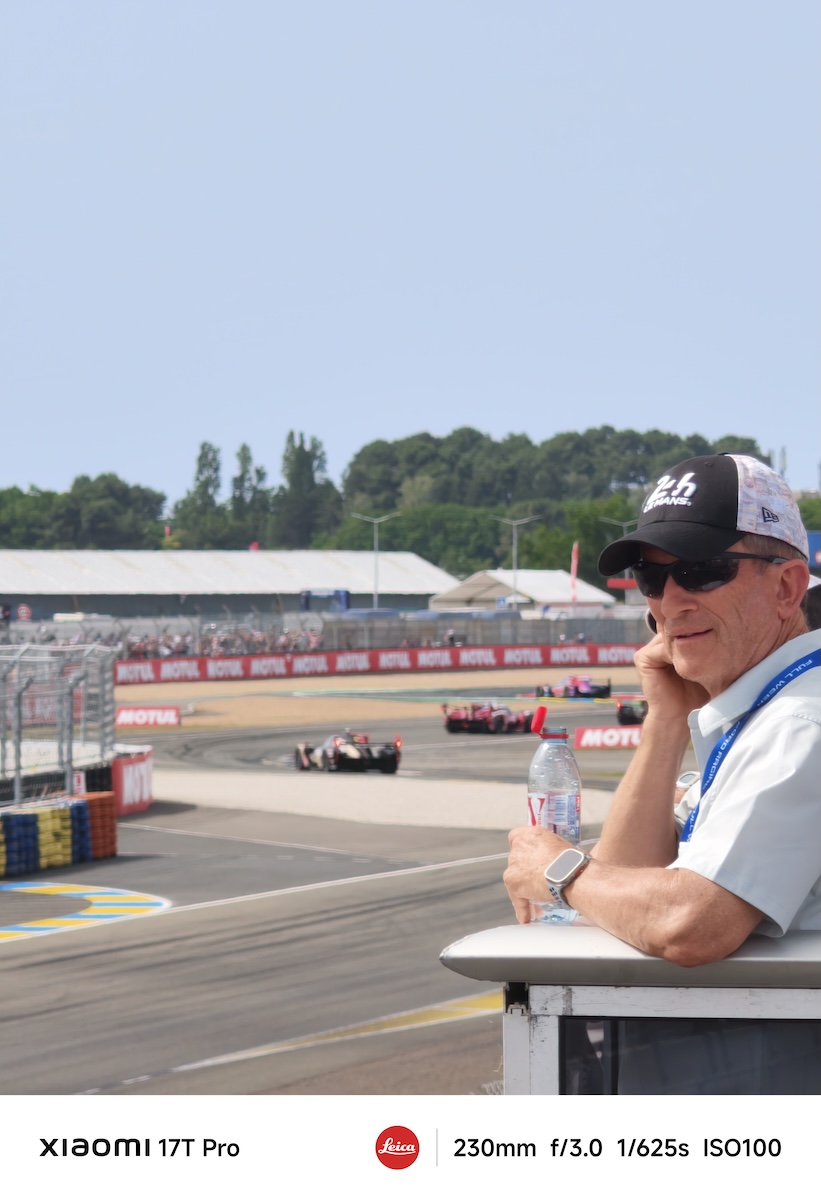
As a bonus, it supports focusing from as close as 30 cm, which turns it into a capable tool for tele-macro photography (incidentally, this is not a specification officially stated for the 17 Ultra).


The main 50 MP camera (23 mm, f/1.67) also uses a hybrid Leica 1G+6P optical construction. The entire system is driven by a 3 nm MediaTek Dimensity 9500 chipset, which serves as the computational core of the imaging pipeline. Power is supplied by a high-capacity 7000 mAh silicon–carbon battery. During Le Mans, I did not have to think about battery life in practical terms, as these smartphones were used primarily as dedicated cameras. Core smartphone functionality was handled by my iPhone, so I cannot provide a fully representative assessment of endurance under mixed usage. However, for photography alone, the battery was not only sufficient, but still had a noticeable reserve remaining after extended shooting sessions.
Read also:
- Mijia Smart Audio Glasses Review: Stylish Accessory or Headset Replacement?
- Xiaomi Watch 5 Review: Wear OS and 6 Days of Battery Life
Computational photography: when physics gives way to mathematics
Despite all this optical engineering, we have to face the reality: a small mobile sensor will never capture as much light as a crop-sensor or full-frame camera sensor. But where optics leave off, neural networks take over.

Modern AI algorithms (such as Google Gemini integrated into the 17T series) analyze scene semantics, recognize objects, and dynamically control exposure. Yes, for studio work or large-format printing, algorithmic artifacts can become noticeable. However, for Instagram and most media consumption contexts, the output generally appears visually refined and effectively “finished” to the eye.

Here are several software features that meaningfully shift the user experience (some of which were already mentioned in the initial impressions article, but it is worth reiterating them):
- Leica Live Moment: captures a short buffer of video before and after the shutter press, creating a “live photo” with Leica’s characteristic color grading applied.
- Stage Mode: neural networks detect faces in high-contrast environments (for example, concerts) and apply localized exposure and white balance adjustments exclusively to the subject, effectively recovering detail in scenes that would otherwise be overexposed.
- AI Ultra Zoom: a generative model analyzes textures and effectively reconstructs fine detail at zoom levels between 20× and 120×. This represents a direct computational extension beyond the physical limits of the optical system. A clear example of this pipeline is the Moon shot featured in my earlier impressions article.
- Leica Portrait: AI builds a depth map and performs precise subject separation, including fine structures such as hair. The algorithm simulates the optical bokeh characteristics of legendary Summilux and Noctilux lenses while preserving natural skin tones.
- AI Erase Pro and AI Film: enable on-device object removal without visible traces, as well as automatic generation of cinematic video edits. These features are powered by dedicated NPUs (including Dimensity 9500 and Snapdragon 8 Elite platforms), handling computationally intensive processing directly on-device.

Conclusions
The Xiaomi 17 Ultra is a truly uncompromising device for enthusiasts. With a one-inch LOFIC sensor, a mechanically variable APO telephoto lens, and the dedicated Photography Kit Pro hardware accessory, it comes very close to semi-professional imaging equipment. I will cover this kit in more detail in a separate article, as mentioned earlier. At the same time, modes such as Leica Essential help preserve a strong emotional connection to analog photography.
On the other hand, the Xiaomi 17T Pro and Xiaomi 17T adopt a “Telephoto Master” concept (a 115 mm periscope system) combined with intelligent computational modes. These devices demonstrate that high-quality optics, when combined with AI, can be made both accessible and highly effective for everyday use. For most users, whose primary platform is social media, the combination of sensors and algorithms is more than sufficient to produce visually refined and emotionally engaging content.
The analysis of the Xiaomi 17T Pro and 17 Ultra camera systems highlights a significant shift in mobile photography. Reflecting on the journey from my preferred CCD sensor in the Leica M9 to these highly computational imaging systems, it becomes clear that manufacturers have learned to effectively bypass many physical limitations through advanced mathematics and computation. The nuances remain, but the progress compared to previous years is dramatic.
Read also:
- YU7 GT completes the Nürburgring without a driver: Xiaomi sets a new record
- DDPAI Z90 Pro Dash Cam Review: Smart Video Recording and Driver Assistance
- Weapons of Ukraine’s Victory: “Vyrivniuvach” Guided Glide Bomb
- Razer BlackShark V3 Headphones Review: Full Immersion in Gameplay and Solid Sound Quality
- Lenovo Legion Go 2 Review: More Powerful, More Comfortable, and Finally Featuring OLED

