





© ROOT-NATION.com - Use of content is permitted with a backlink.
In 2026, something happened that I had been hoping for for a very long time – and almost missed entirely. In fact, many of the things I had wanted to see become reality finally did so this year. Most of them were made possible by NVIDIA, and some, at least indirectly, by Goodram through products such as the RIVAL DDR5 series. Today, however, I want to focus specifically on the NVIDIA RTX Spark.

TABLE OF CONTENTS:
A video about NVIDIA RTX Spark (and Goodram)
What is Spark?
To start with, what exactly is it? At Computex 2026, Jensen Huang took the stage to introduce NVIDIA’s long-anticipated laptop-oriented system-on-chip platform. The chip combines custom ARM-based CPU cores with either the RTX Spark N1 or RTX Spark N1X integrated GPU. It also appears to support up to 128 GB of high-speed onboard memory, soldered directly onto the package.

All of this is packaged into exceptionally thin, lightweight, yet durable devices. In his video, Linus showcased the battery from one of these laptops, and it was remarkably thin. Despite that, its capacity is rated at 99.9 Wh. The battery uses silicon-carbon chemistry, but from a user perspective, the key point is the combination of high energy density and a compact form factor.
In other words, Apple’s decision to transition to ARM-based Apple Silicon significantly reshaped expectations across the industry. It may even be worth making an English-language video titled “ARM’s Race”, as the ecosystem has expanded rapidly since then.
Today, ARM-based systems are no longer limited to Apple’s desktop and mobile devices. Qualcomm has established a growing presence with Windows on ARM platforms, and the company has outlined plans to bring ARM-based processors to more affordable laptop segments, including devices in the approximately $300 price range.

And now we have NVIDIA, with 20-core ARM processors, which essentially offers most, if not all, of the benefits of Windows on ARM compatibility. The very same device that currently meets 99 per cent of the average Qualcomm user’s needs on, say, the ASUS Zenbook A16. This isn’t a gadget for tech enthusiasts. It’s a fully-fledged device.

And no, Prism is not a proprietary software technology from Qualcomm. This emulator is optimised for Qualcomm, but it is a Microsoft product, which is why it will also work on NVIDIA chips.
For artificial intelligence
NVIDIA itself positions the RTX Spark range as laptops designed for running AI agents. These aren’t LLMs, nor are they chatbots. They are specifically agents. You ask them to animate an owl based on a sketch – they do it, and they do it relatively quickly… and without the internet! To do this, they need 128 GB of RAM, into which the AI models are loaded so they can run offline.

And actually, this is where I want to bring Goodram into the picture. Because if you think I’m not going to support the only – the ONLY – RAM manufacturing plant in Europe, well, don’t even get your hopes up. Support Goodram, just as I do, because without it, prices will go through the roof.

A reminder: a gaming PC does not function without storage and memory. Both components are provided by Goodram. At the moment, I am also in the process of refurbishing an older PC that I plan to donate to the Armed Forces of Ukraine. A link to this material will either be available or is already included in the video description.
Low Power, High Stability
I likely would not have started working on this topic at all if it were not for a video by Alex Ziskind, which provided a particularly interesting angle. He tested the DGX Spark, a dedicated AI module designed for compact PCs, which in its optimized form was presented under the RTX Spark branding.
In essence, it is the same silicon design: the same Grace CPU with 20 ARM cores developed in partnership with MediaTek, and the same Blackwell-based GPU with 6,144 CUDA cores. On paper, these specifications are broadly comparable to an RTX 5070 Mobile-class configuration. However, in practice, Ziskind’s testing of the DGX Spark produced performance results closer to a Radeon 8060S-class system, which roughly corresponds to an RTX 5050-level performance range.

And there is no reason to believe that the RTX Spark will be more powerful than the DGX Spark. Performance may improve as a result of software optimisation. But in all likelihood, we will end up with perhaps even LESS performance in exchange for better energy efficiency. Because the DGX Spark is a mini-PC without a battery. Whereas the RTX Spark is designed for laptops.
Now, let’s recall that for nearly four years I’ve been saying: I don’t need the performance of, say, an RTX 5090. What I need is video memory. For my work, the performance of an RTX 5050 or RTX 5060 will be more than enough – that is, support for the latest codecs and technologies, but with a HUGE pool of video memory.
My main task (as far as I’m concerned)
And it’s not because I’m an AI developer. I’m a post-production editor. And I often work with poor-quality footage: flickering, dark, or too short. And the more video memory I have, the more ‘remedial’ plugins I can use to fix the footage.

Roughly speaking (i.e. the figures are approximate but illustrative), but… Deflicker – 4 GB. Speed adjustment using RTX – 6 GB. Resizer using RTX – 5 GB. Noise reduction – 4 GB. Basic colour correction – 4 GB. And that’s JUST for a single video clip, and there could be many more.
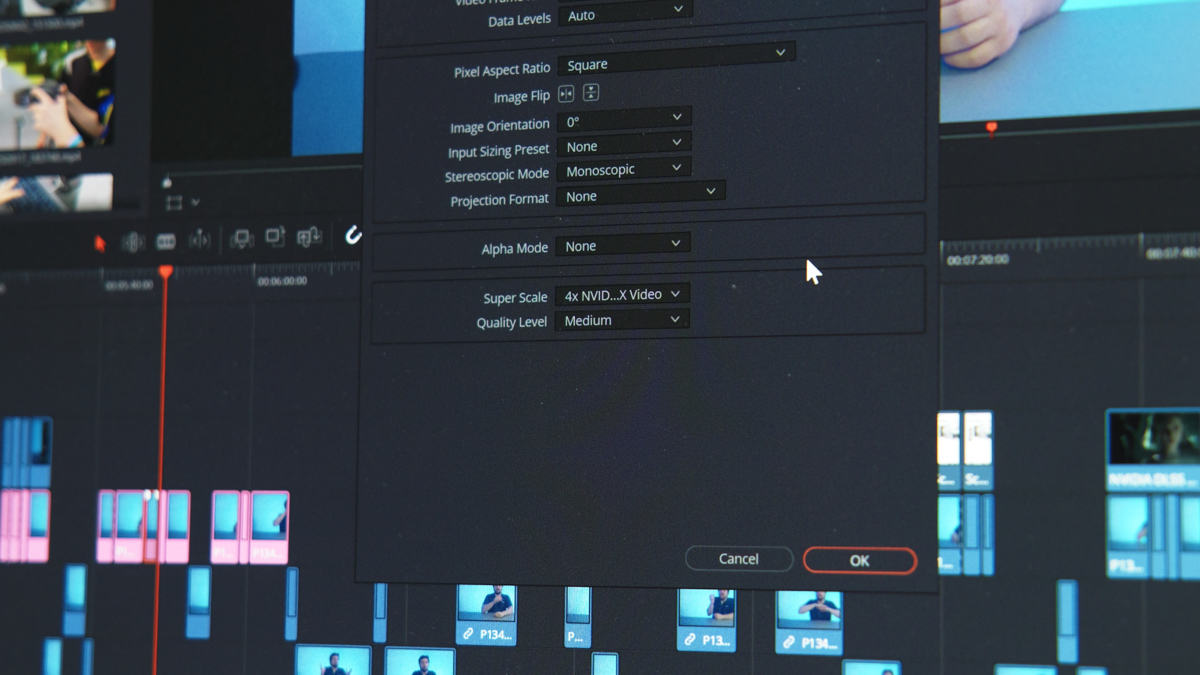
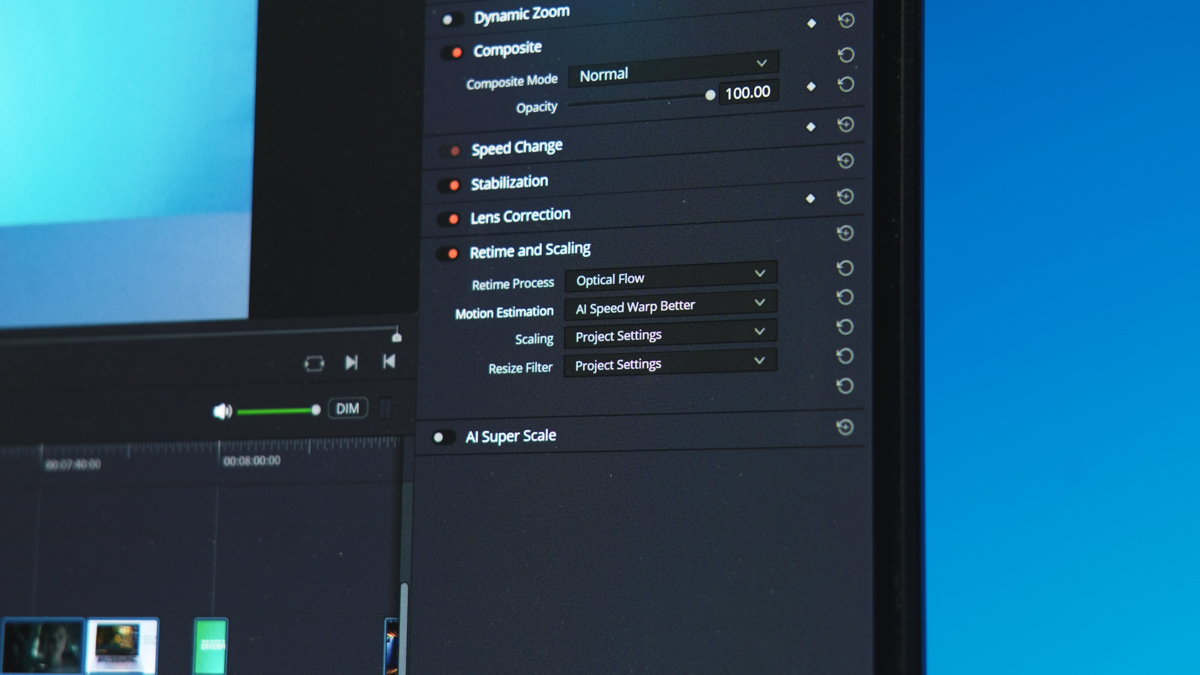
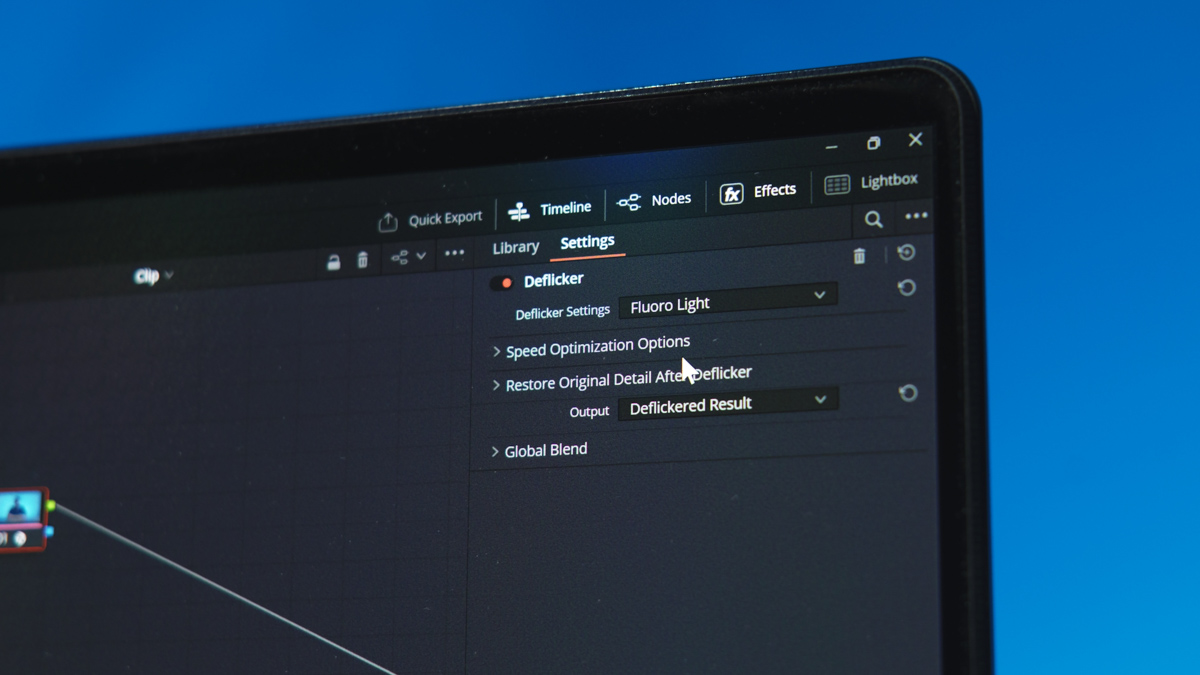
Actually, that’s why it drove me so mad when I was trying to edit on an RTX 5070 Ti. It’s got 12 GB of VRAM. Fast, but only 12 GB. For YEARS, Resolve hadn’t crashed as often on my machine as it did on a $3,000 laptop, and it crashed more often than on a $1,000 laptop with an RTX 3080 16GB. And that finally convinced me that stability is better than speed.

And here – NVIDIA is showing exactly what I wanted. Essentially an AMD Ryzen AI Max+ 395, but on ARM cores, with a graphics core as powerful as the RTX 5050, yet with the energy efficiency of the Qualcomm X2 Elite. And on top of that! Hold on a minute! With a HOST of CUDA cores. This means Radeon’s restrictions on using proprietary NVIDIA plugins are completely eliminated. EVERYTHING IS AVAILABLE!

And the question remains: the price. Mini PCs based on the DGX Spark cost over $4,000 even in the US. Mini PCs based on the AMD Ryzen AI Max+ 395 cost $2,700 on AliExpress. Add customs duties to that, and you might want to have a little cry – I’ll pass you a tissue.
Conclusion
But all things considered – and let this serve as my conclusion – NVIDIA has fulfilled my wish for AI-powered game remastering, and it has fulfilled my wish for a low-power graphics core with the full range of CUDA performance and a massive amount of video memory. And I’d like to thank Goodram once again for existing and keeping prices from soaring even higher into the stratosphere. And for new models, such as the RIVAL DDR5.
And don’t forget to let us know in the comments exactly how much video memory YOU need. How much do you have at the moment, and how much is enough for your work? I’ve got 24 GB, and for the first time since I got my RTX 3090, I’m comfortable editing videos. But do write in and don’t be shy!
Read also:
- DLSS 4.5: Why This Technology Changes the Approach to Path Tracing
- Against the Current: My Thoughts on DLSS 5 (ft. Goodram Move Ridge)
- Everything About NVIDIA RTX Spark: The Superchip Redefining Personal Computing

