





© ROOT-NATION.com - Use of content is permitted with a backlink.
Alibaba has introduced the Zhenwu M890 chip, a new accelerator developed by its semiconductor division, T-Head. At first glance, this may not appear unusual, but there are several aspects worth examining in more detail.
China is not standing still. I typically frame this country through the lens of energy, expensive raw materials, and advances in robotics, but this time there is something different. It appears that China is building its own “AI infrastructure backbone.”

За останні кілька років у мене склалося враження, що вся глобальна розмова про штучний інтелект звелася до одного питання: скільки відеокарт NVIDIA хтось зміг під’єднати до свого дата-центру? Звісно, це сильне спрощення, але воно добре відображає нинішню ієрархію ринку. NVIDIA дає доступ до найкращих акселераторів, швидкої пам’яті, CUDA, готових бібліотек і перевіреної серверної інфраструктури – тобто фактично відкриває двері до “вищої ліги” ШІ.
А якщо доступу до цього немає? Тоді починаються експерименти. І саме цим зараз займається Alibaba – один із технологічних гігантів Китаю.
Read alsо: Key Takeaways from Google I/O 2026
TABLE OF CONTENTS:
When restrictions become a catalyst
There are geopolitical paradoxes that, over time, take on an ironic character. One of the most striking is unfolding right now at the intersection of silicon wafers, data centers, and diplomatic exchanges between Washington and Beijing. In attempting to slow China’s technological rise, the United States has arguably triggered the very outcome it sought to prevent: forcing China to learn how to operate without American technology.

This is not just a business news story about a new processor. It signals a shift in an era. To understand its scale, it is necessary to look beyond technical specifications and consider the geopolitical context, economic logic, and strategic thinking embedded in every transistor of Alibaba’s new chip.
Read also: From CUDA to AI: the secrets of NVIDIA’s success
A monopoly that shaped the global stack
NVIDIA and the architecture of dependence
To understand what Alibaba is doing, it is first necessary to understand what it is trying to move away from.
Over the past decade, NVIDIA has evolved from a manufacturer of gaming GPUs into a de facto infrastructure layer for global artificial intelligence. Its chips – A100, H100, H200 – have become a kind of currency in the ecosystem of large language models. However, the hardware is only part of the story. NVIDIA’s real advantage lies in CUDA, a software platform the company has been developing for nearly two decades.
CUDA is not just a programming language. It is an entire ecosystem: millions of lines of optimized code, libraries covering virtually every type of computation, a large community of developers who think in terms of “CUDA-optimized” solutions, university courses, documentation stacks, and – most importantly – habit. When a researcher in Toronto, an engineer in Seoul, and a startup in Tel Aviv all converge on the idea that “we need NVIDIA GPUs,” it is no longer just a question of performance. It becomes a matter of culture. This kind of advantage cannot be replicated in a year or two. It takes decades of sustained development.
This is why any country aiming to compete seriously in artificial intelligence inevitably ends up dependent on an American company – and, by extension, on U.S. foreign policy.
An archipelago of computation
Beyond the software stack, there is another, more subtle form of dependence: infrastructure.
Modern AI data centers are not just warehouses filled with servers. They are complex ecosystems: high-speed interconnect networks between chips (NVLink, InfiniBand), specialized cooling systems, server platforms (such as DGX), cloud orchestration layers, and management software stacks. NVIDIA effectively offers much of this stack as a unified package. When purchasing an H100, you are not simply buying hardware – you are buying integration, support, and compatibility.
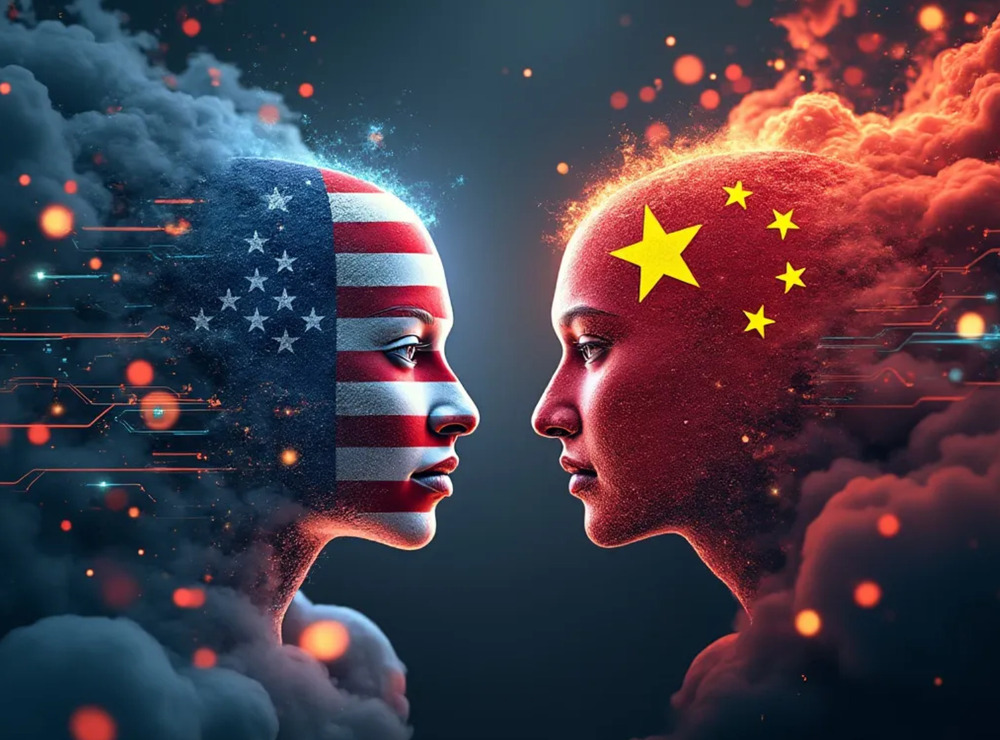
This is precisely why competing with NVIDIA is so difficult. It is not enough to produce a chip with higher FLOPS. One must reproduce the entire ecosystem layer and do so in a way that convinces developers to change their established habits. This is a problem that even Intel and AMD have been working on for years, with mixed success.
Read also: How Chinese Companies Circumvent the US Ban on AI Chips
Sanctions as an accelerator of evolution
A timeline of pressure
In 2022, the Biden administration introduced restrictions on NVIDIA chip exports to China. The official rationale was to prevent the use of advanced technologies for military applications. The practical consequence was the effective cutoff of China from the most powerful AI accelerators on the market.
NVIDIA attempted to adapt by releasing modified versions of its chips for the Chinese market, such as the A800 and H800. However, in 2023 these variants were also restricted. This led to the H20, another attempt to comply with regulatory constraints while still serving Chinese demand. By 2025, the Trump administration closed this remaining loophole as well.
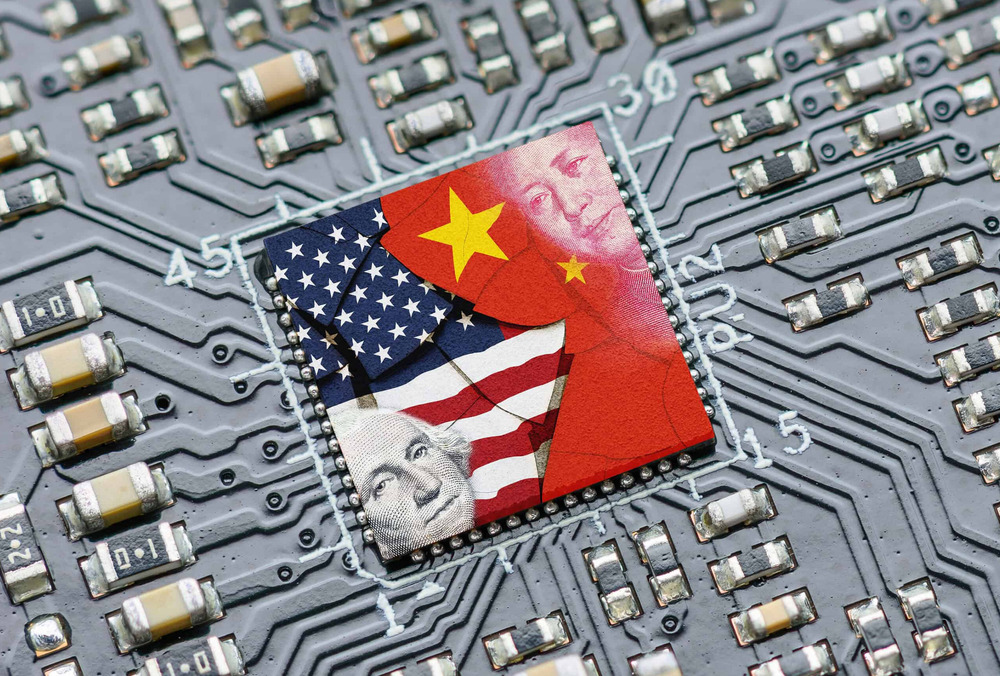
Chinese companies responded to the initial wave of restrictions in a predictable way: they began mass purchasing of permitted chip variants as a form of stockpiling. This bought them time. However, time is not a solution. The solution was – and remains – domestic production.
The trade war paradox
Here lies the central paradox of the entire situation. The sanctions were intended to slow China’s technological development. Instead, they have had the following effect:
First, they removed the temptation for Chinese companies to “buy ready-made solutions.” If NVIDIA had continued selling its most advanced chips without restriction, companies such as Alibaba, Baidu, and Tencent would have rationally kept purchasing them, since this is cheaper and faster than developing in-house alternatives. The restrictions eliminated that option.
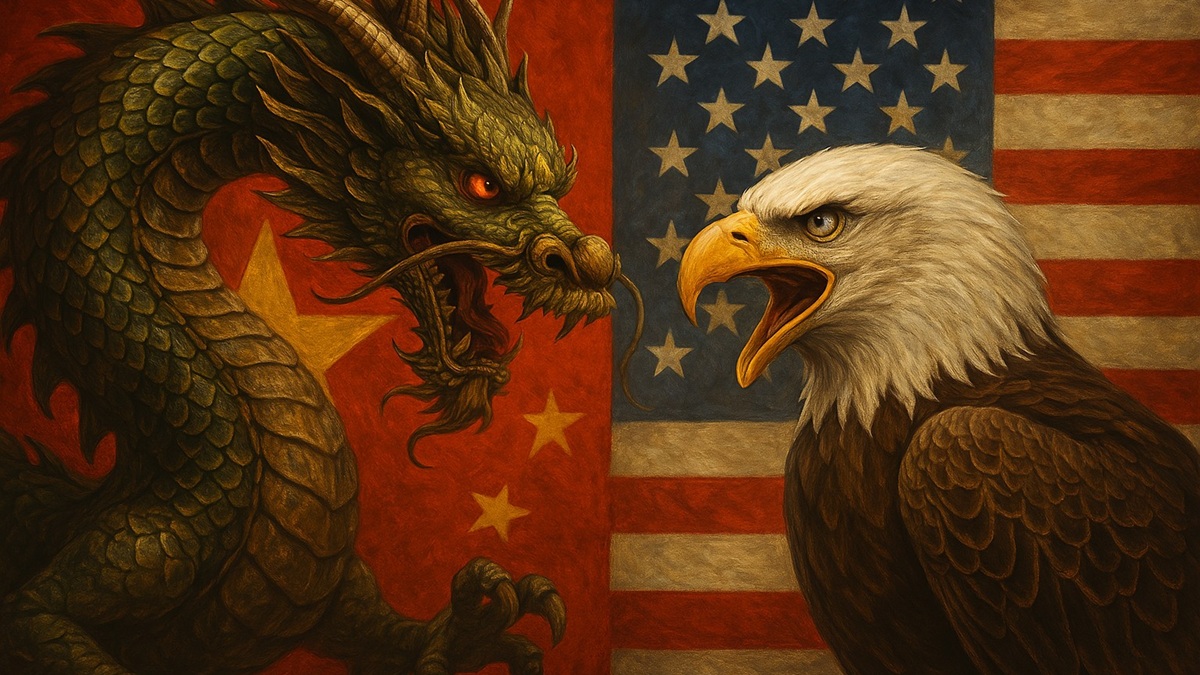
Second, the sanctions transformed “building a domestic chip” from a “maybe someday” task into an urgent requirement. It became something that had to be addressed immediately to avoid falling further behind. This represents a fundamental shift in priorities.
Third, and most importantly, the restrictions made it clear to China’s technology leadership that reliance on American hardware is a strategic risk. It does not matter how advanced a chip is if access to it can be cut off by executive order.
As a result, China did not simply begin producing its own chips. It began building its own technological ecosystem.
Read also: Hantavirus: Virus from a barn that killed people in the middle of the ocean
Zhenwu M890 and the architecture of the future
A chip larger than itself
Alibaba has introduced the Zhenwu M890 accelerator, and it is important to understand why this is not just another “Chinese equivalent” of American hardware.

First, the technical specifications are impressive on their own. Compared to its predecessor, the Zhenwu 810E, the new model delivers a threefold increase in performance. It includes 144 GB of GPU memory, an inter-chip bandwidth of 800 GB/s, and support for formats ranging from FP32 to FP4. These are figures that, only a few years ago, would have seemed unrealistic for a non-U.S. chip.
Second, and more importantly, the Zhenwu M890 is not designed to replicate the functionality of the H100. It is designed for a fundamentally different class of workloads.
From chatbots to agents: a paradigm shift
Most current discussions about AI revolve around language models – large parameter-based systems that respond to prompts. However, the next stage of development is agents: systems that do not simply respond, but act. They write code, execute it, verify results, correct errors, coordinate with other agents, and maintain context over hours or even days.
This represents a fundamentally different type of computation. A chatbot requires microsecond-scale response latency. An agent requires stable, efficient long-running execution with persistent memory access and the ability to coordinate across multiple nodes.

Alibaba has designed the Zhenwu M890 specifically for agent workloads. This is not merely a marketing decision – it reflects an architectural choice. Rather than competing directly with NVIDIA in its established domain (the de facto standard for training large models), Alibaba is targeting a less saturated area: infrastructure for agent-based AI.
Panjiu AL128: when 128 is not a number, but an architecture
Alongside the Zhenwu M890, Alibaba also introduced the Panjiu AL128 server supernode – a platform integrating 128 accelerators within a single rack. The internal system bandwidth reaches petabyte-scale throughput per second. This is not a standalone server. It is, in effect, a data center condensed into a single unit.

This approach – concentrating computing power into a single node rather than distributing it across thousands of conventional servers – can significantly reduce latency and improve efficiency for agent-based workloads. When an agent needs to pass context between submodules or retrieve cached intermediate results, waiting time becomes a critical factor.
Read also: Notepad++ for Mac Controversy: Detailed Breakdown of Conflict
The Ecosystem vs. the Hardware
The problem Alibaba understands
The biggest mistake in analyzing this announcement is to view it as “a Chinese GPU.” Alibaba clearly appears to understand what NVIDIA’s real advantage is, and is responding not at the hardware level, but at the systems level.
That is why, alongside the chip, it announced its own ICN Switch 1.0 interconnect protocol with 25.6 Tbps bandwidth, the T-Head SAIL software stack, the Bailian (Model Studio) platform for cloud access, and a fully integrated “all-in-one” service offering.

The logic is straightforward: if your main competitor has won through an ecosystem, then you need your own ecosystem. Not just a chip, but a full stack – from hardware to cloud – where the customer simply consumes compute resources without needing to worry about what is happening “under the hood.”
The “cloud without branding” strategy
This is an important strategic point. Alibaba is not trying to position the Zhenwu M890 as “better than NVIDIA’s H100.” Instead, it is aiming to sell compute as a service through the Bailian platform, where the question of which chip is used internally is not relevant to the customer.
This resembles how AWS sells compute rather than Intel servers. AWS customers do not ask which specific Xeon processors are installed in a rack, because they consume computing as a service. Alibaba’s goal is to replicate this model for the Chinese market, using its own hardware under the hood.
Read also: John Ternus: The Engineer Apple Has Been Waiting For for Quarter Century
The Geopolitics of Silicon
What is actually happening
Behind all of this lies a question far deeper than the business competition between Alibaba and NVIDIA. It is about who will control the infrastructure of the next technological era.
AI is not a product. It is infrastructure, comparable to electrical grids or the internet. The state or corporation that controls AI infrastructure gains significant leverage over who can use it and under what conditions.

At present, this infrastructure is largely American – through NVIDIA, AWS, Microsoft Azure, and Google Cloud. China is attempting to build an alternative. The primary goal is not necessarily global competition (although that may become a consequence in the future), but rather to reduce exposure to external control over its own technological development.
Three layers of technological sovereignty
What Alibaba is building can be understood as a three-layer strategy for technological sovereignty.
The first layer is hardware: in-house chips, servers, and networking solutions. The Zhenwu M890 and Panjiu AL128 belong to this layer.

The second layer is software: a full stack ranging from microcode to the cloud platform. T-Head SAIL and Bailian represent an attempt to build an alternative to CUDA and AWS.
The third layer is the model layer: proprietary large language models trained on domestic infrastructure, without reliance on U.S. suppliers. Alibaba already has Qwen – one of the strongest open models available today. The next step is to train and deploy these models on its own hardware.
Together, these three layers form what could be described as an “AI bloodstream” – a closed ecosystem capable of operating independently of American technology.
$56 billion: when the numbers speak for themselves
Alibaba has announced investments of over 380 billion yuan (approximately $56 billion) in cloud and AI infrastructure over three years. This is not an experiment or a pilot project. It is a strategic commitment.
For context, the annual science and technology budgets of some mid-sized European countries are lower than this figure. Alibaba is investing more in technological independence than many states allocate to their entire technology development programs.
Read also: Quantum Networks as Alternative to Classical Internet: What to Expect
Real competition and real constraints
What the Zhenwu M890 cannot yet do
It would be inaccurate to portray Alibaba’s progress in overly optimistic terms. There are real limitations, and they are important to acknowledge.
The software gap between T-Head SAIL and CUDA is significant. This is not because SAIL is inherently weak, but because CUDA represents two decades of sustained investment, millions of lines of highly optimized code, and an entire generation of researchers trained to think in CUDA-native paradigms. Closing such a gap in three years is an extremely difficult task.

In addition, there is the manufacturing base. The most advanced chips require state-of-the-art fabs – such as TSMC’s 3 nm or 2 nm process technologies. Due to sanctions, China currently has limited access to the most advanced process nodes. SMIC, the country’s leading chip manufacturer, still lags several generations behind TSMC.
Finally, there is validation. Specifications are one thing; real-world performance on complex workloads is another. Until the Zhenwu M890 is tested on actual agent-based workloads and benchmarked against competing solutions, any comparison remains closer to marketing than engineering.
What the Zhenwu M890 already achieves
At the same time, even from a skeptical perspective, several points need to be acknowledged.
The fact that a Chinese company is capable of designing an accelerator with these specifications at all is already a meaningful achievement. Three years ago, many analysts estimated that China was lagging by five to ten years. That gap appears to be narrowing. This is not because the United States has stalled, but because China has genuinely accelerated its development efforts.

In addition, there is already an existing market for the Zhenwu M890. Chinese companies, cut off from NVIDIA’s most advanced products, are likely to adopt a domestic alternative from Alibaba even if it falls short of the H100 in certain respects. For them, the alternative is either having no access at all or relying on costly indirect procurement routes through third countries.
Read also: DLSS 4.5: Why This Technology Changes the Approach to Path Tracing
The broader picture
Not just Alibaba
It is important to recognize that Alibaba is only one player in a much larger landscape. Huawei is developing its own AI accelerators under the Ascend series. Baidu has its own Kunlun chips. Cambricon, a specialized semiconductor company founded in 2016, has been steadily building out its ecosystem.

China is deliberately building an entire industry rather than relying on a single company. This is fundamentally different from a scenario where only one vendor attempts to compete with NVIDIA. When the state systematically supports dozens of companies developing different parts of the technology stack, a synergy effect emerges. This makes it difficult to disrupt the trajectory through targeted sanctions alone.
The Global South as an arena
There is another dimension that is rarely discussed in this context. For most countries – India, Brazil, Indonesia, Nigeria, and dozens of others – the question of “American or Chinese technology” is not settled. They are not aligned technologically with either Washington or Beijing. They will adopt whatever is cheaper, more accessible, and better.
If Alibaba can offer competitive cloud-based compute at lower prices than AWS or Azure, a significant portion of the Global South could shift toward Chinese AI infrastructure. The implications of such a shift extend far beyond standard business competition.
Read also: Project Silica Explained: A Look at “Digital Immortality”
An iron curtain that didn’t hold?
There is something symbolic about Alibaba introducing its AI accelerator at this moment. It is a response expressed not in words, but in transistors.
The logic behind the 2022–2025 sanctions was straightforward: cut China off from the most advanced hardware, and you cut it off from meaningful competition in AI. This logic has not necessarily failed because the sanctions did not work, but because they worked too well in the short term and too poorly in the long term.
By restricting access to NVIDIA, the United States effectively turned technological sovereignty from an abstract goal into an existential requirement for Chinese firms. When the choice is between “buy American” and “build your own,” large companies with access to state-backed financing and clear strategic direction tend to choose the latter.
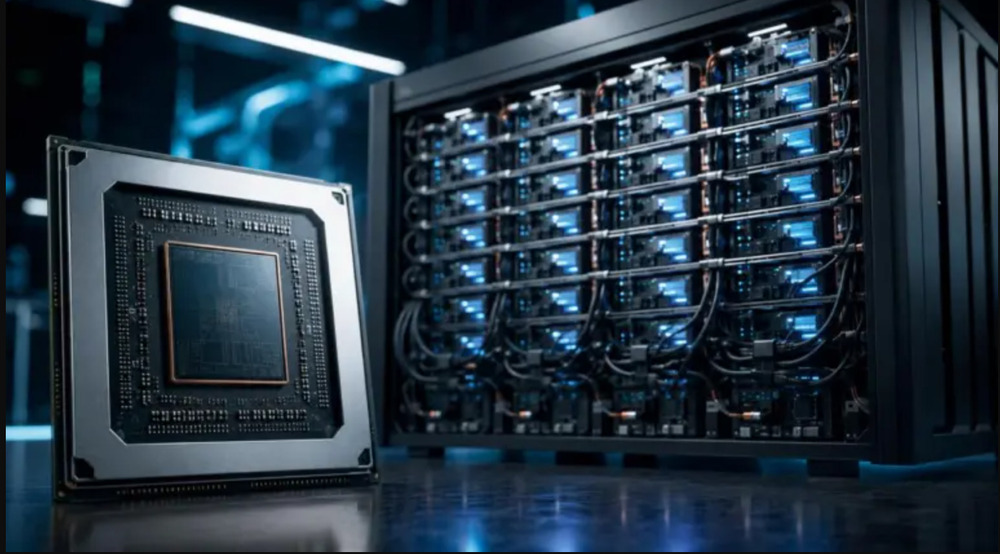

Zhenwu M890 is not yet a victory. It is an early step in a very long marathon. But it signals that the race has genuinely begun, and the gap between participants is narrowing.
For the rest of the world observing this competition from the sidelines, a rare opportunity emerges. Competition between American and Chinese technology ecosystems could mean greater choice, lower prices, and potentially faster progress. In some cases, the most beneficial outcome for users is the erosion of a monopoly.
The question is not whether Zhenwu M890 will “win.” The question is whether Alibaba can build a fully functional alternative ecosystem over the next five to ten years. Based on current investment levels, strategic direction, and development speed, the answer may be more positive than Washington would prefer.
The “iron curtain of microchips” has proven more permeable than its architects anticipated. And this may be one of the most important lessons in today’s technology geopolitics.
Read also:
- Prospects for DDR SDRAM: Future Developments and Key Challenges
- Silicon–Carbon (Si-C) Batteries: An Overview of a New Trend in the Smartphone Market
- Structural Crisis of the DRAM Market and Its Impact on Consumer Electronics

