© ROOT-NATION.com - Use of content is permitted with a backlink.
The Anker soundcore R60i NC is a rare example of mid-range earbuds that not only meet their price expectations but can also deliver a noticeable level of performance for more demanding users.
The launch of the Anker soundcore R60i NC (known in some regions as the soundcore P31i) appears to be a logical step in the evolution of the company’s product line. This is not an attempt to reinvent the category, but rather an effort to maximize what already works – providing more value to the user without obvious compromises.
This review examines whether these headphones genuinely set a new standard for the mid-range segment, and, importantly, where the line lies between a genuinely positive surprise and marketing overstatement.
Read also: Wireless earbuds reviews (TWS)

TABLE OF CONTENTS:
What makes the soundcore R60i NC noteworthy
The TWS headphone market has fully moved beyond its “enthusiast toy” phase and become highly competitive. Features that were once premium – active noise cancellation (ANC), LDAC, Hi-Res Audio, multipoint connectivity – are now standard in the $50–70 range, which is where the segment becomes particularly interesting. In this context, soundcore (Anker) acts as a driver of change, blurring the line between affordability and functionality. These headphones are not merely inexpensive; they reflect deliberate engineering optimization with a comprehensive set of features and some additional benefits.
My experience with soundcore TWS devices confirms that they consistently deliver solid performance for their segment. There are no groundbreaking innovations, but the headphones offer adequate noise cancellation, energetic bass, clear mids, and useful software features.
It is worth noting that the R60i NC exemplifies the new wave of “smart budget” headphones, where the main appeal lies not in individual specifications but in how they perform together.
First, the headphones feature adaptive ANC with a claimed reduction of up to –52 dB. Until recently, such performance was associated only with higher-end models. The system adjusts in real time to the surrounding environment, making ANC not just a specification checkbox, but a practical tool for urban or transit use.
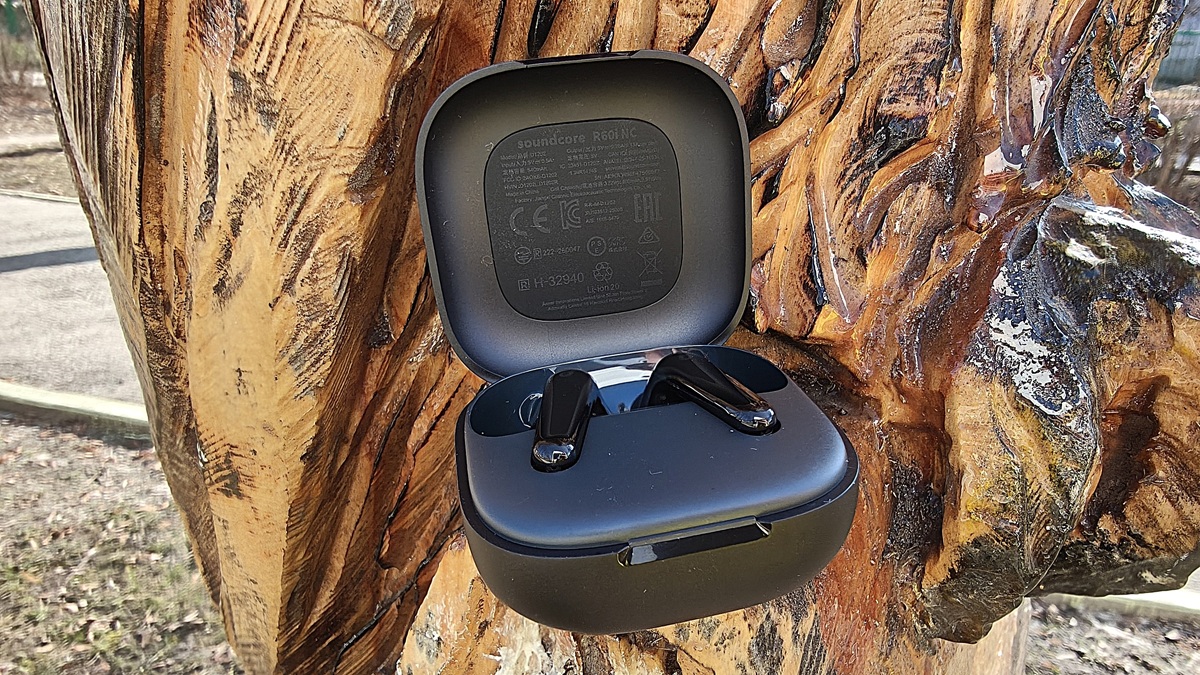

Second, the sound quality is notably strong for this segment. The 11-mm drivers, combined with LDAC and Hi-Res Audio support, provide a more detailed soundstage than typically expected in mid-range TWS headphones. This positions the R60i NC beyond basic wireless earbuds, approaching a semi-audiophile experience. While this assessment may be slightly optimistic, for the average user, the sound of the R60i NC will likely be close to ideal.
Third, battery life is a key strength. The manufacturer claims up to 10 hours of playback on a single charge, and up to 50 hours with the charging case. This effectively addresses concerns about daily or weekly usage. Fast charging further reinforces the device’s practical usability.

Finally, there is an additional layer of functionality: a six-microphone system for calls, a low-latency gaming mode, customization via the companion app, and even AI-based features such as translation. Together, these elements create the impression of a device that aims to be smarter than its price might suggest.
In summary, the soundcore R60i NC stands out not for a single feature, but for a balanced combination of specifications and functions, implemented without obvious compromises.
Read also: Anker Soundcore Liberty 5 Review: Multifunctional TWS Headphones
The Anker soundcore R60i NC are now available on the market, with a recommended retail price of $80. This is where the situation becomes particularly interesting.
Formally, the headphones sit at the lower end of the mid-range segment, but their feature set clearly aims higher – closer to devices that, until recently, were priced significantly above this level. This is the key point: the pricing strategy is not only competitive, but deliberately aggressive.

Considering the ANC, LDAC support, solid battery life, and software features, the soundcore R60i NC clearly fit into the “value for money” category. Stripped of marketing framing, this is a typical example of a manufacturer deliberately lowering the entry barrier to attract users from higher-priced segments.
Soundcore R60i NC Specifications
- Manufacturer: Anker
- Design type: in-ear
- Connection type: wireless
- Active noise cancellation (ANC): yes
- Bluetooth codecs: AAC, LDAC, SBC
- Intended use: True Wireless (TWS), for smartphones, for travel
- Driver type: dynamic
- Acoustic design: closed
- Features: Android compatibility, Apple compatibility, remote control, microphone noise cancellation
- Design features: TWS (True Wireless)
- Fit type: in-ear
- Frequency range, Hz: 20–40,000
- Cable type: wireless
- Additional features: Bluetooth 5.3, LDAC, Multipoint
- Ear tip material: silicone
- Adaptive Active Noise Cancellation (ANC) up to 52 dB
- Support for Hi-Res Audio and LDAC codec
- Powerful 11 mm dynamic drivers with titanium coating
- Gaming mode with ultra-low latency (~50 ms)
- 6 microphones with AI noise cancellation for crystal-clear calls
- Real-time AI translation (over 100 languages)
- Up to 50 hours of battery life with charging case
- Fast charging: 10 minutes = up to 3–3.5 hours of playback
- Headphone battery life: up to 10 hours (ANC off), up to 8 hours (ANC on)
- Total time with case: up to 50 hours (ANC off), up to 40 hours (ANC on)
- Power supply: Li-Ion battery
- IP55 water and dust resistance
- Weight: 4.8 g
- Warranty: 18 months
Read also: Soundcore AeroClip Review: Open-Ear Clip-On Earbuds
Package Contents
The R60i NC come in the brand’s signature box, which has become a recognizable element of soundcore’s presentation. The packaging is practical and well-considered: a minimalist design, quality materials, and no attempts to present a mid-range product as premium through glossy finishes or gold accents.

Inside, the packaging is layered and well-structured. Each component has a designated place, with everything securely fixed and logically arranged.

This is a case where even unboxing feels straightforward and frustration-free: nothing shifts, gets lost, or appears haphazard. It may seem like a minor detail, but these small touches contribute to a positive first impression.

The included accessories are practical rather than surprising, but they do not feel skimped; the package provides a rational minimum that covers basic usage scenarios. Inside the box, you will find the TWS headphones in their charging case, several pairs of silicone ear tips in different sizes, a USB-A to USB-C charging cable, and the accompanying documentation.

There are no extras or “bonuses,” but there are also no critical omissions. This reflects a typical soundcore approach: the focus is on the product itself rather than expanding the package for marketing purposes. Importantly, this restraint makes sense given the price point – the user is essentially paying for functionality and sound quality, not for accessories that often remain unused in the box.
Read also: Anker Soundcore Liberty 4 Pro Review: Flagship TWS Headset with Unique Features
Design, Materials, and Build
The design of the Anker soundcore R60i NC represents an evolution rather than a radical change, moving toward a more restrained and mature aesthetic.

Compared to its predecessor, the model appears cleaner and more cohesive: there is minimal visual clutter, with greater attention given to proportions and ergonomics.

The earbuds themselves have a compact, elongated form factor with a short stem, reminiscent of the soundcore Liberty 5. They do not protrude from the ear and maintain a low-profile, unobtrusive appearance.

The charging case features a matte finish, a practical choice that resists fingerprints and conceals minor scratches. Its rounded shape enhances ergonomics, making the case easy to fit in a pocket and comfortable for daily carry. The lid is a small but telling detail that functions effectively in everyday use.
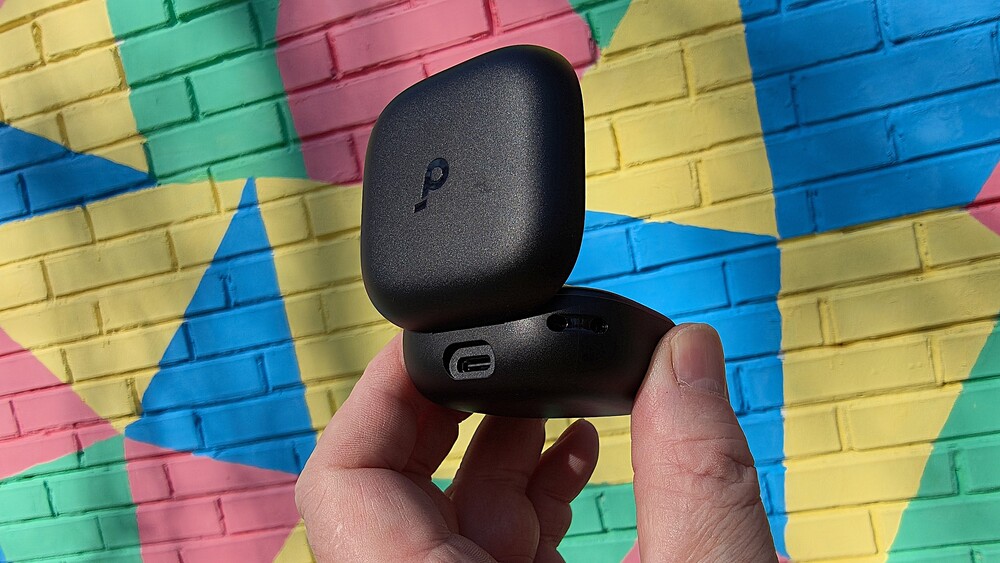
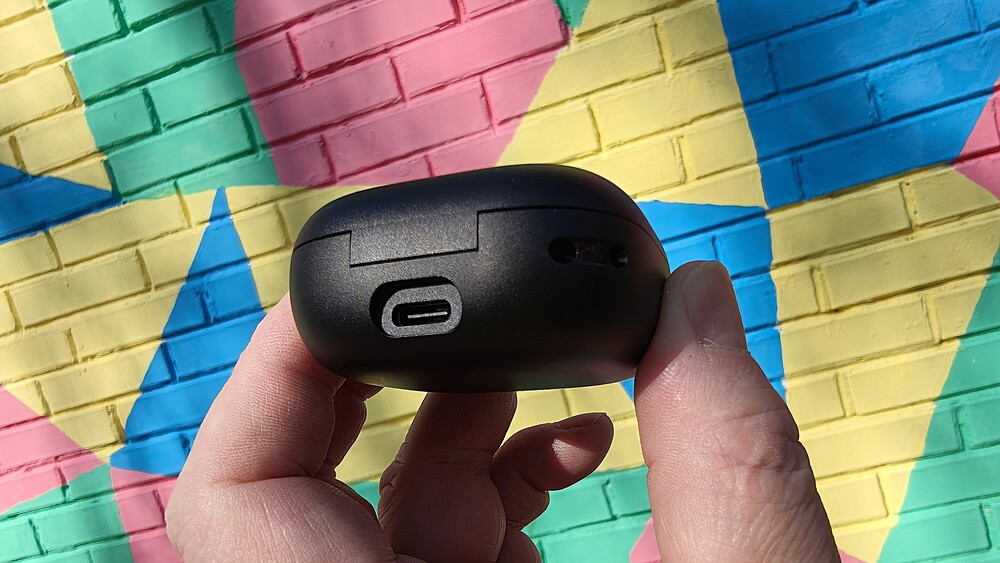
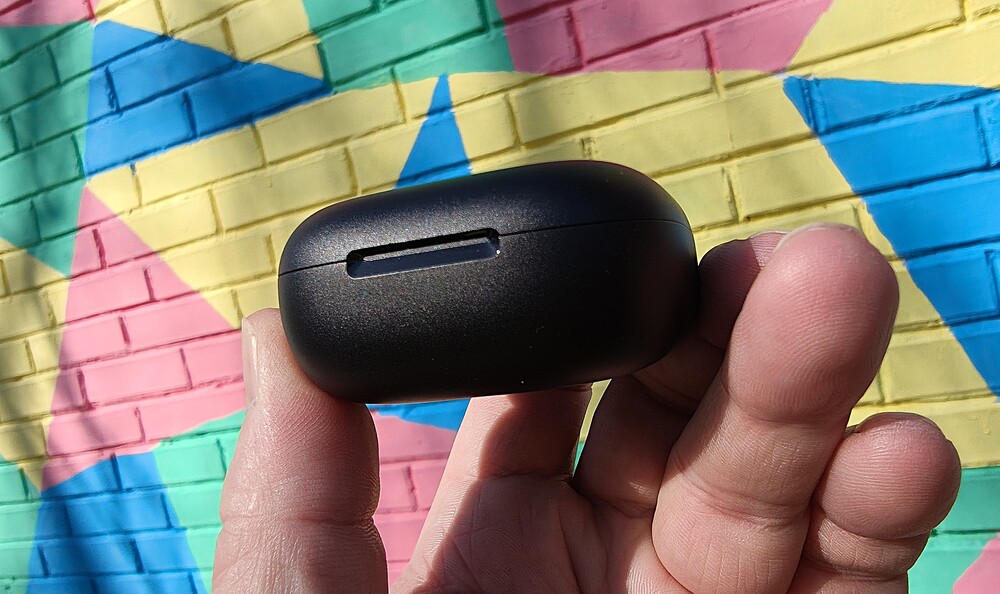
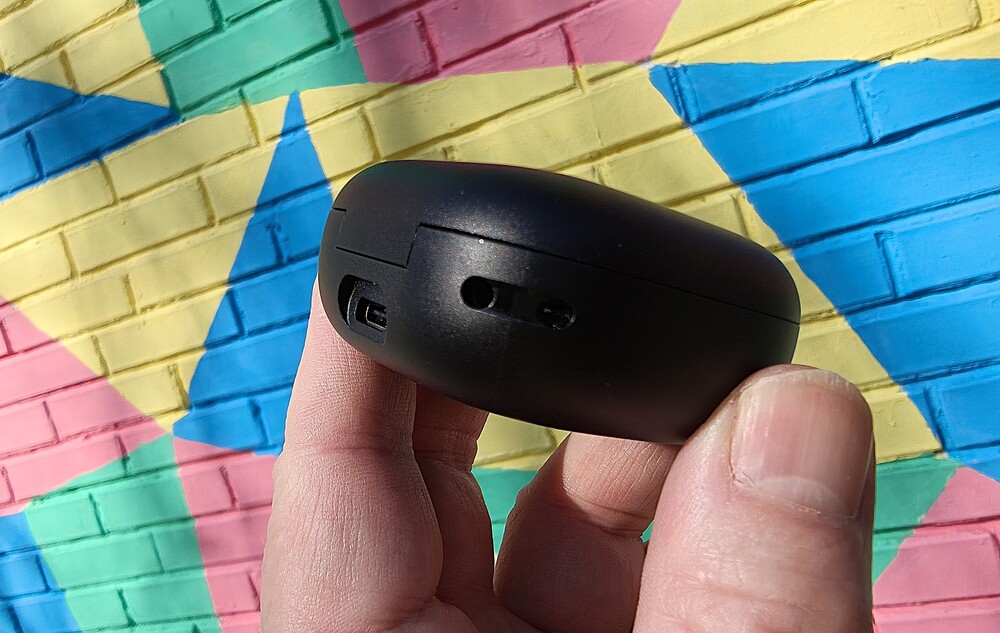
It opens smoothly, with a controlled resistance and a distinct click that indicates precise engineering and fit.

The materials used for the earbuds are purely utilitarian, consisting of plastic without any claim to premium appeal. What matters is that it is a solid, well-built plastic that does not creak, flex, or feel cheap in hand.
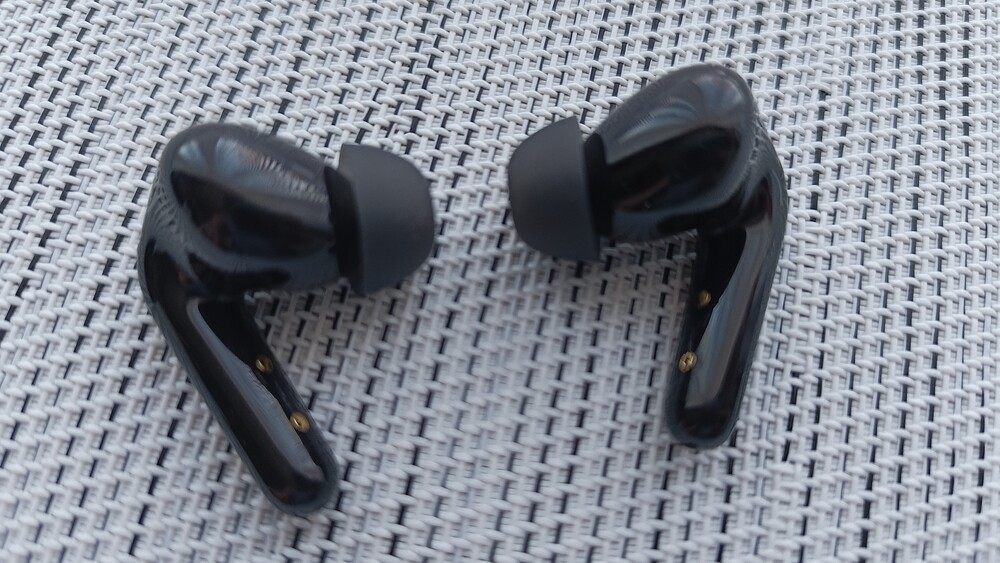
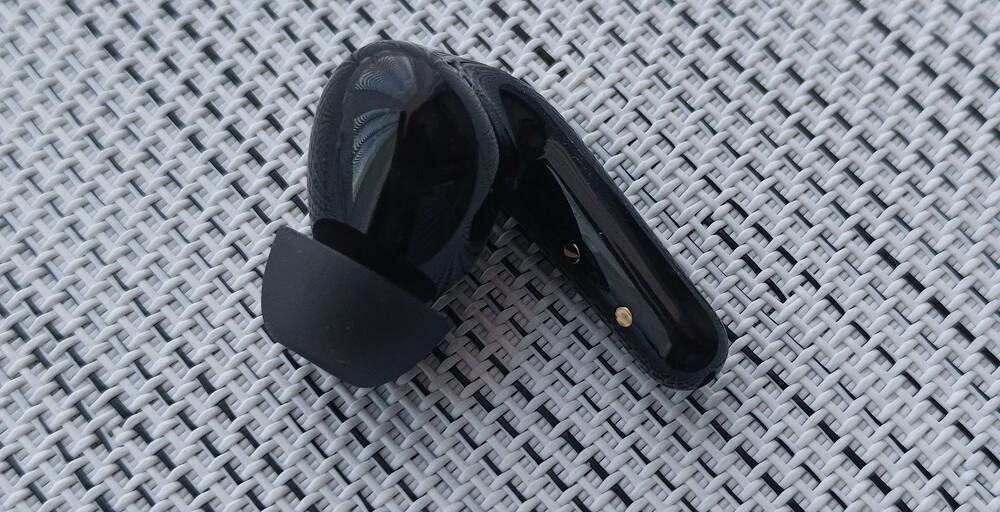
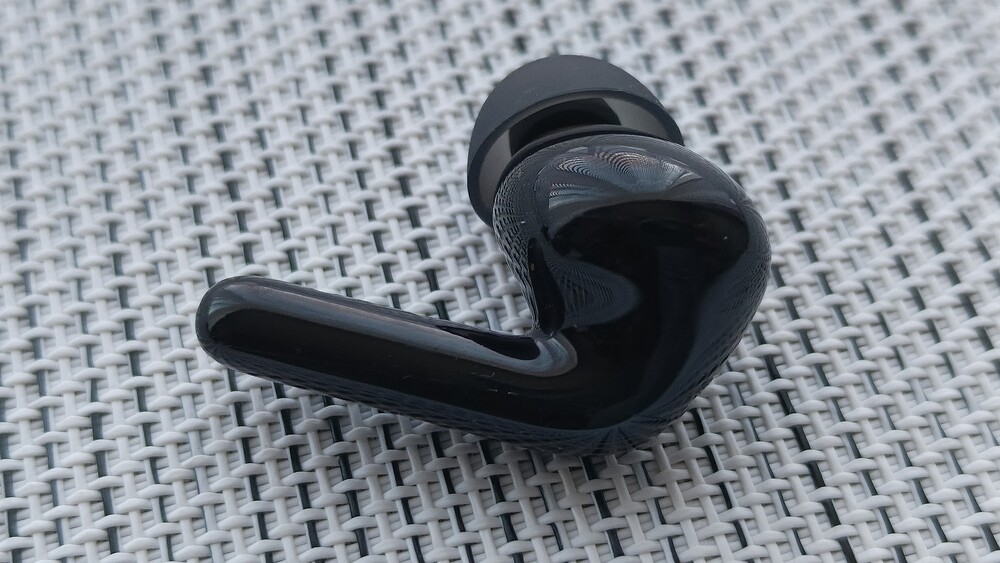
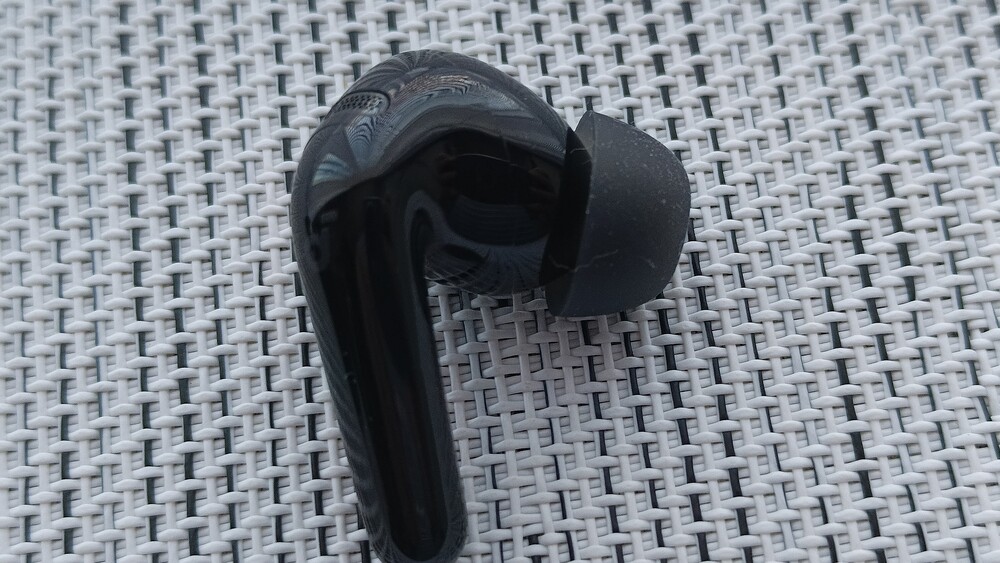
A strong point of the model is its build quality. All components are precisely fitted, with no play, and the case mechanism is well-executed. The earbuds are held securely by strong magnets, preventing them from falling out accidentally, even during sudden movements – a practical advantage for everyday use.
Ergonomics are also well considered. Thanks to the compact design, the earbuds fit naturally in the ear canal and do not cause pressure, even during extended wear.

The silicone ear tips provide a secure fit, which is critical for both passive noise isolation and the effectiveness of ANC and bass reproduction. In practical use – during walks, commuting, or light workouts – the earbuds remain stable in the ear.
An additional advantage is the IP55 rating, offering resistance to sweat and splashes. This makes the headphones suitable for use in the gym or in the rain, reinforcing their design as a device intended for intensive daily use.

It is worth highlighting the updated microphone array design. The six-microphone system with beamforming not only improves voice transmission quality but also indirectly enhances noise cancellation performance, allowing the algorithms to respond more quickly and accurately to the surrounding environment.
The soundcore R60i NC do not attempt to appear more expensive than they are, which is part of their strength. The design is thoughtful and practical, emphasizing comfort, reliability, and everyday usability, with every element serving the user rather than marketing.
Read also:
- Kiwi Ears Aventus Review: Headphones for Gamers and… DJs?
- Logitech G522 Review: A Gaming Headset – and More
Comfort, Controls, and Connectivity
Comfort is one of the key advantages of the Anker soundcore R60i NC. Despite their classic in-ear design, the model proves to be remarkably versatile: the lightweight construction minimizes pressure on the ear, while thoughtful ergonomics ensure a stable fit even during movement. Whether running, walking briskly, or navigating everyday city activity, the earbuds stay securely in place without requiring constant adjustment.

A practical tool for achieving optimal isolation and comfort is the inclusion of six additional pairs of ear tips in the package. This is further supported by the proprietary soundcore app, which features a fit test to quickly determine whether the selected tips provide the correct seal. In real-world use, this not only improves comfort but also enhances the effectiveness of active noise cancellation.

The control system is based on mechanically pressing the stems, a solution that feels more technically refined than typical touch panels. Accidental activations are practically eliminated, and the tactile feedback provides confidence in operation. Users can access four gesture types, from single to long presses. Additional functions, such as quick camera launch or instant microphone muting during calls, emphasize the model’s focus on everyday practicality, not just music playback.
The in-ear sensors also deserve attention: automatic pausing and resuming work correctly and without delay. While a small detail, it quickly becomes a habitual convenience, making the absence of this feature in other headphones feel like a noticeable downgrade.

The connectivity system is built on Bluetooth 5.3, providing a stable connection with low latency. Support for LDAC and Hi-Res Audio certification allows access to higher-quality audio, while integration with Google Fast Pair simplifies initial setup on Android devices. In real-world use, the headphones maintain a reliable signal within the typical 6–9 meter indoor range, with a noticeably greater range outdoors.
Multipoint functionality is implemented without compromise. The ability to connect to multiple devices simultaneously works correctly and, importantly, does not require sacrificing LDAC. This is a key technical detail that remains a weak point even in some higher-end models. Overall, the soundcore R60i NC demonstrate a mature balance between comfort, controls, and connection stability – precisely the level expected from a well-designed mass-market product.
Read also: Logitech G321 Review: Entry-Level Wireless Gaming Headset
soundcore Mobile App
The proprietary soundcore app serves not just as a supplementary tool, but as a full-featured hub for managing the headphones. Available on both Android and iOS, it demonstrates a rare combination for the mass-market segment: stability, responsiveness, and a well-considered UX design without interface clutter.

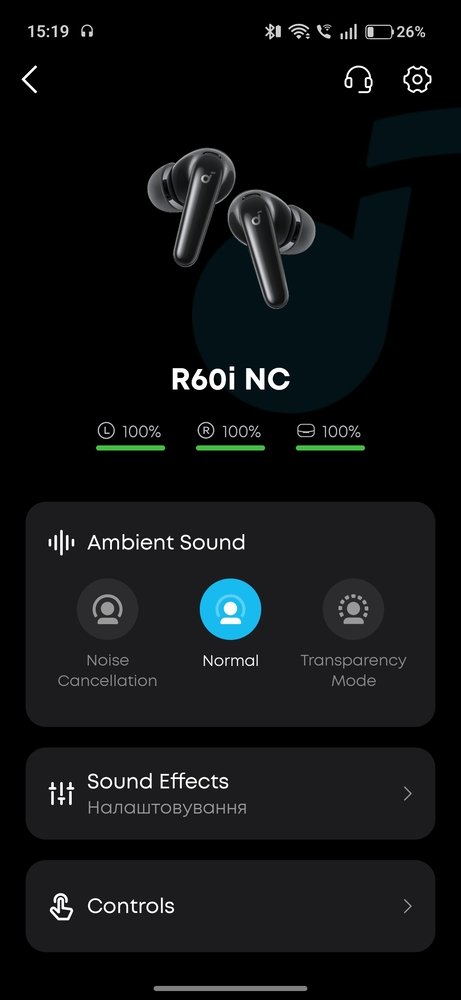
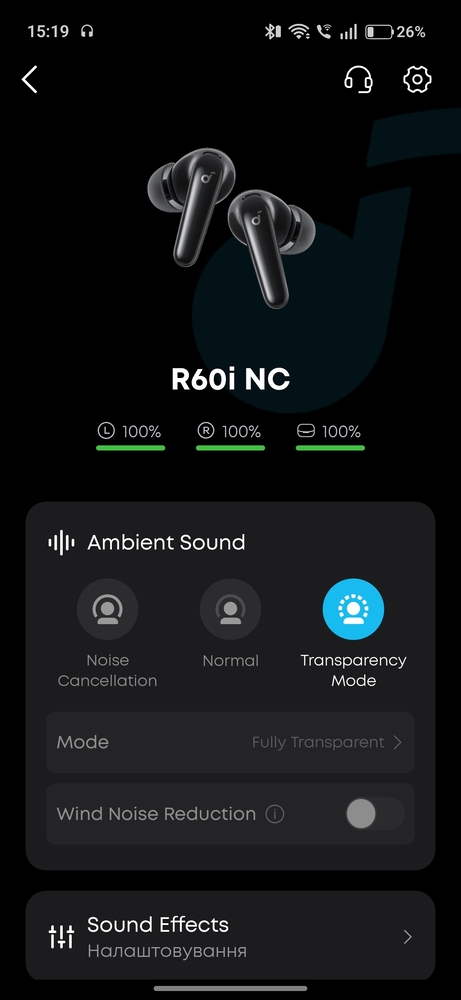
The main screen is designed with a pragmatic approach, giving users immediate access to key functions without unnecessary navigation. From here, it is possible to quickly adjust ambient sound levels, activate “airplane mode” which uses barometric data to optimize noise cancellation, or enable wind noise filtering – an option that noticeably improves performance when using the headphones outdoors.
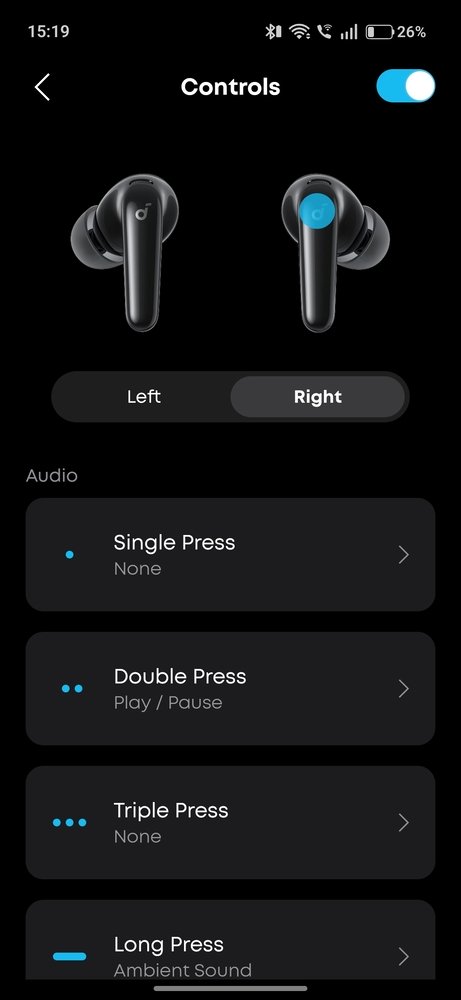
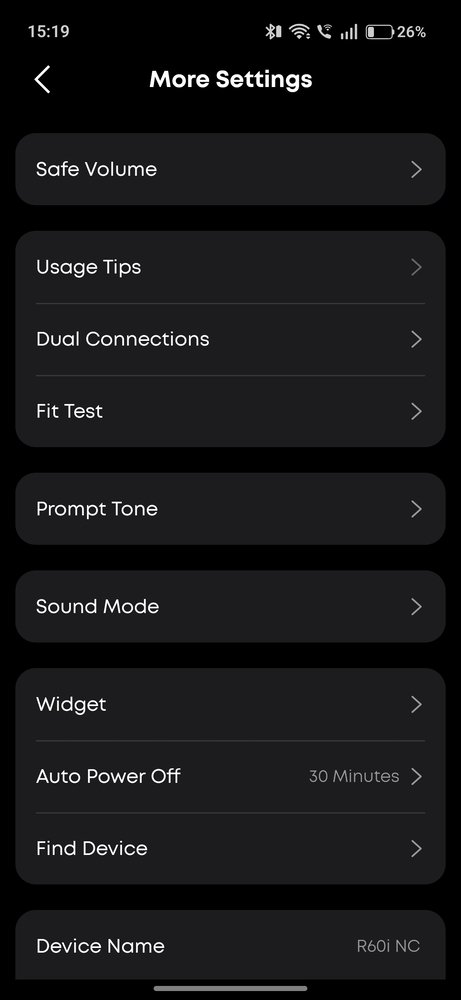
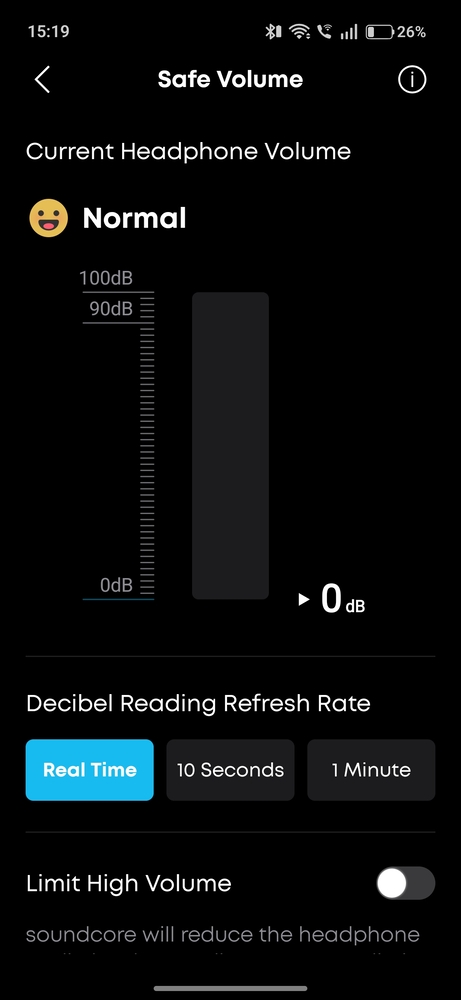
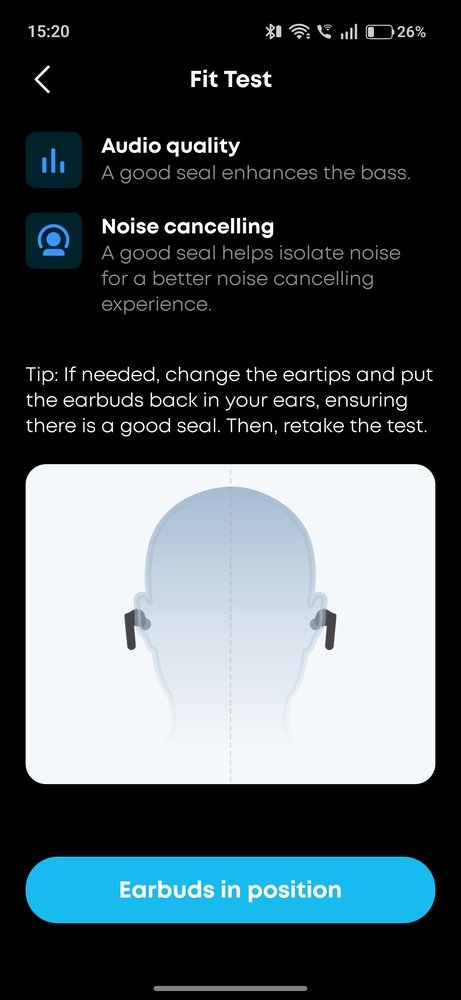
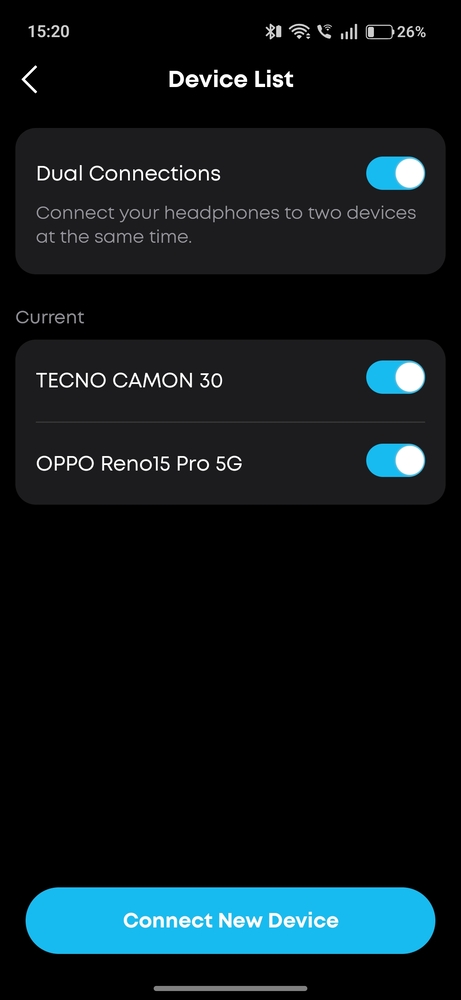

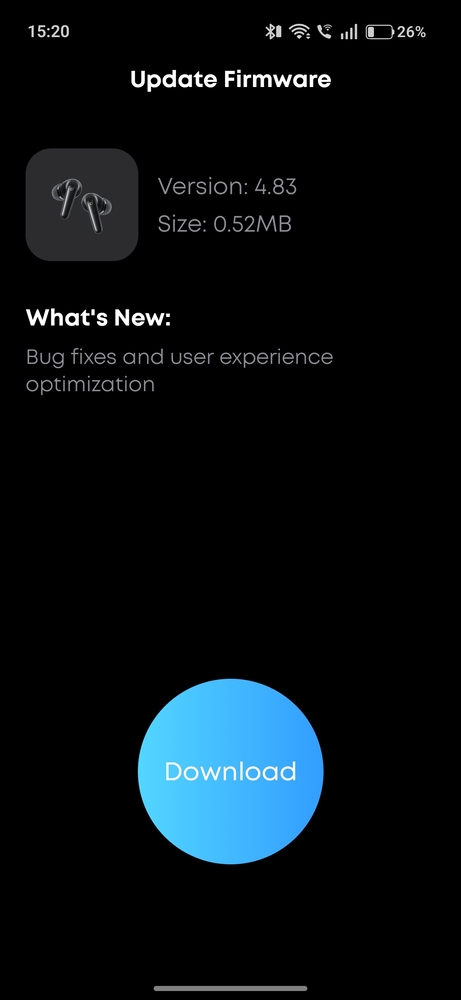
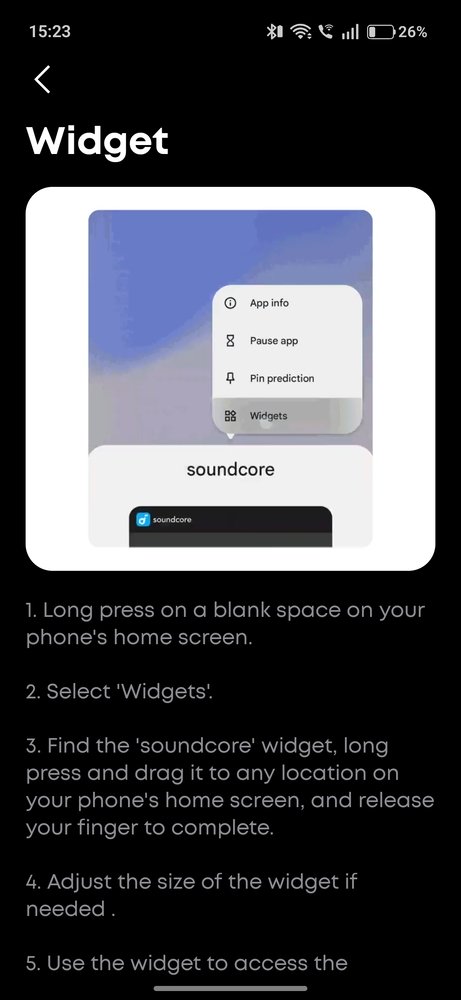
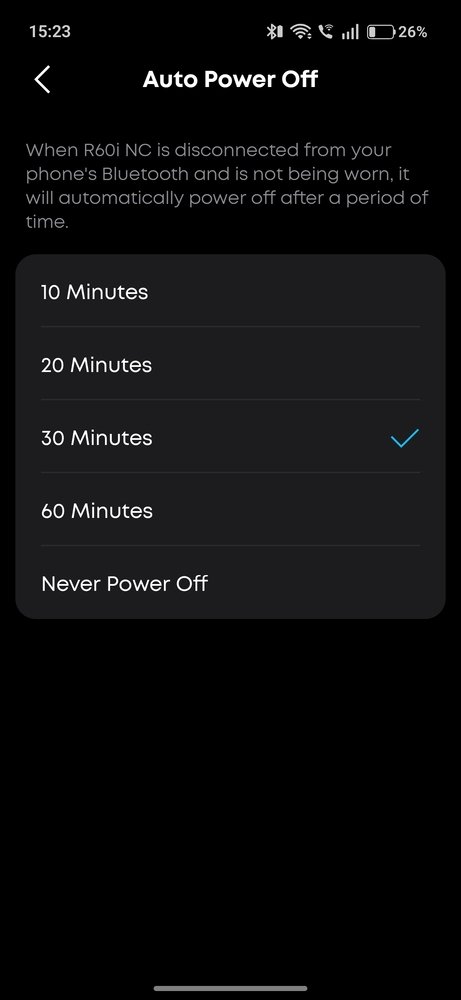


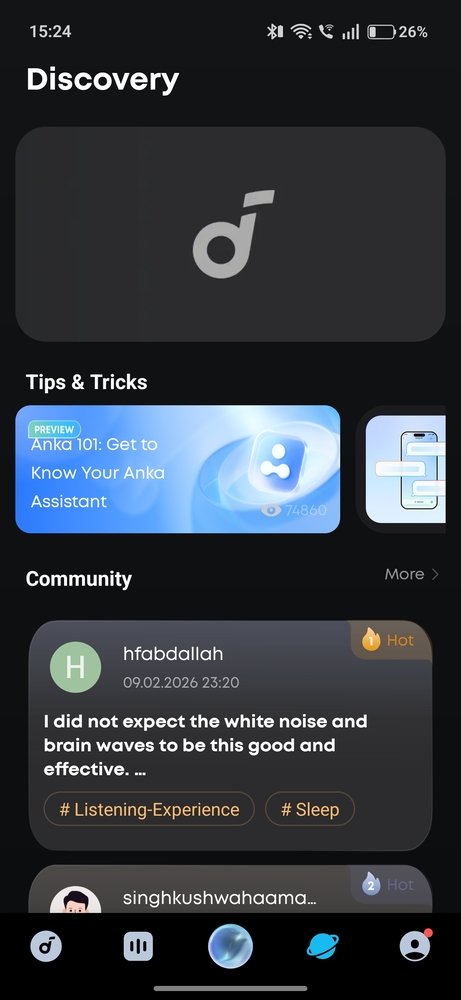
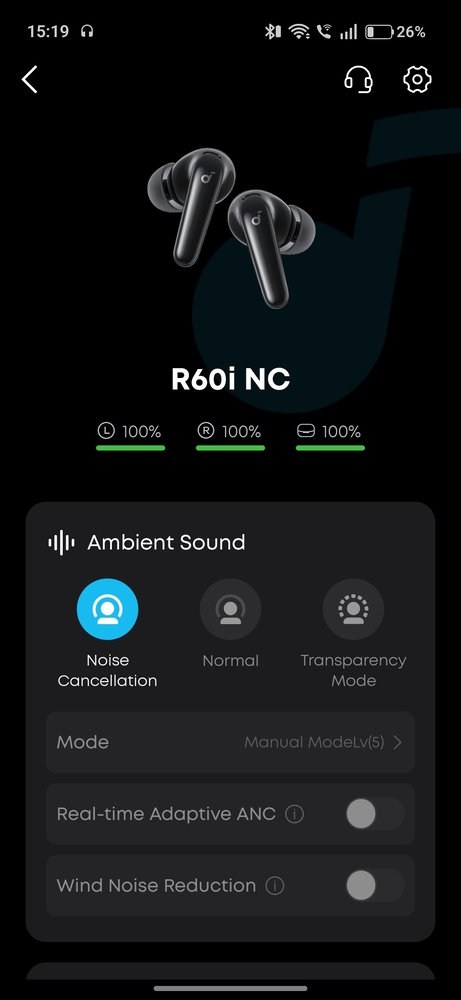
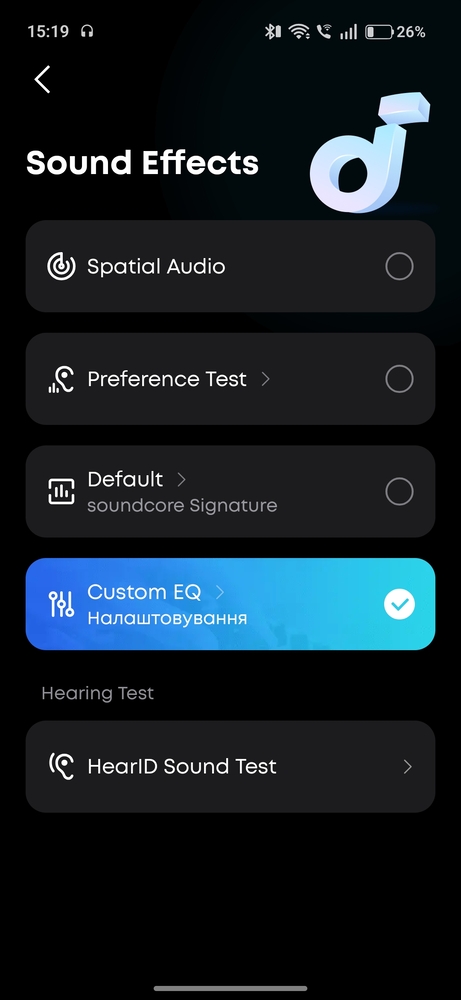
Audio settings are organized in a dedicated section, where the app’s full capabilities become apparent. It supports Spatial Audio (with AAC limitations), offers a set of preset equalizers, allows manual tuning, and, importantly, includes a personalized hearing test. This feature creates an individualized sound profile, providing a practical tool that genuinely adapts audio reproduction to the specific user rather than serving as a marketing gimmick.
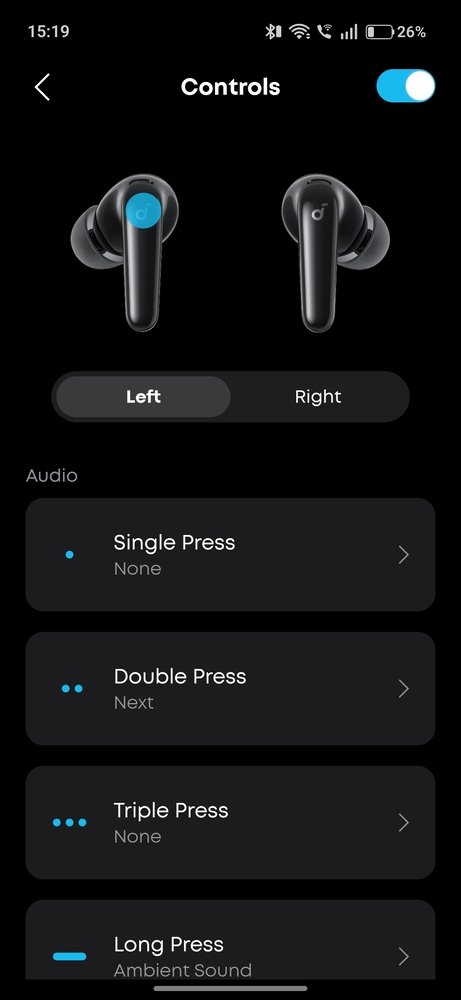
A separate module handles gesture controls. For the soundcore R60i NC, this is particularly relevant, as the mechanical stem system supports multiple types of interaction. Within the app, each gesture – from single tap to long press – can be reassigned in detail, separately for the left and right earbud. This level of customization effectively allows users to tailor controls to their personal usage habits.

An interesting addition is the “Soundscapes” section. This goes beyond traditional white noise, offering curated audio scenarios for focus, relaxation, or sleep. It represents an intersection with wellness-oriented functionality, which is gradually becoming standard in modern TWS solutions.

It is also worth mentioning the integrated Anka voice assistant. Its functionality goes beyond basic commands, offering a real-time translation mode that supports dozens of languages. In practical use, it is not flawless – occasional inaccuracies occur – but the overall meaning of the conversation is conveyed correctly. For an embedded solution within the headphones, this feature demonstrates a technologically ambitious approach.
Read also: Kiwi Ears Quintet Headphones Review: Symphony of Balanced Sound
Connectivity and Ease of Use
The headphones operate on Bluetooth 5.3, providing a stable connection up to 10 meters even in environments with high signal interference. They support LDAC and SBC codecs, offering flexibility in balancing audio quality and connection stability.

Among the key advantages are fast automatic reconnection to familiar devices, minimal latency in standard mode, and a dedicated gaming mode with approximately 50 ms delay. This is virtually unnoticeable for video playback or mobile gaming.
As mentioned earlier regarding the soundcore app, it allows you to adjust ANC, personalize sound through the hearing test, enable gaming mode, manage gestures and headphone behavior, and also provides a flexible equalizer.

In other words, this is not just an accessory, but a comprehensive audio system with extensive user-adaptive features – an aspect that is particularly noteworthy in the mid-range segment.
Read also: Noble Audio FoKus Mystique TWS Earbuds Review: Half a Kingdom for Quality Sound
Sound Quality – the Main Strength
For this model, the manufacturer has clearly prioritized the acoustic component, which becomes evident within the first few seconds of listening. The foundation is an 11-mm dynamic driver with a minimal 0.2 mm magnetic gap and a titanium-coated diaphragm. This configuration provides a stiff yet sensitive membrane, directly contributing to detail resolution and fast response.
The sound profile is dense, rich, and well-controlled. Compared to the previous generation, the bass is not only deeper but also more structured. It has weight and presence without bleeding into or overpowering other frequencies. The low end delivers the characteristic warmth associated with soundcore, but without excessive emphasis. This balance is particularly notable, as it is often difficult to achieve in mid-range models.


A key technological upgrade is the Hi-Res Audio certification combined with LDAC codec support. When connected to a compatible Android device, the headphones switch to a significantly higher audio bitrate, which noticeably changes sound perception. Details often lost on SBC – microdynamics, instrument decay, guitar textures, and natural room reverberation – become audible. The result is a soundstage that feels less “flat” and more three-dimensional.
In terms of tuning, the headphones employ a classic V-shaped frequency response, emphasizing bass and treble while keeping the midrange relatively neutral. This approach delivers a “wow” effect when listening to popular genres, from pop and hip-hop to electronic music. Vocals remain clear and expressive, though they can occasionally recede slightly behind the instrumental layers.
In more delicate genres – acoustic music, jazz, or indie – the bass can occasionally dominate slightly. However, this can be easily adjusted through the soundcore app, which effectively provides a second level of customization. Users have access to a full graphic equalizer for manual frequency adjustments, a quick hearing preference test that creates a personalized profile in under a minute, and a set of preset EQs tailored for different genres.
Read also: Huawei FreeBuds Pro 4 Review: Possibly the Best All-Around TWS Earbuds for Everyday Use
Practical Listening Impressions
Real tracks highlight the strengths of the model:
Talking Heads – Psycho Killer: Guitar riffs are sharp and expressive, drums have an aggressive attack, yet the vocals remain clear and do not get lost in the mix.
Hozier – Who We Are: Even with a rich low-frequency foundation, the voice retains emotional depth and control on peak notes.
Ronan Keating – Brighter Days: The warm tonal character emphasizes the vocal timbre, adding a sense of space and liveliness to the track.
- Erin LeCount – Marble Arch: Subtle performance nuances, intonations, and the track’s atmosphere are conveyed convincingly without losing emotional impact.
Overall, the sound quality positions the R60i NC among the strongest in its price segment. The only potential compromise for more discerning listeners is a slight but noticeable emphasis on bass. This, however, aligns with the brand’s signature tuning, designed with the mass-market listener in mind.
Read also: SoundPEATS Engine4 Review: TWS Earbuds with Good Sound at Affordable Price
Active Noise Cancellation (ANC) and Transparency Mode
Another key advantage is the adaptive noise cancellation, with a claimed effectiveness of up to –52 dB. The system operates dynamically: the algorithm analyzes ambient noise approximately every 0.007 seconds and quickly adjusts the filtering parameters.
In practice, this delivers a convincing reduction of persistent low-frequency noise. For example, the system effectively suppresses sounds from air conditioners or during commutes on public transport, especially in the metro. Background hum from crowds or vehicle engines becomes noticeably less intrusive.

High-frequency sounds, including human speech, are partially audible, but this is typical even for higher-end models. Within its class, the ANC performance is close to the maximum achievable.
The transparency mode is well implemented: ambient sound is conveyed naturally, without noticeable digital artifacts. This allows comfortable conversation or situational awareness outdoors without needing to remove the earbuds.
Read also: SteelSeries Arctis GameBuds: Best Gaming Earbuds of 2024?
Call Quality and AI Features of the soundcore R60i NC
The headphones feature six microphones with beamforming technology and AI-driven Environmental Noise Cancellation (ENC) algorithms. As a result, voice transmission during calls remains clear even in challenging acoustic environments. For video calls and work meetings, they function reliably, allowing the other party to hear you without significant interference.
However, there are two system-level drawbacks:
- Noticeable volume drop during calls – even at maximum levels, the sound can seem somewhat muted.
- Latency when adjusting volume (1–2 seconds), occasionally accompanied by brief glitches where the audio may jump or momentarily cut out.
These issues are not critical but can be noticeable in daily use. Additionally, the headphones support real-time translation for over 100 languages via the app. While this is more of a niche feature, it can be useful for travel or basic communication.
Read also: Oppo Enco Buds 3 TWS Earbuds Review: Comfort, Battery Life, and Sound Quality
Battery Life – One of the Best in Its Class
Battery life has long ceased to be a secondary consideration in TWS headphones, as it is now a key factor in purchasing decisions. In this model, the manufacturer clearly prioritized extended endurance, and the result is impressive, even compared to strong competitors.

The stated battery performance is as follows:
- Up to 10 hours of playback without active noise cancellation (ANC)
- Around 8 hours with ANC enabled
- A total of up to 50 hours with the charging case (or about 40 hours with ANC)
These figures are not merely “marketing claims,” as real-world use comes fairly close. In mixed scenarios (volume ~60%, ANC active, music streaming), the headphones consistently last approximately 7–7.5 hours of continuous playback. This is a strong result, allowing a full workday or a long commute without frequent reliance on the case.

An important aspect is the stability of power discharge. The headphones do not experience sudden drops at the end of the cycle; instead, they deliver charge gradually, without unexpected shutdowns. This creates a sense of predictability, which is critical for everyday use.
Another strong point for the soundcore R60i NC is fast charging. Just 10 minutes in the case provides approximately 3.5 hours of playback – essentially a “top up before heading out and forget it” scenario, which works well in real life. A full charge of the case takes roughly 40–60 minutes, which is faster than the segment average.
It is also worth noting that even when using the power-demanding LDAC codec in combination with ANC, battery life does not drop to critical levels. Playback time is reduced, but remains competitive, representing a well-executed engineering balance between audio quality and endurance.
Read also: JBL Tune 245 NC Review: TWS Headphones with Deep Bass
Summary
The Anker soundcore R60i NC represents a fairly ambitious offering in the budget segment. For its price, the headphones provide an impressive set of features: LDAC, Hi-Res Audio, ANC up to –52 dB, and up to 50 hours of total battery life. The sound is detailed, the bass is powerful, and overall comfort is high.

However, issues with call volume, occasional connection instability, and the volume adjustment bug are real drawbacks that cannot be ignored. If these factors are not critical for you, the soundcore R60i NC represents one of the most compelling purchases in its segment. If calls are an important part of your daily routine, it may be worth considering alternatives.

If you are looking for headphones for daily use – commuting, office work, sports, gaming, or music – or if you are a student or someone seeking premium features without overpaying, the Anker soundcore R60i NC is a clear choice. They are not perfect, but for the price, they deliver more than most competitors. Personally, I would confidently recommend them to anyone willing to accept minor compromises in call performance in exchange for strong ANC, powerful bass, and long battery life. If your budget allows, they are worth purchasing.
Advantages
- The most powerful ANC in the under-$80 segment (up to -52 dB)
- Excellent sound quality with Hi-Res and LDAC
- Powerful bass + flexible equaliser
- Comfortable fit and IP55 protection
- 50-hour battery life + fast charging
- Smart AI features and 50 ms gaming mode
- Value for money – simply out of this world.
Drawbacks
- Boosted bass (may not appeal to those who prefer a neutral sound)
- Issues with volume and the microphone during calls
- A slight delay when adjusting the volume
Read also:
- Everything You Need to Know Before Installing Solar Panels: A Look Into the World of Energy Generation and Storage Systems
- “The Drone Drops a Grenade” – or How the Pentagon Was Embarrassed
- Introducing the XGIMI Brand: How to Choose a Projector