





© ROOT-NATION.com - Use of content is permitted with a backlink.
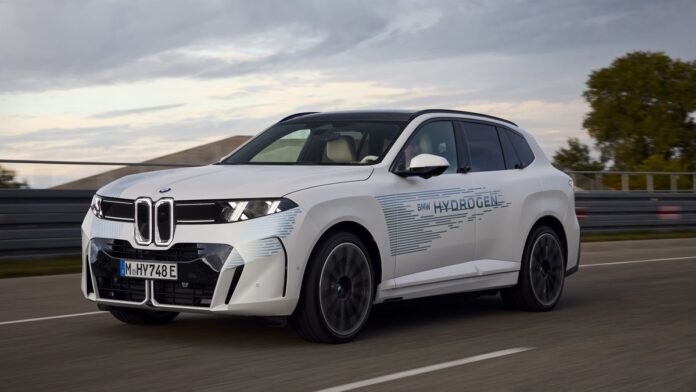
The new BMW iX5 Hydrogen has entered a new phase of development on the path to series production: the current prototypes are already undergoing a comprehensive testing program. At the same time, preparations are underway at the engine plant in Steyr, Austria, for the future series production of the hydrogen fuel cell system.
The BMW Group is systematically developing its first series-production hydrogen fuel cell vehicle. The primary focus is on further testing the entire system, preparing for industrialization, and integrating fuel cell technology into a vehicle concept that delivers the dynamic driving experience characteristic of BMW.

“Our ambition for the BMW iX5 Hydrogen is clear: a true BMW – with Sheer Driving Pleasure. A perfectly coordinated overall system is crucial for this. Current testing demonstrates how the fuel cell system, high-voltage battery and electric drive train are already successfully integrated and how systematically we are developing the technology towards series production,” says Josef Hochreiter, head of Hydrogen Vehicles at the BMW Group.
Read also: Car Reviews

The current tests focus on verifying the operation of the entire system under challenging environmental and operating conditions. Development teams are testing the functionality of all components of the integrated vehicle system and optimizing the complex control of the systems even under high loads.
Read also: From Netherlands to Spain: Demanding Real-World Test of BMW iX2 eDrive20
Current tests confirm the interaction between the fuel cell system, the electric motor, the high-voltage battery, BMW Hydrogen Flat Storage, and Energy Master. The developers aim to deliver dynamic performance on par with the iX5, specifically targeting acceleration from 0 to 100 km/h in less than five seconds.

In parallel with vehicle testing at the Hydrogen Competence Center in Munich, the next phase of assembling third-generation fuel cell system prototypes is beginning. The main focus is on finalizing and validating the testing methodology, as well as continuing preparations for industrialization.
Read also: Škoda Enyaq 85 (2026) Review: A Family Electric Crossover Focused on Practicality
The previous phase of prototype assembly focused on the manufacturability of components and the basic qualification of suppliers. The next stages of the process are intended to create the necessary conditions for reliable and efficient manufacturing processes. In the future, series production of fuel cell systems will take place at the plant in Steyr.

With the start of this new assembly phase, the project has entered another important stage of development. To this end, the first test benches and production equipment have already been installed at the BMW Group plant in Steyr, and employees are undergoing training in phases.
Read also: The Most Efficient Electric Car in Audi’s History: The Compact A2 e-tron Unveiled
With the BMW iX5 Hydrogen, the automaker continues to adhere to a technology-neutral approach. Hydrogen can complement battery-electric vehicles in situations where a long range, short refueling times, and high versatility are required. The claimed range is up to 750 km (WLTP), and refueling will take less than five minutes.

Read also: Europe’s Cheapest Electric Car: Renault Is Radically Changing the Fate of the Dacia Spring