
© ROOT-NATION.com - Use of content is permitted with a backlink.
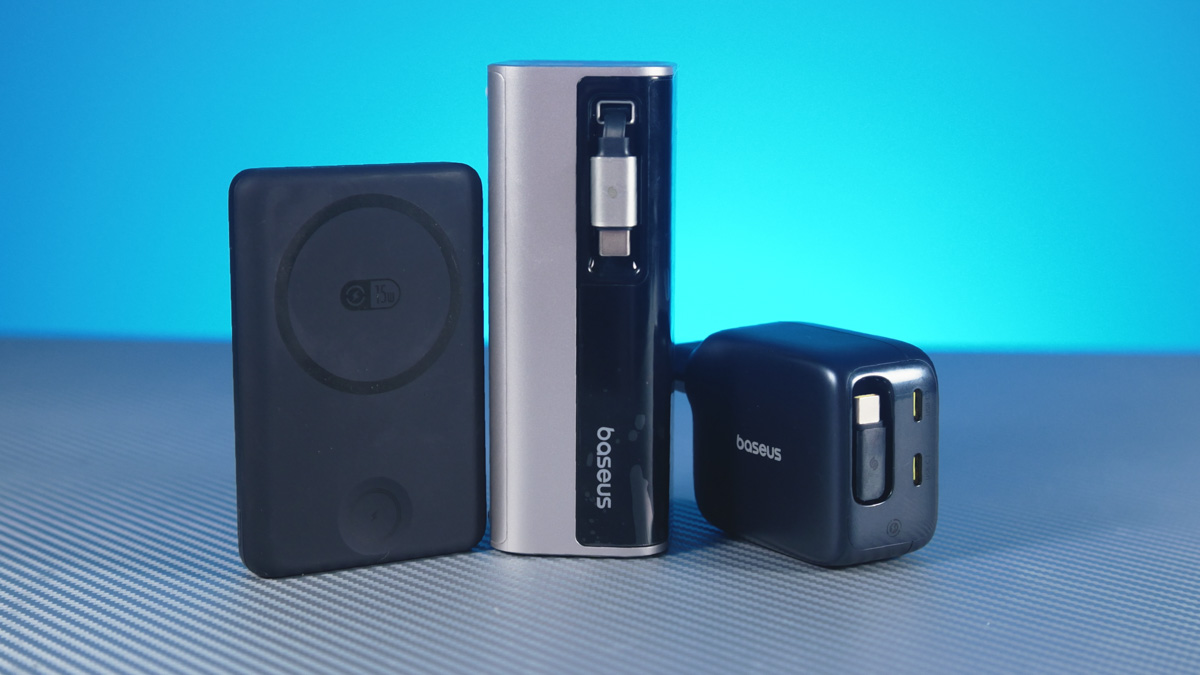
I’d argue that Ukraine is among the more advanced countries when it comes to energy independence – partly for obvious reasons. And it’s not just about solar panels or power stations. Even everyday items like power banks are highly valued here, as are powerful fast chargers. That’s why I tend to welcome news about new models with some enthusiasm. A recent example is the latest lineup from Baseus: the Baseus EnerGeek GR11, Baseus EnerFill FT11 and Baseus EnerCore CJ11.
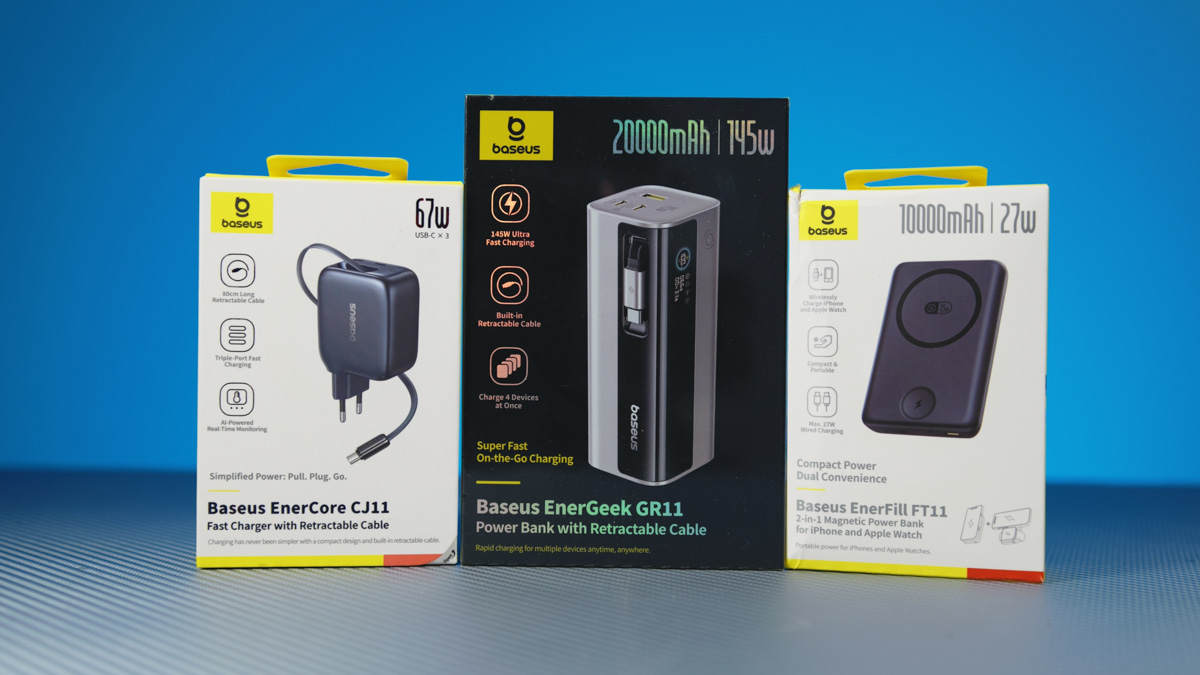
These are models I’ve already featured in a few of my reviews, using them to power both monitors and laptops. I’m glad to cover them in more detail here, since they’re not only practical but also quite interesting devices.
Read also: Inside Motorola Solutions: How Trust and Security Are Built
TABLE OF CONTENTS:
Video about Baseus EnerGeek GR11, EnerFill FT11 and EnerCore CJ11
Don’t want to read the text? Watch the video!
Read also: How Chinese Companies Circumvent the US Ban on AI Chips
Baseus EnerFill FT11
Let’s start with the least powerful, yet still useful device – the Baseus EnerFill FT11. This is a 10,000 mAh (36 Wh) wireless power bank. It comes in four colors – black, white, pink, and blue – and is priced at $36.
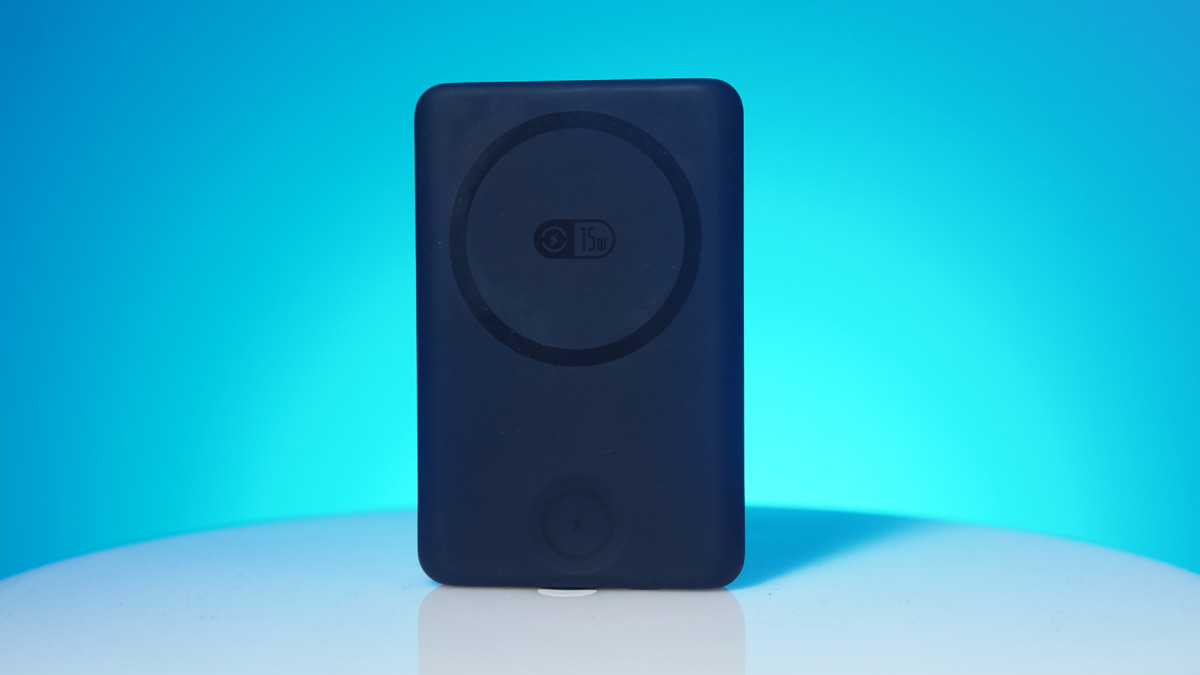
What makes it stand out? First, its compact size – 105×69×18 mm – and weight of under 200 g. It also includes a magnetic ring and supports 15 W wireless charging for smartphones, making it a power bank you can easily carry attached directly to your device.
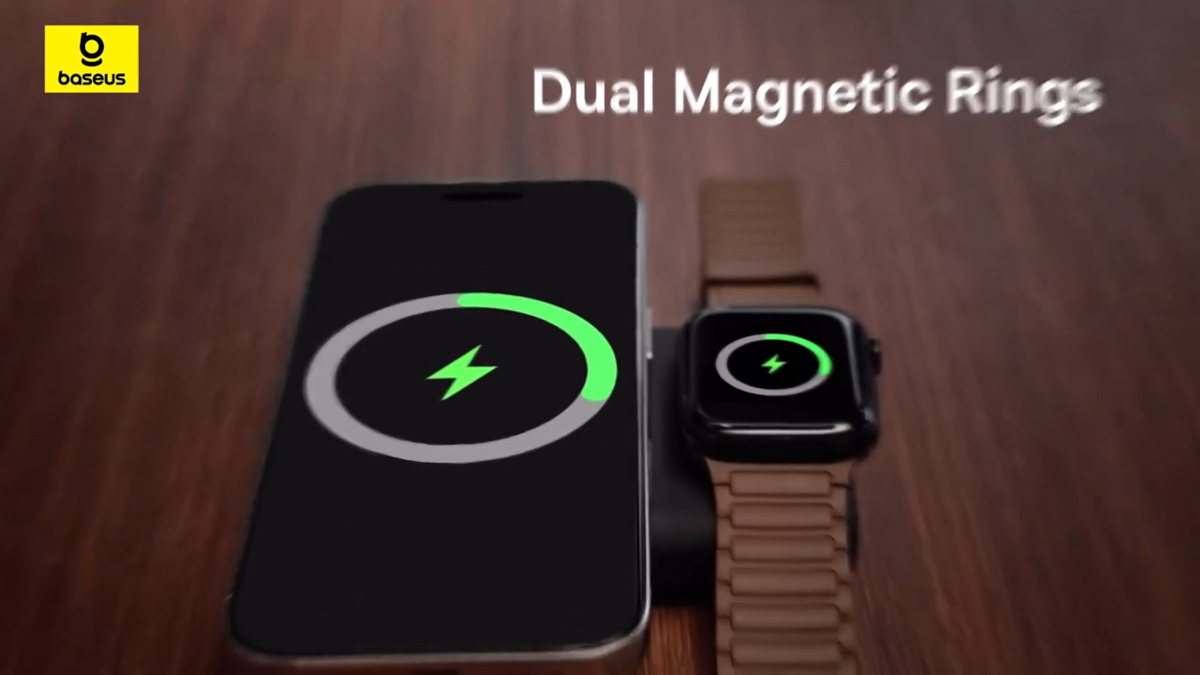
Add to that 27 W wired charging, plus a second wireless port designed for an Apple Watch or other smartwatch, and you get a very handy option for travel or simply keeping in your pocket as a backup. The manufacturer doesn’t officially mention pass-through charging, but in my testing, it worked: the smartphone charged wirelessly while the power bank itself was plugged in, and the process was fast.
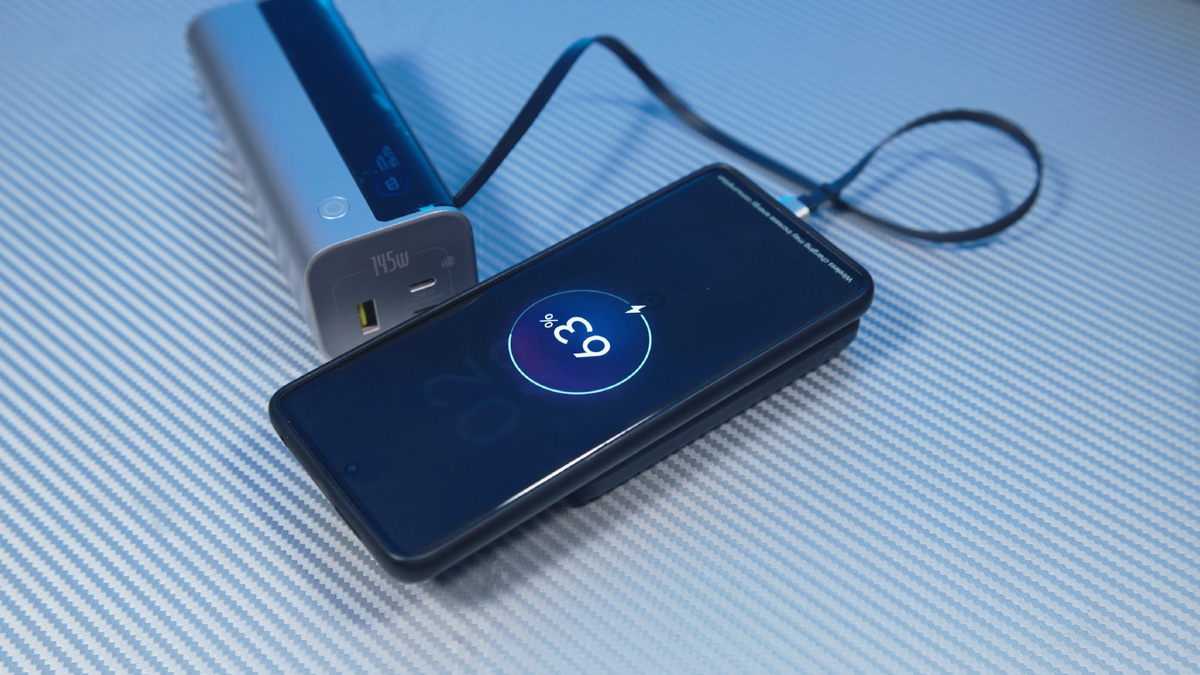
According to the manufacturer, the Baseus EnerFill FT11 is also well protected against overheating. It uses graphene as a thermal plate and aerogel as an insulator to help manage heat more effectively.
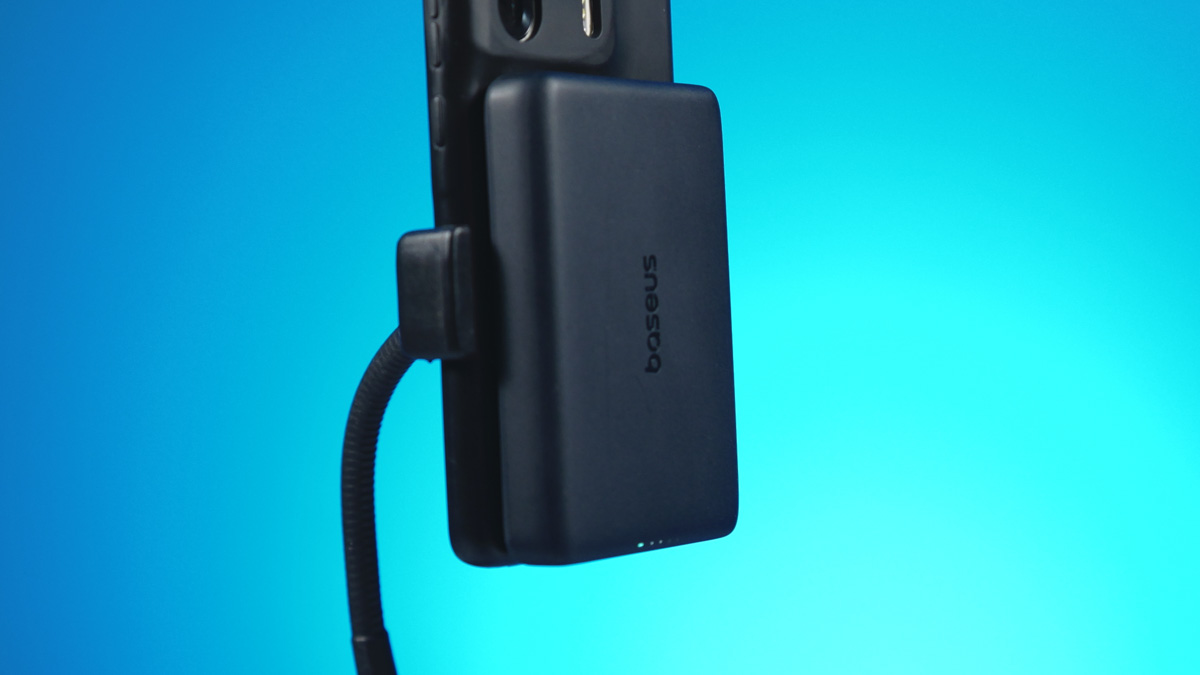
An AI-powered chip monitors the internal temperature 18,000 times per hour. The only minor drawback I’d note is the lack of a fold-out stand, though that’s not a major issue.
Baseus EnerCore CJ11
Next up is the EnerCore CJ11 charger – a well-designed dual USB-C power adapter with an 80 cm retractable Type-C cable. The cable is flat, magnetically attaches to the body so it stays flush, and can lock at various lengths. Pull it slightly for just over a second without letting go, and it automatically retracts back into the charger.
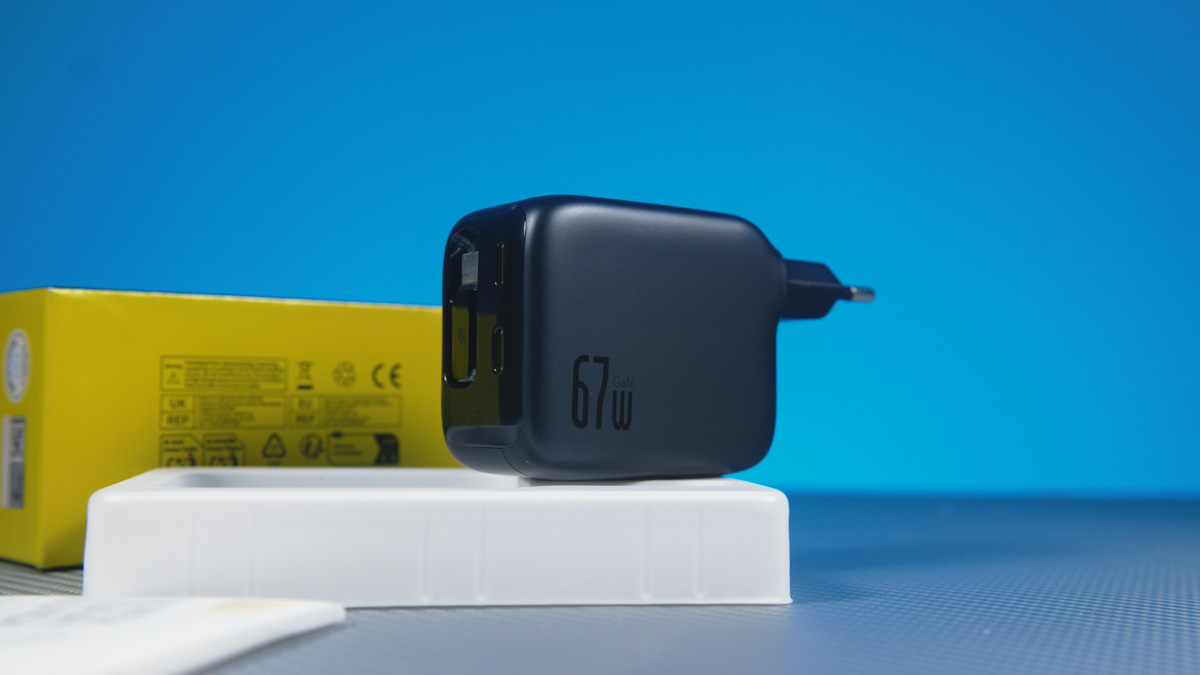
The charger can distribute up to 67 W across all three USB-C ports. For example, if one port is delivering 55 W to a smartphone, the remaining ports share no more than 12 W. At first glance, it might not seem particularly powerful. However, priced at 1,500 UAH, it’s versatile, easily charges laptops, and eliminates the need to carry a separate cable since one is built in.
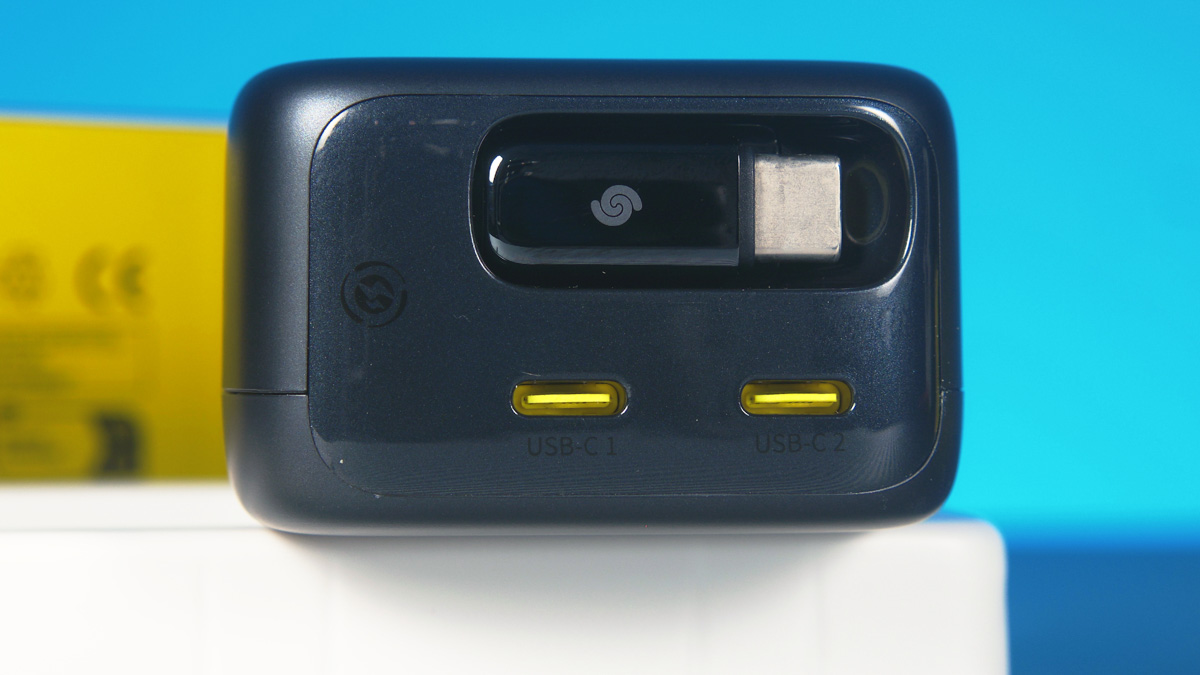
The charger is also very compact, despite some of its internal space being taken up by the retractable cable mechanism. While the manufacturer doesn’t specify the durability of this mechanism, based on the figures from our previous model, you can expect around 30,000 cycles of extension and retraction.
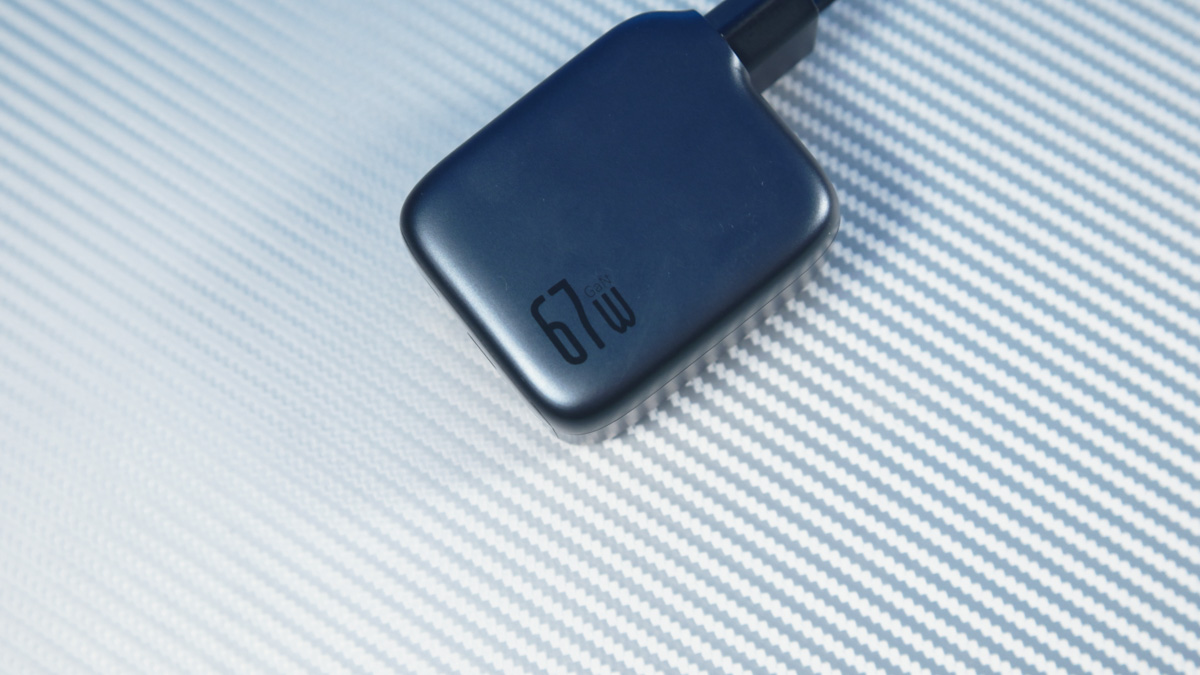
It also features overheating protection, including BTC monitoring chips and a graphene heat-dissipation pad. The only thing I didn’t notice was the use of gallium nitride (GaN), but even without it, the charger performs very well. I was even able to power a 2E monitor through an adapter.
Baseus EnerGeek GR11
Finally, the star of the lineup: the Baseus EnerGeek GR11 power bank. It offers 20,000 mAh, or 72 Wh. It features the same retractable 80 cm flat cable mechanism with a magnetic system – though in this case the cable extends slightly beyond the body, making it easier to grab without needing to use a nail.
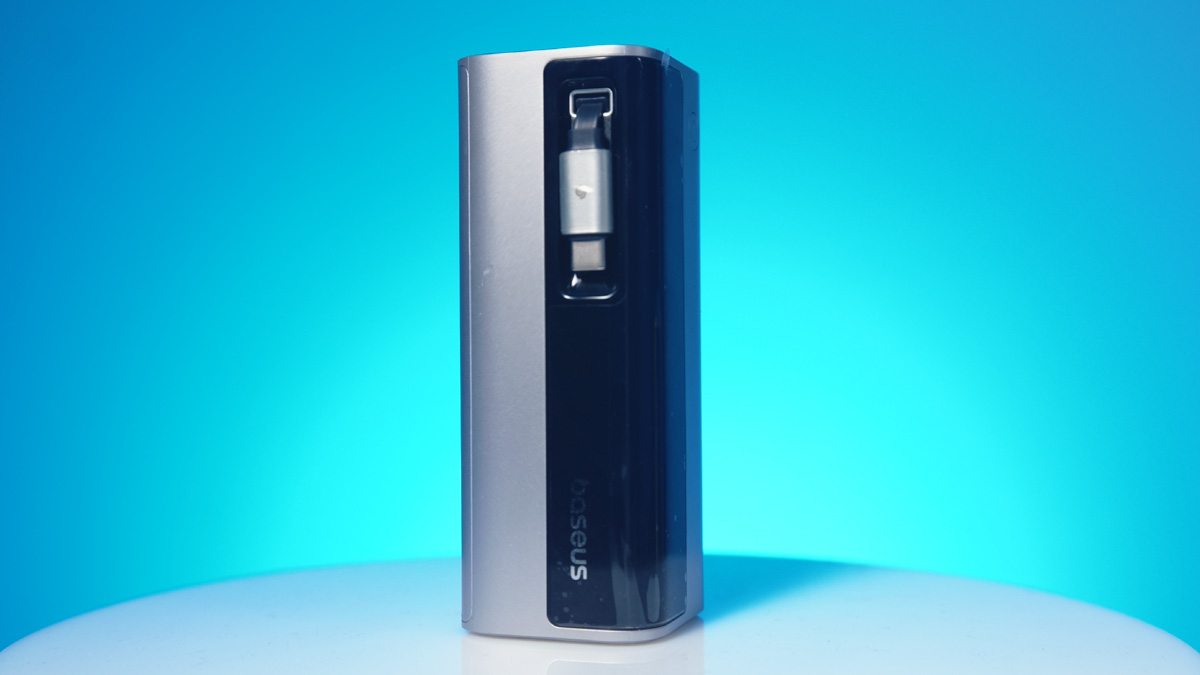
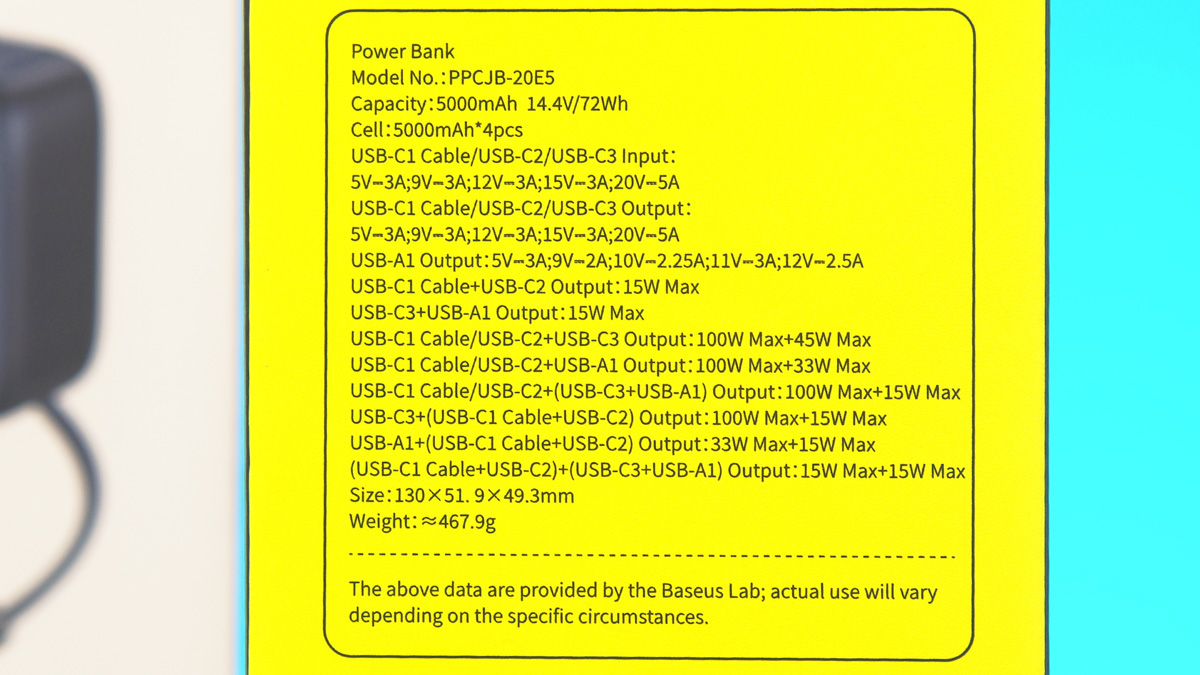
The built-in cable supports 100 W charging, and the power bank also includes two Type-C ports and one Type-A port. This allows you to charge up to four devices simultaneously. The Baseus EnerGeek GR11 can reach a peak output of 145 W – but it achieves this intelligently, not all at once.
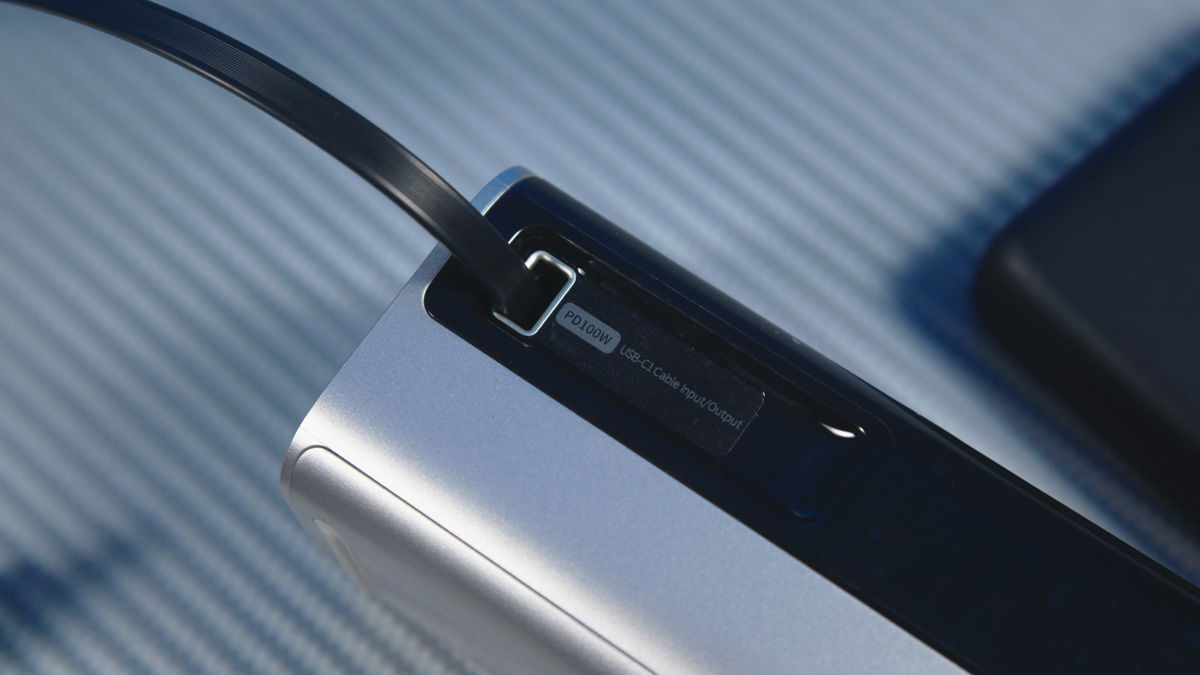
Each of the three USB-C ports can deliver up to 100 W individually, whether for input or output. The USB-A port can provide a maximum of 33 W. To reach the full 145 W output, you need to use the built-in cable along with the bottom Type-C port (C1 + C3), or the two Type-C ports (C2 + C3). If all four ports are used simultaneously, each port’s maximum output drops to 15 W, which is expected.
I should also note that the GR11 has become my primary power bank for testing. Why? Because it features a display that shows the current power draw and even tracks charging and discharging time. The screen flickers only slightly on camera, which allows me to monitor the energy consumption of laptops and smartphones, so expect to see it more often in upcoming videos.
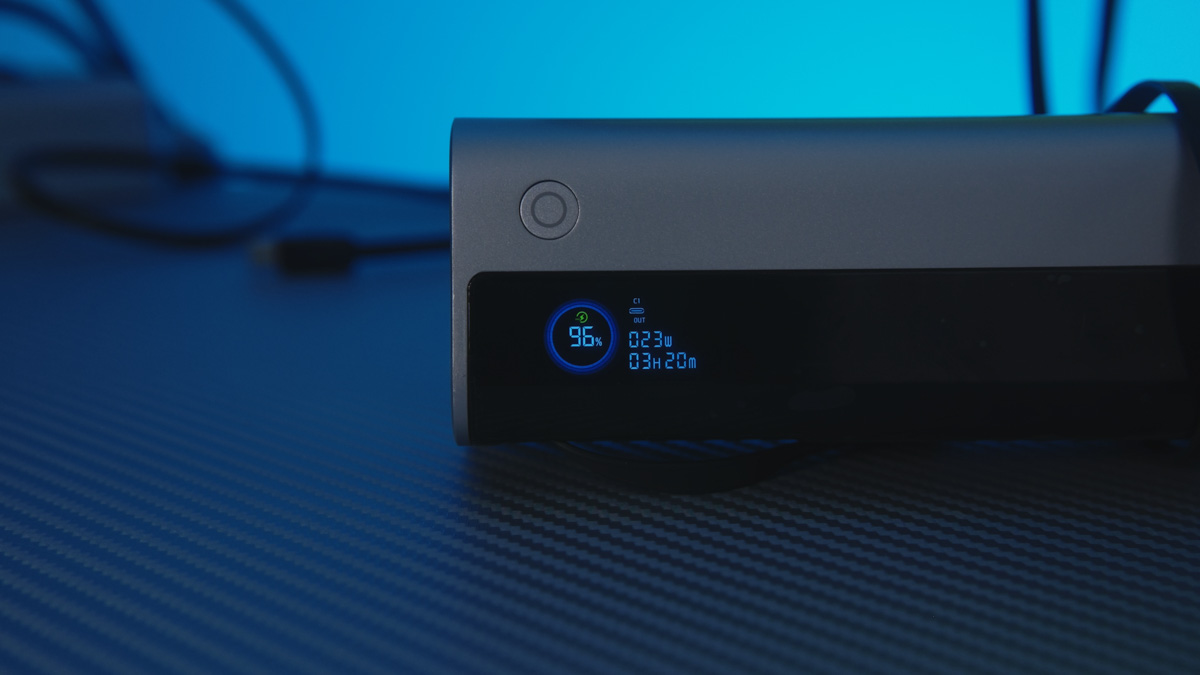
It’s also likely to become my main power bank for laptops. Despite having a built-in cable, it remains remarkably compact at 51×19×21 mm and 463 g. Overheating protection is provided by graphene and aerogel, along with an AI-powered chip. There’s no pass-through charging, but the power bank has rubberized feet on the body – on the side and the bottom – which I really like.
Results for Baseus EnerGeek GR11 and more
In summary, two of the three new models – the Baseus EnerCore CJ11 and Baseus EnerGeek GR11 – have already proven themselves as reliable and convenient tools for charging test devices. The Baseus EnerFill FT11 is ideal for iPhone users, though it also works well with devices like the Motorola Edge 50 Ultra, thanks to its lighter weight, which helps the magnetic attachment hold the phone more securely. Overall, I can confidently recommend all of these new releases.
Read also:
- Samsung Smartphones: Impressions from Galaxy Unpacked Summer 2025
- Why It’s Unlikely That the iPhone 17 Will Bring Any Significant Innovations
Where to buy Baseus new products
- Baseus EnerCore CJ11 (Use code KLRU81 for a discount, valid until 30 September 2025)
- Baseus EnerGeek GR11 (Use code UAGR09 for a discount, valid until 31 August 2025)
- Baseus EnerFill FT11 (Use code FT116A for a discount, valid until 31 August 2025)