





© ROOT-NATION.com - Use of content is permitted with a backlink.
Despite sanctions, bans, and obstacles, China has managed to obtain AI chips, as evidenced by its progress in AI and robotics.
Just a few months ago, it seemed that the US sanctions strategy had finally achieved its goal. China’s ambition for technological independence in artificial intelligence appeared to be unraveling. While Silicon Valley poured billions into new models, China was forced to count every limited Nvidia chip that slipped through regulatory controls. However, as is often the case, reality turned out to be not only more complex but also far more creative – and even concerning – for Washington.
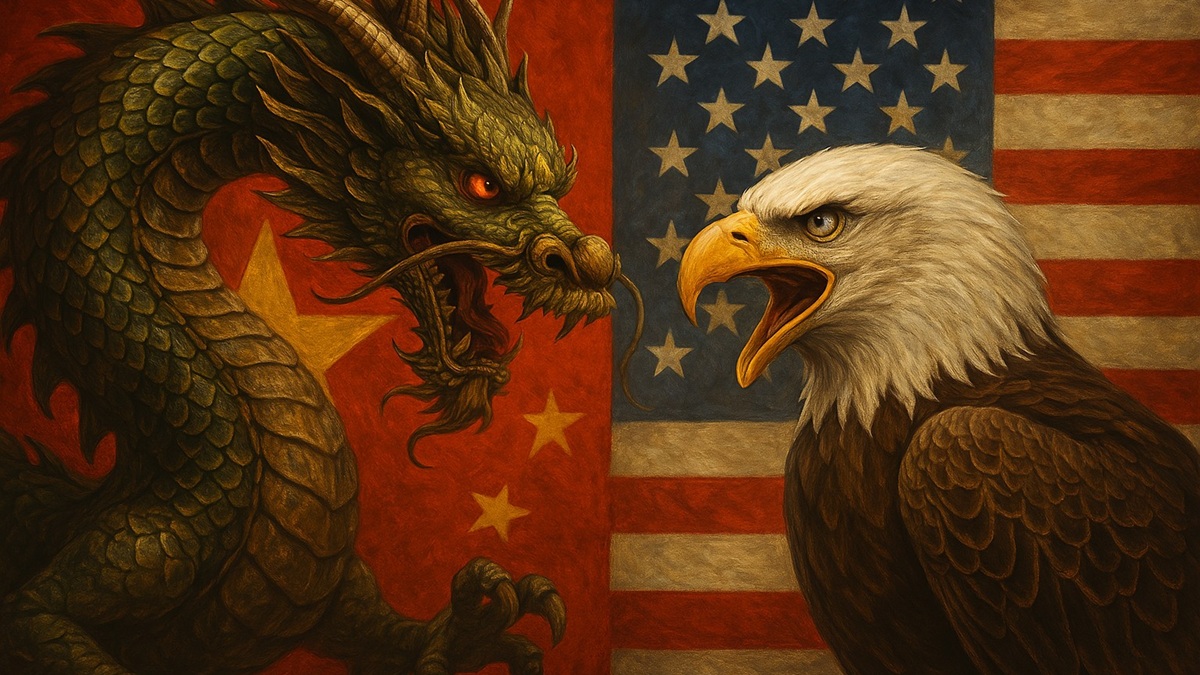
China hasn’t just kept going – it has built a shadow ecosystem that allows it to bypass sanctions with such sophistication that US cyber intelligence agencies are starting to scratch their heads. Underground cloud server rentals with banned chips, “neural networks in suitcases,” and engineer-couriers are no longer science fiction but a new geopolitical and technological reality.
Read also: How to Spot Fake Photos: New Challenges of the Digital Age
TABLE OF CONTENTS:
Sneakernet
One of the most intriguing methods is “sneakernet” – literally transporting data on hard drives in suitcases. In March, four Chinese AI specialists flew to Malaysia carrying, notably, fifteen hard drives each. In total, that was 80 terabytes of training data. Once there, they rented servers equipped with powerful Nvidia A100 GPUs to train and optimize their models. They then returned home with the finalized model parameters – without importing any hardware, breaking embargoes, or carrying a single chip in their luggage. Just digital “brains” packed in suitcases. And this isn’t an isolated case.
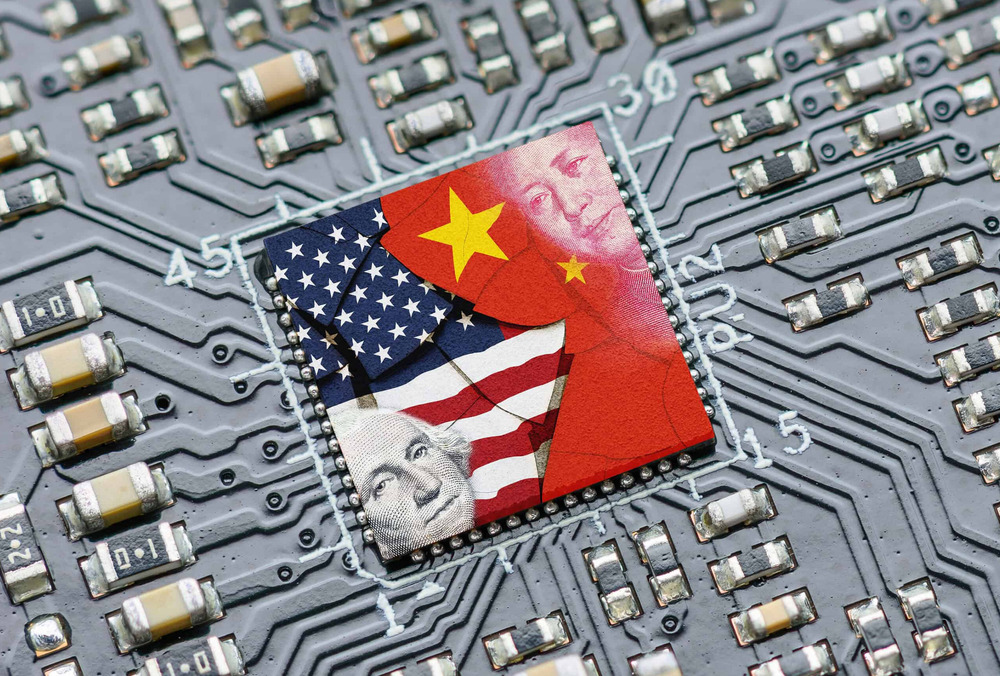
Alongside this, there’s a semi-legal rental market. In Shanghai, AI-Galaxy – a company founded by former Nvidia and AliCloud engineers – offers access to eight Nvidia A100 processors for just $10 per hour, no questions asked. Companies like iFlytek, despite sanctions related to their cooperation with state security and persecution of Uyghurs, continue developing AI applications relatively unimpeded by obtaining chip access through gray-market channels.
US sanctions remain in place. However, it now appears that it’s not just individual hackers bypassing them, but entire organizations with established logistics, refined routes, and a corporate mindset along the lines of “intelligence will outsmart control.” For anyone who thought 21st-century geopolitics was limited to drones and sanction lists, it’s time to add another category: “digital suitcases” and “computational smuggling.”
Read also: Cryptography: What It Is and How It Works
DeepSeek – the moment of truth in artificial intelligence
The real shock for the US market came in January. Without flashy presentations, Elon Musk tweets, or PR buzz, a little-known Chinese startup, DeepSeek, launched the R1 model, which suddenly began closing the gap with the leading US AI companies. And they did it on a shoestring budget – less than \$6 million for the entire development. By comparison, OpenAI, Google, and Anthropic each spend hundreds of millions just on preliminary training phases, not including costs for PR, cloud offices, and corporate events.
DeepSeek made its breakthrough using the “trimmed” Nvidia H800 chips – a special version limited by sanctions for the Chinese market. In other words, the startup built a competitive AI model not only on a minimal budget but also on restricted hardware that the West considered unsuitable for a real breakthrough. And they did it quietly, without loud slogans about “AI democratization” or manifestos calling for a responsible future. They simply got the job done.

The panic was immediate. On Monday, January 27, the stock market experienced a digital frenzy. Nvidia shares plunged a record 17%, wiping out $589 billion in market value. This marked the largest single-day drop in Wall Street history. Ironically, the company that dominated the AI market lost billions precisely because artificial intelligence suddenly became too accessible to others.
For a few days, the DeepSeek AI Assistant app surged to the top of the US App Store charts, even surpassing ChatGPT. In other words, a Chinese product running on sanctioned chips became the most popular free app in the very country that imposed those sanctions. The level of cognitive dissonance here can only be measured in teraflops.
Read also: OpenAI’s New Superpower: What Is a ChatGPT Agent?
Shanghai as an arena for global confrontation
The World Artificial Intelligence Conference (WAIC), held in Shanghai from July 26 to 28, outwardly resembled a typical tech expo filled with robots, holograms, and neural networks at every booth. In reality, however, it was the stage for a high-stakes geopolitical chess match between the two main players of the 21st century – the US and China. The event brought together over 800 companies and 1,200 delegates from more than 30 countries, including notable figures like AI pioneer Geoffrey Hinton and former Google CEO Eric Schmidt. The organizers shaped the conference into more than just an innovation showcase.
While American corporations are still adjusting to new realities – sanctions, model leaks, and China’s “suitcase neural networks” – China’s Premier Li Qiang took the stage to declare that the future of artificial intelligence should not be a private Silicon Valley club but a global cooperative, headquartered, naturally, in Shanghai. A global AI collaboration organization looks to be the new “silk-wrapped dagger” in the ongoing cold technological war.
“We don’t want artificial intelligence to be an exclusive game for a few countries and corporations,” Li Qiang said. The audience applauded, though everyone clearly understood who the “few countries” referred to. The US, which until recently tried to set the global AI agenda under the slogan “AI for democracy,” is now facing a mirror response. AI is meant to be for everyone – but under new, multilateral rules where China is no longer a secondary player.
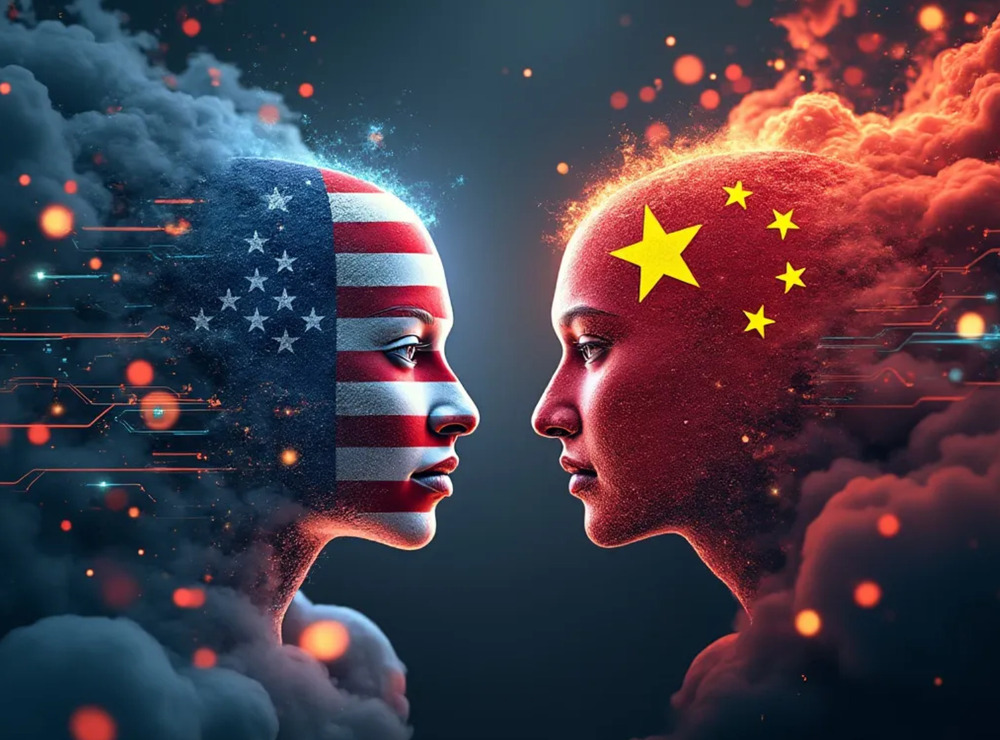
Beyond the grand statements, Beijing proposed two concrete mechanisms: dialogue platforms under the UN’s auspices and a dedicated international organization to coordinate AI efforts. The core idea is simple: whoever controls the rules controls the game. While the West continues to struggle with the “brain drain” from its own labs, China is quietly and methodically reshaping global institutions – without tweets or drama.
Read also: AI in Medicine: Is the Future Already Here?
Robots as a secret weapon in the trade war
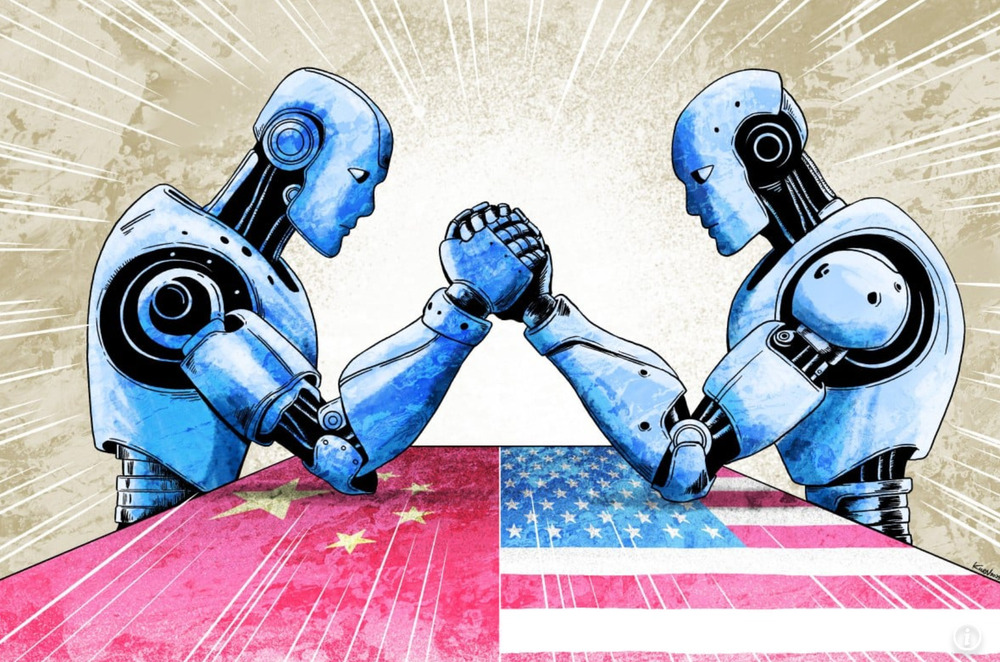
At the WAIC exhibition, about 60 companies showcased robots, many of which shared similar designs and functions. This reflects the intense price competition among Chinese AI firms, which has significantly lowered development costs for creators building on open-source models.
Currently, China has more factory robots per 10,000 manufacturing workers than any country outside of South Korea and Singapore. This AI-driven automation enables Chinese factories to reduce production costs and remain competitive, even when factoring in US tariffs.
An AI-powered welding robot in a workshop in Guangzhou now costs around $40,000, compared to $140,000 four years ago.
Read also: “Superintelligence” – Breakthrough or Marketing Hype? An Analysis
Open source strategy versus proprietary
While US AI leaders like OpenAI, Google, and Anthropic keep their models locked away in corporate vaults – turning each release into a tightly controlled marketing event with multiple NDAs – China took a different approach. The startup DeepSeek released its R1 model under the very permissive MIT license, a move being called the “Android moment” for China’s AI industry. Just as Android once disrupted the mobile market, DeepSeek is laying the groundwork for a new, open AI ecosystem – one that promises to be large-scale, fast-moving, and not necessarily state-controlled.
This paradigm shift isn’t limited to enthusiastic startups. China’s biggest players – Baidu, Alibaba, and Tencent – have all simultaneously changed course. Baidu, which had kept its models under tight control for years, has now open-sourced Ernie 4.5 and Ernie X1. Alibaba and Tencent, traditionally more focused on infrastructure, haven’t lagged behind either. Open models, open APIs, open doors to the global market. Once accused of “copying the West,” China is now creating an alternative paradigm where openness is its strategic advantage.
In this context, Eric Schmidt’s remarks at WAIC in Shanghai were particularly symbolic. The former Google CEO recalled how fierce competition between Microsoft and Apple in the early 2000s drove the industry forward, suggesting that a similar dynamic could happen today.
“Collaboration between the US and China in artificial intelligence is possible if there is a shared goal,” he diplomatically noted. The question, however, is who now defines that goal – and whether it will inherently be shaped by China.
While the West struggles to maintain control over APIs and API keys, China is exporting not only AI models but also an ideology of an open technological ecosystem – one where even corporations can’t hold everything tightly. If this trend continues, open Chinese models could become the global standard in the coming years. In that scenario, Western proprietary giants might find themselves in a position similar to BlackBerry’s role alongside Android years ago.
Read also: Strange Relationship Between Microsoft and OpenAI
The American response: too little, too late?
The US AI strategy announced by the Trump administration just days before WAIC focuses on three pillars: accelerating innovation, building AI infrastructure in the US, and leading international diplomacy. The plan aims to reduce burdensome federal regulations and promote American technologies globally.
However, the response from US tech companies to DeepSeek’s breakthrough suggests the industry was caught off guard. OpenAI CEO Sam Altman acknowledged that R1 is an impressive model, especially considering what they offer at that price point. Snowflake decided to add DeepSeek’s model to its marketplace following a surge of customer requests.
At WAIC, Geoffrey Hinton warned against a scenario where artificial intelligence escapes human control, likening it to a cute tiger kept as a pet that could become dangerous as it grows. He called for the creation of an international community of AI safety institutions focused on developing methods to train AI systems to be benevolent.
Read also: ChatGPT Destroys the Competition: Era of Super Apps Has Arrived
The future: two visions, one world
The clash between China’s open-collaboration model and the American “America First in AI” doctrine is no longer just a technological competition. It has become a new form of global tug-of-war, where the stakes are not financial flows or patents, but control over the very logic of the future. By leveraging open-source platforms, flexible workaround logistics, and a state-driven strategy, China has shown it doesn’t need to catch up – it can overtake. And it does so not by copying, but by systematically breaking the established rules of the game.
DeepSeek’s success marks the culmination of this shift. They didn’t just build their model on a shoestring budget – they demonstrated that innovation can emerge where it’s least expected. That limitations are not shackles, but challenges. And that even with restricted chips, it’s possible to achieve what neither Silicon Valley nor Washington anticipated. China is turning sanctions circumvention into a discipline and open source into a geopolitical tool of influence.
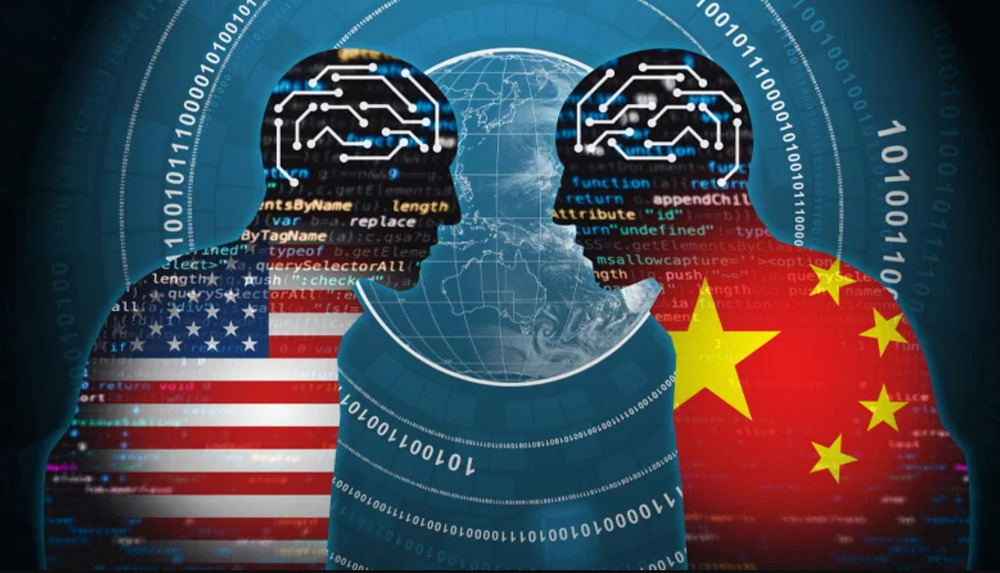
For American corporations, the moment of truth has arrived. The coming months will reveal whether the US AI elite can adapt – and, more importantly, whether they will continue to trade intelligence on a subscription basis while the world rapidly changes. Today, it’s not just the “best algorithm” that wins, but who is more open, agile, and strategically bold.
The world faces a choice: a global AI ecosystem where models freely circulate and collaborate across borders, or a bipolar reality with AI evolving under two competing ideologies, behind closed gates and separate internets. The cards are on the table, but the stakes are rising, and the game for the future is just beginning.
Read also:
- Gabe Newell’s Starfish Neuroscience Сhallenges Neuralink
- Online Safety: How to Protect Your Data – Even When You Let Your Guard Down

