





© ROOT-NATION.com - Use of content is permitted with a backlink.

The devastating effects of global warming are becoming more and more apparent and are reaching catastrophic proportions. In order to prevent irreversible changes, the global scientific community emphasizes the critical importance of restraining climate change within limits that will not allow the global temperature to rise by more than 1.5 degrees Celsius compared to the pre-industrial era.

A significant number of countries have declared their intention to achieve zero net carbon emissions by 2050. Achieving this goal will require consolidation of international efforts, implementation of new policy solutions and active development of technological innovations.
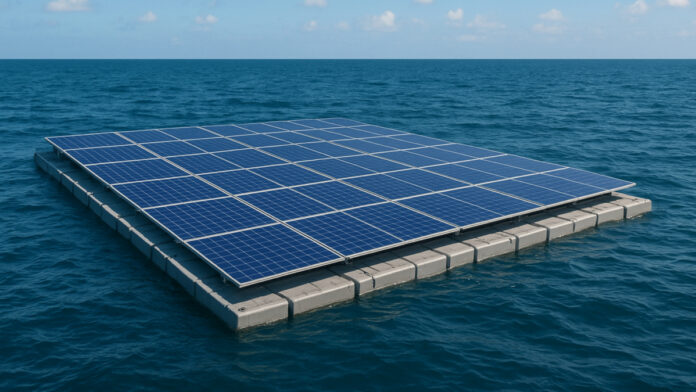
Some countries facing a shortage of available land have begun deploying photovoltaic (PV) systems on the surface of inland water bodies and in coastal marine areas to accumulate solar energy. Existing research papers on floating PV power plants and offshore floating PV (OFPV) systems have mostly focused on energy flow management and direct performance.
At the same time, the scientific literature still lacks comparative studies that would assess the level of environmental impact of such complexes in comparison with traditional ground-based solar panels.

In the Journal of Renewable and Sustainable Energy, two researchers from National Taiwan University of Technology in Taiwan-where the expansion of the renewable energy sector is hampered by the island’s small size and geographic specificity-have filled this gap. They conducted a comparative analysis of classic ground-mounted solar power plants and the first large commercial coastal OFPV facility built in this island nation. According to the co-author of the study, Ching-Feng Chen, the researchers found that floating solar complexes located at sea are able to generate more electricity over their life cycle – about 12% more compared to their land-based counterparts under identical operating conditions.
Due to their higher energy generation rates, such plants also provide a larger reduction in carbon dioxide emissions. Simply put, despite the use of similar technological solutions, the placement of solar panels on the water surface can significantly improve their performance.
One of the key factors behind this effect is the cooling capacity of the surrounding water environment. Excessive temperature rise negatively affects the efficiency of solar cells, while water successfully absorbs thermal energy. To ensure the objectivity of the calculations, the scientists applied the life cycle assessment method. To achieve comparability of results, they set a single functional unit for both sites – 100 megawatt-peak, which denotes the maximum power of a photovoltaic system under standard testing conditions.

For the purposes of this research, the parameters of the ground-mounted photovoltaic (LPV) plant located in Taiwan’s Changbin Industrial Park were 100 MW-peak. Accordingly, for the sake of correctness of the mathematical comparison, the performance of the coastal OFPV system, which actually has a higher actual capacity of 181 MW-peak, was proportionally brought to a similar scale of 100 MW-peak. According to Chen, this normalization method allowed for a direct comparison of key parameters – including energy output, overall efficiency, and environmental impacts – for systems with equivalent capacity, which completely eliminated data distortion due to differences in facility scale.
The results provided comprehensive information on the carbon footprint of both types of power plants, which can serve as a guide for government officials and stakeholders in reducing CO2 emissions.
Chen emphasized that Taiwan’s movement towards net-zero emissions by 2050 requires the introduction of innovative approaches to the deployment of generating capacity, rather than simply increasing the number of already known technologies.
Read also:
- Balcony Solar System, Part 1: EcoFlow Stream Pro (Ultra) – A Residential Energy Independence Solution
- Balcony Solar Power System, Part 2: EcoFlow Stream Setup, Basic Configuration, Backup Power, and Scalability
- Balcony Solar Power System, Part 3: Choosing and Installing Solar Panels. Flexible vs Rigid Panels – Which Are More Efficient?