





© ROOT-NATION.com - Use of content is permitted with a backlink.
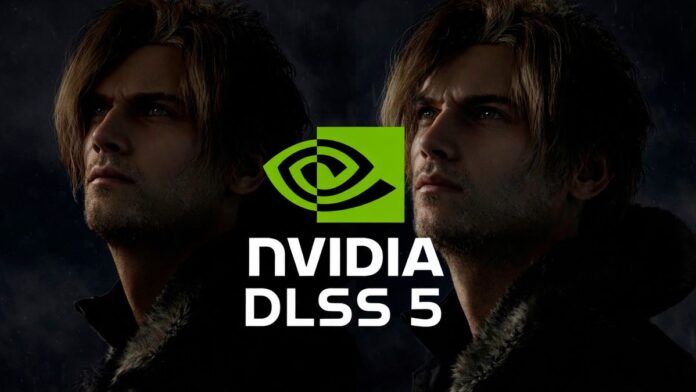
NVIDIA has introduced DLSS 5 technology, which it calls the biggest breakthrough in computer graphics since the introduction of real-time ray tracing in 2018. DLSS 5 introduces a new real-time neural rendering model that allows you to create images with photorealistic lighting and materials. Thanks to this, the technology blurs the line between traditional graphics and reality.
NVIDIA CEO Jensen Huang said that 25 years after the creation of programmable shaders, the company is once again changing its approach to computer graphics. According to him, DLSS 5 is a kind of “GPT moment” for the industry, as it combines traditional rendering with generative artificial intelligence, providing a significant leap in realism without losing control for artists.

Since the beginning of the NVIDIA GeForce line, the company has been committed to providing the computing power to create the most realistic gaming worlds possible, where light, shadows, and reflections obey the laws of physics. From the introduction of programmable shaders with GeForce 3 in 2001, to the introduction of CUDA in the GeForce 8800 GTX in 2006, to real-time ray tracing with the GeForce RTX 2080 Ti in 2018, to path tracing with the GeForce RTX 5090, the company has consistently innovated, increasing computing power by a factor of approximately 375,000.
However, even with this progress, the computing resources available for a single frame in a game, which is generated in 16 milliseconds, are inferior to those used to create photorealistic shots in movies, where rendering can take from several minutes to hours. That’s why it’s impossible to achieve full photorealism only by increasing real-time computing power.
Modern AI-based video models can already generate photorealistic images, but they work offline, are difficult to fine-tune, and often produce unpredictable results. This is unacceptable for games, as the image should be generated deterministically, in real time, and correspond to the three-dimensional world of the game and the creative vision of the developers.
DLSS 5 uses color and motion data for each frame as input, and then applies an AI model to create photorealistic lighting and materials that remain consistent across frames and tied to the original 3D scene. The technology works in real time with resolutions up to 4K, providing a smooth gameplay experience.
The AI model undergoes extensive training to understand complex scene elements, including characters, hair, fabrics, and translucent skin, as well as different types of lighting. By analyzing the frame, the system generates accurate images, correctly reproducing complex effects while maintaining the structure and logic of the scene.
DLSS 5 also provides developers with extensive effects management capabilities, including intensity, color correction, and masking. This allows artists to determine where and how enhancements are applied, while maintaining the unique style of each game. The technology is integrated through the same NVIDIA Streamline framework used for DLSS and NVIDIA Reflex.
Support for DLSS 5 has already been confirmed by leading game studios and publishers, including Bethesda, Capcom, Hotta Studio, NetEase, NCSOFT, S-GAME, Tencent, Ubisoft, and Warner Bros. Games.
“NVIDIA and Bethesda have a long history of pushing game graphics and innovation, and DLSS 5 is another important step along the way,” said Todd Howard, studio head and executive producer at Bethesda Game Studios. – “With DLSS 5, art style and detail are brought to life in their full glory, beyond the traditional real-time rendering framework. We’re excited to be working with this new technology and look forward to implementing DLSS 5 in Starfield and future Bethesda titles.”
“At Capcom, we strive to create cinematic, immersive and believable gaming experiences where every shadow, texture and ray of light is carefully crafted to enhance the atmosphere and emotional impact,” added Capcom Executive Producer and CEO Jun Takeuchi. – “DLSS 5 is another important step in our commitment to enhancing the visuals to help players immerse themselves even more deeply in the world of Resident Evil.
Charlie Guillemot, Co-CEO of Vantage Studios, noted that the technology brings the industry much closer to creating fully realistic worlds. According to him, a new approach to rendering lighting, materials and characters changes the capabilities of developers, which is already used, in particular, in the game Assassin’s Creed Shadows.
DLSS 5 will be available in a number of games, including AION 2, Assassin’s Creed Shadows, Black State, CINDER CITY, Delta Force, Hogwarts Legacy, Justice, and NARAKA: BLADEPOINT, NTE: Neverness to Everness, Phantom Blade Zero, Resident Evil Requiem, Sea of Remnants, Starfield, The Elder Scrolls IV: Oblivion Remastered, Where Winds Meet, and others. The technology is scheduled to be launched in the fall.
Read also:
- The future of gaming or a marketing gimmick? A gaming mouse is presented that can be divided into two
- Redragon Terraflare K762 Pro Review: Іnteresting Gaming Keyboard