





© ROOT-NATION.com - Use of content is permitted with a backlink.
Starting with its global “Human × Car × Home” strategy, Xiaomi immediately set an ambitious tone for the event. The company showcased the futuristic Xiaomi Vision GT hypercar and announced the opening of a new R&D center in Munich, a strategic step aimed at supporting the brand’s planned entry into the European electric vehicle market next year. Visitors were also welcomed by two yellow Xiaomi SU7 Ultra models displayed at the venue.
Read also: All XIAOMI smartphone reviews

The excitement generated by high-performance vehicles soon gave way to a different kind of anticipation – this time focused on mobile photography. The evening’s main highlights were the Xiaomi 17T and Xiaomi 17T Pro, a new generation of smartphones that continues Xiaomi’s focus on telephoto imaging while aiming to bring advanced photography capabilities into a compact form factor.
TABLE OF CONTENTS:
Leica and Xiaomi Collaboration: A Brief Historical Perspective
I should note that I do not personally use Android smartphones, but I do own a Leica camera, so this article will focus primarily on the photography aspect. That makes it worth taking a short detour from the launch event itself and looking at the background of the Xiaomi–Leica partnership, which began well before the products presented here. For example, during a visit to the Leica Museum in Wetzlar last year, I noticed a Xiaomi smartphone on display that had been released to commemorate the 100th anniversary of the German camera maker. This served as a reminder that the collaboration between the two companies extends beyond branding and has become a recurring element of Xiaomi’s approach to mobile imaging.

The anniversary itself is a bit more nuanced, but in this context it refers to 100 years since the debut of the Leica I (Model A) at the Leipzig Spring Fair in 1925. That camera marked the beginning of the global success of 35 mm photography and is widely regarded as a milestone in photographic history. This is what the legendary Leica I (Model A) looked like, equipped with its fixed Leitz Elmar 50mm f/3.5 lens.

Owners of the flagship Xiaomi 17 Ultra may now have a better understanding of the design inspiration behind the camera modules used in the company’s smartphones. The resemblance is particularly noticeable to users of the Leica Leitz Phone, developed in collaboration with Xiaomi, especially when paired with its distinctive magnetic lens cap, which echoes the appearance of classic Leica cameras.

Looking even further back, the circular camera module design can be traced to the Leica Leitz Phone 1, a device developed with the involvement of German engineers.

With that brief historical detour concluded, it is time to return to the present and take a closer look at the devices unveiled during the Xiaomi May 2026 Launch Event.
Key Features of the Xiaomi 17T and 17T Pro
After the historical introduction, it becomes clearer why I tend to assess technologies developed in partnership with Leica with a critical eye.

In optics lies the foundation of a high-quality image. Of course, the sensor, image processing algorithms, and the photographer’s skill and intent all play an important role; however, without strong optics, subsequent improvements lose much of their meaning. It is therefore particularly significant that all three modules of the main camera in the new devices are equipped with optics from the German brand.
Telephoto Master Concept and Camera Specifications
Xiaomi emphasizes that both models in the lineup – the 17T and 17T Pro – are fully developed as “Telephoto Masters.” This is not presented as a marketing label alone, but as a positioning that reflects a strong focus on telephoto imaging capabilities across the entire camera system. At this point, it is difficult to avoid technical specifications, as they are essential for understanding the actual level of these devices.

Both smartphones are equipped with the Leica Ultra Pure optical system, which was previously available exclusively in the flagship Xiaomi 17 Ultra.
Main Camera
The main camera uses Leica Summilux optics, with an aperture of f/1.7 on the base model and f/1.67 on the Pro version. The Xiaomi 17T Pro is equipped with an updated 50-megapixel Light Fusion 950 sensor (2.4 μm pixel size, 4-in-1 Super Pixel), while the Xiaomi 17T features the Light Fusion 800 sensor (2.0 μm, 4-in-1 Super Pixel). Both camera modules include optical image stabilization (OIS) and a 23 mm equivalent focal length, ensuring consistent framing and improved stability across shooting conditions.

Telephoto Lens
Both models are equipped with a Leica 5x Pro periscope telephoto camera featuring a 50 MP sensor and optical image stabilization (OIS). The lens uses a hybrid 1G + 6P optical design (one glass element and six plastic elements) with a specialized coating aimed at maximizing sharpness and light transmission. The camera supports 5× optical zoom, 10× optical-quality zoom, and AI-assisted digital zoom ranging from 20× to 120×. It has a 115 mm equivalent focal length. The lens is also capable of focusing at a minimum distance of 30 cm, enabling detailed close-up shots with pronounced natural background blur.

Ultra-Wide Camera
The ultra-wide module features a 12 MP sensor with an f/2.2 aperture. Although it also uses Leica optics, it does not include optical image stabilization (OIS). It offers a 15 mm equivalent focal length and a 120-degree field of view, enabling wide framing for landscapes and group shots.

Front Camera
The front camera is identical on both models, featuring a 32 MP sensor with an f/2.2 aperture and a 21 mm equivalent focal length. Unlike the rear camera system, it is implemented without Leica tuning or branding.
In practical terms, this means that the camera systems across both devices are nearly identical. Users are unlikely to face a meaningful choice between the Pro and the standard version based on imaging performance alone, as the differences are effectively within the margin of variation.
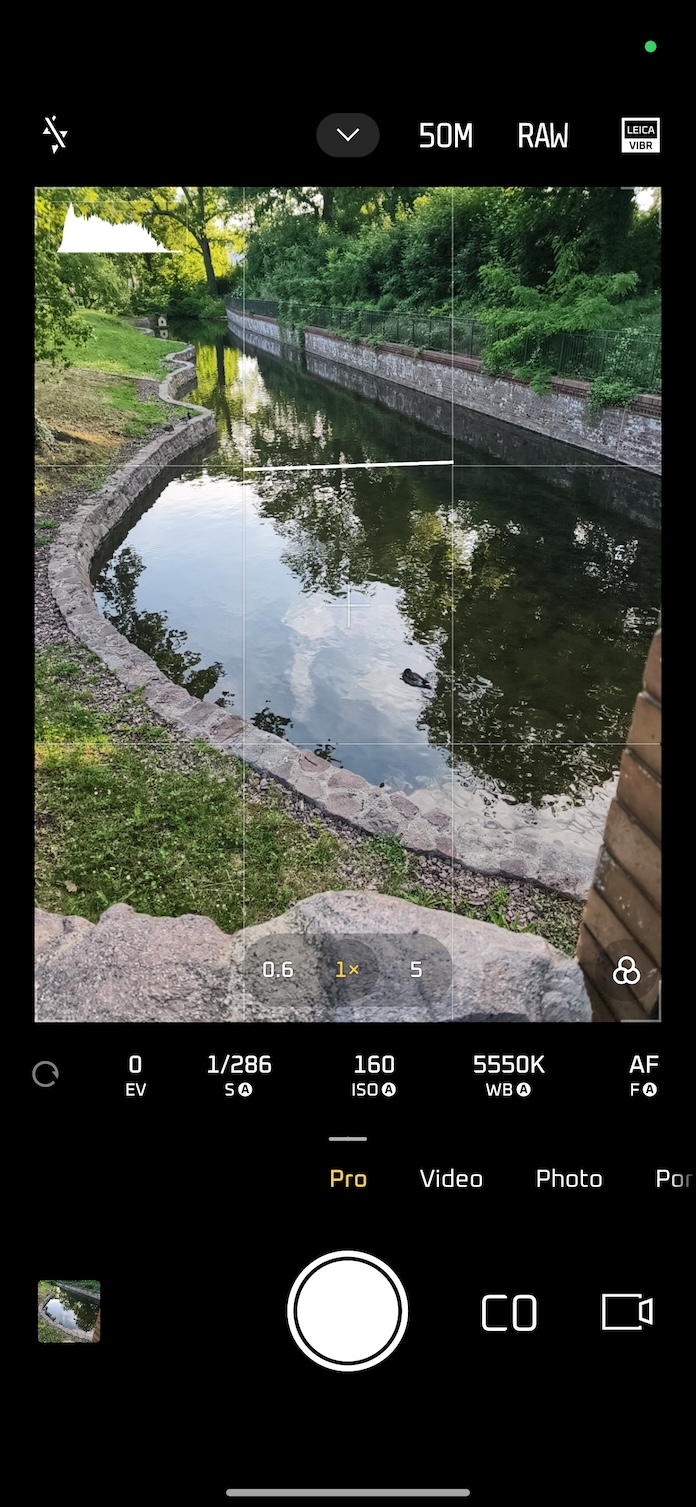
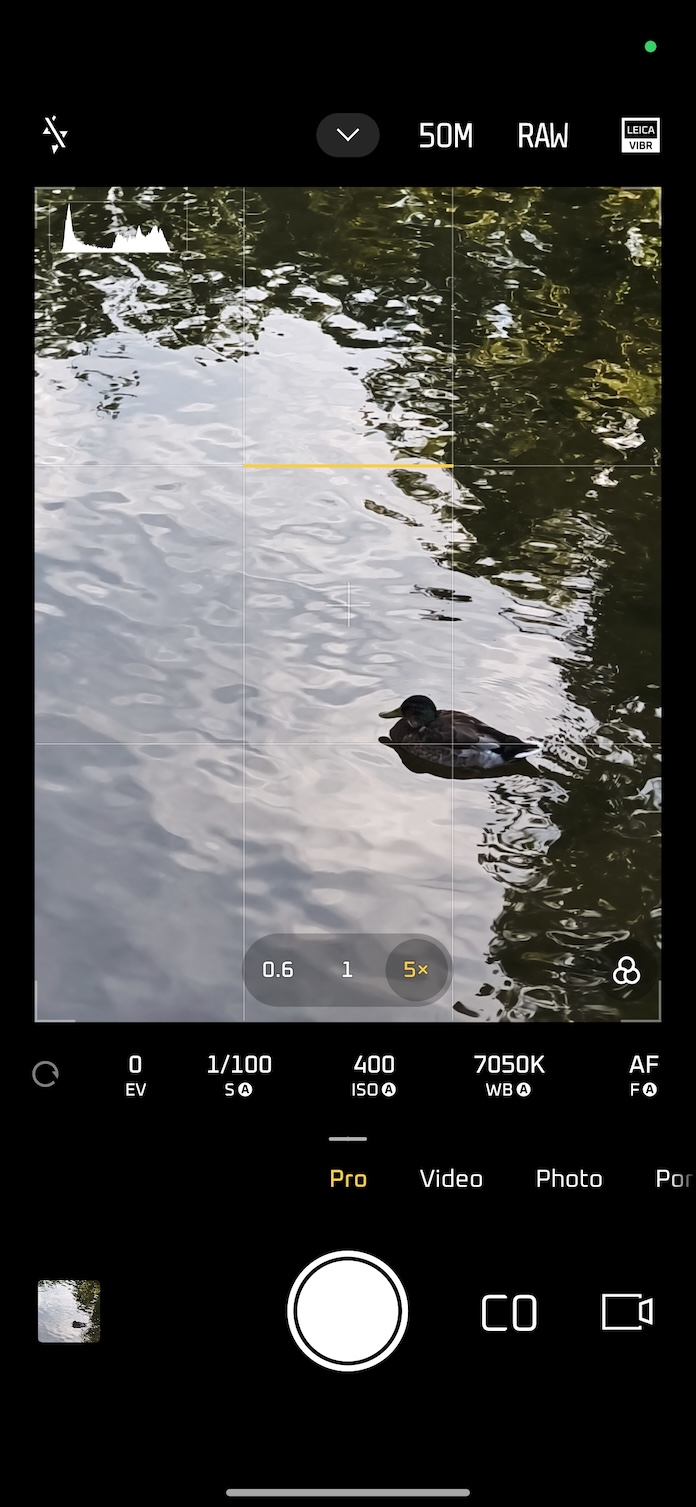
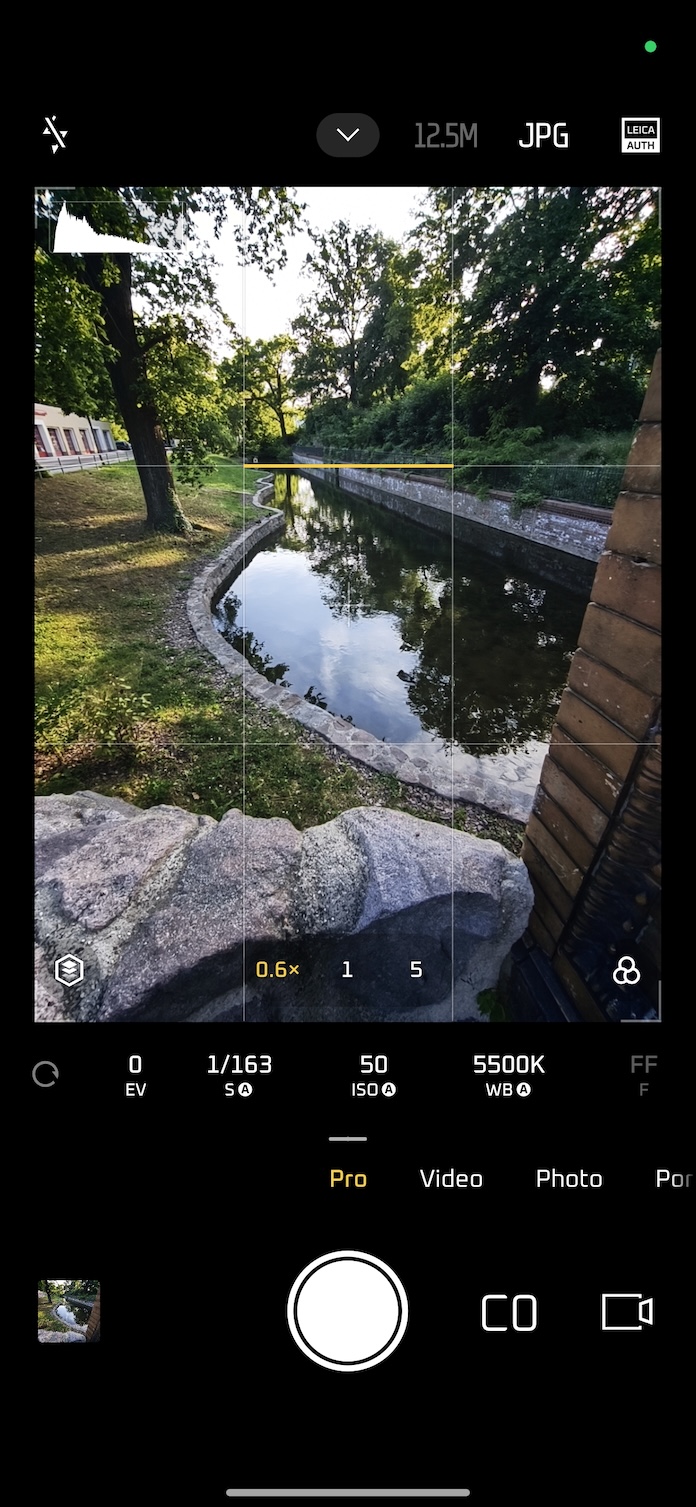
Special modes and personal experience

Leica Live Moments
This mode was introduced as a new form of “live photos,” combining a still image with motion while preserving the signature Leica aesthetic in terms of color rendering, bokeh, and detail reproduction. In essence, the Xiaomi–Leica implementation inevitably recalls Apple’s Live Photos feature, which has been present and widely promoted for years. However, in this case, it may still represent a meaningful step forward if it manages to refine the concept beyond its original implementation and offer a more compelling imaging experience.

This format does have its place – for example, when photographing children, where the goal is not only to capture a still frame but also a few seconds of motion. However, for mobile photographers who prioritize uncompromising image quality, this comes at the cost of some loss in detail. For those who take photography seriously, I would recommend shooting exclusively in RAW for maximum post-processing flexibility, although for everyday use, JPEG is more than sufficient. For Xiaomi device owners, the Leica Live Moments mode will likely serve as an interesting new feature to experiment with.

Testing note. Since I am working with an engineering sample of the Xiaomi 17T Pro running non-final firmware, the Live Moments feature did not retain the selected visual “look” applied to the frame during testing. This is clearly a bug in the current software build, which is expected to be addressed (or may already have been fixed) in a later update.

The feature captures motion and expressions for a few seconds before and after the shutter button is pressed, adjusting texture and contrast to match Leica’s signature style. The new “live” watermark disappears during micro-video playback and reappears on the final still frame. In addition, the system allows users to create animated Live collages composed of up to nine frames at once.
Stage Mode and Moon Photography
Stage Mode is a dedicated shooting mode for concerts, designed to optimize the rendering of complex stage lighting and the dynamic nature of live performances. I will be attending an event in the near future where I plan to test this feature in detail, so stay tuned for updates with real-world results.

However, I have already tested Moon photography in night conditions, and there is an interesting nuance here. At one point, I shot the Moon using a Leica M9 rangefinder camera with a 200 mm lens. Users familiar with these systems will know that the camera is effectively limited to focal lengths up to around 135 mm due to the rangefinder coupling mechanism, meaning that achieving precise focus at 200 mm requires a somewhat improvised approach. In my case, I eventually managed to get it right, and the resulting frame turned out well, as focusing at infinity is a relatively straightforward task in this context.

In the case of the Xiaomi 17T Pro (as well as the base model and the flagship 17 Ultra), an AI-based Supermoon intelligent switch is implemented. It allows users to capture sharp and well-resolved images of the Moon with minimal effort. Realistically, such a feature is rarely needed in everyday photography. However, the more important aspect is that training AI models on scenarios like this helps improve the overall image processing pipeline, which can lead to better results across a wider range of shooting conditions.

I am convinced that Stage Mode is a direct result of this kind of AI training. The laws of physics cannot be bypassed – even large cameras with professional optics struggle under extreme low-light conditions. It is precisely software and neural networks that allow smartphones, with their relatively small sensors and compact lenses, to elevate photos and video output to a level that is generally acceptable for social media use.
Portrait mode

For portrait photography, two key modes are available:
- Master Portrait: Provides a professionally rendered, stylized image with smooth, soft background bokeh.
- Leica Portrait: Focuses on a more natural and realistic rendering of the scene.
I am still actively exploring this area, so a more detailed breakdown will follow in future materials, as portrait photography remains one of the most in-demand genres in mobile imaging. By the way, Xiaomi notes that a new feature here is the ability to adjust background blur in post-processing specifically within Leica Live Moment; I do not recall seeing this implementation in other systems. For now, I am sharing a self-portrait I took using the main camera rather than the telephoto module, which is expected to deliver noticeably better results.


Video capabilities comparison
Video is an area I am less focused on than photography, so I will limit this section to the key points. The Xiaomi 17T Pro is the first model in the series to support 4K video recording at 60 fps directly from the telephoto camera.
While both devices are positioned with an emphasis on telephoto shooting, the Pro version has an advantage due to the more capable Light Fusion 950 sensor. It enables the main camera to record video in up to 8K at 30 fps or 4K at 120 fps. The standard Xiaomi 17T offers similar optical zoom handling and Leica Live Moment functionality, but its main Light Fusion 800 sensor limits maximum video recording to 4K at 60 fps. From a post-production perspective, support for Log profiles and the HDR10+ standard is also available, providing additional flexibility for color grading during editing.
Deep integration of AI in collaboration with Google

AI is already an integral part of modern smartphones, and a significant portion of the presentation was dedicated to this topic. Looking into the details, the hardware of the Xiaomi 17T series is tightly integrated with artificial intelligence features based on Google Gemini models.
- Gemini 3.5 Flash: Handles fast on-device processing for personal assistant requests, without requiring a constant cloud connection.
- Gemini Live: Enables a more continuous and natural conversational interaction with the assistant, including voice-based commands for tasks such as searching information, structuring emails in Gmail, and planning complex routes in Google Maps.
- Nano Banana: An image generation and editing model. It can generate simple infographics based on objects in a scene or integrate AI-generated selfies into well-known global locations. During the presentation, a use case was shown where multiple photos from a business trip were combined to illustrate the user’s location in a more structured way. This type of functionality is often used in informal contexts as well, such as creating themed images from travel or outdoor activities.
- Gemini Omni: A generative model designed for video creation from text prompts or still images. For example, it can transform a static photo into a short animated scene, such as adding rain or altering lighting direction.
All of these AI features are offered by Xiaomi in collaboration with Google as a free three-month trial, after which continued access will require a paid subscription to the respective services.
Eye care with Xiaomi Vision Care technology
This aspect of the presentation may seem less engaging to some, but it is critically important. In my previous review of the Mijia smart glasses, I mentioned that I had undergone laser vision correction, so eye health is a personally relevant topic for me.

The company has introduced the Xiaomi Vision Care system, a combined hardware and software solution designed to protect eye health and developed in collaboration with ophthalmologists. The Xiaomi 17T series is the first in the mobile industry to receive four TÜV Rheinland certifications at once:
- Low Blue Light: This certification confirms that the display reduces the proportion of high-energy blue light at the hardware level, which can help decrease eye strain during prolonged use, such as photo editing, while maintaining accurate color reproduction.
- Flicker-free: This technology eliminates perceptible display flicker at low brightness levels through high-frequency dimming control, which is particularly relevant for users with sensitive eyes or those who have undergone vision correction procedures.
- Circadian Friendly: This standard ensures that the display dynamically adjusts its color temperature according to the time of day, gradually shifting toward warmer tones in the evening to reduce potential disruption of melatonin production and sleep cycles.
- Intelligent Eye Care: This system uses AI-based algorithms to continuously analyze ambient lighting conditions and user behavior, automatically adjusting display parameters to maintain comfortable viewing conditions across different environments.
The device display reduces blue light emission by 75%. In addition, the panel automatically adapts to ambient conditions: in complete darkness, brightness can be lowered to a record level of 1 nit, while under bright winter sunlight the display adjusts its color temperature to compensate for snow glare and maintain text readability.
Read also:
- Mijia Smart Audio Glasses Review: Stylish Accessory or Headset Replacement?
- Xiaomi Watch 5 Review: Wear OS and 6 Days of Battery Life
Technical specifications and design
To conclude, we take a brief look at the overall technical specifications of the devices outside the camera system. For the first time in the T-series, the brand offers a choice between two different sizes without compromising functionality: the compact Xiaomi 17T (6.59″) and the larger Xiaomi 17T Pro (6.83″).


Battery life is handled by silicon–carbon batteries. The Xiaomi 17T Pro is equipped with a record 7000 mAh battery for the series, which provides up to 1.88 days of active use. The standard Xiaomi 17T uses a 6500 mAh cell.
In terms of performance, the Pro version is powered by the flagship MediaTek Dimensity 9500 chipset, while the standard model uses the Dimensity 8500 Ultra processor. Both smartphones run Xiaomi’s HyperOS 3 interface, which includes full support for AirDrop-like functionality, enabling seamless wireless file transfer with Apple devices.
Read also:
- Xiaomi 17 Review: Compact Flagship with Leica Optics
- Xiaomi 15T Pro Review: Leica Optics, 144 Hz Display, and MediaTek 9400+
Postscript
According to the original plan, the closing section was meant to include other new products from the “Xiaomi May 2026 Launch.” However, after discussing it with the editor-in-chief, we decided to separate those devices into a dedicated article. As a result, while this is not the most time-sensitive mini-report, it comes with a certain sense of “aftertaste” and deliberate pacing. And finally, stay tuned for a comparison of the camera capabilities of the Xiaomi 17 Ultra and the Xiaomi 17T Pro.


