





© ROOT-NATION.com - Use of content is permitted with a backlink.
An object called 3I/ATLAS is speeding toward the center of the Solar System, sparking growing debate about its origin. Scientists and experts are divided: is it a comet or evidence of extraterrestrial activity?
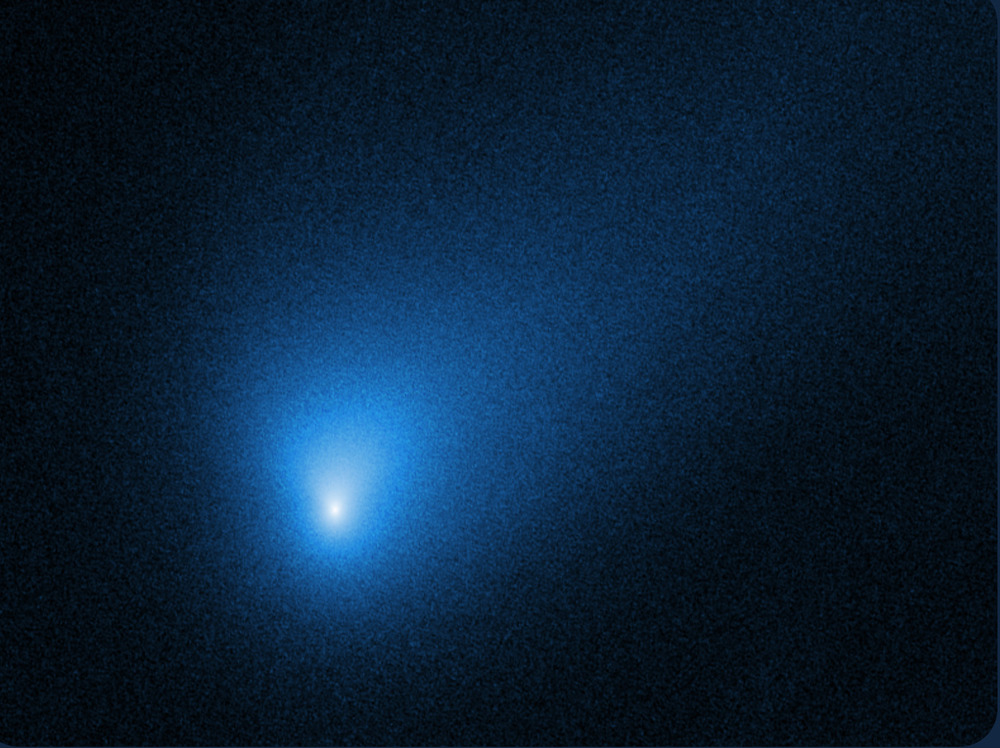
The object 3I/ATLAS, which has kept the astronomical community on edge for weeks, is approaching the inner Solar System at over 68 km/s. The more we learn about it, the more questions it seems to raise.
Read also: 15 Creepiest Space Objects and Concepts That Defy Explanation
TABLE OF CONTENTS:
A comet or an alien spacecraft?
Previous calculations confirm that 3I/ATLAS’s trajectory is not connected to our star. This is an interstellar object – a visitor not from the edge of the Solar System, but from elsewhere in the Galaxy. Objects like this are rare; before it, only 1I/ʻOumuamua and Comet Borisov had been observed. And once again, a new visitor arrives, reigniting the same question: is it a rock or a spacecraft?

Most scientists lean toward the view that this is just another interstellar comet – but not all.
Enter a familiar name: Harvard professor Avi Loeb, who gained attention for his hypothesis on the artificial origin of 1I/ʻOumuamua. He doesn’t rule out the possibility that this time, too, we might be dealing with more than a cosmic fragment – potentially something far more ambitious. In a recent post, he cautiously notes that while a natural origin seems most likely, certain details leave room for speculation. In short, it’s a reminder to keep an open mind.
So what raises the professor’s caution? Primarily, it’s the object’s unusual behavior. For a comet, 3I/ATLAS is atypical: it shows dust activity but lacks the characteristic cometary tail.
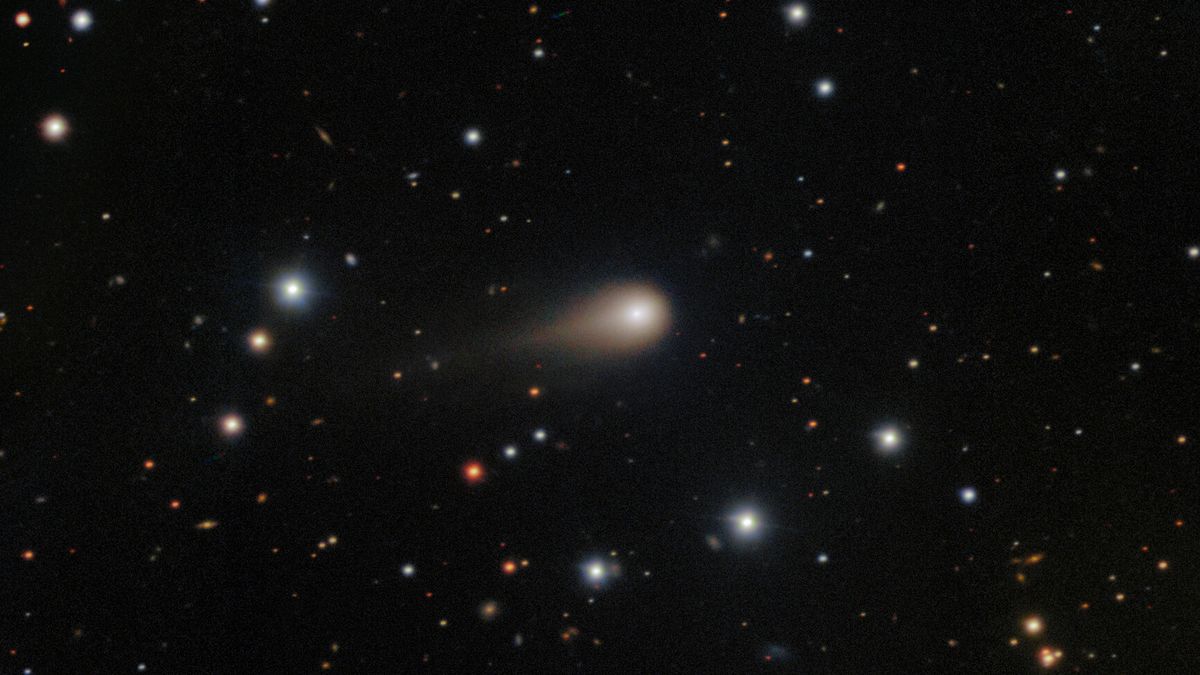
Normally, as a comet approaches the Sun, ice and gases vaporize, forming an elongated tail – but that hasn’t happened with 3I/ATLAS. Telescopes detect dust, but no tail appears. Instead, its surface is gradually reddening, which could signal changes in composition or result from interaction with solar radiation. However, there’s too little data and too many unknowns for scientists to draw firm conclusions.
Researchers suggest that the unusual “silence” of 3I/ATLAS might be due to an awkward observation angle or weak dust production. Even so, they admit these are only hypotheses. And in space, as often happens, reality can turn out far stranger than any speculation.
Read also: Can a Modern Human Live to 150 Years?
Strange movement, strange trajectory, strange size
Loeb also highlights another unusual aspect: the object’s trajectory. This is where it gets really interesting. According to his calculations, 3I/ATLAS passes extremely close to three planets – Jupiter, Mars, and Venus. Such a configuration is not just rare; it’s almost improbable. Explaining it as mere chance would be like winning a cosmic lottery. Loeb suggests that if there is a deliberate path here, it raises the question of navigation.
And there’s even more to be surprised about – its size.
Estimates suggest a colossal diameter of around 20 km, making it officially the largest interstellar object ever observed in the Solar System. According to Loeb, an object of this scale might appear only once every 10,000 years. And now – it’s here. Coincidence?
But that’s not all. The Hubble Telescope has detected an anomaly that defies everything we know about comets. There’s a diffuse cloud of dust around the object, which at first glance resembles a typical cometary tail. Yet the radiation is strangely ahead of the object, not trailing behind as with a normal comet pushed by the Sun. This contradicts basic astronomical expectations. The object doesn’t appear to drift passively – it seems to move with intent.
This behavior is more reminiscent of an artificial device heading toward the Sun than a passive chunk of ice and rock.
Read also: How Chinese Companies Circumvent the US Ban on AI Chips
Is 3I/ATLAS a technology of an extraterrestrial civilisation?
To bring some order to the chaos of cosmic speculation, Loeb and his team proposed a tool – a scale. Not just an abstract concept, but a fairly concrete one, named after him: the Loeb scale. It’s a ten-point system that assesses the likelihood of an object having an artificial, extraterrestrial origin.
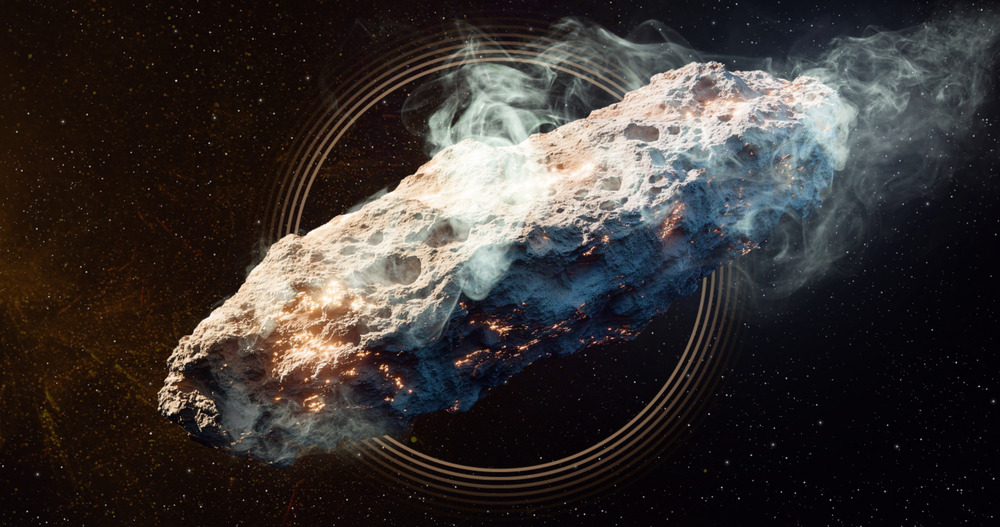
At the bottom of the scale is “1”: an object that raises no questions and fits entirely within known physics. At the top is “10”: a technology that could be considered direct evidence of another intelligent presence in the Universe.
The rating takes everything into account, from unusual trajectories and thermal radiation anomalies to chemical composition, shape, color, and other “oddities” that don’t fit the usual picture.
Here’s the most interesting part: where does 3I/ATLAS fall on this scale? Currently, it scores a 6. That’s not just “above average” – it’s very high. For comparison, most comets, asteroids, and other interplanetary wanderers rarely exceed a score of 3.
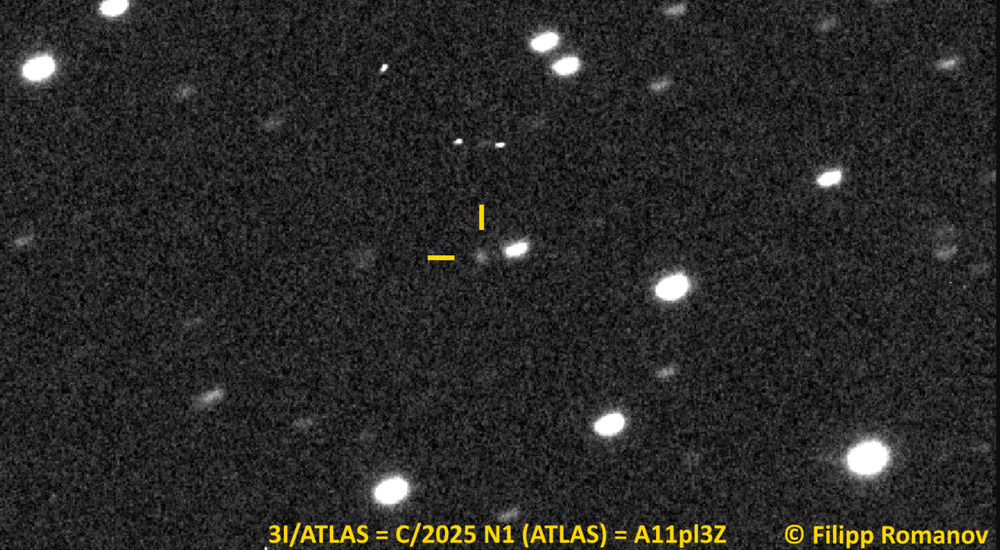
A score of six is no longer a “maybe” level – it’s a serious signal. It’s not a claim that we’re dealing with a probe from another civilization, but it’s not a denial either. This is the threshold where speculation becomes a hypothesis, and science is ready to ask more questions than it can answer.
And this is where, as Loeb himself says, it gets most interesting: we may be looking at one of the strangest natural objects ever observed – or something that humanity simply isn’t prepared to understand yet.
Read also: Cryptography: What It Is and How It Works
Science has no right to fear questions. Even the craziest ones
Loeb never explicitly claims that 3I/ATLAS is an alien probe, but he doesn’t rule out the possibility either. Instead, he emphasizes that real science begins where most people stop – where questions are framed as challenges, not dismissed because they don’t fit the standard curriculum.
Science isn’t a collection of answers from a textbook. It’s the ability to observe and question, to pose even seemingly absurd questions, and to follow them wherever they lead. Most importantly, it’s about not rejecting hypotheses simply because they are uncomfortable or inconvenient.
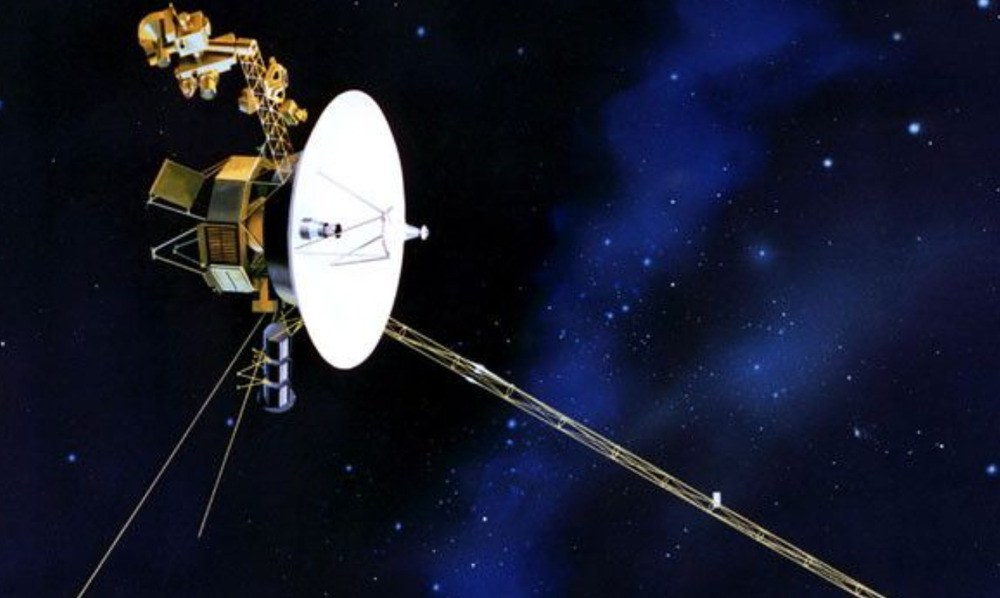
Loeb states plainly: if we label something as natural too quickly – simply because we lack the courage to consider alternatives – we risk missing an opportunity. The opportunity to realize that we may not be alone in the Universe, and that perhaps someone – or something – has already passed by… or is approaching even now.
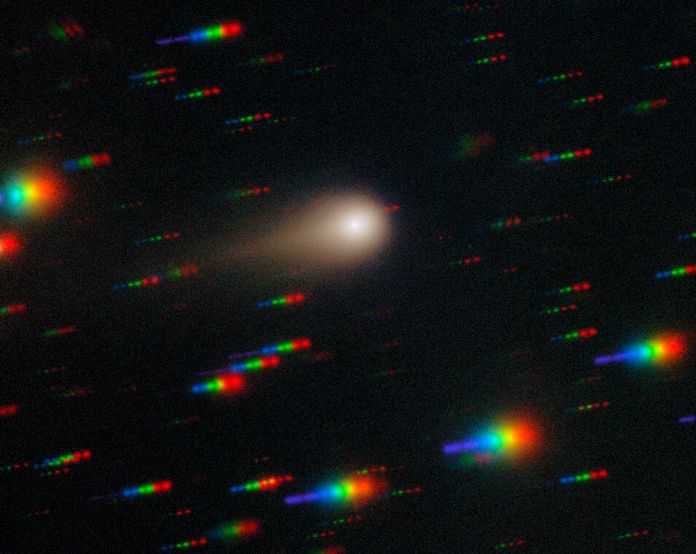
3I/ATLAS is still on its way. It’s approaching the Sun – and likely the climax of this entire story. Observations are ongoing, and what astronomers manage to see in the coming weeks and months could prove pivotal – not only in understanding the object itself but perhaps in reconsidering our place in the cosmic chain.
“Encountering an interstellar object is like a blind date,” Loeb writes. “You don’t know what to expect, but you go anyway.”
That’s why it’s worth keeping a close eye on this story. Even if 3I/ATLAS turns out to be nothing more than a bright, unusual comet from another star system, that alone is enough to make us look at the sky a little more carefully – and a little more warily.
Read also:
- AI in Medicine: Is the Future Already Here?
- “Superintelligence” – Breakthrough or Marketing Hype? An Analysis


Wow!