




© ROOT-NATION.com - Use of content is permitted with a backlink.
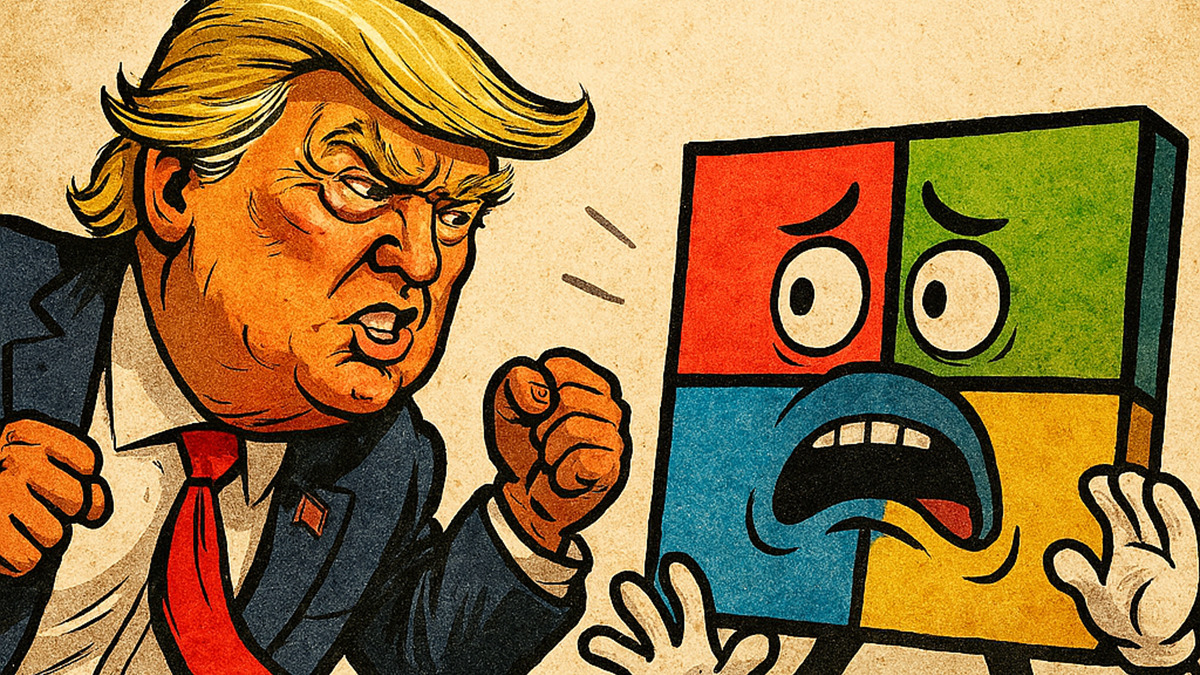
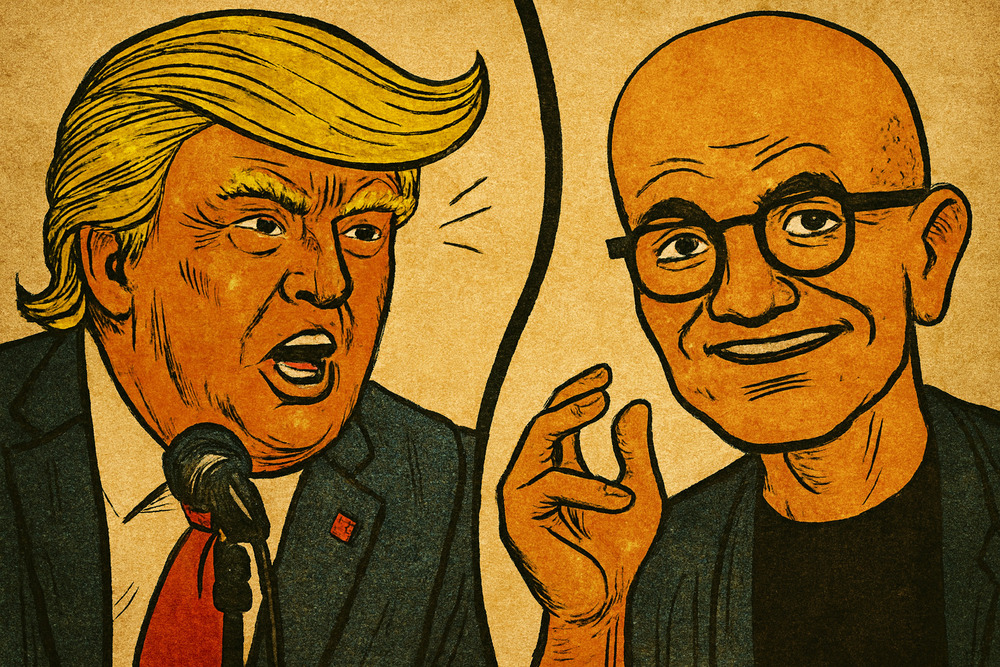
It appears that a conflict is brewing in the tech world – one that could have negative consequences for the entire industry. The dispute in question involves Donald Trump and Microsoft.
TABLE OF CONTENTS:
What’s the problem?
When the CEO of one of the world’s most influential technology corporations openly challenges a political figure, the situation inevitably turns into a high-stakes game with an unpredictable outcome. This is precisely where Microsoft’s chief executive, Satya Nadella, now finds himself – a leader who has chosen not only to defend corporate principles but also to publicly resist pressure from Donald Trump.
At first glance, it may seem like a routine clash of interests between politics and business. Yet behind the scenes lies a complex struggle for influence, where every statement can cost billions and every decision can determine a company’s future. Trump is accustomed to compliant partners and quick deals, while Nadella favors deliberate moves and the calm that precedes a storm.
Microsoft now finds itself at a crossroads: should it remain true to its principles and risk political repercussions, or compromise in the name of stability? This situation goes beyond questions of corporate ethics. It highlights how narrow the line has become between moral conviction and pragmatism in a world where political loyalty increasingly functions as a universal currency.
Read also: Civilization at Risk: Donald Trump’s Policies Are Undermining the Scientific World
When the US president demands loyalty
In its second term, Donald Trump’s administration appears to be operating under a simple but ruthless principle: “those who are not with us are against us.” This principle has evolved from a political slogan into a tool of control.
In August, reports surfaced about the existence of a “loyalty rating” system – a large-scale database covering 553 American corporations. The White House did not deny the information; instead, it effectively confirmed it by announcing the creation of “dynamic assessment systems.” These systems monitor how closely companies align with the president’s agenda, using criteria that resemble a checklist of political allegiance – from attendance at White House events to the tone of corporate social media posts and advertising campaigns.
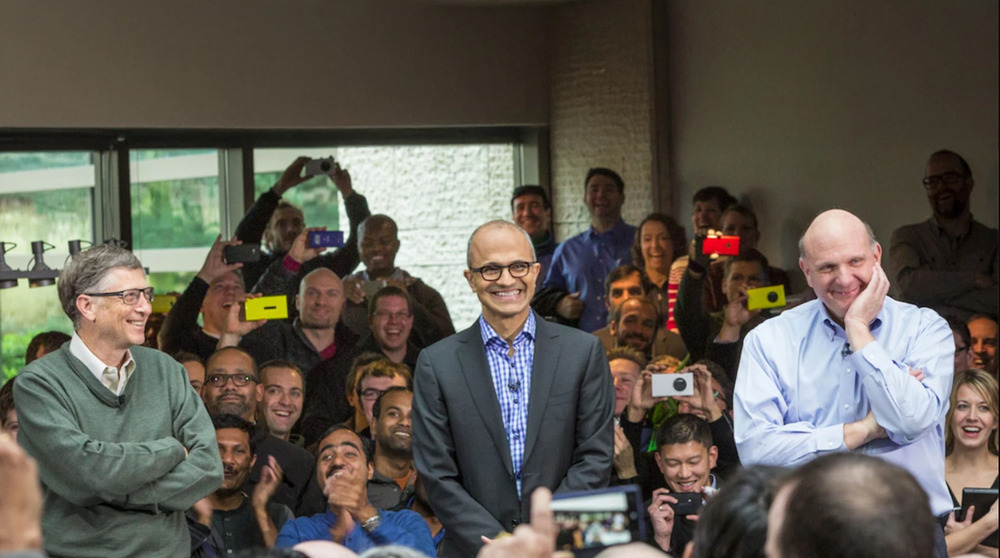
Microsoft has found itself in an ambiguous position – one that resembles a chess match where any move could prove decisive. On one hand, the company holds a federal contract worth over $6 billion, an agreement that, according to official data, saves the government approximately $3.1 billion in its first year alone. On the other hand, CEO Satya Nadella has consistently refused to play by the rules imposed by the current administration, keeping a deliberate distance from any public displays of political loyalty.
As a result, Microsoft now stands in the shadow of its own success – caught between profit and principle, between contracts and convictions. Unlike other tech giants that have increasingly shown support for Trump, Nadella has chosen a path of quiet resistance. This stance makes him more than just a corporate leader; it turns him into a figure closely watched by those who understand that in a game where power intertwines with technology, no move is ever accidental.
Read also: Strangest Deal of Year: TikTok to Lease Out Its Algorithm
Lisa Monaco and red lines
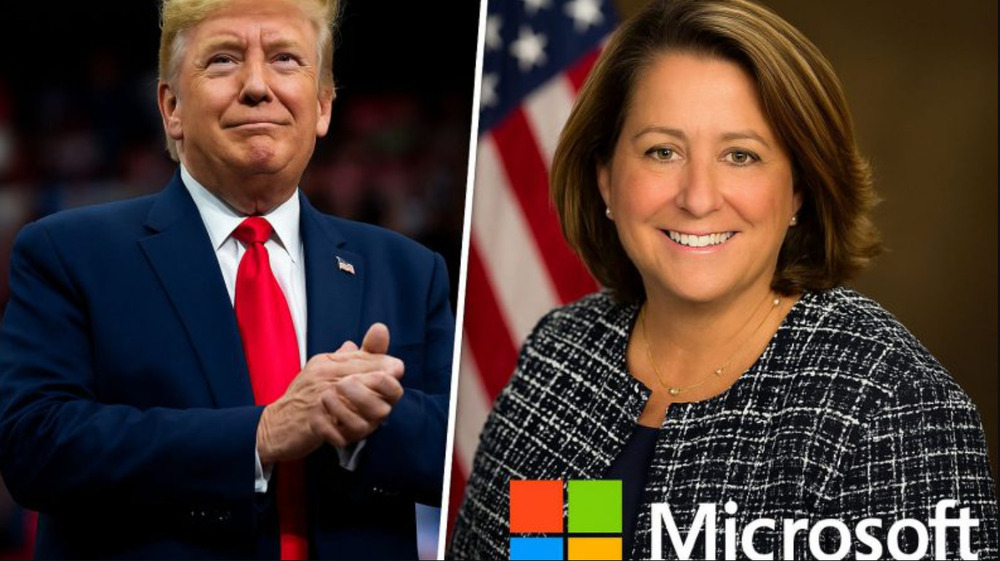
In September, the conflict between the White House and Microsoft reached a critical point – the stage at which even the most reserved parties begin to act openly. Donald Trump publicly demanded the immediate dismissal of Lisa Monaco, former Deputy Attorney General under the Biden administration, who in July had been appointed Microsoft’s President of International Affairs. Trump accused her of having “corrupt ties” and labeled her a “national security threat,” implying that her presence at the company could lead to a review of its federal contracts.
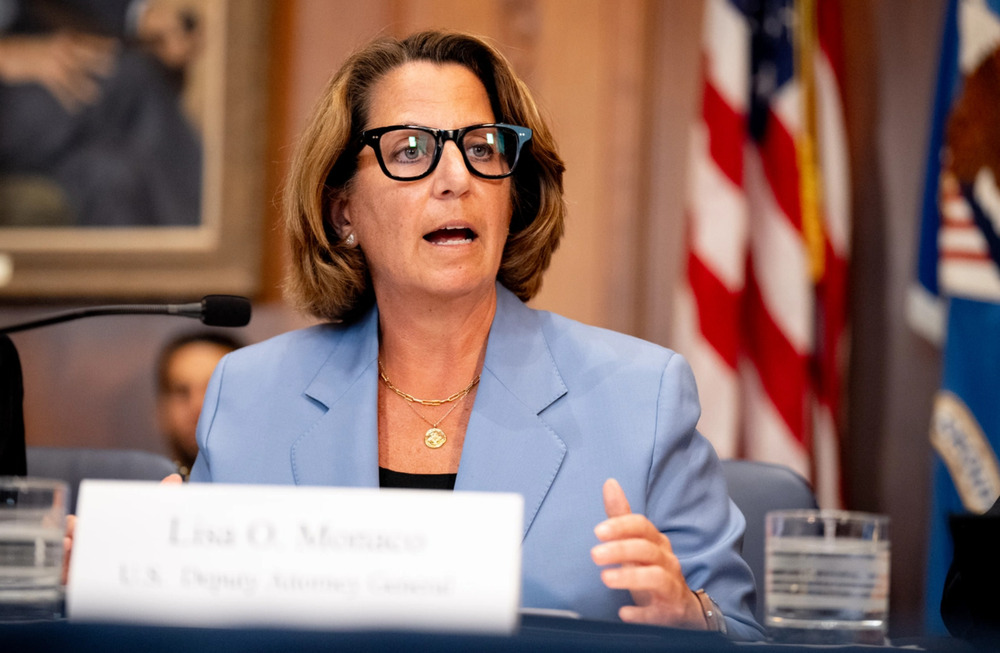
Monaco is not an incidental figure in this story. She led the Department of Justice’s response to the January 6, 2021, Capitol riot and directly oversaw investigations that involved Trump himself. In March of this year, she was indeed stripped of her security clearance, though the circumstances surrounding that decision remain unclear. The president, in his characteristic style, portrayed it as “proof of guilt,” while sources within the Justice Department described it as a procedural step related to her transition into the private sector.
Trump’s public attack bore all the hallmarks of a calculated act of political pressure: sharp statements, emotional rhetoric, and repeated emphasis on a supposed “threat to the nation.” It was a familiar tactic – an attempt to coerce a corporation into compliance without resorting to formal legal measures. Microsoft, however, responded with silence. No statements, no explanations – just a quiet refusal to obey the ultimatum.
To an outside observer, this might appear to be a minor episode. Yet in the corporate world, such a stance amounts to open defiance. Microsoft’s silence became its loudest form of resistance – an act of restrained but deliberate disobedience that raised a broader question: how far is the Trump administration willing to go in its effort to bring private enterprise under political control?
Read also: Secret Behind Microsoft’s Profits: What the Company Hid for 15 Years
Antitrust investigations as a tool of pressure
Donald Trump is not known for easily abandoning his demands. His administration wields not only political influence but also an array of institutional tools. One of these has been the Federal Trade Commission (FTC) – a formally independent regulator that, in recent months, has appeared to act in suspiciously close alignment with the White House’s messaging.
The antitrust investigation into Microsoft, initially launched during the Biden administration, has now been given unexpected new momentum under the current government. It is led by Andrew Ferguson, the newly appointed head of the FTC and a long-standing Republican ally known for his tough stance toward major tech firms. Officially, the inquiry concerns Microsoft’s cloud licensing practices – specifically, whether the company creates barriers that discourage customers from moving to competing platforms such as Amazon Web Services or Google Cloud. Yet to a careful observer, it is evident that the antitrust case has become another instrument of political pressure.
The FTC’s scrutiny also extends to Microsoft’s partnership with OpenAI – a collaboration that the Trump administration views as a potential mechanism for controlling artificial intelligence. Regulators aim to determine whether the structure of the deal was designed to formally circumvent antitrust oversight while giving Microsoft influence over OpenAI’s strategic direction. Particular attention has been drawn to Microsoft’s decision to scale back internal investments in its own AI projects following the partnership – a move Washington interprets as an attempt to “monopolize the future” using external technology.
In March, the FTC took the next step, issuing Microsoft a civil investigative demand – a document that, legally, is nearly equivalent to a court order. The company was required to provide terabytes of data, ranging from internal memos and financial reports to email correspondence, covering all of its AI operations since 2016.
Officially, this is described as part of “standard procedure.” Behind the scenes in Washington, however, the action is being referred to as a “strike against the defiant.” The stakes are high: the outcome could be decisive, involving not just multi-billion-dollar fines but also the potential forced reevaluation of Microsoft’s business model. In effect, what would normally be an antitrust investigation has become a potent political tool.
Read also: How Chinese Companies Circumvent the US Ban on AI Chips
Nadella and the art of diplomatic resistance
Satya Nadella has long demonstrated a distinctive leadership style that combines business pragmatism with clear ethical principles. This balance has been particularly evident during key moments when corporations have confronted government policy. In 2017, when Trump announced the termination of the DACA program – the Deferred Action for Childhood Arrivals – Microsoft, at Nadella’s insistence, became one of the first companies to join a lawsuit filed by 15 states and the District of Columbia against the decision. To outside observers, this was an unusual move: a corporation typically focused on stability and profit openly challenging the government.
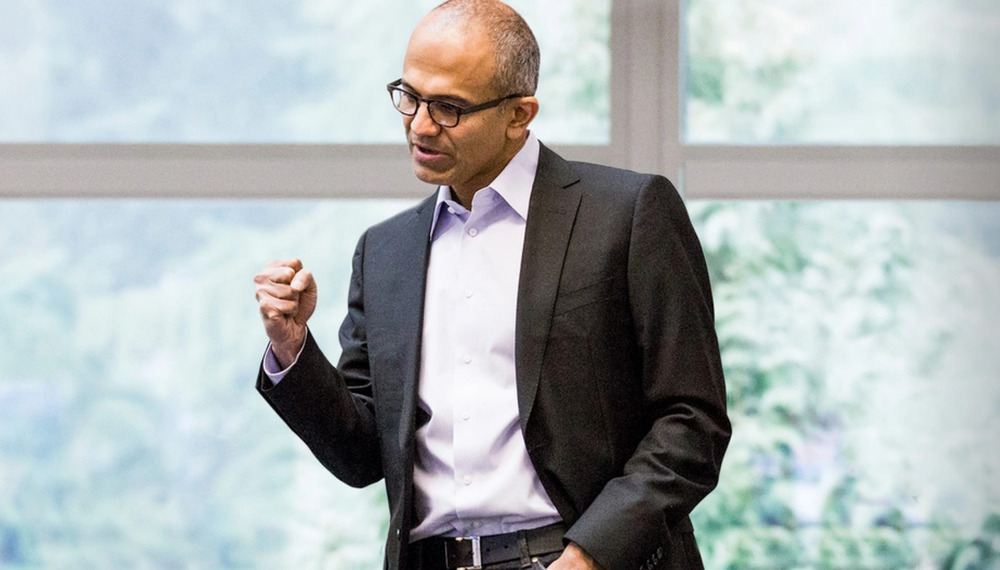
In 2018, Nadella publicly condemned the Trump administration’s policy of separating immigrant families at the border, describing it as “cruel and inhumane.” Over time, this approach became a consistent practice: in 2020, he became the first CEO of a major tech company to openly criticize India’s citizenship law, which discriminates against Muslims, stating plainly that the law was “simply wrong.”
Under Nadella’s leadership, Microsoft published a Global Human Rights Statement, committing to adhere to the Universal Declaration of Human Rights and other international standards. The company also regularly releases independent assessments of how its products affect human rights, particularly in the context of contracts with law enforcement and government agencies.
Yet Nadella is well aware that leading a global corporation is not only about principles. Every public statement and human-rights initiative is accompanied by careful risk assessment – political, financial, and legal. Microsoft’s story under his leadership resembles a strategic thriller: deliberate silence alternates with public statements, and each executive move is carefully measured. The stakes are not only the company’s reputation but also its ability to remain independent in a world where political pressure can become a powerful lever of influence.
Read also: Techno-feudalism – A New Form of World Order
The financial consequences of independence
The stakes are substantial and measured in billions of dollars. Since 2020, Microsoft has secured federal contracts totaling approximately $2.7 billion. The most significant of these is the recent agreement with the General Services Administration (GSA) under the OneGov program, which is estimated to save the federal government over $3.1 billion annually and generate more than $6 billion in revenue for Microsoft over three years. In addition, the company provides thousands of government users with free access to its AI assistant, Copilot, through Microsoft 365 G5 licenses, further deepening the integration and enhancing its strategic importance.
These contracts are more than just numbers on a report – they position Microsoft as an almost indispensable player within the federal infrastructure. Every server and service becomes a critical node, without which government operations could slow down. This makes it essential for the company to strike a balance between adhering to its principles and exercising political pragmatism.
Yet Donald Trump rarely backs down. If Microsoft continues to ignore his demands – as in the case of Lisa Monaco – even its most strategically important contracts could face real jeopardy. The stakes are high, and the consequences could extend beyond financial losses to political ramifications: a corporation that appears steadfast could find itself a piece on a chessboard where a single move by the opponent can change the entire game.
Read also: Cryptography: What It Is and How It Works
Silence as a strategy?
While other tech giants have publicly expressed approval of Trump’s policies – Mark Zuckerberg stating that “we now have a U.S. administration that takes pride in leading companies,” and Apple’s Tim Cook thanking the president for a “tone that allows for multi-billion-dollar investments” – Microsoft chose a middle path. Satya Nadella attended a tech dinner at the White House and offered thanks, yet his rhetoric remained noticeably measured, without any public display of loyalty.
A key detail: Nadella did not attend Trump’s inauguration in January, instead heading to the World Economic Forum in Davos. This was not coincidental. It was a deliberate and calculated decision – a balance between the need to maintain contact with the government and the desire to preserve the company’s independence.
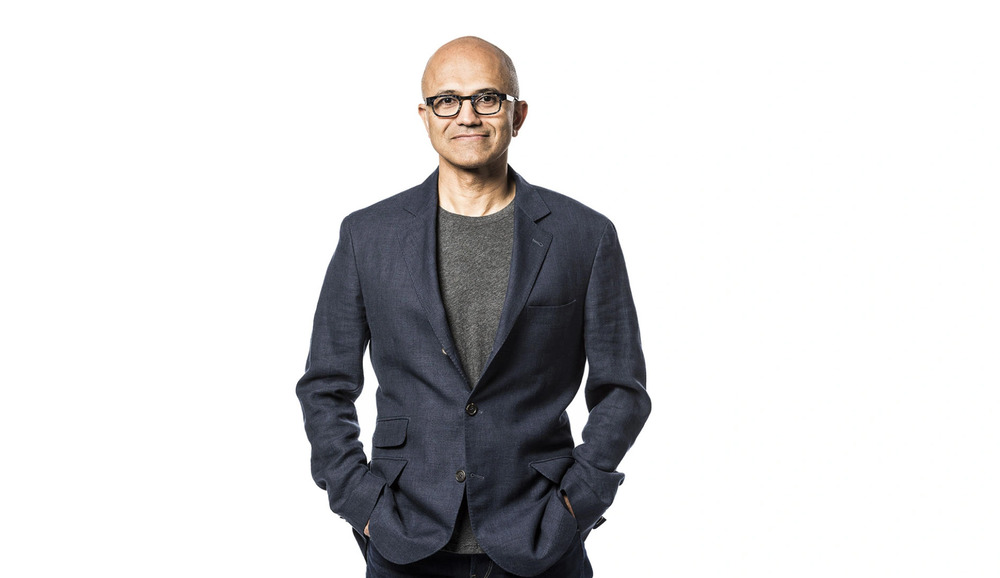
At the same time, Microsoft has not entirely ignored the administration. The company donated $1 million to Trump’s inaugural events and to fund the White House reconstruction project, which included demolishing the historic East Wing to make way for a new $250 million golden ballroom. This action appears to serve as a symbolic “insurance policy”: the corporation signals a willingness to cooperate while maintaining its autonomy, without becoming a public political ally.
In summary, Microsoft has developed a nuanced strategy: showing courtesy and cautious loyalty without compromising its own position. Every move is calculated, and the public visibility of its actions forms part of a complex game in which billions of dollars and the company’s reputation are at stake.
Read also:
Choosing between moral integrity and obedience
Experts predict that Microsoft may soon face a decisive moment – when strategic silence alone will no longer suffice. Satya Nadella appears to be pursuing a long-term approach: following the rules without provoking open conflict, while still upholding the company’s principles. It is a game of endurance, where each move is measured not only in financial terms but also in political risk.
In July, the White House released an AI Action Plan, advising the Federal Trade Commission (FTC) to exercise greater restraint in AI-related investigations and to avoid actions that could excessively burden innovation. For Microsoft, this represents a potential “safe zone,” signaling an opportunity to avoid undue regulatory pressure. Yet in a world where political loyalty often functions as a form of “currency,” even this signal depends on a delicate balance of agreements and compromises.
The FTC investigation continues despite the White House’s recommendations, indicating that Andrew Ferguson is not inclined to back down easily. Microsoft finds itself in a complex position: the company may need to engage in indirect negotiations to protect its stance, potentially making concessions in other areas to safeguard key contracts and maintain strategic independence. Every move in this game tests patience and strategic resilience, where even silence becomes a tool of influence.
Read also:
- “Superintelligence” – Breakthrough or Marketing Hype? An Analysis
- Strange Relationship Between Microsoft and OpenAI
What does this mean for the rest of the industry?
The story of Microsoft and Satya Nadella illustrates a broader trend: the increasing politicization of corporate America. The administration has formalized assessments of company loyalty, public ultimatums regarding executive personnel have become common, and corporations are forced to navigate a difficult balance between their own values and pragmatic considerations.
Many companies have opted for the path of least resistance. Amazon and Meta have paused their diversity, equity, and inclusion (DEI) programs, which Trump has long criticized. Google, Meta, Apple, and Amazon have made substantial donations to Trump-related initiatives, including the White House reconstruction and its proposed golden ballroom. These companies are simultaneously contending with their own antitrust challenges and hope that demonstrating political goodwill will mitigate regulatory pressure.
Microsoft stands out among these companies. It continues to publish detailed reports on diversity and inclusion, supports Lisa Monaco despite the president’s demands, and funds independent assessments of its technologies’ impact on human rights.
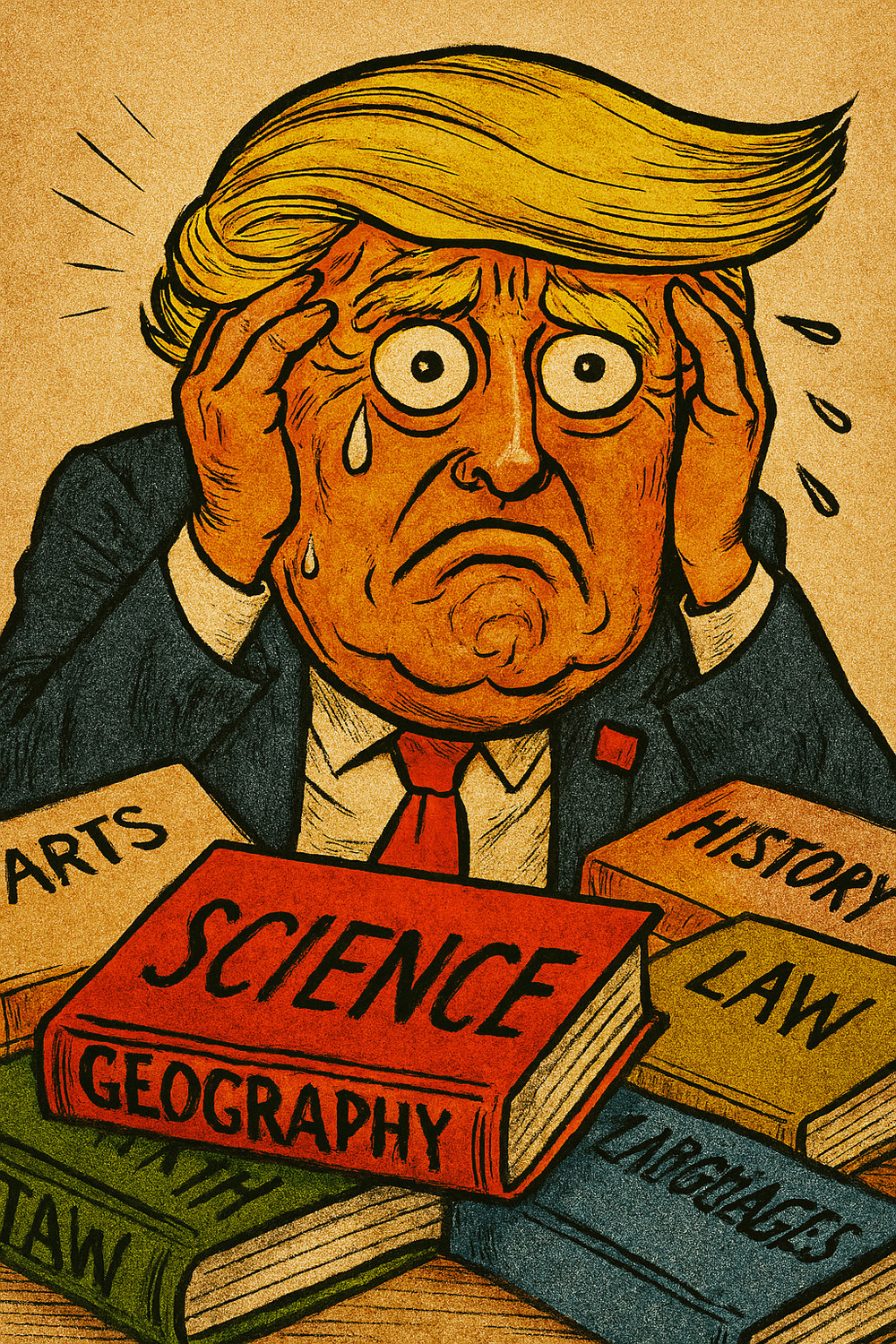
But this independence comes at a cost – and for now, it is unclear how high that cost might be. Microsoft may discover that adhering to principles is expensive, or it may find that long-term trust from customers, employees, and society outweighs short-term political expediency.
Tech giants are not impersonal profit machines. They are organizations run by people who make decisions based on values – or the lack thereof. Nadella has repeatedly stated that privacy is a human right, diversity is a business imperative, and technology should serve humanity. Today, these statements face a real test: billions of dollars and political influence act as a litmus test for corporate ethics. Will Microsoft yield to pressure, or will it continue its cautious yet principled strategy of resistance? Will Nadella pay a price for refusing to “kiss the ring,” or will independence prove more advantageous in the long run?
The decisions Nadella makes will have consequences far beyond Microsoft. They set a precedent that all tech companies will observe, defining how much autonomy they can maintain in a politically charged environment. For users, consumers, and citizens, this is a test of whether corporate values mean anything in practice – when not just reputation, but power and money are at stake.
What happens next remains to be seen. We will continue to follow the story closely.
Read also:
- AI Hallucinations: What They Are and Why They Matter
- Microsoft, how many more interns will decide what Windows should be?
- Civilization at Risk: Donald Trump’s Policies Are Undermining the Scientific World

