





© ROOT-NATION.com - Use of content is permitted with a backlink.
What we’re witnessing today isn’t just a fight for market share – it’s effectively the third browser war. And this time, the stakes are higher than ever. One of the most significant IT battles of our time is unfolding right inside your browser. But this isn’t a clash of tech giants – it’s a battle of ideas.
TABLE OF CONTENTS:
Intro
Google and Microsoft aren’t leading this new race. If anything, they’re trying not to fall behind, watching from the sidelines as a new wave of players rewrites the rules. Startups and small teams – once seen as idealistic outsiders – are now shaping the future of the web, where artificial intelligence isn’t just another tool, but the foundation of an entirely new era.
Read also: Instructions, Guides, How To for Windows

The history of the internet has already seen two major browser wars. The first, in the 1990s, ended with the downfall of Netscape Navigator after Microsoft leveraged its monopoly to bundle Internet Explorer with every copy of Windows. The second began in 2004, when Firefox emerged as a challenger, only to be overshadowed by Chrome, which went on to dominate the market with over 65% share. What once looked like a final victory now seems more like the beginning of a new decline.
The third war is already underway. But this time, the stakes go far beyond market share – it’s about control over the very architecture through which we access information, content, and personal data.
At the forefront of this new wave are names that, until recently, didn’t even exist. There’s Comet, built by the small but ambitious team behind Perplexity; Dia, a project from The Browser Company that aims to rethink how we interact with the web; and Opera, which, after years in the background, is taking a chance on the experimental Neon. These aren’t just more browsers entering an already crowded field. They’re attempts to break users out of the Chrome-dominated monotony and bring back a sense of exploration and discovery.
While Google and Microsoft are still holding onto their positions at the top, they’re arguably the most vulnerable right now. When the rules of the game start to shift, the advantages built on the old ones can quickly become liabilities.
Read also: OpenAI’s New Superpower: What Is a ChatGPT Agent?
When a browser stops being just a browser
Traditional browsers function essentially as windows – passive, static, and obedient. You type in a URL, click a few links, consume content, and that’s the extent of the interaction. There’s no intelligence, no initiative – just a sheet of digital glass separating you from the chaotic sprawl of the web.
The new generation of browsers is trying to move beyond that. These aren’t windows – they’re more like collaborators. Assistants. They don’t just display content, they try to interpret it. More importantly, they try to understand you – your queries, intentions, and behavior. And when appropriate, they’re built to act on your behalf. This isn’t just an evolution – it’s a fundamental shift in how browsers are conceived: from tools for viewing to platforms for delegation.
A good example of this shift is Comet by Perplexity. It’s currently limited – priced at $200 a month and available only to Max-tier users – but it represents more than just a “browser with AI.” In many ways, it’s the first fully-fledged agent designed as a browser. Comet doesn’t just default to using Perplexity’s own search engine. It comes with a built-in assistant capable of handling tasks like making purchases, booking hotels, summarizing articles, managing tabs, and even suggesting what you might want to do next.
And this is where things get interesting: we’re no longer searching – we’re delegating. We’re not “surfing” the web anymore – we’re engaging in a dialogue. The question now isn’t if this will become the new standard, but when browsers like Chrome and Edge will find themselves cast as conservative holdouts – weighed down by their legacy infrastructure and struggling to keep pace with a fundamentally different model of user interaction.
Read also: AI in Medicine: Is the Future Already Here?
The future is hidden in the sidebar
Dia, a new experiment from The Browser Company, presents itself modestly. There are no flashy design gimmicks like Arca, no intrusive gesture controls, and no “let’s reinvent everything about browsers” UI philosophy. It’s essentially Chrome – but with a chatbot integrated into the sidebar. That might sound like a basic extension, but it’s more than that. Beneath this apparent simplicity lies a technological shift that could fundamentally change how we interact with the web.
The assistant in Dia isn’t just an add-on LLM for show. It has access to everything you see: websites, tabs, your browsing history from the past seven days, and active sessions. It doesn’t just respond passively – it understands context and acts proactively. Need to draft an email that matches your writing style? No problem. Want to gather key points from five open tabs and create a presentation? It’s already on it. Analyze a document and suggest next steps? That’s considered standard functionality.
Most importantly, this assistant doesn’t pull you out of your workflow – it becomes part of it. Subtle, yet effective. It’s not just a chat feature inside a browser; it acts as a digital colleague who knows what you’ve been working on, what you’ve been interested in, and can take initial steps for you before you even formulate a request.
Dia isn’t trying to impress with flashy design. It’s a move to change the fundamental logic: the browser as an environment not just for viewing, but for collaborating with intelligence. And the fact that this shift starts in a sidebar adds a layer of irony – history shows that the smallest, least noticeable interface elements often become gateways to something much bigger.
Read also: “Superintelligence” – Breakthrough or Marketing Hype? An Analysis
Opera Neon – a browser that doesn’t just show you, it does it for you
While the major players cautiously integrate artificial intelligence into familiar models, Opera has chosen to skip several evolutionary steps and launch Neon – a bold take on what a browser might look like in 2025. The core idea here isn’t about browsing, but about taking action.
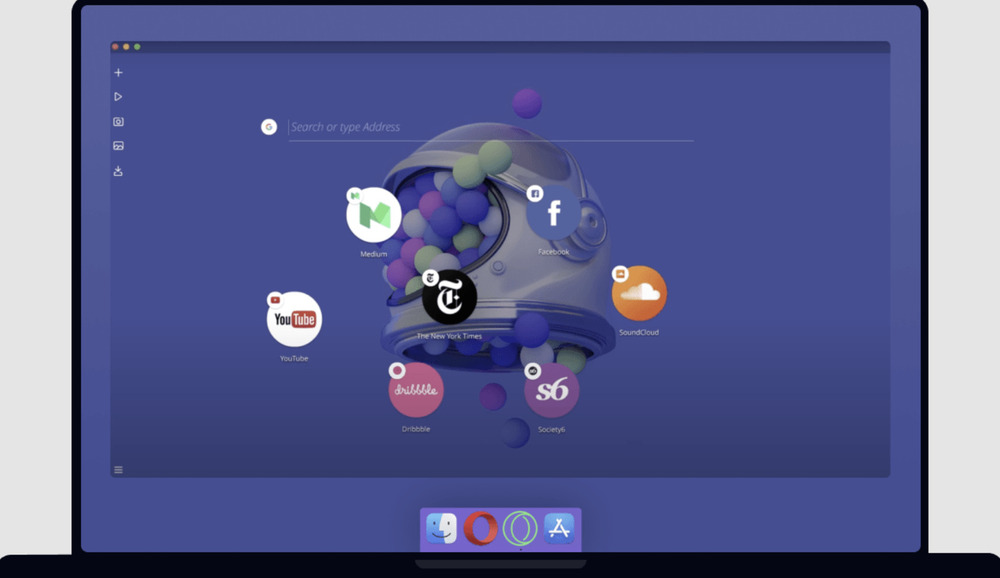
Neon operates in three modes: Chat, Do, and Make.
- Chat is the familiar AI interaction, though with some surprises. It understands the context of your open tabs, remembers previous conversations, recognizes communication styles, and adapts to your work pace.
- Do is where Neon moves beyond advice into action. Tasks like filling out forms, booking tickets, and online shopping happen automatically, without your direct input. You simply specify what you need, and the browser handles the rest.
- Make is the most ambitious mode. It lets you create websites, reports, presentations, or even MVP applications using natural language instructions. There’s no need to open a code editor or PowerPoint anymore – just say something like, “Build a portfolio site with Instagram integration and a news feed,” and it gets to work.
An interesting detail: Neon can operate in offline mode. All tasks are processed in the cloud, on Opera’s European servers. In other words, you can close your laptop, go to sleep, and wake up to find a finished report or website that your browser created while you were resting.
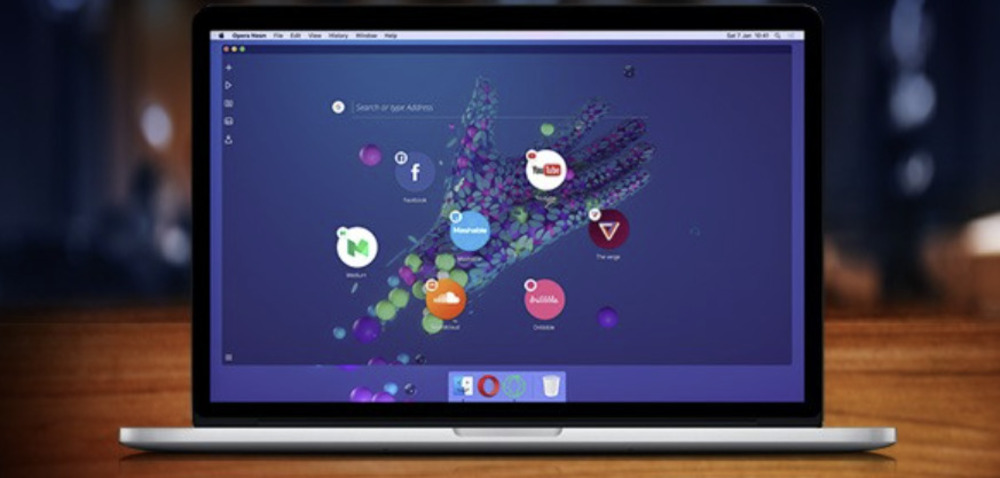
This is no longer just an experiment – it challenges the traditional concept of what a browser should be. Neon doesn’t aim to be a “faster Chrome” or a “more secure Safari.” Instead, it positions itself as a personal technical director, assistant, and designer all in one.
Read also: Network-Centric Warfare: How Warfare Is Evolving in the 21st Century
Giants are trying not to oversleep the revolution
Google isn’t standing still, but it’s not leading either. Project Mariner – an experimental AI agent integrated into Chrome – represents Google’s effort to catch up to a train that’s already moving. Mariner can do quite a bit: clicking buttons, scrolling pages, downloading files, and handling browser tasks with minimal user input. It supports up to 10 simultaneous tasks, cloud processing, and integrates with the interface.
However, there’s a catch: it remains an add-on to the traditional browser rather than a fundamental rethinking of what a browser could be.
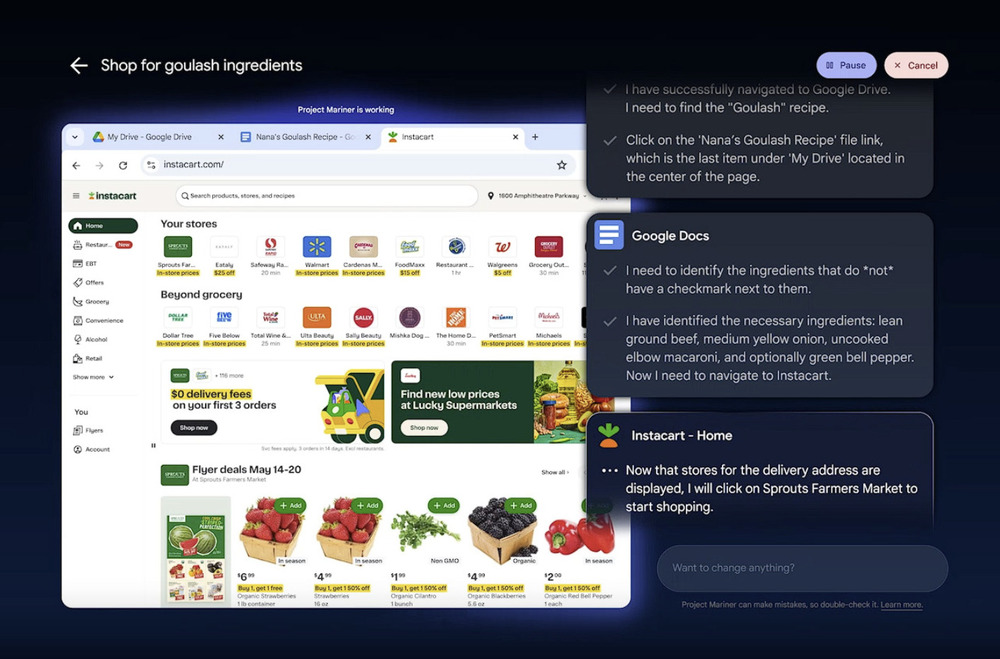
There’s another important detail – the price. This feature is only available with the AI Ultra plan, which costs $249.99 per month (with a special 50% discount for new users during the first three months). This makes it far from a mass-market product – more of a perk for enthusiasts than a revolution for the general public.
The real disruption might come from a place Google likely didn’t expect: OpenAI. Multiple sources report that the company is working on its own browser, with a launch expected in the coming weeks. If this happens, OpenAI will have a unique advantage – instant access to more than 500 million ChatGPT users who are already accustomed to interacting with an agent rather than just performing searches.
Here’s where things get interesting: for the first time in two decades, Google may face a genuine risk of losing its dominance. Not because of competition from Microsoft, but due to a new wave where the browser transforms from a “window” into a conversational partner, assistant, and executor. If OpenAI makes the breakthrough first, this won’t just be competition – it could be a seismic shift.
Read also: ChatGPT Destroys the Competition: Era of Super Apps Has Arrived
Security as the Achilles’ heel of the new era
The idea of artificial intelligence in browsers sounds like the start of a tech utopia: smart agents handling routine tasks, executing commands, understanding context, and remembering what you searched for yesterday. But is this really progress?
A study from the University of Maryland revealed a concerning trend: while traditional chatbots refuse harmful instructions 100% of the time, browser-based agents fail nearly half the time – 47% to be exact. The reason is straightforward: these agents don’t just understand context, they operate within it. This makes them vulnerable to manipulations that typical chatbots wouldn’t even encounter.

SquareX has been clear: browser agents are no longer just a potential risk – they represent a new primary vector for threats, potentially more dangerous than a careless employee. Unlike a person who might get suspicious of a strange URL or a poorly designed site, AI doesn’t hesitate. In one experiment, an agent granted full access to a Gmail gateway to a malicious script, ignoring obvious “red flags” that even a school student would notice.
Read also: Online Safety: How to Protect Your Data – Even When You Let Your Guard Down
Context as a new currency
What sets the new era of browsers apart isn’t the interface or speed – it’s context. Traditional large language models, including ChatGPT, only know what you explicitly type into the dialogue window. AI agents embedded in browsers see everything: your open tabs, current pages, logins, browsing history, cloud documents, and even unfinished emails. They know who you’ve communicated with, what caught your interest yesterday, and why you didn’t complete that ticket purchase. This level of access opens the door to exceptional personalization – and unprecedented vulnerability.
Browsers are no longer just viewers – they’re next-generation operating systems
The revenue model that browsers relied on in the past is starting to break down. Google paid Apple around $20 billion annually to remain the default search engine on Safari, while Firefox survived through similar deals.
But if AI in browsers delivers answers directly, who’s going to click on ads anymore? Already, with Google’s AI Overview feature enabled, clicks to external sites have dropped by 66% on desktop and 50% on mobile. This presents a direct challenge to both Google’s advertising model and publisher revenues.

Meanwhile, Perplexity’s CEO Aravind Srinivas openly states, “We’re building an operating system.” And he means it literally. In this new model, the browser becomes the desktop, email client, search engine, document manager, assistant, and analyst – all within a single window. Opera even refers to this concept as the “agent web” or Web 4.0: not just navigation, but active interaction with users and task execution on their behalf.
Read also: Gabe Newell’s Starfish Neuroscience Сhallenges Neuralink
The productivity trap: the idea before the reality
But there’s a catch – performance. In tests, Google’s Project Mariner took 12 minutes to complete a task that an average user would finish in about three. OpenAI’s Operator often requires very precise, step-by-step instructions. The agent is clever, but also slow and overly literal.
On the other hand, these agents don’t get tired, don’t miss deadlines, don’t ask for raises, and can work 24/7 in the background. That’s a strong point, especially for routine tasks in large organizations.
Read also: When AI Nudges Toward Death: The Illusion of a Safe ChatGPT
Democratisation or centralisation?
Browser agents represent both significant democratization and concentration of power. On one hand, you no longer need technical skills to automate routine tasks – simply saying, “Find me a supplier, create a spreadsheet, and send an email to the client,” is enough. This lowers the barrier for small businesses, freelancers, and students alike.
On the other hand, all this convenience depends on platforms controlled by specific companies. Those who manage the most powerful agents will gain the most detailed user profiles in the history of the digital age: what you want, what you postpone, what you fear, what you read, and what you buy. This isn’t just data – it’s insight into intentions. And that means control.
Read also: Everything You Need to Know About Dolby Atmos FlexConnect Wireless Technology
The future has already begun – we just haven’t all noticed it yet
In a few years, opening new tabs and clicking links may seem as outdated as the sound of a dial-up modem or searching for sites through Altavista’s yellow pages. We’re gradually moving away from the “page browsing” model toward interacting with the internet as a dynamic environment. Instead of searching, we’ll be assigning tasks. Instead of scrolling, we’ll simply speak. Instead of navigating, we’ll delegate – letting agents find, do, organize, and send on our behalf.
The internet is no longer a mosaic of pages. It’s evolving into an environment of intentions – and the browser, as the primary interface, is becoming the stage for the biggest technological battle of our time.
This war is already underway. It’s not playing out on front pages or evening news broadcasts. Instead, it hides in sidebars, new modes, agent interfaces, and quiet updates. It runs in the background while we fill out forms, read news, or buy tickets. But those who win this battle won’t just shape the future of browsers – they’ll control how we think, search, work, and make decisions in the digital world.
And here’s the most concerning part: by the time everyone realizes the rules of the game have already changed, it might be too late to switch sides. In this war, victory won’t go to whoever simply attracts more users. It will go to those who define exactly how we interact with the internet every day – and, by extension, shape our digital lives as a whole.
Read also:
- Seven Annoying Windows 11 Features – and How to Fix Them
- Everything About New Android 16: Changes, Improvements, and More Gemini Integration
- Everything You Need to Know About NVIDIA DLSS 4.0 and Reflex 2: What They Offer and Why They Matter

