





© ROOT-NATION.com - Use of content is permitted with a backlink.
Today, we explain everything you need to know about the new NVIDIA RTX Spark superchip, a 1-petaflop platform designed to redefine the Windows PC. When one petaflop fits inside a laptop, this is no longer just an evolution of hardware performance – it is a shift in computing design. What actually stands behind NVIDIA’s most ambitious chip yet, and why does it matter beyond AI enthusiasts and developers? Let’s take a closer look.
TABLE OF CONTENTS:
Why Now, and Why It Was Inevitable
Just a few years ago, the idea of running a powerful large language AI model on a personal computer without an internet connection sounded unrealistic. Cloud platforms had effectively monopolized AI workloads, while ordinary users depended on data centers located thousands of kilometers away from their desks. NVIDIA RTX Spark is a technical response to a question that has been building across the industry for years: when will AI computing power finally move directly onto local machines?

The answer is: now. And the implications are far deeper than they may appear at first glance.
Read also:Microsoft Build 2026: From Language Models to New OS-Level Security Architecture
The Alliance of Three Giants and the Birth of a New Architecture
NVIDIA RTX Spark did not emerge in isolation. It is the result of a strategic partnership between NVIDIA, Microsoft, and MediaTek – three companies whose interests converged around a single idea: redefining what a modern PC should be. Microsoft is pushing toward a new generation of Windows where AI is not an additional feature, but a core part of the operating system itself. NVIDIA aims to extend its dominance beyond data centers and enterprise accelerators. MediaTek contributes its experience in highly efficient mobile architectures. Together, they designed not just a chip, but an entire computing platform.
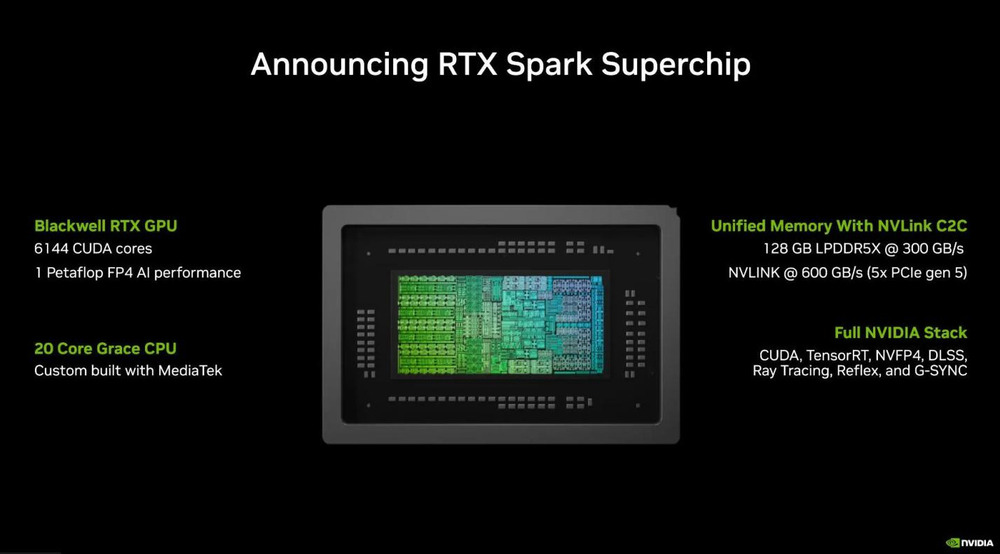
Technically, RTX Spark is a new type of system-on-chip (SoC). At its core is a Blackwell-based GPU with 6,144 CUDA cores and fifth-generation Tensor cores with FP4 precision support. It is paired with a 20-core NVIDIA Grace CPU connected through the NVLink-C2C interconnect. This high-bandwidth link is one of the platform’s key architectural elements. It removes the traditional bottleneck between the CPU and GPU that has limited system performance for decades.
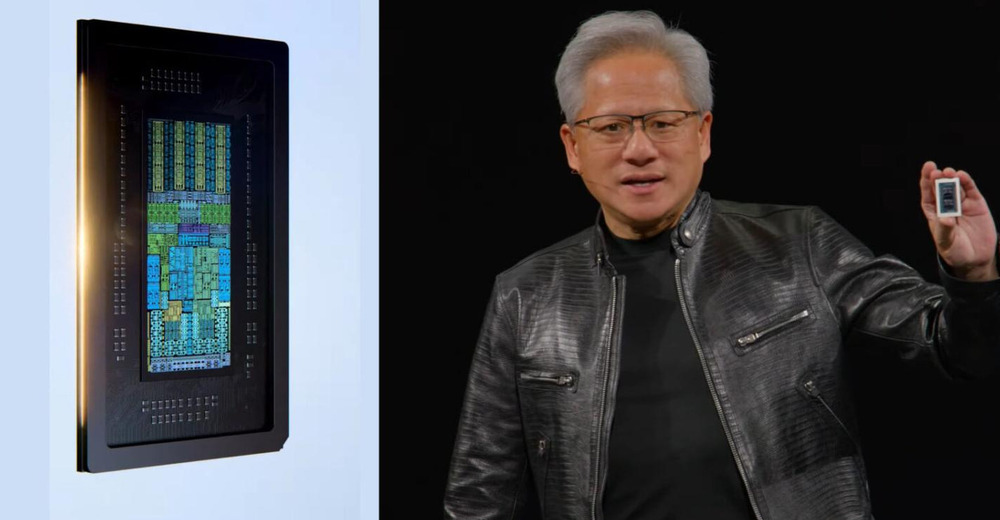
“For forty years, you launched applications… with RTX Spark, you ask a question, and the PC does the work,” said Jensen Huang, CEO of NVIDIA.
Read also:NVIDIA N1 and N1X: The Moment Windows Has Been Waiting for for Twenty Years
One Petaflop: What the Number Actually Means
The “1 petaflop” figure sounds impressive, but what does it mean in practical terms? In AI and machine learning workloads, it represents one quadrillion operations per second. For comparison, the first supercomputers to cross the petaflop threshold in the early 2000s occupied entire buildings and consumed megawatts of power. Today, that level of compute performance can fit inside an ultrathin laptop.
The practical significance becomes clearer through specific examples. With 128 GB of unified memory, the system can locally run large language models with up to 120 billion parameters. Until recently, this class of AI systems required cloud infrastructure and could cost hundreds of dollars per month through API access alone.
Now, these workloads can run directly on a local machine – without network latency, without sending sensitive data to third-party servers, and without depending on a stable internet connection.
Another particularly important detail is support for a 1-million-token context window. In practical terms, this means a model can keep an entire novel, a large software codebase, or a year-long archive of business correspondence within a single working session. For enterprise environments, this represents a major shift in workflow design and AI integration.
Read also:Prospects for DDR SDRAM: Future Developments and Key Challenges
The Software Layer: A Platform, Not Just a Chip
It would be a mistake to view RTX Spark as purely a hardware product. The broader integration includes NVIDIA OpenShell for AI agents, Windows security frameworks, and deep optimization for the Adobe ecosystem.
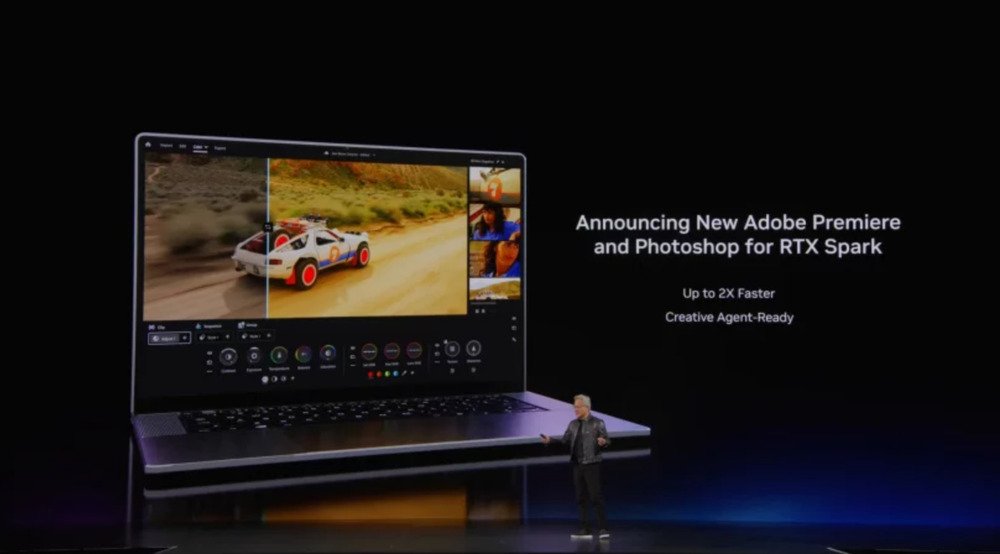
According to the developers, applications such as Photoshop and Premiere Pro can deliver up to twice the AI processing performance when optimized for the new architecture. The CUDA, RTX, DLSS, and TensorRT technology stack has effectively undergone a form of “technology compression,” where every layer of the software pipeline has been tuned around the new compute cores.
This matters because the software ecosystem will define the real-world potential of the chip just as much as its transistor count. And this is where NVIDIA holds a significant advantage. For decades, the company has been building the CUDA development ecosystem, and competitors still struggle to offer a truly equivalent alternative.
Read also:Everything About VERTU ALPHAFOLD: Smartphone Priced Like Car or Future of Enterprise AI?
What you can do with RTX Spark: a practical guide
AI Without the Cloud: Ending Server Dependency
This is arguably the most radical shift introduced by RTX Spark. Today, most users interact with artificial intelligence through a browser or an app. Their request is sent to a server – often located in Virginia or Ireland – processed there, and the response is returned. The entire process takes time, costs money, and, most importantly, assumes that user data is transmitted and stored on external infrastructure.
RTX Spark breaks this chain. As noted earlier, with 128 GB of unified memory and 1 petaflop of compute performance, the chip is capable of running locally hosted language models with up to 120 billion parameters. This places it in the class of systems comparable to GPT-4-level models, which until recently existed exclusively in the cloud. Now, the model effectively lives on the user’s device.
The implications of this are multi-layered. For everyday users, it means an AI assistant that works without an internet connection – on a plane, in the mountains, or in areas with unstable connectivity. For businesses, it enables the deployment of corporate models trained on internal documents without sending any data to third-party servers. For journalists, lawyers, and medical professionals handling sensitive information, it introduces a fundamentally different security model.
Another key point is support for a 1-million-token context window. This is roughly equivalent to 750,000 words – an entire novel, a large software codebase, or several years of business correspondence that the model can keep “in memory” within a single session. No cloud-based solution currently offers this level of context capacity to typical users without significant additional cost or infrastructure requirements.
3D Rendering of 90+ GB Scenes: The End of Render Farms for Most Workloads
Architectural firms, visualization studios, and VFX teams have faced the same bottleneck for decades. Complex 3D scenes simply did not fit into local workstation memory. The standard solution was either to invest in extremely expensive machines with large amounts of VRAM or to offload rendering tasks to render farms and wait hours for results.
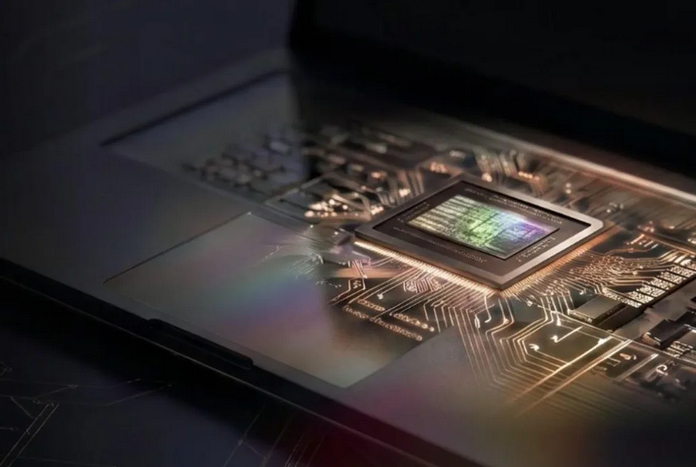
RTX Spark, with support for scenes exceeding 90 GB through NVIDIA OptiX, shifts this model. OptiX is NVIDIA’s ray tracing engine used in demanding fields such as film production, industrial design, and scientific simulation. Previously, working with datasets of this size required workstation-class hardware or compute clusters. Now it can be done on a laptop.
In practical terms, this means an architect can load a full skyscraper model – with all materials, lighting, and surrounding environment – directly during a client meeting. An automotive designer can inspect a photorealistic interior render without sending the project to a render farm. An animator can review ray-tracing output in near real time instead of waiting for overnight renders.
This is not only an acceleration of existing workflows, but a structural change in how they are organized. Iterations that once took days are reduced to hours.
12K 4:2:2 Video: Cinematic Quality Without a Cinematic Budget
The 12K 4:2:2 format was, until recently, associated almost exclusively with Hollywood productions and specialized post-production studios. The numbers are significant: 12K refers to approximately 12,000 horizontal pixels, about six times the resolution of 4K. Chroma subsampling at 4:2:2 is a professional video standard that preserves substantially more color information compared to consumer 4:2:0 workflows.
Processing this type of video in real time requires extremely high memory bandwidth and significant computational resources. Until recently, it typically implied workstation-class systems such as Mac Pro configurations or Xeon-based setups with dedicated professional accelerators. RTX Spark moves this capability into a mobile form factor.
For filmmakers and documentary creators working with cameras such as RED, ARRI, or Blackmagic Design, this enables on-location editing of raw footage without transcoding to proxy files and without quality loss. For content creators targeting the future of ultra-high-resolution media, it provides a competitive advantage already today.
An additional factor is integration with Adobe Premiere Pro, which is optimized for RTX Spark and is expected to double the performance of AI-driven features. Automatic color grading, noise reduction, and AI-based subtitles are all significantly accelerated.
1440p / 100+ FPS with Ray Tracing: A Mobile Gaming Workstation Without Compromises
Ray tracing – a technology that simulates the physical behavior of light in a 3D environment – was introduced to consumer GPUs in 2018 and immediately confronted the industry with a trade-off: visual fidelity versus performance. Enabling ray tracing typically meant losing a significant portion of frame rate. Mobile systems were affected even more severely.
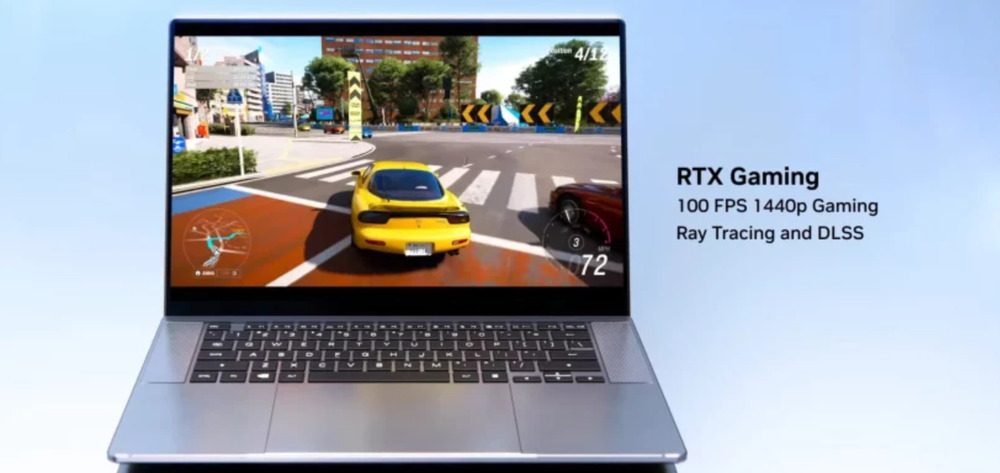
DLSS (Deep Learning Super Sampling) from NVIDIA was developed as a response to this trade-off. It uses a neural network to reconstruct higher-resolution images from lower-resolution input, delivering near-native visual quality with significantly reduced rendering load.
DLSS 4.5, integrated into RTX Spark, represents the latest iteration of this approach, adding AI-based frame reconstruction that generates intermediate frames between rendered ones, effectively increasing perceived frame rates.
The result is 1440p gaming at 100+ FPS with ray tracing enabled – on a laptop. These are performance levels that, until recently, required high-end desktop systems. At the same time, NVIDIA Reflex reduces system latency between user input and on-screen response, which is especially important for competitive gaming genres.
However, the broader context is more important than individual metrics. For a long time, the mobile gaming segment has been defined by compromise: either play at home on a powerful desktop, or accept reduced settings on a laptop. RTX Spark effectively blurs that boundary and raises a more fundamental question about the necessity of traditional desktop gaming PCs in the next generation.
Read also:Against the Current: My Thoughts on DLSS 5 (ft. Goodram Move Ridge)
Where are the risks, and is there an alternative?
An objective assessment requires acknowledging that alongside the excitement, there are still open questions.
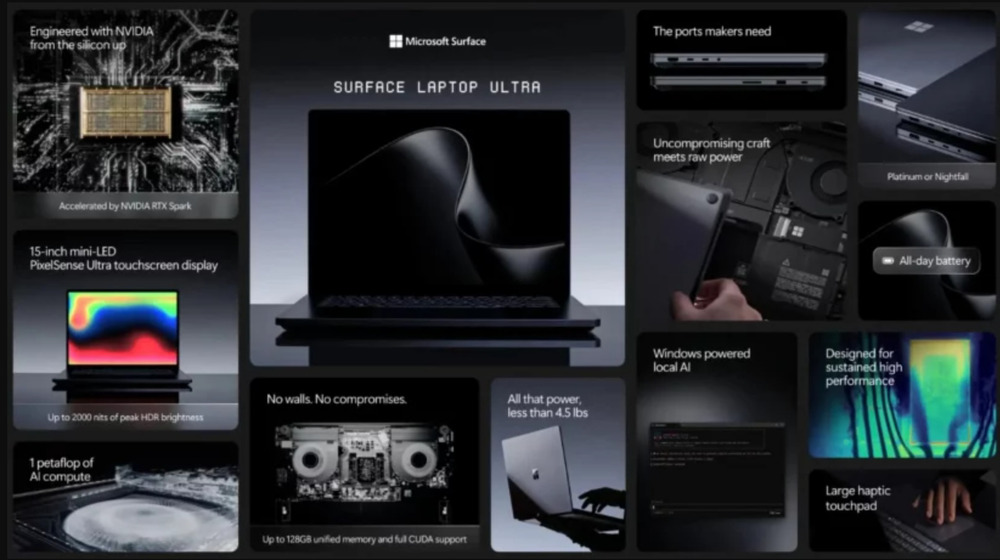
First is pricing. Chips in this class typically enter the market through premium-tier devices. The Surface Laptop Ultra is already generating interest, but it remains unclear whether this technology will be accessible to mainstream consumers.
Second, thermal constraints. A petaflop-class system in a thin chassis is fundamentally a thermal challenge. Sustained performance will depend heavily on cooling design, and any limitations in heat dissipation will directly affect long-term stability under continuous workloads.
Third, the competitive landscape. The broader market context also matters. Apple Inc. Silicon and Qualcomm Snapdragon X Elite have already demonstrated that efficient ARM-based architectures can deliver strong performance in mobile form factors. However, neither currently approaches this level of AI compute performance in the mobile segment.
The wider implication. Local LLMs are not just a matter of convenience – they raise questions of digital sovereignty. For businesses handling sensitive data, for journalists operating in high-risk regions, and for researchers working with confidential materials, offline AI represents a fundamentally different security model. RTX Spark effectively makes this model scalable.
Read also:Windows 12: Five Changes Users Are Still Waiting For
A historical parallel: what is actually happening
When SSDs began replacing hard drives in the 1990s, the transition seemed gradual. When modern GPUs replaced CPUs for graphics workloads, it also happened almost imperceptibly to most users. Yet in hindsight, each of these shifts represents an inflection point. RTX Spark can be understood in a similar way: a structural shift in where AI computation happens – from data centers to the end-user device.
The implications go far beyond performance alone. The monetization model of AI services will likely shift, enterprise system architectures will evolve, and expectations for a “standard” laptop will change. Within three to five years, chips in this class may become the norm rather than the exception.
RTX Spark is not just another step in the hardware race. It is a statement about what the personal computer will look like in the next decade: powerful, autonomous, deeply integrated with artificial intelligence, and less dependent on the cloud. The question is not whether the industry will change. The question is how fast it will happen.
Read also:
- Weapons of Ukraine’s Victory: Meteor Air-to-air Missile
- Interview with Bell Textron: Investing in the future in Ukraine
- Top 10 TWS Earbuds Under $35
- Top 10 Bluetooth Speakers

